Search results
Search for "reactivity" in Full Text gives 1661 result(s) in Beilstein Journal of Organic Chemistry. Showing first 200.
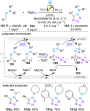
Stereoselective mechanochemical synthesis of thiomalonate Michael adducts via iminium catalysis by chiral primary amines
Beilstein J. Org. Chem. 2024, 20, 2313–2322, doi:10.3762/bjoc.20.198
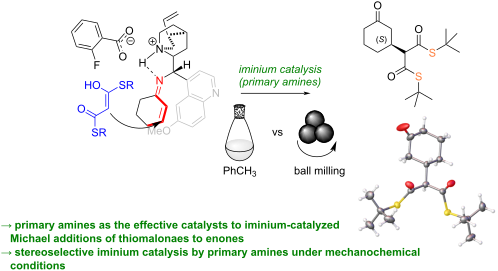
- catalysis with hydrogen bonding units has been essential for achieving high reactivity and enantioselectivities [21][22]. Additionally, the reactivity of the nucleophilic addition is influenced by substitutions near the electron-poor double bond. This approach requires 30 mol % of catalyst and a reaction
- enhancing the reactivity of a relatively inert acceptor does not necessarily lead to increased reaction rates, involves the use of more reactive nucleophiles. In this context, varying the stabilization energy of carboxylic acid derivatives by switching from oxoesters to thioesters is the significant
- reactivity by chiral quaternary ammonium salt in the asymmetric variant of the phase-transfer catalysis. Nevertheless, no product was formed despite several conditions being examined. Finally, an attempt to activate the electrophile was performed. We chose iminium salt catalysis particularly employing chiral


Hydrogen-bond activation enables aziridination of unactivated olefins with simple iminoiodinanes
Beilstein J. Org. Chem. 2024, 20, 2305–2312, doi:10.3762/bjoc.20.197
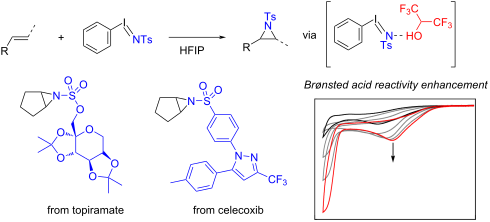
- catalysts or photochemical procedures have been developed to enable this transformation [7][8][9]. The reactivity of hypervalent iodine reagents can be enhanced via Lewis acid catalysis [10]. For example, PIDA becomes a stronger oxidant upon coordination of BF3·OEt2, enabling chemistry that was not
- described in some group-transfer schemes [23][24][25], and in particular, fluorinated alcohol solvents, such as 1,1,1,3,3,3-hexafluoroisopropanol (HFIP), have been reported to enhance hypervalent iodine reactivity by providing a H-bonding solvent cluster that enhances the electrophilicity of the iodine
- recently developed a metal-free aziridination of unactivated olefins via the intermediacy of an N-pyridinium iminoiodinane (Scheme 1b) [34]. We rationalized the enhanced reactivity towards olefin aziridination as a result of charge-enhanced iodine-centered electrophilicity arising from the cationic N


Catalysing (organo-)catalysis: Trends in the application of machine learning to enantioselective organocatalysis
Beilstein J. Org. Chem. 2024, 20, 2280–2304, doi:10.3762/bjoc.20.196
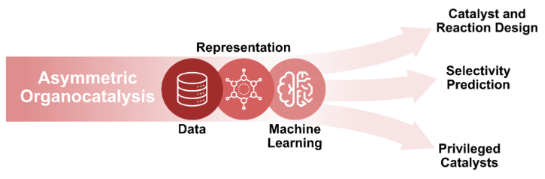
- , equipping experimentalists with the knowledge necessary to follow the developments in the field. The rest of the review is divided into three parts: (1) ML for reactivity and selectivity prediction, (2) ML for the design of privileged organocatalysts and (3) ML for catalyst and reaction design. Ultimately
- , the authors developed a separate model to gain a sufficiently interpretable model, finding that some parameters remain important throughout the different subsets. This example demonstrates both the strength of careful data analysis and the intricacies of dealing with chemical reactivity data. The
- . With HTE platforms established and due to their importance to ML campaigns, the past few years have seen a trend in creating larger experimental chemical reactivity datasets, in particular for transition metal catalysis [47][48]. 2.2 Increasing data availability in ML for organocatalysis While, to the


Deuterated reagents in multicomponent reactions to afford deuterium-labeled products
Beilstein J. Org. Chem. 2024, 20, 2270–2279, doi:10.3762/bjoc.20.195
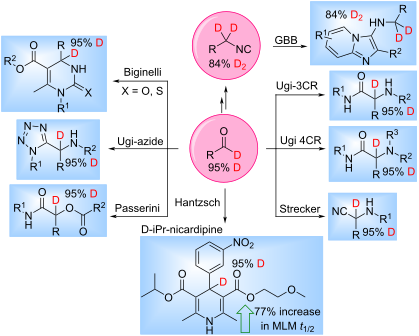
- scope of reactivity and determination of deuterium retention using a combination of deuterated aldehydes, [D1]-, and/or [D2]-isocyanides. We began with the venerable Ugi 4-component reaction (Ugi-4CR), first reported by Ivar Ugi in 1959 [28]. The Ugi-4CR utilizes an amine, carbonyl, carboxylic acid, and
- the Passerini reaction [40][41][42][43] discovered 60 years prior to the Ugi reaction. It uses the reactivity of isocyanides, aldehydes, and carboxylic acids to yield α-acyloxy amides (Scheme 6). Six deuterated analogs are reported in good yield with no observation of deuterium scrambling. For the


Synthesis and reactivity of the di(9-anthryl)methyl radical
Beilstein J. Org. Chem. 2024, 20, 2254–2260, doi:10.3762/bjoc.20.193
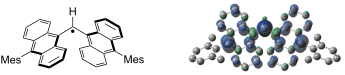
- , electrical properties, and reactivity. The generation of the DAntM radical was confirmed by its ESR spectrum, which showed two broad signals. The unpaired electron is primarily localized on the central sp2 carbon and slightly delocalized over the two anthryl moieties. Although the DAntM radical undergoes
- . Keywords: anthracene; cation; dimerization; radical; reactivity; Introduction Organic radicals have garnered significant attention in various research fields, including catalysis [1][2][3][4], chromophores [5][6][7][8], and as agents in dynamic nuclear polarization [9][10][11][12]. Recently, highly stable
- the field of radical chemistry. However, reducing the reactivity of radical species can mean losing one of their most attractive properties. Therefore, it is very important to explore aromatic hydrocarbon radicals that are sufficiently stable for handling, yet reactive under specific conditions


Metal-free double azide addition to strained alkynes of an octadehydrodibenzo[12]annulene derivative with electron-withdrawing substituents
Beilstein J. Org. Chem. 2024, 20, 2234–2241, doi:10.3762/bjoc.20.191
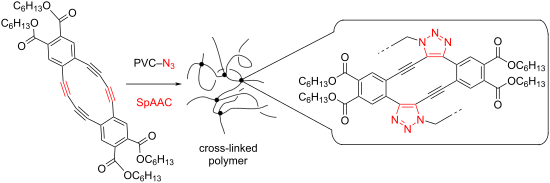
- apparently smaller than those previously reported for the reaction between DBA-OHex and benzyl azide (Table S1 in Supporting Information File 1). However, the Ea values were previously measured in DMSO-d6 and C6D6, and it is known that there is a solvent polarity effect on the reactivity of SpAACs. In order
- to quantitatively compare the reactivity of DBAs with different substituents, the reaction between DBA-OHex and benzyl azide was also monitored in CDCl3. The Ea in CDCl3 was 71.1 kJ mol−1 (Table S1 in Supporting Information File 1). This result clearly suggests that DBA 5 with electron-withdrawing
- ) is more energetically demanding than the counter monoadduct (out) due to steric factors. The second azide addition follows this step. The alkyne, which is diagonally positioned relative to the triazole group, shows the highest reactivity due to its significant distortion. This finding correlates with




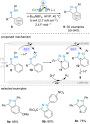
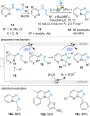
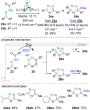
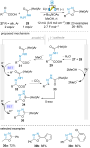
Heterocycle-guided synthesis of m-hetarylanilines via three-component benzannulation
Beilstein J. Org. Chem. 2024, 20, 2208–2216, doi:10.3762/bjoc.20.188
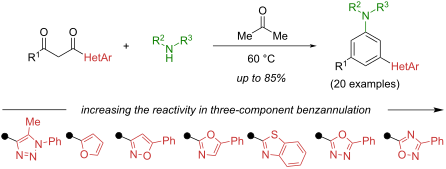
- the possible substitution patterns, meta-substituted anilines hold a special place. These compounds are difficult to access due to the inherent ortho-/para-directional reactivity of the amino group, at the same time they are widely used in medicinal chemistry, resulting in several marketed drugs
- /chemoinformatics calculations were also performed to correlate the observed reactivity with the charges on the carbonyl group of 1,3-diketones. Unfortunately, no reliable correlation was found between the charges and the reactivity of the 1,3-diketones with the present set of heterocyclic substituents or with the


O,S,Se-containing Biginelli products based on cyclic β-ketosulfone and their postfunctionalization
Beilstein J. Org. Chem. 2024, 20, 2143–2151, doi:10.3762/bjoc.20.184
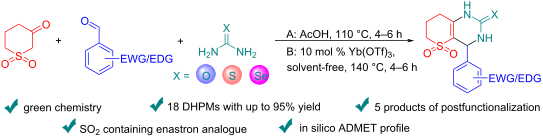
- regioselectivity to give diverse DHPMs in reasonable yields up to 95%. Moreover, an SO2-containing analogue of anticancer drug-candidate enastron (SO2 vs C=O) was obtained by using the here reported method in gram scale. We also demonstrate the reactivity of the Biginelli product in various directions – synthesis
- synthesis of new S-heterocyclic systems we tried to combine the broad synthetic potential of Biginelli condensation and high reactivity β-ketosulfone 1 (dihydro-2H-thiopyran-3(4H)-one-1,1-dioxide) in various condensation reactions [14][15][16][17][18][19][20]. It was also worth mentioning that the thiopyran



Efficacy of radical reactions of isocyanides with heteroatom radicals in organic synthesis
Beilstein J. Org. Chem. 2024, 20, 2114–2128, doi:10.3762/bjoc.20.182
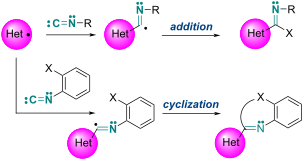
- nitrogen-containing compounds [3][4][5][6][7]. Furthermore, by adjusting the substituents on the nitrogen, reactivity can be controlled and solubility in various solvents can be tuned (Figure 2). However, the use of isocyanide as a C1 resource is somewhat limited compared to that of carbon monoxide [8
- on molecular transformations by the reactions of heteroatom radicals with isocyanides using methods 1 and 2. Thus, in this perspective, we mainly focused on the use of method 1 and method 2 for the generation of heteroatom radicals and the reactivity of them with isocyanides. Among these three
- can add to isocyanides to form the imidoyl radicals. In this reaction, telluro radicals (ArTe•) also forms in situ, but the relative reactivity of them toward isocyanides might be very low. In addition, dimerization of ArTe• to (ArTe)2 is very fast, and therefore, the ArTe-substituted imidoyl radical


Multicomponent syntheses of pyrazoles via (3 + 2)-cyclocondensation and (3 + 2)-cycloaddition key steps
Beilstein J. Org. Chem. 2024, 20, 2024–2077, doi:10.3762/bjoc.20.178

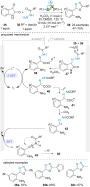
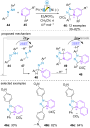
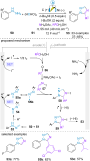
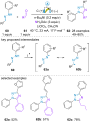
- approach this ideal, representing a reactivity-based concept where reactive functionalities are generated and consumed in each step [24]. MCR can be conducted in a domino, sequential, or consecutive fashion, offering a versatile approach to synthetic design by creating countless new sequences by
- ) [69] approach without reducing the reactivity of the Michael system. In this one-pot procedure, the borylation of aryl halides with pinacolborane gives aryl pinacolyl boronates 53, which are then coupled with bromoenal 51 to generate the intermediary enal 54. Subsequent cyclization with tosylhydrazine
- employed, likely due to the more electron-rich internal nitrogen atom reacting with the Michael system. When phenylhydrazine is used, an inverse reactivity is observed [73][74][75]. Remarkably, when hydroxyethylhydrazine is utilized, a mixture of regioisomers is formed, likely attributed to steric




Diastereoselective synthesis of highly substituted cyclohexanones and tetrahydrochromene-4-ones via conjugate addition of curcumins to arylidenemalonates
Beilstein J. Org. Chem. 2024, 20, 2016–2023, doi:10.3762/bjoc.20.177
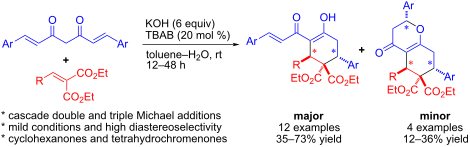
- , curcumin showcases its Michael donor–acceptor ability in different ways, such as simple Michael addition, [4 + 2] annulation, Michael addition followed by cyclization or one-pot multicomponent reactions (MCR), etc. (Scheme 1) [25]. In 2011, our group reported the reactivity of curcumin as a Michael donor
- ]. Other groups have also investigated the Michael donor–acceptor reactivity of curcumins [25]. For instance, a quinine-thiourea catalyzed Michael addition of curcumins to nitroalkenes reported by Ye et al. stopped at the single Michael addition stage [35]. In the subsequent year, Yan et al. demonstrated a
- reported in due course. Biologically active derivatives of cyclohexanones. X-ray structure of 4a (CCDC 2351387). Origin of stereoselectivity in the double Michael addition. The Michael donor–acceptor reactivity of curcumin: previous vs present work. A plausible reaction mechanism. Scale-up reaction


Harnessing the versatility of hydrazones through electrosynthetic oxidative transformations
Beilstein J. Org. Chem. 2024, 20, 1988–2004, doi:10.3762/bjoc.20.175
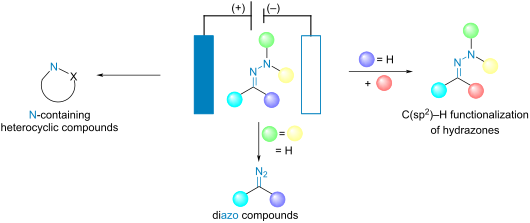
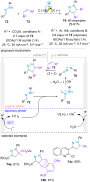
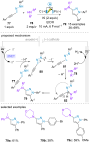
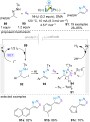
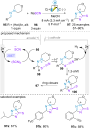
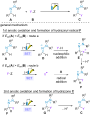
- hydrazones can act as radical acceptors for the synthesis of functionalized amines or hydrazones through reductive functionalization [21][25][26] or oxidative C(sp2)–H functionalization [27][28], respectively. Consequently, given their rich reactivity profile, exploring new synthetic transformations of
- appealing opportunities to take advantage of the versatility of this reagent. Such an approach can either ameliorate the previous methods in a more sustainable and efficient fashion or provide a mean for the discovery of new reactivity. Herein, this review aims to give an overview of the state of the art in
- reactivity profile of hydrazones, the electrooxidative transformations of such a molecular building block provides a fascinating route to valuable compounds under mild and safe reaction conditions. Alone, the electrooxidation of NH-aryl, -tosyl, and -acylhydrazones triggered the cyclization of a radical









Radical reactivity of antiaromatic Ni(II) norcorroles with azo radical initiators
Beilstein J. Org. Chem. 2024, 20, 1967–1972, doi:10.3762/bjoc.20.172
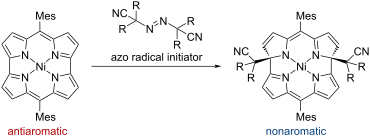
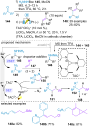
- ) norcorrole. The radical reactivity of Ni(II) norcorroles was investigated by density functional theory (DFT) calculations. Keywords: 16π; antiaromatic; norcorrole; porphyrinoid; radical; Introduction Considerable attention has been directed toward antiaromatic norcorroles [1][2][3] due to the fascinating
- the electrophile [16][17][18]. In addition, C–C double bonds of the norcorrole skeleton outside the π-delocalization pathway exhibit a reactivity similar to an alkene to afford hydrogenated norcorroles by hydrogenation [19] or reduction with hydrazine [20] and [3 + 2]-cycloadducts with 1,3-dipoles [21
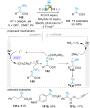
- presented. We also discuss the selectivity of the radical addition to Ni(II) norcorroles using DFT calculations. Results and Discussion Reactivity with azo radical initiators We selected 2,2'-azobis(isobutyronitrile) (AIBN) as a radical source. Ni(II) dimesitylnorcorrole 1 was treated with AIBN in refluxing


1,2-Difluoroethylene (HFO-1132): synthesis and chemistry
Beilstein J. Org. Chem. 2024, 20, 1955–1966, doi:10.3762/bjoc.20.171

- higher reactivity than (Z)-1,2-difluoroethylene in this reaction. The reaction of either (E)- or (Z)-1,2-difluoroethylene with perfluoroaldehydes resulted in the formation of three isomeric oxetanes in a 1.0:1.7:1.3 ratio in a high yield of 78–94% (Scheme 22) [49]. All data reported for the [2 + 2


Regioselective alkylation of a versatile indazole: Electrophile scope and mechanistic insights from density functional theory calculations
Beilstein J. Org. Chem. 2024, 20, 1940–1954, doi:10.3762/bjoc.20.170
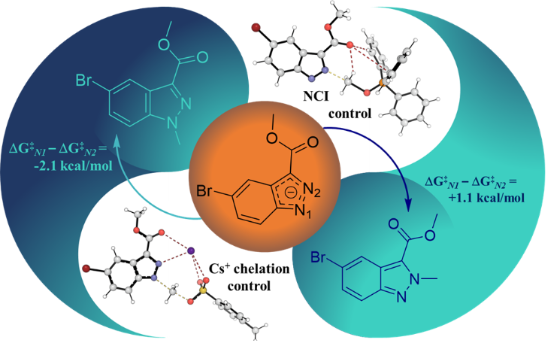
- precursors of alkylating reagents presents an opportunity to find new ways to diversify indazole reactivity by simple modifications of reaction conditions. Mechanistic understanding would allow for further diversification in related systems. The indazole ring presents annular tautomerism regarding the


A new platform for the synthesis of diketopyrrolopyrrole derivatives via nucleophilic aromatic substitution reactions
Beilstein J. Org. Chem. 2024, 20, 1933–1939, doi:10.3762/bjoc.20.169
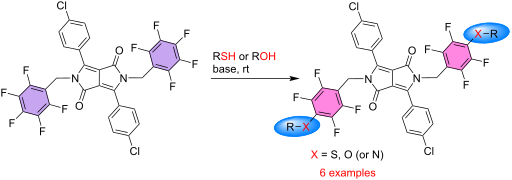
- pentafluorobenzyl bromide, followed by a nucleophilic aromatic substitution (SNAr) with thiols and phenols. This approach is based on the well-established reactivity of perfluoroaromatic compounds in nucleophilic aromatic substitutions [32][33][34][35]. By varying the reaction conditions and the number of
- generating new DPP derivatives through nucleophilic aromatic substitution reactions with thiols and phenols. The main objective of this study was to employ the N,N’-bis(pentafluorobenzyl)-DPP 2 as an electrophile and investigate its reactivity with thiols and phenols (Scheme 1). All SNAr reactions were
- functionalized DPP derivatives. As anticipated, it displayed reactivity with thiols and phenols through nucleophilic aromatic substitution at the pentafluorobenzyl groups, yielding both symmetrical (disubstitution) and non-symmetrical (monosubstitution) derivatives in satisfactory yields (Scheme 1). Thiols are


Negishi-coupling-enabled synthesis of α-heteroaryl-α-amino acid building blocks for DNA-encoded chemical library applications
Beilstein J. Org. Chem. 2024, 20, 1922–1932, doi:10.3762/bjoc.20.168
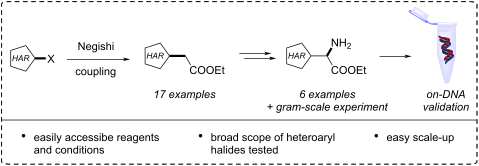
- heteroaromatic halides. The reaction sequence utilizes a photochemically enhanced Negishi cross-coupling as a key step, followed by oximation and reduction. The prepared amino esters were validated for on-DNA reactivity via a reverse amidation–hydrolysis–reverse amidation protocol. Keywords: amino acids; DEL
- results, thiazole 2b, benzothiazole 2i and benzimidazole 2t react very well with sodium nitrite in an acidic environment (Scheme 6, red section). Among the various subclasses of compounds, pyrazole 2l exhibited a high reactivity using t-BuONO and EtONa in ethanol (Scheme 6, red section). On the other hand


Access to 2-oxoazetidine-3-carboxylic acid derivatives via thermal microwave-assisted Wolff rearrangement of 3-diazotetramic acids in the presence of nucleophiles
Beilstein J. Org. Chem. 2024, 20, 1894–1899, doi:10.3762/bjoc.20.164

- versatile methods for the preparation of structurally diverse β-lactam derivatives is of great importance and relevance. Continuing the investigation of the reactivity and synthetic potential of diazotetramic acids (1), we have recently shown that these diazo reagents can act as precursors of β-lactam


The Groebke–Blackburn–Bienaymé reaction in its maturity: innovation and improvements since its 21st birthday (2019–2023)
Beilstein J. Org. Chem. 2024, 20, 1839–1879, doi:10.3762/bjoc.20.162
- and a hydrophilic corona and can serve as heterogeneous systems for solubilizing hydrophobic chemicals in water. By concentrating reactants in nanometer-sized vessels, their reactivity is altered, and reaction rates are often accelerated. As a result, mild reaction conditions can be achieved
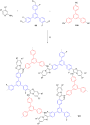
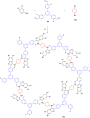
- template, selecting the ligand building blocks with highest affinity and bringing them in proximity within the binding site. Building blocks are opportunely chosen to have complementary reactivity and therefore to react irreversibly within the binding site and assemble into the final ligand. Before the
- Almost 90 different amidines had already been tested until 2018 [1], however, room for novel building blocks or old ones with novel reactivity is still available as demonstrated for example by Dömling et al. [48]. They focused on the use of 2,4-diaminopyrimidines 41 to synthetize






A facile three-component route to powerful 5-aryldeazaalloxazine photocatalysts
Beilstein J. Org. Chem. 2024, 20, 1831–1838, doi:10.3762/bjoc.20.161
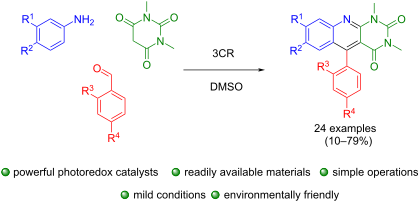
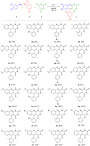
- reactivity, thus giving higher yields than those bearing electron-withdrawing groups. The best reactivity was observed for 3,4-dimethylaniline (3a) and 3,4-dimethoxyaniline (3b) with the isolation of 5-aryldeazaalloxazines 2a–h, with yields of 43–79%. Additionally, 5-aryldeazaalloxazines bearing methoxy
- substituents at positions 7 and 8 of the deazaalloxazine ring (see Figure 1 for numeration) showed the best reactivity as reductive photocatalysts. Such an outcome of MCR opens up the possibility of their production on a larger scale for commercial needs. However, the synthesis of the 7- and 8-methoxy
- the described conditions. The halogen groups on the anilines slightly decreased their reactivity, leading to the formation of products 2q–w with lower yields. However, the 8-chlorine derivative 2u with a o-tolyl aldehyde moiety was prepared with a yield of 37%. Aromatic aldehydes bearing bromine and




Oxidative fluorination with Selectfluor: A convenient procedure for preparing hypervalent iodine(V) fluorides
Beilstein J. Org. Chem. 2024, 20, 1785–1793, doi:10.3762/bjoc.20.157
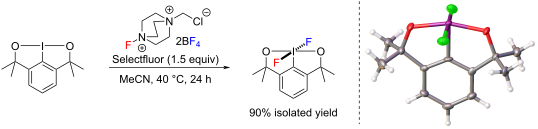
- alternative approach, we reported the first application of using fluoroiodane 2 as a fluorinating reagent in 2013 [11]. The chelate sidearm makes 2 an air-stable, easy-to-handle solid with excellent fluorinating ability and it often exhibits different reactivity to that observed with fluoroaza reagents such
- disappointingly, no fluorination was observed. The disparity in reactivity between difluoroiodane 6 and trifluoroiodane 3 towards aryl Grignard reagents could be attributed to the different relationships between the fluorine ligands on the iodine(V) centre. In difluoroiodane 6 the fluorine ligands are restricted


Synthesis and characterization of 1,2,3,4-naphthalene and anthracene diimides
Beilstein J. Org. Chem. 2024, 20, 1767–1772, doi:10.3762/bjoc.20.155
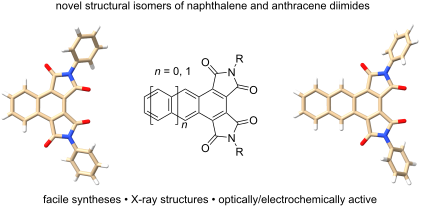
- acetylenedicarboxylate (DMAD). Although this [2 + 2 + 2] cycloaddition reactivity strategy has been reported under a variety of aryne generation conditions [17][18][19], in our hands we were only able to generate practical amounts of tetraesters 3 using the method reported by Peña et al. [18]. Hydrolysis of 3 with


Harnessing unprotected deactivated amines and arylglyoxals in the Ugi reaction for the synthesis of fused complex nitrogen heterocycles
Beilstein J. Org. Chem. 2024, 20, 1758–1766, doi:10.3762/bjoc.20.154
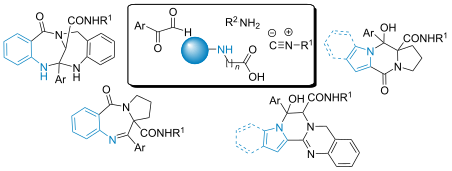
- limited reactivity, modulated by their substitution [19]. Results and Discussion Synthesis of 3H-benzo[e][1,4]diazepin-5-ones As part of our continued interest in developing new and efficient strategies for synthesizing complex fused nitrogen heterocycles, we decided to evaluate the use of amine groups
- with a reduced reactivity in the synthesis of 3H-benzo[e][1,4]diazepin-5-ones, heterocycles previously synthesized by our research group through Ugi/Staudinger/aza-Wittig and Ugi/reduction/cyclization sequences, using 2-azidobenzoic [20] and 2-nitrobenzoic [21] acids, respectively. The first


Chemo-enzymatic total synthesis: current approaches toward the integration of chemical and enzymatic transformations
Beilstein J. Org. Chem. 2024, 20, 1693–1712, doi:10.3762/bjoc.20.151
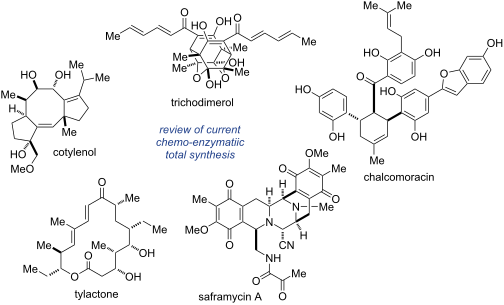
- artificial reaction environments for precise reactivity control. The third strategy, "regio- and stereoselective scaffold construction", enabled concise access to highly functionalized complex core skeletons of natural products. From the discovery of unknown enzymes to the application of the discovered
- (Scheme 9 and Scheme 10). A major limitation of the chemo-enzymatic approach is the current difficulty of designing or evolving enzymes. The chemical synthesis of each substrate and the introduction of mutations into enzymes must be verified to increase their reactivity and selectivity. As the number of
- applications of chemo-enzymatic hybrid syntheses increases and we better understand the extent to which the structure of enzymes and the reactivity of synthetic substrates can be predicted, guidelines for the rational design of enzymes will likely be established, enabling the rapid identification of optimal




Oxidation of benzylic alcohols to carbonyls using N-heterocyclic stabilized λ3-iodanes
Beilstein J. Org. Chem. 2024, 20, 1677–1683, doi:10.3762/bjoc.20.149
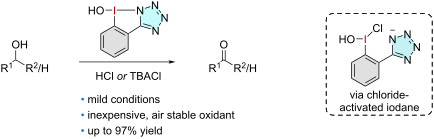
- oxidation of the alcohol. Only small amounts of benzoic acid 4a’ were observed in all reactions with additional AlCl3, suggesting that the additive inhibits the previously observed overoxidation. Surprisingly AlCl3 activated the cyclic tetrazole iodane 1a but had almost no influence on the reactivity of the
- (75%). The ortho-phenyl-substituted aldehyde 4h was isolated in 85% yield, while the ortho-methoxy substrate did not convert to 4i. The ortho-, meta- and para-permutation of a CF3 group showed lower reactivity for the ortho-substituted 4j (53%), while the meta- and para-derivatives 4k and 4l gave