


Search results
Search for "CRBN" in Full Text gives 5 result(s) in Beilstein Journal of Organic Chemistry.
Advantages of PROTACs in achieving selective degradation of homologous protein families
Beilstein J. Org. Chem. 2026, 22, 628–661, doi:10.3762/bjoc.22.49
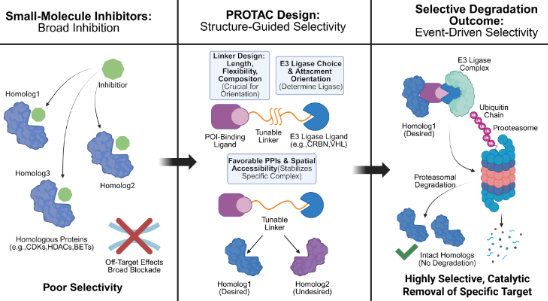
- inhibitors, candidates in clinical trials, or their structural analogs. Similarly, E3 ligands are engineered to target specific E3 ubiquitin ligases. For instance, pomalidomide and lenalidomide are widely employed to recruit the CRBN ligase [38]. Given the established nature of these ligands, initial
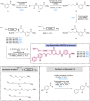
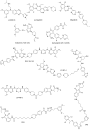
- pharmaceutical chemists. In 2019, Gray, Zhang and co-workers designed a PROTAC-1 (1) to degrade CDK4/6 [21]. To construct compound 1 they used the CDK4/6 inhibitor palbociclib as the POI ligand, pomalidomide, which combines with CRBN as the E3 ligand and a 4-carbon alkyl linker to connect them. The compound can
- selectivity of PROTACs to CDK9 [64]. They used pan-CDK inhibitors AT-7519 (7) and FN-1501 (8) as POI ligands and connected them with CRBN ligands through various linkers. First, the results showed that PROTACs with molecule 7 as POI ligand did not achieve a good degradation effect on CDK9, whereas most


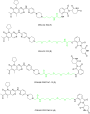

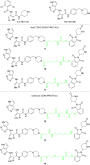


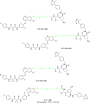




Towards the targeted protein degradation of CK2: design and synthesis of CAM4066-based PROTACs
Beilstein J. Org. Chem. 2026, 22, 611–619, doi:10.3762/bjoc.22.47
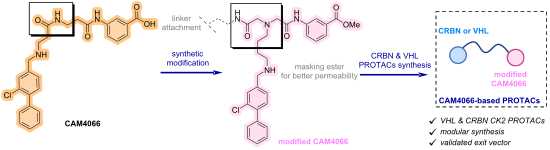
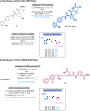
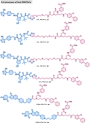
- conjugating a CAM4066-derived warhead to CRBN or VHL ligands, four VHL-recruiting PROTACs, were prepared using PEG and alkyl linkers, alongside two CRBN-recruiting analogues featuring constrained linkers. A ligand–linker analogue in which a linker is projected from the solvent-exposed region of CK2α retained
- conjugated CAM4066-derived ligands to both CRBN or VHL E3-ligase recruiters. We created VHL-recruiting PROTACs for CK2 using PEG and alkyl linkers, while the CRBN-recruiting analogues featured more constrained linkers. A ligand–linker analogue bearing a linker projected from the solvent-exposed region of the
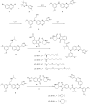
- . Two CRBN-based degraders 28 and 29 were synthesised using constrained linker–ligand constructs S18 and S19. Because the steric environment imposed by these linkers differed from that of the VHL system, a modified synthetic sequence was adopted. The αD-site binder 16 was first introduced onto the

Design and synthesis of an erdafitinib-based selective FGFR2 degrader
Beilstein J. Org. Chem. 2026, 22, 583–591, doi:10.3762/bjoc.22.44
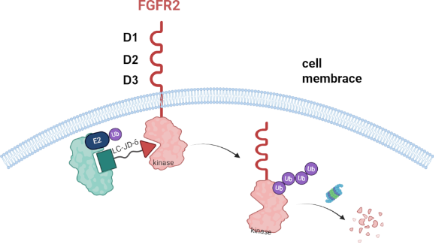
- growth factor receptor 2 (FGFR2) to overcome the issues of drug resistance and adverse reactions associated with traditional inhibitors in the treatment of FGFR2-driven tumors. Erdafitinib was employed as the targeting ligand, and its aliphatic amine site was conjugated with a CRBN E3 ligase ligand to
- -selective degrader, and for the first time confirmed its ability to degrade the membrane-bound form of FGFR2. This work provides an innovative targeted protein degradation strategy for the treatment of FGFR2-driven tumors and holds significant potential for clinical application. Keywords: CRBN; erdafitinib
- functions and overcome a series of critical issues in cancer treatment. The numerous advantages of PROTAC technology in targeted therapy have prompted us to conduct further research into FGFR2 degraders. In this work, a series of degraders conjugating erdafitinib with a CRBN binder was synthesized and



Identification and removal of a cryptic impurity in pomalidomide-PEG based PROTAC
Beilstein J. Org. Chem. 2025, 21, 407–411, doi:10.3762/bjoc.21.28
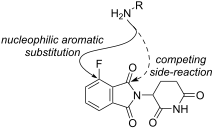
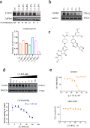
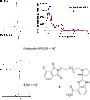
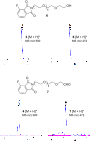
- chimera (PROTAC) has made it a popular starting point to develop selective small-molecule degraders [2]. Currently, leveraging ubiquitination by the von Hippel–Lindau (VHL) protein or cereblon (CRBN) is the most successful method to achieve targeted protein degradation [3][4]. For initial studies, a short




N-Boc-α-diazo glutarimide as efficient reagent for assembling N-heterocycle-glutarimide diads via Rh(II)-catalyzed N–H insertion reaction
Beilstein J. Org. Chem. 2023, 19, 1841–1848, doi:10.3762/bjoc.19.136
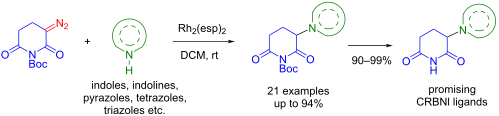
- , including both aromatic and saturated NH-substrates. This yields structures that are appealing for generating cereblon ubiquitin-ligase ligands and for potential use in crafting PROTAC molecules. Keywords: CRBN ligands; diazocarbonyl compounds; N–H insertion reaction; N-heterocycles; Rh(II)-catalysis
- strategies is cereblon (CRBN), the target focus of a collection of immunomodulatory drugs containing the glutarimide moiety such as thalidomide, pomalidomide, lenalidomide [12][13], and avadomide [14] (Figure 1). These ligands, although prevalent recruiters in PROTAC design, present several drawbacks
- circumstances, considerably impacting their pharmacological utility [19][20], Moreover, the conventional CRBN recruiters restrict structural modification options necessary to maintain satisfactory affinity for the E3-ligase [21][22][23][24]. These limitations underscore the relevance of expanding the chemical


Other Beilstein-Institut Open Science Activities



