


Search results
Search for "CRBN ligands" in Full Text gives 2 result(s) in Beilstein Journal of Organic Chemistry.
Advantages of PROTACs in achieving selective degradation of homologous protein families
Beilstein J. Org. Chem. 2026, 22, 628–661, doi:10.3762/bjoc.22.49
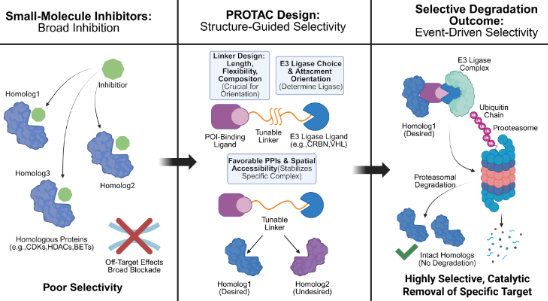
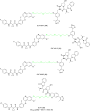
- selectivity of PROTACs to CDK9 [64]. They used pan-CDK inhibitors AT-7519 (7) and FN-1501 (8) as POI ligands and connected them with CRBN ligands through various linkers. First, the results showed that PROTACs with molecule 7 as POI ligand did not achieve a good degradation effect on CDK9, whereas most
- , VHL and CRBN are the most commonly used E3 ubiquitin ligases when designing PROTACs. This is because VHL ligands and CRBN ligands often have several favorable characteristics: (1) specific, strong, biophysically validated binding affinity for their target E3 ligases; (2) acceptable physicochemical
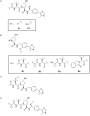
- , CRBN ligands, and IAP ligands, to explore the difference between the E3 ligands of PROTACs for the selective degradation of CDK4 and CDK6 (Table 1) [57]. The results showed that PROTACs based on CRBN, VHL, and IAP ligands can degrade CDK4 and CDK6 and show a specific selectivity for CDK6. Moreover, the









N-Boc-α-diazo glutarimide as efficient reagent for assembling N-heterocycle-glutarimide diads via Rh(II)-catalyzed N–H insertion reaction
Beilstein J. Org. Chem. 2023, 19, 1841–1848, doi:10.3762/bjoc.19.136
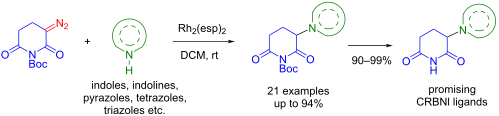
- , including both aromatic and saturated NH-substrates. This yields structures that are appealing for generating cereblon ubiquitin-ligase ligands and for potential use in crafting PROTAC molecules. Keywords: CRBN ligands; diazocarbonyl compounds; N–H insertion reaction; N-heterocycles; Rh(II)-catalysis
- space of cereblon ligands. Research teams and pharmaceutical companies worldwide are actively conducting studies to discover new CRBN ligands based on α-hetaryl-substituted glutarimides of general formula 1 (Scheme 1). Consequently, a significant number of patents describing the synthesis of new PROTAC
- molecules and CRBN ligands are being published (over 400K patents in the last 5 years according to SciFinder). Various nitrogen heterocycles were utilized as a heterocyclic moiety linked to a glutarimide core via a nitrogen atom. In addition to the phthalimide fragment, the most commonly studied ones are


Other Beilstein-Institut Open Science Activities



