


Search results
Search for "PROTAC" in Full Text gives 5 result(s) in Beilstein Journal of Organic Chemistry.
Advantages of PROTACs in achieving selective degradation of homologous protein families
Beilstein J. Org. Chem. 2026, 22, 628–661, doi:10.3762/bjoc.22.49
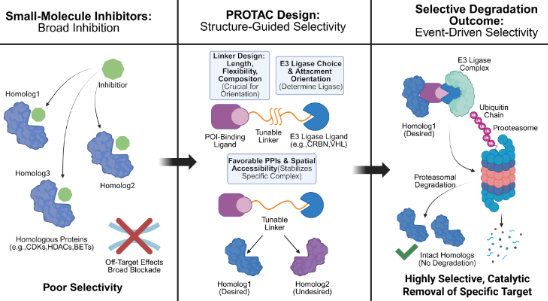
- ; PROTAC; protein–protein interaction; selectivity; ubiquitination; Introduction The cell is the fundamental unit of structure and function in the human body [1][2]. More than 20,000 proteins act in concert to regulate the entire cellular life process [1]. To date, dysregulated protein function has been
- , PROTACs, one of the most extensively studied and promising TPD approaches, are reshaping the paradigm of small-molecule drug development [11]. The PROTAC technology was initially conceptualized by Crews et al. in 2001 [11]. As a heterobifunctional molecule, a PROTAC comprises two distinct ligands: one
- targeting an E3 ubiquitin ligase and the other binding to a protein of interest (POI), covalently joined by a flexible linker [12]. Upon cellular entry, the PROTAC molecule facilitates the formation of a ternary complex by simultaneously recruiting the POI and the E3 ligase (Figure 1). This proximity


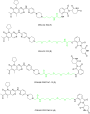







Towards the targeted protein degradation of CK2: design and synthesis of CAM4066-based PROTACs
Beilstein J. Org. Chem. 2026, 22, 611–619, doi:10.3762/bjoc.22.47
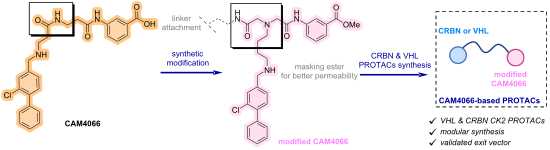
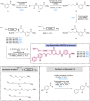
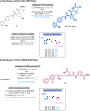
- PROTAC targeting CK2 was reported in the literature. This used CX-4945, a potent CK2 inhibitor, as the CK2 warhead [9][10]. However, as CX-4945 targeted the ATP-binding site of CK2, it also displayed nanomolar affinity for the ATP-binding sites of other kinases, like CLK2 [11]. Therefore, finding a
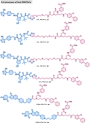
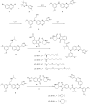
- potent and selective PROTAC targeting CK2 might be valuable in the evaluation of specific degradation of CK2 as a therapeutic approach. Herein, we report the design and synthesis of a series of CK2-targeting PROTACs. CAM4066 was selected as the warhead to enable CK2-specific target engagement. We
- CK2 ligand retained binding affinity comparable to CAM4066, demonstrating that linker installation is well tolerated and preserves key interactions in both the αD and ATP sites. Results and Discussion CAM4066 (1) was selected as the CK2-targeting ligand for PROTAC development owing to its high

Design and synthesis of an erdafitinib-based selective FGFR2 degrader
Beilstein J. Org. Chem. 2026, 22, 583–591, doi:10.3762/bjoc.22.44
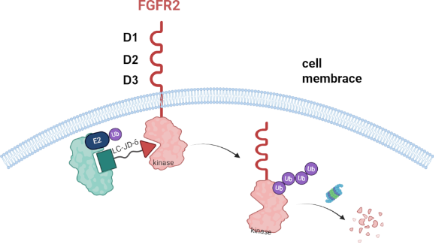
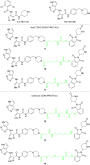
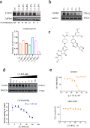
- design and synthesize a series of PROTAC molecules with different linkers. Screening was performed in KATO III cells with high FGFR2 expression, leading to the identification of LC-JD-6 as a potent degrader. Experimental results demonstrated that LC-JD-6 effectively induced FGFR2 protein degradation with
- . Proteolysis-targeting chimera (PROTAC) is a chemical molecule which induce the target protein to approach the ubiquitin protein through the ubiquitin proteasome system, then it can be ubiquitinated and degraded [26][27][28]. This drives to form degraders through the unique properties of their own degradation
- functions and overcome a series of critical issues in cancer treatment. The numerous advantages of PROTAC technology in targeted therapy have prompted us to conduct further research into FGFR2 degraders. In this work, a series of degraders conjugating erdafitinib with a CRBN binder was synthesized and



Identification and removal of a cryptic impurity in pomalidomide-PEG based PROTAC
Beilstein J. Org. Chem. 2025, 21, 407–411, doi:10.3762/bjoc.21.28
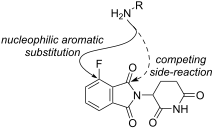
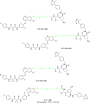
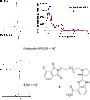
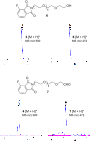
- drug”) class of PROTAC molecules with a PEG linker is frequently used to promote targeted protein degradation. The standard protocol for their synthesis involves nucleophilic aromatic substitution of 4-fluorothalidomide with a PEG-amine. We report herein the identification of a commonly ignored
- contamination. Keywords: glutarimide; IMiD; impurity; nucleophilic acyl substitution; PROTAC; Introduction Targeted protein degradation capitalizing on the concept of chemically induced dimerization has emerged as a new therapeutic approach recently [1]. In particular, the modularity of proteolysis targeting
- chimera (PROTAC) has made it a popular starting point to develop selective small-molecule degraders [2]. Currently, leveraging ubiquitination by the von Hippel–Lindau (VHL) protein or cereblon (CRBN) is the most successful method to achieve targeted protein degradation [3][4]. For initial studies, a short




N-Boc-α-diazo glutarimide as efficient reagent for assembling N-heterocycle-glutarimide diads via Rh(II)-catalyzed N–H insertion reaction
Beilstein J. Org. Chem. 2023, 19, 1841–1848, doi:10.3762/bjoc.19.136
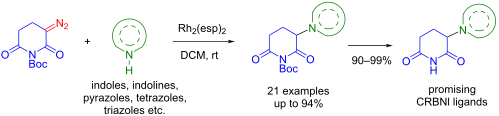
- , including both aromatic and saturated NH-substrates. This yields structures that are appealing for generating cereblon ubiquitin-ligase ligands and for potential use in crafting PROTAC molecules. Keywords: CRBN ligands; diazocarbonyl compounds; N–H insertion reaction; N-heterocycles; Rh(II)-catalysis
- small molecule inhibitors into PROTACs. The RAS proteins, once seen as drug-resistant, became susceptible and a series of covalent inhibitors [5][6][7] were synthesized to bind to KRASG12C. The application of the PROTAC principle has demonstrated the feasibility of endogenous degradation of KRAS [8][9
- ][10], potentially opening a path for its use in treating KRAS-induced cancers. A common characteristic of the degraders elaborated in the literature involves the compulsory integration of an E3-ligase ligand motif into the PROTAC configuration [11]. The E3-ligase most frequently utilized in TPD


Other Beilstein-Institut Open Science Activities



