


Search results
Search for "PROTACs" in Full Text gives 5 result(s) in Beilstein Journal of Organic Chemistry.
Advantages of PROTACs in achieving selective degradation of homologous protein families
Beilstein J. Org. Chem. 2026, 22, 628–661, doi:10.3762/bjoc.22.49
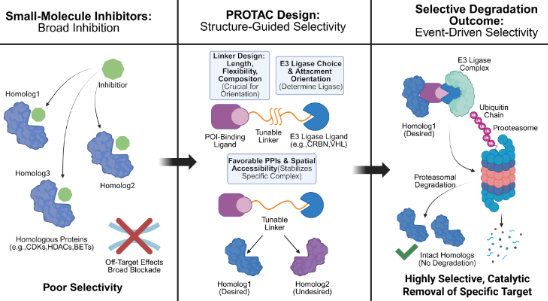
- , Hangzhou 310053, China College of Pharmaceutical Sciences, Zhejiang University, Hangzhou, 310058, China 10.3762/bjoc.22.49 Abstract Proteolysis-targeting chimeras (PROTACs) have emerged as a promising therapeutic modality and now represent an important addition to the toolkit of medicinal chemists
- . Compared with conventional small-molecule inhibitors, PROTACs exhibit notable advantages, particularly in achieving selectivity within highly homologous proteins. The ability to discriminate among members of such families holds broad implications for future disease treatment. In this review, we primarily
- summarize the advantages of PROTACs in conferring selectivity toward highly homologous proteins. This focus will provide a feasible strategy for developing PROTACs that selectively target highly homologous proteins and will ultimately support future therapeutic applications. Keywords: homologous protein









Towards the targeted protein degradation of CK2: design and synthesis of CAM4066-based PROTACs
Beilstein J. Org. Chem. 2026, 22, 611–619, doi:10.3762/bjoc.22.47
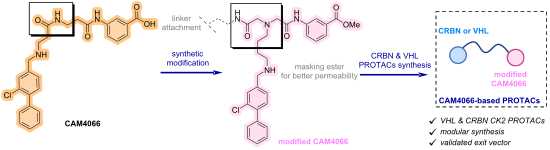
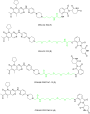
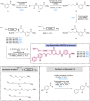
- off-target effects and incomplete or transient CK2 suppression. PROTACs offer an alternative strategy by inducing proteasome-mediated degradation, with potential advantages in potency, selectivity, and duration of action. Herein, a series of CK2-targeting PROTACs has been designed and synthesised. By
- conjugating a CAM4066-derived warhead to CRBN or VHL ligands, four VHL-recruiting PROTACs, were prepared using PEG and alkyl linkers, alongside two CRBN-recruiting analogues featuring constrained linkers. A ligand–linker analogue in which a linker is projected from the solvent-exposed region of CK2α retained
- binding affinity comparable to CAM4066, confirming that linker installation is tolerated and preserves key interactions in the αD and ATP sites. Keywords: CAM4066; casein kinase 2 (CK2); PROTACs; targeted protein degradation; Introduction Protein kinases form a large family of more than 500 enzymes that

Design and synthesis of an erdafitinib-based selective FGFR2 degrader
Beilstein J. Org. Chem. 2026, 22, 583–591, doi:10.3762/bjoc.22.44
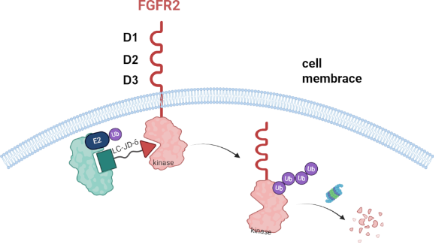
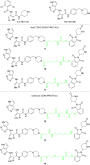
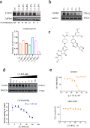
- degrader. LC-JD-6 as a selective degrader for FGFR2 Pharmacologically, the capacity of PROTACs to discriminate between intended and unintended targets represents a pivotal attribute that mitigates adverse off-target effects. Therefore, LC-JD-6 underwent in vitro profiling against diverse FGFR subtypes to
- reduction of over 80% in FGFR2 protein levels, with negligible effects on the other subtypes. These findings establish LC-JD-6 as a highly selective FGFR2 degrader. LC-JD-6 reduced the expression of membrane-bound FGFR2 Since most PROTACs reported to date act on intracellular targets, we examined whether LC
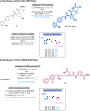
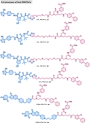
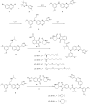
- . Synthesis of PROTACs towards FGFR2. Reagents and conditions: (a) K2CO3, Pd (dppf)Cl2, 1,4-dioxane/H2O 4:1, 100 °C, 5 h; (b) 3,5-dimethoxyaniline, Pd2(dba)3, BINAP, Cs2CO3, toluene, 100 °C, 12 h; (c) (2-bromoethoxy)-tert-butyldimethylsilane, NaH, DMF, rt, 12 h; (d) tetrabutylammonium fluoride, THF rt, 12 h



Synthesis of a HDAC inhibitor–nanogold probe for cryo-EM visualization in class I HDAC co-repressor complexes
Beilstein J. Org. Chem. 2026, 22, 480–485, doi:10.3762/bjoc.22.35
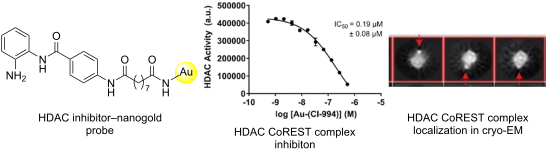
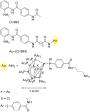
- functionalized this position with linkers for the development of HDAC1–3 proteolysis targeting chimeras (PROTACs) [14][18]. Alkyl-linker lengths of approximately 12 atoms and greater were the most effective degraders [18]. We chose the commercially available amine functionalized nanogold particles (Au–NH2



N-Boc-α-diazo glutarimide as efficient reagent for assembling N-heterocycle-glutarimide diads via Rh(II)-catalyzed N–H insertion reaction
Beilstein J. Org. Chem. 2023, 19, 1841–1848, doi:10.3762/bjoc.19.136
- ; Introduction Targeted protein degradation (TPD) has transformed the field of drug discovery [1][2]. Utilizing proximity-induced pharmacological strategies [3], this method has fostered the creation of numerous molecular glues and proteolysis-targeting chimeras (PROTACs). By manipulation of the internal
- small molecule inhibitors into PROTACs. The RAS proteins, once seen as drug-resistant, became susceptible and a series of covalent inhibitors [5][6][7] were synthesized to bind to KRASG12C. The application of the PROTAC principle has demonstrated the feasibility of endogenous degradation of KRAS [8][9
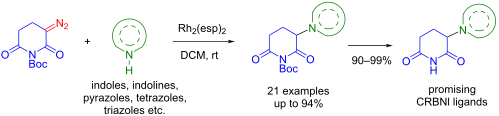
- heterocyclic fragment into the glutarimide core, creating potential CRBN ligands and crucial building blocks for assembling PROTACs. In this paper, a more convenient diazo reagent 5 is introduced and its effectiveness in reacting with a broad variety of NH-heterocycles and in providing N-Boc-protected


Other Beilstein-Institut Open Science Activities



