


Search results
Search for "lecanoric acid" in Full Text gives 2 result(s) in Beilstein Journal of Organic Chemistry.
Semisynthesis, characterisation, and antibacterial evaluation of a novel lecanoric acid-derived amide library
Beilstein J. Org. Chem. 2026, 22, 1023–1032, doi:10.3762/bjoc.22.81
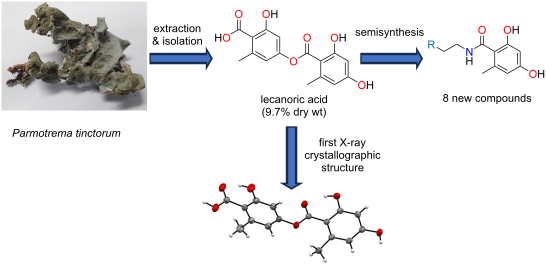
- , The University of Melbourne, Melbourne, VIC 3010, Australia Centre for Cell Factories and Biopolymers, Griffith University, Brisbane, QLD 4111, Australia NatureBank, Griffith University, Brisbane, QLD 4111, Australia 10.3762/bjoc.22.81 Abstract The known lichen depside, lecanoric acid (1), was
- new semisynthetic compounds were fully characterised following 1D/2D NMR, MS and UV data analysis. Crystalline lecanoric acid was obtained during the chemical investigations of the lichen extract, enabling the first X-ray crystallographic analysis to be undertaken on this depside. Compounds 1–13 were
- of biofilm (21% at 50 µM). Keywords: amide; biodiscovery; depside; lecanoric acid; natural products; Parmotrema tinctorum; Pseudomonas aeruginosa; semisynthesis; Introduction Lichens are organisms resulting from the symbiotic relationship between a fungus (the mycobiont) and an alga (the photobiont


Methodology for awakening the potential secondary metabolic capacity in actinomycetes
Beilstein J. Org. Chem. 2024, 20, 753–766, doi:10.3762/bjoc.20.69
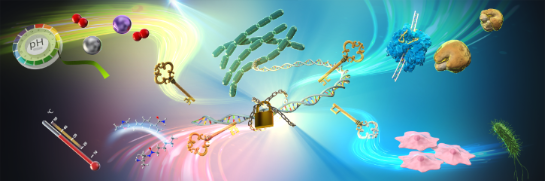
- orsellinic acid, lecanoric acid, and the compounds F-9775A and F-9775B. Lee et al. discovered that secondary metabolism in Streptomyces coelicolor A3(2) M145 is activated by iron competition during co-culture with Myxococcus xanthus [110]. Co-culture promotes the production of the siderophore myxochelin in M


Other Beilstein-Institut Open Science Activities



