


Search results
Search for "phosphoryl azide" in Full Text gives 3 result(s) in Beilstein Journal of Organic Chemistry.
Construction of CF2 moieties in FDA-approved drugs (2016–2025): industrial routes, mechanisms, and scale-up considerations
Beilstein J. Org. Chem. 2026, 22, 1122–1150, doi:10.3762/bjoc.22.91
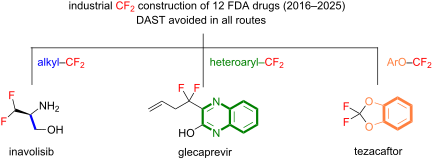
- . It is noteworthy that a study [13] found that the yield of the difluoro acid 38 in route c decreased significantly during scale-up when using diphenyl phosphoryl azide (DPPA) for the Curtius rearrangement (the reason for the decrease was not described). Switching to the Schmidt reaction using NaN3


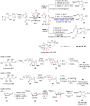


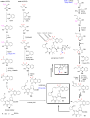


Safe and highly efficient adaptation of potentially explosive azide chemistry involved in the synthesis of Tamiflu using continuous-flow technology
Beilstein J. Org. Chem. 2019, 15, 2577–2589, doi:10.3762/bjoc.15.251
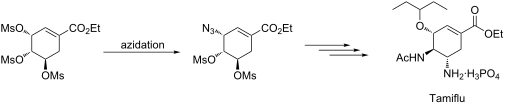
- diphenyl phosphoryl azide (DPPA), trimethylsilyl azide (TMSA) and tetrabutylammonium azide (TBAA) are suitable for the reaction. Continuous flow C-3 mesyl shikimate azidation using either DPPA or TMSA. The use of either DPPA or TMSA as the azidating agent for mesyl shikimate 4 was investigated in a


Synthesis of chiral N-phosphoryl aziridines through enantioselective aziridination of alkenes with phosphoryl azide via Co(II)-based metalloradical catalysis
Beilstein J. Org. Chem. 2014, 10, 1282–1289, doi:10.3762/bjoc.10.129
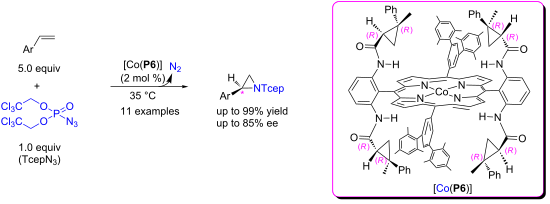
- (2,2,2-trichloroethyl)phosphoryl azide (TcepN3) as a nitrene source. This new Co(II)-based metalloradical aziridination is suitable for different aromatic olefins, producing the corresponding N-phosphorylaziridines in good to excellent yields (up to 99%) with moderate to high enantioselectivities (up to
- ; cobalt complex; metalloradical catalysis; organophosphorus; phosphoryl azide; Introduction Aziridines, the smallest three-membered nitrogen-containing heterocycles, are highly valuable heterocyclic compounds that are widely used in organic synthesis and pharmaceuticals [1][2]. As a result, tremendous
- asymmetric version of olefin aziridination with phosphoryl azide, both the yields and enantioselectivities were moderate even using 10 mol % catalyst loading. It would be desirable if a more effective Co(II)-based metalloradical system could be developed for asymmetric aziridination of alkenes with


Other Beilstein-Institut Open Science Activities



