


Search results
Search for "substrate engineering" in Full Text gives 4 result(s) in Beilstein Journal of Organic Chemistry.
Site-specific labelling of native peptides and proteins: chemical and enzymatic strategies
Beilstein J. Org. Chem. 2026, 22, 857–881, doi:10.3762/bjoc.22.67
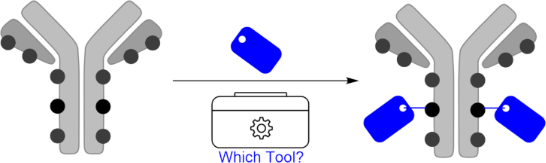
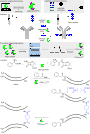
- substrate engineering and minimising risks such as aggregation and immunogenicity, and hence site-specific modifications of commonly found surface residues are desired. Tools are also expected to be easy to prepare and apply, yet remain reliably functional in vitro and in vivo settings. The use of harsh
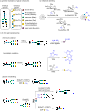
- delivered double variants G250S/E300D (“S2”) and G250S/K327T (“S13”), both capable of generating ADCs with DAR close to 2.0. Second, substrate engineering revealed that MTG preferentially processes positively charged peptides, with an RAK-containing motif supporting efficient ligation to fully glycosylated
- antibodies [150]. Collectively, these enzyme- or substrate-engineering approaches enabled native-state labelling of multiple antibodies (avelumab, matuzumab, cetuximab, and rituximab), producing stable conjugates with favourable biodistribution [149][150]. Another example is the engineering of the hydrolase








Recent advances in controllable/divergent synthesis
Beilstein J. Org. Chem. 2025, 21, 890–914, doi:10.3762/bjoc.21.73

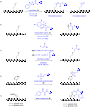
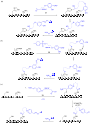
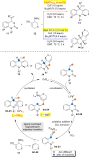
- strategies for controlling reaction pathways and selectivity predominantly involve precise manipulation of catalytic systems (metal catalysts/ligands), reaction parameters (solvent, temperature, time), acid/base mediation, and strategic substrate engineering. This review systematically organizes recent




Harnessing enzyme plasticity for the synthesis of oxygenated sesquiterpenoids
Beilstein J. Org. Chem. 2019, 15, 2184–2190, doi:10.3762/bjoc.15.215
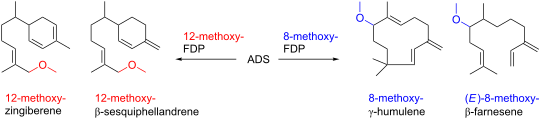
- synthesised in amorphadiene synthase-catalysed reactions from 8- and 12-methoxyfarnesyl diphosphates due to the highly plastic yet tightly controlled carbocationic chemistry of this sesquiterpene cyclase. Keywords: artemisinin; amorphadiene synthase; oxygenated terpenoids; sesquiterpenoids; substrate
- engineering; terpenes; Introduction Amorphadiene synthase (ADS) from Artemisia annua is a key enzyme involved in the biosynthesis of the antimalarial sesquiterpene drug artemisinin (1) [1][2][3][4]. ADS catalyses the Mg2+-dependent conversion of farnesyl diphosphate (FDP, 2) to amorpha-4,11-diene (3) with


Chimeric self-sufficient P450cam-RhFRed biocatalysts with broad substrate scope
Beilstein J. Org. Chem. 2011, 7, 1494–1498, doi:10.3762/bjoc.7.173
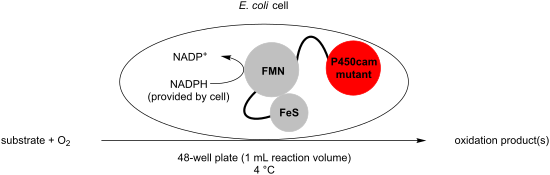
- ; P450 monooxygenase; substrate engineering; Introduction P450 monooxygenases are a ubiquitous family of enzymes found in a wide variety of organisms in all domains of life. These enzymes catalyse oxidation reactions such as hydroxylation, epoxidation, N- and O-dealkylation and heteroatom oxidation


Other Beilstein-Institut Open Science Activities



