


Search results
Search for "tetraureacalixarenes" in Full Text gives 1 result(s) in Beilstein Journal of Organic Chemistry.
Cone p-aminocalix[4]arenes enriched with ‘clickable’ alkyne or azide functionalities
Beilstein J. Org. Chem. 2026, 22, 399–415, doi:10.3762/bjoc.22.28
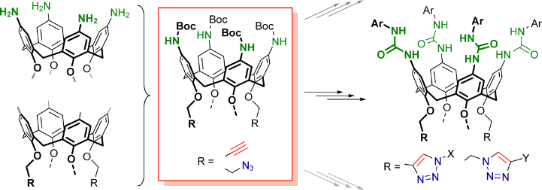
- virtually any functional units attached to them via triazole groups. Keywords: calixarene amines; dimeric capsules; functionalization; tetraureacalixarenes; triazoles; Introduction Considered generally as multifunctional molecular cores, calixarenes in their native forms as cyclic oligophenols actually
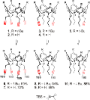
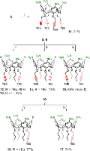
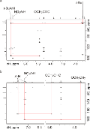
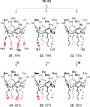
- pairs of distal triazole groups, and C4v-symmetric tetraureas 47 and 50. Due to the phenomenon of supramolecular chirality caused by the direction of hydrogen bonds in the capsules [100], tetraureacalixarenes of the first type should form two regioisomeric homodimers possessing C1-symmetry or a single
- heterodimer with a C4v-symmetric tetratosylureacalix[4]arene 52 (each as a pair of enantiomers). Similarly, the C2v-symmetric tetraureacalixarenes of the second type should furnish C2-symmetric homo- or heterodimers as single regioisomers (each as a pair of enantiomers), whereas homo- and heterodimers formed






Other Beilstein-Institut Open Science Activities



