


Search results
Search for "AFM" in Full Text gives 739 result(s) in Beilstein Journal of Nanotechnology. Showing first 200.
Vibration-induced dynamic structural superlubricity on MoS2/Au(111) under ultrahigh vacuum
Beilstein J. Nanotechnol. 2026, 17, 1039–1046, doi:10.3762/bjnano.17.71
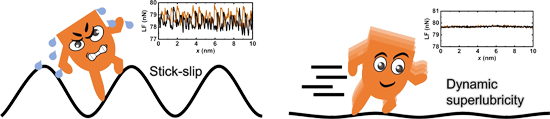
- phononic friction model, reveal that torsional vibrations reduce energy barriers and promote transitions between atomic sites. This strategy provides a universal and reversible approach for active friction control at the nanoscale. Keywords: atomic force microscopy (AFM); dynamic structural superlubricity
- experimental setup for friction measurements is illustrated in Figure 1a. The experiments were performed at room temperature using a custom-built beam-deflection atomic force microscope (AFM) system under ultrahigh vacuum (UHV). A MoS2 flake on a Au(111) surface was scanned by an AFM tip under UHV conditions


Supramolecular one-dimensional conducting nanofibers from a C3-symmetric tetrathiafulvalene derivative
Beilstein J. Nanotechnol. 2026, 17, 872–881, doi:10.3762/bjnano.17.63
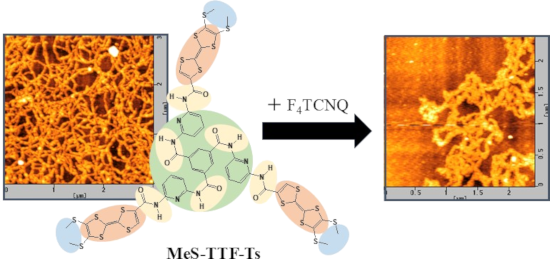
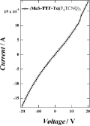
- structures with morphologies strongly dependent on the solvent conditions. AFM and SEM observations revealed that distinct supramolecular structures were formed depending on the solvent and substrate used, suggesting that molecular interactions and assembly processes play important roles in determining the
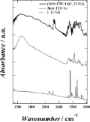
- , 1445, 1292, 1236, 773, 699. The FTIR spectrum of MeS-TTF-Ts is shown in Figure S1 in Supporting Information File 1. MS (APCI) m/z: [M + H]+ calcd for C51H39N9O6S18, 1449.80; found, 1449.8082; Anal. calcd for C51H39N9O6S18: C, 42.21; H, 2.71; N, 8.69; found: C, 42.12; H, 2.66; N, 8.63. Measurements AFM
- measurements The structures formed on mica substrates were observed using an atomic force microscopy (AFM) system (Bruker Multi Mode 8). Measurements were performed in non-contact mode using a silicon cantilever with a spring constant of approximately 0.8 N·m−1. Optical spectra UV–vis absorption spectra were


He+ FIBID-fabricated 3D AFM tip architectures: an exploratory study of hollow pillars, helices, and spirals
Beilstein J. Nanotechnol. 2026, 17, 863–871, doi:10.3762/bjnano.17.62
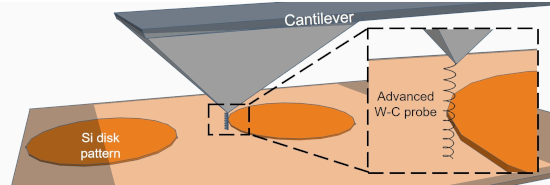
- , Germany 10.3762/bjnano.17.62 Abstract Atomic force microscopy (AFM) relies strongly on tip geometry and mechanical integrity for stable and reproducible surface measurements. Here, we present an exploratory study of tungsten–carbon (W–C) AFM tips with complex three-dimensional (3D) architectures
- fabricated by helium ion beam-induced deposition (He+ FIBID) directly onto commercial AFM cantilevers bearing a pre-existing tip. Hollow nanopillars, nanohelices, and nanospirals were tested on a calibrated reference sample with a nominal step height of 20 nm using two AFM instruments under comparable
- examined by electron microscopy before and after AFM use. The main degradation modes were geometric deformation of the apex or shaft and mechanical fracture, most frequently at the tip–cantilever interface. While a few structures remained operational through repeated measurement cycles, others failed


Sustainable fabrication of 2D-based devices through reuse of substrates with microfabricated electrodes
Beilstein J. Nanotechnol. 2026, 17, 818–827, doi:10.3762/bjnano.17.58
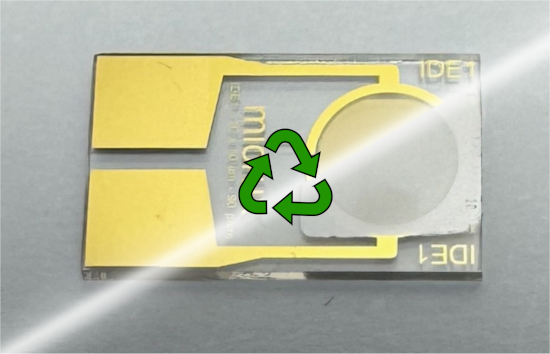
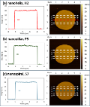
- conditions using a commercial AFM system (NanoObserver, CSI Instruments). Topographic images were acquired in dynamic mode using the oscillation amplitude as the feedback signal. Surface-potential maps were recorded in single-pass KPFM mode (HD-KFM) using an Au-coated probe (PPP-FMAu, Nanosensors), with an


Substrate-dependent pore formation in molybdenum disulfide monolayers under ion irradiation
Beilstein J. Nanotechnol. 2026, 17, 769–780, doi:10.3762/bjnano.17.54
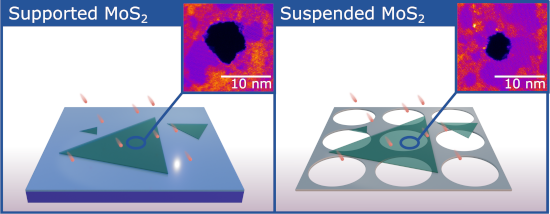
- , high-resolution scanning transmission electron microscopy (STEM) generally requires freestanding membranes, while atomic-resolution atomic force microscopy (AFM) and scanning tunneling microscopy (STM) demand exceptionally clean surfaces; also, substrate effects can further complicate interpretation
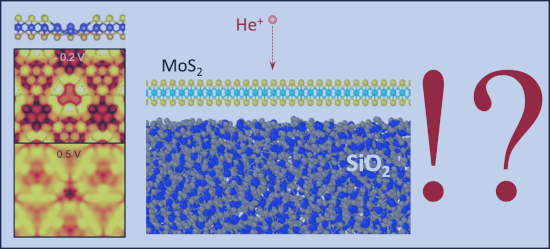
- on SiO2/Si with suspended MoS2 reported in one of our previous works [25]. Using the same ion species and kinetic energies as in that work, we vary the charge state from q = 30+ up to q = 40+, corresponding to potential energies of approximately 15–40 keV. In contrast to earlier AFM studies on


Tailoring Ag–Pt nanoalloys through solid-state dewetting: structural and optical insights
Beilstein J. Nanotechnol. 2026, 17, 748–759, doi:10.3762/bjnano.17.52

- plasmonic properties. Results and Discussion As-deposited thin Ag–Pt bilayers exhibit a granular morphology, as evidenced by atomic force microscopy (AFM) measurements shown in Figure 1. This granular character leads to instability of the layers at higher temperatures, causing cracking of the continuous
- a region with a lower film thickness at grain boundaries, which is well visible on the linear AFM profile in Figure 1 [45][46][47]. Figure 2a presents an exemplary scanning electron microscopy (SEM) image of nanostructures formed as a result of annealing of a silver–platinum bilayer with a thickness
- temperature of 650 °C to induce the formation of nanostructures. Both deposition and annealing parameters were selected based on our prior research on metallic nanostructures [23][24][25][26][51][61][73]. The microstructure of as-deposited Ag–Pt bilayers was determined by means of AFM with the use of NT-MDT




afspm: A framework for manufacturer-agnostic automation in scanning probe microscopy
Beilstein J. Nanotechnol. 2026, 17, 653–667, doi:10.3762/bjnano.17.45
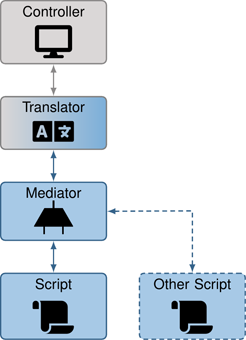
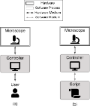
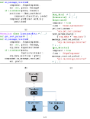
- (AM-AFM) or frequency-modulated atomic force microscopy (FM-AFM)) and spectroscopic mode (e.g., IV curves or force spectroscopy), which we believe is justifiable as part of the experimental setup. This base set of operations gives the user a reasonable degree of flexibility: One could design an image
- SciFiReaders was used [21]. Running an automated experiment In order to validate the functioning of our drift correction logic, we ran experiments with it on the Asylum Research MFP-3D-BIO AFM system, scanning a CD stamper as a test sample using a MikroMasch HQ:NSC15/Al AFM probe (40 N/m force constant, 325
- kHz resonant frequency). These experiments were run under ambient conditions in an AM-AFM mode. Prior to engaging with the sample, we performed an auto-tuning operation to optimize the cantilever frequency and manually optimized the z-height feedback parameters for reasonable imaging quality. In the




Probing tribological evolution in atomically thin MoS2 at different scales
Beilstein J. Nanotechnol. 2026, 17, 586–597, doi:10.3762/bjnano.17.40
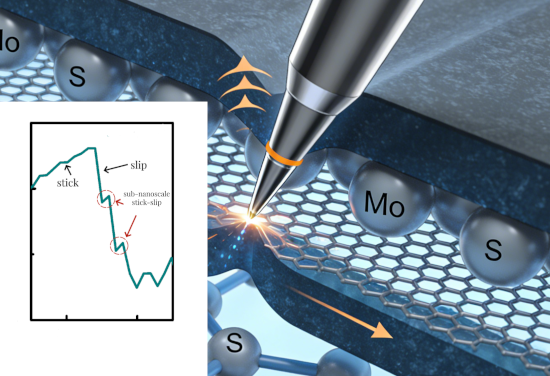
- (MoS2) under controlled loads using a calibrated atomic force microscope (AFM), with a focus on quantifying the strengthening effect and sub-nanoscale stick–slip motion. Our results reveal that the nanoscale strengthening effect intensifies with increasing applied load but weakens as the number of MoS2
- puckering effect [17][18]. However, these studies focused on nanoscale phenomena; the sub-nanoscale origins of stick–slip motion remains unaddressed. Here, we use a calibrated AFM to quantitatively study the sub-nanoscale friction behaviors of a single layer (1L) and four layers (4L) of MoS2 under different
- sequentially in acetone, ethanol, and deionized water via ultrasonic cleaning and then dried with high-purity nitrogen. Sample characterization MoS2 layer thickness was determined via AFM (MFP-3D, Asylum Research) and Raman spectroscopy (inVia Reflex, Renishaw). AFM topographic images were acquired in tapping


Defects and defect-mediated engineering of two-dimensional materials: challenges and open questions
Beilstein J. Nanotechnol. 2026, 17, 454–488, doi:10.3762/bjnano.17.31
- of defects, for example, TEM [80], STM [81], or atomic force microscopy (AFM) [82]; but, normally, only a small part of the sample can be probed [83][84][85]. Moreover, these techniques can create defects themselves, for example, when the energy of the electron beam exceeds the displacement threshold
- in 2D materials also poses challenges for interpreting the data. Overlapping signals from different defects, such as vacancies, interstitials, and substitutional defects, can complicate analysis. To address this, combining XPS with complementary techniques, such as Raman spectroscopy, AFM, and DFT





Calculation of the dynamic stiffness of a cantilever under torsional oscillation
Beilstein J. Nanotechnol. 2026, 17, 303–308, doi:10.3762/bjnano.17.21
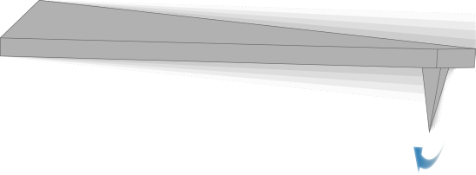
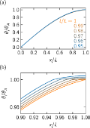
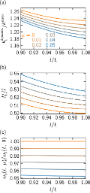
- detailed mechanisms remain not fully understood [5]. Non-contact atomic force microscopy (nc-AFM) is widely employed to investigate non-contact friction through its dissipation channel. Common techniques include pendulum AFM, bimodal AFM, and quartz tuning fork AFM [6][7][8]. Pendulum AFM uses cantilevers
- with small stiffness and provides exceptional sensitivity to conservative and dissipative forces owing to the small stiffness [2][9][10][11]. Non-contact friction measurements with pendulum AFM on a Nb film across the superconducting transition indicate that friction is electronic in the metallic state
- , whereas phononic dissipation dominates in the superconducting state [10]. The cantilever in bimodal AFM oscillates in two modes, typically, the first flexural and first torsional modes [2]. The flexural mode is used for vertical tip-position control via its frequency shift, and the torsional mode detects

Advancing nanolithography: a comprehensive review of materials for local anodic oxidation with AFM
Beilstein J. Nanotechnol. 2026, 17, 275–291, doi:10.3762/bjnano.17.19
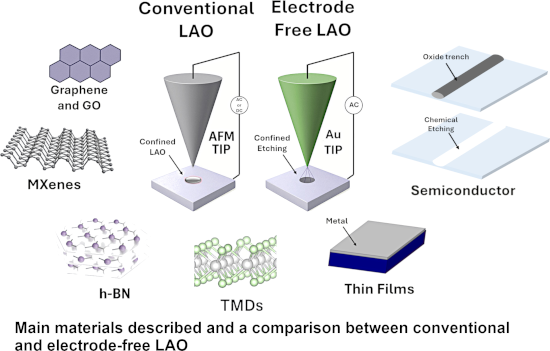
- fabrication techniques, with scanning probe lithography (SPL) [1] gaining prominence as a versatile method for high-resolution patterning, particularly in the early 2000s. SPL encompasses multiple methods, including nanomechanical processing [2], AFM bias-induced lithography [3], dip-pen nanolithography [4
- maskless patterning under ambient conditions with sub-10 nm lateral resolution, enabling direct oxide formation or material removal with nanoscale precision, capabilities not readily achievable with conventional lithographic approaches. AFM-based LAO originated from earlier STM local oxidation studies [10
- ][11][12], which first demonstrated tip-induced electrochemical modification of semiconductor surfaces and even early device structures [13]. These STM works established the fundamental mechanism later adopted and expanded by AFM-based approaches. LAO utilizes an AFM to generate localized oxidation


Development and in vitro evaluation of liposomes and immunoliposomes containing 5-fluorouracil and R-phycoerythrin as a potential phototheranostic system for colorectal cancer
Beilstein J. Nanotechnol. 2026, 17, 97–121, doi:10.3762/bjnano.17.7
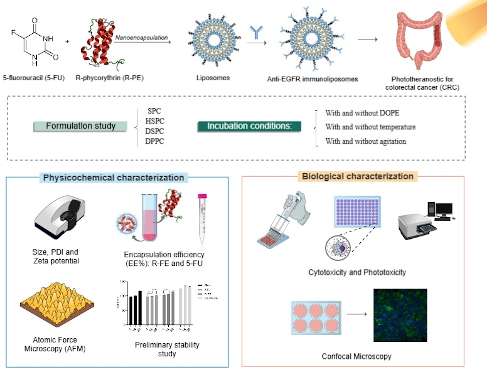
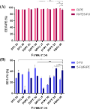
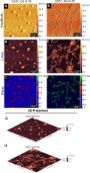
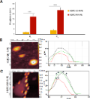
- ± 1.81 nm), negative zeta potential (−14.8 ± 0.81 mV) and antibody conjugation efficiency of 34.4%. Topographical AFM analysis showed that HSPC-IM-R-PE presented significantly higher surface roughness and viscoelastic contrast, indicating successful antibody anchoring. For cell viability in the HCT-116
- force microscopy The topographical characterization of liposomal formulations was performed by using atomic force microscopy (AFM) with a Nanosurf® FlexAFM system. The samples analyzed included liposomes and immunoliposomes containing R-PE. Briefly, to avoid vesicle deformation or disruption, liposomes
- from [e.g., n = 507] HSPC-50-R-PE control liposomes and [e.g., n = 788] HSPC-IM-R-PE immunoliposomes, which were obtained from six and eight independent AFM images, respectively. 2.4 Fourier transform infrared spectroscopy Drug–nanoparticle interactions were studied by subjecting the previously



Quantitative estimation of nanoparticle/substrate adhesion by atomic force microscopy
Beilstein J. Nanotechnol. 2026, 17, 1–14, doi:10.3762/bjnano.17.1

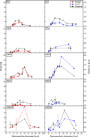
- order to develop strategies for improved NP functionality and performance, it is necessary to measure and to quantify their adhesion to the corresponding substrates. With the available highly sensitive force sensors, atomic force microscopy (AFM) is well suited for determining the adhesion between
- individual NPs and the supporting substrate. Applying controlled forces to manipulate NPs enables precise quantification of adhesion forces [14]. Significant progress in AFM manipulating nanometer-scale objects has been achieved, particularly in the last two decades, enhancing its capabilities and accuracy
- [15][16][17]. However, achieving consistently accurate manipulation of NPs has inherent limitations due to limited knowledge of the exact geometry of the AFM tip as well as the complex interactions involving surface contact area and interfacial friction between the AFM tip, NPs, and the substrate [18



Chiral plasmonic nanostructures fabricated with circularly polarized light
Beilstein J. Nanotechnol. 2025, 16, 2245–2264, doi:10.3762/bjnano.16.154
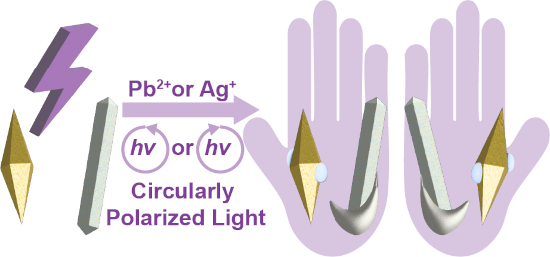
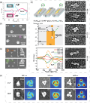
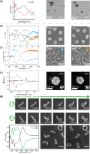
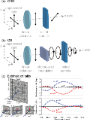
- can lead to a significant displacement of the polymer backbone, with the degree of displacement being dependent on the strength of the electric field under CPL. Chiral topographic changes due to the polymer displacement were observed using atomic force microscopy (AFM). Similar observations were made




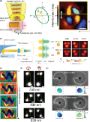

Ultrathin water layers on mannosylated gold nanoparticles
Beilstein J. Nanotechnol. 2025, 16, 2183–2198, doi:10.3762/bjnano.16.151
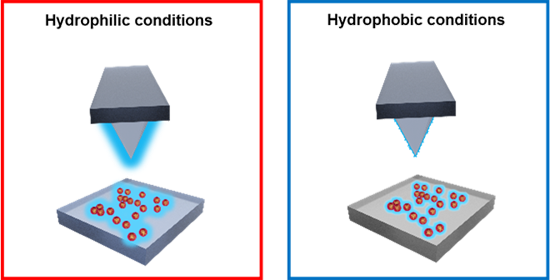
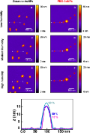
- light scattering, and infrared spectroscopy. We probed particles adsorbed on hydrophilic and hydrophobic surfaces with atomic force microscopy (AFM) and vibrational sum frequency generation (VSFG) spectroscopy, both operated under variable air humidity. For AFM, we additionally tested hydrophilic and
- hydrophobic tips. While VSFG indicated preferential hydration of the dimannoside and proved conformational changes in the organic ligands, AFM provided sub-nanometer changes in particle topography due to water adsorption. In general, the dimannoside nanoparticles condense ultrathin water layers upon humidity
- transmission of airborne viruses, such as influenza. Keywords: AFM; humidity; hydrophilicity; hydrophobicity; nanoparticles; sum frequency generation spectroscopy; viruses; water; wetting; Introduction Gold nanoparticles (AuNPs) have been a staple in biomedical and biophysical research [1][2] for almost a



Calibration of piezo actuators and systems by dynamic interferometry
Beilstein J. Nanotechnol. 2025, 16, 2086–2091, doi:10.3762/bjnano.16.143
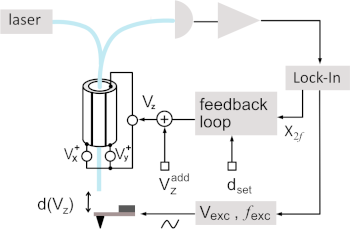
- oscillation amplitude calibration under conditions of various amounts of tube piezo contraction and extension. The merits and limits of accuracy for such type of calibration are discussed. Keywords: cantilever excitation; fiber interferometer; NC-AFM; piezo calibration; non-contact atomic force microscopy
- ; Introduction Interferometric displacement detection stands as a cornerstone in high-precision techniques employed in cantilever-based atomic force microscopy (AFM), since its early days [1][2][3][4][5][6]. This method of cantilever displacement detection is specifically well suited for non-contact atomic force
- microscopy (NC-AFM) operation in an ultrahigh-vacuum (UHV) environment at low temperature and has been developed tremendously over the last three decades [7][8][9][10][11][12]. In frequency-modulated NC-AFM, the cantilever is kept at oscillation with constant amplitude, yielding an interferometric signal


Multifrequency AFM integrating PeakForce tapping and higher eigenmodes for heterogeneous surface characterization
Beilstein J. Nanotechnol. 2025, 16, 2077–2085, doi:10.3762/bjnano.16.142
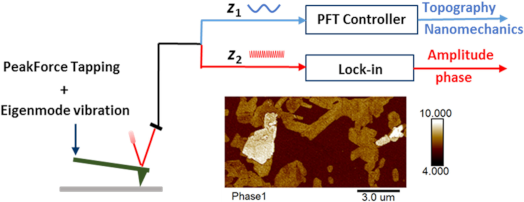
- Yanping Wei Jiafeng Shen Yirong Yao Xuke Li Ming Li Peiling Ke Public Technology Center, Ningbo Institute of Materials Technology and Engineering, Chinese Academy of Sciences, Ningbo 315201, China 10.3762/bjnano.16.142 Abstract This study introduces a multifrequency atomic force microscopy (AFM
- ) technique that synergistically integrates PeakForce tapping mode with higher eigenmode vibrations to achieve simultaneous high-resolution topographical imaging and to access additional contrast channels for distinguishing material regions or compositions. Unlike conventional multimodal AFM, our method
- . Keywords: atomic force microscopy (AFM); high eigenmodes; multifrequency AFM; nanoscale material analysis; surface characterization; Introduction Atomic force microscopy (AFM) has become an indispensable tool for characterizing the morphology and surface properties of materials at the micro- and the


Molecular and mechanical insights into gecko seta adhesion: multiscale simulations combining molecular dynamics and the finite element method
Beilstein J. Nanotechnol. 2025, 16, 2055–2076, doi:10.3762/bjnano.16.141
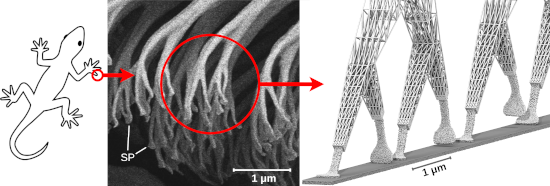
- microscopy (AFM) experiments. Our investigation into how gecko keratin interacts with hydrophilic and hydrophobic substrates [12] supported the importance of the water-mediating effect [10] and elucidated mechanistic differences depending on surface chemistry. A particle-based mesoscale model of a single
- gecko spatula was then used to bridge molecular interactions and macroscopic adhesion behavior. This mesoscale model accurately simulated spatula detachment from various substrates and matched experimental pull-off forces observed in AFM studies and pull-off pressures from united atom simulations of
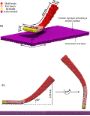
- protocol We aimed to replicate the protocol used in AFM experiments on gecko spatulae and setae as reported in [23][57]: (1) Initially, all spatulae were positioned at a minimum distance of 13 nm above the substrate, which is higher than the non-bonded interaction cutoff of 12 nm. (2) In the preloading






Mechanical property measurements enabled by short-term Fourier-transform of atomic force microscopy thermal deflection analysis
Beilstein J. Nanotechnol. 2025, 16, 1952–1962, doi:10.3762/bjnano.16.136
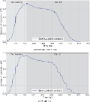
- Contact resonance atomic force microscopy (CR-AFM) has been used in many studies to characterize variations in the elastic and viscoelastic constants of materials along a heterogeneous surface. In almost all experimental work, the quantitative modulus of the surface is calculated in reference to a known
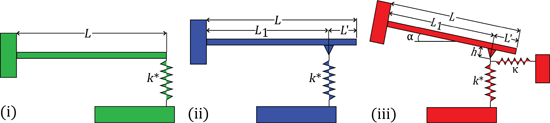
- stiffness demonstrate that existing models cannot capture the physics of this problem. While concrete solutions to use analytical models to interpret CR-AFM data have not been found, a possible solution may include revisiting the analytical model to capture a potentially more complex system than the current
- ); mechanical property measurements; surface science; Introduction Atomic force microscopy (AFM) has become an indispensable tool for imaging the surface topography on a variety of surfaces [1]. Since the invention of the AFM [2], several other modes of AFM have been developed, including friction force




Evaluating metal-organic precursors for focused ion beam-induced deposition through solid-layer decomposition analysis
Beilstein J. Nanotechnol. 2025, 16, 1942–1951, doi:10.3762/bjnano.16.135
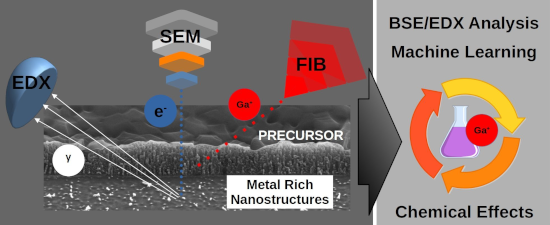
- the fabrication or modification of cantilevers in AFM and scanning optical near-field microscopy, and as plasmonic materials [15][16][17][18][19]. FEBID/FIBID techniques combine the advantages of direct-write lithographic processes, for example, high spatial resolution, site-specificity, no need for


Low-temperature AFM with a microwave cavity optomechanical transducer
Beilstein J. Nanotechnol. 2025, 16, 1873–1882, doi:10.3762/bjnano.16.130
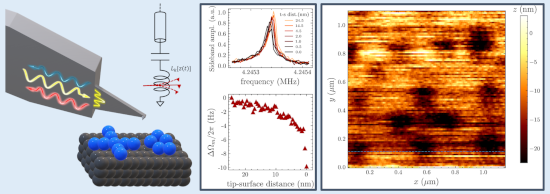
- /bjnano.16.130 Abstract We demonstrate atomic force microscopy (AFM) imaging with a microcantilever force transducer where an integrated superconducting microwave resonant circuit detects cantilever deflection using the principles of cavity optomechanics. We discuss the detector responsivity and added
- force-sensor design is a significant improvement over piezoelectric force sensors commonly used in low-temperature AFM. We discuss the potential for further improvement of the sensor design to achieve optimal detection at the standard quantum limit. We demonstrate AFM operation with surface-tracking
- fulfills the specific requirements of the application. The latter is indeed the case for force sensing in atomic force microscopy (AFM). Force transduction at maximum sensitivity requires detecting the position of a “test mass”, while minimizing the added noise introduced by the detection itself [14][15


Self-assembly and adhesive properties of Pollicipes pollicipes barnacle cement protein cp19k: influence of pH and ionic strength
Beilstein J. Nanotechnol. 2025, 16, 1863–1872, doi:10.3762/bjnano.16.129
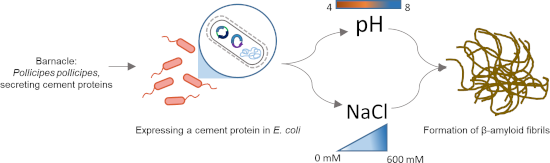
- observed before and after the pH switch, and no observable difference in adhesion was noted, suggesting that cp19k fibrils remain stable and retain their adhesion ability after the pH switch. To further correlate these observations with the natural life cycle of barnacle adhesion, more detailed AFM- or


Electrical, photocatalytic, and sensory properties of graphene oxide and polyimide implanted with low- and medium-energy silver ions
Beilstein J. Nanotechnol. 2025, 16, 1794–1811, doi:10.3762/bjnano.16.123
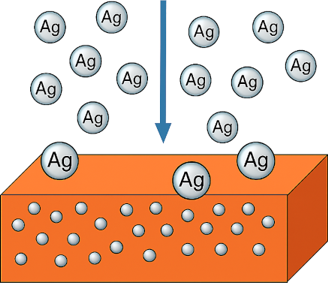
- amorphization of the material and probably to the carbonization of the polyimide. Surface morphology studied by AFM Changes in the surface morphology of PI implanted with 20 keV and 1.5 MeV Ag ions at different fluences were examined by atomic force microscopy (AFM). The basic parameters arithmetic average
- reduction in roughness is observable at any ion fluence relative to the reference condition. The lowest roughness in this instance was achieved with an ion fluence of 3.75 × 1012 cm−2. One possible explanation for the change in surface roughness measured by AFM may be surface sputtering. When there is
- from the AFM readings. Implantation of 20 keV Ag ions showed a significant increase in roughness compared to implantation with 1.5 MeV Ag ions. The degradation rate constant was also increased in the case of PI implantation (Figure 11), but the increase is not as significant as in the case of GO. The


Prospects of nanotechnology and natural products for cancer and immunotherapy
Beilstein J. Nanotechnol. 2025, 16, 1644–1667, doi:10.3762/bjnano.16.116

- aptamer, sorafenib, and ursolic acid as an API at 4 mg·mL−1 in methanol. Physicochemical tests showed that the nanoparticles have a spherical shape, confirmed by atomic force microscopy (AFM), and are stable in ultrapure water and Dulbecco’s modified eagle medium (DMEM) with 10% FBS. Procedures to


Venom-loaded cationic-functionalized poly(lactic acid) nanoparticles for serum production against Tityus serrulatus scorpion
Beilstein J. Nanotechnol. 2025, 16, 1633–1643, doi:10.3762/bjnano.16.115
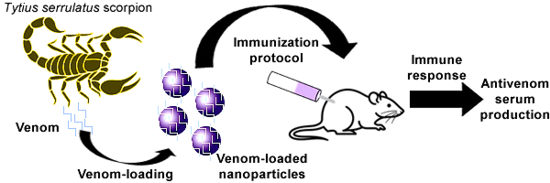
- corroborates the high encapsulation efficiency obtained by the BCA assay. Field emission gun scanning electron microscopy and atomic force microscopy analyses Field emission gun scanning electron microscopy (FEGSEM) and atomic force microscopy (AFM) analyses were realized to access shape and surface features
- cationic nanoparticles prepared by ionic gelation with 100% encapsulation efficiency [1][2]. Additionally, PEI with high branching density has been shown to enhance complexation and transfection efficiency [23]. The morphology obtained by AFM and FEGSEM showed particles with a smooth surface, spherical
- data expressed as mean ± standard deviation. The shape and surface of nanoparticles were assessed by AFM (SPM-9700 Shimadzu, Tokyo, Japan) and FEGSEM (Zeiss Microscopy, Auriga, Jena, Germany) images. For the AFM analyzes, a drop of dispersion was placed on a clean microscope slide and dried under a





