Search results
Search for "MOFs" in Full Text gives 51 result(s) in Beilstein Journal of Nanotechnology.
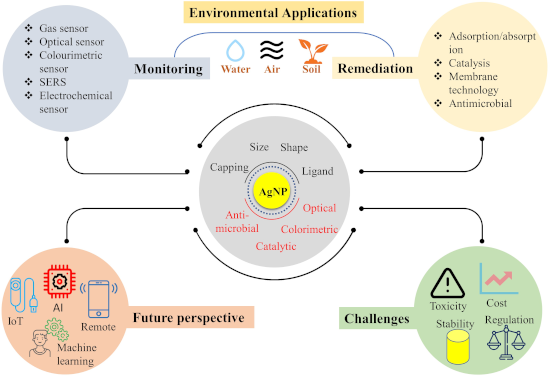
Environmental applications of silver nanoparticles: state-of-the-art review and emerging trends
Beilstein J. Nanotechnol. 2026, 17, 697–736, doi:10.3762/bjnano.17.49


Electrochemical determination of ciprofloxacin using a MIL-101/reduced graphene oxide-modified electrode
Beilstein J. Nanotechnol. 2026, 17, 541–554, doi:10.3762/bjnano.17.35
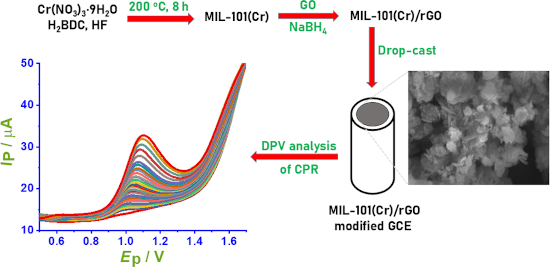
- potential for miniaturization and field use. The performance of electrochemical sensors heavily relies on the electrode’s surface properties. Recently, metal–organic frameworks (MOFs) have attracted significant interest in electrochemical sensing due to their highly ordered porous structures, very high
- direct use in electrochemical sensing. To address this limitation, hybridizing MOFs with conductive carbon materials has been extensively studied. Reduced graphene oxide (rGO) is especially appealing due to its high electrical conductivity [12], large specific surface area, mechanical stability [13], and


Biomimetic nanoparticles in cancer photodynamic therapy: a review of targeted delivery systems and therapeutic outcomes
Beilstein J. Nanotechnol. 2026, 17, 396–422, doi:10.3762/bjnano.17.27

- isolation procedures, heterogeneity, scalability limitations, and potential loss of membrane protein activity during processing [122]. CCM-coated platforms involve cloaking synthetic nanoparticle cores (e.g., PLGA, silica, and metal-organic frameworks (MOFs)) with membranes derived from tumor cells [123
- ) [175][176][177] or MOFs [165][178][179], and a stabilizing matrix often composed of polymers, lipids, or proteins like human serum albumin (HSA) [177]. Figure 6 schematically illustrates examples of these key strategies for mitigating hypoxia in tumor tissues using BNPs. Table 2 presents the main


Current status of using adsorbent nanomaterials for removing microplastics from water supply systems: a mini review
Beilstein J. Nanotechnol. 2025, 16, 1837–1850, doi:10.3762/bjnano.16.127
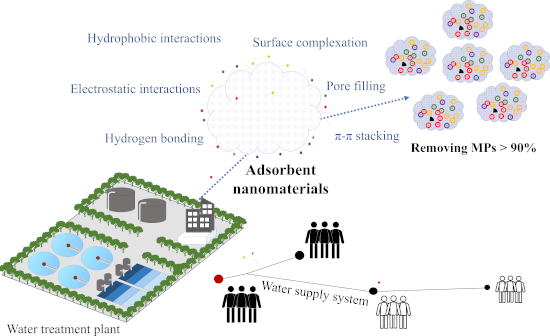
- materials provide a foundation for developing sustainable, effective solutions to mitigate MPs pollution in the water supply system. Keywords: adsorbent interactions; adsorbent nanomaterials; carbon-based adsorbents; metal-organic frameworks (MOFs); microplastics (MPs); Introduction Plastic materials have
- methods Adsorbent nanomaterials have recently shown great potential for removing MPs. They can be classified into four main groups, including carbon-based adsorbents, metal-organic frameworks (MOFs), magnetic nanomaterials, and aerogels and sponge-based adsorbents [49]. These materials are fabricated and
- , and the main mechanism involved electrostatic attractions between the positive charge of MPs and negatively charge of GAC [58]. Metal-organic frameworks. MOFs are highly ordered crystalline materials characterized by high porosity and large surface area (Figure 3). Their pore size, volume, and


Nanotechnology-based approaches for the removal of microplastics from wastewater: a comprehensive review
Beilstein J. Nanotechnol. 2025, 16, 1607–1632, doi:10.3762/bjnano.16.114
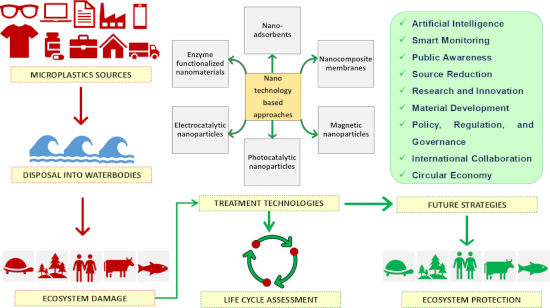
- frameworks (MOFs) are a complex and relatively new category of highly porous nanomaterials that have gained attention over the past two decades, showing broad potential in wastewater treatment. These crystalline materials are formed through coordination bonds that connect clusters or metal ions with
- multidentate or bidentate organic ligands. Sometimes MOFs are referred to as porous coordination polymers. MOFs are created by combining clusters or metallic ions with inorganic or organic ligands. The metallic component consists of metal ions or clusters with organic or inorganic ligands like sulfonate
- , phosphonate, carboxylates, and heterocyclic compounds [114]. MOFs possess a combination of properties including as low density, large porous structure, and high adsorption capacity, which makes them suitable for wastewater treatment [115]. In addition, the strong coordination bonding within their framework



Laser processing in liquids: insights into nanocolloid generation and thin film integration for energy, photonic, and sensing applications
Beilstein J. Nanotechnol. 2025, 16, 1428–1498, doi:10.3762/bjnano.16.104






Soft materials nanoarchitectonics: liquid crystals, polymers, gels, biomaterials, and others
Beilstein J. Nanotechnol. 2025, 16, 1025–1067, doi:10.3762/bjnano.16.77
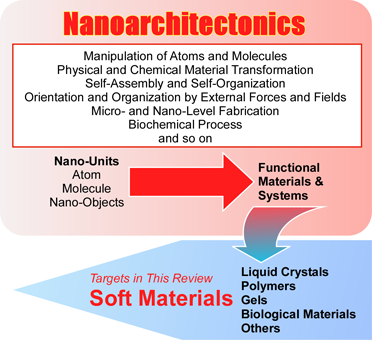
- . Technologies that facilitate the conversion of these materials, not limited to typical soft materials, into more advanced assemblies include self-assembly via supramolecular chemistry [60][61][62][63][64], the creation of metal-organic frameworks (MOFs) through coordination chemistry [65][66][67][68][69], and







Nanomaterials in targeting amyloid-β oligomers: current advances and future directions for Alzheimer's disease diagnosis and therapy
Beilstein J. Nanotechnol. 2025, 16, 561–580, doi:10.3762/bjnano.16.44
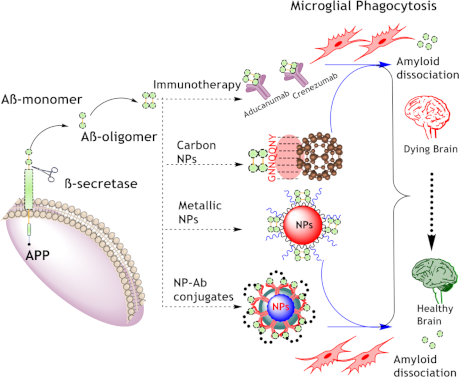
- to the development of diagnostic strategies for NDs. Zhou and colleagues introduced an advanced electrochemical aptasensor that utilizes metal-organic frameworks (MOFs) as signal probes for detecting AβOs. They engineered an electrode modified with gold nanoflowers to capture targets, employing
- aptamer-tagged gold nanoparticle/Cu-MOFs conjugates to produce sensitive signals. This resulted in a highly effective sandwich sensor capable of detecting AβOs in a linear range from 1 nM to 2 μM, demonstrating a correlation coefficient of 0.996 and a low detection limit of 0.45 nM [75]. Phan and team


Emerging strategies in the sustainable removal of antibiotics using semiconductor-based photocatalysts
Beilstein J. Nanotechnol. 2025, 16, 264–285, doi:10.3762/bjnano.16.21
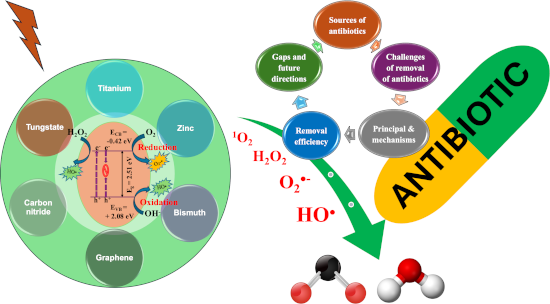
- , including biochar, metal-organic frameworks (MOFs), functionalized mesoporous silica, porous organic polymers, zeolite, and derivatives of graphene. These substances act as a support for metal oxides and immobilize the catalyst, increase the catalyst surface area, and improve the chemical stability



A review of metal-organic frameworks and polymers in mixed matrix membranes for CO2 capture
Beilstein J. Nanotechnol. 2025, 16, 155–186, doi:10.3762/bjnano.16.14
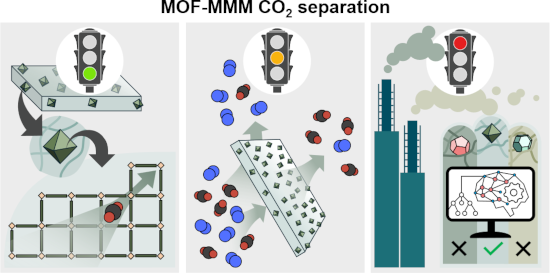
- frameworks (MOFs) have gained recognition as MMM fillers for CO2 capture. Here, a review of the current state, recent advancements, and challenges in the fabrication and engineering of MMMs with MOFs for selective CO2 capture is proposed. Key considerations and promising research directions to fully exploit
- , metal-organic frameworks (MOFs) have received a growing focus in the past decade [5][12][23][24][25]. The MOFs play the role of versatile and porous dispersive fillers, providing a multitude of opportunities to fabricate highly efficient MOF-derived MMMs tailored for CO2 separation. The present review
- (1) mechanisms of CO2 sorption in MOFs, (2) considerations related to the integration of MOFs in MMMs, (3) CO2 capture performance of MOF-based MMMs, (4) advancements in MOF-based MMM materials design through machine learning, and (5) considerations for the implementation of MOF-based MMMs in large





Facile synthesis of size-tunable L-carnosine-capped silver nanoparticles and their role in metal ion sensing and catalytic degradation of p-nitrophenol
Beilstein J. Nanotechnol. 2024, 15, 1576–1592, doi:10.3762/bjnano.15.124
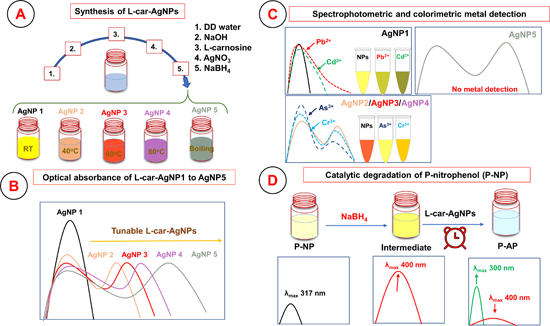
- 94.33 mg/g at a pH of 8.5 and 0.4 g/L adsorbent [16]. These studies confirmed that ʟ-carnosine adsorbed on metal surfaces has widespread environmental applications. However, magnetic nanoparticles or MOFs coated with ʟ-carnosine were applicable only for environmental remediation but were incapable of




Electrochemical nanostructured CuBTC/FeBTC MOF composite sensor for enrofloxacin detection
Beilstein J. Nanotechnol. 2024, 15, 1522–1535, doi:10.3762/bjnano.15.120
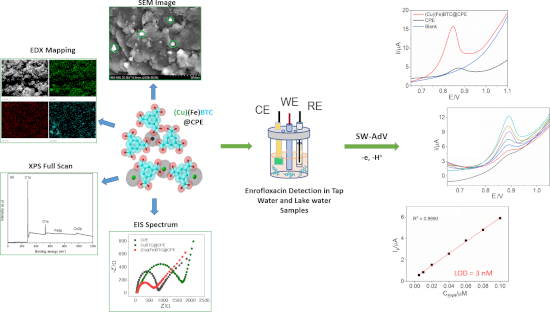
- /bjnano.15.120 Abstract A novel electrochemical sensor for the detection of enrofloxacin (ENR) in aqueous solutions has been developed using a carbon paste electrode modified with a mixture of metal-organic frameworks (MOFs) of CuBTC and FeBTC. These MOFs were successfully synthesized via a solvothermal
- volume of 0.544 cm3/g, and a capillary diameter of 1.50 nm. Additionally, energy-dispersive X-ray mapping demonstrated the uniform distribution of the two MOFs within the electrode composition. The synergistic effect of the electrocatalytic properties of CuBTC and the high conductivity of FeBTC
- efficacy in the detection of ENR with quick response, low cost, and simple handling; hence, these methods are promising to quantify ENR [15][16]. Noble metals and metal-organic frameworks (MOFs) are the most typical electrode materials to detect antibiotics [17][18]. MOFs emerged as the outstanding






Unveiling the potential of alginate-based nanomaterials in sensing technology and smart delivery applications
Beilstein J. Nanotechnol. 2024, 15, 1077–1104, doi:10.3762/bjnano.15.88
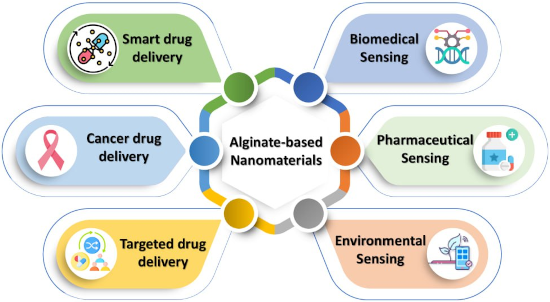
- aldehydes is widely awaited. Coating fluorescent alginate-modified surfactants (APGF and APOF) on ZIF-8 metal-organic frameworks (MOFs) resulted in the development of novel APGF@ZIF-8 and APOF@ZIF-8 sensing materials, which are porous fluorescent sensors (SBET up to 1519 m2/g). The developed sensors


Facile synthesis of Fe-based metal–organic frameworks from Fe2O3 nanoparticles and their application for CO2/N2 separation
Beilstein J. Nanotechnol. 2024, 15, 897–908, doi:10.3762/bjnano.15.74
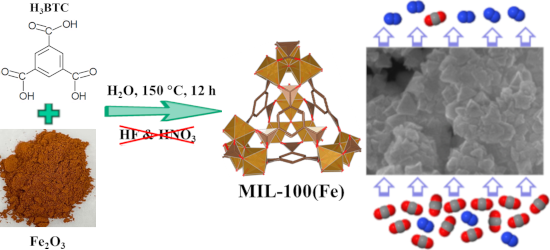
- -organic frameworks (MOFs) are well-ordered porous hybrid structures assembled from the fundamental components of metal ion clusters and organic linkers. MOFs are well known as multipurpose materials that serve a broad range of applications because of their unique construction variants, enormous surface
- areas, high thermal stability, changeable pore system sizes, and customizable chemical surfaces [1][2][3][4][5][6]. The family tree of MOFs holds giant lineages such as Zeolitic Imidazolate Framework (ZIF), University of Olso (UiO), Material of Institute Lavoisier (MIL), Dresden University of Technology
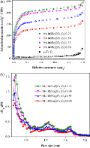
- . These findings have been compared with the CO2 uptake capacities of MIL-100(Fe)-based adsorbents created through different methods, as well as other MOFs and conventional materials, all of which are detailed in Table S2 (Supporting Information File 1). Isosteric enthalpy of CO2 adsorption over M-100Fe





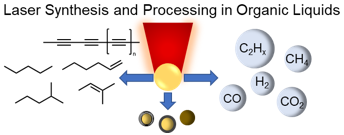
Laser synthesis of nanoparticles in organic solvents – products, reactions, and perspectives
Beilstein J. Nanotechnol. 2024, 15, 638–663, doi:10.3762/bjnano.15.54






Metal-organic framework-based nanomaterials for CO2 storage: A review
Beilstein J. Nanotechnol. 2023, 14, 964–970, doi:10.3762/bjnano.14.79
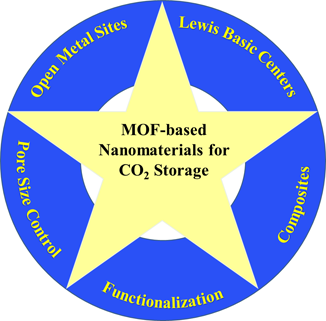
- -organic frameworks (MOFs) promising contenders for CO2 uptake. This review commences by discussing recent advancements in MOFs with diverse adsorption sites, encompassing open metal sites and Lewis basic centers. Next, diverse strategies aimed at enhancing CO2 adsorption capabilities are presented
- frameworks (MOFs) [11][12][13]. Notably, MOFs constructed from metal ions and organic linkers are expected to be alternative materials to the organic alcohol amines in CCS [14]. These nanosized materials posess unique properties such as ultrahigh surface area, tunable pore size, open metal sites (OMSs), and
- facile post-synthetic modifications, which allow for diverse strategies towards efficient adsorption and separation of gas molecules [15]. Among the nanosized MOFs, MOF-210 has demonstrated a remarkable ability to adsorb CO2 (54.5 mmol·g−1 at 50 bar, 298 K) owing to its large surface area of 6240 m2·g−1




Ni, Co, Zn, and Cu metal-organic framework-based nanomaterials for electrochemical reduction of CO2: A review
Beilstein J. Nanotechnol. 2023, 14, 904–911, doi:10.3762/bjnano.14.74

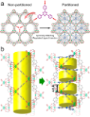
- of converting CO2 into valuable chemicals through electrochemical techniques has garnered significant attention. Metal-organic frameworks (MOFs) have occured as highly prospective materials for the reduction of CO2, owing to their exceptional attributes including extensive surface area, customizable
- architectures, pronounced porosity, abundant active sites, and well-distributed metallic nodes. This article commences by elucidating the mechanistic aspects of CO2 reduction, followed by a comprehensive exploration of diverse materials encompassing MOFs based on nickel, cobalt, zinc, and copper for efficient
- exhibited considerable variation depending on the elemental composition of pure metal catalysts [19]. Notably, Au, Ag, and Zn catalysts exhibit preferential CO generation, while Sn, In, and Pb catalysts prove effective in producing formate ions (HCOO−) [20]. Metal-organic frameworks (MOFs) are established


Metal-organic framework-based nanomaterials as opto-electrochemical sensors for the detection of antibiotics and hormones: A review
Beilstein J. Nanotechnol. 2023, 14, 631–673, doi:10.3762/bjnano.14.52
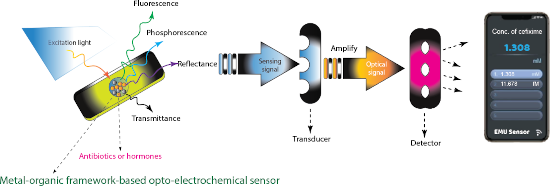
- that are time-consuming and require experienced professionals. Metal-organic frameworks (MOFs) with variable porosity, active functional sites, and fluorescence capacity are attractive materials for developing opto-electrochemical sensors. Herein, the insights into the capabilities of electrochemical
- , high-performance MOFs as commercially viable next-generation opto-electrochemical sensor materials for the detection and monitoring of diverse analytes are discussed. Keywords: antibiotics sensing; endocrinal disorders; fluorescent sensor; hormones sensors; luminescent sensor; MOF nanohybrids
- framework (MOF) opto-electrochemical nanosensors for the detection of hormones and antibiotics is still missing, though. This review focuses on a variety of sensing applications that use MOFs as well as the synergistic mechanisms of MOF hybrids or composites that improve sensing performance. It provides a


Cyclodextrins as eminent constituents in nanoarchitectonics for drug delivery systems
Beilstein J. Nanotechnol. 2023, 14, 218–232, doi:10.3762/bjnano.14.21
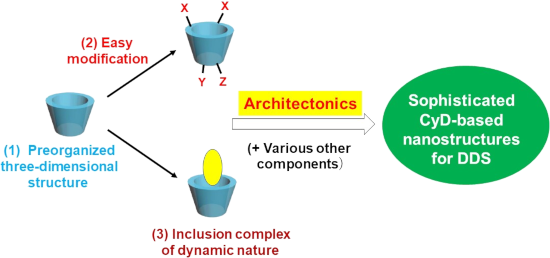
- ]. Metal complexes of CyD [93] and metal-organic frameworks (MOFs) containing CyDs [94][95][96] were also developed for DDSs. By combining a thermoresponsive poly(N-isopropylacrylamide) star polymer with a β-CyD core, adamantane-terminated poly(ethylene glycol) polymer, and α-CyD, a supramolecular hydrogel


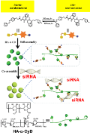


Design of surface nanostructures for chirality sensing based on quartz crystal microbalance
Beilstein J. Nanotechnol. 2022, 13, 1201–1219, doi:10.3762/bjnano.13.100
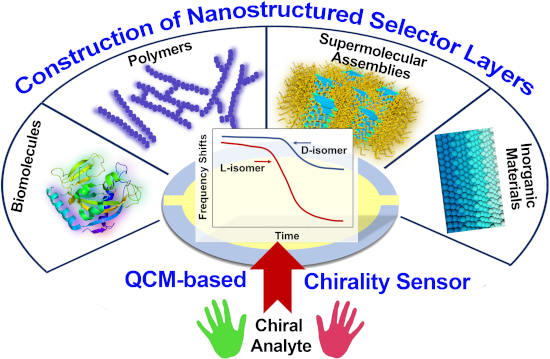
- volatile organic compounds (VOCs) with a remarkable degree of selectivity, which may promote the development of electronic nose systems for chiral analytes. Metal–organic frameworks. Metal–organic frameworks (MOFs) are unique porous crystalline materials fabricated by the self-assembly of metal ions or
- clusters and organic ligands via coordination bonds [89][90][91][92]. The variety of combinations between metal ions and organic linkers or structural motifs allows for tunable pore size/shape and adjustable surface functionality [93][94]. These structural characteristics make MOFs one of the most ideal
- sensing materials [95][96][97]. Due to the confinement effect from the porous space, chiral MOFs with suitable recognition sites may improve the stereoselectivity of chiral sensing [98]. Zhu et al. designed a homochiral MOF sensor based on [Zn(L)(2,2′-bipy)]·H2O, which could achieve the quantitative


Spindle-like MIL101(Fe) decorated with Bi2O3 nanoparticles for enhanced degradation of chlortetracycline under visible-light irradiation
Beilstein J. Nanotechnol. 2022, 13, 1038–1050, doi:10.3762/bjnano.13.91
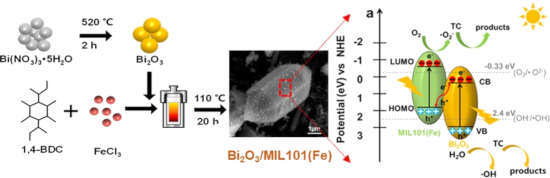
- China 10.3762/bjnano.13.91 Abstract Improving the photocatalytic performance of metal–organic frameworks (MOFs) is an important way to expand its potential applications. In this work, zero-dimensional (0D) Bi2O3 nanoparticles were anchored to the surface of tridimensional (3D) MIL101(Fe) by a facile
- efficient photocatalysts for CTC degradation. Metal–organic frameworks (MOFs) are a kind of micro- or mesoporous materials established by the self-assembly of organic linkers and metal-cluster or metal-ion nodes [19]. The MOF materials possess large surface areas, high pore volume, tunability, uniform
- cavities, and excellent thermal stability [20][21]. These advantages make it appalling to adsorption [22], gaseous capture/separation [23], sensing [24], and drug release applications [25]. Moreover, some MOFs can be excited under UV or visible light and exhibit light harvesting properties due to ligand


The role of sulfonate groups and hydrogen bonding in the proton conductivity of two coordination networks
Beilstein J. Nanotechnol. 2022, 13, 437–443, doi:10.3762/bjnano.13.36
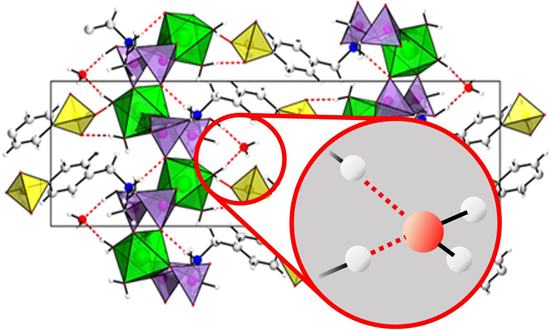
- coordination polymers (CPs), such as (porous) metal-organic frameworks (MOFs) and (non-porous, yet cross-linked) coordination networks [12], may offer alternatives to Nafion because of their structural controllability and high crystallinity [13]. The quest to develop new proton-conducting network materials is


Interfacial nanoarchitectonics for ZIF-8 membranes with enhanced gas separation
Beilstein J. Nanotechnol. 2022, 13, 313–324, doi:10.3762/bjnano.13.26
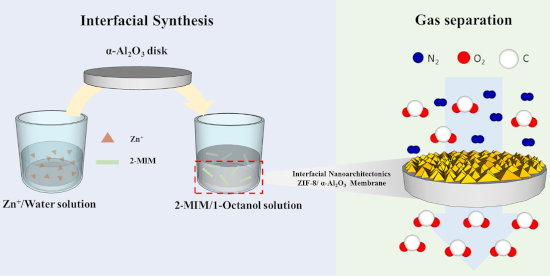
- rise to specific molecule-sized pores, which yield a high separation factor in the separation processes [9][10][11][12]. Wider application of zeolite membranes in separation is limited by the narrow pore-size range (0.2–2 nm) and the difficult chemical modification. Metal-organic frameworks (MOFs) are
- ]. Given these structural properties, MOFs are widely applied to gas storage [18], gas/liquid separation [18][19][20], energy storage [21][22][23], sensing [24], catalysis [25], electrochemistry [26], and bio-related fields [27]. Zeolitic imidazolate frameworks (ZIFs), a subclass of MOFs, comprise
- intercrystalline defect formation in MOFs can have either positive or negative effects on the separation performance. Point defects and extended defects may increase the number of adsorption sites in MOFs [35], while missing linkers may provide low-resistance diffusion pathways by increasing the porosity of the


Recent progress in magnetic applications for micro- and nanorobots
Beilstein J. Nanotechnol. 2021, 12, 744–755, doi:10.3762/bjnano.12.58
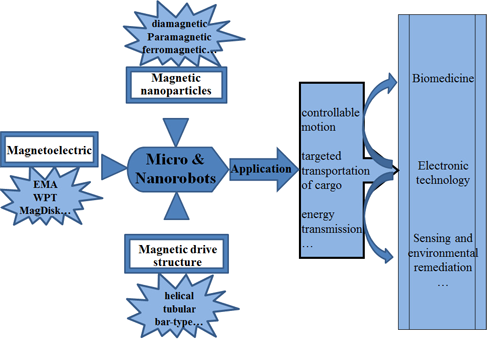
- ). Nayak [39] used metal-organic frameworks (MOFs) to adsorb heavy metals in water for water purification. MOFs have a very high specific surface area and modular structure, showing great advantages in the sustainable supply of clean drinking water. Later, Yu et al. [40] reported a method to disassemble
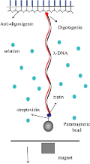
- constructed of MOFs proposed by Yang et al. [78] was powered by enzymes, in which MOF crystals use H2O2 as fuel to achieve bubble propulsion. A rotating magnetic field generated by the MagDisk was applied to drive the FMSM. The translational motion direction of the FMSM was determined by the yaw angle. The
- flagella to perform helical rotation. So far, people have been inspired to design many synthetic swimmers [80][81]. The use of an external magnetic field could guide magnetically driven MOFs. This locomotion mechanism was mainly limited to magnetic dragging and required a high magnetic field gradient [82


Self-standing heterostructured NiCx-NiFe-NC/biochar as a highly efficient cathode for lithium–oxygen batteries
Beilstein J. Nanotechnol. 2020, 11, 1809–1821, doi:10.3762/bjnano.11.163
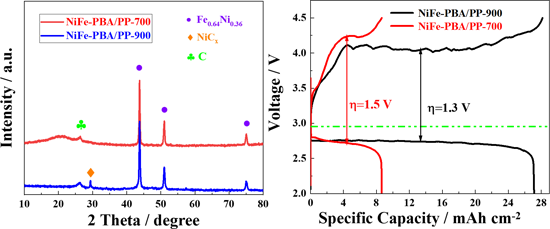
- series of 3D self-standing electrodes [40][41][42][43] by depositing MOFs on biomass followed by either a carbonization or a phosphating step. These electrodes can be directly used as cathodes in Li–O2 batteries. In this work, the NiFe-PBA/pomelo peel (PP) precursors were prepared in a similar way as in