Search results
Search for "Ni" in Full Text gives 384 result(s) in Beilstein Journal of Nanotechnology. Showing first 200.
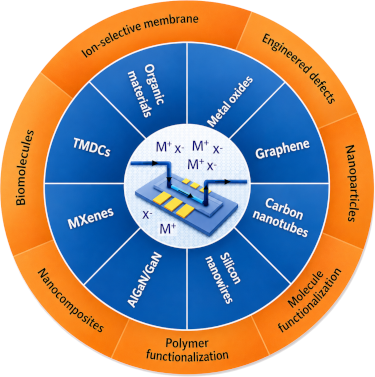
Materials challenges in solid-state sensors for continuous monitoring of ions in water
Beilstein J. Nanotechnol. 2026, 17, 935–973, doi:10.3762/bjnano.17.66



Tuning the electronic properties of defect-rich MoS2
Beilstein J. Nanotechnol. 2026, 17, 796–805, doi:10.3762/bjnano.17.56
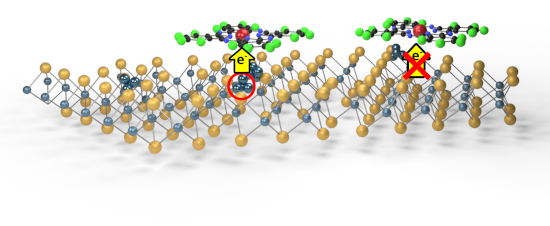
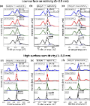
- strong local interactions accompanied by (integer) charge transfer [9]. A convenient side effect of this heterostructure is the strong interaction of the central Co atom of CoPcF16 with many metals such as Au, Ag, Cu, or Ni [11][12][13][14][15][16] such that it can be used as a probe for PES studies of
- formation of new states in the case of strong chemisorption [11]. The latter was observed for CoPc on reactive metal surfaces like Ag or Ni [11]. However, in the present case, such interactions exclusively manifest for the heavily sputtered Ar+ (4 min) sample. This behavior is more in line with the
- previously documented interactions of CoPcF16 with relatively inert metals including oxygen-terminated copper or graphene-covered Ni [11][33][34]. Based on these similarities, we suggest that charge transfer and/or electron redistribution at the Co atom in the vicinity of such defect-rich MoS2 is responsible


Tailoring Ag–Pt nanoalloys through solid-state dewetting: structural and optical insights
Beilstein J. Nanotechnol. 2026, 17, 748–759, doi:10.3762/bjnano.17.52

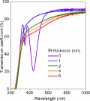
- macroscopic alloy systems (e.g., Ag–Pt nanoalloys [3][4] or Ni–Au [5][6]). Furthermore, they enable the formation of various crystalline arrangements and structures. There are various methods for synthesizing metallic nanoalloys, both on solid substrates and in solution [7][8][9]. An auspicious method seems




Environmental applications of silver nanoparticles: state-of-the-art review and emerging trends
Beilstein J. Nanotechnol. 2026, 17, 697–736, doi:10.3762/bjnano.17.49
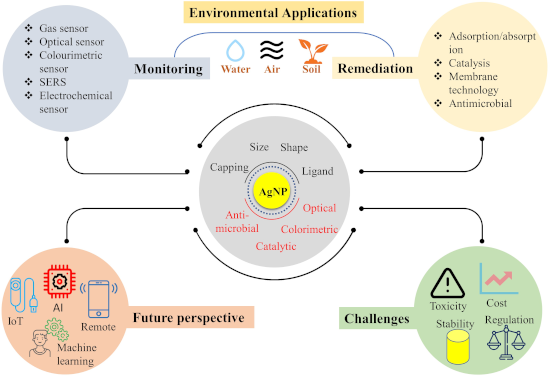
- with other products [119]. A study showed ciprofloxacin removal via photocatalysis using a nanocomposite (Ag/silica), achieving 98% degradation at pH 6.7, 180 min, and a 0.12 g of catalyst [120]. Anthracene and benzene photocatalytic degradation were achieved using Ag-, Cu-, and Ni-based nanocomposites


Laser–material interactions in liquids for the synthesis of nanomaterials: current status and perspectives
Beilstein J. Nanotechnol. 2026, 17, 571–575, doi:10.3762/bjnano.17.38

- [33]. Representative examples of this approach include the combination of pump–probe measurements with atomistic simulations to reveal spallation and phase explosion regimes during pulsed laser ablation of Fe–Ni alloys [39], the identification and experimental confirmation of two mechanisms of
Synthesis of Cu–Mo/TiO2 and Co–Mo/TiO2 photocatalysts for the efficient degradation of organic pollutants in water
Beilstein J. Nanotechnol. 2026, 17, 559–570, doi:10.3762/bjnano.17.37
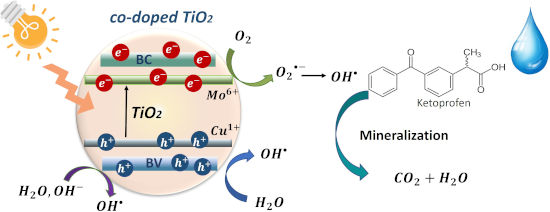
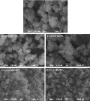
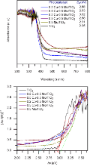
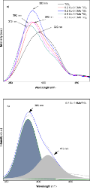
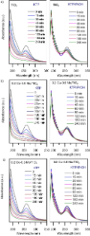
- the bandgap of TiO2 [36]. The new energy levels can act as recombination centers for electrons and holes, affecting the emission and absorption of photons [37]. Doping metal ions such as Fe, Ni, Co, and Cu into TiO2 introduces mid-gap or surface states and defects, such as oxygen vacancies [38]. The



First-principles study on elastic properties of Cu, (Cu1−x,Nix)3Sn and interfacial mechanical properties of (Cu1−x,Nix)3Sn/Cu in the lead-free solder joint
Beilstein J. Nanotechnol. 2026, 17, 428–439, doi:10.3762/bjnano.17.29
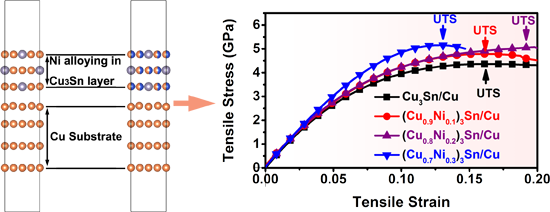
- Guomin Hua School of Material Science and Engineering, Jiangsu University, Zhenjiang 212013, Jiangsu, China 10.3762/bjnano.17.29 Abstract In this study, the elastic properties of Cu and (CuxNi1−x)3Sn were calculated to reveal the effects of Ni alloying on the interfacial mechanical properties of
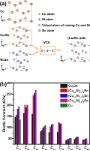
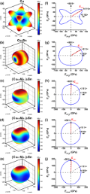
- (CuxNi1−x)3Sn/Cu in lead-free solder joints. The results reveal that, within the thermodynamically stable domain of (CuxNi1−x)3Sn, the increase of Ni content can enhance the interfacial mechanical properties of (CuxNi1−x)3Sn/Cu, and increase the reliability of the lead-free solder joints. The enhancement
- mechanism can be attributed to the simultaneous improvements of oriented Young’s modulus and ductility of (CuxNi1−x)3Sn, achieved by Ni alloying. But higher Ni content beyond the thermodynamically stable domain of (CuxNi1−x)3Sn will deteriorate the interfacial mechanical properties by mechanical or


Nanoinformatics: spanning scales, systems and solutions
Beilstein J. Nanotechnol. 2026, 17, 423–427, doi:10.3762/bjnano.17.28
- carrier for other heavy metals such as Cd, Zn, Pb, Co or Ni into the cells – a so-called Trojan Horse mechanism. Using an ensemble learning approach that implements gradient boosting and bagging algorithms, four models were developed (i.e., a random forest, AdaBoost, Gradient Boost, and Extreme Gradient

Improving magnetic properties of Mn- and Zn-doped core–shell iron oxide nanoparticles by tuning their size
Beilstein J. Nanotechnol. 2025, 16, 2285–2295, doi:10.3762/bjnano.16.157
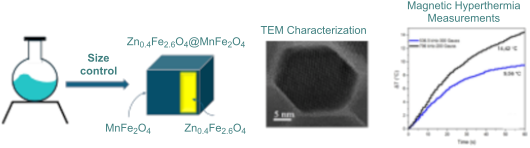
- . Consequently, efforts have been made to design new ferrite systems that offer improved performance. One promising strategy involves substituting iron with other divalent metal cations (M) in spinel ferrites (MFe2O4), such as cobalt (Co), manganese (Mn), zinc (Zn), and nickel (Ni), to modify the magnetic



Missing links in nanomaterials research impacting productivity and perceptions
Beilstein J. Nanotechnol. 2025, 16, 2168–2176, doi:10.3762/bjnano.16.149
- , other 2D nanomaterials, such as elemental 2D materials (e.g., borophene, phosphorene, and silicene), transition metal dichalcogenides (e.g., MoS2, WS2, and NbSe2), transition metal oxides (e.g., MnO2, Fe2O3, and Ni(OH)2 nanosheets), MXenes (e.g., Ti3C2, Ti2C, and Ta4C3), 2D halides (e.g., CrI3, NiI2
Laser ablation in liquids for shape-tailored synthesis of nanomaterials: status and challenges
Beilstein J. Nanotechnol. 2025, 16, 1963–1997, doi:10.3762/bjnano.16.137
- modification. The presence of the active ionic species has been shown to guide the formation of Ni(OH)2 nanosheets in [30]. After NP formation, the shape transformation can occur during the stages of growth, self-organization, and ageing of the NPs. In this case, laser ablation, which is performed for
- , but typically highly active species, such as radicals and ions, are formed. Their adsorption and reactions at the NP surface results in composition, shape, and structure transformations induced in NPs. As an example, Zhang et al. [30] explained the formation of Mn-doped Ni(OH)2 nanosheets, observed





Mechanical property measurements enabled by short-term Fourier-transform of atomic force microscopy thermal deflection analysis
Beilstein J. Nanotechnol. 2025, 16, 1952–1962, doi:10.3762/bjnano.16.136
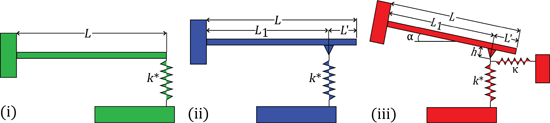
- software measuring the deflection of the cantilever and moving the sample during the experiment, the cantilever deflection was measured by a National Instruments BNC box (NI-USB-6341) via an unfiltered connection direct from the photodetector at a sampling rate of 2.0 MHz and for a duration of 1 s of the




Current status of using adsorbent nanomaterials for removing microplastics from water supply systems: a mini review
Beilstein J. Nanotechnol. 2025, 16, 1837–1850, doi:10.3762/bjnano.16.127
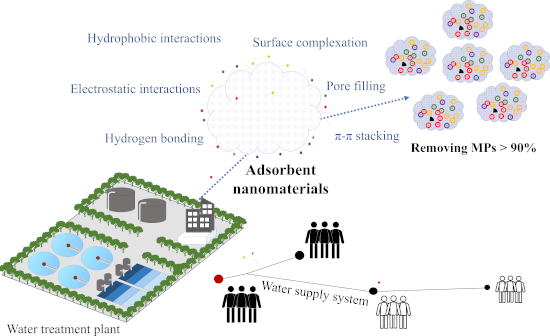
- bonding through oxygen-containing groups (oxidized biochar), pore filling, and electrostatic interactions [53]. GO materials, such as a nickel/reduced graphene oxide (Ni/rGO) nanocomposite, also exhibited high adsorption efficiency, achieving 80.3% removal of PS from water containing 100 mg·L−1 PS. The
- primary mechanisms were hydrophobic and π–π interactions between PS microspheres and the Ni/rGO nanocomposite [54]. In addition, a mass loss of 35.66–50.46% of MP particles from aqueous polyethylene suspensions after 480 min was observed when using GO, GO-Cu2O, GO-MnO2, and GO-TiO2 for treatment [55
- , applying magnetic nanoparticles for treatment purposes may release toxic metal ions (Ni or Mn) or highly soluble metal ions (Zn or Mg) into the treated water, which can then enter water bodies and cause harm [74]. Similarly, MOFs, such as materials combined with Fe, Cu, or Zr, may release toxic ions into


Piezoelectricity of layered double hydroxides: perspectives regarding piezocatalysis and nanogenerators
Beilstein J. Nanotechnol. 2025, 16, 1812–1817, doi:10.3762/bjnano.16.124

- authors’ claims have been excluded from the table and the figure but left in the text. A Ni/Fe-LDH piezoelectric nanogenerator was used to charge an asymmetric supercapacitor made from the as-prepared Ni/Fe-LDH and biomass-derived activated carbon as the positive and negative electrode [7]. The Ni/Fe-LDH
- dodecylbenzene sulfonate-modified Ni/Co-LDH as a filler promoted the formation of the electroactive β-phase in PVDF-based electrospun nanocomposite fabrics [12]. The enhanced piezoelectric response was attributed to the realignment of PVDF dipoles in combination with their interfacial interactions with the
- organically modified Ni/Co-LDH nanosheets. However, some concerns arise regarding whether the synthesized material reported by the authors can indeed be classified as a Ni/Co-LDH. First, the synthesis was carried out using salts of divalent nickel and divalent cobalt at a Ni/Co ratio of 1:2. In the absence of

Ambient pressure XPS at MAX IV
Beilstein J. Nanotechnol. 2025, 16, 1677–1694, doi:10.3762/bjnano.16.118
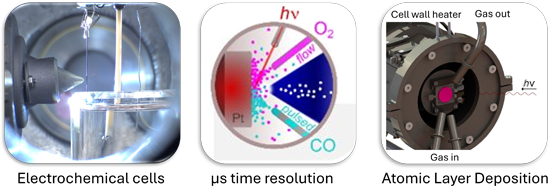
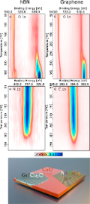
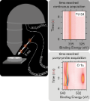
- application is photocatalytic water splitting for green hydrogen production. Urpelainen and colleagues clarified the mechanisms of photocatalytic hydrogen evolution reaction (HER) in a new prospective model system, the Ni@NiO/NiCO3 photocatalyst, under dark and illuminated conditions at 1 mbar of H2O [45
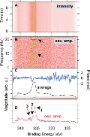
- ]. Figure 10a illustrates how the complex Ni 2p spectrum is caused by multiplet splitting, shake-up, and plasmon loss structures. When the catalyst surface is dark, the Ni 2p3/2 structure can be well matched with three main components assigned to Ni0, NiO, and NiCO3. Upon illumination, the Ni0 peak vanishes
- , and the main Ni 2p peak broadens due to the emergence of an additional peak at 857.4 eV attributed to NiOOH. This indicates that photoexcitation triggers oxidation and structural changes, consistent with plasmon-driven electron excitation at the Ni/NiO interface. The authors propose a mechanism where





Modeling magnetic properties of cobalt nanofilms used as a component of spin hybrid superconductor–ferromagnetic structures
Beilstein J. Nanotechnol. 2025, 16, 1557–1566, doi:10.3762/bjnano.16.110
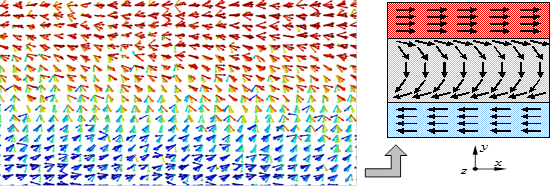
- structure and composition of Co–Ni–Fe films were evaluated, and it was found out how the deposition rate affects the conversion of a weak magnetic field into magnetic induction. In addition, thin-film structures based on Fe and Co are among the most promising materials that can be applied in the creation of


Laser processing in liquids: insights into nanocolloid generation and thin film integration for energy, photonic, and sensing applications
Beilstein J. Nanotechnol. 2025, 16, 1428–1498, doi:10.3762/bjnano.16.104
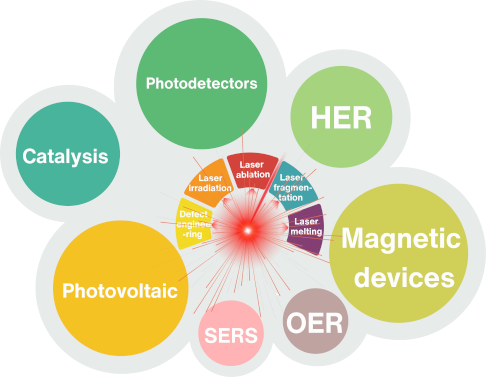
- spheres and is suitable for a variety of metal and semiconductor NPs, including Ag, Au, Cu, Fe, Ni, Fe2O3, Fe3O4, Co3O4, NiO, TiO2, WO3, and ZnO, which all exhibit optical absorption at 355 or 532 nm (using a Nd:YAG laser). Pulsed laser irradiation of colloidal NPs differs from LAL primarily in that PLIL
- ]. Figure 10d shows the X-ray diffraction (XRD) measurements of CdS nanoropes. A comparison of spin coating and drop casting for film fabrication on graphene paper was made using Ni/NiO NPs synthesized by LAL. Rutherford backscattering spectrometry measurements revealed that the homogeneity of the NPs was






Wavelength-dependent correlation of LIPSS periodicity and laser penetration depth in stainless steel
Beilstein J. Nanotechnol. 2025, 16, 1302–1315, doi:10.3762/bjnano.16.95
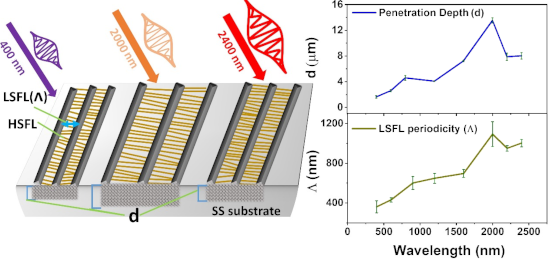
- investigate this, we conducted energy-dispersive X-ray spectroscopy (EDS) analysis on laser-treated stainless steel samples across different wavelengths alongside untreated stainless steel for comparison, as outlined in Table 3. Specifically, we examined the weight percentage of Cr, Fe, and Ni in three
- weight percentages of Cr, Fe, and Ni across all three areas. This uniformity suggests that the elemental composition remains unchanged throughout the whole laser-treated surface. For a comparative study, we also measured the elements on a polished stainless steel surface, depicted in Figure 10e. Figure
- 10f–h exhibits the EDS spectra of three different regions of the untreated surface, highlighting the presence of Cr, Fe, Ni, Mg, and C. However, magnesium and carbon are comparatively lower in abundance and not uniformly distributed in the unablated sample, and these peaks do not appear after the




Crystalline and amorphous structure selectivity of ignoble high-entropy alloy nanoparticles during laser ablation in organic liquids is set by pulse duration
Beilstein J. Nanotechnol. 2025, 16, 1141–1159, doi:10.3762/bjnano.16.84
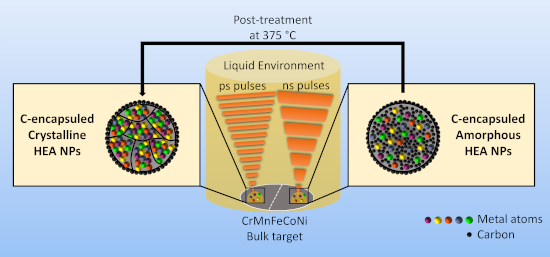
- produces polycrystalline HEA NPs, nanosecond-pulsed laser ablation favors a metastable amorphous structure. Particle cores in all cases exhibit a homogeneous distribution of the metals Cr, Mn, Fe, Co, and Ni, while particle shells were found to vary between manganese-enriched oxide layers and thin
- amorphous. As different pulse durations (ps vs ns) may lead to fundamentally different ablation mechanisms during LAL [50][64], it is conceivable that differences in sample compositions (content and distribution of the elements Cr, Mn, Fe, Co, Ni) may be responsible for the observed pulse-duration-dependent
- structure of the particle. Figure 6a highlights the elemental distribution of Cr, Mn, Fe, Co, Ni, O, and C throughout the cross section of the HEA NP. Here, evenly distributed metal atoms can be observed, surrounded by a carbon shell. However, note that carbon signals additionally originate from the




Structural and magnetic properties of microwave-synthesized reduced graphene oxide/VO2/Fe2O3 nanocomposite
Beilstein J. Nanotechnol. 2025, 16, 921–932, doi:10.3762/bjnano.16.70
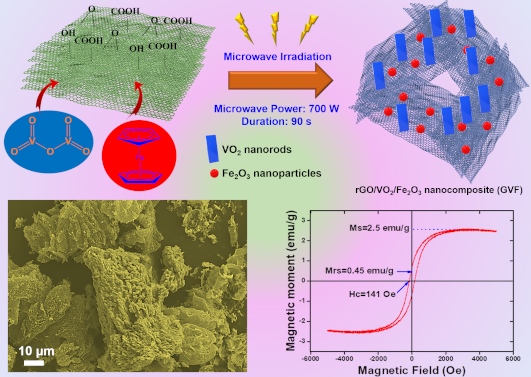
- with graphene by applying MW irradiation for certain time intervals. In this context, Zhang et al. reported the synthesis of Ni-Co sulfide/graphene NC through MW irradiation at a power of 1000 W for 60 s [12]. As a supercapacitor (SC) electrode, the MW-synthesized NC displayed a specific capacitance of




Heat-induced transformation of nickel-coated polycrystalline diamond film studied in situ by XPS and NEXAFS
Beilstein J. Nanotechnol. 2025, 16, 887–898, doi:10.3762/bjnano.16.67
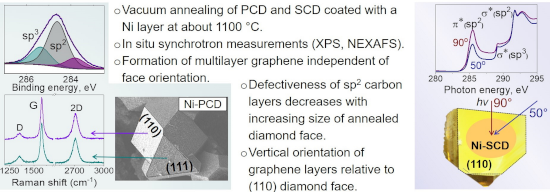
- SCD surface into graphene requires annealing at temperatures above 800 °C [21]. The annealing of nanocrystalline diamond (NCD) films in the presence of a Ni catalyst has been recently explored [22][23][24]. It was shown that graphitization of Ni-coated NCD films begins at a relatively lower
- temperature of about 500 °C [23]. Such a significant decrease in the temperature at which graphitization starts compared to that of the Ni-coated SCD is due to the presence of multiple grain boundaries, along which the diffusion of Ni atoms takes place, facilitating the graphitization process [34]. The
- process occurring at the interface between diamond and Ni nanoparticles was revealed using high-resolution transmission electron microscopy (HRTEM) [19][24]. During annealing, Ni nanoparticles etch the diamond surface, resulting in the formation of a narrow interdiffusion zone. The carbon atoms released


Insights into the electronic and atomic structures of cerium oxide-based ultrathin films and nanostructures using high-brilliance light sources
Beilstein J. Nanotechnol. 2025, 16, 860–871, doi:10.3762/bjnano.16.65

- rationalized the observed high activity of the material in direct methanol fuel cells [37]. Regarding the Ni-CeO2−x(111) system, a study of the methanol reaction revealed that the strong metal–support interactions between Ni and CeO2 determines the high selectivity for CO2 production, instead of the formation


Facile one-step radio frequency magnetron sputtering of Ni/NiO on stainless steel for an efficient electrode for hydrogen evolution reaction
Beilstein J. Nanotechnol. 2025, 16, 837–846, doi:10.3762/bjnano.16.63
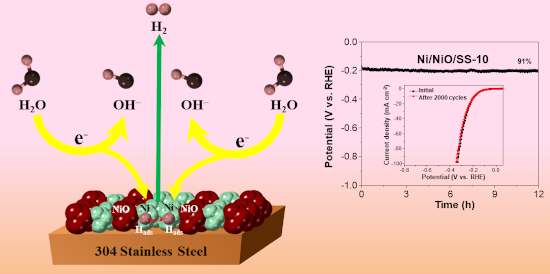
- 700000, Vietnam 10.3762/bjnano.16.63 Abstract The advancement of affordable, ultrastable, and efficient electrode materials for basic hydrogen evolution reaction (HER) plays a crucial role in industrial hydrogen manufacture, resolving problems caused by carbon dioxide emissions. Ni-based
- . In this study, Ni/NiO nanolayers were prepared on stainless steel (SS) via a facile one-step radio frequency magnetron sputtering with various O2 flow rates. The O2 flow rate not only changed the crystal phase but also affected the morphology and atomic ratio of materials, leading to optimized HER
- efficiency. The evaluation of catalytic activities revealed that the optimal sample of Ni/NiO/SS-10 displayed a higher HER performance than bare SS. To produce H2 at a current density of 10 mA·cm−2, this electrode required a low overpotential of 184 mV and demonstrated remarkable durability over 12 h of


Synthesis and magnetic transitions of rare-earth-free Fe–Mn–Ni–Si-based compositionally complex alloys at bulk and nanoscale
Beilstein J. Nanotechnol. 2025, 16, 823–836, doi:10.3762/bjnano.16.62
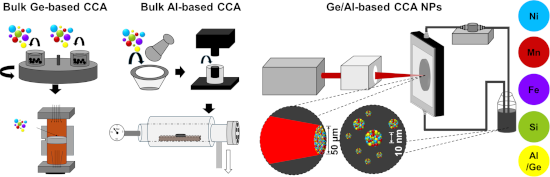
- process. Initially, elemental Mn (99.2%, 3 µm), Fe (99.96%, 10–20 µm), Ni (99.5%, 45–60 µm), Si (99.999%, 45–60 µm), and Ge (99.99%, <250 µm) powders were mixed in the desired stoichiometric proportions and underwent HEBM in a planetary ball mill for 90 min under argon atmosphere and a ball-to-powder
- diameter of ∅ = 10 mm. The preparation procedure for the bulk Ge-based CCA is illustrated in Figure 1a. Preparation of bulk Al-based CCAs The bulk Al-based CCA was produced from elemental Mn (99.6%, <10 µm), Fe (99.5%, 6–10 µm), Ni (99.9%, 3–7 µm), Al (99.5%, 44 µm), and Si (99%, 44 µm) powders. The bulk
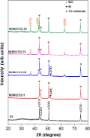
- chamber. (a, c) SEM (SE) and EDX elemental maps of Mn, Fe, Ni, Ge, and Si obtained for bulk the Ge-based CCA and Mn, Fe, Ni, Al, and Si, obtained for bulk Ge-based CCA. (b, d) X-ray diffraction (XRD) patterns of the bulk Ge-based CCA and the bulk Al-based CCA, showing the presence of side phases. Particle


Changes of structural, magnetic and spectroscopic properties of microencapsulated iron sucrose nanoparticles in saline
Beilstein J. Nanotechnol. 2025, 16, 762–784, doi:10.3762/bjnano.16.59
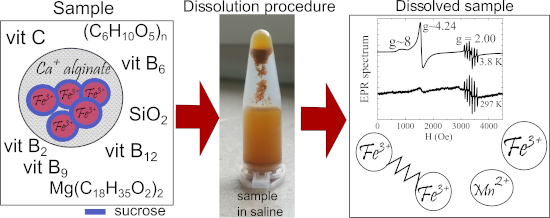
- 3d confirms the presence, in addition to iron, of elements from additives and organic compounds, such as Si from SiO2, Ca from calcium alginate, and Co most likely from cobalamin. The Na and Cl peaks relating to salt (NaCl), and peaks of P, S, Ni, and Zn (trace levels), were classified as