Search results
Search for "TiO2" in Full Text gives 370 result(s) in Beilstein Journal of Nanotechnology. Showing first 200.
Environmental applications of silver nanoparticles: state-of-the-art review and emerging trends
Beilstein J. Nanotechnol. 2026, 17, 697–736, doi:10.3762/bjnano.17.49
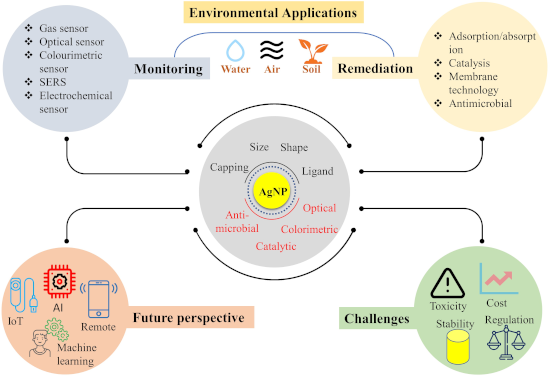
- exposure [117]. Microplastics, such as polyamide 66, were degraded by Ag-doped TiO2, with increased efficiency observed with Ag doping [118]. 1.5% Ag/TiO2 achieved a 58.9% removal, which significantly increased to 100% upon increasing the catalyst dose (3:1) after 4 h of UV-A exposure. The underlying
- semiconductor (e.g., TiO2, ZnO, or g-C3N4) within ≈150 fs, generating long-lived charge-separated states [124][125]. Second, near-field electromagnetic enhancement, in which the intensified local electric field around AgNPs boosts electron–hole pair generation in adjacent semiconductor domains [126]. Schottky
- composites (Ag/TiO2, Ag/ZnO, Ag-Fe3O4, Ag/silica) rather than pristine AgNPs (Table 3). The enhanced performance of these systems should be attributed to the composite architecture (Schottky junction, increased surface area, and synergistic ROS generation) rather than to AgNPs alone. 3.1.3 Membrane


Cellulose as a photocatalyst support material: extraction, structural features, and environmental applications
Beilstein J. Nanotechnol. 2026, 17, 635–652, doi:10.3762/bjnano.17.44
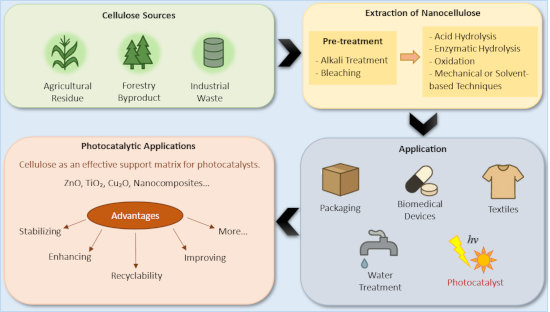
- of functional groups enable it to act as an effective support matrix for photocatalysts such as ZnO, TiO2, Cu2O, and various hybrid nanocomposites. Through stabilizing nanoparticles, preventing their aggregation and contributing to pollutant adsorption, cellulose enhances the overall efficiency of
- materials that can absorb light energy and generate electron–hole pairs, which then participate in redox reactions to produce ROS that degrade organic pollutants. Titanium dioxide (TiO2) and zinc oxide (ZnO) are the common catalysts that have been used [18][19]. Figure 3 illustrates the general mechanism of
- reduction and doping, which enhance their reactivity and overall performance [86]. Widely used examples include ZnO, TiO2, and iron oxide, which support a broad range of catalytic applications, and researchers have explored several production methods for these nanoparticles, with the sol–gel process relying


Two-step laser synthesis of Ag@TiO2 nanomaterials for the photocatalytic degradation of rhodamine B
Beilstein J. Nanotechnol. 2026, 17, 622–634, doi:10.3762/bjnano.17.43
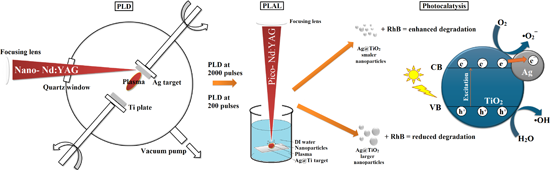
- Techniques, Institute of Physics, Bijenička Cesta 46, 10000 Zagreb, Croatia 10.3762/bjnano.17.43 Abstract This study presents a novel, chemical-free approach for the synthesis of Ag-modified TiO2 (Ag@TiO2) nanoparticles by combining the two laser-based ablation techniques pulsed laser deposition (PLD) and
- UV–vis spectroscopy confirmed the formation of nanoparticles with a predominantly anatase TiO2 phase. The synthesized particles exhibited spherical morphology, with average diameters ranging from 97–331 nm for the 200p sample and 86–144 nm for the 2000p sample. The photocatalytic efficiency was
- evaluated using rhodamine B (RhB) under UV irradiation; while RhB showed minimal self-degradation, the Ag@TiO2 200p and 2000p NPs samples achieved degradation rates of 75.8% and 88.4%, respectively. The main novelty of this work is the combination of two laser techniques in a chemical-free process, which


Impacts of annealing on structural and photophysical properties of zinc phthalocyanine adsorbed on graphene
Beilstein J. Nanotechnol. 2026, 17, 576–585, doi:10.3762/bjnano.17.39
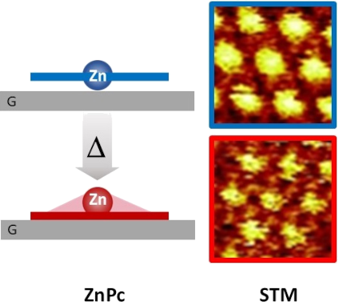
- particular, ZnPc has been shown to present such 2D phase transitions on various substrates such as TiO2 [32], Au(111) [33][34], InSb [35], or ZnS [36]. These studies have emphasized the diversity of mechanisms involved in the relative stability of 2D phases, including intermolecular versus molecule–substrate


Synthesis of Cu–Mo/TiO2 and Co–Mo/TiO2 photocatalysts for the efficient degradation of organic pollutants in water
Beilstein J. Nanotechnol. 2026, 17, 559–570, doi:10.3762/bjnano.17.37
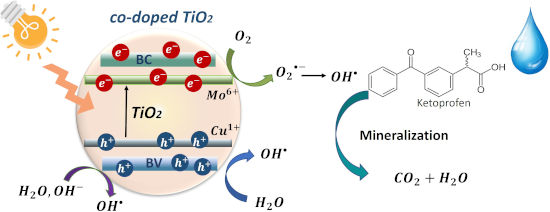
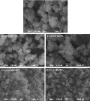
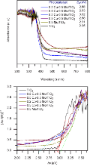
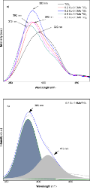
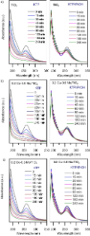
- , copper and cobalt, were added at 0.2–0.5 wt %. The co-doped TiO2 photocatalysts were characterized by XRD, SEM, N2 physisorption, UV–vis diffuse reflectance spectroscopy, and photoluminescence spectroscopy. The structural characterization showed stabilization of the anatase phase, and lattice distortion
- was evidenced after dopant incorporation into the TiO2 structure. Morphological characterization showed poorly defined spherical particles that decreased in size with increasing Cu and Co concentrations. PL spectra showed an additional signal attributed to the ability of the metal dopants to capture
- electrons. The point of zero charge of the photocatalytic systems TiO2, Cu–Mo/TiO2, and Co–Mo/TiO2 was evaluated and reported. Materials with lower concentrations of the co-dopants Cu and Co were more efficient at degrading ketoprofen. The most efficient photocatalyst was 0.2 Cu–0.5 Mo/TiO2, which achieved



Nanocarrier-integrated multilayer films produced by 3D printing for improved skin adhesion and curcumin photostability
Beilstein J. Nanotechnol. 2026, 17, 440–453, doi:10.3762/bjnano.17.30
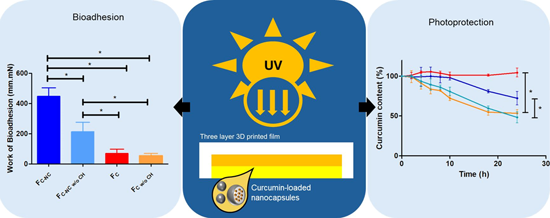
- efficiency. Films were fabricated containing either C-NCs (FC-NC) or unloaded curcumin (FC) and consisted of three layers, namely, a chitosan-based bottom layer, a middle layer of carboxymethylcellulose and alginate, and a carboxymethylcellulose top layer incorporating titanium dioxide (TiO2). The lower and
- intermediate layers contained C-NC or curcumin. The final films (15 × 15 × 1.5 mm) contained 282.20 ± 7.75 µg and 246.80 ± 6.70 µg of curcumin in FC-NC and FC, respectively. Films containing the bottom chitosan layer exhibited the highest bioadhesion, while the presence of a TiO2 top layer effectively
- composed of carboxymethylcellulose and titanium dioxide (TiO2). Curcumin was incorporated into the formulations either in its encapsulated form, loaded into polymeric nanocapsules, or non-encapsulated and dissolved in a hydroalcoholic solution. The preparation of films containing curcumin-loaded polymeric


Nanoinformatics: spanning scales, systems and solutions
Beilstein J. Nanotechnol. 2026, 17, 423–427, doi:10.3762/bjnano.17.28

- of cancerous cells, also offering insights for potential nano-based cancer therapeutics [6]. Focusing on one specific MeOx nanomaterial, nano-TiO2, and a kidney epithelial cell – human renal cortex proximal tubule epithelial (HK-2) – Roy and Roy explored the potential for the nano-TiO2 to act as a
- Boost) and used to establish statistically significant relationships between the structural properties of the TiO2 nanomaterials and the cause of cytotoxicity. The experiment-independent periodic table descriptors utilised here were found to produce better predictions than quantum chemical descriptors

Advancing nanolithography: a comprehensive review of materials for local anodic oxidation with AFM
Beilstein J. Nanotechnol. 2026, 17, 275–291, doi:10.3762/bjnano.17.19
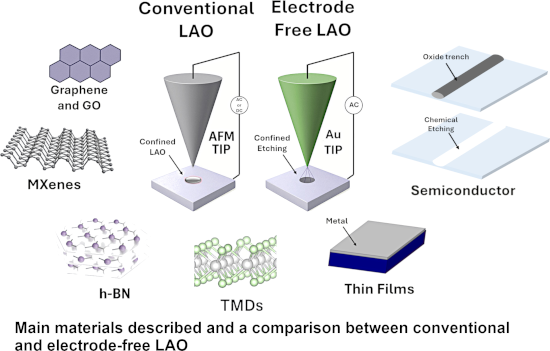
- efficiently align BCPs into an ordered parallel lamellar arrangement, as depicted in Figure 4b–d. 2.5.2 Metals. Metals like titanium and aluminum are frequently utilized for plasmonic devices and nanoscale sensors. Oxidation of titanium during LAO forms TiO2 [69][88], a process highly dependent on relative
- , which often requires high voltages that can compromise stability. The study revealed that thinner titanium oxide layers enhance resistive switching performance by providing higher resistance ratios and more uniform switching behavior. Furthermore, compositional analysis showed that TiO2 dominates the


Durable antimicrobial activity of fabrics functionalized with zeolite ion-exchanged nanomaterials against Staphylococcus aureus and Escherichia coli
Beilstein J. Nanotechnol. 2026, 17, 262–274, doi:10.3762/bjnano.17.18
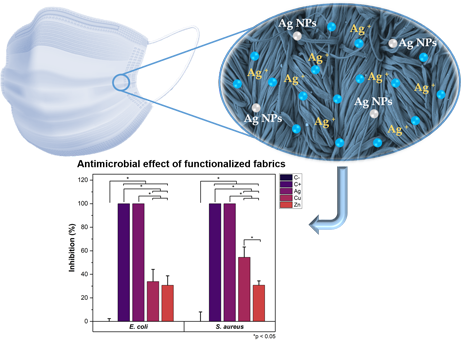
- different components, fiber material composites, nanoscale fibers, and immersion in NPs solutions with a binder. Nanoparticles such as Ag, Au, TiO2, ZnO, Se, SiO2, CuO, and Pt are widely used for textile functionalization [25]. Common methods for incorporating Ag and Cu NPs into cotton textiles involve




Multilayered hyperbolic Au/TiO2 nanostructures for enhancing the nonlinear response around the epsilon-near-zero point
Beilstein J. Nanotechnol. 2026, 17, 251–261, doi:10.3762/bjnano.17.17
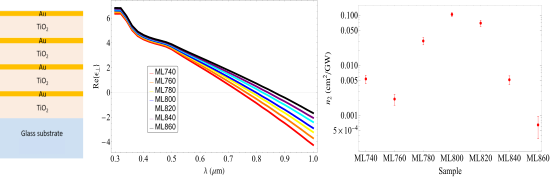
- –dielectric Au/TiO2 structures. The samples were fabricated using Joule effect evaporation for gold and electron beam evaporation for titanium dioxide. Their structure was designed to have an epsilon-near-zero (ENZ) point at different wavelengths around 800 nm, in order to study their nonlinear response as a
- layered Ag/TiO2 and determined via spectroscopy that its ENZ point laid within the visible spectrum [7]. Since then, a wide array of layered metal–dielectric configurations have been demonstrated, including silver-based combinations such as Ag/SiO2 [1], Ag/Al2O3 [6], Ag/LiF [8], Ag/TiO2 [9], Ag/Ge [10
- ], Ag/MgF2 [11], and Ag/Ti3O5 [12]. Gold-based systems have also been prominent, such as Au/Al2O3 [13][14][15], Au/SiO2 [16], Au/TiO2 [17], and optical filters based on Au/TiO2 multilayers [18]. Beyond classic metal–dielectric structures, research has explored ZnO/Al:ZnO [19] and doped semiconductors


Functional surface engineering for cultural heritage protection: the role of superhydrophobic and superoleophobic coatings – a comprehensive review
Beilstein J. Nanotechnol. 2026, 17, 63–96, doi:10.3762/bjnano.17.6
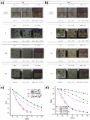
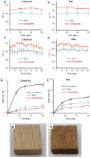
- activity under both UV-A and visible light. The TiO2/C-dot composites were synthesized via a green, hydrothermal method using citric acid and hydroxylamine, resulting in anatase-phase particles. Various C-dot loadings were tested; composites with moderate content (i.e., TC25 and TC50) demonstrated superior
- degradation of MO dye under simulated solar and natural sunlight, while higher C-dot loadings (TC62.5 and TC75) reduced performance, likely due to surface-masking effects. To fully exploit the photocatalytic activity of the TiO2/C-dot composites on cementitious substrates, they were embedded in a silica-based
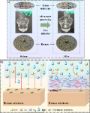
- consolidant composed of tetraethoxysilane (TEOS) and PDMS, forming a protective and functional coating. The film structure fully integrated the C-dots, without altering TiO2 bonding, maintaining visual transparency and color neutrality on mortar surfaces. Under both UV and visible light, the coated mortars





Quantitative estimation of nanoparticle/substrate adhesion by atomic force microscopy
Beilstein J. Nanotechnol. 2026, 17, 1–14, doi:10.3762/bjnano.17.1

- are immobilized on supports like carbon-based materials or TiO2 to prevent aggregation and to maintain catalytic activity, strong adhesion is required [11]. To improve adhesion, Au NPs have been stabilized on SiO2 substrates by embedding them into an organometallic layer, effectively immobilizing the




Chiral plasmonic nanostructures fabricated with circularly polarized light
Beilstein J. Nanotechnol. 2025, 16, 2245–2264, doi:10.3762/bjnano.16.154
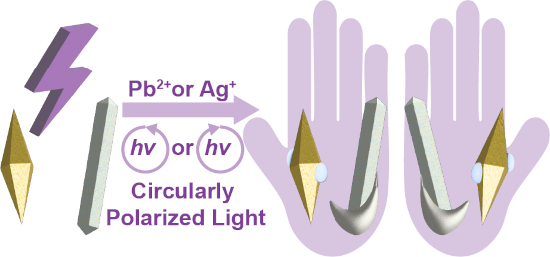
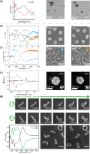
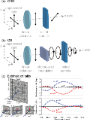
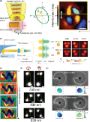
- ) (Figure 3a). In a typical experimental setup, AuNRs were immobilized on tens of nanometer thick TiO2 films deposited on glass. (A similar setup is shown in Figure 3d left panel for Au bipyramids (AuBPs)) Under CPL illumination, hot carriers were generated in Au. The hot electrons are diverted to the TiO2
- electron sink, and the hot holes oxidize Pb2+ in solution to form PbO2. The TiO2 substrate is very efficient in removing the unwanted hot electrons to suppress carrier recombination. Ag+ in the reaction mixture eventually consumes these hot electrons. Previous studies have shown that the oxidation of Pb(II





Microplastic pollution in Himalayan lakes: assessment, risks, and sustainable remediation strategies
Beilstein J. Nanotechnol. 2025, 16, 2144–2167, doi:10.3762/bjnano.16.148
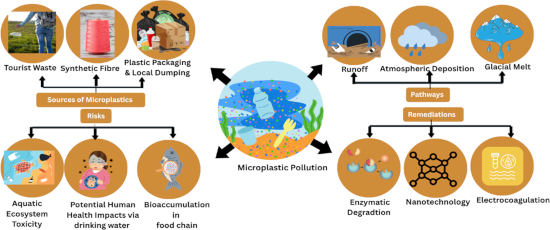
- permanently removed without causing secondary pollution [72]. 5.3.2 Nanotechnology for degradation. Nanotechnology offers a novel method for the accurate and effective breakdown of MPs. Under UV light, nanomaterials such as ZnO and TiO2 work as photocatalysts to break down MPs into CO2 and water, which are
- , attack the polymer chains of MPs. They either break the chains into smaller pieces or mineralize them into CO2 and water. A lot of research is being done on the photocatalytic properties of nanomaterials like TiO2, graphene oxide (GO), and ZnO. An excellent material for breaking down MPs in water systems
- is TiO2, which is known for being stable, effective, and able to produce ROS when exposed to UV light [43]. The effectiveness of TiO2 has been improved recently by doping it with nonmetals like sulfur and nitrogen or combining it with carbon-based compounds like graphene. According to Xiao et al


Current status of using adsorbent nanomaterials for removing microplastics from water supply systems: a mini review
Beilstein J. Nanotechnol. 2025, 16, 1837–1850, doi:10.3762/bjnano.16.127
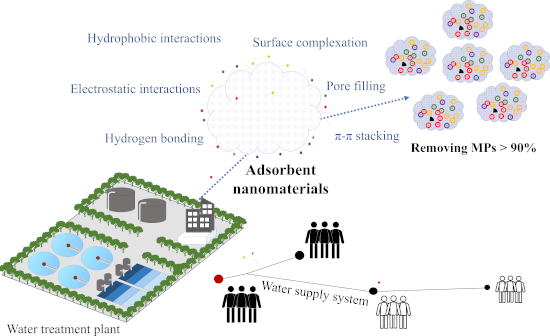
- primary mechanisms were hydrophobic and π–π interactions between PS microspheres and the Ni/rGO nanocomposite [54]. In addition, a mass loss of 35.66–50.46% of MP particles from aqueous polyethylene suspensions after 480 min was observed when using GO, GO-Cu2O, GO-MnO2, and GO-TiO2 for treatment [55


Nanotechnology-based approaches for the removal of microplastics from wastewater: a comprehensive review
Beilstein J. Nanotechnol. 2025, 16, 1607–1632, doi:10.3762/bjnano.16.114
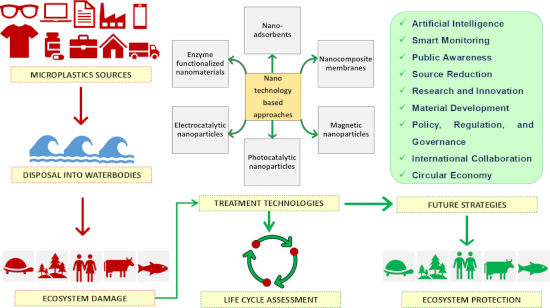
- generating highly reactive radicals through techniques such as Fenton and photo-Fenton reactions, UV/H2O2 systems, ozonation, TiO2, photocatalysis, and electrochemical oxidation [53]. These methods hold potential for breaking down MPs into smaller, less harmful by products, although optimization and
- fabrication process involves thermally transforming Ti3C2Tx MXene into multilayered TiO2 with photocatalytic properties, followed by coating with platinum and decorating the surface with magnetic γ-Fe2O3 nanoparticles. These engineered γ-Fe2O3/Pt/TiO2 microrobots exhibit light-driven, fuel-free movement with
- emerged as a promising approach. Materials such as silver, ZnO, TiO2, and iron oxide are frequently used in membrane construction due to their high reactivity and effective catalytic behaviour. These membranes are not only simple to engineer but also exhibit strong antibacterial activity. Additionally



Photocatalytic degradation of ofloxacin in water assisted by TiO2 nanowires on carbon cloth: contributions of H2O2 addition and substrate absorbability
Beilstein J. Nanotechnol. 2025, 16, 1567–1579, doi:10.3762/bjnano.16.111
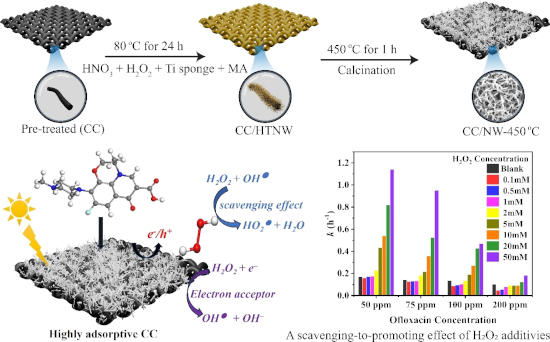
- Environmental and Optoelectronic Applications, Institute of Wenzhou, Zhejiang University, Wenzhou 325006, P. R. China 10.3762/bjnano.16.111 Abstract Vertically aligned TiO2 nanowires demonstrate exceptional photoactivity owing to their high specific surface area and improved charge separation; however, their
- unsatisfactory interaction with target contaminants diminishes photocatalytic degradation efficiency in water. Here, we present a mild solution method to precipitate anatase TiO2 nanowire arrays, measuring 1.5 μm in thickness, over carbon cloth to ensure substantial interactions with target pollutants and, in
- turn, a superior photoactivity. Compared to TiO2 nanowire arrays grown on metallic Ti substrates, TiO2 nanowires supported on carbon cloth substrates demonstrate markedly superior efficiency in the photocatalytic degradation of ofloxacin (OFL) molecules in water when exposed to UV light. The TiO2


Laser processing in liquids: insights into nanocolloid generation and thin film integration for energy, photonic, and sensing applications
Beilstein J. Nanotechnol. 2025, 16, 1428–1498, doi:10.3762/bjnano.16.104
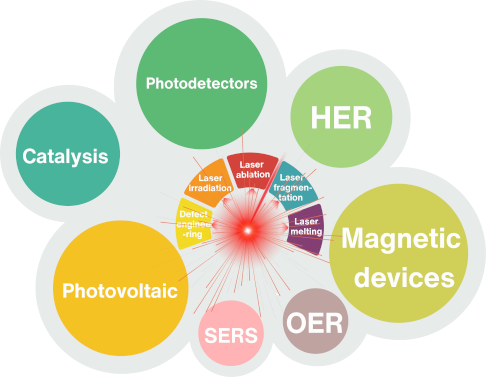
- spheres and is suitable for a variety of metal and semiconductor NPs, including Ag, Au, Cu, Fe, Ni, Fe2O3, Fe3O4, Co3O4, NiO, TiO2, WO3, and ZnO, which all exhibit optical absorption at 355 or 532 nm (using a Nd:YAG laser). Pulsed laser irradiation of colloidal NPs differs from LAL primarily in that PLIL






Synthesis and antibacterial properties of nanosilver-modified cellulose triacetate membranes for seawater desalination
Beilstein J. Nanotechnol. 2025, 16, 1380–1391, doi:10.3762/bjnano.16.100
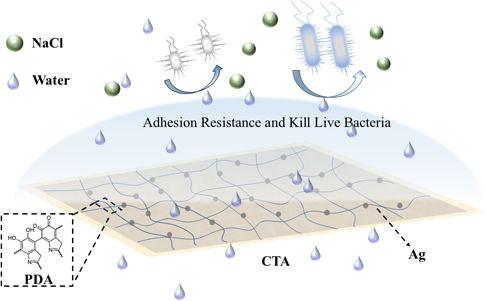
- membranes exhibited outstanding antibacterial performance against Escherichia coli and Staphylococcus aureus [22]. Mayyahi introduced TiO2 nanoparticles into the polyamide layer of traditional TFC membranes by interfacial polymerization with m-phenylenediamine to create a thin film nanocomposite (TFN
- ) membrane for water desalination. The TiO2-modified membrane demonstrated significant antibacterial activity against Escherichia coli. Under UV light, the survival ratio of bacterial cells reduced to 5% within 4 h; the membrane was completely sterilized within 5 h. This effect is attributed to the
- photocatalytic properties of TiO2, which generate ROS that degrade bacterial membranes [23]. Yang and Wang’s group introduced carbon nanotubes (CNTs) into a mixed cellulose esters (MCE) membrane to create a robust porous bi-layered photothermal membrane (CNT@PEI/MCE) for efficient solar-driven interfacial water


Hydrogels and nanogels: effectiveness in dermal applications
Beilstein J. Nanotechnol. 2025, 16, 1216–1233, doi:10.3762/bjnano.16.90
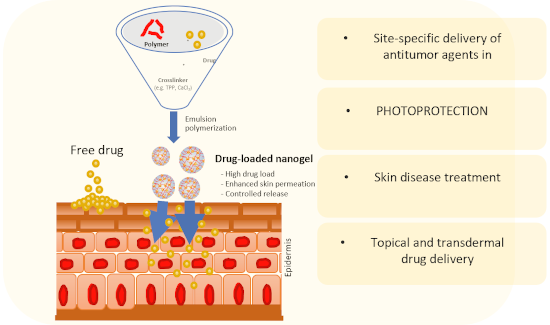
- prevention were tested by Bagde et al. (2019) [195]. The obtained nanogels were incorporated with quercetin, a natural antioxidant, and titanium dioxide (TiO2), which acts as an inorganic sunscreen. Formulations containing 0.08% and 0.12% quercetin exhibited an encapsulation rate of 89.3 ± 1.4% and 90.4
- ± 1.8%, respectively. Nanogels containing quercetin (0.12%) and TiO2 (5% and 15%) showed a drug release rate above 70% with a significant increase (p < 0.001) in the deposition of quercetin on the skin when compared with a drug suspension in 24 hours. The mean number of tumors, tumor volume, and
- percentage of animals with onset tumors in the group pre-treated with quercetin nanogels (0.12%) + TiO2 (15%) were significantly lower (p < 0.05) compared with the group exposed to UV radiation (control group). Besides, the nanogel containing quercetin (0.12%) + TiO2 (15%) significantly reduced (p < 0.001


Influence of ion beam current on the structural, optical, and mechanical properties of TiO2 coatings: ion beam-assisted vs conventional electron beam evaporation
Beilstein J. Nanotechnol. 2025, 16, 1097–1112, doi:10.3762/bjnano.16.81
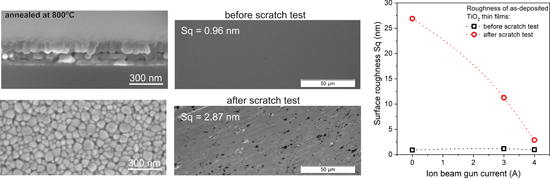
- Agata Obstarczyk Urszula Wawrzaszek Wroclaw University of Science & Technology, Faculty of Electronics, Photonics and Microsystems, Janiszewskiego 11/17, 50-372 Wroclaw, Poland 10.3762/bjnano.16.81 Abstract In this paper, comparative studies of selected properties of titanium dioxide (TiO2
- analysis of surface morphology and cross sections revealed that the TiO2 films prepared by IBAD had smaller, rounded grains and were denser compared to those deposited by EBE. Optical properties showed high transparency of 77–83% in the visible wavelength range for all as-prepared thin films. However
- , annealing caused a decrease of the transparency level by 32% for films deposited by EBE, while for films from the IBAD process the decrease was less than 10%. The use of an ion gun increased the hardness of the TiO2 films from 2.4 to 3.5 GPa (Iibg = 4 A). Although a similar relationship was observed for




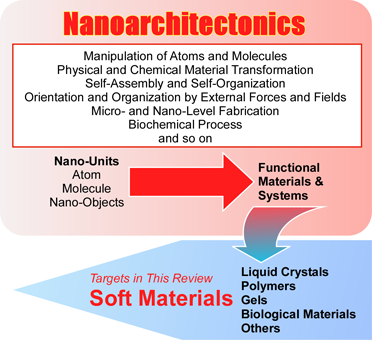
Soft materials nanoarchitectonics: liquid crystals, polymers, gels, biomaterials, and others
Beilstein J. Nanotechnol. 2025, 16, 1025–1067, doi:10.3762/bjnano.16.77






Insights into the electronic and atomic structures of cerium oxide-based ultrathin films and nanostructures using high-brilliance light sources
Beilstein J. Nanotechnol. 2025, 16, 860–871, doi:10.3762/bjnano.16.65

- under UHV conditions. Such instruments, installed at synchrotron radiation facilities and applied to ceria-based model systems have given an important contribution to understanding the surface chemistry of specific reactions. Coexisting Pt and ceria nanoparticles supported on TiO2(110) were found to
- exhibit a unique reactivity for the binding and dissociation of CO2, not observed on the TiO2(110) surface, on ceria supported on TiO2(110), or on bulk platinum surfaces [56]. In the same system, the high ability to bind and activate CO2 was exploited for the hydrogenation of CO2 to methanol, with the


The impact of tris(pentafluorophenyl)borane hole transport layer doping on interfacial charge extraction and recombination
Beilstein J. Nanotechnol. 2025, 16, 678–689, doi:10.3762/bjnano.16.52
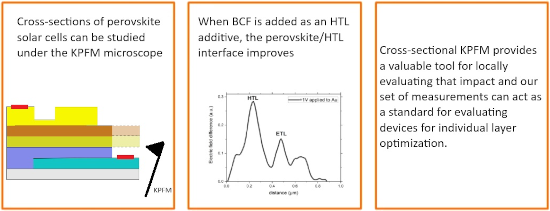
- '-tetrakis[N,N-di(4-methoxyphenyl)amino]-9,9'-spirobifluorene (spiro-OMeTAD) [15][16] and Li+ ions interacting with TiO2 [17][18]) has also been proposed to explain the asymmetrical distribution of charges within the perovskite [19][20]. Many research endeavors involve the optimization of ETLs in terms of
- the HTL/perovskite interface, whereas negative charges get separated within the mesoporous TiO2. In the traditionally doped cell, we notice that on the HTL side there is a comparable amount of electrons and holes on each side of the junction. On the ETL side, however, there are more positive charges
- 0.14 mbar and 280 W). Consequently, we deposited a compact layer of TiO2 via an aqueous 0.75 M TiCl4 solution (Sigma-Aldrich, 99.99% trace metal basis). A volume of 80 μL of the solution was spin-coated at 5000 rpm for 30 s, and the resulting films were annealed at 500 °C for 30 min. Afterwards, we


Graphene oxide–chloroquine conjugate induces DNA damage in A549 lung cancer cells through autophagy modulation
Beilstein J. Nanotechnol. 2025, 16, 316–332, doi:10.3762/bjnano.16.24
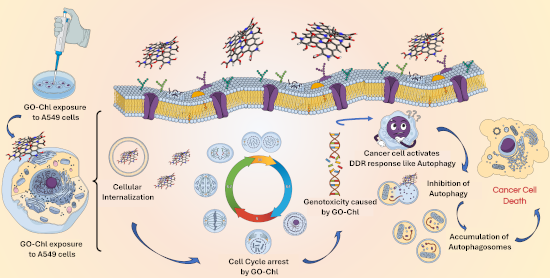
- exposure to starch-capped silver nanoparticles (AgNPs) [11]. Gemcitabine-encapsulated poly(lactic-co-glycolic acid) (PLGA) nanoparticles have been shown to enhance cell death in chemoresistant PANC1 cells, human pancreatic epithelial carcinoma cells [12]. Also, TiO2 nanoparticles can sensitize A549 cells