Search results
Search for "band structure" in Full Text gives 158 result(s) in Beilstein Journal of Nanotechnology.
Synthesis and characterization of RF-sputtered ZnTe/Cu2−xTe thin films for solar cell applications
Beilstein J. Nanotechnol. 2026, 17, 1016–1027, doi:10.3762/bjnano.17.69
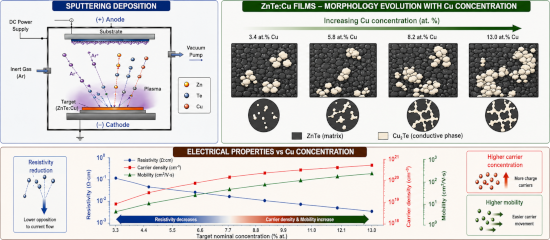
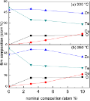
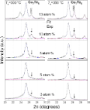
- attributed to enhanced absorption and light scattering phenomena resulting from the formation and growth of Cu-rich secondary phases rather than to significant modifications of the intrinsic band structure. The undoped ZnTe film shows well-defined interference fringes in the photon energy region below the



Materials challenges in solid-state sensors for continuous monitoring of ions in water
Beilstein J. Nanotechnol. 2026, 17, 935–973, doi:10.3762/bjnano.17.66


Tuning the electronic properties of defect-rich MoS2
Beilstein J. Nanotechnol. 2026, 17, 796–805, doi:10.3762/bjnano.17.56
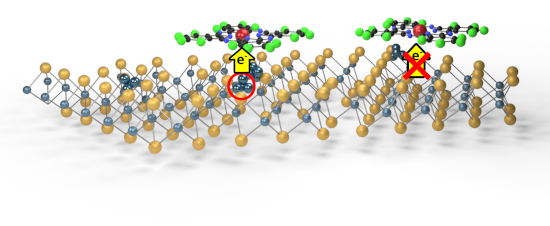
- perfluorinated cobalt phthalocyanine (CoPcF16). Defects were introduced in synthetic MoS2 bulk crystals by gentle argon and neon sputtering. Although the band structure is still visible after sputtering, especially SXPS reveals structural and electronic disturbances of the topmost MoS2 layer. We show how the
- spectroscopy (XAS), and angle-resolved photoelectron spectroscopy (ARPES) are powerful techniques for studying interfacial electronic structures with different surface sensitivities, the orientation of molecules in a heterostructure, and the band structure in proximity to the Fermi level. Using these
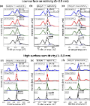
- energetic shifts to these initial Fermi level positions without compromising the integrity of the band structure. In experiment one, the sputtering with Ne, the Gamma point shifts to 0.7 eV (Figure 1d), now indicating a slight n-doping. In contrast, after Ar sputtering for 1 or 4 min, the Gamma point is


Two-step laser synthesis of Ag@TiO2 nanomaterials for the photocatalytic degradation of rhodamine B
Beilstein J. Nanotechnol. 2026, 17, 622–634, doi:10.3762/bjnano.17.43
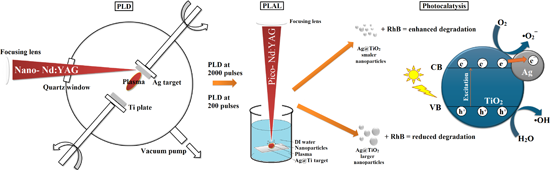
- positive potential with increasing Ag content, which can be attributed to the interaction between Ag species and the TiO2 lattice as well as the formation of localized energy states near the conduction band. Meanwhile, the VB edge also shows a small downward shift. These changes in band structure


Recent progress in enhancing built-in electric fields of perovskite solar cells via junction engineering
Beilstein J. Nanotechnol. 2026, 17, 602–621, doi:10.3762/bjnano.17.42
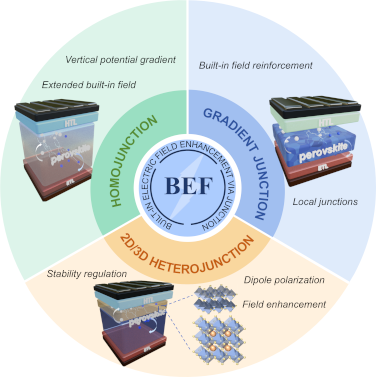
- device efficiency of 23.2% with negligible hysteresis. Moreover, combined grain-boundary passivation and band-structure modulation by BP NSs enabled unencapsulated devices to retain over 92% efficiency maintained for 150 days (3,600 h) at 25 °C and 40% ± 10% relative humidity. Although this operational
- primarily employed cation or anion composition gradients to directly tailor the band structure, and subsequent research has expanded to diverse routes such as dimensional-gradient engineering, synergistic ion regulation, and tailored interfacial optimization (see Table 2 for representative graded-junction




Defects and defect-mediated engineering of two-dimensional materials: challenges and open questions
Beilstein J. Nanotechnol. 2026, 17, 454–488, doi:10.3762/bjnano.17.31
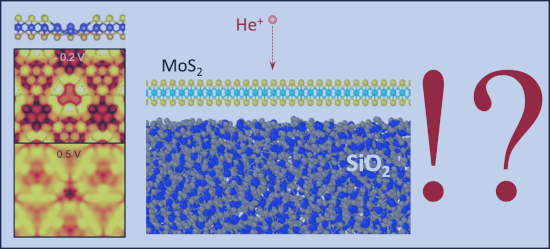
- the context of the fundamental science. For instance, a defect lattice creates a superpotential for electrons in the 2D material; thus, a mini-Brillouin zone and, consequently, a modified band structure with new electronic properties appears. The following three examples will illuminate the limits of





Electron transport through nanoscale multilayer graphene and hexagonal boron nitride junctions
Beilstein J. Nanotechnol. 2025, 16, 2132–2143, doi:10.3762/bjnano.16.147
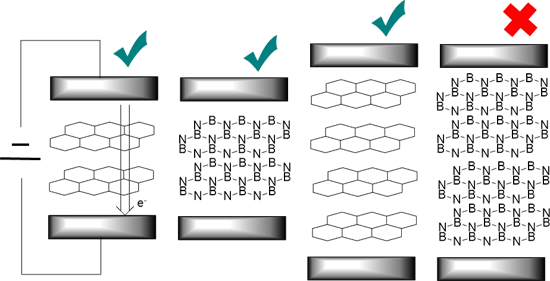
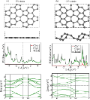
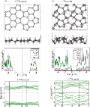
- h-BN with Stone–Wales defect. For graphite and bulk h-BN, we adopt a graphite unit cell with A–B stacking consisting of two layers and two atoms per layer. We perform geometry optimization, density of states (DOS) calculations, and band structure calculations. For graphite and h-BN with Stone–Wales
- band structure are calculated. The graphitic nitrogen doping is performed for a 4 × 4 × 1 supercell with one nitrogen atom substituting one carbon atom per layer. Figure 1 shows the unit cell of graphite, the DOS of graphite, the band structure of graphite, the unit cell of h-BN, the DOS of h-BN, the
- band structure of h-BN, and a schematic of the Brillouin zone. Graphite is a zero-bandgap semiconductor, while h-BN is a large-bandgap semiconductor with a direct bandgap of 4.58 eV and an indirect bandgap of 4.46 eV. The experimental optical bandgap of h-BN was measured to be approximately 6.0 eV [32


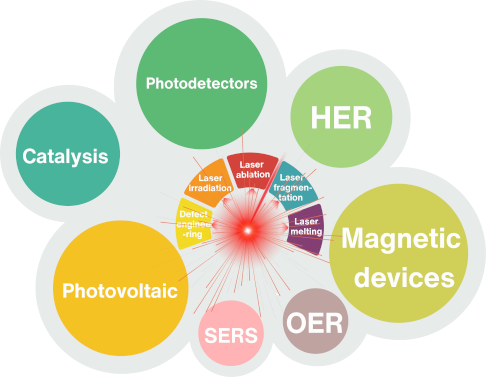
Laser processing in liquids: insights into nanocolloid generation and thin film integration for energy, photonic, and sensing applications
Beilstein J. Nanotechnol. 2025, 16, 1428–1498, doi:10.3762/bjnano.16.104






Electronic and optical properties of chloropicrin adsorbed ZnS nanotubes: first principle analysis
Beilstein J. Nanotechnol. 2025, 16, 1184–1196, doi:10.3762/bjnano.16.87
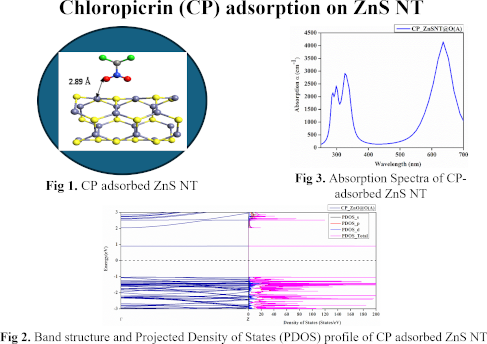
- functional theory (DFT) to explore the sensing capabilities of a ZnS (3,3) nanotube (ZnS NT) for detecting chloropicrin (CP, CCl3NO2), a highly toxic gas. To elucidate the sensing mechanism, we systematically analyze the adsorption configurations, Mulliken charge transfer, band structure, density of states
- highly toxic chemical warfare agent, remains an area with untapped potential. Addressing this gap, the present work constructs an armchair ZnS NT to investigate its adsorption configurations, charge transfer, band structure, density of states, optical absorption, and optical conductivity using a density
- correspond to the maximum structural deformation caused by CP physisorption. These results are consistent with the adsorption energy trends. Band structures and density of states analysis The electronic properties of ZnS NT in the presence of CP molecules are analyzed with the help of band structure, total


Influence of ion beam current on the structural, optical, and mechanical properties of TiO2 coatings: ion beam-assisted vs conventional electron beam evaporation
Beilstein J. Nanotechnol. 2025, 16, 1097–1112, doi:10.3762/bjnano.16.81
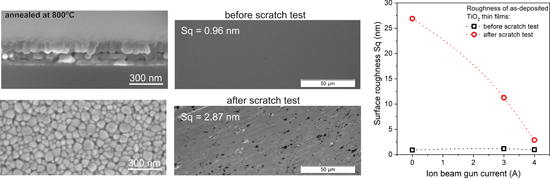
- transmitted through the coating, but also information about the band structure of the materials from which it is made of. Therefore, to perform a comprehensive analysis of the band structure of the prepared titania films, optical bandgap energy (Egopt) and Urbach energy (Eu) were analyzed. The value of Egopt




Heat-induced transformation of nickel-coated polycrystalline diamond film studied in situ by XPS and NEXAFS
Beilstein J. Nanotechnol. 2025, 16, 887–898, doi:10.3762/bjnano.16.67
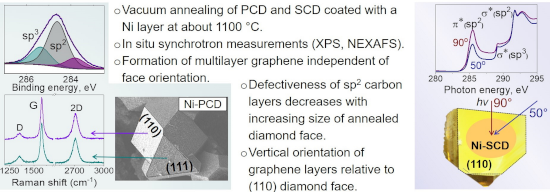
- eV corresponding to a second absolute gap in the diamond band structure [38]. In the TEY spectra of both PCD and Ni-PCD films, the aforementioned spectral features are well pronounced, indicating the preservation of the ordered crystalline structure of diamond in the bulk of the film after annealing


Supramolecular hydration structure of graphene-based hydrogels: density functional theory, green chemistry and interface application
Beilstein J. Nanotechnol. 2025, 16, 806–822, doi:10.3762/bjnano.16.61
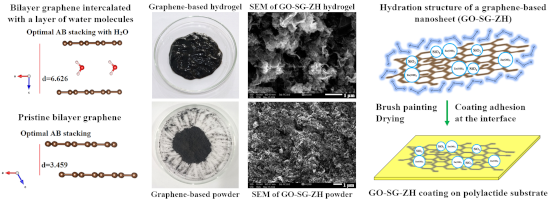
- graphene with the intersheet distance of 3.459 Å (a), and its valence–conduction band structure in hexagonal Brillouin zone (b). The AB bilayer graphene structure intercalated with a layer of water molecules and the intersheet distance of 6.626 Å (c), and its electronic band structure in hexagonal


Thickness dependent oxidation in CrCl3: a scanning X-ray photoemission and Kelvin probe microscopies study
Beilstein J. Nanotechnol. 2025, 16, 749–761, doi:10.3762/bjnano.16.58
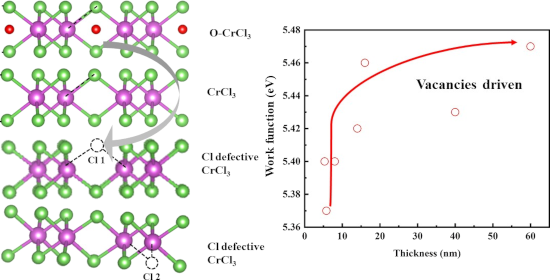
- the halides. This has been supported by self-consistent band structure calculations by Antoci and Mihich [7], which introduced spin degeneracy, demonstrating that CrCl3 and CrBr3 behave as metallic system because of the prominent role of the 3d states near Fermi level. In our previous publications [8
- molecular oxygen [16] at the metal species. These defects do not only change the electronic behavior of the sample by modifying the band structure [17]; they are also responsible for Curie temperature deviations, work function modifications [18], and induced long-range magnetic orders (i.e., magnetic band





Nanostructured materials characterized by scanning photoelectron spectromicroscopy
Beilstein J. Nanotechnol. 2025, 16, 700–710, doi:10.3762/bjnano.16.54
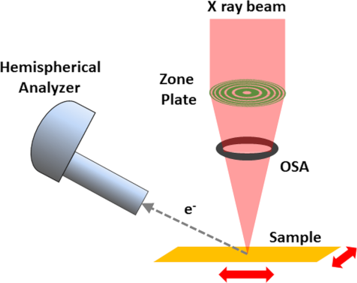
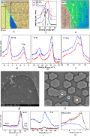
- (Au 4f, right). c) High-resolution In 4d (middle) and P 2p (right) core-level spectra obtained at n-doped (top) and p-doped (bottom) segments of the nanowire shown in b). The band structure across the p–n junction is indicated (left). d) In 3d SPEM image of the same nanowire, positions of the spectra


Quantification of lead through rod-shaped silver-doped zinc oxide nanoparticles using an electrochemical approach
Beilstein J. Nanotechnol. 2025, 16, 422–434, doi:10.3762/bjnano.16.33
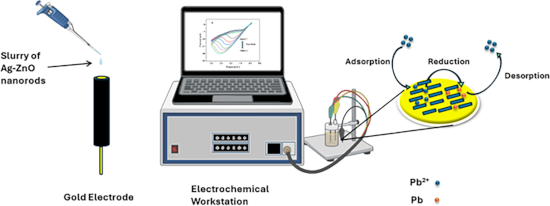
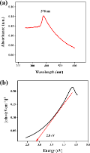
- activity, and semiconductor properties. By doping ZnO nanoparticles with transition metals, we can alter their electrical, optical, and magnetic properties by introducing new electronic states into the band structure. Herein, Ag is added to ZnO nanostructures to improve their optical properties to detect





Emerging strategies in the sustainable removal of antibiotics using semiconductor-based photocatalysts
Beilstein J. Nanotechnol. 2025, 16, 264–285, doi:10.3762/bjnano.16.21
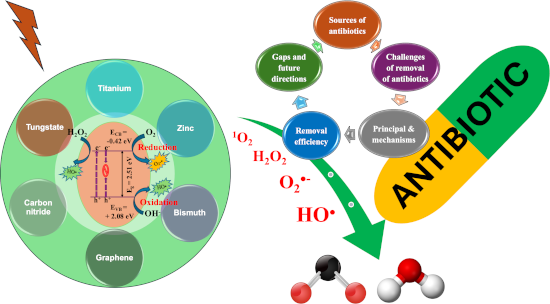
- have taken two approaches to developing effective solar light-activated semiconductor-based photocatalysts. The main approach is to improve the absorption of visible light of semiconductor materials by including metal or nonmetal elements. This augmentation can modify the energy band structure or



Theoretical study of the electronic and optical properties of a composite formed by the zeolite NaA and a magnetite cluster
Beilstein J. Nanotechnol. 2025, 16, 44–53, doi:10.3762/bjnano.16.5
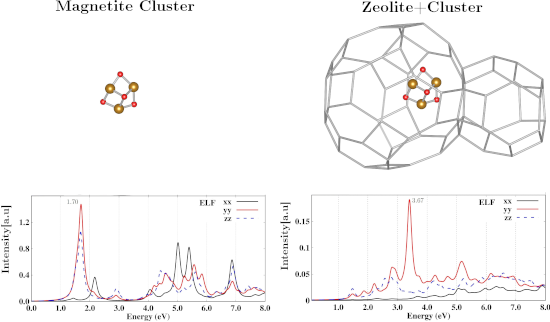
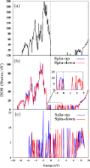
- when it is introduced into the NaA zeolite to form the NaA-M composite. Comparing these structures directly and examining their respective Fe–O bond lengths reveal that the magnetite cluster undergoes structural changes when confined within the zeolite. Figure 3a presents the band structure of the NaA
- cluster reduces the bandgap and induces a shift in the band structure of the NaA zeolite toward negative energies, approximately by 1 eV. This observation is consistent with the results of prior research studies [61][62][63]. Figure 3c illustrates the band structure corresponding to the isolated magnetite
- , but it also affects the band structure of the zeolite framework. Additionally, the geometry of the cluster stabilized in the zeolite cavity undergoes structural changes, which leads to modifications of its electronic and magnetic properties. Specifically, the investigation shows that the cluster




Strain-induced bandgap engineering in 2D ψ-graphene materials: a first-principles study
Beilstein J. Nanotechnol. 2024, 15, 1440–1452, doi:10.3762/bjnano.15.116
- al. found a shift from an indirect bandgap to a direct bandgap in arsenene under uniaxial strain along the zig-zag direction [37]. Mohan et al. employed DFT to study the effect of strain on the electrical band structure of a silicene monolayer and found a bandgap (335 meV) opening in silicene at 4
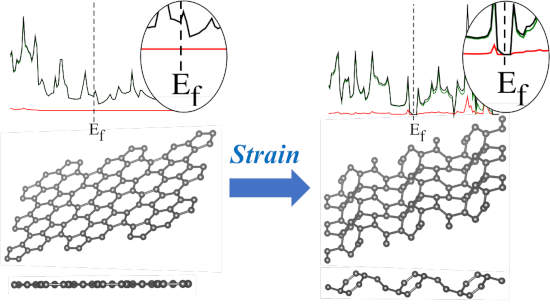
- , at a negative mechanical strain of around −14%, a bandgap of 0.2 eV becomes apparent in the band structure of ψ-graphene, changing it from zero-bandgap to a narrow-bandgap semiconductor. These results signify ψ-graphene’s low bandgap sensitivity to mechanical strain. Enhanced sensitivity to


Lithium niobate on insulator: an emerging nanophotonic crystal for optimized light control
Beilstein J. Nanotechnol. 2024, 15, 1415–1426, doi:10.3762/bjnano.15.114
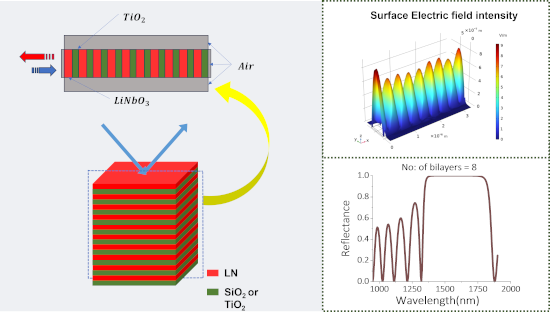
- ). These band structures arise due to Bragg scattering of electromagnetic waves within the periodic structure. The refractive index contrast between the materials in the bilayers determines the spacing and position of the bands around the bandgap. The band structure calculation has been done on each


Quantum-to-classical modeling of monolayer Ge2Se2 and its application in photovoltaic devices
Beilstein J. Nanotechnol. 2024, 15, 1153–1169, doi:10.3762/bjnano.15.94
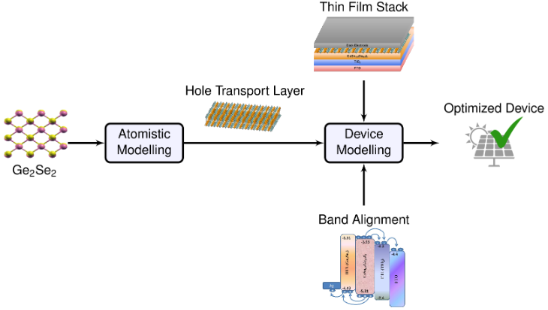
- Ge2Se2 using its electronic band structure and density of states, as shown in Figure 3. To maintain a high degree of accuracy, we calculated the band structure using the HSE06 functional, and the band dispersion along the high symmetry paths Γ-X-S-Y-Γ in the first Brillouin zone, as shown in Figure 3
- [41][42][46][47]. The optimum bandgap value and its CBM/VBM positions make it suitable for photovoltaic applications and provide a guideline for selecting the absorber layers in the solar cells. Notably, multivalley and flat bands are present in the energy band structure. The formation of multiple
- structure calculation. Figure 3 shows that the calculated DOS is consistent with the electronic band structure and the bandgap values, further validating the results. Other properties that will be useful in the simulation of solar cells, such as the effective mass of charge carriers (electrons/holes




Local work function on graphene nanoribbons
Beilstein J. Nanotechnol. 2024, 15, 1125–1131, doi:10.3762/bjnano.15.91
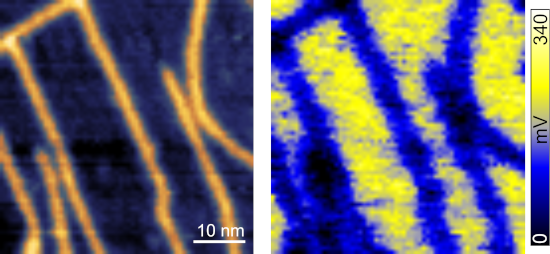
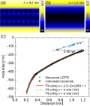
- nanoribbons; Kelvin probe force microscopy; local contact potential difference; Introduction Graphene’s electronic properties are determined by its two-dimensionality as well as by its semimetallic gapless conical band structure [1]. Its electronic behavior depends strongly on the location of the Fermi level

![[Graphic 1]](/bjnano/content/inline/2190-4286-15-91-i4.svg?max-width=637&scale=1.18182)
Intermixing of MoS2 and WS2 photocatalysts toward methylene blue photodegradation
Beilstein J. Nanotechnol. 2024, 15, 817–829, doi:10.3762/bjnano.15.68
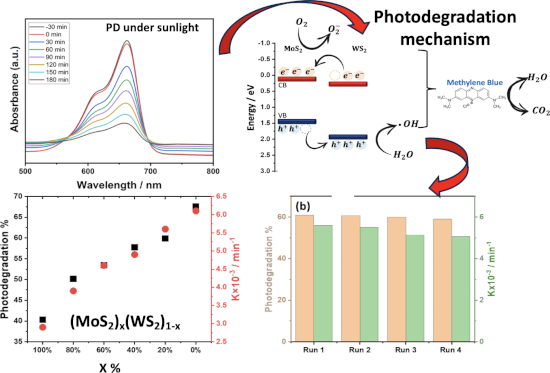
- excitations from a) sunlight and b) solar simulator. Proposed PD mechanisms of MB by MoS2/WS2 catalysts. PD stability comparison between WS2, MoS2 and WS2/MoS2 composite samples. Schematic diagram of the photocatalyst preparation. Electronic band structure for both MoS2 and WS2. Reported MoS2 and WS2-based


On the mechanism of piezoresistance in nanocrystalline graphite
Beilstein J. Nanotechnol. 2024, 15, 376–384, doi:10.3762/bjnano.15.34

- strain or piezoresistivity in graphene is expected to be small because the displacement of the Dirac point occurs in continuous k space, and strain-induced lattice distortions do not change the local band structure up to 20% strain [4]. In contrast, because of the quantized k space in carbon nanotubes


Metal-organic framework-based nanomaterials as opto-electrochemical sensors for the detection of antibiotics and hormones: A review
Beilstein J. Nanotechnol. 2023, 14, 631–673, doi:10.3762/bjnano.14.52
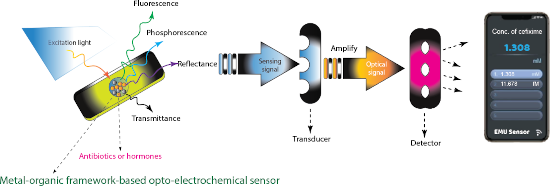
- band structure. Additionally, computational analyses have shown that the functionality of the linker, such as nitro, carboxylic, or amine, can affect the electrical characteristics of MOFs, particularly the bandgap. The p orbital interactions of the functional group with aromatic carbon atoms, which


Molecular nanoarchitectonics: unification of nanotechnology and molecular/materials science
Beilstein J. Nanotechnol. 2023, 14, 434–453, doi:10.3762/bjnano.14.35
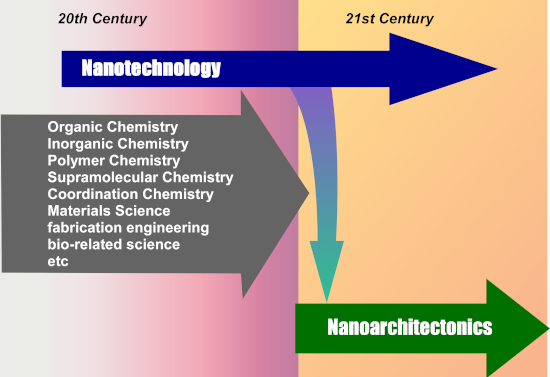
- properties were investigated. Müllen, Fasel, and co-workers have succeeded in nanoarchitectonics of graphene nanoribbons with zigzag edges with atomic precision by on-surface synthesis via cyclodehydrogenation of precursor monomers [123]. The physical properties of the graphene nanoribbons, such as band
- structure, magnetism, and charge and spin transport, are very interesting for nanoscale physics. In particular, nanostructures with zigzag edges are expected to have spin-polarized electronic edge states. The synthesized structures could play a leading role in graphene-based spintronics. In addition to