Search results
Search for "carbon nanotubes (CNTs)" in Full Text gives 139 result(s) in Beilstein Journal of Nanotechnology.
Materials challenges in solid-state sensors for continuous monitoring of ions in water
Beilstein J. Nanotechnol. 2026, 17, 935–973, doi:10.3762/bjnano.17.66
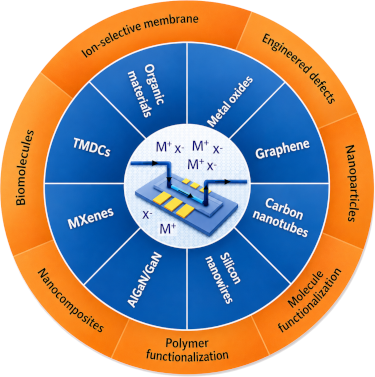
- -ISEs convert the ionic potential formed at the membrane–sample interface into an electronic signal through one of three principal mechanisms: (1) Capacitive (electrostatic) transduction relies on high double-layer or pseudocapacitive charge storage at the solid contact; carbon nanotubes (CNTs) are a
- limitations, studies found how graphene’s high mobility, chemical functionalizability and compatibility with extended-gate layouts help overcome screening and drift in complex electrolytes and make it suitable for electrical and electrochemical sensing [117][120][121]. Carbon nanotubes. Carbon nanotubes (CNTs


Cellulose as a photocatalyst support material: extraction, structural features, and environmental applications
Beilstein J. Nanotechnol. 2026, 17, 635–652, doi:10.3762/bjnano.17.44
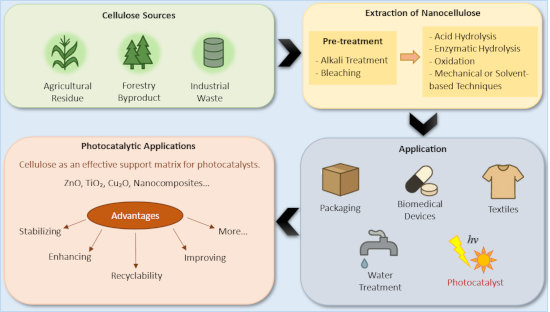
- with conductive polymers, depositing metallic layers on them, converting them through carbonization, and integrating them with carbon nanotubes (CNTs), each approach offering unique pathways to tailor the performance of CNCs-based conductive nanomaterials [87]. Cellulose-based nanostructured


Fractional shot noise of an SU(N) Kondo system
Beilstein J. Nanotechnol. 2026, 17, 515–540, doi:10.3762/bjnano.17.34
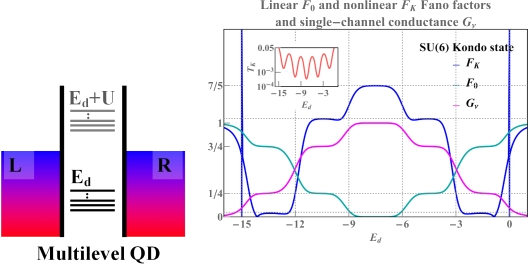
- the tunability of QDs by external fields, voltages, and strains, strong correlations can be tested also in regimes not accessible in solid-state physics. The paramagnetic SU(2) Kondo effect has been observed in semiconductor-based QDs [5][6], in carbon nanotubes (CNTs) [7][8][9][10][11], and in


![[Graphic 127]](/bjnano/content/inline/2190-4286-17-34-i187.svg?max-width=637&scale=1.18182)

Interconnection morphology effects on the radio frequency response of carbon nanotube sponges
Beilstein J. Nanotechnol. 2026, 17, 343–351, doi:10.3762/bjnano.17.23
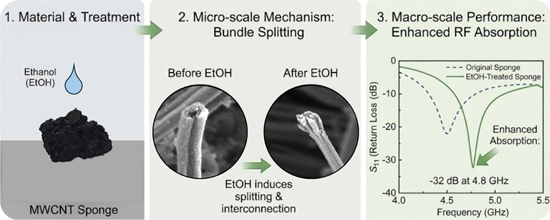
- conditions [1][2]. Novel alternative materials including conducting polymers [3], nanocarbon-based materials like carbon fibres [4], carbon nanotubes (CNTs), their composites [5][6][7], and more recently graphene [8][9] have been the focus of extensive research. Above materials fulfil the requirements of



Toward clinical translation of carbon nanomaterials in anticancer drug delivery: the need for standardisation
Beilstein J. Nanotechnol. 2025, 16, 2092–2104, doi:10.3762/bjnano.16.144

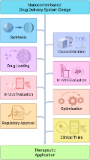
- , aspect ratio, surface area, and surface chemistry result in unique biodistribution patterns, metabolic fates, and pharmacokinetic profiles. For instance, the high aspect ratio of carbon nanotubes (CNTs) contributes to their prolonged pulmonary retention, often linked to chronic inflammation and fibrotic



Current status of using adsorbent nanomaterials for removing microplastics from water supply systems: a mini review
Beilstein J. Nanotechnol. 2025, 16, 1837–1850, doi:10.3762/bjnano.16.127
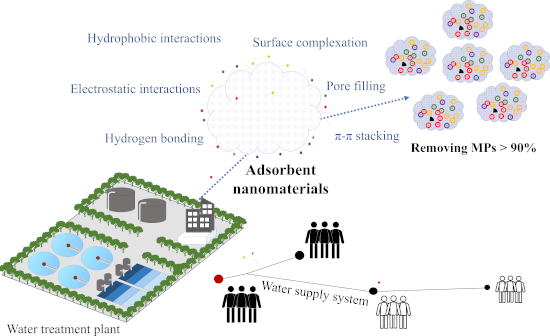
- reaction pathways of these materials. Classification and potential of adsorbent nanomaterials Carbon-based adsorbents. Carbon-based adsorbents, such as graphene oxide (GO), activated carbon, biochar, and carbon nanotubes (CNTs), have been extensively investigated regarding the treatment of pollutants in


Nanotechnology-based approaches for the removal of microplastics from wastewater: a comprehensive review
Beilstein J. Nanotechnol. 2025, 16, 1607–1632, doi:10.3762/bjnano.16.114
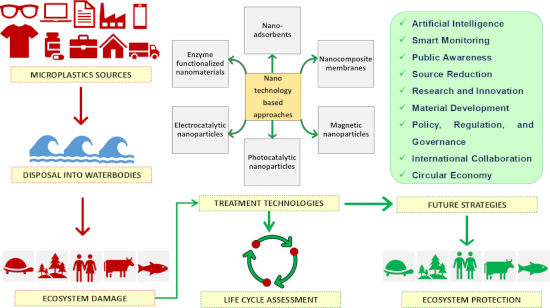
- contaminated with MPs. Meanwhile, a higher cost of these adsorbents limit their use for the removal of MPs [82]. Research is actively exploring alternative adsorbents, with a particular focus on nanomaterial-based options. Among these, carbon nanotubes (CNTs), nanoscale metals, nanocomposites, and metal oxides


Transient electronics for sustainability: Emerging technologies and future directions
Beilstein J. Nanotechnol. 2025, 16, 1545–1556, doi:10.3762/bjnano.16.109
- bioresorbable materials, advanced materials such as carbon nanotubes (CNTs) [95] and two-dimensional transition metal dichalcogenides (e.g., MoS2) [96] are being re-examined from a new perspective, with growing interest in their potential biodegradability. The rediscovery and reassessment of such established


Dendrimer-modified carbon nanotubes for the removal and recovery of heavy metal ions from water
Beilstein J. Nanotechnol. 2025, 16, 1522–1532, doi:10.3762/bjnano.16.107

- dendrimers on a solid support can also improve the dispersibility, accessibility of binding sites, chemical recyclability, and mechanical stability [16][17]. In fact, dendrimers have been supported by various nanomaterials such as silica, graphene oxide, and carbon nanotubes (CNTs), broadening their
- thermodynamic parameters such as ΔH and ΔG asserted that adsorption process was endothermic and spontaneous in nature. Experimental Materials Multiwalled carbon nanotubes (CNTs) (CM-95, diameter 10–15 nm, length 10–20 μm, specific surface area 200 m2/g) were purchased from Hanwha Nanotech, Korea
- Abstract Effective removal of trace heavy metal ions from aqueous bodies is a pressing problem and requires significant improvement in the area of absorbent material in terms of removal efficiency and sustainability. We propose an efficient strategy to enhance the adsorption efficiency of carbon nanotubes


Parylene-coated platinum nanowire electrodes for biomolecular sensing applications
Beilstein J. Nanotechnol. 2025, 16, 1392–1400, doi:10.3762/bjnano.16.101
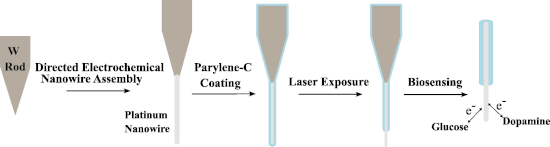
- portable and reliable devices [6]. Contemporary nanoscale biosensors are engineered for diverse applications, employing a variety of materials and design architectures to optimize performance and functionality. For example, carbon nanotubes (CNTs) are categorized as either single-walled or multiwalled


Synthesis and antibacterial properties of nanosilver-modified cellulose triacetate membranes for seawater desalination
Beilstein J. Nanotechnol. 2025, 16, 1380–1391, doi:10.3762/bjnano.16.100
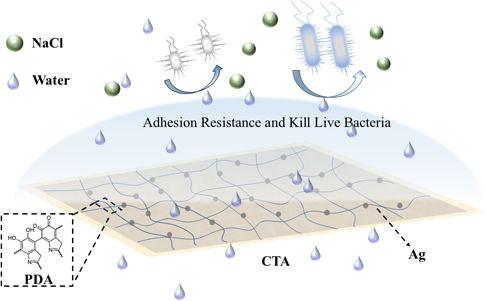
- photocatalytic properties of TiO2, which generate ROS that degrade bacterial membranes [23]. Yang and Wang’s group introduced carbon nanotubes (CNTs) into a mixed cellulose esters (MCE) membrane to create a robust porous bi-layered photothermal membrane (CNT@PEI/MCE) for efficient solar-driven interfacial water


Deep-learning recognition and tracking of individual nanotubes in low-contrast microscopy videos
Beilstein J. Nanotechnol. 2025, 16, 1316–1324, doi:10.3762/bjnano.16.96
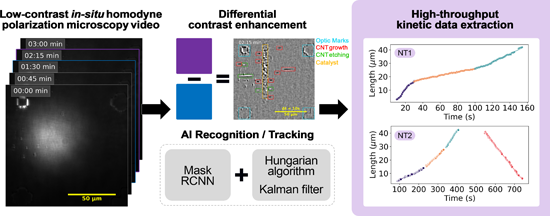
- ; polarization microscopy; Introduction Carbon nanotubes (CNTs), discovered over three decades ago, continue to present unresolved questions and challenges. Their exceptional properties, both theoretically [1][2] and experimentally demonstrated [3], make them desirable for electronic and optical devices


Multifunctional properties of bio-poly(butylene succinate) reinforced with multiwalled carbon nanotubes
Beilstein J. Nanotechnol. 2025, 16, 1014–1024, doi:10.3762/bjnano.16.76
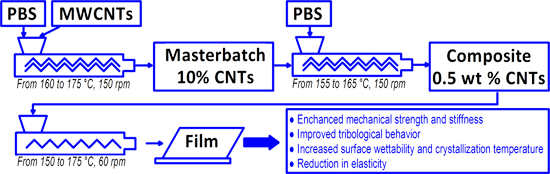
- in microbial environments is primarily attributed to its high degree of crystallinity [6][7][8]. A well-established approach to improving polymer properties involves the incorporation of nanofillers, particularly carbon nanotubes (CNTs). Even at low concentrations, CNTs can significantly affect the




Feasibility analysis of carbon nanofiber synthesis and morphology control using a LPG premixed flame
Beilstein J. Nanotechnol. 2025, 16, 581–590, doi:10.3762/bjnano.16.45
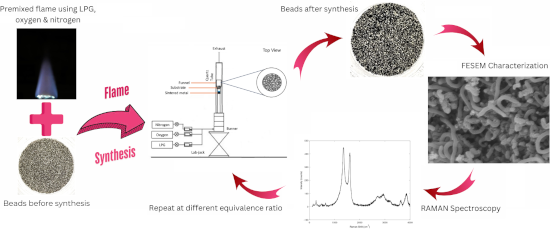
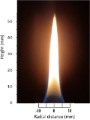
- synthesis; liquefied petroleum gas (LPG); nanomaterial synthesis; Introduction Carbon nanotubes (CNTs) and carbon nanofibers (CNFs) have gained significant interest because of their distinctive properties and their wide range of applications in nanotechnology [1][2][3]. CNTs are a modified version of CNFs



Nanomaterials in targeting amyloid-β oligomers: current advances and future directions for Alzheimer's disease diagnosis and therapy
Beilstein J. Nanotechnol. 2025, 16, 561–580, doi:10.3762/bjnano.16.44
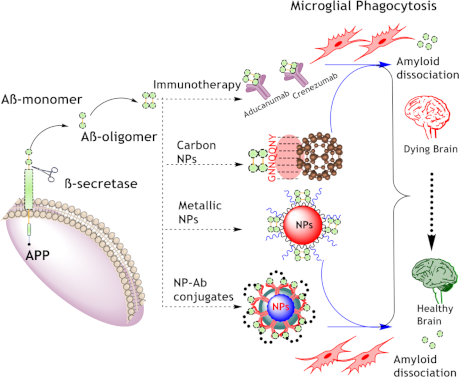
- therapeutic applications. CNMs can be categorized into three primary forms, namely, zero-dimensional fullerenes (e.g., C60), one-dimensional carbon nanotubes (CNTs), and two-dimensional graphene. Each of these NMs possesses distinct attributes that facilitate their engagement with proteins and peptides


Electron beam-based direct writing of nanostructures using a palladium β-ketoesterate complex
Beilstein J. Nanotechnol. 2025, 16, 530–539, doi:10.3762/bjnano.16.41
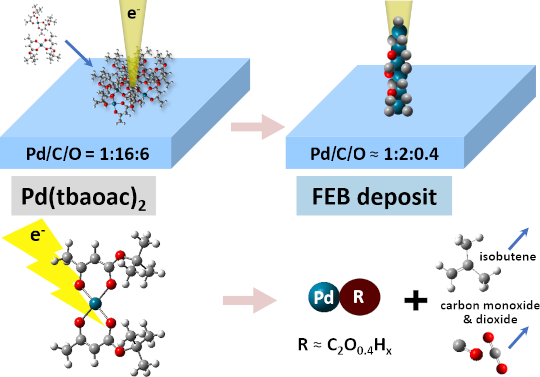
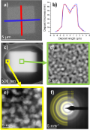
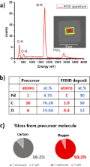
- this study, we present a detailed analysis of the characteristics of deposits obtained using the new precursor bis(tert-butylacetoacetate)palladium(II), [Pd(tbaoac)2], a member of the β-ketoesterate complex group. Given the growing interest in carbon nanotubes (CNTs) and graphene for semiconductor



Radiosensitizing properties of dual-functionalized carbon nanostructures loaded with temozolomide
Beilstein J. Nanotechnol. 2025, 16, 229–251, doi:10.3762/bjnano.16.18
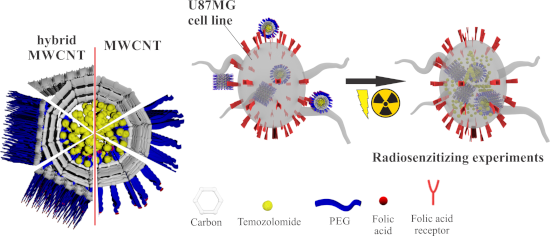
- nanostructures; cytotoxicity; glioblastoma multiforme; radiosensitizing properties; temozolomide; Introduction Carbon-based nanostructures (CNs) such as graphene and its derivatives, carbon nanotubes (CNTs), fullerenes, carbon quantum dots, carbon nanohorns and nanodiamonds (NDs), and their hybrids are becoming
- photodynamic therapy can be obtained [1][2][3][4][5]. It has been shown that CNs have an anti-amyloid aggregation activity, and some of them (i.e., carbon nanotubes (CNTs) and graphene) are able to interface with neurons and neuronal circuits and play an important role in the modulation of neurobiological




Modeling and simulation of carbon-nanocomposite-based gas sensors
Beilstein J. Nanotechnol. 2025, 16, 90–96, doi:10.3762/bjnano.16.9
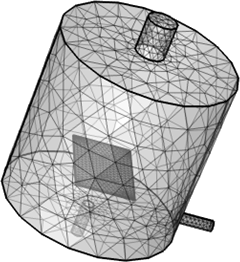
- nanomaterials, such as carbon nanotubes (CNTs), graphene, and carbon black, embedded within a polymer matrix [1]. The distinctive properties of carbon nanocomposites have positioned them as promising candidates for various applications, particularly in the development of advanced sensors. The small amounts of



Interface properties of nanostructured carbon-coated biological implants: an overview
Beilstein J. Nanotechnol. 2024, 15, 1041–1053, doi:10.3762/bjnano.15.85
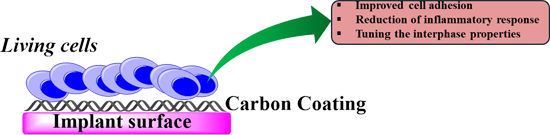
- applications [4] as active species or as drug delivery platforms using tailored carbon nanotubes (CNTs) [5][6], fullerenes [7][8], carbon dots (CDs) [9][10], and graphene-related materials (i.e., graphene oxide (GO) [11], reduced graphene oxide (rGO) [12], and nanographite (nG) [13]). Furthermore, the
- they still remain far below those of graphene. Last, GO and rGO show good interactions with polymeric matrices thanks to specific surface functionalizations [51]. Carbon nanotubes CNTs are an allotropic state of carbon discovered in the middle of the 20th century [52][53][54][55], which became famous



Bolometric IR photoresponse based on a 3D micro-nano integrated CNT architecture
Beilstein J. Nanotechnol. 2024, 15, 1030–1040, doi:10.3762/bjnano.15.84
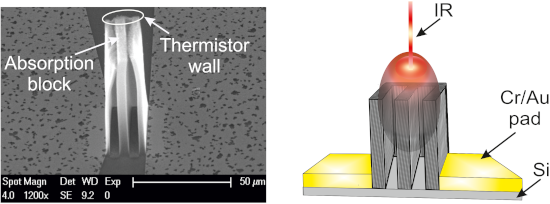
- for non-cryogenic IR microbolometer technology, carbon nanotubes (CNTs) have emerged as highly promising candidates [2] with broadband blackbody absorption [3], high resistance perpendicular to the CNT orientation [4], low lateral thermal conductivity [5], a high temperature coefficient of resistance


Ultrasensitive and ultrastretchable metal crack strain sensor based on helical polydimethylsiloxane
Beilstein J. Nanotechnol. 2024, 15, 270–278, doi:10.3762/bjnano.15.25
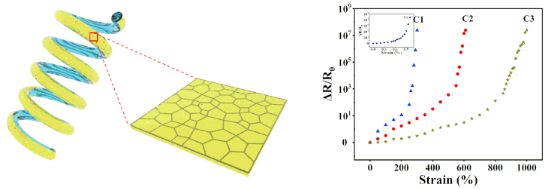
- -dimensional Ti3C2Tx MXene nanostacks [23]. The sensor exhibited a high GF of 772.6 when subjected to a strain range of 40–70%, owing to the presence of cracks induced in the MXene layer and carbon nanotubes (CNTs) acting as bridges. In a separate study, Xin et al. reported the fabrication of highly sensitive


Experimental investigation of usage of POE lubricants with Al2O3, graphene or CNT nanoparticles in a refrigeration compressor
Beilstein J. Nanotechnol. 2023, 14, 1041–1058, doi:10.3762/bjnano.14.86
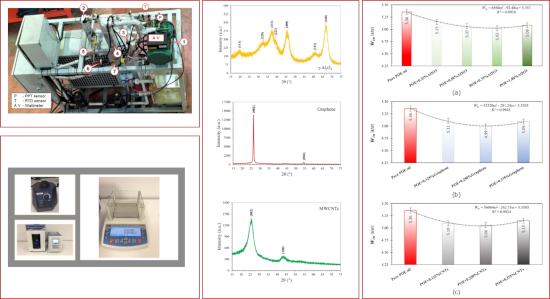
- nanotubes (CNTs) at different mass fractions in a refrigeration compressor was experimentally investigated. The required electrical power of the compressor was measured to determine the effect of the use of nanolubricants. Nanoparticles used in the preparation of nanolubricants were gradually added to the
- Kayhan Dagidir Kemal Bilen Department of Mechanical Engineering, Tarsus University, Mersin, Turkey Department of Mechanical Engineering, Ankara Yıldırım Beyazıt University, Ankara, Turkey 10.3762/bjnano.14.86 Abstract In this study, the use of nanolubricants containing Al2O3, graphene, and carbon


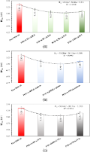


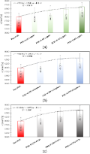

Control of morphology and crystallinity of CNTs in flame synthesis with one-dimensional reaction zone
Beilstein J. Nanotechnol. 2023, 14, 741–750, doi:10.3762/bjnano.14.61
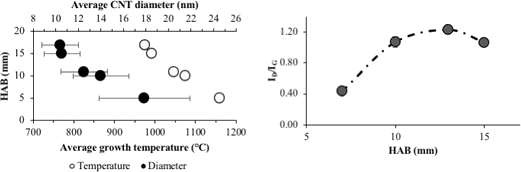
- Malaysia, 81310 Johor Bahru, Malaysia Advanced Membrane Technology Research Center, Universiti Teknologi Malaysia, 81310 Johor Bahru, Malaysia National Research and Innovation Agency, Indonesia 10.3762/bjnano.14.61 Abstract The growth of carbon nanotubes (CNTs) in a flame requires conditions that are
- with the nickel wire being exposed to an open flame at HAB values of 4 mm up to 14 mm for 3 min. The methane diffusion flame is unable to form under the wire mesh below 4 mm HAB, whereas carbon nanotubes (CNTs) are not synthesized on the nickel wire above 15 mm HAB. The entire synthesis is conducted


Carbon nanotube-cellulose ink for rapid solvent identification
Beilstein J. Nanotechnol. 2023, 14, 535–543, doi:10.3762/bjnano.14.44
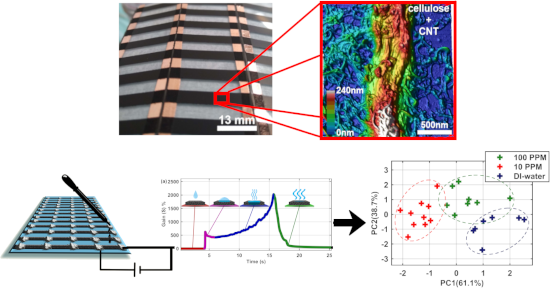
- of lightweight materials comprising a conductive ingredient (e.g., carbon nanotubes (CNTs), graphene, graphene oxide, and metal particles) embedded in a polymer matrix, have been extensively studied as liquid sensors [14][15][16][17][21][22]. The main idea is to combine the responsive electrical


A TiO2@MWCNTs nanocomposite photoanode for solar-driven water splitting
Beilstein J. Nanotechnol. 2022, 13, 1520–1530, doi:10.3762/bjnano.13.125
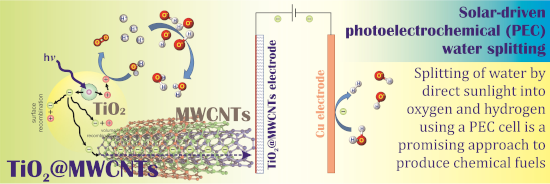
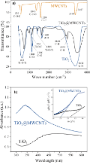
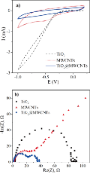
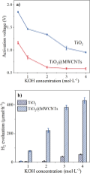
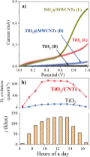
- been developed to increase the absorption of visible solar light [6][7]. Notably, carbon nanotubes (CNTs) are a promising material for visible-light absorption [8]. A combination of TiO2 with CNTs can effectively enhance the separation of e−/h+ pairs based on the high electric conductivity of CNTs