Search results
Search for "catalysts" in Full Text gives 315 result(s) in Beilstein Journal of Nanotechnology. Showing first 200.
Glycerol photoelectrochemical oxidation reaction at carbon nitrides/BiVO4 materials
Beilstein J. Nanotechnol. 2026, 17, 806–817, doi:10.3762/bjnano.17.57
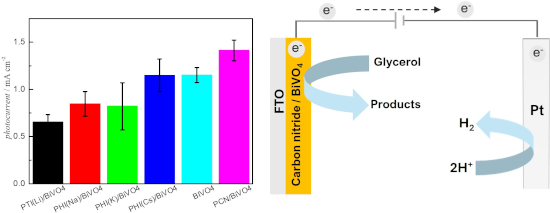
- water oxidation reaction, as well as the material stability at the anodes, must be overcome for this technology to be successfully transferred to end users [5]. To address these issues, several efforts have been made to develop efficient catalysts to improve the kinetics of the water oxidation reaction





Oxidative atmosphere-driven formation of single-phase spinel CuRh2O4 nanofibers for alkaline water oxidation
Beilstein J. Nanotechnol. 2026, 17, 737–743, doi:10.3762/bjnano.17.50
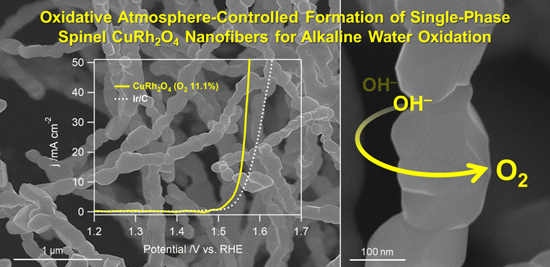
- , enhances metal–oxygen (M–O) covalency and optimizes the adsorption energies of key intermediates (*OH, *O, and *OOH), leading to improved reaction energetics [6][7][8]. Despite these advantages, synthesizing phase-pure spinel oxides remains challenging when Cu is incorporated. Cu-based catalysts are
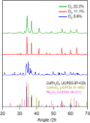
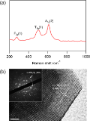
- oxides exhibit excellent OER electrocatalytic activity in 1 M NaOH (aq), highlighting the importance of oxygen-atmosphere engineering for the rational design of Cu-based spinel oxide catalysts. Results and Discussion A series of Cu–Rh bimetallic oxide nanofibers were synthesized via electrospinning and a
- critical role of phase purity in catalytic performance. Notably, the optimized CuRh2O4 nanofibers outperform commercial Ir/C and IrO2, benchmark catalysts for alkaline OER, requiring a lower potential of 1.53 V (vs RHE) to reach 10 mA·cm−2 compared to 1.57 V for Ir/C and exhibiting comparable performance




Environmental applications of silver nanoparticles: state-of-the-art review and emerging trends
Beilstein J. Nanotechnol. 2026, 17, 697–736, doi:10.3762/bjnano.17.49
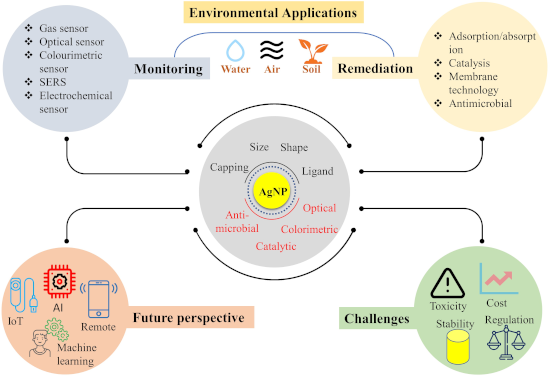
- design of next-generation environmental catalysts. However, various parameters, such as pH, temperature, catalyst dose, and pollutant concentration, are important in designing nanoparticle-based catalytic applications. Importantly, many high-performance examples cited above involve Ag-containing
- using an Ag-modified (CeO2–Al2O3) nanocomposite, achieving oxidation rates of 96% and 98%, respectively. Additionally, the reaction selectivity exceeded 97%. The relative humidity enhanced gas-phase photolysis in the presence of UV [168]. Bifunctional zeolite-Ag catalysts (ZSM-5||Ag/γ-Al2O3) showed 100


Cellulose as a photocatalyst support material: extraction, structural features, and environmental applications
Beilstein J. Nanotechnol. 2026, 17, 635–652, doi:10.3762/bjnano.17.44
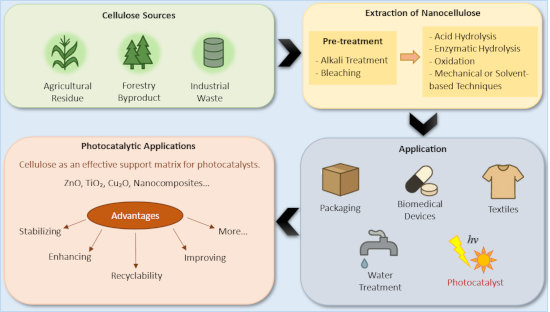
- absorb photons from light, typically ultraviolet (UV) radiation or visible light, and generate reactive oxygen species (ROS) such as hydroxyl radicals (•OH) or superoxide radicals (O2•−) through photoexcitation [16][17]. In photocatalytic degradation, the catalysts typically used are semiconductor
- materials that can absorb light energy and generate electron–hole pairs, which then participate in redox reactions to produce ROS that degrade organic pollutants. Titanium dioxide (TiO2) and zinc oxide (ZnO) are the common catalysts that have been used [18][19]. Figure 3 illustrates the general mechanism of
- attractive for water purification applications. Owing to these features, CNCs have been widely studied not only as adsorbents, supports for catalysts, and coagulants or flocculants, but also as membrane materials, with recent research showing that CNCs can either be incorporated into existing membranes or


Synthesis of Cu–Mo/TiO2 and Co–Mo/TiO2 photocatalysts for the efficient degradation of organic pollutants in water
Beilstein J. Nanotechnol. 2026, 17, 559–570, doi:10.3762/bjnano.17.37
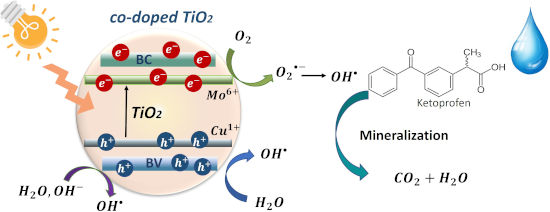
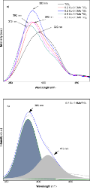
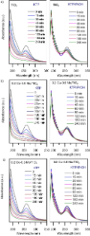
- ]. Point of zero charge The point of zero charge (PZC) of the TiO2, 0.5 Cu–0.5 Mo/TiO2, and 0.5 Co–0.5 Mo/TiO2 photocatalysts was determined by the acid–base titration method [40]. Information on the surface properties of the catalysts is highly relevant as adsorption plays a vital role in photocatalytic
- cobalt, the point of zero charge decreased, resulting in values of 6.2 and 6.8 for the catalysts 0.5 Cu–0.5 Mo/TiO2 and 0.5 Co–0.5 Mo/TiO2, respectively. The PZC value can be used to determine the optimal pH value of the ketoprofen aqueous solution for the photocatalytic reaction experiments. Since the
- of the presence of hydroxyl radicals generated by TiO2, Cu–Mo/TiO2, and Co–Mo/TiO2 catalysts was evaluated. Aliphatic alcohols (ROH) can be used as HO· radical scavengers, to determine their effect on a photocatalytic process. The photocatalytic degradation reactions of ketoprofen solutions with an



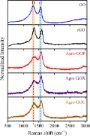
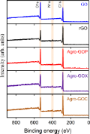
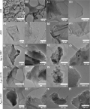
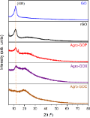
Upcycling agroindustrial waste into graphene oxide supports for gold nanoparticles: toward sustainable nanomaterials
Beilstein J. Nanotechnol. 2026, 17, 489–504, doi:10.3762/bjnano.17.32
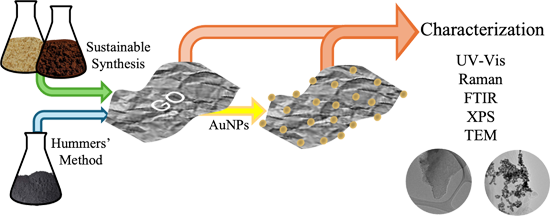
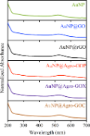
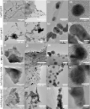
- alternatives based on low-temperature and rapid pyrolysis of biowaste have been proposed [20]. Previous studies have shown that organometallic catalysts can lower the energetic barrier for carbon domain formation, enabling carbonization at temperatures significantly below those required for conventional




Gold nanoparticle-decorated reduced graphene oxide as a highly effective catalyst for the selective α,β-dehydrogenation of N-alkyl-4-piperidones
Beilstein J. Nanotechnol. 2026, 17, 218–238, doi:10.3762/bjnano.17.15
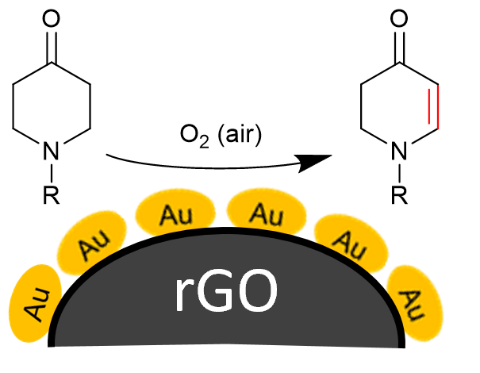
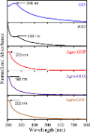
- carbon (AC), and carbon black (CB), to investigate the influence of the carbon support on the catalyst performance. As stabilizing agents for the AuNPs, citrate (Cit) and the polyoxometallate [SiW9O34]10− (SiW9) were used. Among the tested catalysts, the rGO-supported ones, Au-Cit/rGO, Au-SiW9/rGO, and
- Au@SiW9/rGO exhibited the highest catalytic activity for the selective oxidation reaction despite containing the lowest gold loading. These findings highlight the exceptional performance of rGO as a support for AuNP catalysts and provide valuable insights for designing efficient Au-based systems for
- development of highly efficient catalysts is of constant interest for advancements in organic chemistry, particularly in oxidation, hydrogenation, and coupling reactions. Gold nanoparticles (AuNPs) have emerged as exceptionally effective catalysts for facilitating these types of reactions [3][4]. The unique


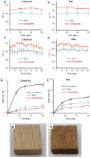
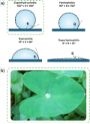
Functional surface engineering for cultural heritage protection: the role of superhydrophobic and superoleophobic coatings – a comprehensive review
Beilstein J. Nanotechnol. 2026, 17, 63–96, doi:10.3762/bjnano.17.6







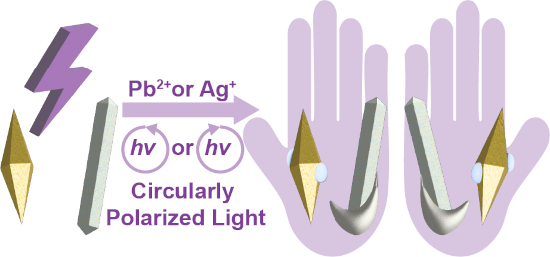
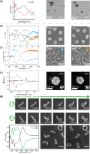
Chiral plasmonic nanostructures fabricated with circularly polarized light
Beilstein J. Nanotechnol. 2025, 16, 2245–2264, doi:10.3762/bjnano.16.154








Missing links in nanomaterials research impacting productivity and perceptions
Beilstein J. Nanotechnol. 2025, 16, 2168–2176, doi:10.3762/bjnano.16.149
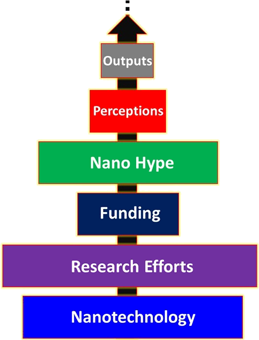
- standardized toxicity assessment, environmental fate modeling, and lifecycle analysis to enable safe and scalable commercialization. (2) Strengthen industry engagement through public–private partnerships that integrate advanced nanomaterials such as graphene, MXenes, nanoporous catalysts, and quantum dots into
Microplastic pollution in Himalayan lakes: assessment, risks, and sustainable remediation strategies
Beilstein J. Nanotechnol. 2025, 16, 2144–2167, doi:10.3762/bjnano.16.148
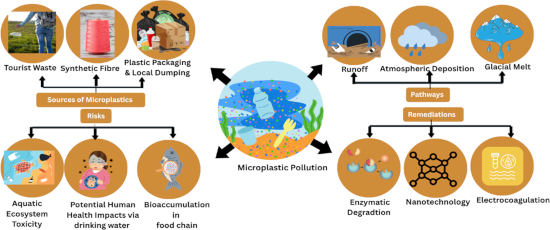
- catalysts, are a good example of a new method that has achieved great degrading effectiveness and is under study regarding its potential application to cold environments [46]. However, before being widely used in delicate ecosystems like Himalayan lakes, chemical methods must be carefully optimized since


Toward clinical translation of carbon nanomaterials in anticancer drug delivery: the need for standardisation
Beilstein J. Nanotechnol. 2025, 16, 2092–2104, doi:10.3762/bjnano.16.144

- energy sectors (Figure 1). NMs have seen use as antimicrobial agents [1], catalysts [2], bioimaging agents [3][4][5][6], magnetic particle imaging agents [7], nanofluids [8], antiviral agents [9], photothermal convertors [10], and in environmental remediation [11]. Topically, the biomedical applications




On the road to sustainability – application of metallic nanoparticles obtained by green synthesis in dentistry: a scoping review
Beilstein J. Nanotechnol. 2025, 16, 1851–1862, doi:10.3762/bjnano.16.128
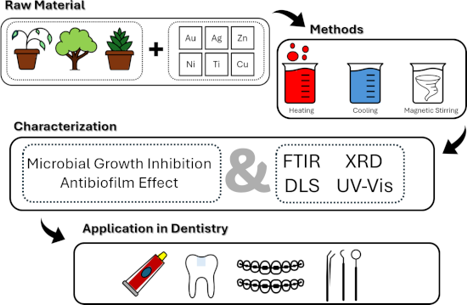
- extracts, several compounds, such as phenols, flavonoids, terpenoids, alkaloids, and proteins, play crucial roles in reducing metal ions and stabilizing nanoparticles, thereby eliminating the need for harsh chemical catalysts [12][13][14]. This technique is widely regarded as a clean technology as it


Piezoelectricity of layered double hydroxides: perspectives regarding piezocatalysis and nanogenerators
Beilstein J. Nanotechnol. 2025, 16, 1812–1817, doi:10.3762/bjnano.16.124

- materials, in some cases having an advantage over three-dimensional bulk counterparts [4]. Traditionally, LDHs are known as adsorbents, anion exchangers, catalysts, and catalyst precursors, but the wide range of their properties is not limited to this, as the discovery of piezoelectric properties has shown
- /Al-LDHs. The crystal structure of LDHs is fairly flexible, enabling adjustment of their cationic composition. One widely used method for preparing LDH-based catalysts is cation doping further increasing their catalytic activity. A cobalt-doped Zn/Al-LDH (ZnCo/Al-LDH) piezoelectric catalyst was used
- piezoelectric properties of the ZnCo/Al-LDH-catalyst accelerated carrier transport and promoted regeneration of the Co2+ catalytic active center. Another variety of LDH-based catalysts are composite materials produced from constituent materials with LDHs as one of them. When combined with BaTiO3, Zn/Al-LDH

Ambient pressure XPS at MAX IV
Beilstein J. Nanotechnol. 2025, 16, 1677–1694, doi:10.3762/bjnano.16.118
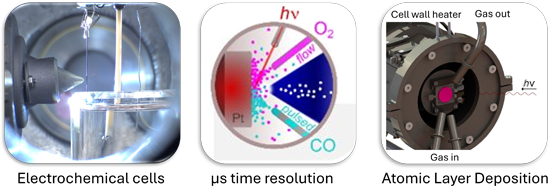
- representative studies at MAX IV, including investigations of single-atom catalysts, confined catalysis, time-resolved catalysis, atomic layer deposition, and electrochemical interfaces, showcasing the role of APXPS in advancing material and surface science. Keywords: 2D materials; atomic layer deposition
- fields including catalysis, energy materials, and corrosion, to name a few. As an example in catalysis research, we will discuss experiments on solid–gas interfaces about single-atom catalysts, catalysis in confined space, time-resolved catalysis, and photocatalysis. Remaining in the solid–gas
- observation of catalytic surfaces under reaction conditions. This allows for full life cycle characterization of catalysts, offering insights into surface structure, composition, and dynamic behavior during catalysis. Thanks to its intrinsic surface sensitivity, APXPS is uniquely positioned to probe the








Nanotechnology-based approaches for the removal of microplastics from wastewater: a comprehensive review
Beilstein J. Nanotechnol. 2025, 16, 1607–1632, doi:10.3762/bjnano.16.114
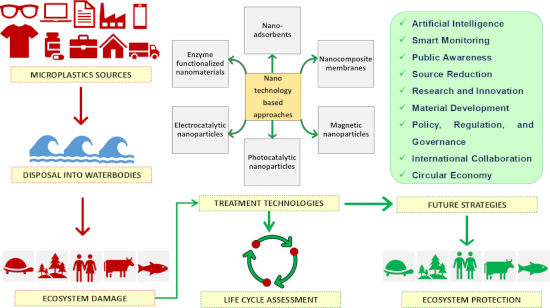
- poses several practical challenges, particularly concerning their recovery and reuse. These issues are critical, as there is a potential risk of nanoparticle release into the environment. To address these concerns, researchers have explored various strategies to immobilize the catalysts onto solid



Laser processing in liquids: insights into nanocolloid generation and thin film integration for energy, photonic, and sensing applications
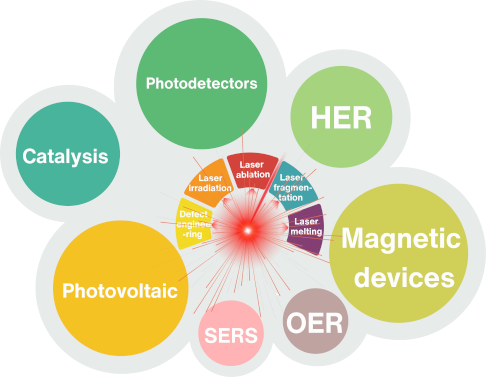
Beilstein J. Nanotechnol. 2025, 16, 1428–1498, doi:10.3762/bjnano.16.104






Better together: biomimetic nanomedicines for high performance tumor therapy
Beilstein J. Nanotechnol. 2025, 16, 1246–1276, doi:10.3762/bjnano.16.92
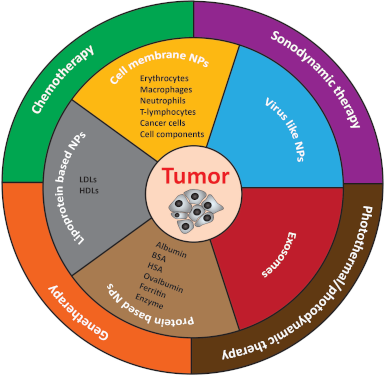
- , recombinant ferritin can be used as a carrier of macromolecules such as enzymes by electrostatic interaction with the negatively charged interior of the ferritin cage [99]. 1.3.6 Enzyme-based biomimetic nanoparticles. Enzymes are biological catalysts and proteins by nature. Multienzymes are complex structures







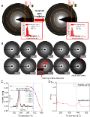
Crystalline and amorphous structure selectivity of ignoble high-entropy alloy nanoparticles during laser ablation in organic liquids is set by pulse duration
Beilstein J. Nanotechnol. 2025, 16, 1141–1159, doi:10.3762/bjnano.16.84
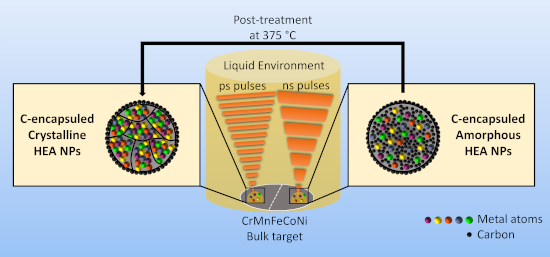
- heterogeneous catalysts or magnets. In that context, the outstanding temperature stability up to 375 °C (differential scanning calorimetry) or 500 °C (transmission electron microscopy) may motivate future application-relevant work. Keywords: amorphous; cantor alloy; compositionally complex alloy; complex solid
- heterogeneous catalysts, colloids are more flexible as the support material is not predefined by the synthesis route but can be freely chosen. This may be highly relevant as previous studies report on the facile supporting of laser-generated NPs onto multiple carrier materials such as carbon [33][34][35], metal




Soft materials nanoarchitectonics: liquid crystals, polymers, gels, biomaterials, and others
Beilstein J. Nanotechnol. 2025, 16, 1025–1067, doi:10.3762/bjnano.16.77
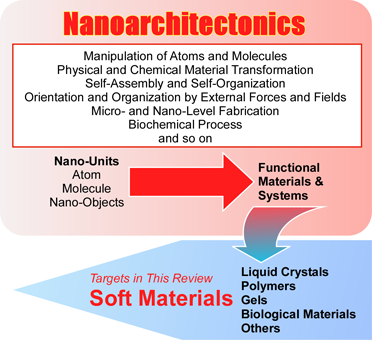
- also illustrate the potential applications, including organic semiconductor devices, electrochemical catalysts, thin-film sensors, solar energy generation, plastic crystal electrolytes, microactuators, smart light-responsive materials, self-repairing materials, enzyme cascade sensors, healing materials
- [149][150][151][152][153]. Nanoarchitectonics is also used in the development of chemical catalysts [154][155][156][157][158], photocatalysts [159][160][161][162][163], sensors [164][165][166][167][168], biosensors [169][170][171][172][173], devices [174][175][176][177][178], solar cells [179][180][181
- without the necessity for catalysts or the generation of by-products. It is possible to develop a variety of dynamic covalent molecules that homolytically dissociate into stable radical species upon mechanical stimulation, thereby exhibiting color changes. The accumulated knowledge on molecular design to






Heat-induced transformation of nickel-coated polycrystalline diamond film studied in situ by XPS and NEXAFS
Beilstein J. Nanotechnol. 2025, 16, 887–898, doi:10.3762/bjnano.16.67
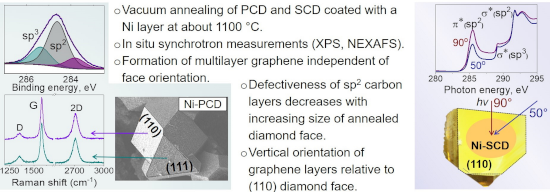
- of diamond surfaces is important for many applications, which require the formation of thin conductive electrodes on dielectric substrates. Transition metal catalysts can facilitate the graphitization process, which depends on the diamond face orientation. In the present work, the role of a nickel


Insights into the electronic and atomic structures of cerium oxide-based ultrathin films and nanostructures using high-brilliance light sources
Beilstein J. Nanotechnol. 2025, 16, 860–871, doi:10.3762/bjnano.16.65

- ; Introduction Transition metal oxides in the form of thin films or nanostructures find extensive use in sustainable energy technologies [1][2]. They serve as active materials or supports for catalysts for various chemical reactions, essential to energy conversion, sensing, and environmental remediation [3][4
- dynamic processes occurring for example upon photoexcitation. Among transition metal oxides, cerium oxide (or ceria) has unique redox properties, linked to the relative stability of Ce cations in the 4+ and 3+ oxidation states, which make the material highly effective in automotive catalysts and in the
- active sites in catalysts is a crucial problem in view of the optimization of catalyst efficiency and selectivity. The possibility of carrying out spectroscopic studies under conditions as close as possible to ambient pressure has largely contributed to this goal. The application of these methods to


Facile one-step radio frequency magnetron sputtering of Ni/NiO on stainless steel for an efficient electrode for hydrogen evolution reaction
Beilstein J. Nanotechnol. 2025, 16, 837–846, doi:10.3762/bjnano.16.63
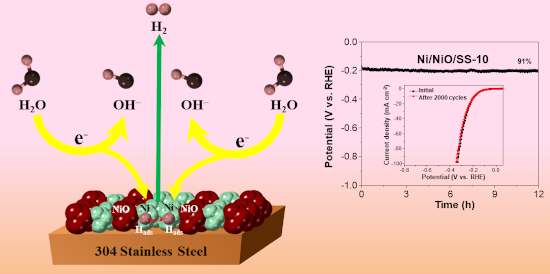
- catalysts were recognized as the best material for electrochemical hydrogen evolution reaction (HER) [11][12][13]. However, it is challenging to use Pt-based nanomaterials for industrial applications because of their non-abundance and high cost. As a result, many studies have explored Pt-free catalysts
- fabricated metal/metal oxide-based nanomaterials using various solution-based methods for alkaline HER because of the efficacy of metal oxides in breaking water molecules. In this context, Ni/NiO-based nanomaterials were evaluated as promising catalysts for industrial applications because of their Gibbs free
- preserved substrate are definite advantages. Although studies have recognized the effectiveness of magnetron sputtering, research has yet to systematically investigate the effect of the O2 flow rate on the HER efficiency of Ni/NiO catalysts. Commercial stainless steel (SS) costs less than other conductive
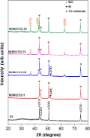


Synthesis and magnetic transitions of rare-earth-free Fe–Mn–Ni–Si-based compositionally complex alloys at bulk and nanoscale
Beilstein J. Nanotechnol. 2025, 16, 823–836, doi:10.3762/bjnano.16.62
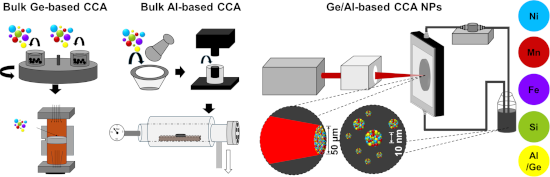
- , regardless of the target preparation technique. Additionally Gatsa et al. [49] provide a realistic perspective that the CCA NPs production using a multibeam PLAL approach can be scaled up to ca. 3 g·h−1. The CCA NPs produced by PLAL have shown a promising response as catalysts for oxygen reduction reactions


Nanostructured materials characterized by scanning photoelectron spectromicroscopy
Beilstein J. Nanotechnol. 2025, 16, 700–710, doi:10.3762/bjnano.16.54
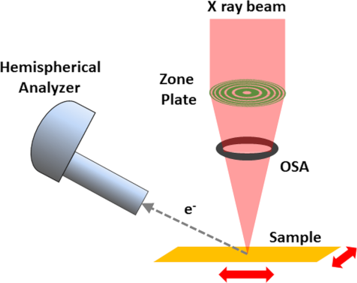
- supercapacitors [35][36] fast spintronics [37], electrochromic devices [38][39], catalysts, and gas sensors [40][41], [42][43]. The characteristic p-type conductivity of this transition metal oxide is related to the presence of oxygen interstitials and the inherent nickel deficiency which leads to the formation