Search results
Search for "cells" in Full Text gives 1112 result(s) in Beilstein Journal of Nanotechnology. Showing first 200.
Nanoglasses: a trail towards uncharted regions of vitreous materials and their properties?
Beilstein J. Nanotechnol. 2026, 17, 1047–1062, doi:10.3762/bjnano.17.72



Influence of an external electric field on the catalytic CO oxidation of nanoscaled CeO2 and its La3+ and Gd3+ congeners
Beilstein J. Nanotechnol. 2026, 17, 1028–1038, doi:10.3762/bjnano.17.70
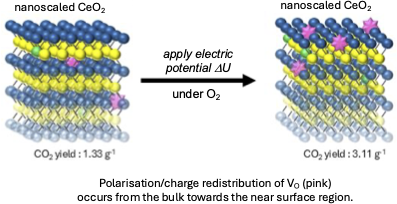
- the efficiency of CO oxidation [1]. The potential applicability of CeO2 in this reaction as well as in photocatalysis, gas sensing, solar cells, electrocatalysis, and as ultraviolet absorbent has been investigated extensively [2]. CeO2 crystallizes in the fluorite crystal structure in which each Ce4


Synthesis and characterization of RF-sputtered ZnTe/Cu2−xTe thin films for solar cell applications
Beilstein J. Nanotechnol. 2026, 17, 1016–1027, doi:10.3762/bjnano.17.69
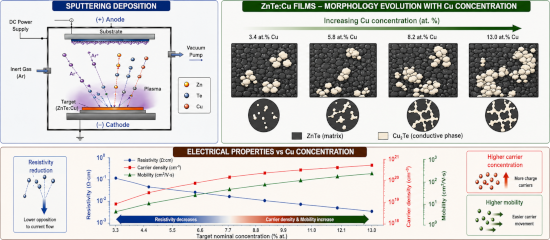
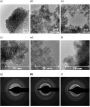
- incorporation and the formation of conductive Cu-rich secondary phases, yielding a biphasic system composed of semiconducting ZnTe and conductive Cu-rich telluride phases. These material properties suggest potential relevance for future studies of back-contact materials in CdTe-based solar cells. Keywords
- : back contact materials; Cu2−xTe phases; phase segregation; RF magnetron sputtering; ZnTe thin films; Introduction CdTe solar cells remain one of the leading thin-film photovoltaic technologies due to the near-optimal direct bandgap of CdTe (≈1.45 eV) and its high absorption coefficient (>104 cm−1
- challenges for large-scale application [4]. One of the most persistent limitations in CdTe solar cells is the formation of a stable back contact with low resistance. The high work function of CdTe (≈5.7 eV) and its relatively high surface resistivity hinder the formation of an ideal ohmic contact with



Ultrasonic irradiation in the synthesis of nanohydroxyapatite: a chemically friendly technique for improving hemocompatibility and antibiofilm applications
Beilstein J. Nanotechnol. 2026, 17, 991–1015, doi:10.3762/bjnano.17.68
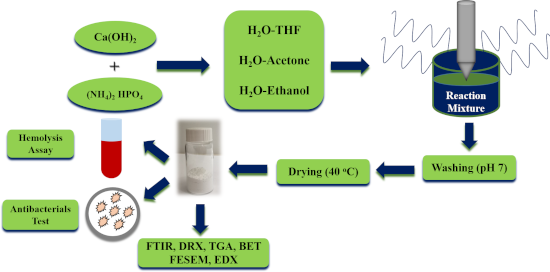
- its ability to form virulent biofilms, which are particularly difficult to eradicate. Biofilms are communities of microbial cells enclosed by exopolysaccharides that adhere to inert or living surfaces. These biofilms enhance bacterial growth and survival by providing access to nutrients and protection
- hemolysis values are comparable to those of other hydroxyapatites. For example, Barbosa et al. [85] using washed mouse red blood cells reported less than 2% hemolysis for hydroxyapatite tested up to 1 mg/mL for 1 h; and Radha et al. [86] using washed human red blood cells reported less than 2% of hemolysis
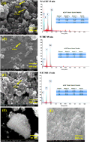
- to erroneous results [87]. In this sense, the sonochemical synthesis used to obtain nHA in this research, is simple and chemically clean, aligning with the principles of green chemistry. Figure 10 shows optical microscopy images of red blood cells from the bottom of the remaining fraction from which




Development of Protium heptaphyllum essential oil-loaded nanocapsules: experimental design and biological activity
Beilstein J. Nanotechnol. 2026, 17, 974–990, doi:10.3762/bjnano.17.67
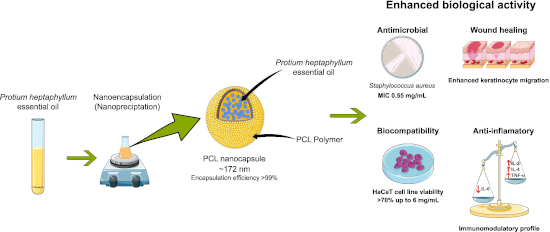
- ± 0.04, a zeta potential of −25.49 ± 1.08 mV and an encapsulation efficiency above 99%, in addition to long-term colloidal stability. Cell viability assays in HaCaT cells showed high biocompatibility, with cell viability above 70% up to 6 mg/mL and only moderate toxicity at 12 mg/mL. In antimicrobial
- storage [45]. Cell viability The cell viability following treatment with NPNC (Figure 4) showed a clear dose-dependent effect, with higher concentrations of encapsulated oil reducing viability in immortalized human keratinocyte epithelial cells (HaCat). At 12 mg/mL, a marked decrease was observed
- . Additionally, the effective concentration remains within a biologically safe range, as demonstrated in HaCaT cells, ensuring antimicrobial activity without compromising cell viability. Taken together, these findings provide evidence that the nanocapsule system enhances the antibacterial efficiency of P




Materials challenges in solid-state sensors for continuous monitoring of ions in water
Beilstein J. Nanotechnol. 2026, 17, 935–973, doi:10.3762/bjnano.17.66



Nanocarrier strategies to overcome P-glycoprotein-mediated drug resistance in cancer therapy
Beilstein J. Nanotechnol. 2026, 17, 882–921, doi:10.3762/bjnano.17.64
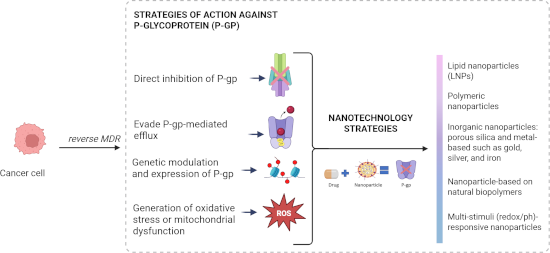
- compromised by multidrug resistance (MDR), a phenomenon in which cancer cells evade the cytotoxic effects of drugs through various mechanisms. Overexpression of efflux transporters, particularly P-glycoprotein (P-gp), is a well-documented contributor to this phenotype, although it is not the sole mechanism
- by uncontrolled proliferation of breast tissue cells and marked clinical heterogeneity. Among the resistance mechanisms documented in breast cancer, overexpression of P-gp has been studied extensively as a factor that actively exports chemotherapeutic agents from cancer cells, reducing intracellular
- restoring drug sensitivity [10]. 1.2 Mechanisms of multidrug resistance in cancer Multidrug resistance and metastasis are the main causes of cancer treatment failure. MDR tends to occur in cancer patients and is the ability of tumor cells to develop a specific mechanism to resist and overcome the cytotoxic


Nanoparticle delivery systems for HIV pre-exposure prophylaxis (PrEP): advances and challenges
Beilstein J. Nanotechnol. 2026, 17, 839–853, doi:10.3762/bjnano.17.60
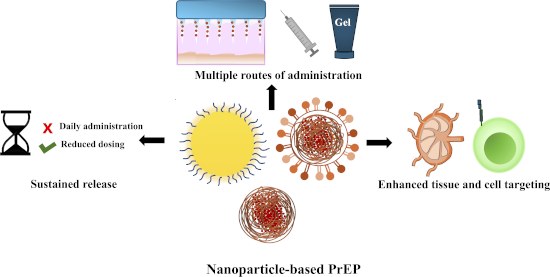
- for the nanoparticles’ ability to target specific tissues and cells. CD4+ T cells and antigen-presenting cells of myeloid lineage, such as macrophages or dendritic cells (DCs), are involved in HIV infection and are, therefore, cellular targets of interest. CD4+ T cells are the primary host cells of
- HIV in cis-infection, in which the virus directly binds to a host cell and initiates replication [30], whereas myeloid cells play a role in trans-infection [31][32][33]. In trans-infection, the virus binds to myeloid cells via a myeloid-cell receptor, in particular sialic acid-binding Ig-like lectin 1
- combination of TDF/FTC as nucleoside reverse transcriptase inhibitors (NRTIs) or long-acting injectable CAB as integrase strand transfer inhibitor (INSTI) [2][15][16]. Targeting cells relevant for both cis- and trans-infection through appropriate nanoparticle delivery strategies is of interest for enhancing


Glycerol photoelectrochemical oxidation reaction at carbon nitrides/BiVO4 materials
Beilstein J. Nanotechnol. 2026, 17, 806–817, doi:10.3762/bjnano.17.57
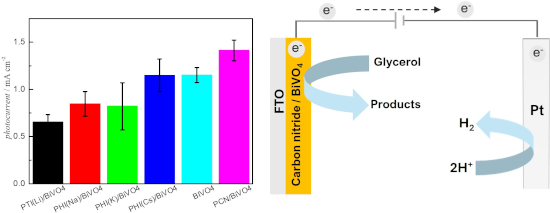
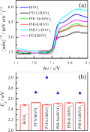
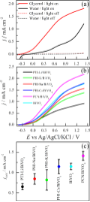
- ; bismuth vanadate; glycerol valorization; heterojunctions; photoelectrochemistry; Introduction Hydrogen production based on sustainable and renewable energy sources (the so-called green-H2) is a promising alternative for energy storage, with potential applications in fuel cells and the chemical industry
- context, the oxidation of small organic molecules has great potential to replace water oxidation in photoelectrochemical cells [22], as these molecules have a considerably lower standard potential, with the possibility to yield value-added products. Indeed, biomass derivatives, such as ethanol and
- glycerol, are targeted to become a new route for converting solar energy into fuels [23] at both sides of the cells (i.e., while H2 is produced at the cathode, carboxylic acids, aldehydes, and ketones can be produced at the anode [24]). It is expected that glycerol photoelectrochemical oxidation at BiVO4




Restorative potential of laser-synthesized silver nanoparticles with Salvia officinalis for periodontal disease treatment: an in vitro study
Beilstein J. Nanotechnol. 2026, 17, 781–795, doi:10.3762/bjnano.17.55
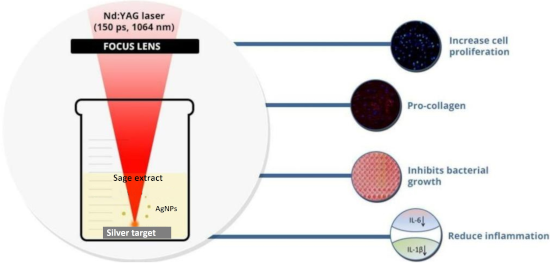
- aqueous sage extract as a stabilizer has not been reported. In the work conducted by Déné and co-workers [8], antifungal properties of sage-synthesized AgNPs were reported; but neither antibacterial effects nor effects on the eukaryotic cells were evaluated, and the synthesis relied on a chemical approach
- the 2,3-bis-(2-methoxy-4-nitro-5-sulfophenyl)-2H-tetrazolium-5-carboxanilide (XTT) assay according to the standard procedures [27]. Upon seeding in 24-well plates at a density of 0.05 × 10⁶ and reaching the subconfluent level, the cells were treated with concentrations of 0.5 × MIC, 1 × MIC, and 2
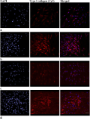
- × MIC for 24 and 48 h. Absorbance was measured at 470 nm on a microplate reader (Sunrise, Tecan Group Ltd., Switzerland). The results are presented as the percentage of viable cells compared to the untreated control (100% of viable cells). Cell proliferation assay Ki-67 immunofluorescent staining was



Interface-engineered Caco-2 cell culture on a collagen-coated liquid–liquid interface in a microfluidic device
Beilstein J. Nanotechnol. 2026, 17, 760–768, doi:10.3762/bjnano.17.53
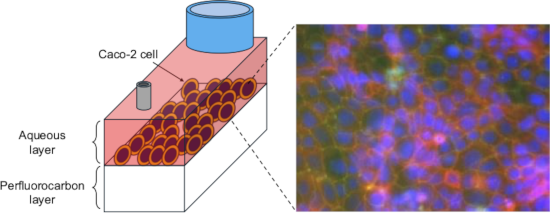
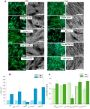
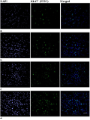
- Caco-2 cells in the device, we show that the liquid interface supports cell attachment and the formation of monolayers. Immunofluorescence observation reveals the development of tight junctions and organized actin cytoskeletons, indicating early-stage epithelial maturation. Our new microfluidic system
- Epithelial tissues form selective barriers that regulate the transport of molecules, ions, and gases; they play an important role in physiological homeostasis [1]. In vitro models of epithelial barriers, particularly culturing Caco-2 cells, have been widely used to study the function of the epithelial
- tissues [2][3][4]. The microfluidic culture system known as gut-on-a-chip enables the cultivation of Caco-2 cells under conditions that more closely recapitulate the in vivo intestinal environment. By precisely controlling fluid flow and inducing mechanical stimuli, this platform provides physiologically


Environmental applications of silver nanoparticles: state-of-the-art review and emerging trends
Beilstein J. Nanotechnol. 2026, 17, 697–736, doi:10.3762/bjnano.17.49
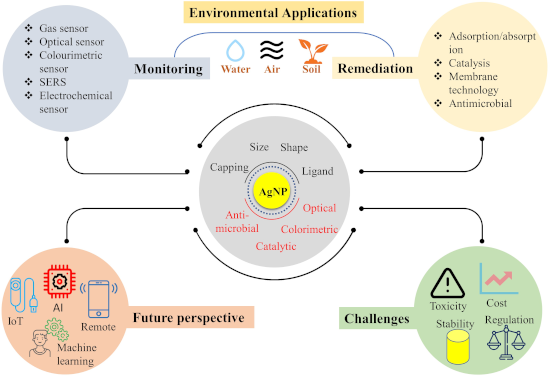
- safety evaluation. Nanosilver coated with tannic acid significantly inhibits adenovirus type 3 (Ad3) in HeLa cells, serving as a model system [78]. The inhibition mechanism involves structural and DNA damage to Ad3 [78]. Another study assessed the dose- and size-dependent antiviral effects of AgNPs


Molecular engineering of individual dye-based nanoparticle photostability for ultrabright two-photon fluorescence
Beilstein J. Nanotechnol. 2026, 17, 688–696, doi:10.3762/bjnano.17.48
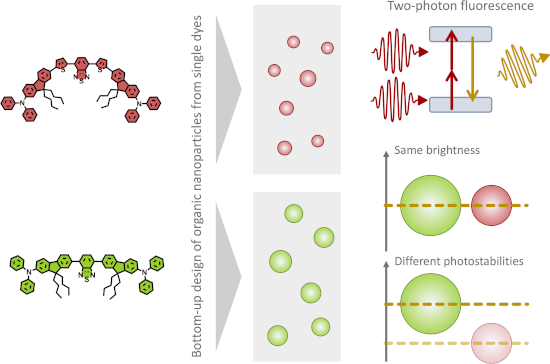
- bioactuators for drug delivery [6][7][8][9], and most recently as actuators for optogenetics in mice [10]. However, dFONs are most widely used as biomarkers for fluorescence imaging. Their stealth properties can be engineered as needed [11][12][13][14], making them versatile for use in cells, tissues [15] and
- whole animals, such as Xenopus tadpoles [3], zebrafish [16][17], and mice [15]. Furthermore, dFONs have proven highly effective as probes for single-particle tracking (SPT) experiments, both within cells [18][19] and deep in the extracellular space of the mouse brain [20]. Recently, we achieved a
- practice is to assess the overall photostability of the nanoparticles in solution [16][17][29][30] or in cells [15][29], by monitoring the fluorescence intensity under continuous illumination. These studies effectively demonstrate the superior photostability of dFONs compared to individual organic dye


Two-step laser synthesis of Ag@TiO2 nanomaterials for the photocatalytic degradation of rhodamine B
Beilstein J. Nanotechnol. 2026, 17, 622–634, doi:10.3762/bjnano.17.43
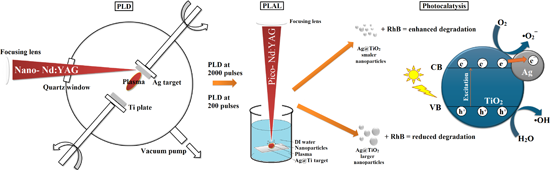
- electrophoretic mobility Hydrodynamic size distribution and zeta potential of the nanoparticles were measured using a Zetasizer Ultra (Malvern Panalytical, Malvern, Worcestershire, UK). Disposable plastic cuvettes were employed for size distribution analysis, while capillary cells were used for zeta potential and


Recent progress in enhancing built-in electric fields of perovskite solar cells via junction engineering
Beilstein J. Nanotechnol. 2026, 17, 602–621, doi:10.3762/bjnano.17.42
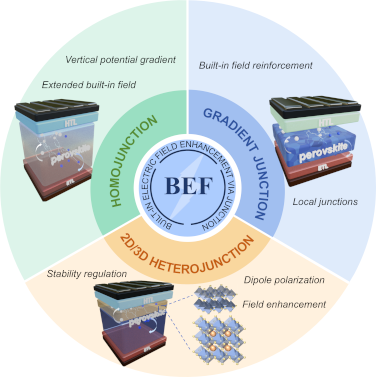
- Tong Xiao Ke Xu School of Electrical & Control Engineering, Shenyang Jianzhu University, Shenyang, China 10.3762/bjnano.17.42 Abstract The performance of perovskite solar cells (PSCs) is primarily governed by the built-in electric field (BEF), which dictates photocarrier separation, drift
- ; junction; perovskite solar cells; Introduction Driven by the global push for carbon neutrality, next-generation high-efficiency and low-cost photovoltaic technologies have gained increasing attention. Due to their high absorption coefficients, long carrier diffusion lengths, tunable bandgaps, and solution
- processability, perovskite solar cells (PSCs) have advanced significantly since their inception [1]. The power conversion efficiency (PCE) of single-junction devices has risen from 3.8% to 27.3% [2][3][4], highlighting their potential to approach the Shockley–Queisser limit. In typical heterojunction solar cells



Towards targeted drugs and next generation of nanomedicines
Beilstein J. Nanotechnol. 2026, 17, 598–601, doi:10.3762/bjnano.17.41
- size in a "big" human. At the same time, recent findings suggested that nanoparticles may be able to reach tumor tissue also via active mechanisms of uptake and transport across tumor endothelial cells, potentially opening up new ways to reach tumors with drugs [20][21][22]. Next to passive targeting
- , active targeting strategies are also being investigated, where drugs and drug carriers are modified via the addition of ligands specifically recognizing receptors overexpressed at the targeted cells. While few antibody–drug conjugates have been approved for clinical use [23], active targeting still
- several reviews on the current development of specific classes of nanomaterials, nanomedicines applied to specific diseases, and fundamental understanding of how nanomedicines are processed by cells and in the body. As a conclusion one can say that nanomedicine is in its infancy steps, where first
Impacts of annealing on structural and photophysical properties of zinc phthalocyanine adsorbed on graphene
Beilstein J. Nanotechnol. 2026, 17, 576–585, doi:10.3762/bjnano.17.39
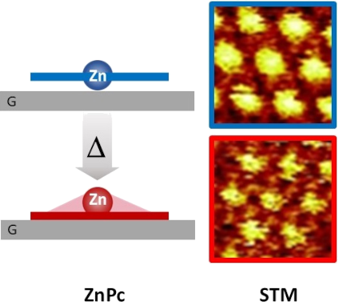
- a promising route to design original and innovative electronic devices [1] such as diodes [2][3], transistors [4][5][6], photodetectors [7][8], solar cells [9][10][11], or light-emitting devices [12]. In such heterostructures most electronic processes take place at the interface between graphene and


Laser–material interactions in liquids for the synthesis of nanomaterials: current status and perspectives
Beilstein J. Nanotechnol. 2026, 17, 571–575, doi:10.3762/bjnano.17.38
- ]), generation of soft magnets for magnetocaloric applications [58], fabrication of photodetectors [59], nanoscale agents for photodynamic [60] and neutron capture therapy [61], incorporation of nanoparticles into solar cells [62], light-harvesting nanofluids [63], and materials with enhanced mechanical [64] or
Advances in nanotechnology applied to natural products
Beilstein J. Nanotechnol. 2026, 17, 555–558, doi:10.3762/bjnano.17.36
- applications, including cancer therapy, where they may be designed as conventional liposomes or as immunoliposomes functionalized with antibodies or ligands to promote targeted delivery to tumor cells or components of the immune microenvironment [18]. Combining liposomes with natural products and co-loaded
Defects and defect-mediated engineering of two-dimensional materials: challenges and open questions
Beilstein J. Nanotechnol. 2026, 17, 454–488, doi:10.3762/bjnano.17.31
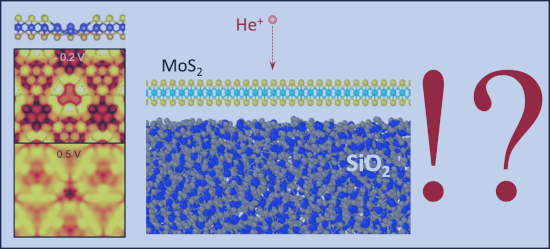





Nanocarrier-integrated multilayer films produced by 3D printing for improved skin adhesion and curcumin photostability
Beilstein J. Nanotechnol. 2026, 17, 440–453, doi:10.3762/bjnano.17.30
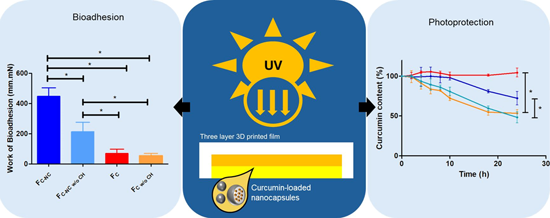
- to test our central hypothesis that multilayer printing can provide enhanced bioadhesion and light protection. However, they will be crucial for future optimisation and translation, including in vitro release testing using Franz diffusion cells as well as skin permeation studies. Conclusion In this


First-principles study on elastic properties of Cu, (Cu1−x,Nix)3Sn and interfacial mechanical properties of (Cu1−x,Nix)3Sn/Cu in the lead-free solder joint
Beilstein J. Nanotechnol. 2026, 17, 428–439, doi:10.3762/bjnano.17.29
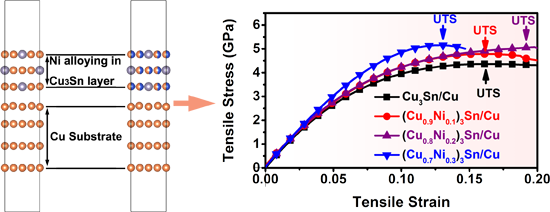
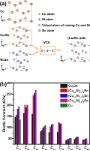
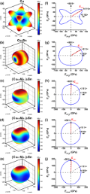
- calculated the energy increments of the deformed cells. Via quadratic fits of the relation between the energy increments and the strains, the elastic constants C11, C12, and C44 for Cu and C11, C22, C33, C12, C13, C23, C44, C55, and C66 for (CuxNi1−x)3Sn were extracted. Based on the calculated elastic


Nanoinformatics: spanning scales, systems and solutions
Beilstein J. Nanotechnol. 2026, 17, 423–427, doi:10.3762/bjnano.17.28
- of cancerous cells, also offering insights for potential nano-based cancer therapeutics [6]. Focusing on one specific MeOx nanomaterial, nano-TiO2, and a kidney epithelial cell – human renal cortex proximal tubule epithelial (HK-2) – Roy and Roy explored the potential for the nano-TiO2 to act as a
- carrier for other heavy metals such as Cd, Zn, Pb, Co or Ni into the cells – a so-called Trojan Horse mechanism. Using an ensemble learning approach that implements gradient boosting and bagging algorithms, four models were developed (i.e., a random forest, AdaBoost, Gradient Boost, and Extreme Gradient
- classification, random forest, support vector classifier, and linear discriminant analysis) applied to multiple cell types (pancreatic cancer cells (PaCa2), human endothelial cells (HUVEC) and human macrophage cells (U937)). The best model for each cell type was identified, and the structural fingerprints

Biomimetic nanoparticles in cancer photodynamic therapy: a review of targeted delivery systems and therapeutic outcomes
Beilstein J. Nanotechnol. 2026, 17, 396–422, doi:10.3762/bjnano.17.27
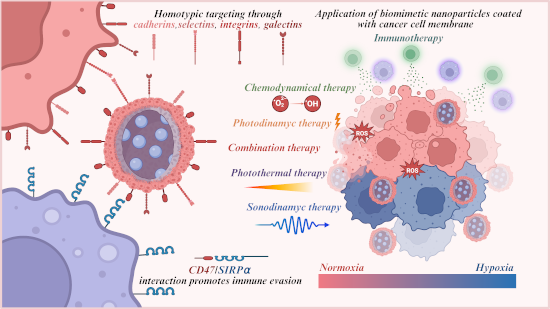
- reduced systemic toxicity [1]. Among emerging treatments, photodynamic therapy (PDT) has garnered considerable attention due to its minimally invasive nature, spatiotemporal control, and ability to selectively destroy tumor tissues while sparing healthy cells [2]. PDT operates through a unique mechanism
- involving three key components: a photosensitizer (PS), light of a specific wavelength, and molecular oxygen [3]. Upon light activation, the PS transitions to an excited state and transfers energy to surrounding oxygen molecules, generating reactive oxygen species (ROS) that can eradicate tumor cells. While
- circulation by the organs and the cells of the mononuclear phagocyte system (MPS), primarily the liver and spleen, and (ii) ineffective overcoming of biological barriers, that is, nanoparticles have to overcome numerous biological barriers to reach the target tissue, including extravasation from the


Polycatecholamine nanocoatings on stainless steel: the effect on attachment of human fibroblasts and platelets
Beilstein J. Nanotechnol. 2026, 17, 365–380, doi:10.3762/bjnano.17.25
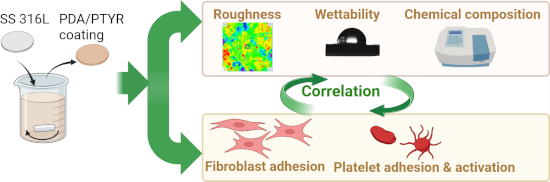
- thin, expandable struts. However, bare SS 316L stents exhibit limited hemocompatibility and are susceptible to in-stent restenosis and thrombosis [6][7]. Early and complete endothelialization plays a crucial protective role in preventing these complications, as endothelial cells restore vascular
- with native cells promotes their integration and mitigates inflammatory processes, the coatings on long-term metallic implants must fulfil some essential requirements. Such coatings must (i) provide corrosion protection, (ii) maintain mechanical integrity, (iii) support cell–material interactions, and
- biggest –NH2 amount. It must be noted that the coating thickness does not determine the –NH2 content available for reaction with methyl orange since the reaction happens on the material surface. Cytotoxicity towards L929 cells According to ISO 10993-5, materials are non-cytotoxic if their cytotoxicity