Search results
Search for "chromophore" in Full Text gives 35 result(s) in Beilstein Journal of Nanotechnology.
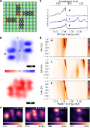
Locally induced Stark shifts of collective excitonic modes in polyradical aggregates
Beilstein J. Nanotechnol. 2026, 17, 1185–1193, doi:10.3762/bjnano.17.81
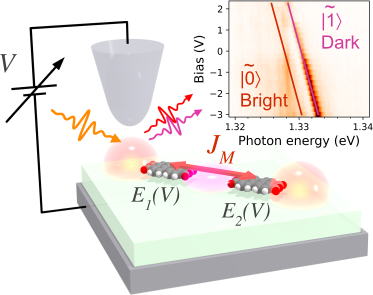
- , nanocavity coupling, and electrostatic charge inhomogeneities in the clusters. This sensitivity to the external parameters demonstrates an effective means of control over radical excitonic aggregates. Keywords: chromophore; dark states; exciton; Stark shift; TEPL; tip-enhanced photoluminescence
- mechanisms in living systems [6][7][8]. In contrast to the neutral chromophore aggregates that have been studied quite extensively in this context recently, reports on systems composed of radical anions are scarce [9][10][11][12][13], despite their potential to host more exotic excitonic properties. Since
- of selected coulombically coupled PTCDA anion chromophore aggregates. A consistent, nearly linear Stark shifting of the delocalized states was found in several symmetrical clusters of various sizes in response to the electric field applied within the nanocavity gap between the tip and the sample. In


Structure-dependent thermochromism of PAZO thin films: theory and experiment
Beilstein J. Nanotechnol. 2026, 17, 186–199, doi:10.3762/bjnano.17.12
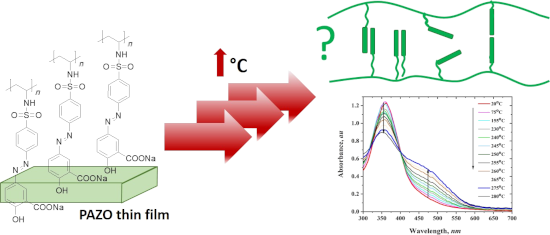
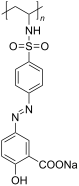
- dimers of the chromophore containing azobenzene and comparing them with experimental ones. The time-dependent DFT (TDDFT) scheme was used to calculate at PBE1PBE/6-311+G(2d,p) level of theory the absorption spectra of the simplified models of nonaggregated/aggregated PAZO side chains starting from the


Optical bio/chemical sensors for vitamin B12 analysis in food and pharmaceuticals: state of the art, challenges, and future outlooks
Beilstein J. Nanotechnol. 2025, 16, 2207–2244, doi:10.3762/bjnano.16.153
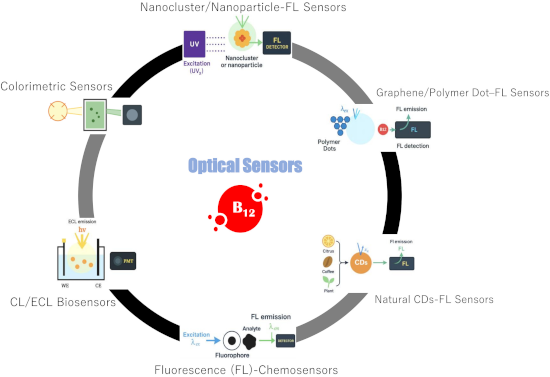
- significant difference in the detected amounts of MeCbl among the utilized diagnostic assays [78]. Small-molecule-based colorimetric chemosensors for cobalt/VB12 detection In this class, the recognition material is a small-molecule receptor (chemosensor), the indicator material is its intrinsic chromophore or
- group was developed to detect Co2+ ions in water with high selectivity. Here, the small molecule served as the recognition receptor, its coumarin scaffold acted as the indicator chromophore, and the sensing signal was a visible change from colorless to pale violet [80]. When anchored to silica, this
- phenols in a diazotization-like process produced a range of azo derivatives, 3-(diazenyl)-2-(styryl)quinazolin-4(3H)-one for detecting metal ions of Co2+ and Fe2+, where the azo-quinazolinone acted as the recognition material, the azo chromophore acted as the indicator, and the sensing readout was a


Advances of aptamers in esophageal cancer diagnosis, treatment and drug delivery
Beilstein J. Nanotechnol. 2025, 16, 1734–1750, doi:10.3762/bjnano.16.121
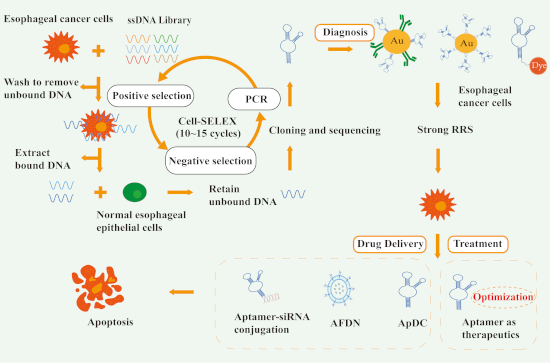
- serum albumin and lidamycin and loading it with the active enediyne chromophore (HSA-LDP-AE). The compound can effectively reduce nucleolin levels, specifically induce apoptosis of esophageal cancer cells, and significantly inhibit the growth of tumor tissues. This study provides a potential therapeutic


Soft materials nanoarchitectonics: liquid crystals, polymers, gels, biomaterials, and others
Beilstein J. Nanotechnol. 2025, 16, 1025–1067, doi:10.3762/bjnano.16.77
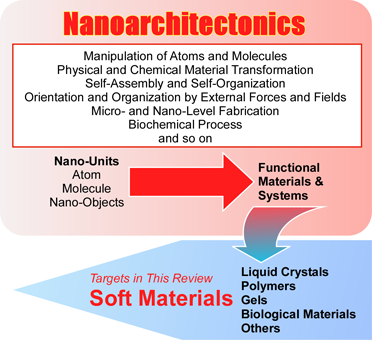
- had a smectic crystal phase that had a tilted chromophore (the part that gives the molecule its color) at 45° from the layer normal. This tilted chromophore caused a macroscopic polarization (a change in the electric field) when a direct current (DC) bias was applied during cooling from a high
- -temperature phase to a smectic crystal phase. By contrast, the other diastereomer exhibited a smectic crystal phase in which the chromophore was parallel to the layer normal and no macroscopic polarization was induced. Bulk photovoltaic effects and polarization-induced electroluminescence were exclusively
- observed in the polarized smectic crystal phase with the chromophore tilted from the layer normal. It is conceivable that the bulk photovoltaic effect could result in the generation of an open circuit voltage that exceeds the bandgap of the active layer. Furthermore, the bulk photovoltaic effect in the






A calix[4]arene-based supramolecular nanoassembly targeting cancer cells and triggering the release of nitric oxide with green light
Beilstein J. Nanotechnol. 2025, 16, 1003–1013, doi:10.3762/bjnano.16.75
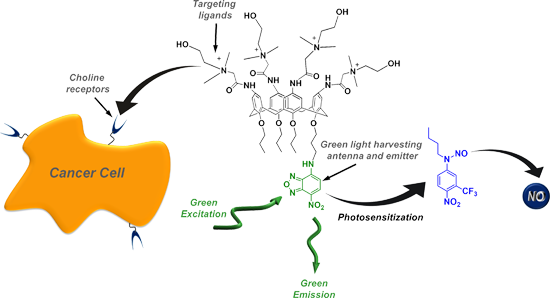
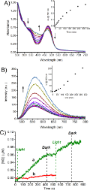
- typical features of the ABF chromophore [55][56][57][58][59][62][63][64] with a maximum at ca. 480 nm (Figure 1A). However, dynamic light scattering (DLS) measurements evidenced that, in line with its amphiphilic character, compound 1 is not present in the monomeric form but as nanoaggregates ca. 180 nm
- is also in line with the typical emission of the ABF fluorophore, with a maximum of ca. 550 nm [62][63][64]. Despite this spectral similarity, the fluorescence quantum yield of 1 was lower than that reported for the isolated ABF [55][56][57][58][59][62][63][64] chromophore, being Φf = 0.02. Besides
- , the fluorescence lifetime was shorter than that of the ABF chromophore, showing a dominant component (relative amplitude ca. 93%) with τ ca. 0.8 ns (inset Figure 1B). These emission features account for some self-quenching phenomena due to the aggregation of 1. The aggregates of 1 were quite stable at


Graphene oxide–chloroquine conjugate induces DNA damage in A549 lung cancer cells through autophagy modulation
Beilstein J. Nanotechnol. 2025, 16, 316–332, doi:10.3762/bjnano.16.24
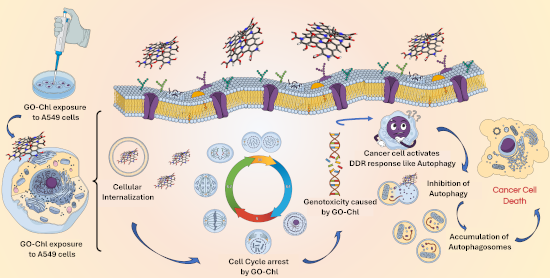
- -bonded networks and chromophore aggregation due to the presence of C=C, C=O, and C–O bonds [41]. The presence of a shoulder band around 295 nm corresponds to the well-defined n–π* electronic transitions due to the presence of C=O functional groups on the surface of GO. The appearance of the Chl



Mixed oxides with corundum-type structure obtained from recycling can seals as paint pigments: color stability
Beilstein J. Nanotechnol. 2023, 14, 467–477, doi:10.3762/bjnano.14.37
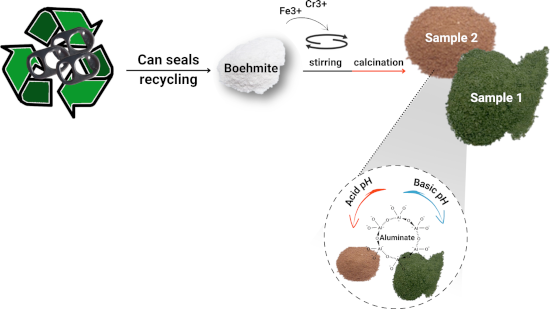
- interests to produce synthetic inorganic pigments [1] using metallic aluminium scrap as precursor to obtain a white matrix that can then be colored by chromophore ions as an approach within the circular economy of aluminium [1]. Aluminium production has one of the most significant energy consumption
- assignment is based on the intrinsic light absorption characteristics of the pigment due to the presence of a chromophore ion [8]. Different transition metals such as V, Cr, Mn, Fe, Co, Ni, and Cu have been used for this purpose [9]. Using inorganic compounds in the synthesis tends to increase the chemical




Cyclodextrins as eminent constituents in nanoarchitectonics for drug delivery systems
Beilstein J. Nanotechnol. 2023, 14, 218–232, doi:10.3762/bjnano.14.21
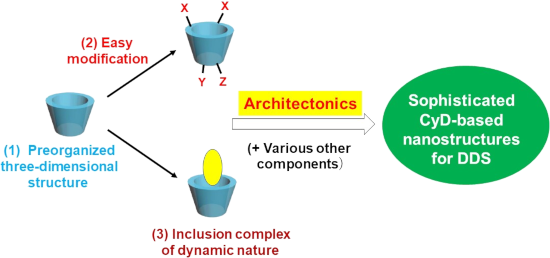
- opened for the release of encapsulated drug. In order to achieve photoinduced drug release through visible light, tetra-ortho-methoxy-substituted azobenzene (mAzo) can be used instead of unsubstituted azobenzene. The trans-to-cis isomerization of this chromophore proceeds under irradiation with red or




Solar-light-driven LaFexNi1−xO3 perovskite oxides for photocatalytic Fenton-like reaction to degrade organic pollutants
Beilstein J. Nanotechnol. 2022, 13, 882–895, doi:10.3762/bjnano.13.79
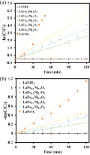
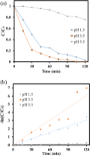
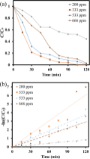
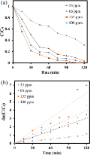
- chemical structure and high chromophore, it is not conducive to most biological and physical treatments. Thus, wastewater is regarded as a threat to the environment and health. As environmental awareness is gradually increasing, many countries are currently starting to control the use of harmful azo dyes



Nanoporous and nonporous conjugated donor–acceptor polymer semiconductors for photocatalytic hydrogen production
Beilstein J. Nanotechnol. 2021, 12, 607–623, doi:10.3762/bjnano.12.50
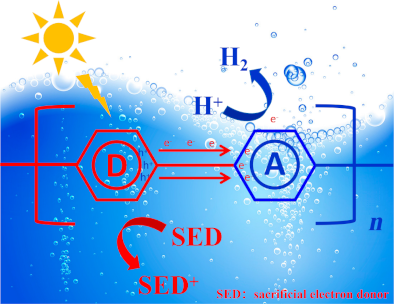
- chromophore has been widely used in OLEDs and fluorescent probes due to its high photoluminescent quantum yield. Jiang et al. [57] introduced various sorts of nitrogen-containing fragments in pyrene-based polymers to investigate their photocatalytic performance, for example, P30 and P31 (Figure 4


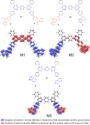


Nanocasting synthesis of BiFeO3 nanoparticles with enhanced visible-light photocatalytic activity
Beilstein J. Nanotechnol. 2020, 11, 1822–1833, doi:10.3762/bjnano.11.164
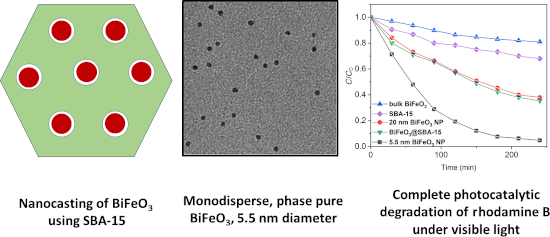
- absorbance peak of RhB at 553 nm decreased over time (see Supporting Information File 1, Figure S1). A closer inspection of that peak also reveals a blueshift of the maximum peak intensity from 553 to 548 nm due to the formation of intermediate species upon cleavage of the conjugated chromophore or removal




Interfacial charge transfer processes in 2D and 3D semiconducting hybrid perovskites: azobenzene as photoswitchable ligand
Beilstein J. Nanotechnol. 2020, 11, 466–479, doi:10.3762/bjnano.11.38
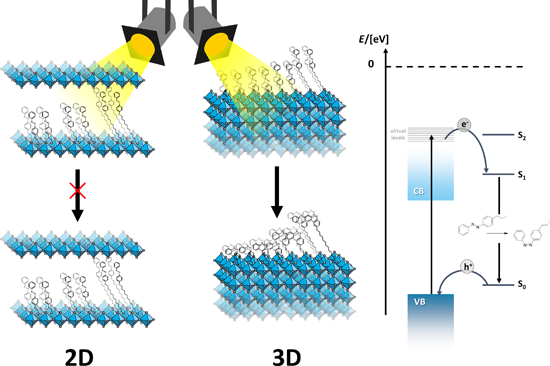
- from perovskite to azobenzene, which is strongly distance-dependent. This study provides evidence for the photoswitching of azobenzenes as ligands of hybrid perovskites, which depends on the spacing between the chromophore and the perovskite phase. Keywords: interface design; molecular switches
- ]. In 1997, Era et al. first presented a chromophore-containing organic–inorganic perovskite [21]. They observed an enhanced phosphorescence of the included naphthalene [22], which was explained by an efficient energy transfer from Wannier excitons from the semiconducting perovskite layer to the triplet
- states of naphthalene [23]. Regarding the electronic alignment of molecular orbitals, valence and conduction bands, the chromophore may serve as a quantum well [24]. The energy transfer between the semiconducting perovskite layer and the chromophore can easily be influenced by the chemical structure and




Molecular architectonics of DNA for functional nanoarchitectures
Beilstein J. Nanotechnol. 2020, 11, 124–140, doi:10.3762/bjnano.11.11

- our design strategy was attributed to the ultrasensitive detection of mercury through FET device fabrication, which overcame the limitations of earlier reports on DNA-based Hg(II) detection. Chromophore conjugation-guided DNA architectonics The introduction of organic chromophores within the nucleic


pH-Controlled fluorescence switching in water-dispersed polymer brushes grafted to modified boron nitride nanotubes for cellular imaging
Beilstein J. Nanotechnol. 2019, 10, 2428–2439, doi:10.3762/bjnano.10.233
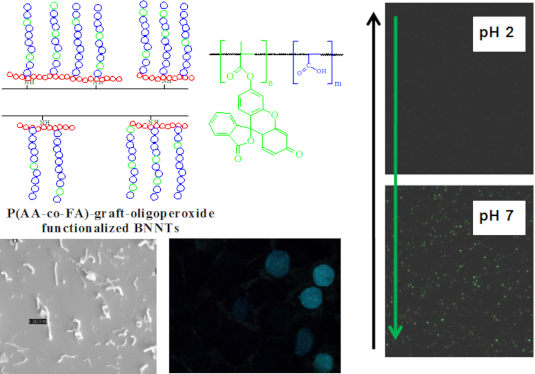
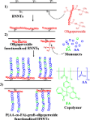
- P(AA-co-FA)-functionalized BNNTs is important evidence for the grafting of P(AA-co-FA) on the BNNTs. These fluorescence properties are due to the π–π* transition in covalently bonded FA (chromophore) units of P(AA-co-FA)-functionalized BNNTs. SEM images of pure and P(AA-co-FA)-functionalized BNNTs



Air oxidation of sulfur mustard gas simulants using a pyrene-based metal–organic framework photocatalyst
Beilstein J. Nanotechnol. 2019, 10, 2422–2427, doi:10.3762/bjnano.10.232
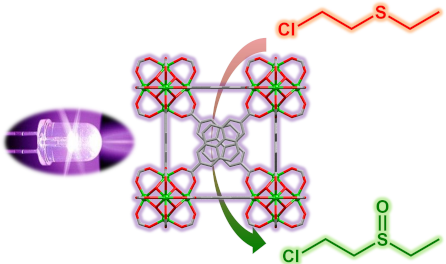
- that will selectively produce the partially oxidized sulfoxide. In that context, a promising approach is the use of singlet oxygen (1O2) generated by photosensitization of ground-state molecular oxygen (3O2) via an electronically excited chromophore. The chromophores can be compounds with significant
- selection of solvent choices since solubility of the chromophore does not need to be considered, and lower probability of photobleaching [24][25]. Metal–organic frameworks (MOFs), porous crystalline materials comprised of metal nodes and organic linkers, have attracted tremendous attention in heterogeneous




Effects of gold and PCL- or PLLA-coated silica nanoparticles on brain endothelial cells and the blood–brain barrier
Beilstein J. Nanotechnol. 2019, 10, 941–954, doi:10.3762/bjnano.10.95
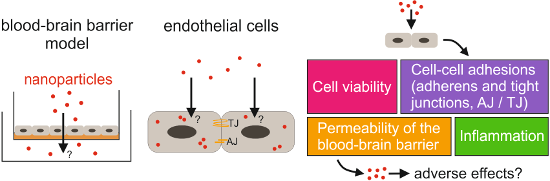
- the chromophore indocyanine green (ICG). The latter enables the transduction of laser light into heat leading to denaturation of the albumin and, subsequently, tissue fusion [6]. As ICG is unstable in aqueous solutions and prone to fast photo-bleaching, the use of a stabilizing system, such as



Outstanding chain-extension effect and high UV resistance of polybutylene succinate containing amino-acid-modified layered double hydroxides
Beilstein J. Nanotechnol. 2019, 10, 684–695, doi:10.3762/bjnano.10.68
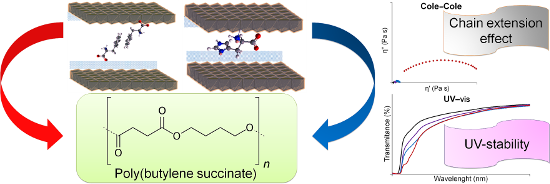
- can be caused by the cycle phenyl or imidazole acting as a chromophore. Also, PBS with Mg2Al/nitrate LDH shows lower transmittance, as described above. The evolution of the UV–vis transmittance of PBS and PBS nanocomposites was measured during photodegradation at 60 °C (Supporting Information File 1


Impact of the anodization time on the photocatalytic activity of TiO2 nanotubes
Beilstein J. Nanotechnol. 2018, 9, 2628–2643, doi:10.3762/bjnano.9.244
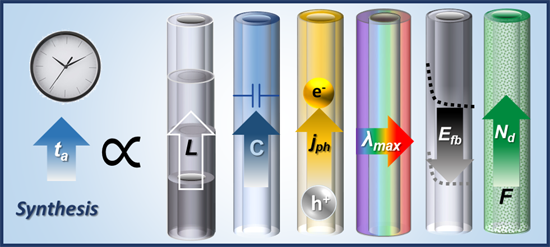
- −1, or on the breakdown of the chromophore feature. From the results we understand that, although a trend is observed for the MB removal with increasing ta, it does not correspond in the same proportion to what it is obtained through the PEC experiments. In part, this has to be associated to the fact


Perovskite-structured CaTiO3 coupled with g-C3N4 as a heterojunction photocatalyst for organic pollutant degradation
Beilstein J. Nanotechnol. 2018, 9, 671–685, doi:10.3762/bjnano.9.62

- ]. Generally, the degradation of RhB takes place either by destruction of the chromophore or by N-deethylation of RhB, resulting in the decrease in absorption at λmax = 554 nm. N-Deethylation of RhB leads to a steady blue shift toward 495 nm with increase in the irradiation time in the presence of g-C3N4
- , which could be due to the formation of N-deethylated intermediates. However, direct chromophore destruction leads to the formation of low molecular weight fragments, which does not have absorption in the lower visible region [53]. In our study, we observed a distinguishable blue shift in the λmax of RhB
- the chromophore of RHB during the degradation process. Control experiments for the degradation of RhB without any catalyst reflect its high stability under different light irradiation conditions, as no significant decrease in the absorption was observed. Figure 9d–f represents the degradation


Deposition of exchange-coupled dinickel complexes on gold substrates utilizing ambidentate mercapto-carboxylato ligands
Beilstein J. Nanotechnol. 2017, 8, 1375–1387, doi:10.3762/bjnano.8.139
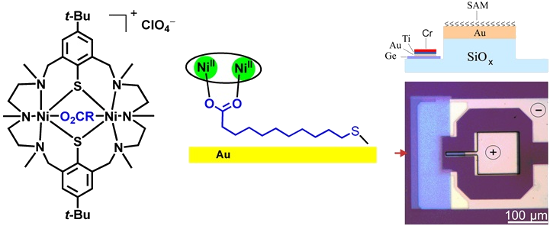
- , typical for an octahedral NiN3S2O carboxylate chromophore (assigned as ν2(3A2g→3T2g) and ν1(3A2g→3T1g), respectively, in pure Oh symmetry). Infrared spectroscopy (IR) is also a powerful method to examine carboxylate coordination modes [47][48]. As can be seen (Table 1), the present complexes reveal two


Selective photodissociation of tailored molecular tags as a tool for quantum optics
Beilstein J. Nanotechnol. 2017, 8, 325–333, doi:10.3762/bjnano.8.35
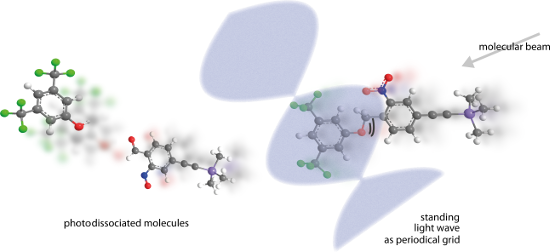
- objects. Both will be crucial for molecular quantum optics and future matter-wave experiments. An open future challenge will be to explore how well this method scales with the size of particles from individual monomer to trimers, chromophore-labelled biomolecules up to decorated viruses, as displayed as


False positives and false negatives measure less than 0.001% in labeling ssDNA with osmium tetroxide 2,2’-bipyridine
Beilstein J. Nanotechnol. 2016, 7, 1434–1446, doi:10.3762/bjnano.7.135
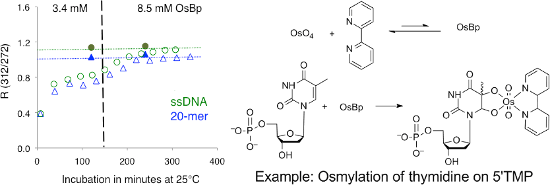
- osmylation of the monomer, the deoxythymidylic acid triphosphate, 5’dTTP [30]. The across-the-board equal reactivity leads to predictable osmylation of any DNA without prior sequence knowledge. Conjugation of OsBp to a pyrimidine leads to a new chromophore that absorbs in the range of 300 to 320 nm, a range
- osmylation conditions, these qualifications are met. Results and Discussion Earlier studies identified a chromophore, resulting from the formation of the pyrimidine/OsBp bond, which absorbs in the range of 300 to 320 nm where DNA has practically no absorbance [30][31][32]. These studies also selected two


Bacteriorhodopsin–ZnO hybrid as a potential sensing element for low-temperature detection of ethanol vapour
Beilstein J. Nanotechnol. 2016, 7, 501–510, doi:10.3762/bjnano.7.44
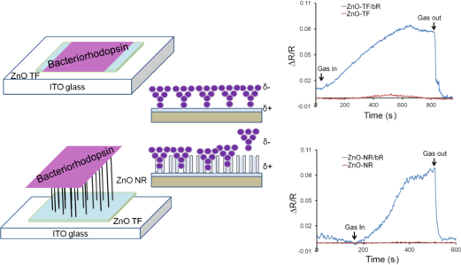
- ) [44] and the π–π* transition in the retinal chromophore between two different energy levels upon exposure to the light [45][46]. However, the characteristic absorbance of bR due to retinal absorption at 570 nm was blue-shifted by 5 nm in ZnO-TF/bR and ZnO-NR/bR hybrids, which may be due to the
- attributed to C–O–C asymmetric stretching, O–H bending, C=C stretching and C–H bending of the retinal chromophore, amino acids and lipids [66]. Further investigation indicates a small change in the amide I vibration spectra (at 1660 cm−1) due to the C=O stretch in the skeleton and amide II vibration spectra


Rigid multipodal platforms for metal surfaces
Beilstein J. Nanotechnol. 2016, 7, 374–405, doi:10.3762/bjnano.7.34

- of a well-decoupled oligothiophene chromophore on the gold electrode, which suppresses quenching of the excited states of the chromophoric unit both by lateral interactions between neighboring molecules in the monolayer and by the gold electrode. Further electrochemical studies of SAMs of two