Search results
Search for "cluster" in Full Text gives 312 result(s) in Beilstein Journal of Nanotechnology. Showing first 200.
Nanoglasses: a trail towards uncharted regions of vitreous materials and their properties?
Beilstein J. Nanotechnol. 2026, 17, 1047–1062, doi:10.3762/bjnano.17.72

- nanoglass formation. Instead, cluster assembly, deposition routes, or more complex synthesis pathways that involve different processing steps in sequence are required and are described in the following section. Routes to nanoglass synthesis Within the energy landscape approach, nanoglasses and conventional


Influence of an external electric field on the catalytic CO oxidation of nanoscaled CeO2 and its La3+ and Gd3+ congeners
Beilstein J. Nanotechnol. 2026, 17, 1028–1038, doi:10.3762/bjnano.17.70
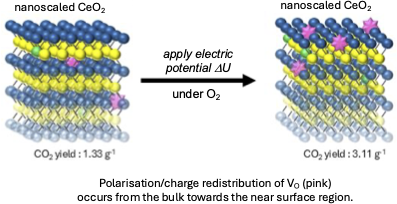
- insufficient for a strong coupled polaron vacancy response, and La3+-doped samples show little to no bias-induced improvement, consistent with stronger defect association/cluster formation that suppresses vacancy participation in sustained field-induced surface redox changes. Experimental CO to CO2 oxidation
- and medium defective samples nCeO2 and 5%Gd3+–nCeO2. When increasing VO as in 2.5%Gd3+–nCeO2 and 5%La3+–nCeO2, the effect of the external applied field is expected to be compensated in the Gd3+-doped samples. La3+-doping however even hinders CO oxidation by VO cluster formation. Schematic


Light-driven ammonia electrooxidation via carbon nitride–ruthenium molecular interfaces
Beilstein J. Nanotechnol. 2026, 17, 854–862, doi:10.3762/bjnano.17.61
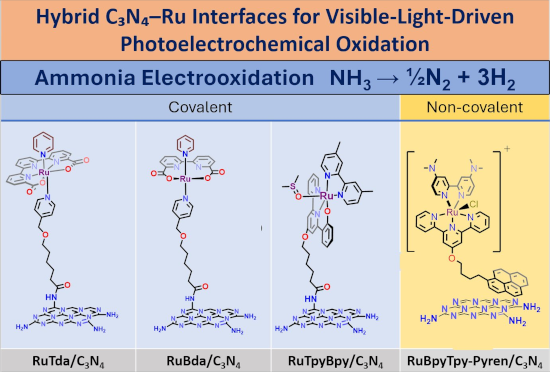
- absorbed excitation drives the oxidation of water (a thermodynamically demanding four-electron, four-proton process) at an inorganic cluster containing four manganese ions and one calcium ion (Mn4CaO5). The electrons extracted from water are passed along the electron transport chain to Photosystem I, where
- -nanometer cluster contributions under operando conditions [33]. A full mechanistic discussion lies beyond the scope of this perspective; SAC nonetheless represents a parallel, and potentially more direct, realization of the antenna–reaction-centre coupling principle that motivates the hybrid strategy


Substrate-dependent pore formation in molybdenum disulfide monolayers under ion irradiation
Beilstein J. Nanotechnol. 2026, 17, 769–780, doi:10.3762/bjnano.17.54
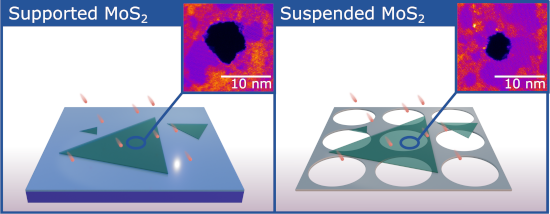
- for the allocated beamtimes and they also thank the CIMAP, CIRIL, and GANIL staff for their assistance during the experiments. Funding UJ and JK acknowledge funding from the Austrian Science Fund (FWF) within the Cluster of Excellence MECS (DOI: 10.55776/COE5). Y.L, M.S, L.S, L.D, C.F and L.B thank


Defects and defect-mediated engineering of two-dimensional materials: challenges and open questions
Beilstein J. Nanotechnol. 2026, 17, 454–488, doi:10.3762/bjnano.17.31
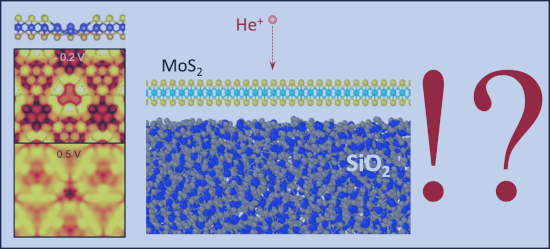
- distribution rather uniform. The average vacancy cluster size in Figure 9a is twelve vacancies. A similar mechanism of vacancy cluster self-organization applies to the moiré of h-BN with Ir(111) [157]. Figure 9d displays the pristine h-BN moiré with pronounced bright spots. Upon 500 eV He+ ion irradiation at





Microscopic study of the intermediate mixed state in intertype superconductors
Beilstein J. Nanotechnol. 2026, 17, 57–62, doi:10.3762/bjnano.17.5
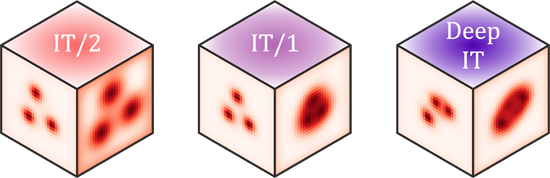
- into a single giant vortex at T = 0.9Tc. As T decreases, this giant vortex splits, eventually forming a compact cluster of three vortices at T = 0.1Tc, signaling a crossover from type-I to IT superconductivity. Notably, at T = 0.1Tc, the vortices again arrange into an equilateral triangle. The case g


Ultrathin water layers on mannosylated gold nanoparticles
Beilstein J. Nanotechnol. 2025, 16, 2183–2198, doi:10.3762/bjnano.16.151
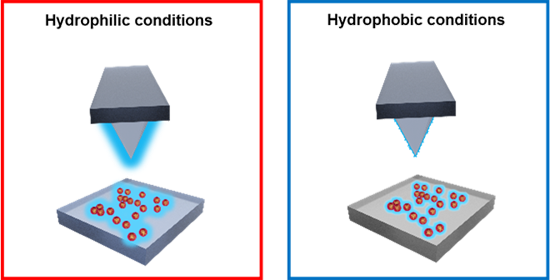
- a more hydrophilic tendency of surfaces functionalized with mannose terminal groups (C6H12O6C5S, contact angle <5°), compared with carboxylic acids (COOHC11S, contact angle 44 ± 1º) [38]. Whenever NPs cluster, the steric hindrance effects of the bulky dimanno-AuNPs should additionally create



Microplastic pollution in Himalayan lakes: assessment, risks, and sustainable remediation strategies
Beilstein J. Nanotechnol. 2025, 16, 2144–2167, doi:10.3762/bjnano.16.148
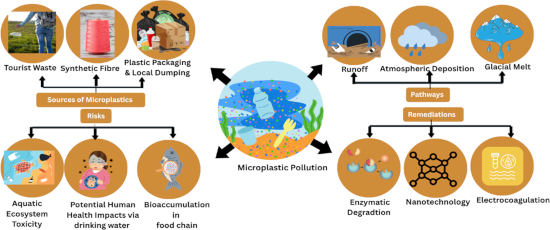
- Sameeksha Rawat S. M. Tauseef Madhuben Sharma Sustainability Cluster, School of Advanced Engineering, UPES, Dehradun, Uttarakhand, India Research & Development, UPES, Dehradun, Uttarakhand, India 10.3762/bjnano.16.148 Abstract Microplastic contamination is a newly emerging environmental problem


Electrical, photocatalytic, and sensory properties of graphene oxide and polyimide implanted with low- and medium-energy silver ions
Beilstein J. Nanotechnol. 2025, 16, 1794–1811, doi:10.3762/bjnano.16.123
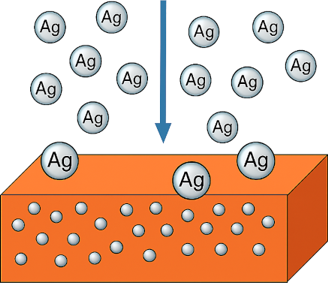
- carbonized matrix, conjugated bonds, and silver cluster structures exhibits dramatically higher conductivity than the unmodified material, which can be exploited, for example, for the fabrication of flexible optoelectronics, thin-film electrodes, or electroactive sensors [12]. In addition to the increase in


Advances of aptamers in esophageal cancer diagnosis, treatment and drug delivery
Beilstein J. Nanotechnol. 2025, 16, 1734–1750, doi:10.3762/bjnano.16.121
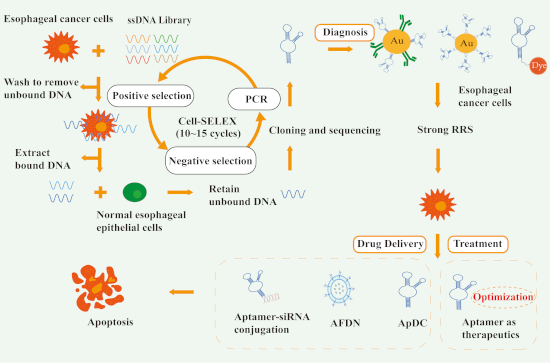
- cells, slow down tumor growth and metastasis, and had no obvious toxicity to human normal esophageal epithelial cells. Cluster analysis showed that the mechanism of action of peptide 58 may be closely related to the inhibition of ESCC cell metabolism. However, pharmacokinetic data on peptide 58 remain


Beyond the bilayer: multilayered hygroscopic actuation in pine cone scales
Beilstein J. Nanotechnol. 2025, 16, 1695–1710, doi:10.3762/bjnano.16.119
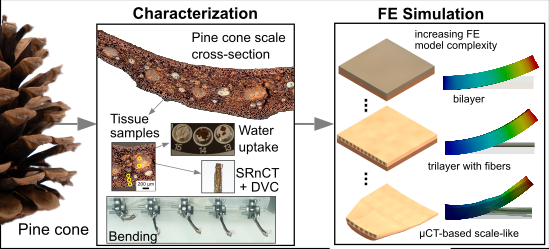
- Kim Ulrich Max David Mylo Tom Masselter Fabian Scheckenbach Sophia Fischerbauer Martin Nopens Silja Flenner Imke Greving Linnea Hesse Thomas Speck Cluster of Excellence livMatS @ FIT—Freiburg Center for Interactive Materials and Bioinspired Technologies, University of Freiburg, Freiburg im


Ambient pressure XPS at MAX IV
Beilstein J. Nanotechnol. 2025, 16, 1677–1694, doi:10.3762/bjnano.16.118
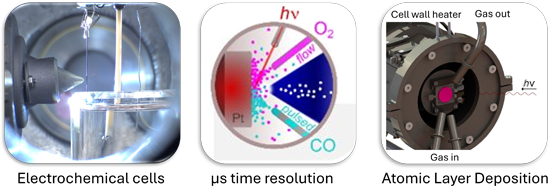
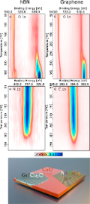
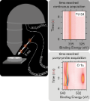
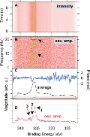
- (SCALMS) [17][18], and cluster encapsulation via strong metal–support interaction (SMSI) [19] have shown promise. While these methods have been successfully characterized using APXPS, the systems themselves were not investigated under catalytic turnover conditions and are therefore not discussed further
- Physics of the University of Trieste [22], and supported by DFT, the authors demonstrated that the Co-porphyrin SAC stabilizes a hydroperoxyl–water (O2H-H2O) cluster in O2+H2O atmosphere at room temperature [21]. This is considered the fundamental reaction intermediate in the ORR. In particular, the





Bioinspired polypropylene-based functionally graded materials and metamaterials modeling the mistletoe–host interface
Beilstein J. Nanotechnol. 2025, 16, 1592–1606, doi:10.3762/bjnano.16.113
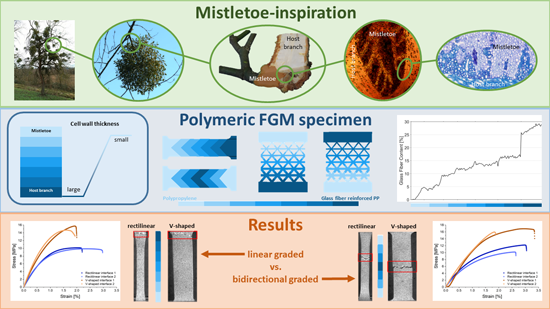
- Lina M. Rojas Gonzalez Naeim Ghavidelnia Christoph Eberl Max D. Mylo Department of Microsystems Engineering, University of Freiburg, D-79110 Freiburg, Germany Cluster of Excellence livMatS @ FIT – Freiburg Center for Interactive Materials and Bioinspired Technologies, University of Freiburg, D


The role of biochar in combating microplastic pollution: a bibliometric analysis in environmental contexts
Beilstein J. Nanotechnol. 2025, 16, 1401–1416, doi:10.3762/bjnano.16.102
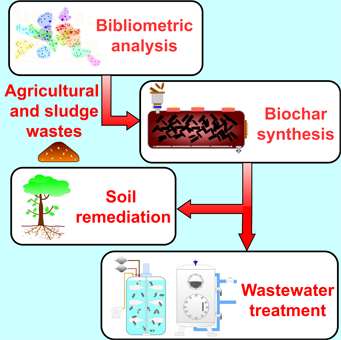
- research topics related to MP removal with BC. CiteSpace was chosen for its ability to detect citation bursts and perform cluster labeling analysis, highlighting emerging research trends and intellectual structures. Compared to VOSviewer, which primarily visualizes co-authorship networks and keyword co
- cluster views reveal the importance of interdisciplinary cooperation, suggesting that involving researchers from diverse scientific fields can yield valuable insights into tackling MP pollution. Despite its potential, significant practical challenges remain, necessitating further research to optimize



Automated collection and categorisation of STM images and STS spectra with and without machine learning
Beilstein J. Nanotechnol. 2025, 16, 1367–1379, doi:10.3762/bjnano.16.99
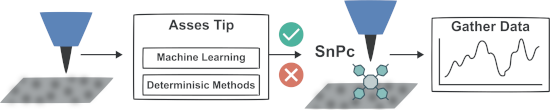
- “flat” DOS, which is typically achieved by using a purely metallic tip. However, most tips do not demonstrate a perfectly flat local density of states (LDOS) as they have a complex electronic structure governed by the geometry of the metallic cluster at the tip apex [8][9][10][11][12]. Non-metallic




Ferroptosis induction by engineered liposomes for enhanced tumor therapy
Beilstein J. Nanotechnol. 2025, 16, 1325–1349, doi:10.3762/bjnano.16.97
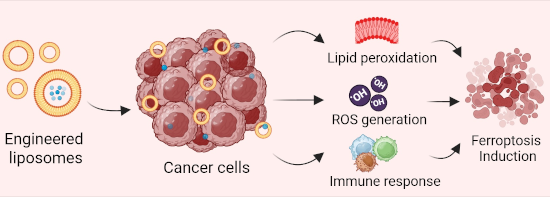
- reason, this transporter is considered a common biomarker for ferroptosis [40][73]. Cancer cells are highly dependent on elevated levels of the iron–sulfur cluster biosynthetic enzyme cysteine desulfurase (NFS1). By blocking NFS1 and inhibiting cysteine transport, ferroptosis was induced in vitro, which


Better together: biomimetic nanomedicines for high performance tumor therapy
Beilstein J. Nanotechnol. 2025, 16, 1246–1276, doi:10.3762/bjnano.16.92
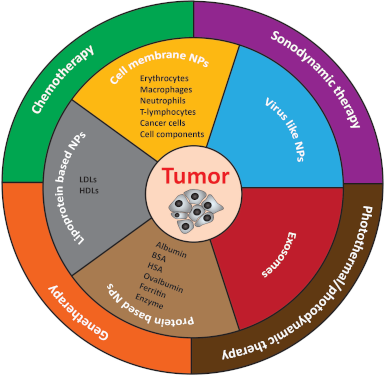
- the cytoplasm [149][150]. In contrast, Li et al. synergistically delivered a miR-144/451a cluster by constructing chitosan NPs (CAs) camouflaged with macrophage membranes for oral squamous cell carcinoma (OSCC) treatment. It was demonstrated that CAs coloaded with miR-144-MEXO/CA-miR-451a NPs






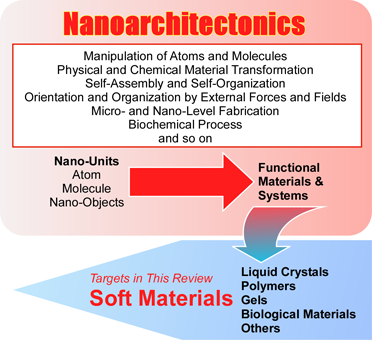
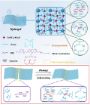
Soft materials nanoarchitectonics: liquid crystals, polymers, gels, biomaterials, and others
Beilstein J. Nanotechnol. 2025, 16, 1025–1067, doi:10.3762/bjnano.16.77






Time-resolved probing of laser-induced nanostructuring processes in liquids
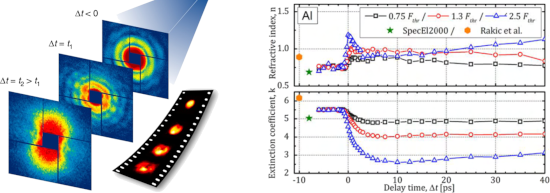
Beilstein J. Nanotechnol. 2025, 16, 968–1002, doi:10.3762/bjnano.16.74


Tendency in tip polarity changes in non-contact atomic force microscopy imaging on a fluorite surface
Beilstein J. Nanotechnol. 2025, 16, 944–950, doi:10.3762/bjnano.16.72
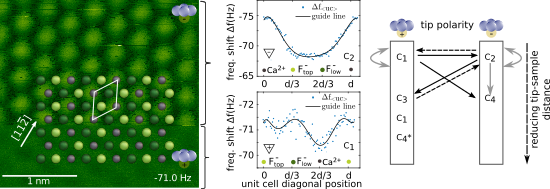
- CaF2(111) surface. A change of the atomic contrast is explained by a polarity change of the tip-terminating cluster or by a polarity-preserving tip change via the re-arrangement of the foremost atoms. Based on the established understanding of the unique contrast patterns on CaF2(111), polarity
- a vital role as the tip-terminating cluster uniquely interacts with the different surface atoms. At cryogenic temperatures, the use of functionalized tips such as as CO-terminated tips [6][11], Xe-terminated tips [12][13][14] and O-terminated Cu tips [15][16][17] has become the state-of-the-art for
- tip apex in slight contact with the surface under investigation to form a tip cluster yielding atomic contrast [18]. As structure and chemical composition of the resulting tip-terminating cluster are not known, the understanding of contrast formation with non-functionalized tips has been developed


Impact of adsorbate–substrate interaction on nanostructured thin films growth during low-pressure condensation
Beilstein J. Nanotechnol. 2025, 16, 473–483, doi:10.3762/bjnano.16.36

- , namely, the parabolic growth ⟨d⟩st(δ) ∝ δ2 at δ < δp and the linear dependence ⟨d⟩st(δ) ∝ δ at δ > δp. This critical value δ = δp relates to the formation of percolating cluster of adsorbate connecting opposite sides of the substrate (see Figure 7b). The number of percolating clusters increases with


Vortex lattices of layered HTSCs at different vortex–vortex interaction potentials
Beilstein J. Nanotechnol. 2025, 16, 362–370, doi:10.3762/bjnano.16.27
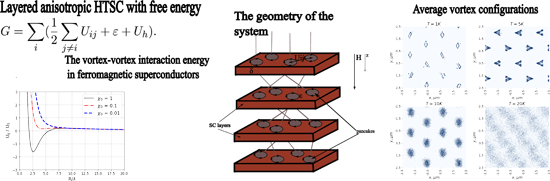
- minimum increases; starting from a certain value, the minimum disappears. For such a potential, the number of vortices in a cluster turns out to be up to several dozens. At large distances, both potentials monotonically tend to 0. The numerical coefficients in the potentials from Equation 2 and Equation 3
- vortices generated in the sample join the existing clusters. The number of vortices in a cluster changes from 17–20 at H = 400 to 80 at H = 1000 G. It is also of interest to study the behavior of the vortex lattice with changing temperature. The magnetization curves (Figure 3) were calculated at T = 1 K
- temperatures of 1–10 K, a hexagonal lattice of clusters is observed; upon reaching 20–25 K, the cluster structure is no longer observed. For the interaction potential characteristic of ferromagnetic superconductors, pronounced clustering is shown at fields near Hc1. The difference between the results obtained


Pulsed laser in liquid grafting of gold nanoparticle–carbon support composites
Beilstein J. Nanotechnol. 2025, 16, 349–361, doi:10.3762/bjnano.16.26
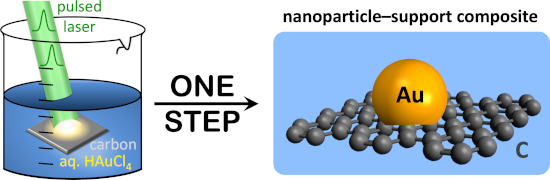
- bonds in solid materials are of the order of nanoseconds to microseconds [40]. For comparison, typical timescales expected for laser-induced growth of Au nuclei are hundreds of femtoseconds to a few nanoseconds [41], and the metal–cluster nucleation rate for the formation of ca. 5 nm gold nanoparticles


Theoretical study of the electronic and optical properties of a composite formed by the zeolite NaA and a magnetite cluster
Beilstein J. Nanotechnol. 2025, 16, 44–53, doi:10.3762/bjnano.16.5
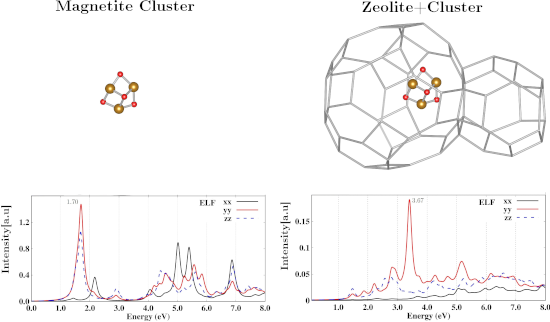
- Investigación Científica y Tecnológica A.C., Camino a la Presa San José 2055, Col. Lomas 4, San Luis Potosí, S.L.P. 78216, México 10.3762/bjnano.16.5 Abstract The electronic and optical properties of a composite created by introducing a magnetite cluster into NaA zeolite have been investigated in this work
- using DFT calculations. The results obtained indicate that the electronic and optical properties of the composite are enhanced because of the cluster. However, the properties exhibited by the cluster outside the zeolite differ from those it presents when it is part of the composite. It is noteworthy
- that the composite exhibits magnetic properties of a half-semiconductor and a strong optical response within the visible and ultraviolet regions of the spectrum. Keywords: magnetic cluster; NaA zeolite; optical properties; Introduction Zeolites are crystalline materials made up of aluminosilicates




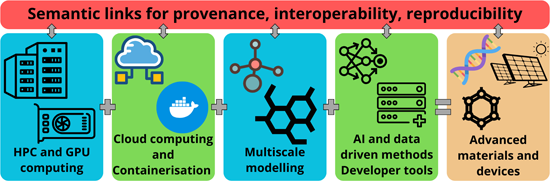
Integrating high-performance computing, machine learning, data management workflows, and infrastructures for multiscale simulations and nanomaterials technologies
Beilstein J. Nanotechnol. 2024, 15, 1498–1521, doi:10.3762/bjnano.15.119