Search results
Search for "crystallinity" in Full Text gives 347 result(s) in Beilstein Journal of Nanotechnology. Showing first 200.
Biosynthesis, characterization, and biofunctional assessment of niobium oxide nanostructures obtained using lactic acid bacteria-derived supernatants
Beilstein J. Nanotechnol. 2026, 17, 1128–1141, doi:10.3762/bjnano.17.77
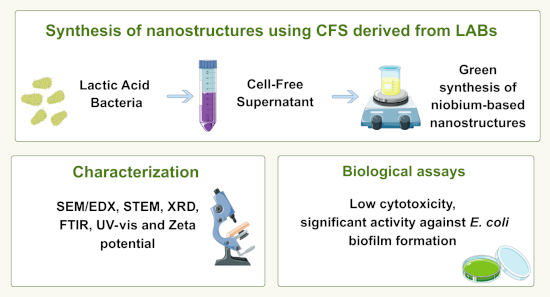
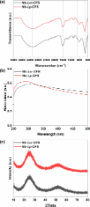
- were performed to assess the crystallinity of the synthesized materials, and the corresponding diffraction patterns are shown in Figure 1c. The nanostructures synthesized in the presence of Lcp-CFS and Lcr-CFS exhibited very similar diffraction profiles, characterized by two broad peaks centered at


Synthesis and characterization of RF-sputtered ZnTe/Cu2−xTe thin films for solar cell applications
Beilstein J. Nanotechnol. 2026, 17, 1016–1027, doi:10.3762/bjnano.17.69
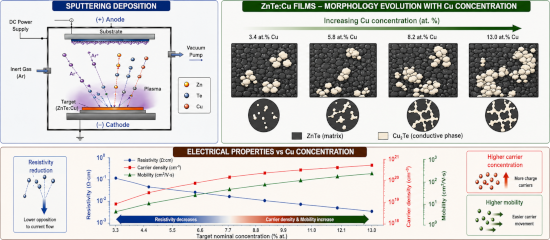
- in materials such as CdTe, CdSe, and ZnTe, without evidence of excessive Cu2+ formation, thereby favoring improved electrical stability. Previous studies on Cu-doped ZnTe thin films have mainly focused on the influence of Cu incorporation on crystallinity, optical bandgap, and electrical transport
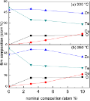
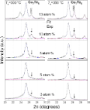
- equation, considering the main reflections associated with the cubic zinc blende structure. The calculated crystallite sizes ranged from 11.28 to 17.07 nm, confirming the nanocrystalline nature of the films and supporting the enhancement in crystallinity with increasing substrate temperature. In contrast
- enhanced crystallinity at higher substrate temperature. A more detailed analysis was performed around the main diffraction peak corresponding to the (111) plane of the cubic phase and the (200) plane of the hexagonal phase (Figure 3), in order to gain deeper insight into the structural modifications



Ultrasonic irradiation in the synthesis of nanohydroxyapatite: a chemically friendly technique for improving hemocompatibility and antibiofilm applications
Beilstein J. Nanotechnol. 2026, 17, 991–1015, doi:10.3762/bjnano.17.68
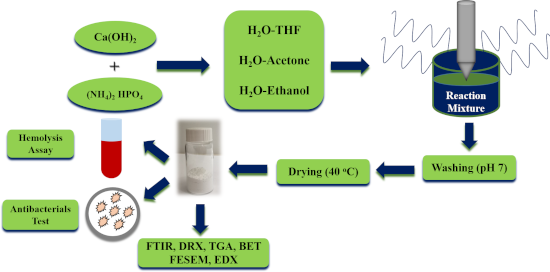
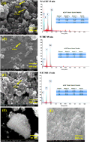
- morphology. These particles can be in the form of needles, regular and irregular spheres, rods, and many others [20][21]. They also exhibit high degrees of crystallinity, high purity, and nanoscale dimensions [22]. The fascinating properties of the resulting materials have led to very promising results
- replacement of its constituent chemical species (calcium, phosphate, and hydroxide ions) [38][39]. This substitution process produces changes in its properties, including crystallinity, morphology, and lattice parameters [40][41]. The nHA obtained using the three aforementioned mixtures as solvents exhibited




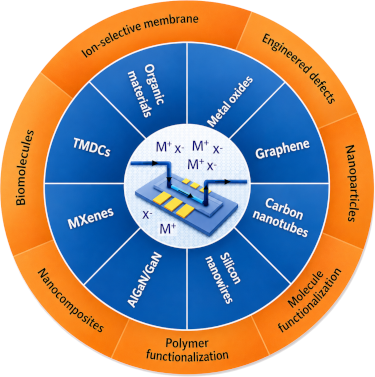
Materials challenges in solid-state sensors for continuous monitoring of ions in water
Beilstein J. Nanotechnol. 2026, 17, 935–973, doi:10.3762/bjnano.17.66



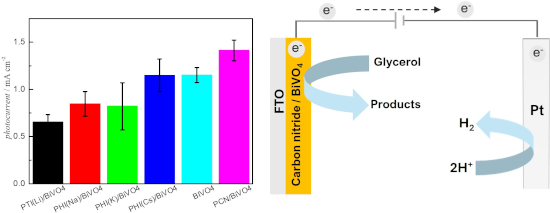
Glycerol photoelectrochemical oxidation reaction at carbon nitrides/BiVO4 materials
Beilstein J. Nanotechnol. 2026, 17, 806–817, doi:10.3762/bjnano.17.57
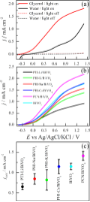
- fundamental heptazine or triazine-based backbone, they significantly differ in structure, crystallinity, and properties. PCN is the commonly synthesized form of CN due to its simple preparation methods. However, it suffers from low crystallinity, structural disorder, and poor reproducibility, which limit its
- , unlike the neutral PCN, which enhances their interactions with various substrates and expands their potential applications. A key factor in achieving superior crystallinity of PHI and PTI is ionothermal synthesis, where the use of salts facilitates a well-ordered molecular arrangement and minimizes
- structural modifications, varying degrees of crystallinity, and consequently, distinct photocatalytic performance [17][18][19][20][21]. Another strategy to bypass the sluggish kinetics of water oxidation involves employing different processes to deliver the electrons necessary for H2 production. In this




Cellulose as a photocatalyst support material: extraction, structural features, and environmental applications
Beilstein J. Nanotechnol. 2026, 17, 635–652, doi:10.3762/bjnano.17.44
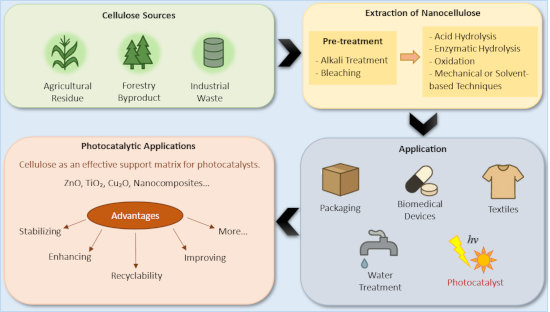
- (CNFs) [7]. CNCs and CNFs differ mainly in their size and crystallinity, as CNFs contain both amorphous and crystalline cellulose chains and can extend to several micrometers in length. In contrast, CNCs exhibit high crystallinity, with lengths typically measuring below 500 nm. Both materials offer
- crystallinity, excellent elasticity, and mechanical strength, with fibers ranging from 200 to 3000 nm long and 10–75 nm wide [23]. Extraction at the nanoscale not only reduces structural defects within cellulose’s hierarchy but also introduces new characteristics such as increased surface area, thereby
- extraction strategies offers distinct advantages, such as preserving crystallinity, enhancing surface functionality, or reducing chemical waste; yet, each method also presents certain limitations, including environmental concerns, high cost, or technical complexity. Table 1 summarize the cellulose yield


Two-step laser synthesis of Ag@TiO2 nanomaterials for the photocatalytic degradation of rhodamine B
Beilstein J. Nanotechnol. 2026, 17, 622–634, doi:10.3762/bjnano.17.43
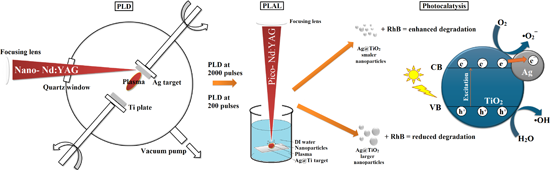
- the morphology, composition, and crystallinity of the resulting nanostructures with high precision. The absence of organic contaminants or residual reagents maximizes the catalytic surface area, while the presence of silver can influence the optical response of TiO2 through plasmon-related effects


Recent progress in enhancing built-in electric fields of perovskite solar cells via junction engineering
Beilstein J. Nanotechnol. 2026, 17, 602–621, doi:10.3762/bjnano.17.42
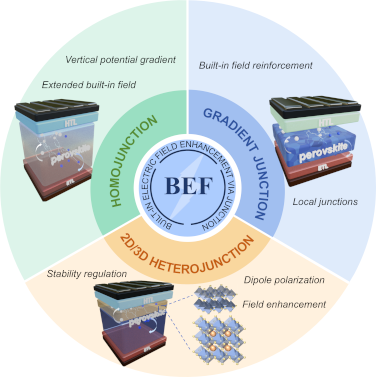
- continuous barrier-reducing channel across the film [15], a strategy that emphasizes longitudinal potential continuity and a “capacitive accumulation” effect, which maintains an effective driving force over a larger thickness and is often accompanied by improved crystallinity and stress release
- and its interactions with Pb, I, and the organic cations not only improved local crystallinity but also induced band bending and an upward shift in the work function, a shift that partially changed the conduction type toward n−. As a result, an n/n− homojunction formed at the microinterface, enhancing
- while optimizing carrier separation, transport, and collection [39]. These processes are often accompanied by synergistic benefits, including improved crystallinity, suppression of defect states, and stress relaxation, which in turn yield concurrent gains in PCE and operational stability. Early efforts




Laser–material interactions in liquids for the synthesis of nanomaterials: current status and perspectives
Beilstein J. Nanotechnol. 2026, 17, 571–575, doi:10.3762/bjnano.17.38

- photothermal mechanisms [17]. Laser melting in liquids (LML) employs lower pulse intensities to increase particle size [18] and/or modify crystallinity and morphology through melting and resolidification [19]. At moderate laser fluences, close to or even below the melting threshold, irradiation can induce
Synthesis of Cu–Mo/TiO2 and Co–Mo/TiO2 photocatalysts for the efficient degradation of organic pollutants in water
Beilstein J. Nanotechnol. 2026, 17, 559–570, doi:10.3762/bjnano.17.37
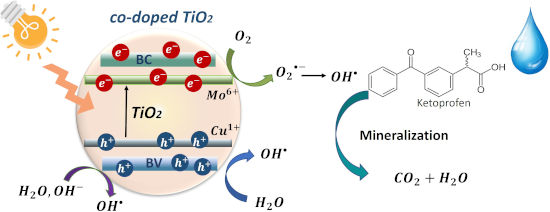
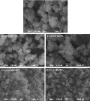
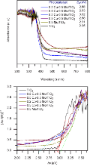
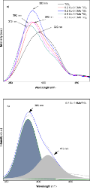
- phase and distorts the TiO2 lattice structure. The introduction of the metallic ions Cu and Co was confirmed. Cu–Mo/TiO2 materials exhibited higher crystallinity, larger particle size, and lower surface area. However, the material 0.2 Cu–0.5 Mo/TiO2 was the most efficient in the photocatalytic oxidation



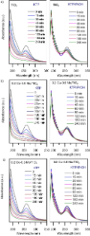
Probing internal continua and atomic ultrafast charge transfer within size-controlled nanoparticles by post-collision interaction in core-hole clock spectroscopy
Beilstein J. Nanotechnol. 2026, 17, 505–514, doi:10.3762/bjnano.17.33
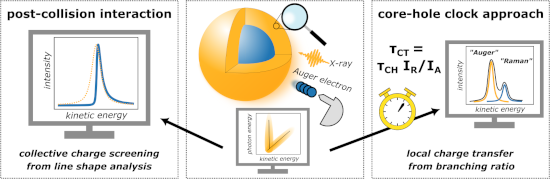
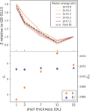
- , the charge transfer times depend on the very local structure of the nearest atomic neighbors. As the shell growth of CdSe/ZnS QDs is known to be highly anisotropic and often exhibits crystallinity issues due to the lattice mismatch between CdSe and ZnS in zinc blende or wurtzite lattices [12][47], the



Beam shaping techniques for pulsed laser ablation in liquids: Unlocking tunable control of nanoparticle synthesis in liquids
Beilstein J. Nanotechnol. 2026, 17, 309–342, doi:10.3762/bjnano.17.22
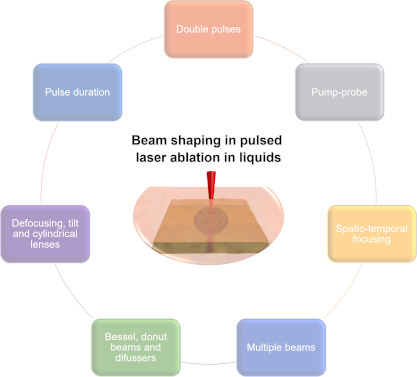
- tuning NP size, crystallinity, defects, and optical properties. Conventional batch PLAL setups often exhibit lower productivity than large-scale chemical or gas-phase syntheses; however, recent advances using megahertz-repetition-rate lasers and continuous-flow configurations have significantly increased







Durable antimicrobial activity of fabrics functionalized with zeolite ion-exchanged nanomaterials against Staphylococcus aureus and Escherichia coli
Beilstein J. Nanotechnol. 2026, 17, 262–274, doi:10.3762/bjnano.17.18
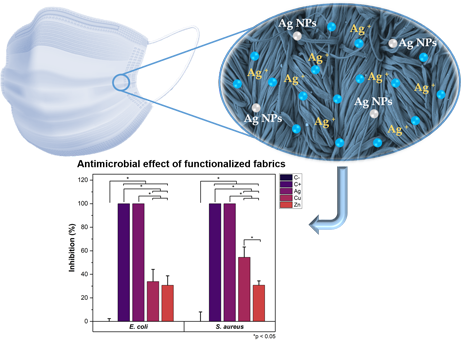
- crystallographic planes (101), (101), and (002), respectively. Modification of the fabrics with nanomaterials led to an increase in the intensity of all peaks, while the position of the signals in XRD patterns remained unchanged (Figure 3). The later may be explained by the increase in crystallinity due to




Gold nanoparticle-decorated reduced graphene oxide as a highly effective catalyst for the selective α,β-dehydrogenation of N-alkyl-4-piperidones
Beilstein J. Nanotechnol. 2026, 17, 218–238, doi:10.3762/bjnano.17.15
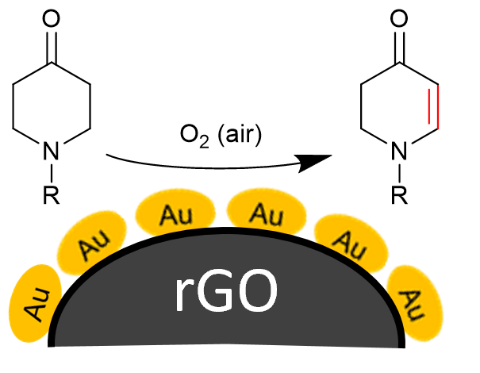
- different methods show the crystallinity of the AuNPs, with four distinct diffraction peaks at 38.4° (111), 44.5° (200), 64.8° (220), and 77.8° (311) (Figure 9), which correspond to the face-centered cubic (fcc) gold lattice [38]. The first distinct diffraction peak at 2θ = 25.5° is attributed to the (100


Structure-dependent thermochromism of PAZO thin films: theory and experiment
Beilstein J. Nanotechnol. 2026, 17, 186–199, doi:10.3762/bjnano.17.12
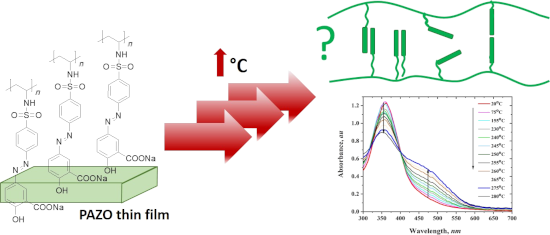
- or meta-GGA functionals are desirable for geometry optimization, but considering a polymer with a realistic length would make the calculation too long and, therefore, expensive. On the other hand, the properties of the material (polymer), including crystallinity, density and solubility, are


Improving magnetic properties of Mn- and Zn-doped core–shell iron oxide nanoparticles by tuning their size
Beilstein J. Nanotechnol. 2025, 16, 2285–2295, doi:10.3762/bjnano.16.157
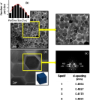
- be attributed to dynamic scattering effects or local structural ordering, as frequently observed in electron diffraction studies of ferrites. These features collectively indicate a high degree of crystallinity, consistent with previous reports on spinel ferrite nanoparticles [18]. To enhance the
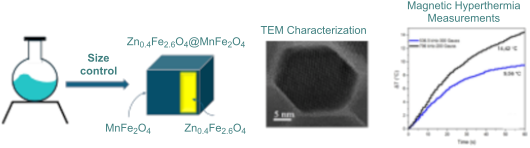
- crystallinity, anisotropy, and field amplitude, which are under ongoing investigation [25]. The role of size in hyperthermia performance has been further highlighted in other studies [16]. It is well established that larger core–shell NPs exhibit enhanced magnetic properties due to increased magnetic anisotropy



Chiral plasmonic nanostructures fabricated with circularly polarized light
Beilstein J. Nanotechnol. 2025, 16, 2245–2264, doi:10.3762/bjnano.16.154
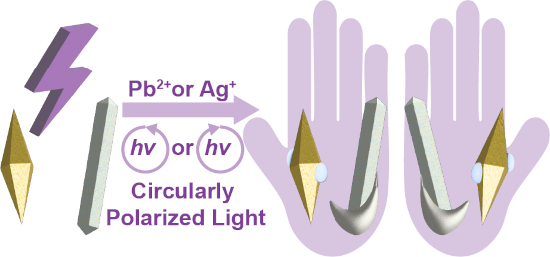
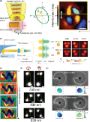
- improving the crystallinity of cPNSs through optimizing synthesis parameters. 4.3 Applications related to the superchiral near field of cPNSs Metamaterials made of cPNSs have been extensively studied for their ability to detect chiral molecular species [53][146][147][148][149][150][151][152]. In Section 3.1
- fabrication method is cost-efficient and less time-consuming. It will also produce periodic arrays of cPNSs with higher crystallinity and finer control over their morphologies. (iii) CPL-fabricated cPNSs are highly suitable for using light to switch chirality. In 2020, the Tatsuma group demonstrated a chiral





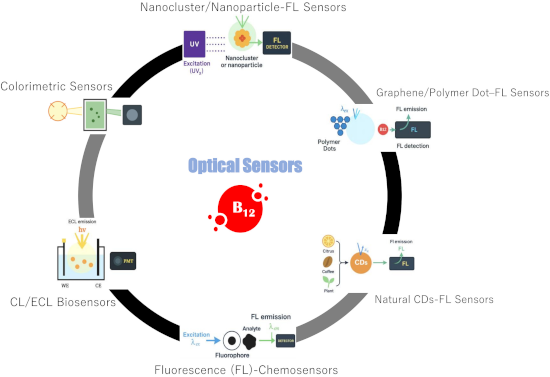
Optical bio/chemical sensors for vitamin B12 analysis in food and pharmaceuticals: state of the art, challenges, and future outlooks
Beilstein J. Nanotechnol. 2025, 16, 2207–2244, doi:10.3762/bjnano.16.153


Rapid synthesis of highly monodisperse AgSbS2 nanocrystals: unveiling multifaceted activities in cancer therapy, antibacterial strategies, and antioxidant defense
Beilstein J. Nanotechnol. 2025, 16, 2105–2115, doi:10.3762/bjnano.16.145
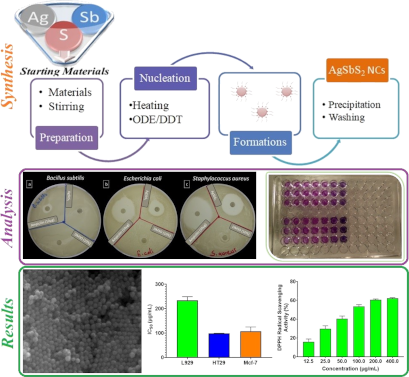
- biological properties. As a result of the performed characterizations, it was revealed that monodisperse AgSbS2 NCs were obtained in high purity and crystallinity. A remarkable antibacterial activity of the synthesized AgSbS2 NCs was identified by exhibiting an ability to suppress microbial growth against


Beyond the shell: exploring polymer–lipid interfaces in core–shell nanofibers to carry hyaluronic acid and β-caryophyllene
Beilstein J. Nanotechnol. 2025, 16, 2015–2033, doi:10.3762/bjnano.16.139
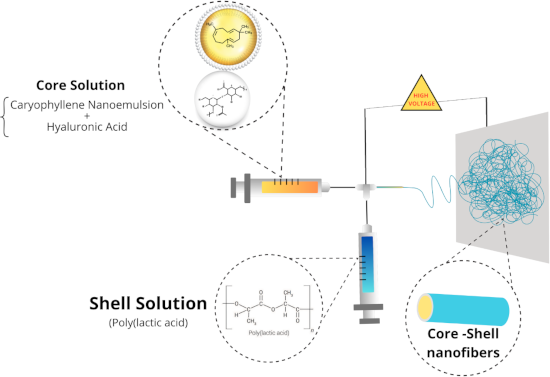
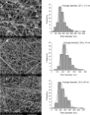
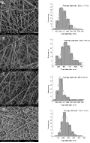
- the nanofiber spectra confirmed the complete encapsulation of the core material by the PLA shell. This observation aligns with the cross-sectional analysis results, where a coated core–shell structure was evident following the removal of the HA+NE2 core. Thermal behavior and crystallinity of
- nanofibers The thermal properties and crystallinity of NF-PLA (monolithic), NF-HA/PLA, and NF-HA+NE2/PLA nanofibers were analyzed using thermogravimetric analysis (TGA), X-ray diffraction (XRD), and differential scanning calorimetry (DSC). Thermal behavior and crystallinity of the nanofibers mats of βCp
- nanoemulsion-loaded PLA are displayed in Figure 8. The TGA and DTG curves provide insights into the thermal stability and decomposition behavior of the nanofibers [65]. At the same time, the DSC and XRD analyses complement the study by elucidating the crystallinity and thermal transitions of the samples




Exploring the potential of polymers: advancements in oral nanocarrier technology
Beilstein J. Nanotechnol. 2025, 16, 1751–1793, doi:10.3762/bjnano.16.122
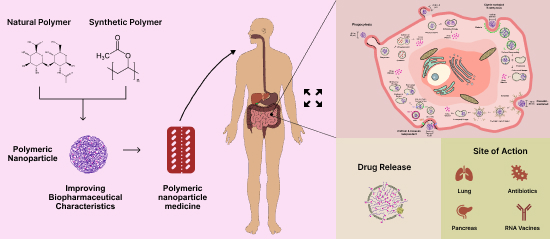
- ]. The intrinsic characteristics of polymers influence biodegradation and drug release behavior. Parameters such as crystallinity, glass transition temperature (Tg), solubility, and molecular weight affect the polymer matrix and the behavior of incorporated molecules. This is because each polymer has
- unique spatial attributes, with monomeric structures and functional groups, hydrophobic or hydrophilic, that determine its properties [60]. The nature of monomers correlates with polymer crystallinity, which, in turn, defines mechanical strength, swelling, hydrolysis, and biodegradation rates
- . Crystallinity is associated with ordered molecular structures that exhibit intense interactions and steric hindrance. In this context, it can be inferred that low-molecular-weight molecules form crystals more easily and, consequently, have a slower drug release profile. Conversely, in polymers with greater


Influence of laser beam profile on morphology and optical properties of silicon nanoparticles formed by laser ablation in liquid
Beilstein J. Nanotechnol. 2025, 16, 1533–1544, doi:10.3762/bjnano.16.108
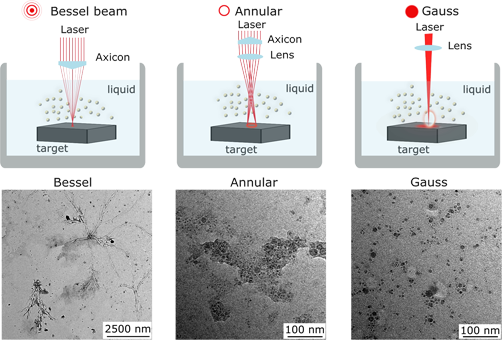
- crystallinity of the silicon samples, or amorphization. An effect of laser beam shape has been also observed in the Raman spectra analysis. Though Si NPs generated from the crystalline Si target using laser beams of different shapes exhibit all above Raman modes, the positions and intensities of these Raman
- modes are slightly different. This reflects a difference in dimensions, number density, crystallinity, and probably morphology of Si NPs formed by using laser beams with different profiles. The corresponding asymmetric broadening of the Raman peaks toward lower wavenumbers indicates a possible
- produced using Bessel and annular profiles. It should be noted that the fractions of amorphous and crystalline phases can be determined by deconvolution of the Raman peaks profiles to estimate the crystallinity of Si NPs (Supporting Information File 1, Figure S6). The colloids synthesized using different


Laser processing in liquids: insights into nanocolloid generation and thin film integration for energy, photonic, and sensing applications
Beilstein J. Nanotechnol. 2025, 16, 1428–1498, doi:10.3762/bjnano.16.104
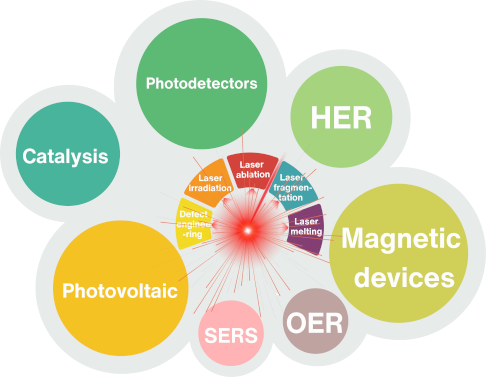
- caused oxidation, crystallinity loss, and reduced photoactivity due to enhanced grain boundaries. Figure 4 shows SEM images of Ba5Ta4O15 and BaTaOxNy-zp powders after successive laser fragmentation passages. Despite these challenges, prolonged fragmentation improved the photocurrent efficiency






Enhancing the photoelectrochemical performance of BiOI-derived BiVO4 films by controlled-intensity current electrodeposition
Beilstein J. Nanotechnol. 2025, 16, 1289–1301, doi:10.3762/bjnano.16.94
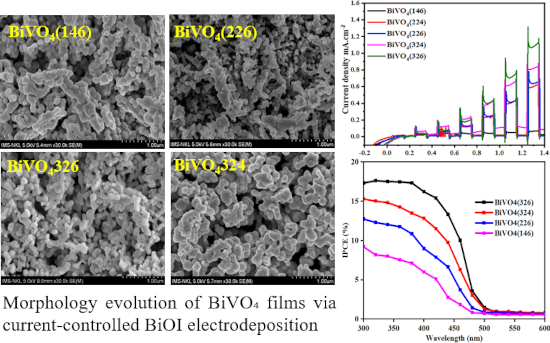
- optimize the crystallinity, surface morphology, and electronic properties of the films. Subsequently, an electrochemical deposition method was developed to facilitate the uniform distribution of V2O5 among Bi–O–I flakes to homogeneously enhance the conversion reaction. The XRD pattern confirms the
- better control over film morphology and crystallinity under mild conditions. Kim et al. [18] reported that BiVO4 films fabricated via electrodeposition achieved a maximum photocurrent density of 1.4 mA·cm−2 at 1.23 V vs RHE. These films exhibited a three-dimensional nanoporous structure that facilitated
- optimize its conversion to BiVO4. By systematically adjusting the deposition current density and vanadium precursor concentration, we achieved fine control over the crystallinity, grain size, porosity, and optical properties of the resulting films. This level of tunability leads to substantial improvements



Crystalline and amorphous structure selectivity of ignoble high-entropy alloy nanoparticles during laser ablation in organic liquids is set by pulse duration
Beilstein J. Nanotechnol. 2025, 16, 1141–1159, doi:10.3762/bjnano.16.84
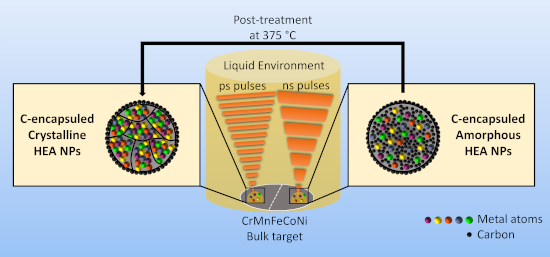
- amorphous ns-ablated particles. Based on these findings we can conclude that the pronounced differences in crystallinity in the samples cannot be explained by differences in particle diameters. However, a certain width of the size distribution curves indicated by the polydispersity indices (PDI) (PDI = 0.31
- while latter was found to vary between minimal, almost non-observable carbon shell and well-visible shell thickness (3–4 Å) in TEM. In a direct comparison of the X-ray diffraction patterns in Figure 2 (ns vs ps), the diffraction pattern of ns-LAL HEA NPs shows a significant decrease in crystallinity
- with ps-pulses. As can be seen in Figure 4A and Supporting Information File 1, Figure S8, the results show that post-irradiating HEA NPs does not affect the crystallinity of the particles in both cases. To highlight this, Figure 4A shows the electron diffraction patterns and number-weighted size