Search results
Search for "displays" in Full Text gives 457 result(s) in Beilstein Journal of Nanotechnology. Showing first 200.
Nanoglasses: a trail towards uncharted regions of vitreous materials and their properties?
Beilstein J. Nanotechnol. 2026, 17, 1047–1062, doi:10.3762/bjnano.17.72

- distinct courses of the specific heats of both states down to the low-temperature limit. For this reason, Figure 1 displays the free enthalpy minimum for the GGI as a dashed curve with a minimum at equal level as the ideal glass. In this sense, the Kauzmann temperature is taken here as a material-inherent


Enhanced erosion resistance and radiation stability of WC–WO3 nanocomposite films under 100 keV Kr+ ion irradiation
Beilstein J. Nanotechnol. 2026, 17, 922–934, doi:10.3762/bjnano.17.65
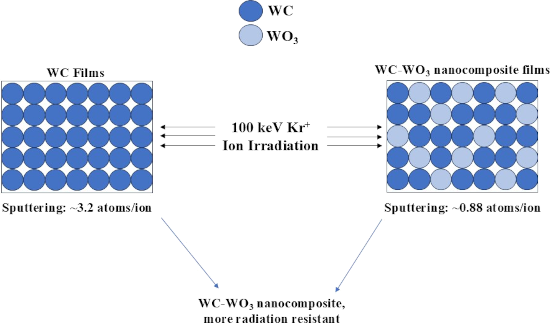
- of around 6 nm. Figure 4 displays a typical RBS spectrum of the WC films (S2). The peak at higher energy values represents tungsten (W). The carbon (C) peak was not clearly distinguishable due to carbon’s small atomic number and low Rutherford scattering cross section. The continuous broad region at



Sustainable fabrication of 2D-based devices through reuse of substrates with microfabricated electrodes
Beilstein J. Nanotechnol. 2026, 17, 818–827, doi:10.3762/bjnano.17.58
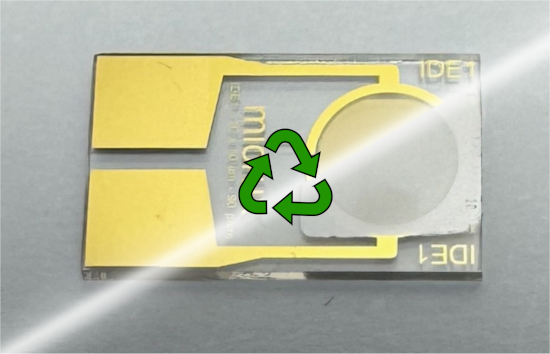
- ) fabrication, initially covered with a large-scale MoS2 film produced by roll-to-roll mechanical exfoliation. Figure 2c,d displays a Ti/Au interdigitated electrode on glass with the 10 µm gap separation, widely used for electrochemistry and biosensing applications [34]. For both cases, the cleaning process


Glycerol photoelectrochemical oxidation reaction at carbon nitrides/BiVO4 materials
Beilstein J. Nanotechnol. 2026, 17, 806–817, doi:10.3762/bjnano.17.57
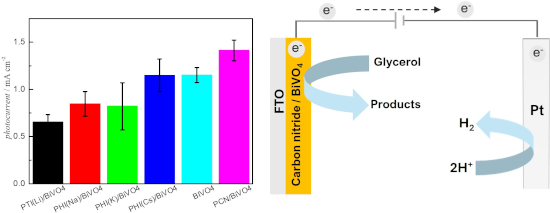
- -Li, PHI-Na, and PHI-K combined with BiVO4 tend to decrease the overall activity for glycerol oxidation. In turn, PHI-Cs/BiVO4 exhibits an activity similar to that of bare BiVO4, while PCN/BiVO4 displays a higher activity. These photoelectrochemical tests were performed in triplicate using




Two-step laser synthesis of Ag@TiO2 nanomaterials for the photocatalytic degradation of rhodamine B
Beilstein J. Nanotechnol. 2026, 17, 622–634, doi:10.3762/bjnano.17.43
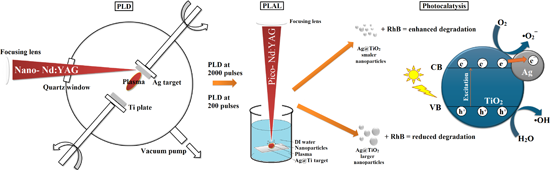
- a state of initial instability. Influence of Ag on the bandgap energy of TiO2 UV–vis spectroscopy was employed to investigate the effect of Ag doping on TiO2 and to determine the bandgaps of both TiO2 and Ag@TiO2 samples. Figure 7a displays the absorption spectra of TiO2 and Ag-modified TiO2 samples


Electrochemical determination of ciprofloxacin using a MIL-101/reduced graphene oxide-modified electrode
Beilstein J. Nanotechnol. 2026, 17, 541–554, doi:10.3762/bjnano.17.35
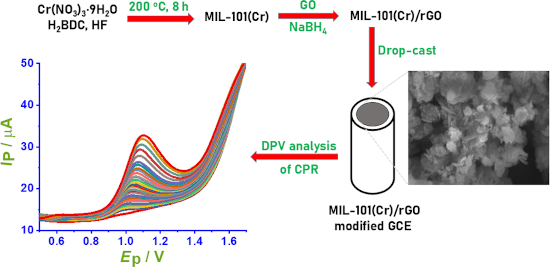
- typical for reduced graphene oxide. In contrast, pristine MIL-101 displays multiple Raman bands in the low- and mid-frequency regions (280, 473, 629, 809, 866, 925, 1037, 1145, 1283, 1454, and 1611 cm−1), which can be assigned to lattice vibrations of the metal–oxygen clusters and organic linker modes
- integration of MIL-101(Cr) and rGO, while preserving the Cr3+ oxidation state and the characteristic coordination environment of the MIL-101 framework. The SEM images of rGO, MIL-101, and the MIL-101/rGO composite are shown in Figure 4. The rGO sample (Figure 4a) displays a typical wrinkled, sheet-like


Upcycling agroindustrial waste into graphene oxide supports for gold nanoparticles: toward sustainable nanomaterials
Beilstein J. Nanotechnol. 2026, 17, 489–504, doi:10.3762/bjnano.17.32
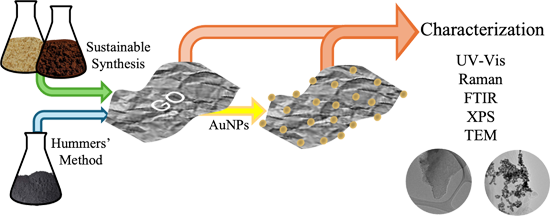
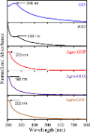
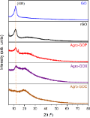
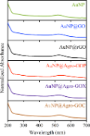
- system within the GO framework. Figure 1 reveals clear distinctions between conventionally synthesized GO, its reduced form rGO, and the Agro-GO materials. GO displays the characteristic π→π* transition near 230 nm and shows the highest absorption in the 300–350 nm region, consistent with the presence of
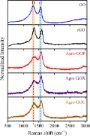
- less fragmented sp2 domains compared with Agro-GOP and Agro-GOC. Regarding absorption in the 300–350 nm region, Agro-GOC displays comparatively higher absorption than Agro-GOX and Agro-GOP, suggesting a greater abundance of C=O functionalities or more chemically diverse oxygen environments. Raman
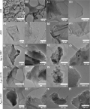
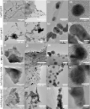
- oxidation level and effective exfoliation of the graphite precursor, consistent with typical GO morphology. In contrast, the rGO sample (Figure 6e–h) displays darker, less transparent sheets, with noticeable regions that are flatter and less wrinkled than in GO. These smoother areas corroborate the presence



Defects and defect-mediated engineering of two-dimensional materials: challenges and open questions
Beilstein J. Nanotechnol. 2026, 17, 454–488, doi:10.3762/bjnano.17.31
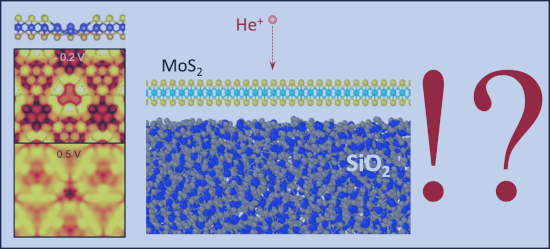
- pattern of Gr with Ir(111) as shown in Figure 9a [157]. The fast Fourier transform of the topograph in Figure 9b confirms the visual impression from Figure 9a. It displays clear “diffraction” peaks at the locations corresponding to the moiré lattice. The formation of a partially ordered nanomesh with size
- distribution rather uniform. The average vacancy cluster size in Figure 9a is twelve vacancies. A similar mechanism of vacancy cluster self-organization applies to the moiré of h-BN with Ir(111) [157]. Figure 9d displays the pristine h-BN moiré with pronounced bright spots. Upon 500 eV He+ ion irradiation at





Fast vortex dynamics and relaxation times in NbRe-based heterostructures
Beilstein J. Nanotechnol. 2026, 17, 292–302, doi:10.3762/bjnano.17.20
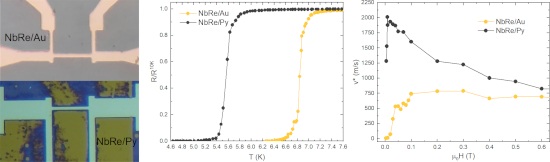
- characterized by protrusions. Thus, the magnetic field is non-uniformly distributed in the film, and preferential stationary movement channels for the vortices are generated [5][47]. At larger fields, the NbRe/Au sample displays a nearly field-independent v*, as predicted by Larkin–Ovchinnikov theory. In


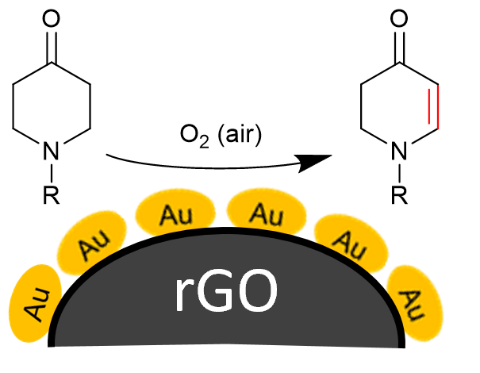
Gold nanoparticle-decorated reduced graphene oxide as a highly effective catalyst for the selective α,β-dehydrogenation of N-alkyl-4-piperidones
Beilstein J. Nanotechnol. 2026, 17, 218–238, doi:10.3762/bjnano.17.15
- 1s spectrum (Figure 11b) displays deconvoluted peaks at 284.7 eV (C–C/C=C), 285.5 eV (C–O), and 288 eV (C=O), confirming the oxygen-containing functionalities in rGO. These residual groups promote strong Au–support interactions, improving nanoparticle dispersion and stability [44]. The W 4f region


Improving magnetic properties of Mn- and Zn-doped core–shell iron oxide nanoparticles by tuning their size
Beilstein J. Nanotechnol. 2025, 16, 2285–2295, doi:10.3762/bjnano.16.157
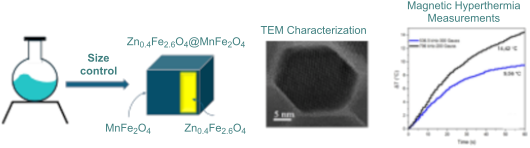
- [dT/dt]t=0 is the derivative function of the temperature at t = 0 (K·s−1). Results and Discussion X-ray diffraction analysis The XRD pattern (Supporting Information File 1, Figure S1) displays sharp and intense peaks characteristic of a well-crystallized material. The most intense peak is located at



Missing links in nanomaterials research impacting productivity and perceptions
Beilstein J. Nanotechnol. 2025, 16, 2168–2176, doi:10.3762/bjnano.16.149
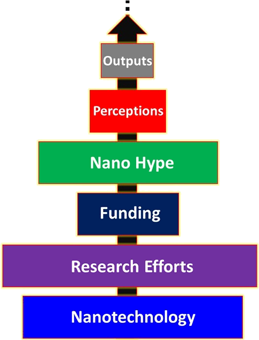
- limited, exclusive, and mostly in the pipeline. Similarly, Samsung’s quantum dot-based smart TV displays are available, but in a controlled and exclusive manner. In essence, business strategy plays a significant role in deliberately delaying the wide release of exceptionally smart and efficient
Stereodiscrimination of guests in chiral organosilica aerogels studied by ESR spectroscopy
Beilstein J. Nanotechnol. 2025, 16, 2034–2054, doi:10.3762/bjnano.16.140
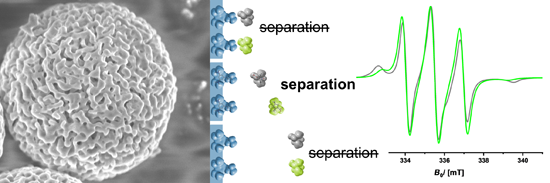
- displays the typical aerogel structure with a random pore system and polydisperse sizes from 30 to 250 nm. The high porosity was confirmed by nitrogen physisorption analysis (Figure 2b). The isotherm is typical for a material with large mesopores and macropores, and the specific surface area, ABET, is 552
- bands are seen at 1666 cm−1 (amide I) and 1557 cm−1 (amide II), and the bands at 1046 and 948 cm−1 originate from the siloxane network (Si–O–Si). The 13C magic angle spinning (MAS) nuclear magnetic resonance (NMR) spectrum (Figure 2e) displays signals for Ala-CH3 (δ = 16.0 ppm), Ala-CH (45.3 ppm




Programmable soliton dynamics in all-Josephson-junction logic cells and networks
Beilstein J. Nanotechnol. 2025, 16, 1883–1893, doi:10.3762/bjnano.16.131

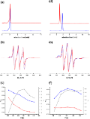
- ). Figure 2 presents the results for different values of this inductance, corresponding to distinct operational modes. Each panel displays two key physical quantities on dual y-axes: (1) the spatial profile of the nodal Josephson phases (φk) as a function of the node index k and (2) the normalized currents


Further insights into the thermodynamics of linear carbon chains for temperatures ranging from 13 to 300 K
Beilstein J. Nanotechnol. 2025, 16, 1818–1825, doi:10.3762/bjnano.16.125
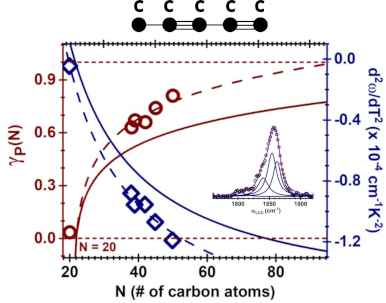
- are fitting results using Equation 2. We are then well positioned to proceed with our analysis using the Debye model, whose associated equations (see Supporting Information File 1) depend on ωLCC, , and [30]. In one hand, Figure 2b shows that u(T) displays a T2 behavior; the values of u(T) at 13 K
- strain (εT), which similarly with u(T), displays a T2 behavior (Figure 2e). This means that strains at 13 K (1.29 × 10⁻⁷, this work) are very similar to those at 70 K (3.74 × 10⁻⁶), while εT = 0.01 × 10⁻² at ambient conditions. As discussed in the literature [29][30][51], in addition to depending on the


![[Graphic 23]](/bjnano/content/inline/2190-4286-16-125-i25.svg?max-width=637&scale=1.18182)
Multifunctional anionic nanoemulsion with linseed oil and lecithin: a preliminary approach for dry eye disease
Beilstein J. Nanotechnol. 2025, 16, 1711–1733, doi:10.3762/bjnano.16.120
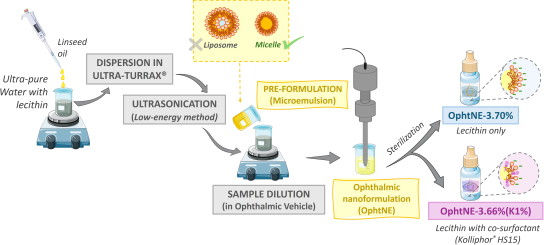
- nanoformulations OphtNE-3.70% and OphtNE-3.66%(K1%) is further supported by the TEM micrographs presented in Figure 3a and Figure 3c, respectively. These micrographs reveal spherical droplets in both formulations, but distinct differences in size and dispersion uniformity are evident. OphtNE-3.70% displays larger



Photocatalytic degradation of ofloxacin in water assisted by TiO2 nanowires on carbon cloth: contributions of H2O2 addition and substrate absorbability
Beilstein J. Nanotechnol. 2025, 16, 1567–1579, doi:10.3762/bjnano.16.111
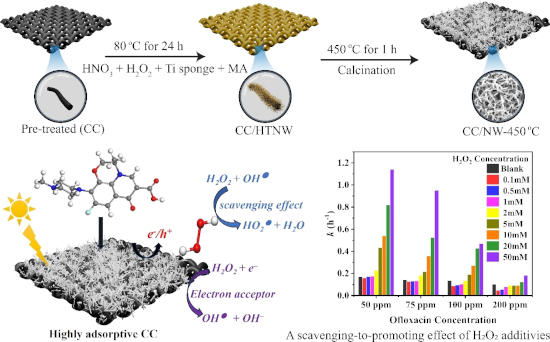
- and O are homogeneously distributed over the carbon cloth fibers, supporting the uniform and successful growth of TiO2 nanowires. The successful formation of TiO2 nanowires is further confirmed by TEM analysis. As shown in Figure 1e,f, the CC/NW-450 °C sample displays a distinct net-like network of
- °, respectively (JCPDS card no. 21-1272). The Raman spectra in Figure 2b are in accordance with the XRD analysis in phase composition. The CC/NW-450 °C spectrum displays prominent peaks at 146, 195, 287, 395, 516, and 637 cm−1, corresponding to the Eg, A1g, B1g, B1g, (A1g + B1g), and Eg modes of the anatase phase


Transient electronics for sustainability: Emerging technologies and future directions
Beilstein J. Nanotechnol. 2025, 16, 1545–1556, doi:10.3762/bjnano.16.109
- of organic displays, are known for their superior water resistance due to their densely packed atomic structures. However, even these films are susceptible to defects formed during deposition, which compromise their barrier function. To overcome this, display technologies have utilized techniques


Laser processing in liquids: insights into nanocolloid generation and thin film integration for energy, photonic, and sensing applications
Beilstein J. Nanotechnol. 2025, 16, 1428–1498, doi:10.3762/bjnano.16.104






Photochemical synthesis of silver nanoprisms via green LED irradiation and evaluation of SERS activity
Beilstein J. Nanotechnol. 2025, 16, 1417–1427, doi:10.3762/bjnano.16.103
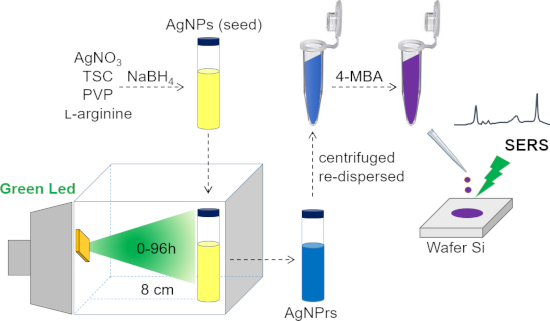
- (Figure 7a) displays two dominant peaks at 1088 and 1596 cm−1, corresponding to the stretching vibrations of the aromatic ring. Weaker peaks are observed at 1182 and 1292 cm−1, attributed to C–H stretching, and at 805 cm−1, corresponding to the bending vibration of the carboxylate group (COO−) [20][21


Wavelength-dependent correlation of LIPSS periodicity and laser penetration depth in stainless steel
Beilstein J. Nanotechnol. 2025, 16, 1302–1315, doi:10.3762/bjnano.16.95
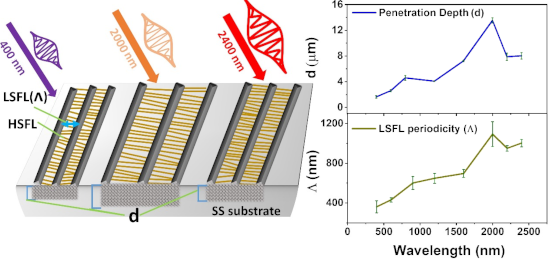
- fixed at 20 mW. For each wavelength, four different step sizes and scanning speeds were explored. Table 1 below displays the optimal spatial periodicity of LIPSS structures obtained for each wavelength. In this work, we fabricated LIPSS over a large area 5 mm × 5 mm and optimization was carried out for
- subsequently displays a decline with further increases in wavelength. This decline is less pronounced compared to our previous report, as we maintained a constant incident power. The HSFL variation trend is very similar to the LSFL trend, as evident from Figure 6, but their orientation is perpendicular to the
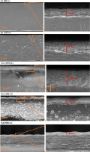
- pure metals [70][71][72]. Figure 7 displays cross-sectional surface morphology images for samples irradiated with 600, 1200, 2000, 2200, and 2400 nm laser wavelength. As depicted in Figure 8 and Table 2, the diagram reveals a contradiction to the established principle of skin depth, as the depth of




Enhancing the photoelectrochemical performance of BiOI-derived BiVO4 films by controlled-intensity current electrodeposition
Beilstein J. Nanotechnol. 2025, 16, 1289–1301, doi:10.3762/bjnano.16.94
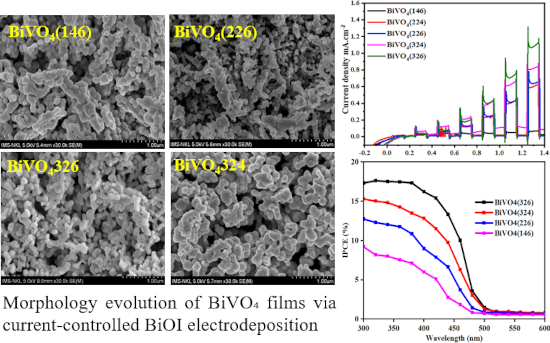
- effects of enhanced crystallinity, film morphology, and preferential crystal orientation. As shown in the XRD patterns (Figure 1), BiVO4(326) displays the most intense (121) and (040) diffraction peaks among all the samples, suggesting preferred growth along these planes, which are known to facilitate



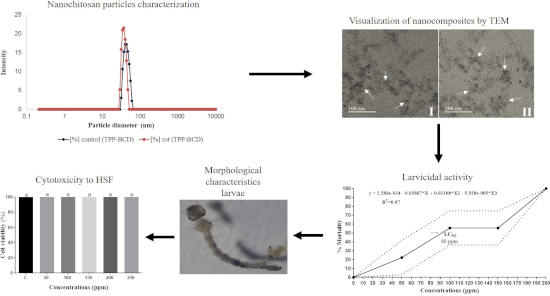
Chitosan nanocomposite containing rotenoids: an alternative bioinsecticidal approach for the management of Aedes aegypti
Beilstein J. Nanotechnol. 2025, 16, 1197–1208, doi:10.3762/bjnano.16.88
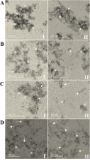
- −1 range are attributed to the bending vibrations of C–H in methyl and methylene groups [22][23][24]. The spectrum of pure rotenoids displays a complex profile with multiple peaks due to the presence of diverse functional groups [14]. Notably, 6-aromatic C=C stretching appears in the 1600–1300 cm−1



Electronic and optical properties of chloropicrin adsorbed ZnS nanotubes: first principle analysis
Beilstein J. Nanotechnol. 2025, 16, 1184–1196, doi:10.3762/bjnano.16.87
- for applications ranging from ultraviolet light-emitting diodes and injection lasers to flat-panel displays and sensors [15][16][17][18][19]. ZnS, a promising transition metal chalcogenide with a wide bandgap of approximately 3.7 eV, has shown remarkable potential in gas sensing applications
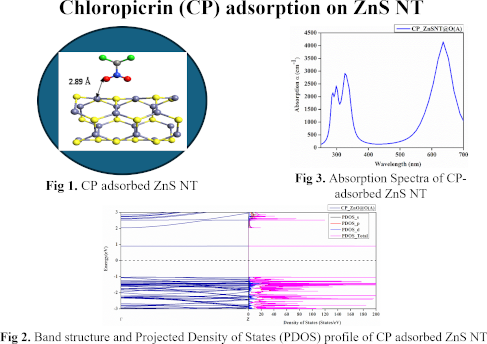
- pristine ZnS NT and CP-adsorbed ZnS NT at orientations A, B, C, and D reveal significant variations that elucidate the interaction mechanisms between CP molecules and ZnS NTs. For pristine ZnS NTs, the spectrum displays multiple sharp peaks in the UV region (250–400 nm), with the strongest peak occurring
- C displays a broader absorption spectrum with multiple peaks spanning the UV (250–400 nm) and visible (400–700 nm) regions. The visible range peaks, though less intense than those in Orientation A, are broader, indicating complex interactions between the CP molecule and the ZnS NT. This could arise


Crystalline and amorphous structure selectivity of ignoble high-entropy alloy nanoparticles during laser ablation in organic liquids is set by pulse duration
Beilstein J. Nanotechnol. 2025, 16, 1141–1159, doi:10.3762/bjnano.16.84
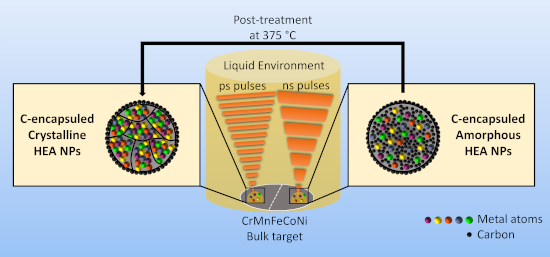
- well as differential scanning calorimetry. Figure 4B displays the TEM in situ heating experiment and SAED patterns of an amorphous sample made by ns-LAL in acetone with increasing temperature. The diffuse and broad intensity that results from an amorphous structure gets sharper, especially for the (111