


Search results
Search for "dopamine" in Full Text gives 44 result(s) in Beilstein Journal of Nanotechnology.
Polycatecholamine nanocoatings on stainless steel: the effect on attachment of human fibroblasts and platelets
Beilstein J. Nanotechnol. 2026, 17, 365–380, doi:10.3762/bjnano.17.25
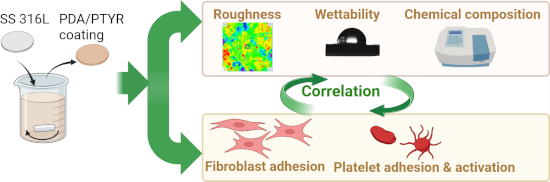
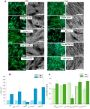
- (PDA) is widely used to functionalize materials and enhance cell attachment. At the same time, the potential of the dopamine precursor tyrosine in its polymerized form (polytyrosine, PTYR) remains underexplored despite its biological activity. In this study, we developed nanostructured PDA and PTYR
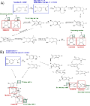
- -driven formation of catechol–quinone intermediates, followed by intramolecular cyclization and supramolecular aggregation [12][27]. Figure 1 summarizes the hypothetical steps of dopamine and tyrosine oxidation, illustrating how both monomers may converge toward heterocyclic structures and supramolecular
- aggregates stabilized by charge transfer, hydrogen bonding and π–π stacking interactions [12][27][28]. Mechanistic studies indicate that the first step of ʟ-tyrosine polymerization involves hydroxylation of the aromatic ring at the C3 position [12][28][29], after which the pathway resembles dopamine




Parylene-coated platinum nanowire electrodes for biomolecular sensing applications
Beilstein J. Nanotechnol. 2025, 16, 1392–1400, doi:10.3762/bjnano.16.101
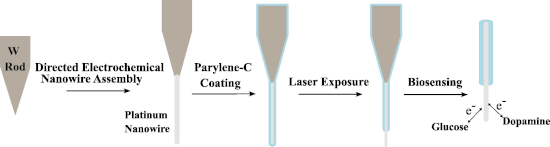
- testing with glucose and dopamine demonstrate limits of detection of 30 nM and 0.01 mM, respectively. The R-squared values for peak current versus concentration are 0.985 and 0.994, indicating strong linear correlations. These nanoscale electrodes hold great promise for single-cell biosensing applications
- due to their compact size, biocompatibility, and rapid fabrication. Keywords: biosensor; directed electrochemical nanowire assembly (DENA); dopamine; glucose; nanoelectrode; platinum; Introduction Electrodes, a tool used in all walks of life today, were first demonstrated by Max Cremer in 1906 [1
- biocompatibility, catalytic efficiency, and stability [24]. Parylene-C was utilized for the encapsulation and insulation of the electrodes. Dopamine and glucose were selected as analytes for testing biosensing capabilities of the electrodes. Nanoscale electrode growth steps are explained including nanowire growth


Synthesis and antibacterial properties of nanosilver-modified cellulose triacetate membranes for seawater desalination
Beilstein J. Nanotechnol. 2025, 16, 1380–1391, doi:10.3762/bjnano.16.100
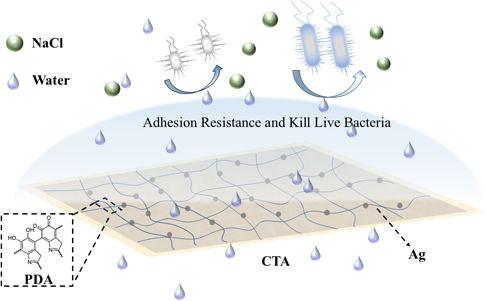
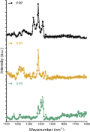
- sample. The low concentration of PDA and Ag may result in characteristic peaks being masked by noise; thus no significant differences are observed in the FTIR curves of the three materials. To confirm the successful polymerization of dopamine into PDA, the dark brown layer adhering to the PCTA membrane
- and the container walls was stripped off and tested via FTIR. The spectrum exhibited characteristic peaks at approximately 1506 cm−1 and 1600 cm−1, corresponding to the stretching vibrations of the indole ring structure (Figure 1) [29]. This result indicates that dopamine was successfully polymerized
- ][32][33][34]. In comparison, no peaks of Ag are observed in CTA and PCTA (Figure 3c,d). Under alkaline conditions (pH > 7.5), dopamine can spontaneously polymerize into PDA in the presence of oxygen (Supporting Information File 1, Figure S1a) [31][35][36]. During the preparation of PCTA, alkaline


Hydrogels and nanogels: effectiveness in dermal applications
Beilstein J. Nanotechnol. 2025, 16, 1216–1233, doi:10.3762/bjnano.16.90
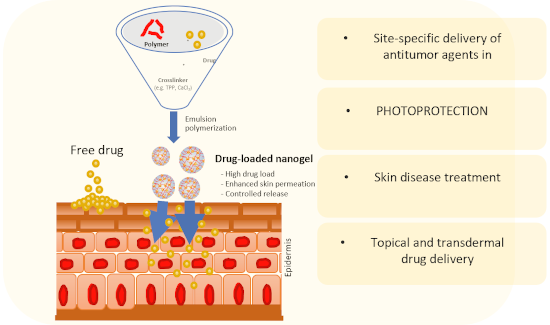
- phenytoin showed drug release improvement, skin adherence, and increased content of both collagen fibers and fibroblasts in the wound tissue during the healing process in rats [40]. Liang et al., (2019) developed hydrogels composed of gelatin-grafted dopamine/chitosan/polydopamine-coated carbon nanotubes


Aprepitant-loaded solid lipid nanoparticles: a novel approach to enhance oral bioavailability
Beilstein J. Nanotechnol. 2025, 16, 652–663, doi:10.3762/bjnano.16.50
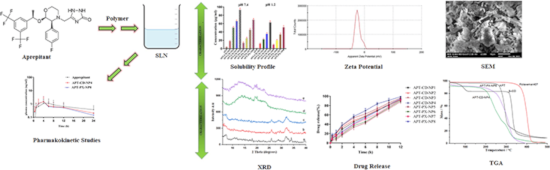
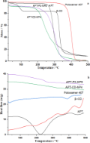
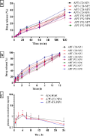
- nausea and/or vomiting in those who receive chemotherapy. Factors that affect the incidence and severity of CINV in patients are schedule, dosage, route of administration of chemotherapy, age, sex, and history of alcohol use [4]. CINV are treated by commonly used agents such as dopamine antagonists, 5HT3



Nanomaterials in targeting amyloid-β oligomers: current advances and future directions for Alzheimer's disease diagnosis and therapy
Beilstein J. Nanotechnol. 2025, 16, 561–580, doi:10.3762/bjnano.16.44
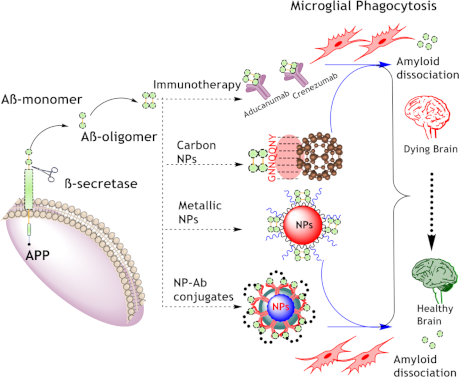
- specifically designed for the diagnosis and inhibition of AβOs. One example of this innovative approach is demonstrated by Viola et al., who designed mono-dispersed nitro-dopamine (nDOPA)- and polyethylene glycol (PEG)-stabilized magnetic nanostructures (MNSs) in a size range of 12–16 nm. The surface of these


Electrochemical nanostructured CuBTC/FeBTC MOF composite sensor for enrofloxacin detection
Beilstein J. Nanotechnol. 2024, 15, 1522–1535, doi:10.3762/bjnano.15.120
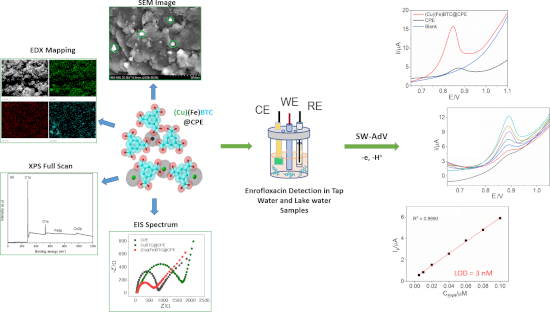
- , respectively [31]. In addition, the coupling of MOFs with conducting polymers was investigated to modulate their electrical properties. Conducting poly(3,4-ethylenedioxythiophene) nanotubes were coated with porphyrin-based MOFs to detect dopamine in the range of 2 × 10⁻⁶ to 270 × 10−6 M with a LOD of 0.04 × 10





A biomimetic approach towards a universal slippery liquid infused surface coating
Beilstein J. Nanotechnol. 2024, 15, 1376–1389, doi:10.3762/bjnano.15.111
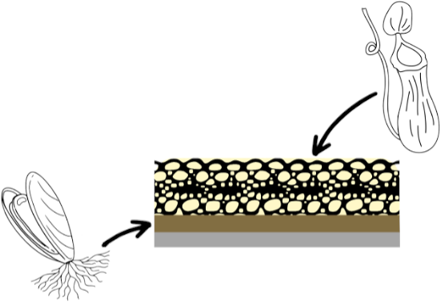
- fabrication of SLIPS by producing the required lubricant anchor layer through the polymerization of dopamine. This dopamine polymerization step is extremely simple and will form a “sticky” layer to almost any chemistry, thereby, providing a straightforward process to produce a SLIPS layer on almost any
- methanol for 20 min [30]. All substrates were then dried under a stream of nitrogen and sealed until use. The cleaned substrates were then immersed in dopamine hydrochloride (Sigma-Aldrich, St. Louis, MO) at a concentration of 2 mg/mL for 24 h in a 10 mM Trizma base (Sigma-Aldrich, St. Louis, MO) solution
- roughness of all samples with the final layer of the coating were not significantly different from one another, suggesting universal attachment of the SLIPS porous component. The final structure of oxidative polymerization for dopamine into PDA is not fully agreed upon [20][44][45]. Therefore, information




Vinorelbine-loaded multifunctional magnetic nanoparticles as anticancer drug delivery systems: synthesis, characterization, and in vitro release study
Beilstein J. Nanotechnol. 2024, 15, 256–269, doi:10.3762/bjnano.15.24
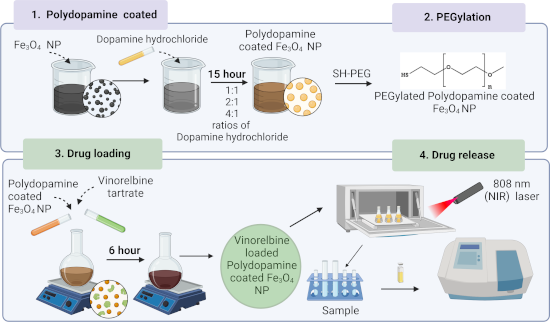
- ratios as a result of dopamine polymerisation and covalent bonding of thiol-polyethylene glycol (SH-PEG). The VNB/PDA/Fe3O4 nanoparticles have a saturation magnetisation value of 60.40 emu/g in vibrating sample magnetometry, which proves their magnetisation. Vinorelbine, which is used as an effective
- ]. Many well-designed agents have been developed for photothermal therapy, including carbon, metal, and organic nanocomposites [21]. Due to their superparamagnetic and heating potential, Fe3O4 nanoparticles have recently garnered attention, particularly in photothermal therapy research. Dopamine (DA) is a
- The chemicals used in nanoparticle synthesis, namely iron(III) chloride hexahydrate (FeCl3·6H2O, Mw = 270.30 g/mol), iron(II) chloride tetrahydrate (FeCl2·4H2O, Mw = 198.81 g/mol), dopamine hydrochloride (Mw = 189.64 g/mol), tris(hydroxymethyl)aminomethane hydrochloride, (Tris-HCl, Mw = 157.60 g/mol


Fluorescent bioinspired albumin/polydopamine nanoparticles and their interactions with Escherichia coli cells
Beilstein J. Nanotechnol. 2023, 14, 1208–1224, doi:10.3762/bjnano.14.100
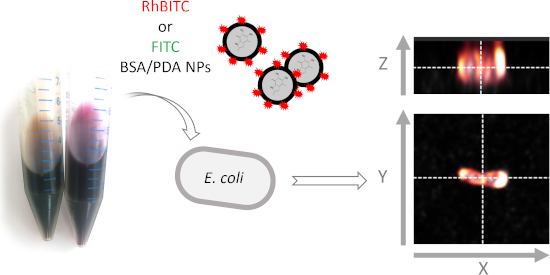
- ]. These properties can even be controlled by an external signal [17][18][19]. PDA NPs are formed upon oxidation in dopamine (DA) solutions with additives such as surfactants, polyelectrolytes, and proteins [14]. Eumelanin-like NPs with a diameter less than 20 nm have been obtained by this method. The
- KE diad (e.g., catestatin) [13]. During the formation process, hydroxy groups of dopamine form hydrogen bonds with carboxylic groups (COO−) of glutamate (pKa = 4.3), whereas protonated amino groups (NH3+) of lysine (pKa = 10.5) further stabilize the aggregate by cation–π interactions with the
- aromatic ring of dopamine (Figure 1c). For this, K and E residues must be next to each other. Even a single glycine residue (G) located between K and E can destabilize the aggregates [13]. Among such possible additives, the albumin protein is an interesting candidate since it contains one KE diad and is



Metal-organic framework-based nanomaterials as opto-electrochemical sensors for the detection of antibiotics and hormones: A review
Beilstein J. Nanotechnol. 2023, 14, 631–673, doi:10.3762/bjnano.14.52


Conjugated photothermal materials and structure design for solar steam generation
Beilstein J. Nanotechnol. 2023, 14, 454–466, doi:10.3762/bjnano.14.36
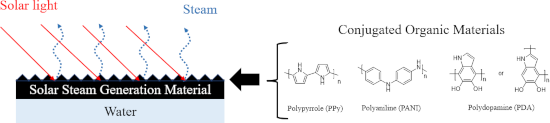
- constructing electron donor–acceptor pairs. Density functional theory (DFT) simulations indicated donor–acceptor interactions between arginine and PDA subunits, including the formation of 5,6-dihydroxyindole (DHI) and indole-5,6-quinone (IQ). Dopamine and arginine were copolymerized in an aqueous solution at
- room temperature to produce APDA. During the polymerization, DHI or IQ moieties were formed by rearrangement of dopamine. The formed DHI and IQ moieties then reacted with each other or the amine groups of arginine. This was followed by further polymerization of DHI, IQ, arginine, and their oligomers
- coating method to obtain light-trapping coatings of nanofibers by the copolymerization of dopamine and pyrrole, which can be directly and rapidly synthesized on a polystyrene (PS) foam at room temperature (Figure 9). Due to its excellent wettability, the coating is water permeable and can be directly


Application of nanoarchitectonics in moist-electric generation
Beilstein J. Nanotechnol. 2022, 13, 1185–1200, doi:10.3762/bjnano.13.99
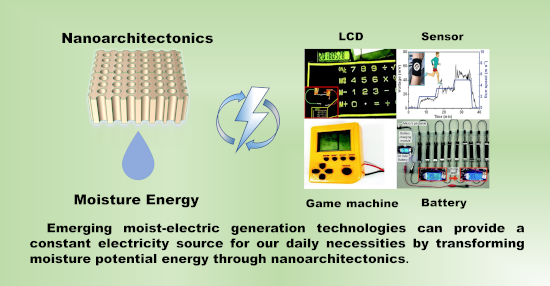
- Using Polyvinyl Alcohol-Wrapped Dopamine/Polyvinylidene Difluoride Nanofibers”, Small, with permission from John Wiley and Sons. Copyright © 2021 WILEY-VCH GmbH. This content is not subject to CC BY 4.0. (k) MEGs in micro/nano drives. (l, m) The electrical output signal generated by the generator during


Zinc oxide nanostructures for fluorescence and Raman signal enhancement: a review
Beilstein J. Nanotechnol. 2022, 13, 472–490, doi:10.3762/bjnano.13.40
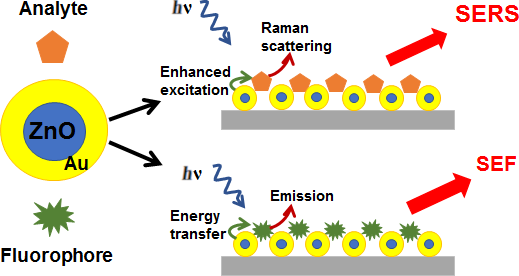
- contact with Ag (WAg = 4.36 eV) and Au (WAu = 5.1 eV), whereby charge transfer occurs in the direction ZnO–Ag or Au. Furthermore, the PATP spacer between ZnO and Ag acts to inhibit the charge transfer. The study conducted by Zhou et al. [67] revealed the Raman signal of dopamine using Au–ZnO heterogeneous
- detection of dopamine, an enhancement factor of Au–ZnO NRs greater than 1.2 × 10⁴ was obtained. The 3D SERS substrates based on Ag/ZnO/Au structures showed a higher SERS enhancement factor of 1 × 10¹⁰ and a limit of detection (LOD) down to 10−16 for rhodamine 6G (R6G) [68]. In this case, the charge transfer




A non-enzymatic electrochemical hydrogen peroxide sensor based on copper oxide nanostructures
Beilstein J. Nanotechnol. 2022, 13, 424–436, doi:10.3762/bjnano.13.35
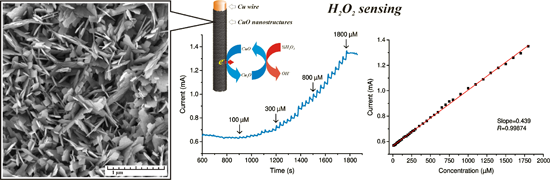
- interfering substances, that is, ascorbic acid, uric acid, dopamine, NaCl, glucose, and acetaminophen, do not affect the electrochemical response. The real milk sample test showed a high recovery rate (more than 95%). According to the obtained results, this sensor is suitable for practical use for the
- ), uric acid (C5H4N4O3, CAS number: 69-93-2), dopamine hydrochloride ((HO)2C6H3CH2CH2NH2HCl, CAS number: 62-31-7), glucose (C6H12O6, CAS number: 50-99-7), acetaminophen (CH3CONHC6H4OH, CAS number: 103-90-2), and sodium chloride (NaCl, CAS number: 7647-14-5) were purchased from Sigma-Aldrich. All reagents
- NaOH was used. The experiment was started at 0 µM concentration of H2O2, then every 60 s either H2O2 or an interfering substance at a concentration of 100 µM was added to the solution, in the following order: H2O2, ascorbic acid, uric acid, dopamine, NaCl, glucose, and acetaminophen. Then, the whole




Self-assembly of amino acids toward functional biomaterials
Beilstein J. Nanotechnol. 2021, 12, 1140–1150, doi:10.3762/bjnano.12.85
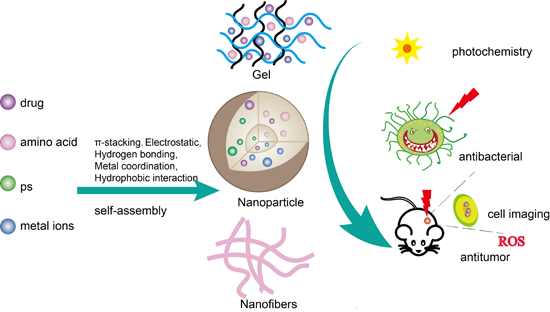
- photosensitizers and limit their severe self-aggregation. Dopamine was chosen as the model substrate to illustrate the photooxidative properties of nanocapsules. After illumination, dopamine is converted to leucine on the nanocapsules. Hence, nanocapsules can be used as photocatalysts to improve the

Applications of superparamagnetic iron oxide nanoparticles in drug and therapeutic delivery, and biotechnological advancements
Beilstein J. Nanotechnol. 2020, 11, 1092–1109, doi:10.3762/bjnano.11.94
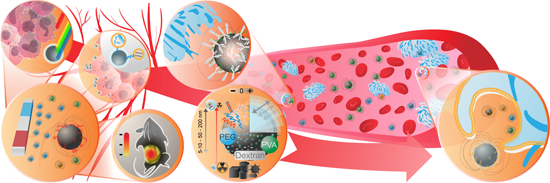
- the corresponding interactions with cell membranes can be changed with different conjugation ligands (type, proportion, and concentration). Cardoso et al. obtained 10–15 nm SPIONs covered with dopamine, tiron, glycerol, and o-phosphorylethanolamine in different combinations and proportions, which had
- release and not by the lipid peroxidation. Lee et al. [123] synthesized SPIONs functionalized with dopamine and lactobionic acid for MRI and nuclear imaging of the liver. They showed that their formulation targets hepatic cells in vitro and is endocytosed within two hours. In vivo, SPIONs were mainly


Key for crossing the BBB with nanoparticles: the rational design
Beilstein J. Nanotechnol. 2020, 11, 866–883, doi:10.3762/bjnano.11.72
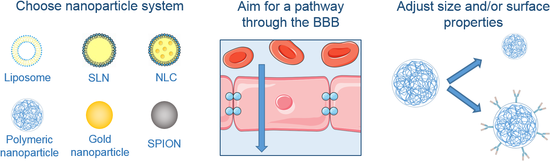
- the drugs or to use prodrugs. One example of a prodrug is levodopa, a prodrug of dopamine used for the treatment of Parkinson’s disease. However, these options are not always possible depending on the structure of the molecule. Another possibility to increase drug delivery through the BBB is to


Multilayer capsules made of weak polyelectrolytes: a review on the preparation, functionalization and applications in drug delivery
Beilstein J. Nanotechnol. 2020, 11, 508–532, doi:10.3762/bjnano.11.41
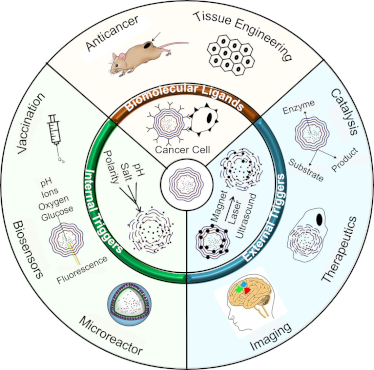
- components have been utilized to functionalize capsules in many ways. Hollow capsules of approximately 400 nm in size with negligible toxicity to cells were reported by the oxidative self-polymerization of dopamine solution onto silica particles [114]. The thickness of multilayer films is comparable to the



The systemic effect of PEG-nGO-induced oxidative stress in vivo in a rodent model
Beilstein J. Nanotechnol. 2019, 10, 901–911, doi:10.3762/bjnano.10.91
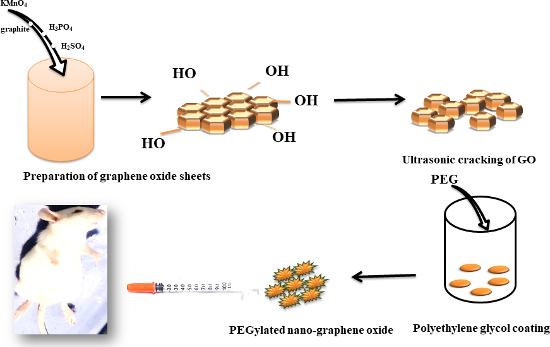
- activity of GO [17]. Moreover, GO-based sensors have been used for the detection of neonicotinoids [18], tyrosine [19], ascorbic acid, dopamine, uric acid [20], 4-nitrophenol [21], and glucose [22]. Among all biocompatible polymers, PEG has been extensively used as a GO cover. Feng et al. used PEG and PEI


Polydopamine-coated Au nanorods for targeted fluorescent cell imaging and photothermal therapy
Beilstein J. Nanotechnol. 2019, 10, 794–803, doi:10.3762/bjnano.10.79
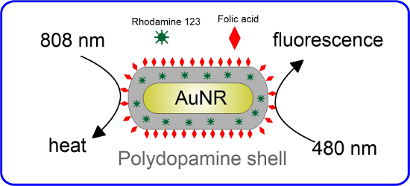
- transversal and longitudinal plasmonic peak intensities is 3.6, which is indicative to small amount of impurities in the AuNR sample. The adsorption of positively charged CTAB molecules on AuNR surface prevents a successful adsorption of dopamine. To make a PDA coating feasible, the CTAB molecules were
- replaced with the thiolated polyethylene glycol (PEG-SH) as the latter molecules interact more strongly with the Au surface. Without this intermediate procedure, the adsorption of dopamine on CTAB-stabilized AuNRs resulted in nanoparticle aggregation. The formation of the PDA coating can be easily induced
- by polymerization of dopamine in alkaline environment. The polymerization process results in the formation of a PDA shell around the AuNR core (Scheme 1). The thickness of the PDA shell can be controlled by the concentration of dopamine added to reaction mixture. In this study we mixed 10 mL of AuNRs


Uniform cobalt nanoparticles embedded in hexagonal mesoporous nanoplates as a magnetically separable, recyclable adsorbent
Beilstein J. Nanotechnol. 2018, 9, 1770–1781, doi:10.3762/bjnano.9.168
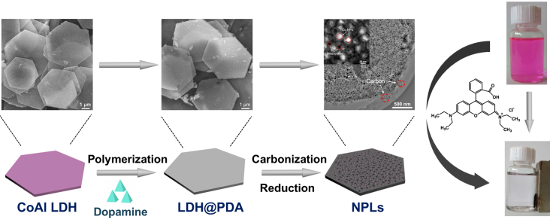
- (LDH). A uniform PDA coating initially covers the surface of LDH by dopamine self-polymerization under mild conditions. Well-dispersed Co nanoparticles are formed in the NPLs by the partial reduction of cobalt from Co2+ to Co0 with surface carbon during the heat treatment process. The surface
- morphology and specific surface area of the as-prepared NPLs can be tailored by adjusting the initial dopamine concentration and carbonization temperature. The mesoporous NPLs exhibit excellent sorption of rhodamine B (RhB) dye and fast magnetic separation in aqueous solution. Over 95% of RhB can be adsorbed
- . Thus, LDHs possess great potential, serving as ideal precursors for the preparation of 2D TM-MCNs. To achieve the reduction of metal cations by carbon in LDH lattices, a suitable carbon precursor is required. Dopamine (DA), a small biomolecule containing both amino and catechol functional groups, can


Anchoring Fe3O4 nanoparticles in a reduced graphene oxide aerogel matrix via polydopamine coating
Beilstein J. Nanotechnol. 2018, 9, 591–601, doi:10.3762/bjnano.9.55
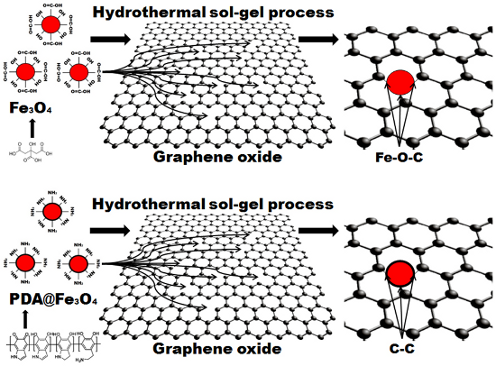
- oxide MNPs were stabilized via organic polymers, such as polydopamine (PDA) [38][39], which introduce additional functional groups onto the nanoparticles surface. Polydopamine is a synthetic analogue of melanine which is composed of dihydroxyindole, indoledione and dopamine units that are believed to be
- ≥99.5%, dopamine hydrochloride and ethylenediamine were obtained from Sigma-Aldrich. Hydrochloric acid 35–38%, sulfuric acid 95%, ethanol 99.8%, ethanol 96% and hydrogen peroxide solution 30% were purchased from POCH. Ammonia solution 25% and potassium permanganate were obtained from Chempur and J.T
- of DI-H2O. Modification of Fe3O4 nanoparticles with polydopamine from dopamine hydrochloride was performed in the same manner as described in ref. [38]. Citric acid and citric acid-polydopamine-coated Fe3O4 nanoparticles are referred to as “Fe3O4” and “PDA@Fe3O4”, respectively. Three DI-H2O solutions


Functionalized TiO2 nanoparticles by single-step hydrothermal synthesis: the role of the silane coupling agents
Beilstein J. Nanotechnol. 2017, 8, 304–312, doi:10.3762/bjnano.8.33
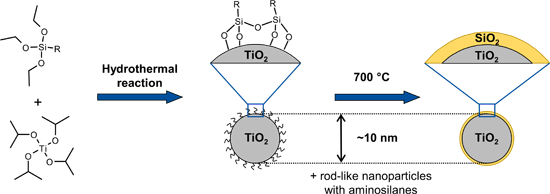
- average size of 40 nm and they determined a maximum surface coverage of about 2.6 OTES molecules per square nanometer. Niederberger et al. developed a room-temperature non-aqueous in situ functionalization process of TiO2 nanoparticles with 4-tert-butylcatechol and dopamine [20]. A brittle brown solid and
- a dark red powder was obtained for 4-tert-butylcatechol and dopamine surface functionalized samples, respectively. More recently, Gao and Cui reported a sol–gel method in which TiO2 nanoparticles functionalized with chlorinated alcohols through hydrogen bonding were produced [21]. However, sol–gel


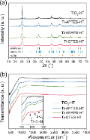

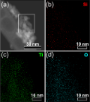
Photocatalysis applications of some hybrid polymeric composites incorporating TiO2 nanoparticles and their combinations with SiO2/Fe2O3
Beilstein J. Nanotechnol. 2017, 8, 272–286, doi:10.3762/bjnano.8.30
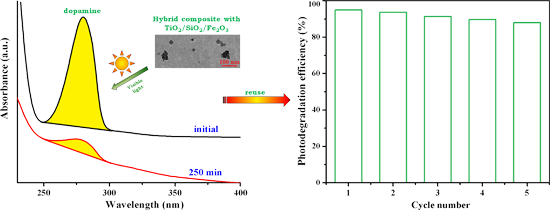
- phenol, hydroquinone and dopamine in aqueous solution under UV or visible-light irradiation. The best results were obtained for the films with TiO2/Fe2O3 or TiO2/SiO2/Fe2O3 NPs. The degradation of the mentioned model pollutants varied between 71% and 100% (after 250 min of irradiation) depending on the
- an amine function (dopamine). The photodegradation experiments for these model pollutants were performed under ambient conditions, under UV irradiation with low intensity (ca. 8 mW/cm2) to imitate the UV radiation from solar light, as well as under irradiation with visible light. The degradation
- eliminated after 250 min of irradiation. We also tested the performance of our catalysts in the decomposition of dopamine, which has a catechol structure (a benzene ring with two hydroxyl side groups) and an amine group attached via an ethyl chain. From the best of our knowledge, the dopamine





