


Search results
Search for "electrodes" in Full Text gives 617 result(s) in Beilstein Journal of Nanotechnology. Showing first 200.
Influence of an external electric field on the catalytic CO oxidation of nanoscaled CeO2 and its La3+ and Gd3+ congeners
Beilstein J. Nanotechnol. 2026, 17, 1028–1038, doi:10.3762/bjnano.17.70
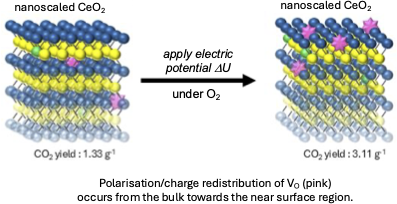
- was controlled by a K-type thermocouple (OMEGA Engineering Inc., NiCr, ±1.1 °C) inside the reactor. The outer and inner electrodes of the sample cell were isolated from each other by tubes (PEEK, 6 mm outer diameter, 1.65 mm inner diameter; 3.6 mm outer diameter, and 1.7 mm inner diameter). A Sorensen
- gas mixture and the catalyst. For the experiments performed under an external electric field, the same gas dosing, mixing, and equilibration procedure was followed. A DC voltage of 50 V was applied using a potentiostat in a two-electrode configuration, with the inner and outer electrodes of the cell
- serving as the two electrodes. The applied voltage (50 V) generated a DC electric field across the catalyst-containing region. The voltage was applied before opening the upstream and downstream valves of the sample holder and was maintained throughout the full reaction period of 120 min. Spectra were


Materials challenges in solid-state sensors for continuous monitoring of ions in water
Beilstein J. Nanotechnol. 2026, 17, 935–973, doi:10.3762/bjnano.17.66
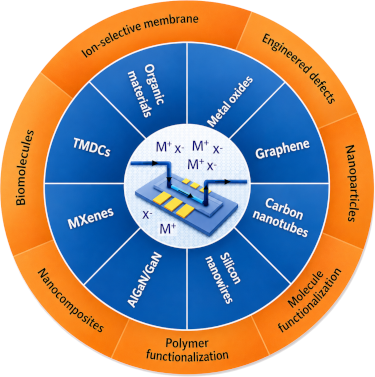
- water systems from passive sampling regimes to active management systems [1]. Electronic ion-sensing platforms including electrochemical (ion-selective electrodes (ISEs) [6][7], amperometric and voltammetric sensors) and electrical (field-effect transistors (FETs) [8][9][10] and chemiresistors [11]) are
- to be covered in this review. This review aims to critically assess the diverse classes of nanomaterials as active layer for electrodes, FETs, and chemiresistors, and as sensing element for these solid-state electronic sensors; this is to understand how different materials influence performance
- , particularly ion-selective electrodes (ISEs), remain among the most established technologies for the detection of ionic species in water. As illustrated in Figure 1a, an ISE generally consists of a disk or planar electrode coated with a polymeric ion-selective membrane (ISM) containing an ionophore [75]. In



Supramolecular one-dimensional conducting nanofibers from a C3-symmetric tetrathiafulvalene derivative
Beilstein J. Nanotechnol. 2026, 17, 872–881, doi:10.3762/bjnano.17.63
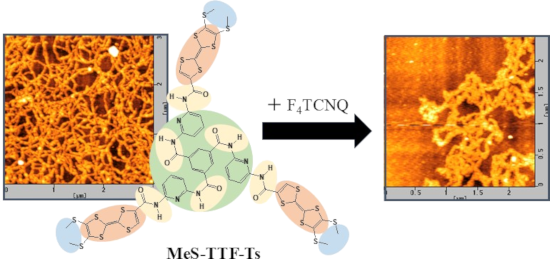
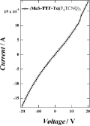
- method or from cast films deposited on quartz substrates, depending on the sample form. Conductivity measurements Electrical conductivity was measured by a direct current (DC) two-probe method. Gold electrodes with a thickness of 100 nm were deposited on mica substrates by vacuum evaporation. Electrical
- concentration of 6 mM. The solution (4 μL) was cast onto a mica substrate equipped with gold electrodes (gap: 50 μm, electrode length: 6 mm) fabricated by vacuum deposition, followed by solvent evaporation to form nanofiber structures. Electrical conductivity measurements of the resulting nanofibers exhibited a


Light-driven ammonia electrooxidation via carbon nitride–ruthenium molecular interfaces
Beilstein J. Nanotechnol. 2026, 17, 854–862, doi:10.3762/bjnano.17.61
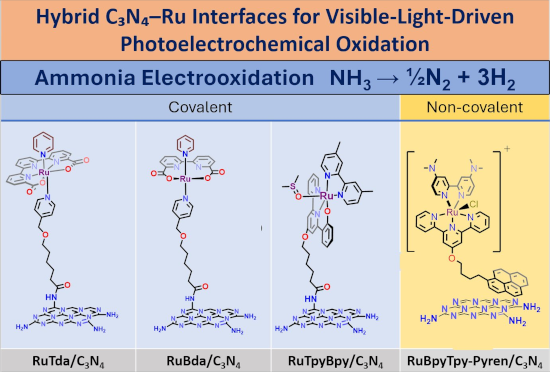
- , nanoparticles, and carbon supports) are manufactured into electrodes or serve as the electrode itself, industrially scalable, but with poorly understood active sites and inactive bulk material [1][2][3][4][5]. In practice, however, bridging these two families is not straightforward. A homogeneous catalyst
- conveniently used for surface anchoring, and its low water oxidation onset potential of 1.1 V vs NHE is among the lowest reported for any molecular catalyst [22][24]. When non-covalently attached to carbon paper electrodes through C–H···π interactions, RuBda achieves a turnover number of 7500 and Faradaic
- photochemical conditions [27]. RuTpyBpy (Ru coordinated by terpyridine and bipyridine), while exhibiting a higher overpotential for water oxidation, has been shown to produce nitrate (NO3−) selectively from ammonia oxidation in aqueous media when immobilised on cyclodextrin-functionalized ITO electrodes


Sustainable fabrication of 2D-based devices through reuse of substrates with microfabricated electrodes
Beilstein J. Nanotechnol. 2026, 17, 818–827, doi:10.3762/bjnano.17.58
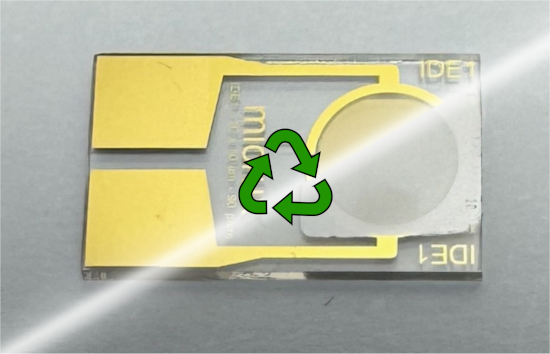
- research is essential but often limited by the high cost and need for specialized facilities. This study establishes a practical method for cleaning and reusing substrates with pre-patterned electrodes. The cleaning protocol involves the use of an ultrasonic bath in warm N-methyl-2-pyrrolidone (NMP
- ), enabling the removal of 2D materials without damaging the electrodes. Electrical measurements, Raman analysis, and Kelvin probe force microscopy measurements collectively confirm the feasibility of repeatedly reusing the same pre-patterned chip, showing that the cleaned regions exhibit no detectable Raman
- devices, potentially reducing the impact of their research. To address this issue, commercially available substrates with pre-patterned electrodes, ready for integration with the nanomaterial under study, offer a practical alternative [7][8][9]. In recent years, our team has regularly employed this


Glycerol photoelectrochemical oxidation reaction at carbon nitrides/BiVO4 materials
Beilstein J. Nanotechnol. 2026, 17, 806–817, doi:10.3762/bjnano.17.57
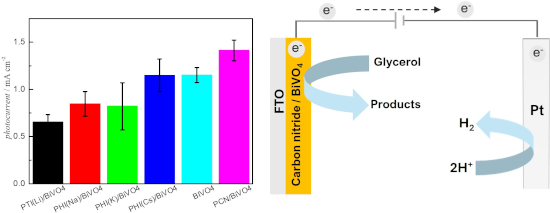
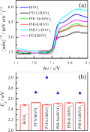
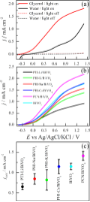
- electrodes. These heterojunctions were applied to photoelectrochemical glycerol oxidation. Furthermore, the effect of Na, K, and Cs alkaline cations in the PHI structures was investigated and the photoactivity for glycerol oxidation was discussed in terms of CN thermal stability. Materials and Methods
- independently prepared electrodes, and the mean photocurrent densities at 0.6 V are shown in Figure 6b. Photocurrent densities under chopped illumination are also presented in Supporting Information File 1, Figures S8–S12 and follow the same trend observed under continuous irradiance. The PCN activity for




Environmental applications of silver nanoparticles: state-of-the-art review and emerging trends
Beilstein J. Nanotechnol. 2026, 17, 697–736, doi:10.3762/bjnano.17.49


Cellulose as a photocatalyst support material: extraction, structural features, and environmental applications
Beilstein J. Nanotechnol. 2026, 17, 635–652, doi:10.3762/bjnano.17.44
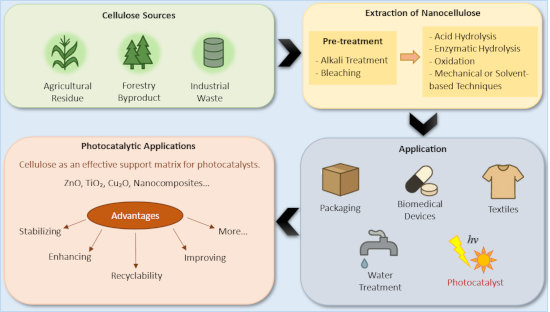
- the need for additional additives, and their high carbon content and small size make them particularly suitable for producing porous carbon-based electrodes through high-temperature pyrolysis. Beyond enhancing conductivity, the use of CNCs as template materials provides multiple advantages, since they


Recent progress in enhancing built-in electric fields of perovskite solar cells via junction engineering
Beilstein J. Nanotechnol. 2026, 17, 602–621, doi:10.3762/bjnano.17.42
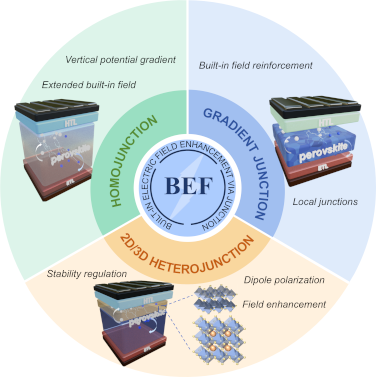
- [19]. The resulting BEFs, extending across both bulk and surface regions, facilitate the efficient separation of photogenerated carriers and promote their directional transport to the electrodes. Furthermore, optimized interfacial energy-level alignment enhances carrier extraction and suppresses
- -surface post-treatments can form a homojunction at the top of the perovskite layer. In particular, HTL-free systems, such as those employing porous carbon electrodes, similar control can be achieved near the electrode–perovskite interface through interfacial modification. Chen et al. [36] employed a
- effective range of the BEF, enhances the directional charge transport and collection efficiency, and suppresses both bulk and interfacial recombination. BP NSs anchored at grain boundaries provide fast hole-transport channels, improving transport matching between the top and bottom electrodes and yielding a




Electrochemical determination of ciprofloxacin using a MIL-101/reduced graphene oxide-modified electrode
Beilstein J. Nanotechnol. 2026, 17, 541–554, doi:10.3762/bjnano.17.35
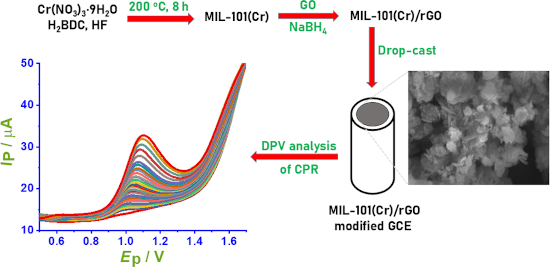
- composite material. Electrochemical determination of ciprofloxacin (CPR) at MIL-101/rGO/GCE Electrochemical behavior of CPR Figure 5a compares the cyclic voltammograms of CPR recorded at different electrodes in 0.1 M BR buffer (pH 4) (see Supporting Information File 1, Figure S2). A weak and poorly defined
- shifted to lower potentials compared with bare GCE (1.203 V), accompanied by a significant increase in peak current. This behavior indicates that the modified materials can effectively enhance the electrocatalytic activity toward CPR oxidation. Notably, the MIL-101/rGO composite electrodes exhibit a much
- /rGO-modified electrodes fabricated under identical conditions (Figure 9b). The peak current response was measured as ICPR = 4.29 ± 0.16 µA, corresponding to an RSD of 3.70%. The low RSD value (<5%) confirms the good fabrication reproducibility of the proposed electrode. The long-term stability of the


Fractional shot noise of an SU(N) Kondo system
Beilstein J. Nanotechnol. 2026, 17, 515–540, doi:10.3762/bjnano.17.34
- understanding a large variety of intricate many-body problems. Potential applications are also relevant. Let us just mention a few: The Kondo effect can be used, for example, as conductance control mechanism [5][17], in probing magnetic interactions [18], or, when polarized electrodes are connected, also for
- the calculation of non-diagonal correlators occurring for interacting systems, we use a simple extrapolation of the Wilson coefficient from the case of an isolated system to a system weakly coupled to electrodes. This allows us to determine the FL free energy and, hence, the thermodynamics and
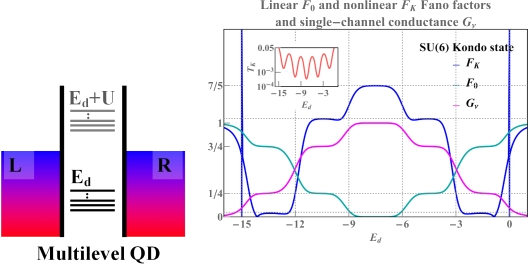
- discuss conductance, Wilson’s ratios, shot noise, Fano factors, and Kondo temperatures of SU(N) systems. We also show susceptibilities and entropies of the N-QD linked with electrodes and compare them with the case of an isolated multiorbital dot. Finally, we give conclusions and some final remarks. We


![[Graphic 127]](/bjnano/content/inline/2190-4286-17-34-i187.svg?max-width=637&scale=1.18182)

Defects and defect-mediated engineering of two-dimensional materials: challenges and open questions
Beilstein J. Nanotechnol. 2026, 17, 454–488, doi:10.3762/bjnano.17.31
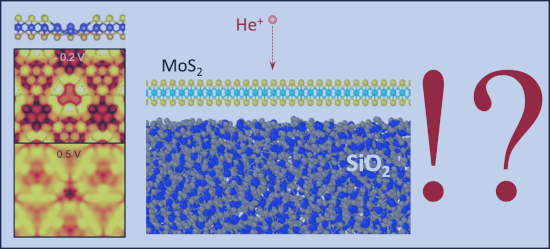
- 10c [160]). After nucleation of two mirrored islands and upon further growth, a MTB forms halfway between the triangular MoS2 islands. An example of such predefined MTB formation is shown in Figure 10d. This close to deterministic MTB positioning enabled their use as ultrashort gate electrodes in





Ferroelectric nanodot reservoir for neuromorphic computing
Beilstein J. Nanotechnol. 2026, 17, 352–364, doi:10.3762/bjnano.17.24
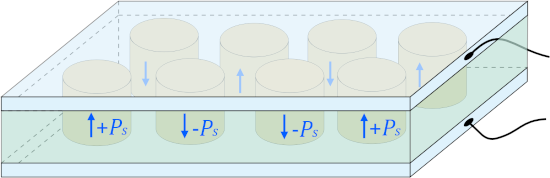
- applications. The reservoir consists of an ensemble of nonlinear ferroelectric nanodots capable of storing information through their stable polarization states. These nanodots are confined between electrodes and form a network of parallel connected capacitive elements, which can either be addressed
- nonlinear response of an ensemble of ferroelectric nanodots. The system consists of a network of nanodots, each carrying the bistable polarization state, arranged between electrodes in configurations that allow for parallel electrical addressing. By receiving temporal input signals, the ensemble evolves
- electrical excitation. As shown in Figure 2a, the nanodot is confined between two metallic electrodes. It exhibits a spontaneous polarization Ps with at least two stable orientations: “up” and “down”. These polarization states are denoted as mPs where m = +1 corresponds to the “up” state and m = −1 to the


Advancing nanolithography: a comprehensive review of materials for local anodic oxidation with AFM
Beilstein J. Nanotechnol. 2026, 17, 275–291, doi:10.3762/bjnano.17.19
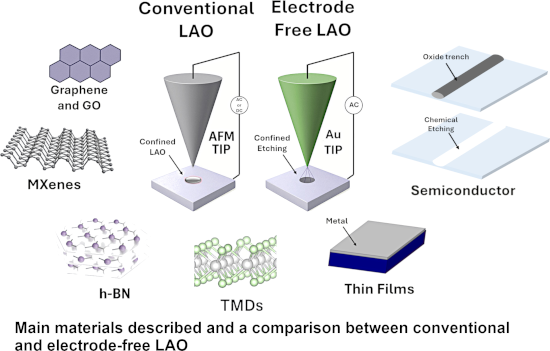
- oxidation steps at the same location during device fabrication [52]. The common experimental setup of LAO on 2D materials flakes is depicted in Figure 3a, where top electrodes are necessary due to the insulating SiO2 layer. The nanometer sized GO features obtained are shown in Figure 3b,c. The description
- oxidation, removing the need for contacted electrodes and broadening the range of usable substrates as shown in Figure 3d. It is important to notice that this technique can be labeled as an anodic oxidation etching. Using AC rather than DC voltage for local anodic oxidation through capacitive coupling, it
- can be applied to any sample, even those without electrodes or electrical contacts. This method simplifies sample preparation, broadens the range of compatible materials, and enhances the reliability and quality of lithographic cuts, all without the need for additional AFM equipment. If applied to


Reduced graphene oxide paper electrode for lithium-ion cells – towards optimized thermal reduction
Beilstein J. Nanotechnol. 2026, 17, 24–37, doi:10.3762/bjnano.17.3
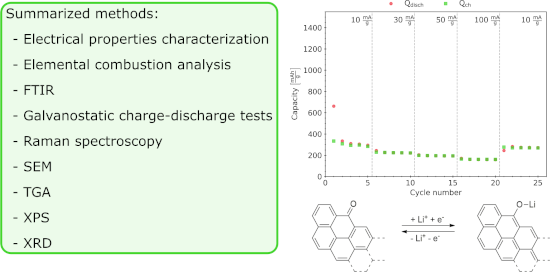
- few examples of rGO-based materials for electrodes, especially for lithium-ion batteries, LiFePO4 and rGO composite cathodes were reported by Wi et al. and Wei and colleagues [8][9]. Moreover, Wang et al. described a method for LiMn0.75Fe0.25PO4 nanorod production on rGO sheets [10]. Again, the
- , that is, rGO as conductive support, was presented by Thangappan et al. for nanostructured MoS2 in supercapacitor electrodes [12]. Another application of graphene materials is current collectors for both anode and cathode based on CVD-grown graphene foam, as described by Li et al., who reported lithium
- -ion batteries with Li4T5O12 and LiFePO4 active materials for the electrodes [13]. Chen et al. described current collectors based on rGO films [14]. Reduced graphene oxide finds further use in sodium-ion composite cathode materials as a conduction-improving agent with Prussian white as the active



Terahertz-range on-chip local oscillator based on Josephson junction arrays for superconducting quantum-limited receivers
Beilstein J. Nanotechnol. 2025, 16, 2296–2305, doi:10.3762/bjnano.16.158
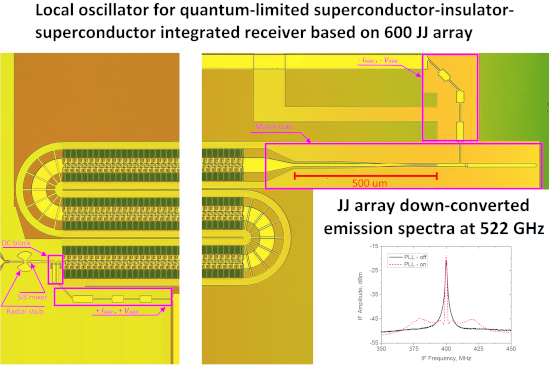
- atmosphere gas components at the TELIS mission on board of the stratospheric balloon [17]. However, the LO based on FFO has some problems yet to be solved. The operation frequency of the FFO is limited by the gap frequency of the superconducting niobium that forms one or both of its electrodes [18
- of robust Nb-based technologies, whereas the electrodes of the transmission lines where the junctions are implemented can be fabricated using Nb compounds. In a work by Uzawa et al. the generation of up to 800 GHz was observed [29]. When a JJ array is properly matched to the load, its radiation power
- the electrodes for this technological run turned out to be slightly different from those used in the calculations (in particular, the gap frequency, denoted by the vertical dash-dotted red line was found to be 650 GHz instead of 700 GHz). The estimate of the gap frequency was done from the value of


Optical bio/chemical sensors for vitamin B12 analysis in food and pharmaceuticals: state of the art, challenges, and future outlooks
Beilstein J. Nanotechnol. 2025, 16, 2207–2244, doi:10.3762/bjnano.16.153


Electron transport through nanoscale multilayer graphene and hexagonal boron nitride junctions
Beilstein J. Nanotechnol. 2025, 16, 2132–2143, doi:10.3762/bjnano.16.147
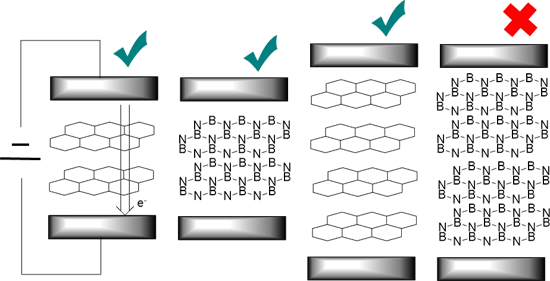
- the c-direction was selected to be 150 k-points per angstrom. Benchmark tests were performed using the NEGF method with Au electrodes instead of Pt, and the Heyd–Scuseria–Ernzerhof 2006 screened hybrid functional (HSE06) instead of PBE. The results obtained from those benchmark simulations showed
- probability can be calculated using Green’s function of the semi-infinite electrode–conductor–electrode system. The transmission probability is a function of the applied bias between the electrodes, V, and the energy of the electrons within the conductor, E; it is given by Equation 3: GA and GR are the
- advanced and the retarded Green’s function, respectively. ΓL and ΓR are the broadening functions of the electrodes. The Green’s function of the electrode–conductor–electrode system is given by Equation 4. HC is the Hamiltonian matrix of the conductor, with HL and HR representing the Hamiltonian matrices of


Laser ablation in liquids for shape-tailored synthesis of nanomaterials: status and challenges
Beilstein J. Nanotechnol. 2025, 16, 1963–1997, doi:10.3762/bjnano.16.137





Quantum circuits with SINIS structures
Beilstein J. Nanotechnol. 2025, 16, 1931–1941, doi:10.3762/bjnano.16.134
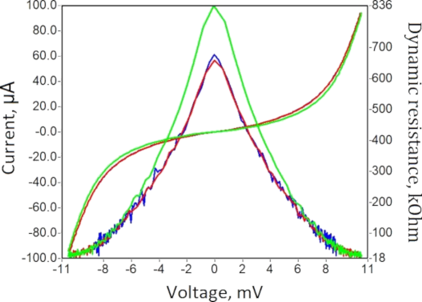
- with selective etching of superconducting and normal metal electrodes. Improvement in ultimate sensitivity is achieved by suspending the absorber above the substrate. Best responsivity of up to 30 electrons per photon at a frequency of 350 GHz, or 72000 A/W, and voltage responsivity up to 3.9 × 10⁹ V/W


Electrical, photocatalytic, and sensory properties of graphene oxide and polyimide implanted with low- and medium-energy silver ions
Beilstein J. Nanotechnol. 2025, 16, 1794–1811, doi:10.3762/bjnano.16.123
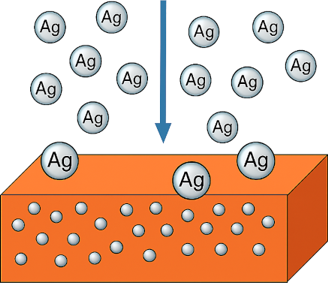
- carbonized matrix, conjugated bonds, and silver cluster structures exhibits dramatically higher conductivity than the unmodified material, which can be exploited, for example, for the fabrication of flexible optoelectronics, thin-film electrodes, or electroactive sensors [12]. In addition to the increase in


Ambient pressure XPS at MAX IV
Beilstein J. Nanotechnol. 2025, 16, 1677–1694, doi:10.3762/bjnano.16.118
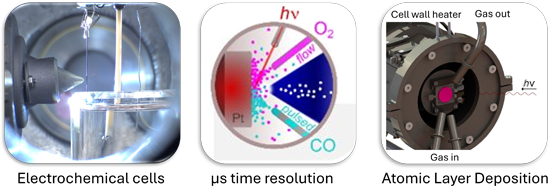
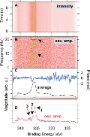
- . First, the electrodes were dipped into the solution, and the cell voltage was swept to the desired voltage. Then the electrode was pulled up under a potential hold for XPS measurements, and, due to the favorable wetting properties of this choice in materials, it was possible to find an area at the top
- increasingly, a bridge between fundamental understanding and functional performance. Picture of the electrochemical APXPS setup at HIPPIE. The EEA on the left is facing the working electrode. The three-electrode cell is then further composed of reference and counter electrodes. The electrodes are immersed in a





Nanotechnology-based approaches for the removal of microplastics from wastewater: a comprehensive review
Beilstein J. Nanotechnol. 2025, 16, 1607–1632, doi:10.3762/bjnano.16.114
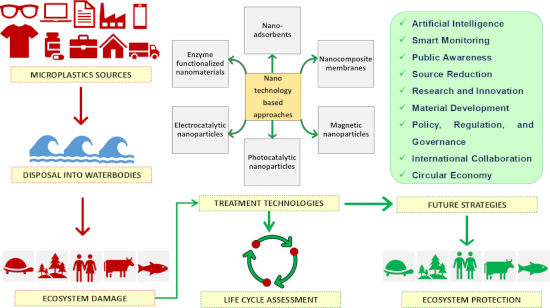
- for easy retrieval. Acting as mobile platforms for preconcentration, these microrobots facilitate the electrochemical sensing of nanoplastics using inexpensive, portable electrodes. This proof-of-concept offers promising potential for real-time, on-site detection and subsequent removal of nanoplastics


Transient electronics for sustainability: Emerging technologies and future directions
Beilstein J. Nanotechnol. 2025, 16, 1545–1556, doi:10.3762/bjnano.16.109

- germanium-based alloys with various metals, as well as emerging heterostructure systems, to achieve tailored electronic and optical properties suited for diverse transient device architectures. Bioresorbable metals are also regarded as essential components for interconnects and electrodes in transient
- electronic systems. Traditionally studied bioresorbable metals include magnesium, zinc, and their alloy AZ31B [51][52]. Mg has been utilized as a transient conductive material in implantable pressure and temperature sensors, where it served as the interconnects and electrodes and underwent complete


Influence of laser beam profile on morphology and optical properties of silicon nanoparticles formed by laser ablation in liquid
Beilstein J. Nanotechnol. 2025, 16, 1533–1544, doi:10.3762/bjnano.16.108
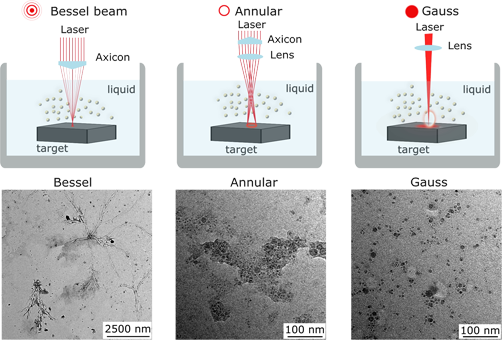
- become an emerging field of research [3][4][5][6][7]. The expanding application areas require silicon nanomaterials of different morphologies, including quantum dots, nanowires, and nanocrystalline films. Si nanowires, for example, are considered as a promising alternative to silicon electrodes in Li-ion
- batteries by providing a solution to the urgent problem of large volumetric expansion known for Si during lithiation process [3]. Due to the possibility of lateral expansion in Si nanowires, the cracking of the electrodes during lithiation is minimized. In addition, the one-dimensional structure of Si
- as a supercapacitor electrode material are in progress. In these experiments, the fabricated Si NPs are deposited onto a carbon cloth and used as working electrodes in the three-electrode scheme. As shown in [50], the application of carbon cloth as a support material in supercapacitors demonstrated a





