Search results
Search for "electronic" in Full Text gives 1102 result(s) in Beilstein Journal of Nanotechnology. Showing first 200.
Sustainable fabrication of 2D-based devices through reuse of substrates with microfabricated electrodes
Beilstein J. Nanotechnol. 2026, 17, 818–827, doi:10.3762/bjnano.17.58
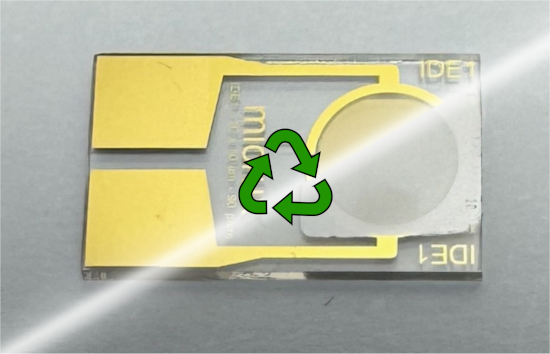
- have mainly focused on epitaxial growth or electrochemical sensing applications. In contrast, this work addresses the reuse of substrates for 2D material-based electronic devices. The cleaning process consists of an ultrasonic bath in N-methyl-2-pyrrolidone (NMP) [23][24] at 50 °C, followed by acetone
- electronic devices, making the fabrication process more practical for laboratories with limited access to cleanroom or microfabrication facilities. Results and Discussion Figure 1a presents a schematic illustration of the cleaning process: The chip with pre-patterned electrodes that needs to be cleaned is
- gentle pressing using a cotton swab to promote adhesion. The sample was then annealed on a hotplate at 110 °C for 5 min to facilitate the transfer of films composed of MoS2 or WSe2 flakes. To ensure high-density coverage of the flakes, multiple sequential transfer steps were employed. For electronic


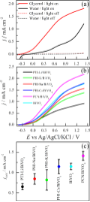
Glycerol photoelectrochemical oxidation reaction at carbon nitrides/BiVO4 materials
Beilstein J. Nanotechnol. 2026, 17, 806–817, doi:10.3762/bjnano.17.57
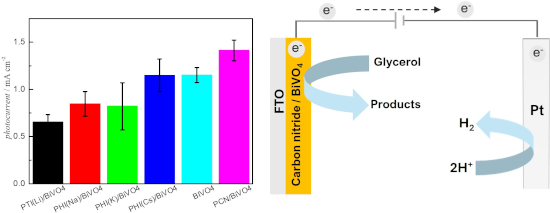
- BiVO4 synthesis, as indicated by thermogravimetric analysis. These findings highlight the dual importance of electronic compatibility and thermal resilience of CN materials in designing efficient heterojunction photoanodes for biomass-assisted hydrogen production. Keywords: biomass valorization
- intrinsic electronic properties, factors such as the nature of the alkali cations, synthesis method, and post-synthesis thermal treatments significantly influence the structural integrity and interfacial behavior of CN materials. Therefore, the design of efficient CN-based heterojunctions must consider not





Tuning the electronic properties of defect-rich MoS2
Beilstein J. Nanotechnol. 2026, 17, 796–805, doi:10.3762/bjnano.17.56
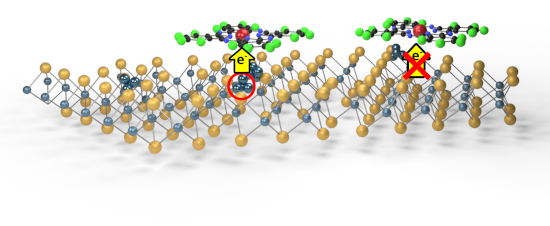
- structural defects significantly affect the electronic properties of the material. The present study utilizes angle-resolved photoelectron spectroscopy (ARPES) and surface-sensitive core-level spectroscopy (SXPS, XAS) with synchrotron radiation to investigate the interfaces between defect-rich MoS2 and
- perfluorinated cobalt phthalocyanine (CoPcF16). Defects were introduced in synthetic MoS2 bulk crystals by gentle argon and neon sputtering. Although the band structure is still visible after sputtering, especially SXPS reveals structural and electronic disturbances of the topmost MoS2 layer. We show how the
- disulfide (MoS2), has emerged as a promising candidate due to their distinctive properties as layered 2D materials with broadly tunable electronic structure [1][2][3]. While numerous studies have focused on single-layer MoS2 sheets, recent research has underscored the pivotal role of multilayer TMDCs in the


Substrate-dependent pore formation in molybdenum disulfide monolayers under ion irradiation
Beilstein J. Nanotechnol. 2026, 17, 769–780, doi:10.3762/bjnano.17.54
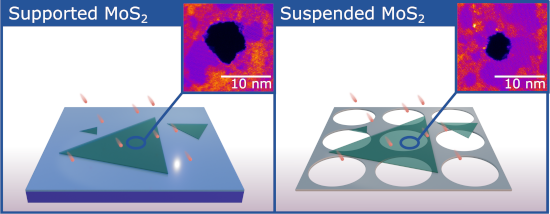
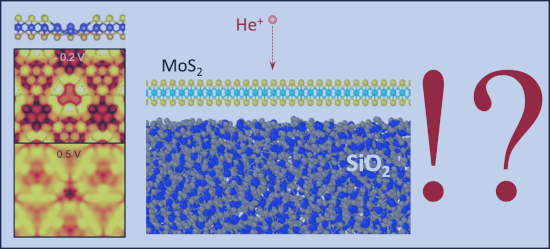
- highly charged ions (HCIs) and swift heavy ions (SHIs) – two types of ions that, despite having vastly different kinetic energies, both interact primarily with the electronic system of the target. Using scanning transmission electron microscopy, we quantify pore radii and pore formation efficiencies for
- under both HCI and SHI irradiation conclusively demonstrate the central role of substrate and interface-dependent electronic dissipation pathways regarding damage under these types of ion irradiation. Keywords: defects; MoS2; nanopores; SiO2; scanning transmission electron microscopy (STEM
- -)electronic and catalytic functionality [14][15][16][17][18]. Ion irradiation has already proven effective for defect engineering across different energy regimes: Low-energy ions enable implantation with near-atomic precision [19][20][21], kiloelectronvolt ions primarily create point defects in monolayers [22


Tailoring Ag–Pt nanoalloys through solid-state dewetting: structural and optical insights
Beilstein J. Nanotechnol. 2026, 17, 748–759, doi:10.3762/bjnano.17.52

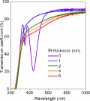
- from the intrinsic electronic properties of platinum, whose Fermi level lies close to partially filled d-states. These d-electron transitions strongly enhance interband absorption, leading to damping of interband sp excitations and broadening of the resonance band. In consequence, it causes an increase




Oxidative atmosphere-driven formation of single-phase spinel CuRh2O4 nanofibers for alkaline water oxidation
Beilstein J. Nanotechnol. 2026, 17, 737–743, doi:10.3762/bjnano.17.50
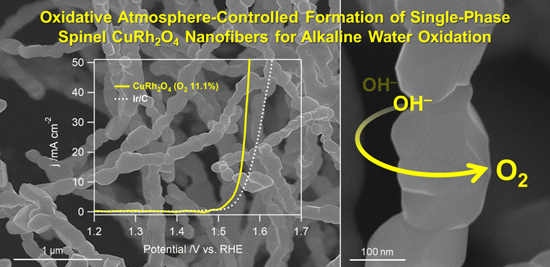
- attention due to their structural robustness and compositional tunability [2]. The spinel framework accommodates diverse metal cations with flexible site occupancy, enabling rational modulation of electronic structure and surface adsorption energetics of key OER intermediates [3], thereby offering a
- versatile strategy for performance optimization. Incorporation of 4d transition metals such as Rh into the spinel lattice provides an effective approach to further tailor catalytic properties. The presence of Rh3+ [4][5], with its more delocalized electronic structure compared to conventional 3d cations




Environmental applications of silver nanoparticles: state-of-the-art review and emerging trends
Beilstein J. Nanotechnol. 2026, 17, 697–736, doi:10.3762/bjnano.17.49
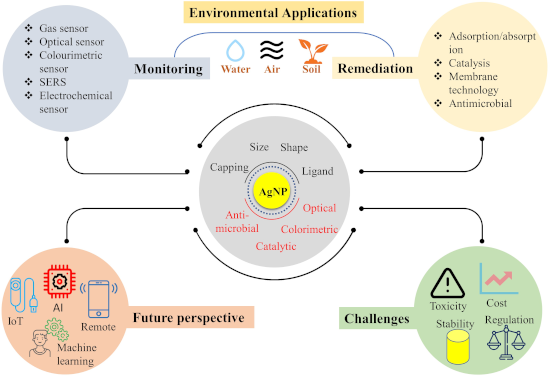
- spectroscopy (SERS) using AgNP nanocomposites could selectively detect polystyrene nanoparticles with a detection limit of 14 μg/mL [55]. X-ray photoelectron spectroscopy (XPS) provides information on the elemental composition, surface oxidation states, and electronic configuration of AgNPs [56]. This


Cellulose as a photocatalyst support material: extraction, structural features, and environmental applications
Beilstein J. Nanotechnol. 2026, 17, 635–652, doi:10.3762/bjnano.17.44
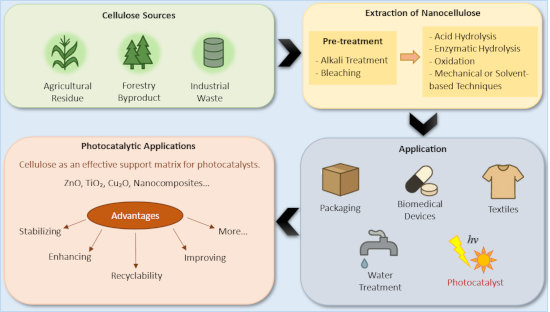
- ; the incorporation of specific chemical groups or materials enables synergistic effects that can impart electronic, magnetic, catalytic, fluorescent, or optical functionalities, thereby improving performance and expanding applications into more specialized fields. Today, cellulose and its derivatives
- , tunable performance, and strong biocompatibility, which collectively make them an excellent base material for wearable electronic devices [76][77]. Traditional hydrogels mainly contain water; water molecules form extensive hydrogen bonds that unfortunately lower the material’s resistance to cold
- significantly enhance the performance of electronic and optoelectronic devices [84]. Researchers have recently developed CNC network structures as versatile substrates for catalytic reactions, including reduction, oxidation, and coupling processes, and one of their key advantages lies in the ability to form


Two-step laser synthesis of Ag@TiO2 nanomaterials for the photocatalytic degradation of rhodamine B
Beilstein J. Nanotechnol. 2026, 17, 622–634, doi:10.3762/bjnano.17.43
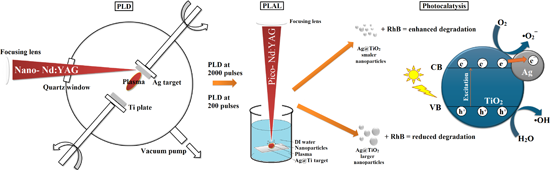
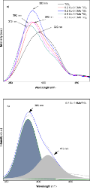
- in the creation of new electronic states in the bandgap, demonstrating that the electron is driven at lower photon energy by a defective state of CB. Additionally, with the addition of Ag, an additional component in the broad band could be noticed in Figure 7a, and it could be associated with Ag


Recent progress in enhancing built-in electric fields of perovskite solar cells via junction engineering
Beilstein J. Nanotechnol. 2026, 17, 602–621, doi:10.3762/bjnano.17.42
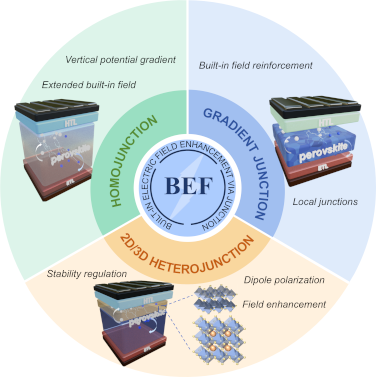
- , characterized by band discontinuities or polarization barriers. Its primary role is to modulate the local potential distribution and establish a stable BEF. In materials such as perovskites, which are mixed ionic–electronic conductors, the junction not only determines the driving force for carrier separation
- mainly due to the electronic compensation effect of the vertical Ge2+ gradient on Sn vacancies, which prevents the oxidation of Sn2+ to Sn4+ and minimizes deep-level defects. Additionally, the GE-I framework prevents ion migration and strain accumulation, suppressing failure from Sn vacancy diffusion and
- precise control over electronic properties and band alignment. However, conventional large-molecule incorporation methods often result in disordered vertical distribution of the 2D/3D phases and interfacial disorder, thereby weakening the formation of the BEF [75][76]. Long et al. [77] proposed a pre




Impacts of annealing on structural and photophysical properties of zinc phthalocyanine adsorbed on graphene
Beilstein J. Nanotechnol. 2026, 17, 576–585, doi:10.3762/bjnano.17.39
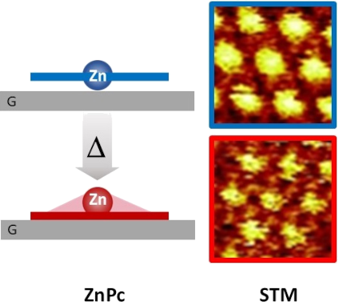
- a promising route to design original and innovative electronic devices [1] such as diodes [2][3], transistors [4][5][6], photodetectors [7][8], solar cells [9][10][11], or light-emitting devices [12]. In such heterostructures most electronic processes take place at the interface between graphene and
- is thus important to develop a deep understanding about how to control the organization of π-conjugated molecules that are in contact with graphene and how this organization impacts their electronic excitations. In this context, porphyrins, phthalocyanines (Pcs) and their metalated complexes (MPcs
- fundamental research on organic semiconductors. The flexibility offered by the choice of the coordinated central metal cation permits to vary their electronic, photonic, and spin-related properties. It also influences their stacking geometry, in particular as a result of the change in relative stability of


Synthesis of Cu–Mo/TiO2 and Co–Mo/TiO2 photocatalysts for the efficient degradation of organic pollutants in water
Beilstein J. Nanotechnol. 2026, 17, 559–570, doi:10.3762/bjnano.17.37
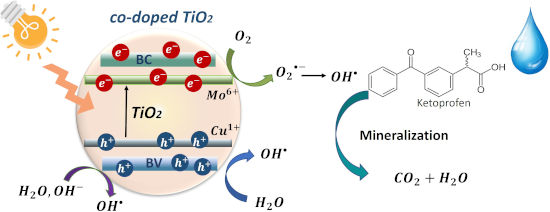
- into the semiconductor matrix. The incorporation of co-dopants results in the formation of heterostructures with different electronic structures compared to the TiO2 structure, which promotes charge separation and visible light absorption [6]. The incorporation of two types of cations into the TiO2
- could be balanced by the doping levels in TiO6 octahedra [3]. Mo6+ is a transition metal ion with high valence that exhibits exceptional optical, electronic, and catalytic characteristics [12]. There are a few reports about the doping of TiO2 with molybdenum [13][14][15][16]; it has been shown that Mo



Electrochemical determination of ciprofloxacin using a MIL-101/reduced graphene oxide-modified electrode
Beilstein J. Nanotechnol. 2026, 17, 541–554, doi:10.3762/bjnano.17.35
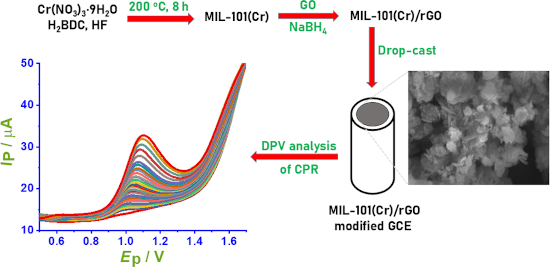
- residual oxygen-containing functional groups on rGO. Chromium (Cr), the metal center of MIL-101, is detected at 20.72 wt % (6.66 atom %), confirming the successful introduction of the MIL-101 framework (Figure 2). The chemical composition and electronic states of the MIL-101/rGO composite were investigated


Fractional shot noise of an SU(N) Kondo system
Beilstein J. Nanotechnol. 2026, 17, 515–540, doi:10.3762/bjnano.17.34
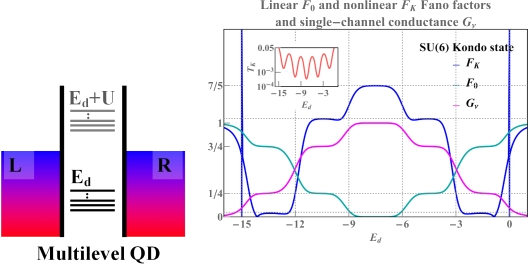
- temperature evolution of Kondo peaks provide this information [57]. Although some information about correlations is hidden in the renormalization of transmission, a deeper insight into the correlations of electronic wave functions can be obtained from the shot noise; therefore, we especially focus in this


![[Graphic 127]](/bjnano/content/inline/2190-4286-17-34-i187.svg?max-width=637&scale=1.18182)

Probing internal continua and atomic ultrafast charge transfer within size-controlled nanoparticles by post-collision interaction in core-hole clock spectroscopy
Beilstein J. Nanotechnol. 2026, 17, 505–514, doi:10.3762/bjnano.17.33
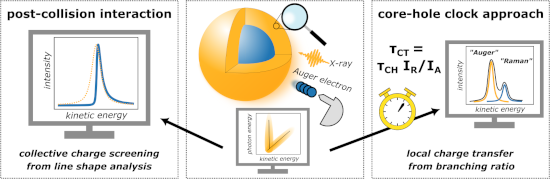
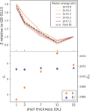
- interpreting line shape asymmetries and peak shifts that are frequently observed but often overlooked in resonant Auger measurements. We show that the strongly enhanced PCI in the samples with one or three double layers can be attributed to reduced collective electronic screening. This comprehensive
- experimental approach enables the simultaneous observation of collective electronic properties and atom-specific dynamics within in a single measurement under identical sample conditions, an advance particularly valuable for complex, sensitive materials. Keywords: core-hole clock; nanoparticles; post
- -collision-interaction; quantum dots; resonant Auger spectroscopy; Introduction The interplay of electron localization, itinerance, and charge transfer is essential to functional nanoparticles and quantum dots (QDs) [1][2][3][4][5][6]. In terms of electronic structure properties, materials on the nanoscale



Upcycling agroindustrial waste into graphene oxide supports for gold nanoparticles: toward sustainable nanomaterials
Beilstein J. Nanotechnol. 2026, 17, 489–504, doi:10.3762/bjnano.17.32
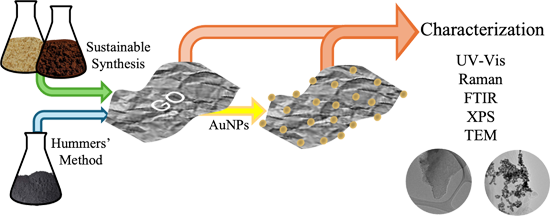
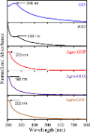
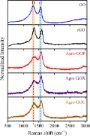
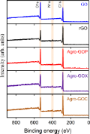
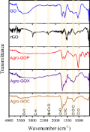
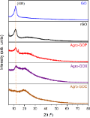
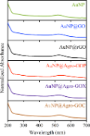
- materials GO and rGO. This spectroscopy technique provides initial insights into the electronic structure and degree of conjugation of the samples. Typically, the UV–vis absorption spectrum of GO exhibits two characteristic features, namely, a main absorption band in the 230–270 nm region, attributed to the



Defects and defect-mediated engineering of two-dimensional materials: challenges and open questions
Beilstein J. Nanotechnol. 2026, 17, 454–488, doi:10.3762/bjnano.17.31
- to the interaction with the environment, for example, because of oxidation. The imperfections have a strong influence on the electronic, optical, thermal, and mechanical properties of 2D materials [2][3]. They normally deteriorate the characteristics; but they can also be beneficial, for example, in
- networks [46][47][48]; it can be further extended to reacting with heteroatoms to introduce electronic dopants, magnetic impurities, and catalytic sites, as well as to add other functionalities [43][49][50]. However, challenges remain to have reliable predictions for the outcome of the reaction and to go
- ), reducing the likelihood of O2 reactions with these defect sites. Reactivity is also highly site-specific and controlled by the local coordination and electronic structure of surface W atoms. The effective charge of W is affected by the number of surrounding vacancies. W atoms surrounded by three or more S





First-principles study on elastic properties of Cu, (Cu1−x,Nix)3Sn and interfacial mechanical properties of (Cu1−x,Nix)3Sn/Cu in the lead-free solder joint
Beilstein J. Nanotechnol. 2026, 17, 428–439, doi:10.3762/bjnano.17.29
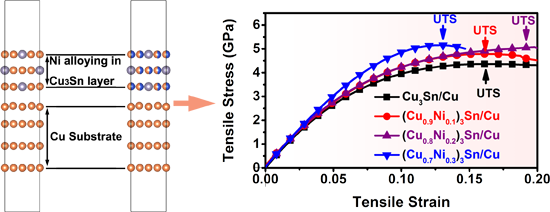
- alloying strategies to meet the requirements for electronic device miniaturization and harsh environmental applications. Keywords: ductility; elastic modulus; interfacial toughness; lead-free solder; work of adhesion; Introduction Due its toxicity, lead has caused serious problems in human health and
- environmental pollution; thus, the use of lead-containing solder in electronic device packaging has been restricted by legislation [1]. In the last few decades, aiming to replace lead-containing solders, great efforts have been dedicated to develop lead-free solder with respect to cost-effectiveness
- received considerable attention, and the Sn-Ag-Cu ternary alloy is considered as a promising candidate to substitute conventional lead-containing solder alloys [7]. Driven by the miniaturization of electronic devices and their widespread application in harsh environments such as high temperature and high



Nanoinformatics: spanning scales, systems and solutions
Beilstein J. Nanotechnol. 2026, 17, 423–427, doi:10.3762/bjnano.17.28

- questions including the prediction of (nano)materials (NM) functionality, nanomaterials fate in the environment, toxicity or therapeutic ability, and recyclability. As the properties of nanomaterials themselves span several scales, from electronic, atomistic, mesoscopic to continuum, and are highly dynamic

Beam shaping techniques for pulsed laser ablation in liquids: Unlocking tunable control of nanoparticle synthesis in liquids
Beilstein J. Nanotechnol. 2026, 17, 309–342, doi:10.3762/bjnano.17.22
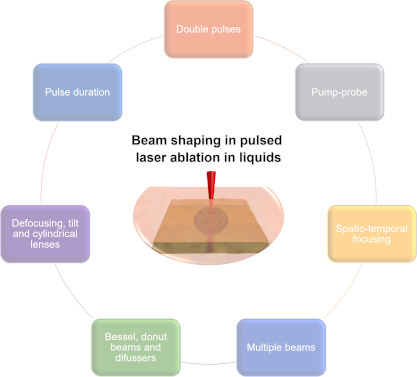
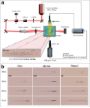
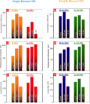
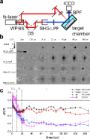
- and avoiding nonlinear optical effects [17]. Upon reaching the target, the laser pulse induces rapid electronic excitation, leading to the injection of electrons into the surrounding liquid, within the first few picoseconds, from 1 to 20 ps [18]. This triggers the formation of a dense plasma composed







Calculation of the dynamic stiffness of a cantilever under torsional oscillation
Beilstein J. Nanotechnol. 2026, 17, 303–308, doi:10.3762/bjnano.17.21
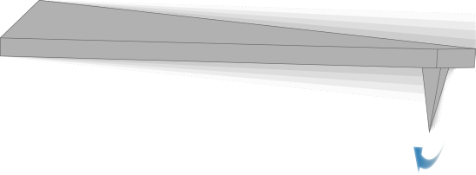
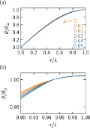
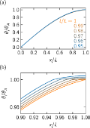
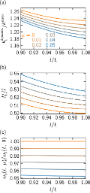
- with small stiffness and provides exceptional sensitivity to conservative and dissipative forces owing to the small stiffness [2][9][10][11]. Non-contact friction measurements with pendulum AFM on a Nb film across the superconducting transition indicate that friction is electronic in the metallic state

Fast vortex dynamics and relaxation times in NbRe-based heterostructures
Beilstein J. Nanotechnol. 2026, 17, 292–302, doi:10.3762/bjnano.17.20
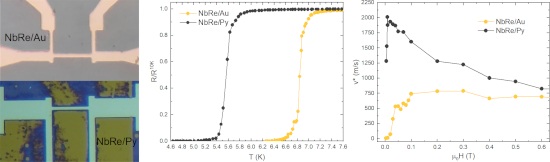
- strongly depend on the microscopic properties of the superconductor and on the degree of electronic disorder [1]. In this context, NbRe has emerged as a promising material that exhibits exceptionally fast vortex dynamics [19]. Extensive structural characterizations performed by X-ray diffraction have shown
- , characterized by a homogeneous vortex motion, the instability voltage allows one to quantify the critical vortex velocity using the relation v* = V*/(μ0HL) [5][9] and then, using Equation 1, to calculate the relaxation time τE and estimate the lifetimes of electronic excitations in superconductors. S/N and S/F
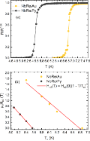
- derived for single-layer superconducting films, whereas, in the present study, the microbridges are bilayer structures. As a result, the calculated parameters do not fully account for proximity-induced modifications of the electronic properties. Current–voltage characteristics and critical currents Figure


Advancing nanolithography: a comprehensive review of materials for local anodic oxidation with AFM
Beilstein J. Nanotechnol. 2026, 17, 275–291, doi:10.3762/bjnano.17.19
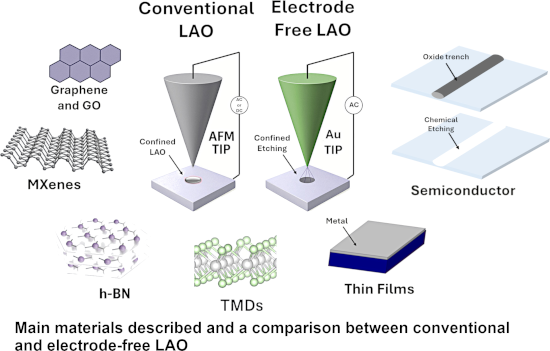
- implemented through a dual-pass technique or by controlling the electronic and ionic contributions to the total current [17][18]. While dynamic mode LAO does not eliminate tip wear [19], it significantly reduces its impact. As new materials continue to emerge in the field of nanotechnology, this review also
- authors agree with an oxidation kinetic consistent with the Cabrera–Mott model [44][45]. As an electrochemical process, LAO is inherently current-dependent. Early studies showed that oxide growth evolves from an initial electronic tunneling regime to ionic transport as the film develops [46]. Dagata and
- . Additionally, the stability and integration of SiO2 within semiconductor workflows make it a reliable choice for robust electronic devices. However, silicon’s limitations include dependence on stringent surface preparation, Si crystal orientation (higher reaction rate on the (111) surface than on the other


Durable antimicrobial activity of fabrics functionalized with zeolite ion-exchanged nanomaterials against Staphylococcus aureus and Escherichia coli
Beilstein J. Nanotechnol. 2026, 17, 262–274, doi:10.3762/bjnano.17.18
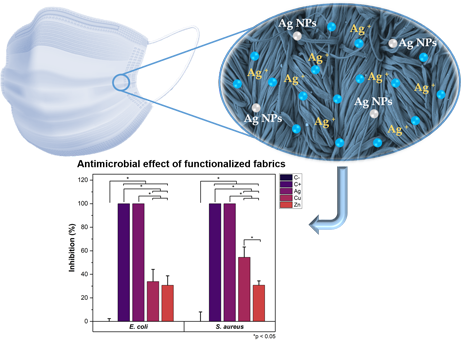
- “smart textiles”, possess a range of properties, including antistatic, UV-blocking, hydrophobic, electronic, thermoregulation, and antimicrobial effects [21][22][23]. One of the simplest way to incorporate nanomaterials into fabrics is by mimicking designs found in nature. It is well known that the




Multilayered hyperbolic Au/TiO2 nanostructures for enhancing the nonlinear response around the epsilon-near-zero point
Beilstein J. Nanotechnol. 2026, 17, 251–261, doi:10.3762/bjnano.17.17
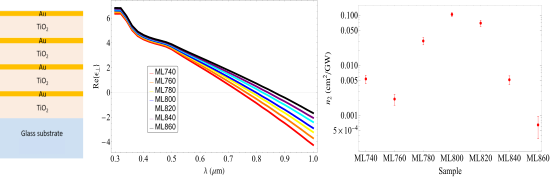
- version of the z-scan technique that allowed us to separate the electronic from the thermal contribution was used. A clear enhancement of the nonlinear response was observed for the sample with an ENZ point around the laser wavelength 800 nm with a nonlinear refractive index of n2 = 0.103 ± 0.006 cm2·GW−1
- number of pulses incident on the sample without modifying the incident peak irradiance. The thermal load to the sample is reduced with the increase of the chopper’s frequency while the electronic contribution to the third order nonlinear response is still excited. In this way, we can resolve the
- electronic and thermal contributions to the response as explained in [24]. We present results that enabled us to determine the thermal nonlinear response due to intrapulse heating. Design and Fabrication of Nanostructured Metal–Dielectric HMM For a multilayer system with layer widths of 10–100 nm, we can