Search results
Search for "femtosecond laser" in Full Text gives 38 result(s) in Beilstein Journal of Nanotechnology.
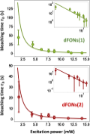
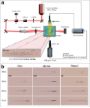
Molecular engineering of individual dye-based nanoparticle photostability for ultrabright two-photon fluorescence
Beilstein J. Nanotechnol. 2026, 17, 688–696, doi:10.3762/bjnano.17.48
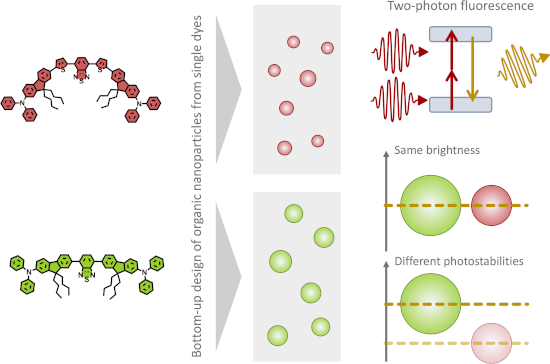
- sample scanning. Excitation and emission Excitation was achieved using a femtosecond laser (τ = 135 fs typical pulse duration, wavelength of 1030 nm, 80 MHz repetition rate, Spark laser). The laser was focused near the diffraction limit onto the sample, leading to a point spread function (PSF) that could


Beam shaping techniques for pulsed laser ablation in liquids: Unlocking tunable control of nanoparticle synthesis in liquids
Beilstein J. Nanotechnol. 2026, 17, 309–342, doi:10.3762/bjnano.17.22
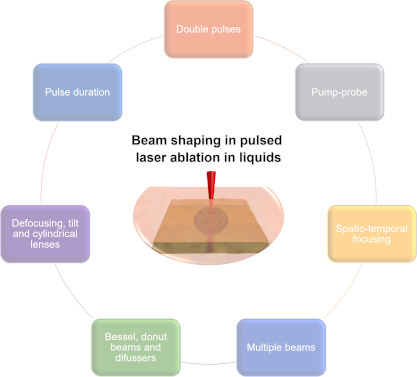
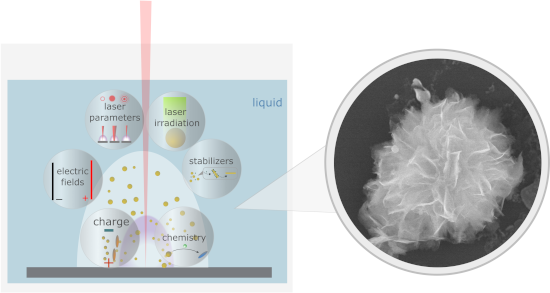
- air-related formula is often used, but complemented by an empirical correction factor to account for liquid effects as proved by Intartaglia et al. for Si NP production with a picosecond laser [138] and Kanitz et al. for Fe NP production with femtosecond laser [20]. Up to now, control of the fluence







Multilayered hyperbolic Au/TiO2 nanostructures for enhancing the nonlinear response around the epsilon-near-zero point
Beilstein J. Nanotechnol. 2026, 17, 251–261, doi:10.3762/bjnano.17.17
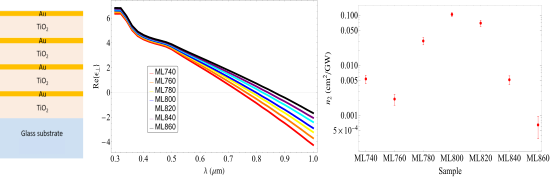
- function of the resonance conditions around the ENZ point. The characterization of the linear properties of the samples was done using spectrophotometry and spectral ellipsometry. We studied the nonlinear response with the z-scan technique at different incident irradiances using a Ti:sapphire femtosecond
- laser, enabling us to characterize both the refractive and absorptive contributions to the nonlinear response. Due to the high pulse repetition rate inherent to Ti:sapphire systems and the presence of linear absorption in the samples, cumulative pulse-to-pulse thermal effects may be present. A modified


Chiral plasmonic nanostructures fabricated with circularly polarized light
Beilstein J. Nanotechnol. 2025, 16, 2245–2264, doi:10.3762/bjnano.16.154
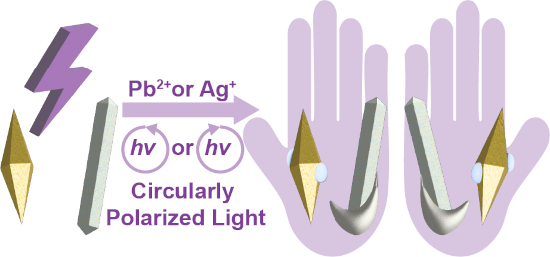
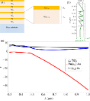
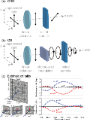
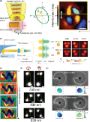
- -assisted hydrolysis with relatively low-energy electrons (≈1.5 eV compared to >10 eV at the hot spots) at the lateral sides of AuNRs. In contrast, polymethyl(methacrylate) (PMMA) decomposed preferentially at the hot spots of the AuNRs under femtosecond laser excitation by high-energy hot electrons





Laser ablation in liquids for shape-tailored synthesis of nanomaterials: status and challenges
Beilstein J. Nanotechnol. 2025, 16, 1963–1997, doi:10.3762/bjnano.16.137
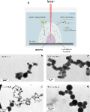
- ), the thermal evaporation is preferential [1], while for picosecond and femtosecond laser pulses of lower power density, the explosive ejection mechanism typically prevails resulting in NP formation at earlier stages from the ejected droplets or fragments. 1.3 Nanoparticle nucleation and growth After
- femtosecond laser ablation of ZnSe powder in water. The transformation to nanowires, which were 100–300 nm in diameter and 50 μm long, was observed during ageing for a week. Furthermore, the authors applied air bubbling through the solution to induce change of nanowires into hollow nanotubes, which is
- femtosecond laser irradiation. As in the case of laser ablation of solid targets, utilization of femtosecond laser beams for laser modification of pre-formed nanomaterials is strongly dependent on the polarization of the laser beam. In [85] copper nanoflakes transformed into nanowires under fs laser





Influence of laser beam profile on morphology and optical properties of silicon nanoparticles formed by laser ablation in liquid
Beilstein J. Nanotechnol. 2025, 16, 1533–1544, doi:10.3762/bjnano.16.108
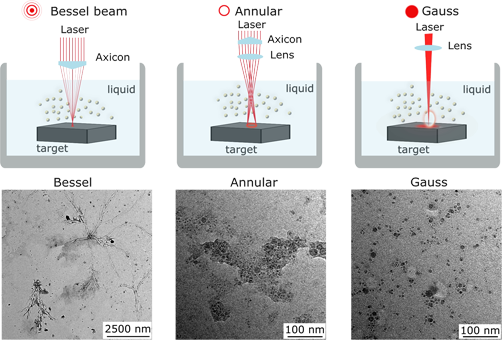
- , repetition rate, and liquid composition. The parameters of the ablated target, such as its optical characteristics and conductivity/resistivity, might also have a pronounced impact on size and morphology of the produced NPs. As demonstrated in [12], femtosecond laser ablation of silicon with varying


Laser processing in liquids: insights into nanocolloid generation and thin film integration for energy, photonic, and sensing applications
Beilstein J. Nanotechnol. 2025, 16, 1428–1498, doi:10.3762/bjnano.16.104
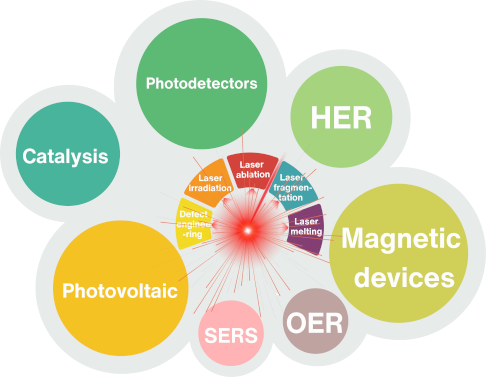
- fragmentation. Additionally, the synthesis of heterostructured NPs composed of Au and Co using femtosecond laser techniques demonstrates the creation of metastable structures that can evolve into stable core–shell configurations [38]. These findings emphasize the role of non-equilibrium processes, rapid
- side. This was achieved by adding a low concentration of trivalent cations such as In or Ga into the colloid. The authors then synthesized colloidal metallic NPs of Cu−In and Cu−Ga alloys using an ultrashort femtosecond laser (1040 nm wavelength, 600 fs pulse duration, 10 μJ pulse energy in the






Wavelength-dependent correlation of LIPSS periodicity and laser penetration depth in stainless steel
Beilstein J. Nanotechnol. 2025, 16, 1302–1315, doi:10.3762/bjnano.16.95
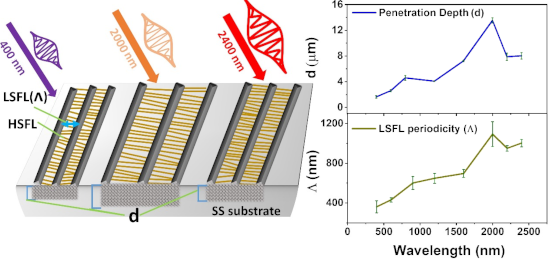
- promising alternative to high-precision lithography techniques [1][2][3]. The utilization of short femtosecond laser pulses has proven instrumental in overcoming diffraction limit restrictions, enabling controlled fabrication of periodic subwavelength structures [4][5][6][7][8][9]. This controlled
- laser-affected zone, and its impact on material processing efficiency using femtosecond laser pulses. The study reveals deviations from the expected behavior predicted by existing theories, showing a wavelength-dependent penetration depth on stainless steel. This finding challenges our understanding of
- . Before and after the laser treatment, these SS surfaces underwent ultrasonic rinsing with acetone for 10 min each, aiming to eliminate dust particles and other contaminants. Experimental details A commercially available Ti:sapphire femtosecond laser operating at an 800 nm central wavelength, with 75 fs





Time-resolved probing of laser-induced nanostructuring processes in liquids
Beilstein J. Nanotechnol. 2025, 16, 968–1002, doi:10.3762/bjnano.16.74
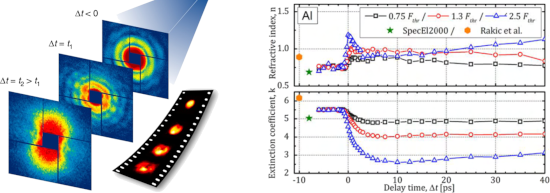
- -transition kinetics using femtosecond laser pulses is critical. Such research promises to improve the ability to engineer functional materials through on-demand customization. Recognizing that photoexcited electrons serve as the initial point, it is intuitive to envision controlling localized surface
- plasmons through the wavelength and polarization state of femtosecond laser pulses [82]. Active research in this domain is anticipated to facilitate the precise optical control of material phases. Furthermore, advances in imaging technologies, particularly those enabling ultrafast, three-dimensional, and
- electrons of the liquid sample pumped by a synchronized femtosecond laser pulse are then recorded by a detector as a scattering pattern, which provides a momentum transfer range (denoted by q) reaching as large as 10 Å−1, cf. Figure 4B for the liquid water scattering pattern. Here q = 4πsinθ/λ, where θ is


Efficiency of single-pulse laser fragmentation of organic nutraceutical dispersions in a circular jet flow-through reactor
Beilstein J. Nanotechnol. 2025, 16, 711–727, doi:10.3762/bjnano.16.55
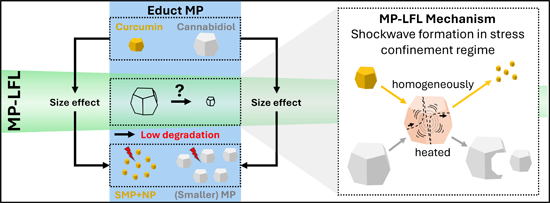
- chemical degradation [29]. Other purely organic materials, such as vitamin C and capsaicin (an alkaloid in chili), were also fragmented using a femtosecond laser with a wavelength of 800 nm, and the yield was determined based on an increase in extinction using UV–vis extinction spectroscopy. It was shown


Effect of additives on the synthesis efficiency of nanoparticles by laser-induced reduction
Beilstein J. Nanotechnol. 2025, 16, 464–472, doi:10.3762/bjnano.16.35
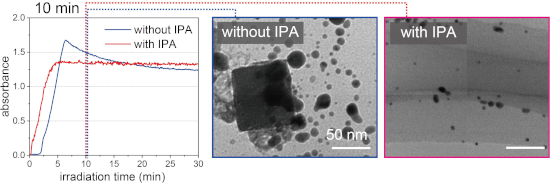
- for the radicals generated by laser irradiation in the solution. Methods Nanoparticles were synthesized by focusing and irradiating femtosecond laser pulses (Ti:sapphire laser, pulse width = 100 fs, pulse energy = 7 mJ, repetition rate = 1,000 Hz) on a precursor salt solution in a 3 mL fused silica


Fabrication of hafnium-based nanoparticles and nanostructures using picosecond laser ablation
Beilstein J. Nanotechnol. 2024, 15, 1639–1653, doi:10.3762/bjnano.15.129
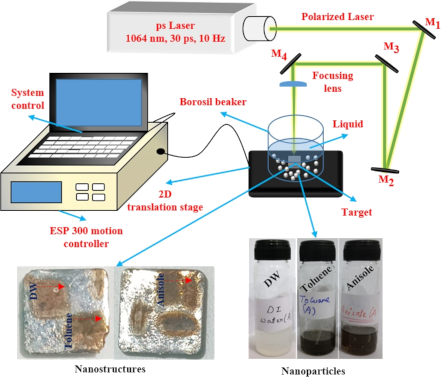
- literature. In our earlier reports, HfO2 nanoparticles, nanoribbons, and nanofibres were synthesised by ablating HfO2 pellets utilising femtosecond laser pulses at 800 nm [10][30]. A bulk Hf target was also ablated in another work using nanosecond laser pulses in different liquids to synthesise oxides and


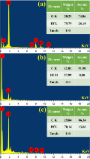


Effect of wavelength and liquid on formation of Ag, Au, Ag/Au nanoparticles via picosecond laser ablation and SERS-based detection of DMMP
Beilstein J. Nanotechnol. 2024, 15, 1054–1069, doi:10.3762/bjnano.15.86

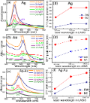
- et al. [20] achieved size-controllable Au NPs in stable solutions via femtosecond laser fragmentation, tuning sizes by adjusting fluence. This technique is employed to create various categories of alloy NPs [21]. Alloying by LASiS can mitigate undesired features associated with plasmonic materials
- laser ablating Au/Fe multilayers with varying thicknesses and deposition orders. Jakobi et al. [26] reported the synthesis of Pt–Ir alloy NPs by femtosecond laser ablation of a Pt9Ir target in acetone and further utilized as PtIr electrodes. In recent years, laser-ablated NPs/NSs have gained prominent


Laser synthesis of nanoparticles in organic solvents – products, reactions, and perspectives
Beilstein J. Nanotechnol. 2024, 15, 638–663, doi:10.3762/bjnano.15.54
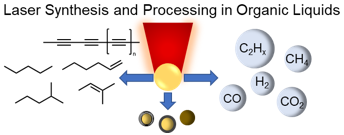
- –C bonds. In addition to hydrogen, other gases including methane, ethylene, acetylene, and ethane have been reported by multiple groups during irradiation of neat alkanes, alcohols, and aromatics with nanosecond, picosecond, and femtosecond laser pulses [116][117][119]. Gas formation also occurs
- elemental carbon is used as a source to form the initial polyyne fragments, fs-LAL reaches power densities that enable direct ionization and dissociation of the solvent, which may form ionized, short polyynes or cumulenes without intermediate steps. Short C4 polyynes have been observed by femtosecond laser





Graphene removal by water-assisted focused electron-beam-induced etching – unveiling the dose and dwell time impact on the etch profile and topographical changes in SiO2 substrates
Beilstein J. Nanotechnol. 2024, 15, 190–198, doi:10.3762/bjnano.15.18
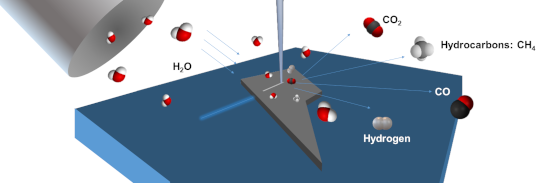
- for a monolayer of graphene onto SiO2) measured using AFM, shown in the insets of Figure 1D, agree with the data obtained in studies presenting femtosecond laser thinning of graphene [28]. In addition to the region located below the baseline, we also observe an elevation in the central part of the


Industrial perspectives for personalized microneedles
Beilstein J. Nanotechnol. 2023, 14, 857–864, doi:10.3762/bjnano.14.70
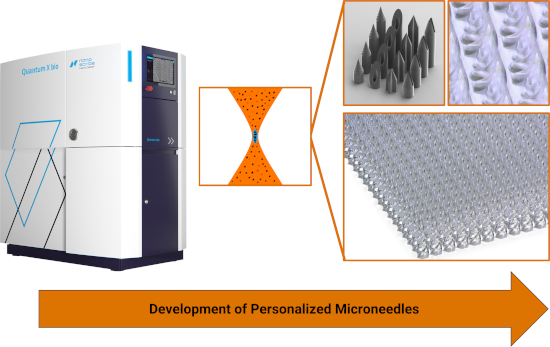
- ) can add up to 50,000+ USD, and this price does not include the femtosecond laser or anti-vibration systems. Custom-built 2PP systems also require extensive optical expertise for the initial installation and are typically a major milestone for several doctoral students. In general, custom-built 2PP


Roll-to-roll fabrication of superhydrophobic pads covered with nanofur for the efficient clean-up of oil spills
Beilstein J. Nanotechnol. 2022, 13, 1228–1239, doi:10.3762/bjnano.13.102
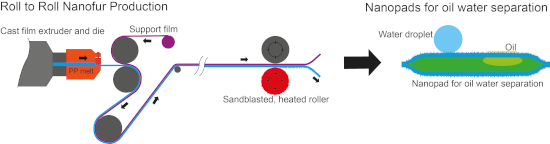
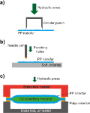
- with high aspect ratio. These needles render superhydrophobic properties to the surface. Such surfaces can either be prepared using a RIE process [12] or a laser-assisted etching process described by Mazur et al. [13], which requires expensive silicon wafers as substrate as well as a femtosecond laser




Fabrication of nano/microstructures for SERS substrates using an electrochemical method
Beilstein J. Nanotechnol. 2020, 11, 1568–1576, doi:10.3762/bjnano.11.139
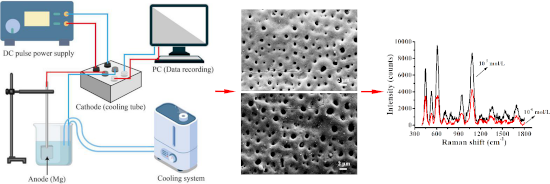
- . [47] employed femtosecond laser irradiation to fabricate nanorod arrayed structures decorated with Au nanoparticles. The study showed that the Raman intensity tended to decrease as the Au film thickness increased. Based on the above results, we selected Au films of 10 nm thickness for further


Fe3O4 nanoparticles as a saturable absorber for giant chirped pulse generation
Beilstein J. Nanotechnol. 2019, 10, 1065–1072, doi:10.3762/bjnano.10.107
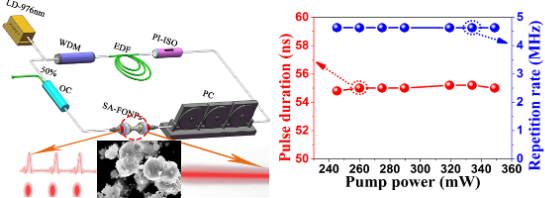
- views of the graph corresponding to the (0,−1,0), (1,1,1), and (0,0,−1) crystal faces. Figure 2c shows the self-designed nonlinear optical measurement system for the FONP SA material. After passing through the coupler, the femtosecond laser light is divided into two channels on average. One path is


Femtosecond laser-assisted fabrication of chalcopyrite micro-concentrator photovoltaics
Beilstein J. Nanotechnol. 2018, 9, 3025–3038, doi:10.3762/bjnano.9.281
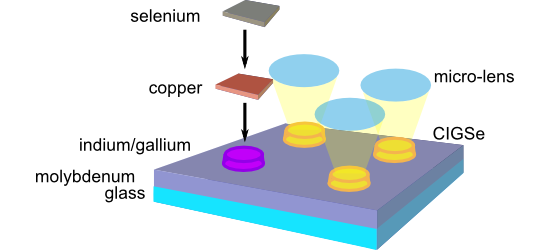
- transfer. Additionally, a procedure for processing these microabsorbers to functioning micro solar cells connected in parallel is demonstrated. The resulting cells show up to 2.9% efficiency and a significant efficiency enhancement under concentrated illumination. Keywords: chalcopyrite; femtosecond laser
- groups of Paire [15] and Sadewasser [16] successfully deposited linear and dot-shaped precursors and processed them to solar cells. Here, we focus on reviewing two different femtosecond laser-based, material-saving approaches to produce CuInSe2 (CISe) and CIGSe microabsorbers. Several studies ranging
- created, site-controlled via femtosecond-laser treatment, which were subsequently processed to microabsorbers. For further processing to microcells, a pathway was demonstrated, in which an isolation concept based on spin coating was applied. The advantage of this approach is that imperfections can be


Biomimetic surface structures in steel fabricated with femtosecond laser pulses: influence of laser rescanning on morphology and wettability
Beilstein J. Nanotechnol. 2018, 9, 2802–2812, doi:10.3762/bjnano.9.262
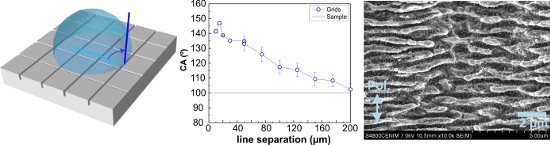
- allows fabrication of specific micro- and nanostructures over extended areas. In this work, we exploit this approach to fabricate complex biomimetic structures on the surface of steel 1.7131 formed upon irradiation with high repetition rate femtosecond laser pulses. In particular, the fabricated
- angle measurements of water drops placed on the surface reveal that a wide range of angles can be accessed by selecting the appropriate irradiation parameters, highlighting also here the prominent role of the number of scans. Keywords: biomimetics; femtosecond laser irradiation; laser-induced periodic
- repetition rate femtosecond laser system and a beam scanning system. B) Continuous irradiated areas are formed by overlapping consecutive laser pulses (ω0 = 19.4 µm) in two dimensions through a proper adjustment of the laser repetition rate (ν), the scanning speed (V), and the line separation (Δ). C) Several



Enhancement of X-ray emission from nanocolloidal gold suspensions under double-pulse excitation
Beilstein J. Nanotechnol. 2018, 9, 2609–2617, doi:10.3762/bjnano.9.242
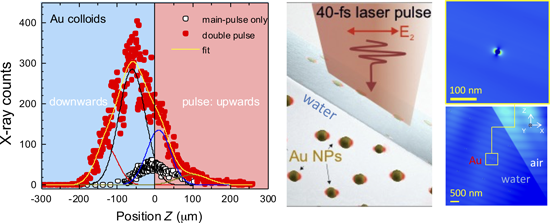
- was revealed that the volume around gold nanoparticles where the permittivity is near zero, ε ≈ 0, accounts for the strongest absorption, which leads to the effective enhancements of X-ray emission. Keywords: double pulse; gold nanoparticles; intense femtosecond laser; plasma; water; X-ray
- ; Introduction X-ray-related science and technology is one of the most powerful tools for material science, in particular regarding nanomaterials [1]. Femtosecond laser-based X-ray pulse sources [2] have been available on the basis of linear- and nonlinear-optical processes such as plasma formation [3][4][5] and
- great interest, due to the efficient conversion of the absorbed energy into energetic ions, electrons and X-rays [12][13][14]. Plasmonic nanoparticles are expected to be highly useful for femtosecond laser-based X-ray emission due to high functionality, large absorption cross section and spectral


Optical near-field mapping of plasmonic nanostructures prepared by nanosphere lithography
Beilstein J. Nanotechnol. 2018, 9, 1536–1543, doi:10.3762/bjnano.9.144
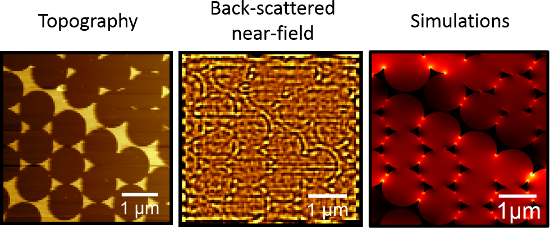
- with a femtosecond laser, thereby inducing polymerization at the hot spots. In another approach, based on confocal fluorescence microscopy, a dye solution is deposited on the samples, and the higher fluorescence magnitude originating from the hot spots is measured [19]. However, these last four




Engineering of oriented carbon nanotubes in composite materials
Beilstein J. Nanotechnol. 2018, 9, 415–435, doi:10.3762/bjnano.9.41
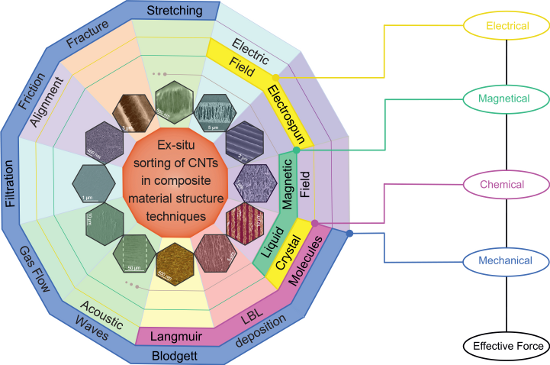
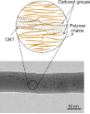
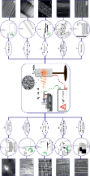
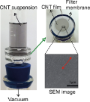
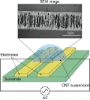
- above techniques summarized in Table 1, there are other less widespread methods such as the dip-pen nanolithography technique [116], uniaxial pressure technique [117][118] and the use of femtosecond laser pulses [119], which are not presented here. Evaluating the arrangement and alignment of CNTs After








Interactions of low-energy electrons with the FEBID precursor chromium hexacarbonyl (Cr(CO)6)
Beilstein J. Nanotechnol. 2017, 8, 2583–2590, doi:10.3762/bjnano.8.258
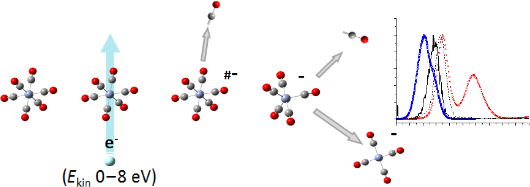
- multiple ionization in a femtosecond laser field was recently reported by Tanaka et al. [24] for Cr(CO)6, Mo(CO)6 and W(CO)6. In the present work we studied the interaction of LEE with the chromium carbonyl precursor, Cr(CO)6. In general, a low-energy electron may be captured by a target molecule, which