


Search results
Search for "heat transfer" in Full Text gives 52 result(s) in Beilstein Journal of Nanotechnology.
Beam shaping techniques for pulsed laser ablation in liquids: Unlocking tunable control of nanoparticle synthesis in liquids
Beilstein J. Nanotechnol. 2026, 17, 309–342, doi:10.3762/bjnano.17.22
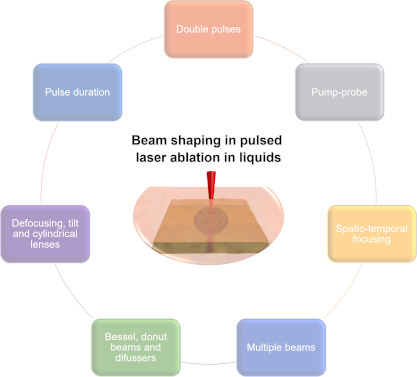
- , making thermal ablation processes dominant [162]. In the picosecond range, the pulse duration is short enough to reduce excessive heat transfer into the surrounding material, but it is still long enough to allow for localised heating, combining photomechanical and thermal effects in the ablation
- nonlinear effects arising therein. Second, we will explore the energy and heat transfer to the ablation target. Finally, we will explore different ablation mechanisms relative to each distinct temporal pulse regime. The laser beam, before reaching the liquid, propagates in air. If no extreme focusing is
- nonlinear effects for high-power nanosecond lasers and thermal effects for long femtosecond pulses with high power. Each laser pulse duration offers a distinct interaction with the ablation target that differs significantly in terms of heat transfer and ablation mechanisms concerning their efficiency and







Comparative study on 3D morphologies of delignified, single tracheids and fibers of five wood species
Beilstein J. Nanotechnol. 2026, 17, 239–250, doi:10.3762/bjnano.17.16
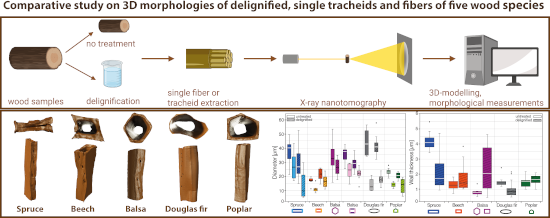
- fibers and tracheids, paving the way for more effective modeling applications, such as finite element modeling or computational simulations of fluid flow or heat transfer, aiding in development of various industrial applications of delignified wood. Accurate 3D models provide valuable insights into


Laser ablation in liquids for shape-tailored synthesis of nanomaterials: status and challenges
Beilstein J. Nanotechnol. 2025, 16, 1963–1997, doi:10.3762/bjnano.16.137
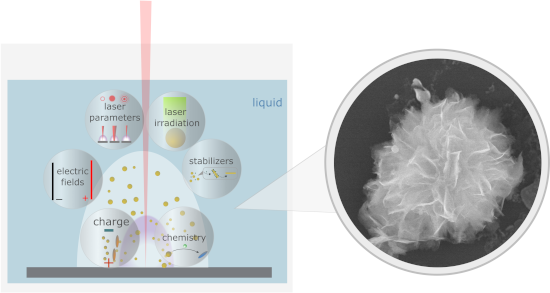
- heat transfer coefficient, Nu is the Nusselt number, k is thermal conductivity of the surrounding liquid, L is the characteristic length, and Tbl is the surrounding liquid boiling temperature. In order to analyse the reached temperatures and occurring thermal processes, the dissipated heat fluxes




Beyond the bilayer: multilayered hygroscopic actuation in pine cone scales
Beilstein J. Nanotechnol. 2025, 16, 1695–1710, doi:10.3762/bjnano.16.119
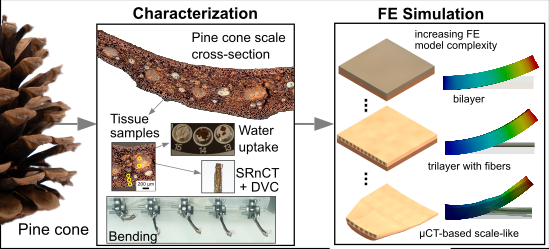
- reliability of upcoming simulations. For the analysis of the motion mechanism of the scale, for example, to show the multiphase nature of the motion [12], future simulation approaches could use transient heat transfer simulations incorporating diffusion models. The comparative simulations in this work


Bioinspired polypropylene-based functionally graded materials and metamaterials modeling the mistletoe–host interface
Beilstein J. Nanotechnol. 2025, 16, 1592–1606, doi:10.3762/bjnano.16.113
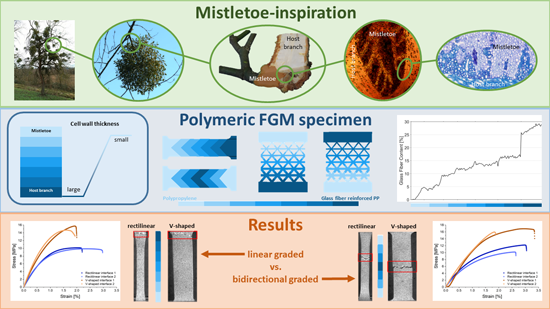
- defined interfaces between the compounds. This can be explained by the reduction in heat transfer of polymer blends with higher glass fiber content [41] and needs to be considered when designing graded interfaces of fiber-reinforced polymers. The results show that interface structuring of FGMs is possible


Time-resolved probing of laser-induced nanostructuring processes in liquids
Beilstein J. Nanotechnol. 2025, 16, 968–1002, doi:10.3762/bjnano.16.74
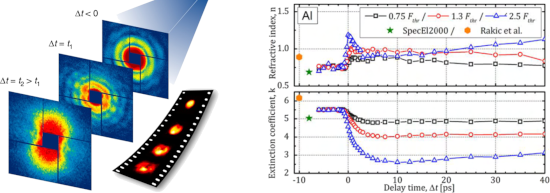
- within a liquid environment. Potential applications of UED include investigating the non-thermal heating of water molecules surrounding NPs, which occurs on femtosecond to picosecond timescales, as well as examining the response of the water environment to heat transfer and the mechanical work performed
- , the temperature difference between the hot NPs and the surrounding liquid drives heat transfer from the NPs to the liquid environment. This heat transfer process impacts the thermal equilibrium within the NPs, thereby shaping their phase evolution pathway. Furthermore, the non-thermal effects that


Recent advances in photothermal nanomaterials for ophthalmic applications
Beilstein J. Nanotechnol. 2025, 16, 195–215, doi:10.3762/bjnano.16.16
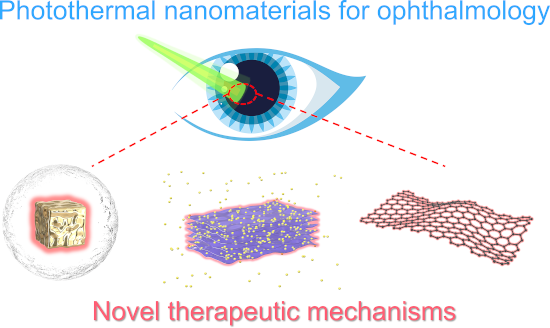
- , and inorganic semiconductor materials that absorb light through bandgap transitions [25]. The specific photothermal properties of these materials, encompassing aspects such as range and rate of light absorption, photothermal conversion efficiency, heat transfer capability, and photothermal stability


Heterogeneous reactions in a HFCVD reactor: simulation using a 2D model
Beilstein J. Nanotechnol. 2024, 15, 1627–1638, doi:10.3762/bjnano.15.128
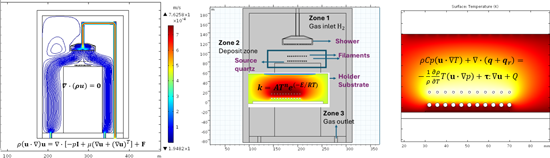
- continuity, momentum, and heat transfer by the finite element method. Mathematical method and equations The complex growth of non-stoichiometric silicon oxide films in a HFCVD reactor involves different physics. For the description of the behavior of all systems, it is necessary to incorporate mathematical
- diffuser. Heat transfer in the reactor is due to different mechanisms, such as radiation, conduction, convection, and diffusion. The theoretical and experimental temperature results were compared and analyzed near the position of the thermocouple, where the experimental temperature is only a function of


Hymenoptera and biomimetic surfaces: insights and innovations
Beilstein J. Nanotechnol. 2024, 15, 1333–1352, doi:10.3762/bjnano.15.107
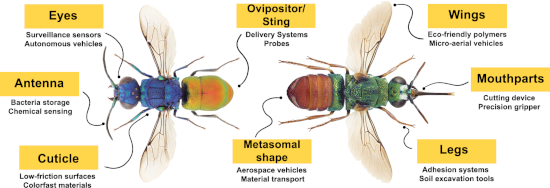
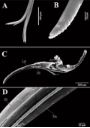
- of artificial surfaces, such as rough coatings on high-speed trains [12], dimples on golf balls [13], and shark skin denticles on aircrafts [14]. Some micromachines can also benefit from micro- and nanostructures that create roughness on surfaces and influence aerodynamics and heat transfer [15]. The





New design of operational MEMS bridges for measurements of properties of FEBID-based nanostructures
Beilstein J. Nanotechnol. 2024, 15, 1273–1282, doi:10.3762/bjnano.15.103
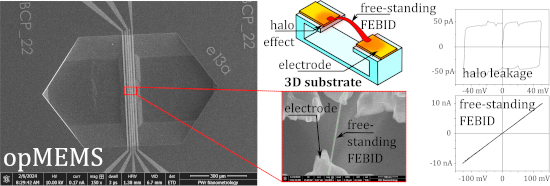
- the material parameters provided by the “MEMS” library. The geometry of the model was defined by the technological design. Microfabrication artefacts were not taken into account. The model was analysed in the steady-state study. The solid mechanics and heat transfer modules were used together with the


A low-kiloelectronvolt focused ion beam strategy for processing low-thermal-conductance materials with nanoampere currents
Beilstein J. Nanotechnol. 2024, 15, 1197–1207, doi:10.3762/bjnano.15.97

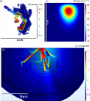
- acceleration voltage) on inducing increases in sample temperature and potential heat damage in thermally low conductive materials such as polymers and biological samples. The ion beam-induced heat for different ion beam currents at low acceleration voltages is calculated using Fourier’s law of heat transfer
- not a large number of recent papers published looking at the underlying physics in the field of focused ion beams. A broader look at current literature on heat transfer induced by particle beams highlights that heat damage is not only problematic for FIB processing, but also presents challenges for
- based on heat transfer and to Monte Carlo or finite element simulations [17][18][19]. Open source programs that assess heat deposition and diffusion are readily available to assess damage in light–tissue interactions [18]. For electron beams, multidimensional models predicting electron beam-induced



Functional fibrillar interfaces: Biological hair as inspiration across scales
Beilstein J. Nanotechnol. 2024, 15, 664–677, doi:10.3762/bjnano.15.55
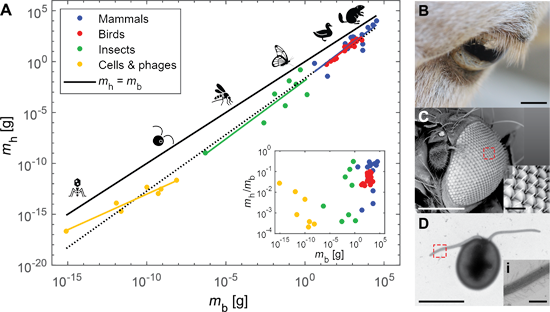
- is exemplified by hair's resistance to heat transfer in humans [4][24], and the role of hair in sensing mates by male mosquitoes [25]. Additionally, plants may exhibit hair-like fibrillar structures, such as the nanometer-thick mastigonemes on the flagella of microalgae [26] and the high-aspect-ratio


Experimental investigation of usage of POE lubricants with Al2O3, graphene or CNT nanoparticles in a refrigeration compressor
Beilstein J. Nanotechnol. 2023, 14, 1041–1058, doi:10.3762/bjnano.14.86
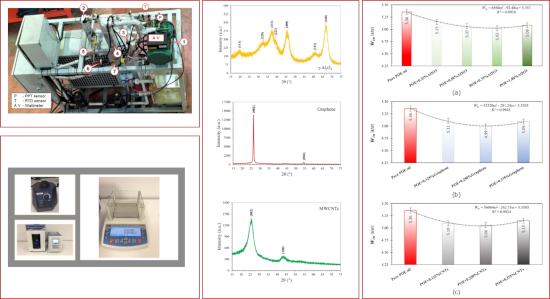
- nanoparticles at different concentrations. They found that the addition of nanoparticles enhanced the thermophysical properties and heat transfer characteristics of the lubricant. The researchers specified that nanolubricants typically provide greater thermal conductivity and viscosity in comparison to pure
- that the thermal conductivity and viscosity of the nanolubricant increased with the increase in mass fraction at a constant temperature. This capability in thermal conductivity enhancement can aid in addressing heat transfer issues within systems. Due to the fact that heat transfer takes place at the
- to the fact that heat transfer is fundamentally a surface-related process [5]. Nanolubricants have been widely used in recent years to improve the performance of refrigeration compressors [6][7][8]. Singh et al. [9] experimentally verified the effect of addition of multiwalled carbon nanotube (MWCNT





Nanoarchitectonics of photothermal materials to enhance the sensitivity of lateral flow assays
Beilstein J. Nanotechnol. 2023, 14, 988–1003, doi:10.3762/bjnano.14.82
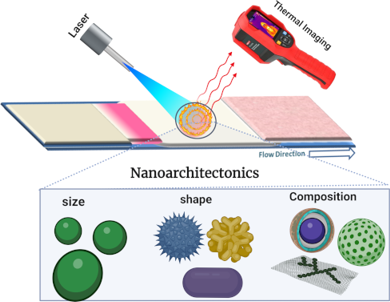
- results again verified that smaller nanorods have better heat transfer characteristics than larger nanorods because of their high cross-sectional area [48] (Figure 5C,D). Though the application of photothermal nanomaterials is not explored much in LFAs, it is expected that enhanced plasmon resonance could


Upscaling the urea method synthesis of CoAl layered double hydroxides
Beilstein J. Nanotechnol. 2023, 14, 927–938, doi:10.3762/bjnano.14.76
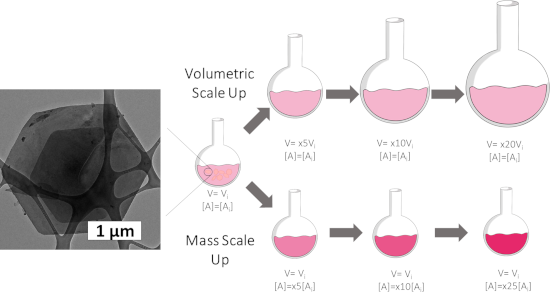
- , evidencing differences in heat transfer. Hence, considering that the precipitation kinetics is controlled by the alkalization process (i.e., the hydrolysis of urea, which depends on the temperature [35]), modifications in the heating process can affect the final size and shape of the particles [69]. This
- size is observed as the volume increases. This feature is related to changes in the heating process (heat transfer) modifying the alkalinization kinetics and the concomitant precipitation process, even after 48 h of recrystallization. These results suggest that the final LDH morphology (size and


Thermal transport in kinked nanowires through simulation
Beilstein J. Nanotechnol. 2023, 14, 586–602, doi:10.3762/bjnano.14.49
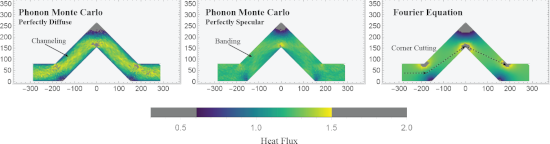
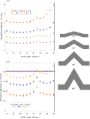
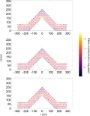
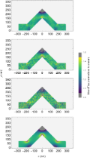
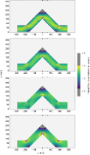
- be taken with a grain of salt, particularly in the MD simulations. Heat flux field In systems with complex geometry, the nuances of heat transfer beyond broad thermal conductance can be understood by examining the heat flux throughout the system. By investigating the flux through kinked systems, it
- . Classical heat transport solutions Fourier solutions were obtained through the use of Mathematica’s standard heat transfer library [55], built on a geometry matching that of the PMC, with appropriate boundary conditions to match the isothermal regions implemented in the PMC. Dimensionless units are used for





Carbon nanotube-cellulose ink for rapid solvent identification
Beilstein J. Nanotechnol. 2023, 14, 535–543, doi:10.3762/bjnano.14.44
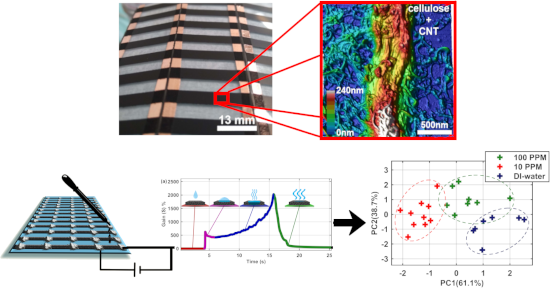
- regarding the width of the peaks. The interaction of the liquid with the hot crucible is analogous to the interaction of the liquid with the transducer from the thermal point of view. In both cases, the contact of the liquid with the hot surface causes a temperature drop due to the heat transfer from the


Plasmonic nanotechnology for photothermal applications – an evaluation
Beilstein J. Nanotechnol. 2023, 14, 380–419, doi:10.3762/bjnano.14.33
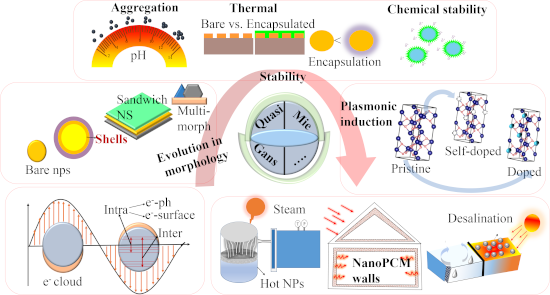
- -radiative relaxation occurs through the sequential processes of hot carrier generation, electron thermalization, and finally electron–phonon coupling heat transfer [65], leading to a temperature increase of the lattice (Figure 8 [66] and Figure 9). Thus, the energy exchange between energetic plasmons and
- Electron–electron scattering is followed by electron–phonon coupling and heat transfer to the surrounding [71][72]. These non-radiative decay processes specifically concern PT applications. Electron–phonon coupling, which reduces with decreasing particle size, and electron–surface scattering, which rises
- [91]: Solving the second-order Equation 33 requires specification of boundary conditions as well as initial conditions such as the type of heat transfer applicable to the specific study (conduction/convection/radiation), the geometry (radii, lengths, and similar dimensionally defined factors




Concentration-dependent photothermal conversion efficiency of gold nanoparticles under near-infrared laser and broadband irradiation
Beilstein J. Nanotechnol. 2023, 14, 205–217, doi:10.3762/bjnano.14.20
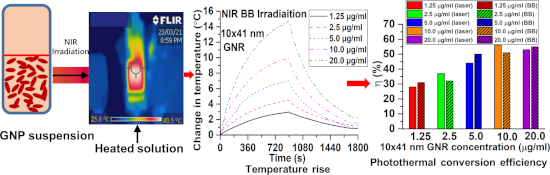
- dissipated to the surrounding medium is defined as: where S is the surface area of the cuvette exposed to the surrounding environment, h is the heat transfer coefficient, Tmax is the maximum temperature attained on irradiating the suspension for time t, and T0 is temperature of the surrounding environment




A cantilever-based, ultrahigh-vacuum, low-temperature scanning probe instrument for multidimensional scanning force microscopy
Beilstein J. Nanotechnol. 2022, 13, 1120–1140, doi:10.3762/bjnano.13.95
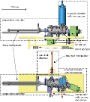
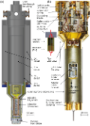
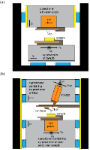
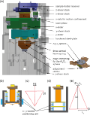
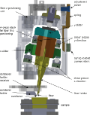
- be obtained on a normal laboratory floor and with operation personnel in the same room. Note that all experiments discussed in section “Results and Discussion” have been carried out with personnel in the room. The heat transfer between the microscope and the Cu bottom plate of the LHe of the cryostat





Comparative molecular dynamics simulations of thermal conductivities of aqueous and hydrocarbon nanofluids
Beilstein J. Nanotechnol. 2022, 13, 620–628, doi:10.3762/bjnano.13.54
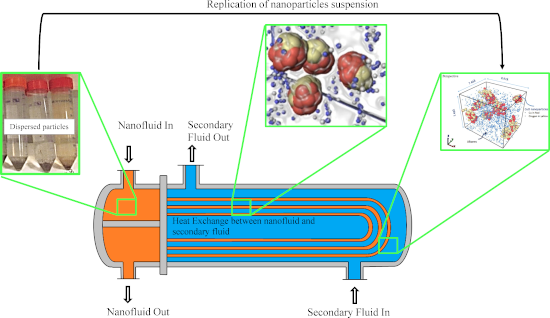
- used as a means of enhancing the thermal conductive properties of base fluids. This method formulates a heterogeneous fluid conferred by nanoparticles and can be used for high-end fluid heat-transfer applications, such as phase-change materials and fluids for internal combustion engines. These
- publication by Choi et al. [3] in 1995, nanofluids have been extensively studied since the addition of nanoparticles significantly enhances the heat-transfer performance of the base fluid [4][5][6]. This has promoted various applications of nanofluids in a wide range of fields, such as cooling fluids for
- conductivity, which is only possible if the understanding of the underlying mechanisms of heat transfer in nanofluids is clearly underpinned. Several mechanisms have been suggested by researchers to effectively predict this improvement in thermal conductivity. The most widely accepted mechanisms for dispersion


Electrostatic pull-in application in flexible devices: A review
Beilstein J. Nanotechnol. 2022, 13, 390–403, doi:10.3762/bjnano.13.32
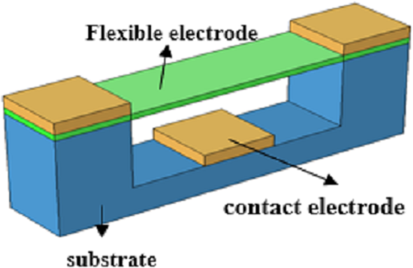
- the scale down of advanced IC designs. GR-NEM switches can be used as a new and unique ESD protection structure to replace PN junctions in integrated circuits. The high carrier mobility and the heat transfer coefficient allow for a low conduction resistance and can avoid device burn during ESD. ESD


Sputtering onto liquids: a critical review
Beilstein J. Nanotechnol. 2022, 13, 10–53, doi:10.3762/bjnano.13.2
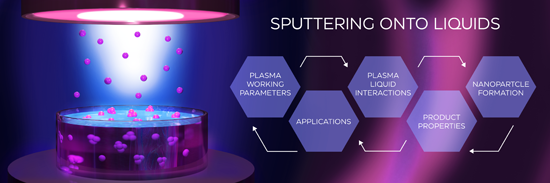
- sputter deposition processes [44]. In Thornton’s report, the probe used for the heat flux measurement, whose temperature increases when submitted to the sputtering plasma, was a stainless-steel body weighing 200 mg. Ultimately, in the case of a solid substrate, the heat transfer and resulting increase of






Design aspects of Bi2Sr2CaCu2O8+δ THz sources: optimization of thermal and radiative properties
Beilstein J. Nanotechnol. 2021, 12, 1392–1403, doi:10.3762/bjnano.12.103
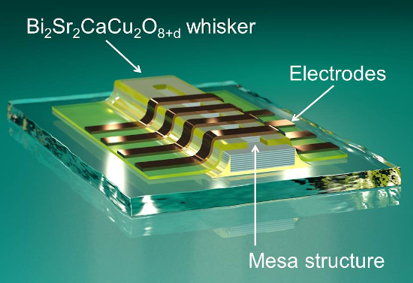
- Comsol Multiphysics. Below, we present simulations of thermal and radiative properties calculated using “Heat Transfer” and “RF” modules, respectively. The presented simulations contain several simplifications and, therefore, are not aiming to self-consistently predict the extent of self-heating, ΔT, or
- the radiative power. Their goal is to reveal general trends and geometrical factors contributing to design aspects of Bi-2212 THz sources. Modelling of heat transfer Accurate analysis of self-heating in Bi-2212 mesas is a complex non-linear problem [28][30][31][32][36][38]. Simulations presented below
- the mesa volume with a total power of 1 mW and uniform density. Figure 3 represents heat transfer simulations for a whisker without an electrode. Figure 3a,b shows sketches of the device and the x–z cross-section through the mesa (not to scale), respectively. Figure 3c–e shows the temperature


Rapid controlled synthesis of gold–platinum nanorods with excellent photothermal properties under 808 nm excitation
Beilstein J. Nanotechnol. 2021, 12, 462–472, doi:10.3762/bjnano.12.37
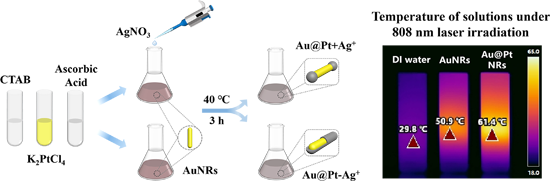
- correlated with the temperature, as shown in Figure 5d. In addition, we measured the PCE (η) of AuNRs and Au@Pt NRs according to the model proposed by Roper et al. [41]: where h is the heat-transfer coefficient, A is the irradiated surface area of the cuvette, Tmax and Tmin are the maximum and minimum steady





