Search results
Search for "heating" in Full Text gives 780 result(s) in Beilstein Journal of Nanotechnology. Showing first 200.
Sustainable fabrication of 2D-based devices through reuse of substrates with microfabricated electrodes
Beilstein J. Nanotechnol. 2026, 17, 818–827, doi:10.3762/bjnano.17.58
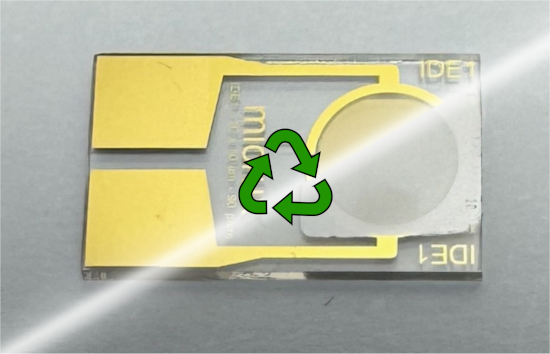
- its ability to penetrate microscopic gaps [24]. Heating to 50 °C can help weaken the van der Waals interactions between the 2D flakes and the substrate. Simultaneously, ultrasound agitation enhances molecular diffusion and promotes cavitation, generating localized pressure fluctuations that further


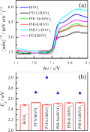
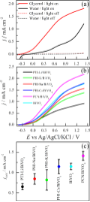
Glycerol photoelectrochemical oxidation reaction at carbon nitrides/BiVO4 materials
Beilstein J. Nanotechnol. 2026, 17, 806–817, doi:10.3762/bjnano.17.57
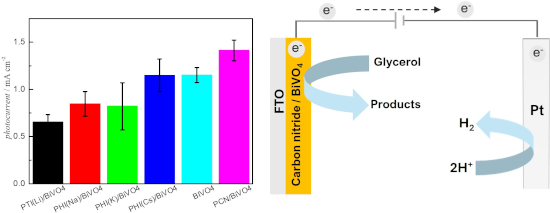
- atmosphere. The heating conditions were adjusted based on the alkali metal chloride used: for Na, the system was heated at 600 °C for 4 h, for Li at 600 °C for 8 h, and for both K and Cs at 550 °C for 4 h. After heating, the product was washed with distilled water and stirred at 95 °C for 3 h. The suspension
- substrates, the different types of CN were structurally and morphologically characterized. Thermogravimetric (TGA) analysis (Netzsch, 209 F3) was performed from 25 to 800 °C at a heating rate of 10 °C·min−1 under a synthetic air atmosphere. X-ray diffraction (XRD) patterns (XRD, Rigaku Ultima IV 6000) were




Restorative potential of laser-synthesized silver nanoparticles with Salvia officinalis for periodontal disease treatment: an in vitro study
Beilstein J. Nanotechnol. 2026, 17, 781–795, doi:10.3762/bjnano.17.55
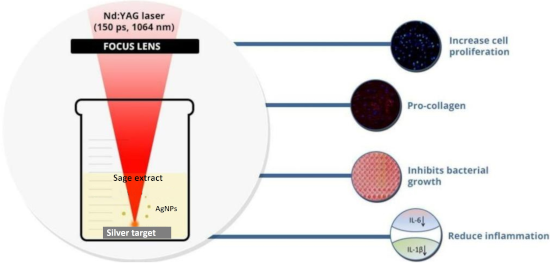
- parameters on size and concentration of the nanoparticles. A shorter pulse time, 150 ps pulses in our experimental setup, leads to quick evaporation, minimum heating of the target area, and very low absorbed energy, thereby enhancing ablation efficiency. The aqueous liquid sage extract environment



Substrate-dependent pore formation in molybdenum disulfide monolayers under ion irradiation
Beilstein J. Nanotechnol. 2026, 17, 769–780, doi:10.3762/bjnano.17.54
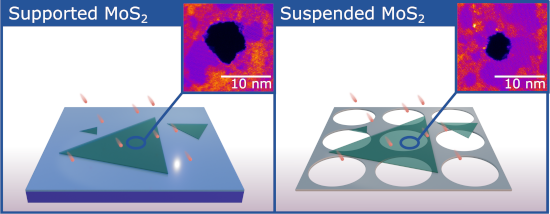
- before it can be converted into local lattice heating. This lowers the energy retained near the ion impact and therefore reduces the probability of pore formation. For HCIs, the initial interaction is governed by near-surface charge exchange within a nanometer-scale zone spanning multiple atoms [54][55
- layer has dissolved, allowing the PS film with the attached monolayers to be retrieved and cleaned in ultrapure water. The film is then transferred onto a TEM grid and heated for 30 min at 80 °C, followed by 1 h at 130 °C. During this step, slow heating and cooling are essential to avoid damaging the


Oxidative atmosphere-driven formation of single-phase spinel CuRh2O4 nanofibers for alkaline water oxidation
Beilstein J. Nanotechnol. 2026, 17, 737–743, doi:10.3762/bjnano.17.50
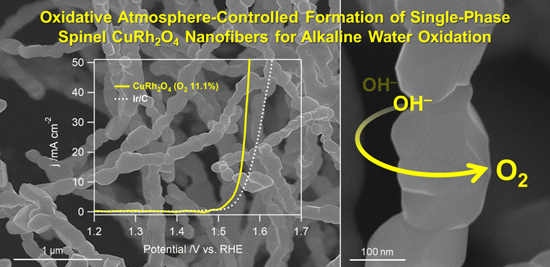
- 10 μL·min−1 with an applied voltage of 17 kV. Finally, the electrospun metal precursor/PVP nanofibers were calcined at 850 °C for 1 h with a heating rate of 10 °C·min−1 under a continuous mixed gas flow of O2 and He with controlled O2 concentrations (5.6%, 11.1%, and 22.2%). Physicochemical




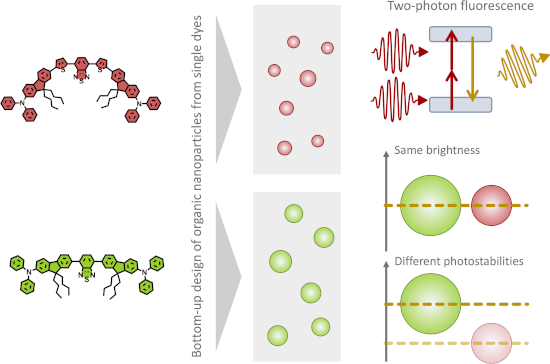
Molecular engineering of individual dye-based nanoparticle photostability for ultrabright two-photon fluorescence
Beilstein J. Nanotechnol. 2026, 17, 688–696, doi:10.3762/bjnano.17.48
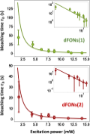
- dye packing density within the nanoparticles. Such non-radiative deactivation is expected to significantly increase local heating. Under 2P excitation, we hypothesize that the larger σ2 of dFONs(2) results in nanoparticle overheating due to rapid multicycling of excitation (induced by intense laser


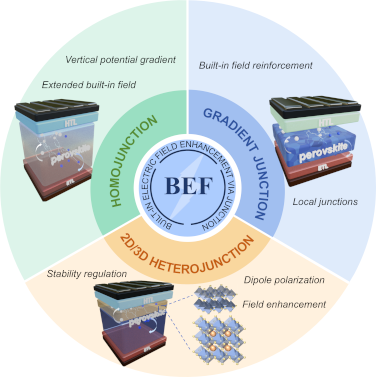
Recent progress in enhancing built-in electric fields of perovskite solar cells via junction engineering
Beilstein J. Nanotechnol. 2026, 17, 602–621, doi:10.3762/bjnano.17.42



Synthesis of Cu–Mo/TiO2 and Co–Mo/TiO2 photocatalysts for the efficient degradation of organic pollutants in water
Beilstein J. Nanotechnol. 2026, 17, 559–570, doi:10.3762/bjnano.17.37
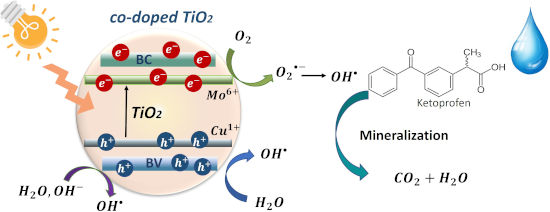
- a 1:10 molar ratio of Ti alkoxide/H2O to obtain the sol. The sol was kept under agitation for 2 h at 65 °C. The resulting gel was aged at room temperature for 24 h and dried at 60 °C for 12 h. Finally, the pure material was thermally treated following a heating program to 600 °C for 6 h. The
- % of each dopant. The materials were kept under vigorous agitation for 2 h and then were recovered by filtration and dried at 60 °C. Finally, the material was thermally treated following a heating program to 600 °C over 6 h, with a controlled temperature increment. The photocatalysts obtained were



Upcycling agroindustrial waste into graphene oxide supports for gold nanoparticles: toward sustainable nanomaterials
Beilstein J. Nanotechnol. 2026, 17, 489–504, doi:10.3762/bjnano.17.32
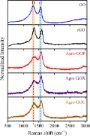
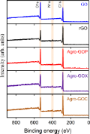
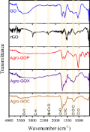
- heated in air to 300 °C at a heating rate of 10 °C·min−1, where it was held for 10 min. The resulting carbonaceous material was recovered and transferred into a 250 mL round-bottom flask containing 60 mL of 50% (v/v) nitric acid to remove residual ionic species introduced by ferrocene. The suspension was
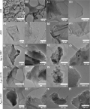
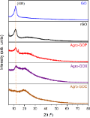
- samples were prepared by drop-casting stable aqueous dispersions of the materials onto carbon-coated copper grids (200 mesh). Thermogravimetric analysis (TGA) was performed using a TA Instruments Q500 thermogravimetric analyzer over a temperature range of 30–700 °C. The heating rate was set at 10 °C·min−1



Nanocarrier-integrated multilayer films produced by 3D printing for improved skin adhesion and curcumin photostability
Beilstein J. Nanotechnol. 2026, 17, 440–453, doi:10.3762/bjnano.17.30
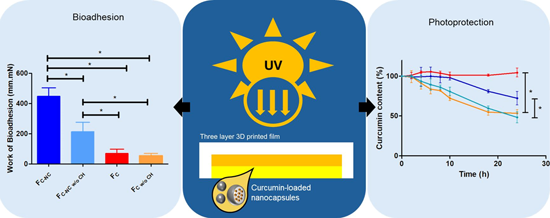
- calorimeter (Shimadzu DSC-60), at a heating rate of 10 °C/min, from room temperature to 300 °C. N2 gas was used at a flow rate of 50 mL/min. All film components (chitosan, CMC and alginate), as well as the resulting films (FC-NC and FC) were analysed separately. Skin adhesion measurements Bioadhesion tests of


Beam shaping techniques for pulsed laser ablation in liquids: Unlocking tunable control of nanoparticle synthesis in liquids
Beilstein J. Nanotechnol. 2026, 17, 309–342, doi:10.3762/bjnano.17.22
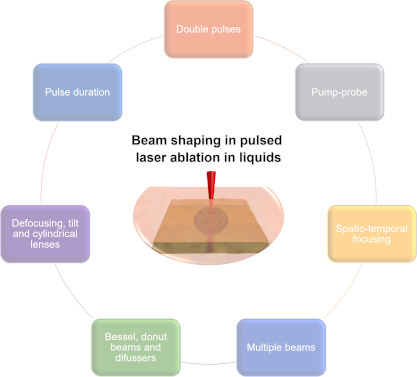
- , heating, and evaporation of the material, leading to plasma formation. The plasma cools down in the surrounding liquid releasing nanoparticles (NPs) into the liquid; the cooling process also generates gas bubbles from the liquid environment. These gas bubbles nucleate, forming a cavitation bubble (CB
- , making thermal ablation processes dominant [162]. In the picosecond range, the pulse duration is short enough to reduce excessive heat transfer into the surrounding material, but it is still long enough to allow for localised heating, combining photomechanical and thermal effects in the ablation
- accuracy in NP synthesis in liquids [174]. Pulse regime variations generate unique thermal dynamics affecting material interactions, energy absorption, and potential applications [1][175]. Femtosecond lasers facilitate swift heating that exceeds the pace of the electron–lattice coupling process. The energy







Fast vortex dynamics and relaxation times in NbRe-based heterostructures
Beilstein J. Nanotechnol. 2026, 17, 292–302, doi:10.3762/bjnano.17.20
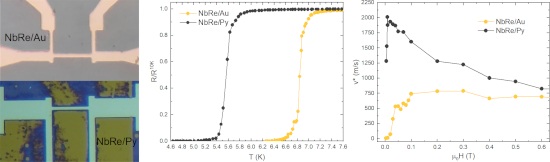
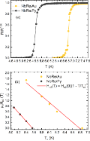
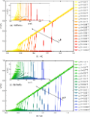
- their large strip widths. Thermal effects Before starting the analysis of flux-flow instability at the critical velocity, it is crucial to rule out the possibility that the sudden transition to the normal state is due to Joule heating. To do this, according to Bezuglyj and Shklovskij (BS) theory [6], we
- capping layer. In addition, the reduced strip width of the NbRe/Py microbridge leads to a less efficient heat evacuation toward the substrate, thereby enhancing the role of Joule heating and amplifying the impact of thermal dissipation on vortex dynamics. For this reason, and since, according to the LO


Multilayered hyperbolic Au/TiO2 nanostructures for enhancing the nonlinear response around the epsilon-near-zero point
Beilstein J. Nanotechnol. 2026, 17, 251–261, doi:10.3762/bjnano.17.17
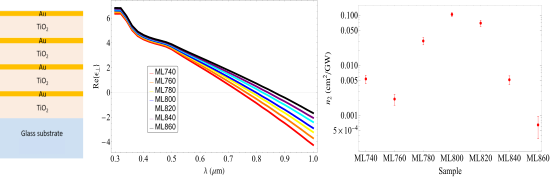
- electronic and thermal contributions to the response as explained in [24]. We present results that enabled us to determine the thermal nonlinear response due to intrapulse heating. Design and Fabrication of Nanostructured Metal–Dielectric HMM For a multilayer system with layer widths of 10–100 nm, we can
- reduce the thermal load to the sample due to intrapulse heating whilst keeping the peak irradiance constant to still be able to excite the electronic contribution of the nonlinear response. In this way, the thermal effect will change with the chopper frequency, while the electronic contribution, function


Gold nanoparticle-decorated reduced graphene oxide as a highly effective catalyst for the selective α,β-dehydrogenation of N-alkyl-4-piperidones
Beilstein J. Nanotechnol. 2026, 17, 218–238, doi:10.3762/bjnano.17.15


Structure-dependent thermochromism of PAZO thin films: theory and experiment
Beilstein J. Nanotechnol. 2026, 17, 186–199, doi:10.3762/bjnano.17.12
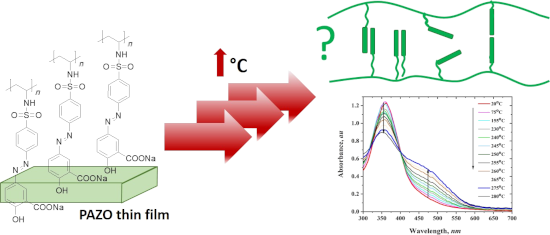
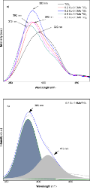
- spectra for PAZO thin films at different temperatures were recorded upon heating as the temperature of the sample heater was gradually increased from room temperature (r.t.) to 300 °C (Figure 2A) at a rate of 5 °C/min and (Figure 2B) at a rate of 1 °C/min. The absorbance in the 450–550 nm region gradually
- , there is still no significant change in the spectrum compared to that at room temperature. After heating above 84 °C the spectrum starts to change with the band around 450–550 nm increasing until a critical temperature (≈230 °C) is reached, after which further heating no longer increases the absorption
- be a new phase of PAZO transformation. Finally, the last three spectra in Figure 2B show how after reaching the maximum heating temperature of 300 °C and subsequent cooling to r.t., the spectrum remains relatively unchanged for a short time. It should be noted that the polymer retains its ability to


From shield to spear: Charge-reversible nanocarriers in overcoming cancer therapy barriers
Beilstein J. Nanotechnol. 2026, 17, 159–175, doi:10.3762/bjnano.17.10
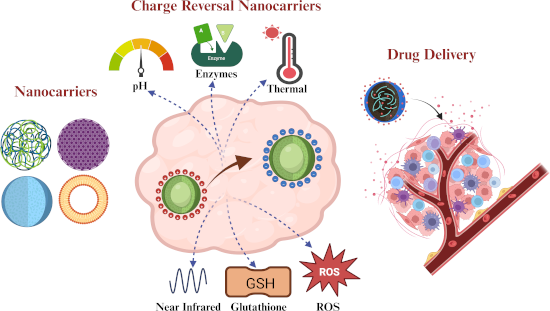
- processes, other stimuli, such as enzymatic cleavage, redox reactions, or magnetic heating induce irreversible charge changes since they involve permanent chemical or structural modifications to the nanocarrier surface. 2.2 Enzyme-responsive nanocarriers Enzymes are essential components that manage cellular
- ., DOX, geldanamycin) under alternating magnetic fields while preserving systemic safety [65]. Core–shell magnetic nanoparticles (Fe3O4@P(MEO2MA60-OEGMA40)) combine magnetic hyperthermia with controlled doxorubicin release, achieving localized heating (≈42 °C) under an alternating magnetic field to


Influence of surface characteristics on the in vitro stability and cell uptake of nanoliposomes for brain delivery
Beilstein J. Nanotechnol. 2026, 17, 139–158, doi:10.3762/bjnano.17.9
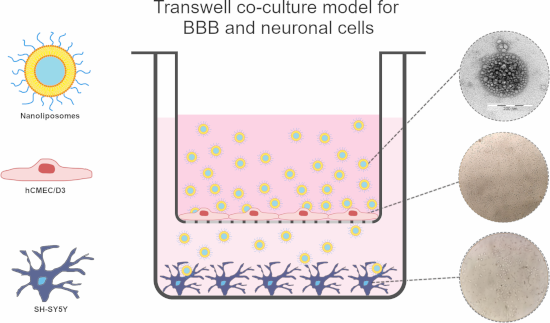
- incubation (37 °C, 5% CO2), the cells were washed twice with PBS, followed by subsequent fluorescence microscopy analysis at 37 °C (Zeiss Axio Observer Z1 inverted microscope, Zeiss, Jena, Germany), equipped with an epifluorescence illuminator and a plate heating chamber. The resulting images were processed




Reduced graphene oxide paper electrode for lithium-ion cells – towards optimized thermal reduction
Beilstein J. Nanotechnol. 2026, 17, 24–37, doi:10.3762/bjnano.17.3
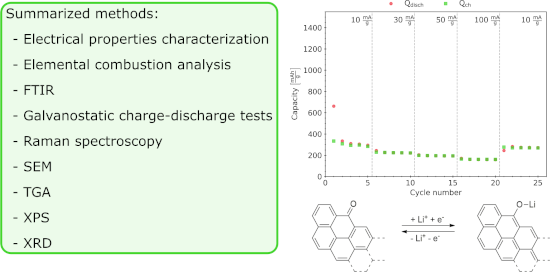
- applied for thermogravimetric analysis. The measurement was performed in an inert gas flow. The heating rate in this experiment was set to 3 °C/min with a final temperature of 800 °C. The sample was cut to fit the platinum pan. Elemental combustion analysis A LECO O836 analyzer was utilized to determine
- postulate that the gas release was rather a continuous phenomenon, driven by the heating process. The exposition of the flake edges and paths resulting from the removal of the gaseous products can be beneficial regarding the electrode design for cells operating liquid or gel electrolytes, ensuring improved



Improving magnetic properties of Mn- and Zn-doped core–shell iron oxide nanoparticles by tuning their size
Beilstein J. Nanotechnol. 2025, 16, 2285–2295, doi:10.3762/bjnano.16.157
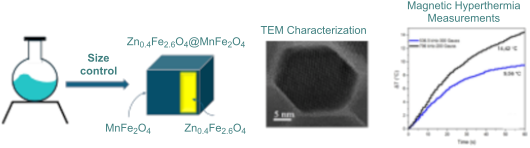
- values of Zn0.4Fe2.6O4@MnFe2O4 NPs are presented as a function of their size (10, 15, 22, and 50 nm; Figure 6a). Additionally, the heating curves of 50 nm Zn0.4Fe2.6O4@MnFe2O4 NPs are shown as a function of time under alternating magnetic fields of 536.5 kHz/300 G and 796 kHz/200 G (Figure 6b). The
- , biocompatible ferrite nanoparticles and are higher than those reported in previous studies involving similar core–shell systems [16]. The corresponding heating curves (Figure 6b) show temperature increases of 6.5 and 9.6 °C after 60 s, confirming the efficiency of these nanoparticles for hyperthermia
- to note, however, that magnetic anisotropy alone does not guarantee enhanced heating efficiency. As highlighted by Dirba et al., there exists an optimal range of magnetic anisotropy for effective energy dissipation in alternating magnetic fields [22]. Excessively high anisotropy may hinder relaxation
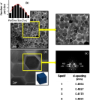

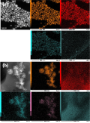


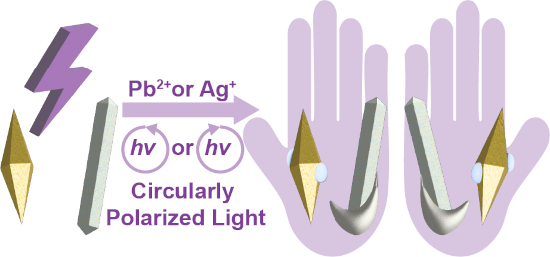
Chiral plasmonic nanostructures fabricated with circularly polarized light
Beilstein J. Nanotechnol. 2025, 16, 2245–2264, doi:10.3762/bjnano.16.154
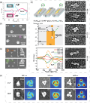
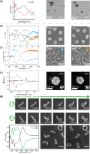
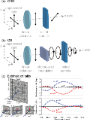
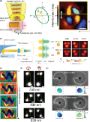
- photocatalysis with PNS, namely, local EM field enhancement, localized hot carrier generation, and local heating (Figure 2) [79][80][81][82]. Any of these factors can alter the landscape of a chemical reaction that might otherwise be insurmountable due to thermodynamic or kinetic barriers. The local EM field can





Optical bio/chemical sensors for vitamin B12 analysis in food and pharmaceuticals: state of the art, challenges, and future outlooks
Beilstein J. Nanotechnol. 2025, 16, 2207–2244, doi:10.3762/bjnano.16.153


Quality by design optimization of microemulsions for topical delivery of Passiflora setacea seed oil
Beilstein J. Nanotechnol. 2025, 16, 2116–2131, doi:10.3762/bjnano.16.146
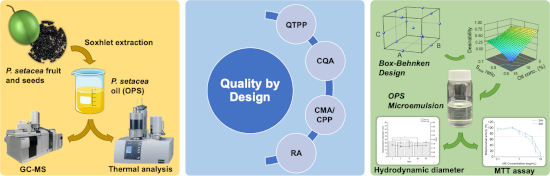
- using a simultaneous thermal analysis (STA 449 F3 Jupiter®, NETZSCH – Selb, Germany). Samples were weighed in alumina crucibles and analyzed with a heating rate of 10 °C·min−1, under nitrogen flow of 10 mL·min−1, over a temperature range of 25 °C to 900 °C. Microemulsion systems were analyzed under the


Calibration of piezo actuators and systems by dynamic interferometry
Beilstein J. Nanotechnol. 2025, 16, 2086–2091, doi:10.3762/bjnano.16.143
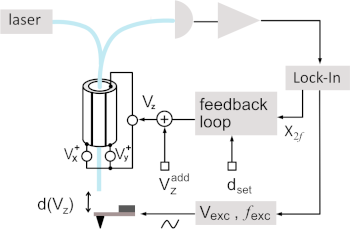
- calibration factor differs from the nominal value by more than a factor of two might be due to the manufacturing tolerance; but, more likely, it can be explained by a depolarization of the tube piezo material as it has been subject to many heating cycles for bakeout of the UHV chamber. Next, we investigate


Beyond the shell: exploring polymer–lipid interfaces in core–shell nanofibers to carry hyaluronic acid and β-caryophyllene
Beilstein J. Nanotechnol. 2025, 16, 2015–2033, doi:10.3762/bjnano.16.139
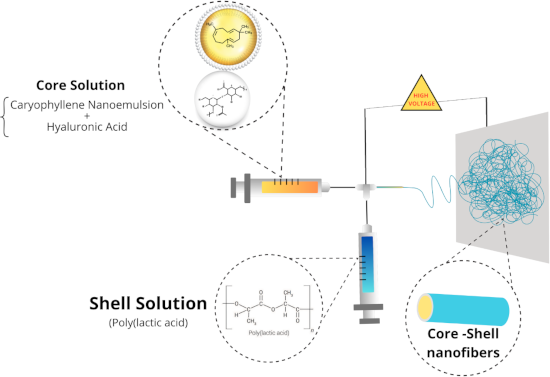
- on the thermal and crystallinity properties of the nanofibers through the values of Tg, Tcc, Tm, ΔHm, ΔHcc, and Xc%. The DSC analysis provided heating curves and thermal transitions for the first and second heating cycles of the nanofibers. The first heating cycle offers insights into the polymers
- after processing by electrospinning, while the second heating cycle reveals characteristics of the material before processing. The values for each thermal event are presented in Table 1 (first heating) and Table 2 (second heating). All fibers exhibited a typical semicrystalline polymer profile
- samples exhibited thermal behavior similar to that of monolithic PLA nanofibers. In the first heating cycle (Figure 8C), all three samples displayed an exothermic peak between 72–77 °C, corresponding to the cold crystallization temperature (Tcc), which indicates the crystallization of chains that were not




Laser ablation in liquids for shape-tailored synthesis of nanomaterials: status and challenges
Beilstein J. Nanotechnol. 2025, 16, 1963–1997, doi:10.3762/bjnano.16.137
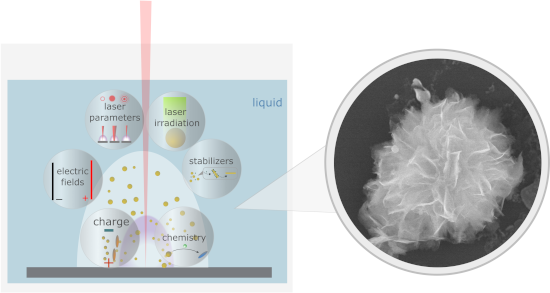
- (nanosecond), this interaction should be taken into account, resulting in the ionization and heating of the ejected material. The initial stages of interaction of a laser beam with a solid target are strongly dependent on laser pulse duration and fluence, surrounding liquid, target morphology and composition
- sufficient time for thermal processes of heating and melting to occur (Figure 7a,f). These mild conditions favour the heating and melting of NPs instead of their fragmentation, which is required for targeted shape change. The laser parameters required to melt the particles by laser pulses can be determined