


Search results
Search for "hydroxy groups" in Full Text gives 122 result(s) in Beilstein Journal of Nanotechnology.
Cross-scale design of chemosensor arrays: from molecular self-assembly in water to paper-based devices for metal ion detection
Beilstein J. Nanotechnol. 2026, 17, 828–838, doi:10.3762/bjnano.17.59
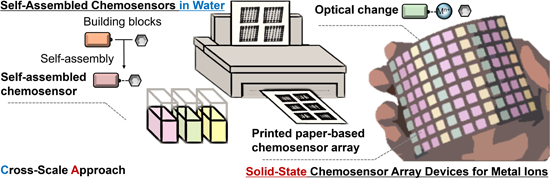
- ]. Also, the favorable binding affinity of phenylboronic acid derivatives enables the formation of ensembles with indicators bearing cis-diol units [50][51][52]. Catechol derivatives demonstrate favorable metal-ion recognition abilities, owing to the presence of two adjacent hydroxy groups [53]. The


Cellulose as a photocatalyst support material: extraction, structural features, and environmental applications
Beilstein J. Nanotechnol. 2026, 17, 635–652, doi:10.3762/bjnano.17.44
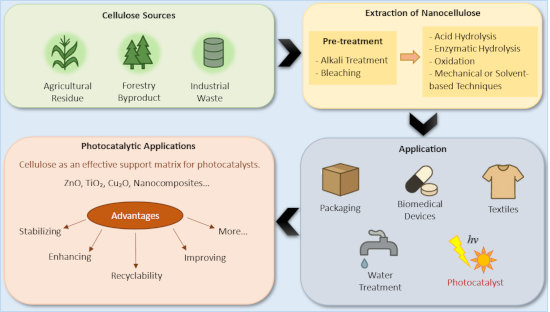
- groups that contribute to the unique reactivity and structural properties of the polymer. These hydroxy groups enable extensive hydrogen bonding between polymer strands; together with van der Waals forces, they drive the cellulose molecules to align and stack in parallel, ultimately giving rise to the
- the cellulose fibers and bind covalently to the crystalline cellulose structure [20]. Its polymerization degree ranges from 10,000 to 20,000 units, depending on the source material. Every glucose monomer in cellulose contains three hydroxy groups that determine its crystalline structure and physical
- characteristics as these groups form hydrogen bonds with neighboring oxygen atoms to stabilize the glucose connections and create straight cellulose chains. In addition to shaping the structural arrangement, the hydroxy groups also control cellulose’s chemical behavior since their reactive sites allow for


Electrochemical determination of ciprofloxacin using a MIL-101/reduced graphene oxide-modified electrode
Beilstein J. Nanotechnol. 2026, 17, 541–554, doi:10.3762/bjnano.17.35
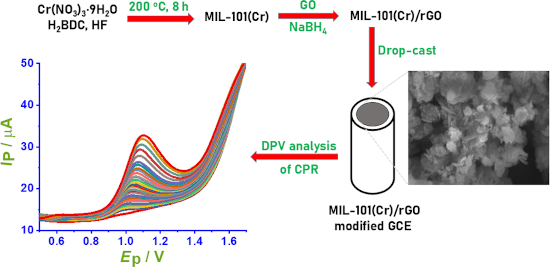
- species in C–O groups, hydroxy groups, or adsorbed water molecules associated with the rGO surface and the porous MOF structure [27]. The presence of these oxygen-containing species further supports the coexistence of MIL-101 and rGO within the composite. Overall, the XPS results confirm the successful


Upcycling agroindustrial waste into graphene oxide supports for gold nanoparticles: toward sustainable nanomaterials
Beilstein J. Nanotechnol. 2026, 17, 489–504, doi:10.3762/bjnano.17.32
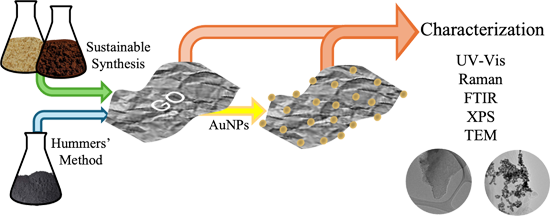
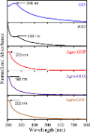
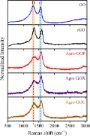
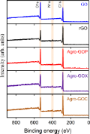
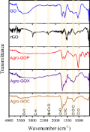
- . C1 is assigned to sp2-C (284.4 eV), C2 to sp3-C (285.0 eV), C3 to hydroxy groups C–O (286.4 eV), C4 to epoxy groups C–O–C (287.3 eV), C5 to carbonyl groups C=O (288.4 eV), C6 to carboxyl groups –COOH (289.3 eV), and C7 to vacancy defects (283.0 eV). The components' peaks result from a least-squares



Interconnection morphology effects on the radio frequency response of carbon nanotube sponges
Beilstein J. Nanotechnol. 2026, 17, 343–351, doi:10.3762/bjnano.17.23
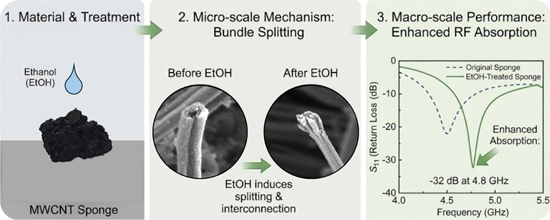
- ), hydroxy groups (C−OH, 285.7 ± 0.1 eV), and carbonyl groups (C=O, 287.1 ± 0.1 eV) [32]. After treatment with ethanol, signals of all aforementioned oxygen-containing components increased in intensity, while that of the sp2 component decreased. Furthermore, carboxyl groups (C=O(OH), 290 ± 0.1 eV) were added



Reduced graphene oxide paper electrode for lithium-ion cells – towards optimized thermal reduction
Beilstein J. Nanotechnol. 2026, 17, 24–37, doi:10.3762/bjnano.17.3
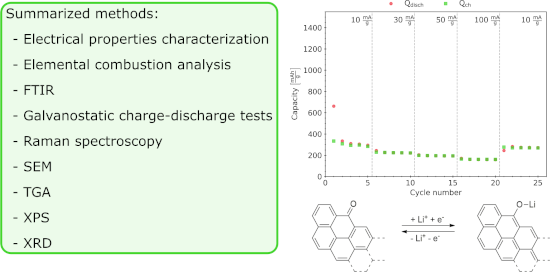
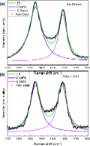
- description of oxygen species and their behavior during the thermal annealing of GO, allowing them to specify a temperature range expected to provide optimal type and amount of oxygen species [27]. According to this article, the desired ketone groups partially remain, while carboxyl, epoxy, and hydroxy groups
- ]. The wavenumber shift in relation to literature data can result from the applied reduction parameters (cf. Xiong et al. [47]). The band observed in the wavenumber range of 3300–3600 cm−1 can be attributed to the O–H stretching vibrations from hydroxy groups or adsorbed water. The temperature values for



Improving magnetic properties of Mn- and Zn-doped core–shell iron oxide nanoparticles by tuning their size
Beilstein J. Nanotechnol. 2025, 16, 2285–2295, doi:10.3762/bjnano.16.157
- -capping agents, such as oleic acid, which is commonly used during synthesis to control particle size and prevent aggregation. The broad peak observed at ≈3400 cm−1 is linked to the O–H stretching vibrations of adsorbed water or hydroxy groups on the particle surface, which is a common feature for



Ultrathin water layers on mannosylated gold nanoparticles
Beilstein J. Nanotechnol. 2025, 16, 2183–2198, doi:10.3762/bjnano.16.151
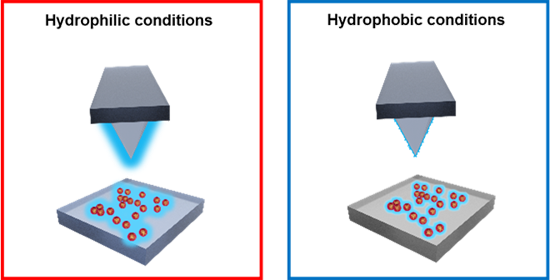
- organic layers. In contrast, VSFG was applied to obtain interface-sensitive information on CH and OH bonds at the AuNP/air interface, under hydration and dehydration. We also used a deuterated water (D2O) atmosphere to distinguish the mannosyl hydroxy groups from adsorbed and absorbed water. Absorption is
- following exposure to D2O. The rationale for using D2O was to differentiate the hydroxy groups of sugar molecules from those associated with adsorbed or absorbed water, based on the known disparity in H–D exchange rates between sugar-bound OH groups and those in pure bulk water [29][30]. In this experiment
- , 30 min of exposure to D2O were insufficient to fully exchange the hydrogen atoms in the dimannose hydroxy groups [31]. However, given the large excess of D2O, it is expected to displace the thin layers of adsorbed water. As shown in Figure 5B, this expectation is confirmed: The CH region remains



PEGylated lipids in lipid nanoparticle delivery dynamics and therapeutic innovation
Beilstein J. Nanotechnol. 2025, 16, 1914–1930, doi:10.3762/bjnano.16.133
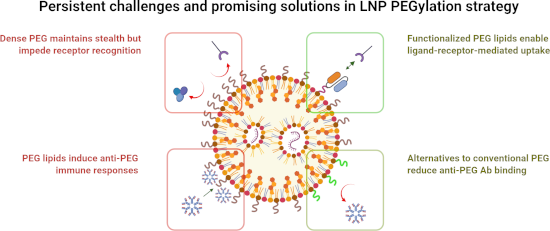
- 80% gene silencing in tumor cells, whereas PEG-LNP control was below 50% [91]. Linear polyglycerol (lPG) features a polyether backbone with hydroxy groups that reduce hydrophobic interactions and antibody binding. It was evaluated by replacing DMG-PEG2k in mRNA-loaded LNP formulations [92]. In a


Piezoelectricity of layered double hydroxides: perspectives regarding piezocatalysis and nanogenerators
Beilstein J. Nanotechnol. 2025, 16, 1812–1817, doi:10.3762/bjnano.16.124

- piezoelectric performance of such promising materials for energy harvesting as polyvinylidene fluoride (PVDF) through strong hydrogen bonding between the hydroxy groups of LDHs and the electronegative fluorine atoms of PVDF [11]. In the work of Shetty et al., incorporation of a low content of sodium

Electrical, photocatalytic, and sensory properties of graphene oxide and polyimide implanted with low- and medium-energy silver ions
Beilstein J. Nanotechnol. 2025, 16, 1794–1811, doi:10.3762/bjnano.16.123
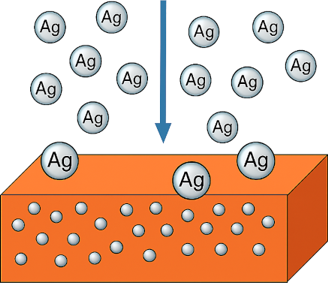
- structure of graphene oxide where carbon atoms form the basic lattice, while oxygen is present in the form of epoxy and hydroxy groups [23]. The C=O bonds (9.42%) represent carbonyl groups, while C=C bonds (14.68%) indicate the presence of residual conjugated sp2-hybridized regions, which are characteristic


Cross-reactivities in conjugation reactions involving iron oxide nanoparticles
Beilstein J. Nanotechnol. 2025, 16, 1504–1521, doi:10.3762/bjnano.16.106
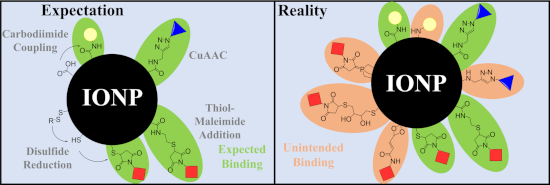
- surface [48], but can still bind through its carboxylate group. To rule out the possibility of cross-reactivity with quinones, in the case of 3,4-DHBA, we incorporate a set of controls using 3,5-DHBA ligands (Figure 1b), which cannot form stable quinones due to their meta hydroxy groups [56]. Few studies
- the surface SH content, thereby increasing the Cy3-maleimide loading significantly. This further indicates that DTT is not coordinated to the IONP surface through both of its thiol groups, but rather, binds through either the hydroxy groups, or a single SH group, leaving the other SH free to react
- . Our previous study on buffer interactions with IONPs [67] demonstrated that the buffer Tris, whose structure is analogous to THPP, showed significant binding to the IONP surface, likely through its hydroxy groups. It is clear that the addition of a disulfide cleavage step is not feasible by any







Laser processing in liquids: insights into nanocolloid generation and thin film integration for energy, photonic, and sensing applications
Beilstein J. Nanotechnol. 2025, 16, 1428–1498, doi:10.3762/bjnano.16.104






Synthesis and antibacterial properties of nanosilver-modified cellulose triacetate membranes for seawater desalination
Beilstein J. Nanotechnol. 2025, 16, 1380–1391, doi:10.3762/bjnano.16.100
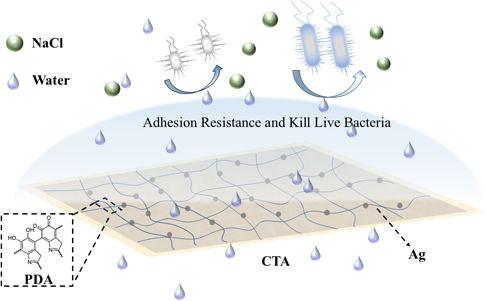
- clear, indicating the formation of [Ag(NH3)2]OH. Grafting of nano Ag onto PCTA membrane The PCTA membrane was immersed in an [Ag(NH3)2]OH solution and underwent static reaction for 8 h. During this process, the phenolic hydroxy groups in PDA facilitated the reduction of Ag(NH3)2+ particles, resulting in


Enhancing the photoelectrochemical performance of BiOI-derived BiVO4 films by controlled-intensity current electrodeposition
Beilstein J. Nanotechnol. 2025, 16, 1289–1301, doi:10.3762/bjnano.16.94
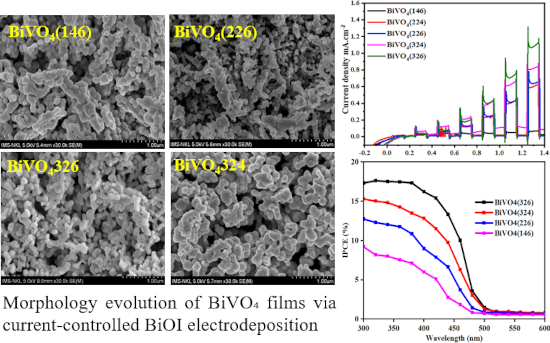
- chemical and structural stability of the electrode during long-term PEC operation. The O 1s spectrum (Figure 7c) was deconvoluted into two main peaks: the dominant peak at 530.1 eV is attributed to lattice oxygen (O2−), while the broader shoulder around 531.8 eV corresponds to surface hydroxy groups and



Functional bio-packaging enhanced with nanocellulose from rice straw and cinnamon essential oil Pickering emulsion for fruit preservation
Beilstein J. Nanotechnol. 2025, 16, 1234–1245, doi:10.3762/bjnano.16.91
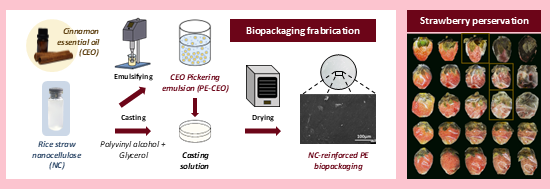
- matrix properties, including tensile strength, elasticity, and thermal stability, due to its high surface area, hydroxy groups forming hydrogen bonds, and excellent dispersion within the matrix [20][21]. This improvement is attributed to interaction between hydroxy groups in NC and PVA, effectively
- %): This can be due to the presence of hydroxy groups in PVA, which can disrupt hydrogen bonds and dissolve the peptidoglycan membranes of the bacteria [51]. CBP showed a drastic time-kill effect of more than 90% for both types of bacteria, attributed to the potent antibacterial functional groups in CEO



Single-layer graphene oxide film grown on α-Al2O3(0001) for use as an adsorbent
Beilstein J. Nanotechnol. 2025, 16, 1082–1087, doi:10.3762/bjnano.16.79
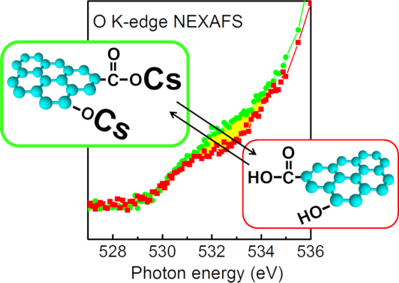
- have dissociation constants pK = 4.3, 6.6, and 9.8 [31]. It can be considered that Cs adsorbs on the oxygen functional groups through a mechanism of ion exchange. This process involves the substitution of H atoms from oxygen functional groups, such as carboxyl and hydroxy groups, with Cs atoms. It can
- obtained by oxidizing monolayer graphene grown by metal-free chemical vapor deposition on the α-Al2O3(0001) surface, and the adsorption state was determined by surface analytical techniques. It was clarified that Cs adsorbs on oxygen functional groups by substituting with H atoms from carboxyl and hydroxy
- groups. It is also estimated that the weight adsorption capacity of SLGO in the 1.0 mol/L-Cs aqueous solution is as much as approximately 70 wt %. It has been demonstrated that GO has great potential to be a promising adsorbent for Cs in aqueous solutions. Keywords: cesium adsorption; chemical vapor


Synthesis of a multicomponent cellulose-based adsorbent for tetracycline removal from aquaculture water
Beilstein J. Nanotechnol. 2025, 16, 728–739, doi:10.3762/bjnano.16.56
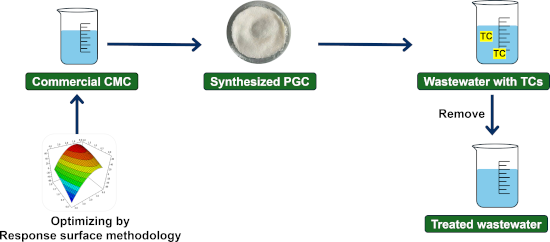
- . For instance, carboxymethyl cellulose (CMC), an anionic derivative of cellulose, is a linear polysaccharide consisting of anhydroglucose units linked by β-1,4-glycosidic bonds. The key distinction between CMC and cellulose is that some hydroxy groups in cellulose are replaced by carboxymethyl
- + ions and TC for adsorption sites, along with the ionization of hydroxy groups and the subsequent formation of hydrogen bonds with TC molecules, results in a rapid increase in adsorption capacity. Beyond pH 7, adsorption capacity decreases sharply as TC transforms into negatively charged anions, causing
- + complex and the negatively charged PGC material drives the adsorption process. Additionally, hydroxy groups may facilitate hydrogen bond formation between PGC and TC (Figure 6c). Furthermore, the aromatic ring of TC contains conjugated double bonds, while the hexagonal network of PGC contains ‒CH groups


Colloidal few layered graphene–tannic acid preserves the biocompatibility of periodontal ligament cells
Beilstein J. Nanotechnol. 2025, 16, 664–677, doi:10.3762/bjnano.16.51
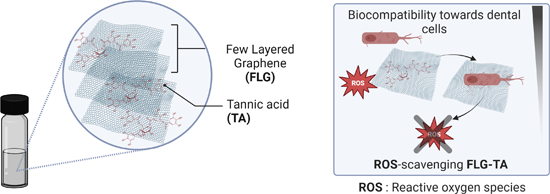
- , characterized by numerous hydroxy groups, is proposed to potentially form non-covalent interactions, such as π–π stacking, with the carbon network and oxygen atoms of graphite [16][20]. This interaction could exfoliate graphite, resulting in a stable colloidal dispersion of functionalized graphene sheets. The
- , rising from 0.17 in graphite to 0.45 in the FLG–TA material. In addition, the high-resolution C 1s and O 1s spectra of the FLG–TA composite show the presence of carbonyl, ether, and hydroxy groups (Figure 2C,D). The percentage of those moieties in the FLG–TA material increases significantly with respect
- capabilities through multiple mechanisms, namely, electron transfer, where hydroxy groups donate electrons to neutralize free radicals, and hydrogen atom transfer, where hydrogen atoms from hydroxy groups are donated to stabilize ROS [17][34]. This retained antioxidant activity could play a crucial role in




Effect of additives on the synthesis efficiency of nanoparticles by laser-induced reduction
Beilstein J. Nanotechnol. 2025, 16, 464–472, doi:10.3762/bjnano.16.35
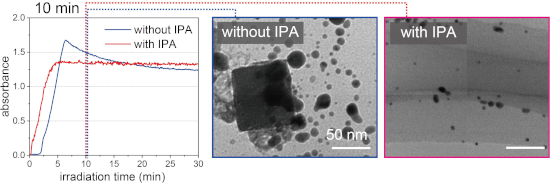
- Au nanoparticles by LRL. On the other hand, the synthesis efficiency is even higher with glycerin. While IPA and ethanol are monovalent alcohols with a single hydroxy group, glycerin is a trivalent alcohol with three hydroxy groups. Therefore, we speculate that glycerin was able to more efficiently


Enhancing mechanical properties of chitosan/PVA electrospun nanofibers: a comprehensive review
Beilstein J. Nanotechnol. 2025, 16, 286–307, doi:10.3762/bjnano.16.22

- . This process leads to a decrease in the number of hydroxy groups present on the PVA chain, resulting in the release of water molecules. Simultaneously, the remaining hydroxy groups facilitate the formation of intramolecular hydrogen bonds. Additionally, intermolecular hydrogen bonds can form between


Radiosensitizing properties of dual-functionalized carbon nanostructures loaded with temozolomide
Beilstein J. Nanotechnol. 2025, 16, 229–251, doi:10.3762/bjnano.16.18
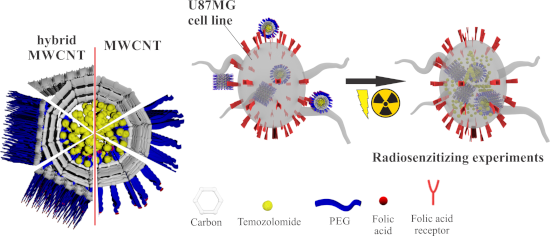
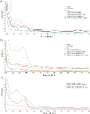
- -G-PEG6000-FA exhibit another novel band at 1728 and 1732 cm−1, respectively, resulting probably from C=O stretching vibrations of the ester RCOOR′ group formed between the carboxyl groups of FA and hydroxy groups of PEG6000. The bands at 1423 cm−1 in the spectrum of MWCNTs-PEG6000-FA and at 1428 cm




Synthesis and the impact of hydroxyapatite nanoparticles on the viability and activity of rhizobacteria
Beilstein J. Nanotechnol. 2025, 16, 216–228, doi:10.3762/bjnano.16.17
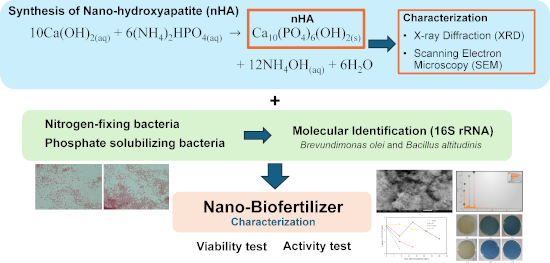
- state. Rhizobacteria demonstrate their ability to create transparent zones on Pikovskaya media because of their capability for phosphate solubilization. These microorganisms produce organic acids, such as citric acid and oxalic acid, which bind to phosphate via hydroxy groups and chelating cations such


TiO2 immobilized on 2D mordenite: effect of hydrolysis conditions on structural, textural, and optical characteristics of the nanocomposites
Beilstein J. Nanotechnol. 2025, 16, 128–140, doi:10.3762/bjnano.16.12
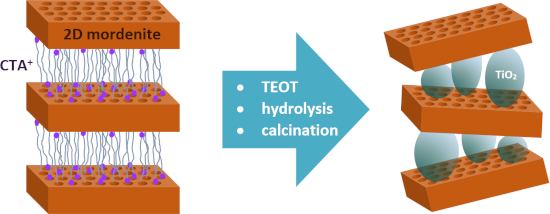
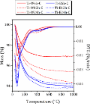
- , even at temperatures above 300 °C, all samples exhibit a small peak in the DTG curves at about 400 °C, which can be attributed either to water molecules trapped in hardly accessible voids or, more probably, to a removal of specific hydroxy groups [34]. Moreover, all samples except Ti-W4h-C show a
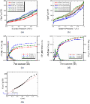
- linear mass loss starting from 300 °C that is not reflected by DTG and can be attributed to progressive dehydroxylation (for hydroxy groups with a significant inhomogeneity) [41]. For the sample Ti-W12h-C, this effect is most pronounced and corresponds to about 7.6% of the total mass loss. The total mass
- Δw1′ and the amount of hydroxy groups, Δw2′. This points out to a strong interaction of nanoconfined water with hydroxy groups on the inner surface of mesopores, a part of which formed upon calcination [6]. Moreover, the samples obtained in 70% ethanol solution may exhibit different hydrophilic



A nanocarrier containing carboxylic and histamine groups with dual action: acetylcholine hydrolysis and antidote atropine delivery
Beilstein J. Nanotechnol. 2025, 16, 11–24, doi:10.3762/bjnano.16.2

- resorcinarenes containing carboxylic, imidazole, and hydroxy groups on the upper rim. Similar to the esterase triad, these groups are essential for the hydrolysis of ACh [28]. Throug hydrolysis, ACh dissociates into choline (Ch) and acetic acid (AcOH). The generated AcOH breaks the boronate bonds and





