Search results
Search for "junction" in Full Text gives 316 result(s) in Beilstein Journal of Nanotechnology. Showing first 200.
Interface-engineered Caco-2 cell culture on a collagen-coated liquid–liquid interface in a microfluidic device
Beilstein J. Nanotechnol. 2026, 17, 760–768, doi:10.3762/bjnano.17.53
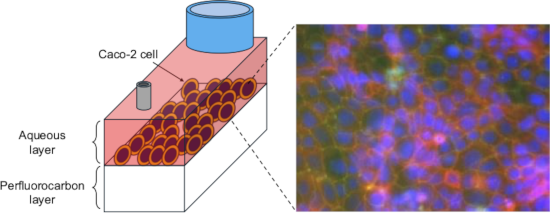
- , such as tight junction formation, after approximately seven days of culture [12]. In the present study, we therefore chose a period of seven days of culture to assess the early-stage maturation of Caco-2 monolayers from a proof-of-concept perspective. Here, the liquid–liquid interface remained intact
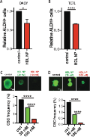
- immunofluorescence imaging confirmed tight-junction formation and organized actin cytoskeletons, indicating early-stage epithelial maturation. Unlike conventional systems that rely on plastic or silicone rubber substrates for cell adhesion, our system enables direct cell culture on a liquid–liquid interface


Superconducting artificial neural networks and quantum circuits
Beilstein J. Nanotechnol. 2026, 17, 744–747, doi:10.3762/bjnano.17.51

- of intensive research [14][15]. A superconducting Gaussian neuron implemented as a two-junction interferometer and a detailed analysis of its transfer function are presented in [16]. A promising design of a neuromorphic ANN based on superconducting elements is proposed in [17]. The superconducting
Environmental applications of silver nanoparticles: state-of-the-art review and emerging trends
Beilstein J. Nanotechnol. 2026, 17, 697–736, doi:10.3762/bjnano.17.49
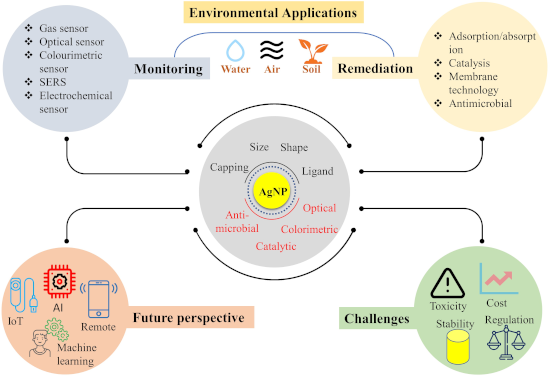
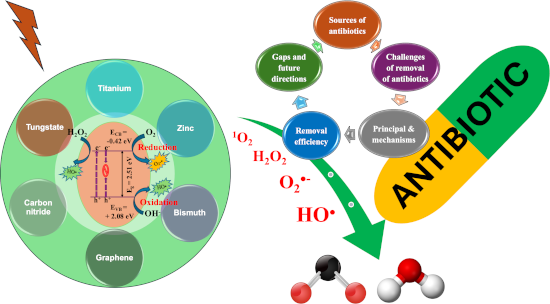
- junction formation at the Ag/semiconductor interface creates an internal electric field that suppresses electron–hole recombination, extending carrier lifetime and enabling band-alignment-dependent redox reactions [127]. Reactive oxygen species, primarily •OH, •O2−, h+, and 1O2, drive oxidative pollutant
- composites (Ag/TiO2, Ag/ZnO, Ag-Fe3O4, Ag/silica) rather than pristine AgNPs (Table 3). The enhanced performance of these systems should be attributed to the composite architecture (Schottky junction, increased surface area, and synergistic ROS generation) rather than to AgNPs alone. 3.1.3 Membrane


Recent progress in enhancing built-in electric fields of perovskite solar cells via junction engineering
Beilstein J. Nanotechnol. 2026, 17, 602–621, doi:10.3762/bjnano.17.42
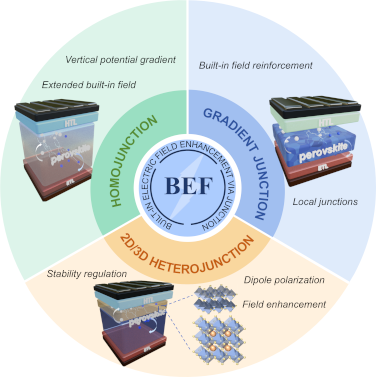
- -diffusion transport, and extraction pathways, thereby shaping critical device parameters such as open-circuit voltage and fill factor. This review highlights recent progress in junction engineering strategies for BEF enhancement. Homojunctions extend interfacial potential fields into the bulk through
- unified framework of BEF descriptors, magnitude, penetration depth, directionality, and spatial continuity. Special emphasis is placed on the potential for synergistic integration of multiple junction architectures and on the development of mild, process-compatible fabrication routes. Ultimately
- ; junction; perovskite solar cells; Introduction Driven by the global push for carbon neutrality, next-generation high-efficiency and low-cost photovoltaic technologies have gained increasing attention. Due to their high absorption coefficients, long carrier diffusion lengths, tunable bandgaps, and solution




Defects and defect-mediated engineering of two-dimensional materials: challenges and open questions
Beilstein J. Nanotechnol. 2026, 17, 454–488, doi:10.3762/bjnano.17.31
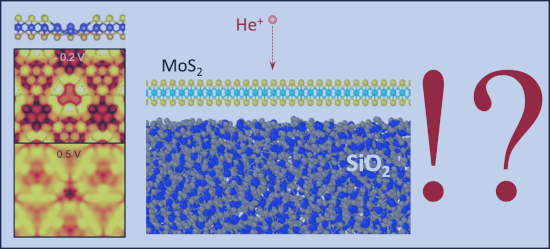
- electrically driven light emission in the STM junction, STML can, in principle, assign the optical fingerprint of a single defect directly to its atomic configuration and electronic states. Such a capability would allow the emission characteristics of defect-bound or moiré-trapped excitons to be traced with





Capabilities of the 3D-MLSI software tool in superconducting neuron design
Beilstein J. Nanotechnol. 2026, 17, 122–138, doi:10.3762/bjnano.17.8

- neurons, in particular, of sigma and Gauss neuron types [1]. They are, in fact, a single-junction and a two-junction interferometer, respectively, shunted by an additional inductance, which is also used to generate the output signal. The designation of such a neuron originates from the type of transfer
- (or activation) function (TF) that can be realized for a given neuron type. More specifically, the single-junction interferometer may possess a sigmoidal TF (useful for implementation of a superconducting perceptron [2]), while the two-junction interferometer may realize a Gaussian TF suitable for
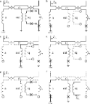
- types of structures designed on the basis of low-Tc Nb–Al multilayer technology similar to that used for RSFQ-circuit fabrication. First, we compare results of experiment and simulation for simple C-shaped two-junction SQUIDs placed over a thick superconducting screen. Then more complicated objects



Competitive helical bands and highly efficient diode effect in F/S/TI/S/F hybrid structures
Beilstein J. Nanotechnol. 2026, 17, 15–23, doi:10.3762/bjnano.17.2
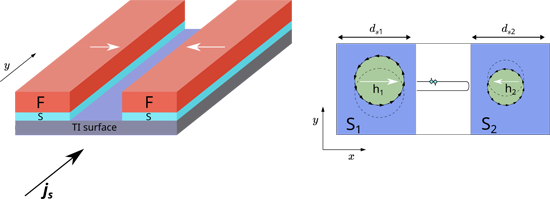
- superconducting electronics [2][3][4]. So far, the superconducting diode effect has been reported in many different systems, including Josephson junctions [5][6][7][8][9][10][11], junction-free devices [12][13][14][15][16][17], superconducting microbridges [18][19], and other systems [20][21]. There have been
- surface (normal N part) and ds1(ds2) is the width of S1 (S2) region. It is important to emphasize that, although the geometry of the considered device corresponds to a Josephson junction, in this work we consider zero macroscopic phase difference between regions S1 and S2, so that the Josephson
- second condition means that , and the transparency of the interfaces between the superconducting leads and the TI layer is rather high. In this case, it is energetically favorable to have the same phase gradient along the whole S1/TI/S2 Josephson junction and the key results are obtained within this


![[Graphic 16]](/bjnano/content/inline/2190-4286-17-2-i31.svg?max-width=637&scale=1.18182)
![[Graphic 17]](/bjnano/content/inline/2190-4286-17-2-i32.svg?max-width=637&scale=1.18182)


Terahertz-range on-chip local oscillator based on Josephson junction arrays for superconducting quantum-limited receivers
Beilstein J. Nanotechnol. 2025, 16, 2296–2305, doi:10.3762/bjnano.16.158
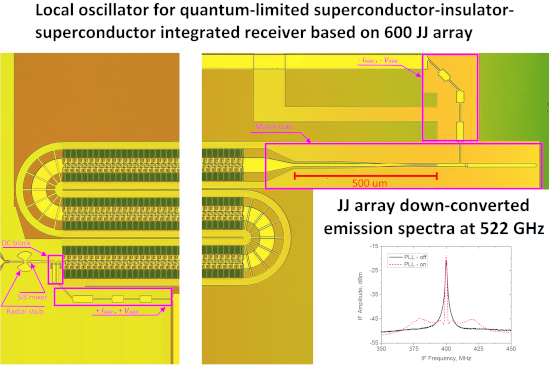
- , Moscow Region, 141701, Russian Federation 10.3762/bjnano.16.158 Abstract In this paper we present the results of the development, fabrication, measurements, and analysis of terahertz-range oscillators based on Josephson junction arrays embedded into the central electrode of a coplanar line. The
- improvement of the oscillator performance. Keywords: Josephson junction arrays; phase-locking; superconducting local oscillator; superconductor integrated receiver; terahertz-range oscillators; Introduction Superconducting heterodyne receivers based on superconductor–insulator–superconductor (SIS) tunnel
- junctions have ultimate characteristics unreachable to devices based on other principles [1][2][3]. The unique nonlinearity of the current–voltage characteristic (IVC) near the gap voltage of the junction enables the gain of the intermediate frequency (IF) signal after mixing with the radiation from the


Geometry-controlled engineering of the low-temperature proximity effect in normal metal–superconductor junctions
Beilstein J. Nanotechnol. 2025, 16, 2265–2273, doi:10.3762/bjnano.16.155
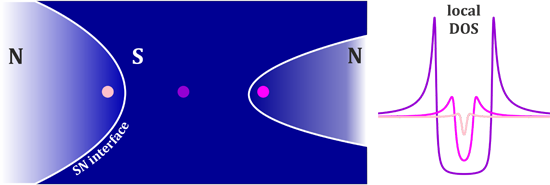
- a decay characterized by a power law with a dimensionality-dependent exponent. Here, we extend the current understanding of the proximity effect by exploring the role of normal metal–superconductor (NS) junction geometry in altering the spatial propagation of the superconducting order. Specifically
- interface governs the transparency of the clean NS junction and thus influences the proximity effect. These results deepen our understanding of how geometry and the proximity effect interact, which is important for the design and optimization of superconducting hybrid devices. Keywords: Bogoliubov–de
- Gennes equations; normal metal–superconductor junction; order parameter; proximity effect; superconductivity; Introduction When a superconductor (SC) is brought into contact with a normal metal (NM) or a ferromagnet (FM), Cooper pairs penetrate the adjacent material, imparting superconducting properties


Electromagnetic study of a split-ring resonator metamaterial with cold-electron bolometers
Beilstein J. Nanotechnol. 2025, 16, 2199–2206, doi:10.3762/bjnano.16.152
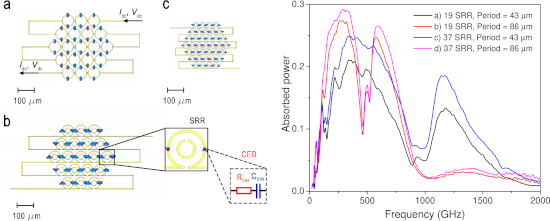
- described in [17] and was characterized using the same experimental setup described there. This setup employs a YBaCuO Josephson junction oscillator as a broadband source, with the signal delivered to the sample via an oversized waveguide. Therefore, the measured frequency response is the combined frequency


Electron transport through nanoscale multilayer graphene and hexagonal boron nitride junctions
Beilstein J. Nanotechnol. 2025, 16, 2132–2143, doi:10.3762/bjnano.16.147
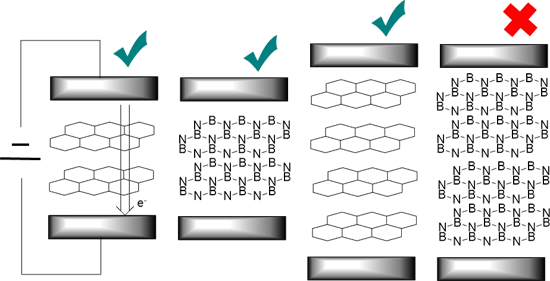
- enabled us to extrapolate trends for electron transport in thicker multilayer carbon and h-BN materials. Keywords: NEGF; DFT; nano-junction; Introduction Multilayer graphene nanomaterials exhibit interesting electronic properties and find application in battery electrode materials [1], electrocatalysis
- , VCR, and VRC represent the escape rates of an electron from a conductance channel, for example, the probability of an electron to enter or leave the junction. The broadening functions ΓL and ΓR are derived from the self-energies of the electrodes and are given by Equation 8 and Equation 9: The steady
- . The current is computed for biases in range between 0.0 and 1.0 V with steps of 0.2 V. The computed current for one layer in the Pt/graphene/Pt junction and one layer in the Pt/h-BN/Pt junction is 2.6·10−4 A for 1.0 V of applied bias. The results are identical and, for one layer, the current flow


Quantum circuits with SINIS structures
Beilstein J. Nanotechnol. 2025, 16, 1931–1941, doi:10.3762/bjnano.16.134
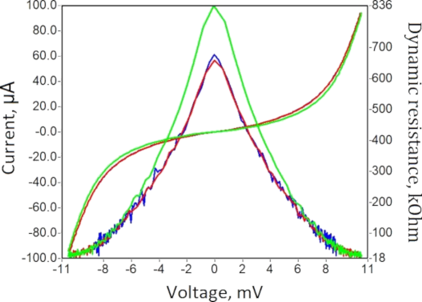
- "Higher School of Economics," Moscow, 101000 Russia P. Kapitza Institute for Physical Problems RAS, Moscow, Russia 10.3762/bjnano.16.134 Abstract The superconductor–insulator–normal metal–insulator–superconductor (SINIS) tunnel junction structure is the basic building block for various cryogenic devices
- junction; superconducting tunnel junctions; Introduction Modern superconducting electronics is moving towards lower temperatures, lower noise levels, and higher sensitivity, which can be achieved at sub-Kelvin temperatures using aluminum-based tunnel junctions. One group of devices, such as
- tunnel junction In tunnel structures, the barrier is a dielectric layer between two metal films (often the oxide layer on the surface of the first metal layer is used as a dielectric). The first experimental study of a tunnel junction was carried out in 1960 [21] for an aluminum–aluminum oxide–lead


Programmable soliton dynamics in all-Josephson-junction logic cells and networks
Beilstein J. Nanotechnol. 2025, 16, 1883–1893, doi:10.3762/bjnano.16.131

- , Russia 10.3762/bjnano.16.131 Abstract We demonstrate the programmable control of kinetic soliton dynamics in all-Josephson-junction (all-JJ) networks through a novel tunable cell design. This cell enables on-demand switching of transmission lines and operates across defined parameter regimes supporting
- ; superconducting neural networks; Introduction The rapid advancement of Josephson junction (JJ) logic circuits [1][2][3][4][5] and neuromorphic networks [6][7][8][9] holds transformative potential for ultra-low-power computing. However, achieving scalable integration remains a critical bottleneck, as conventional
- for the flexible configuration of advanced logic and neuromorphic circuits. Results Model description To model the dynamics of kinetic solitons [43], we employ the resistively and capacitively shunted junction (RCSJ) model [1], where the total current I across a Josephson junction is the sum of the


Advances of aptamers in esophageal cancer diagnosis, treatment and drug delivery
Beilstein J. Nanotechnol. 2025, 16, 1734–1750, doi:10.3762/bjnano.16.121

- help of aptamers. Common nanocarrier systems, including micelles, liposomes, metal nanoparticles, and solid lipid nanoparticles, demonstrate well-established fabrication protocols, yet often face challenges with in vivo stability. Emerging nanoplatforms, such as four-way junction RNA nanostructures


Few-photon microwave fields for superconducting transmon-based qudit control
Beilstein J. Nanotechnol. 2025, 16, 1580–1591, doi:10.3762/bjnano.16.112
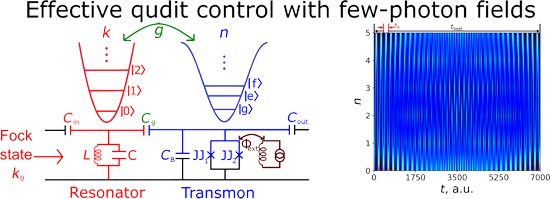
- photon number operator . The transmon is considered as an anharmonic oscillator (with ladder operators and ) with the number of excitations in the solid-state system similarly introduced as . In a transmon, the inductance is created using a nonlinear element, that is, a nanoscale Josephson junction (JJ
- ) and the phase on the JJ/(interferometer) are quantized as follows: where charge energy EC = e2/2CB and Josephson energy EJ = (Φ0Ic)/2π are used (Ic is the critical current flowing through the Josephson junction). The Hamiltonian for the transmon part of our system can be written in the following form


Laser processing in liquids: insights into nanocolloid generation and thin film integration for energy, photonic, and sensing applications
Beilstein J. Nanotechnol. 2025, 16, 1428–1498, doi:10.3762/bjnano.16.104
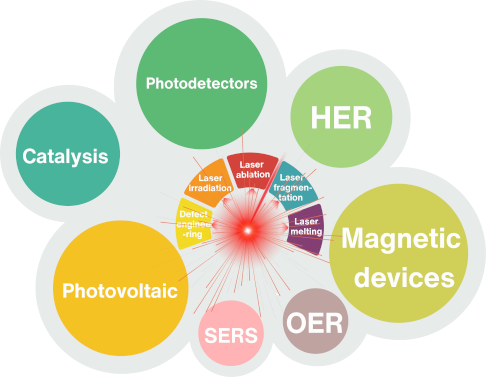
- an electrical resistance of 3–5 Ω·cm. A thickness of 300 nm was recorded using a laser interferometer. The CdS/Si photodetector demonstrated that the junction exhibited proper rectification behavior and suggested that the CdS NPs may be a good nanomaterial for optoelectronic applications [109






Automated collection and categorisation of STM images and STS spectra with and without machine learning
Beilstein J. Nanotechnol. 2025, 16, 1367–1379, doi:10.3762/bjnano.16.99
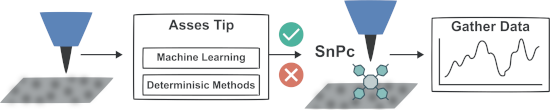
- shown in Figure 2. One addition to this method compared to the automated data gathering method described in Barker et al. [19] is the addition of I(z) classifications prior to performing imaging to ensure a tunnelling junction. This acts as a rapid “pre-filtering” step, eliminating tips that do not show
- a stable tunnelling junction (and hence are not suitable for STS) without the need to perform a complete image to characterise the tip. The classification of the state of the probe based on imaging is performed via the CC method as a key feature of a “good” tip for STS is also the sharpness of the





Better together: biomimetic nanomedicines for high performance tumor therapy
Beilstein J. Nanotechnol. 2025, 16, 1246–1276, doi:10.3762/bjnano.16.92
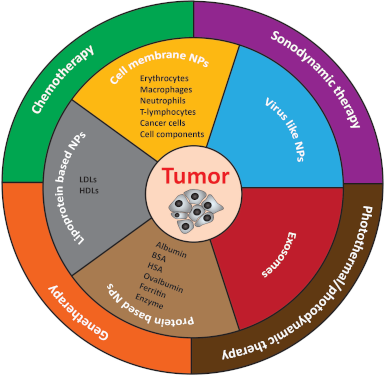
- holliday junction molecules, was demonstrated [155]. DNA tiles mimicking the holliday junction molecule structure were conjugated with gold nanoparticles and successfully used for the delivery of a neutral antisense oligonucleotide, morpholino, for silencing HER2 and ERα genes in breast cancer. Within gene







Transfer function of an asymmetric superconducting Gauss neuron
Beilstein J. Nanotechnol. 2025, 16, 1160–1170, doi:10.3762/bjnano.16.85
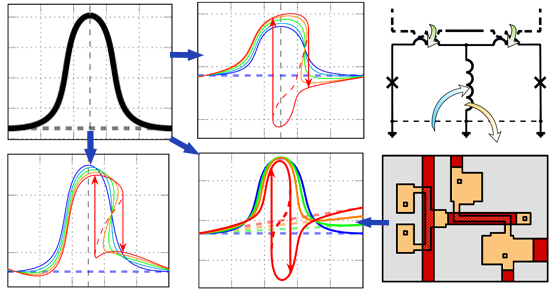
- derivative of some sigmoidal dependence. A superconducting Gauss neuron can be implemented as a two-junction interferometer shunted symmetrically by an additional inductance. This work analyzes three cases of asymmetry that can occur in the experimental samples of Gauss neurons, that is, unequal critical
- contain a Josephson junction JJA,B and an inductance LA,B, which is also used for receiving input signal. It is assumed that the input arms of the neuron are identical, including equal sensitivity to the input signal. These arms form the two-junction interferometer, and each of them is shunted by the
- variation for the parameter is ±π/4 when, for example, IcA changes within 0 ≤ IcA < ∞. Exceeding these limits is possible if one of the Josephson junctions is a π-junction with a negative sign of the current–phase relation (see, for example, [21][22]). The use of π-junctions in the context of developing



Soft materials nanoarchitectonics: liquid crystals, polymers, gels, biomaterials, and others
Beilstein J. Nanotechnol. 2025, 16, 1025–1067, doi:10.3762/bjnano.16.77






Morphology and properties of pyrite nanoparticles obtained by pulsed laser ablation in liquid and thin films for photodetection
Beilstein J. Nanotechnol. 2025, 16, 785–805, doi:10.3762/bjnano.16.60
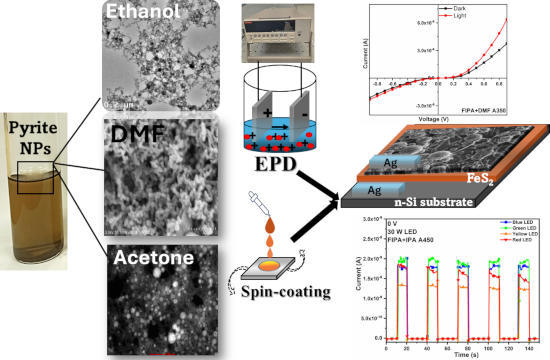
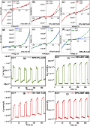
- crystalline structure of the films was characterized by X-ray diffraction (XRD). The UV–vis–NIR photodetection properties of p-n junction-based thin films composed of FeS2 nanoparticles are reported. Additionally, the results of various light-sensing parameters evaluated in these photodetectors are also
- carriers. In p-n junction photodetectors, an internal electric field further facilitates this separation, enhancing the response of the device [65]. The effect of light intensities at different wavelengths was also investigated while illuminating using 532 and 785 nm continuous laser source with variable






Nanostructured materials characterized by scanning photoelectron spectromicroscopy
Beilstein J. Nanotechnol. 2025, 16, 700–710, doi:10.3762/bjnano.16.54
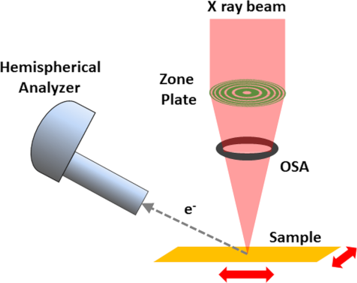
- suitable substrates for characterization by scanning probe microscopy and SPEM. An atomic force microscopy (AFM) image of a typical InP p–n junction nanowire is shown in Figure 2a, confirming a homogeneous shape with a nanowire length of about 2.5 µm and a diameter of about 200 nm, fluctuating only by a
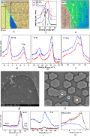
- the local binding energy position of the core level directly follows the energy of the valence and conduction band and thus the band-bending at the interface between the p- and n-doped segments, the observed shift in binding energy directly reflects the in-built potential of the p–n junction at the
- junction nanowires have been reported to show an open circuit voltage between 0.6 and 0.9 eV in photovoltaic measurements [31][32]. While those open circuit voltages can be considered as the built-in potential in the nanowire bulk, the values measured by XPS result from the nanowire surface, demonstrating


The impact of tris(pentafluorophenyl)borane hole transport layer doping on interfacial charge extraction and recombination
Beilstein J. Nanotechnol. 2025, 16, 678–689, doi:10.3762/bjnano.16.52
- conductivity of selective contacts, as well as the junction quality and energetic alignment with the absorber. On the hole extracting side, organic semiconductors have been extensively used due to their flexibility and favorable properties. Two of such compatible materials that have yielded high performing
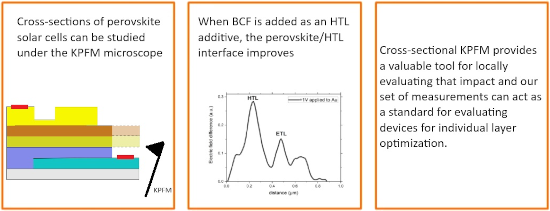
- (pentafluorophenyl)borane (BCF), we enhanced the hole extracting material/perovskite junction quality in spiro-OMeTAD and in PTAA based devices. Measurements under illumination show that the improvement is caused by a reduced recombination rate at the perovskite/hole transporter interface. Keywords: cross-section
- , which diminish the HTL/perovskite junction quality [40][41]. To investigate the microscopic origins of these effects at the interfaces, we performed cross-sectional KPFM. A well-performing solar cell was selected from each batch and after cleaving, it was subjected to argon ion milling in order to get a


Emerging strategies in the sustainable removal of antibiotics using semiconductor-based photocatalysts
Beilstein J. Nanotechnol. 2025, 16, 264–285, doi:10.3762/bjnano.16.21
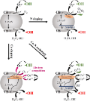
- shown in Figure 5a. In type-II heterojunctions, however, holes move from SC2 to SC 1 (Figure 5b). In the p–n junction system, a type-II mechanism exchanges electrons and holes. Electrons travel from p-type to n-type semiconductors, whereas holes move from n-type to p-type semiconductors (Figure 5c). The
- , they also reduce compound semiconductors’ redox capacity and pose problems to the continuous flow of electrons and holes because of electrostatic repulsion. A Schottky junction is also formed by combining two different semiconductor materials (Figure 5d). The oxidation capability of Schottky



A review of metal-organic frameworks and polymers in mixed matrix membranes for CO2 capture
Beilstein J. Nanotechnol. 2025, 16, 155–186, doi:10.3762/bjnano.16.14
- -scale CO2 capture applications. The contents of this review are at the junction of different research areas for which interested readers can refer to dedicated existing literature. For example, Sumida et al. [26] provide a comprehensive review of CO2 capture using MOFs, while details on the fabrication