Search results
Search for "kinetics" in Full Text gives 454 result(s) in Beilstein Journal of Nanotechnology. Showing first 200.
Nanoglasses: a trail towards uncharted regions of vitreous materials and their properties?
Beilstein J. Nanotechnol. 2026, 17, 1047–1062, doi:10.3762/bjnano.17.72

- as well as kinetics. As the excess free enthalpy contribution due to the interfaces between GGIs and glass grains depends on the total area of these interfaces and on the composition-dependent strain contributions, a linear common tangent construction does not describe the actual situation. Instead
- less probable as jumps within the glass–glass interfaces due to the energy landscape particulars described above. To explore also the relaxation kinetics in nanoglasses, annealing times during diffusion measurements were also varied [31]. The results from diffusion measurements and TEM-based analyses
- by atom probe tomography independently indicated strongly enhanced atomic transport kinetics [63]. It is important to note also in this context that the fast diffusion pathways have extended life times, even under conditions that allow for significant diffusion


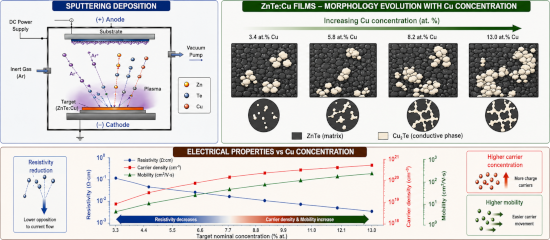
Synthesis and characterization of RF-sputtered ZnTe/Cu2−xTe thin films for solar cell applications
Beilstein J. Nanotechnol. 2026, 17, 1016–1027, doi:10.3762/bjnano.17.69
- weaker reflections in the 2θ range of 40–50°. These peaks correspond to a mixture of ZnTe crystalline phases, namely zinc blende [JCPDS 65-5730] and wurtzite [JCPDS 19-1482]. The coexistence of these two polymorphs is commonly reported in sputtered ZnTe films and is associated with growth kinetics and



Ultrasonic irradiation in the synthesis of nanohydroxyapatite: a chemically friendly technique for improving hemocompatibility and antibiofilm applications
Beilstein J. Nanotechnol. 2026, 17, 991–1015, doi:10.3762/bjnano.17.68
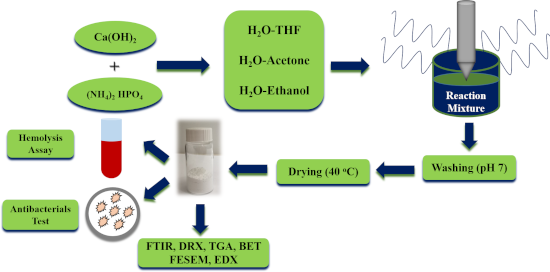
- primary chemical nature of the reacting species. Instead, the solvent media (water/ethanol, water/THF, and water/acetone) act as physicochemical modulators of the overall reaction kinetics and cavitation behavior, which directly explains the observed discrepancies in both yield and nanostructure
- dimensions. The introduction of these organic co-solvents significantly alters the dielectric constant of the medium, modifying the solubility and supersaturation kinetics of calcium and phosphate ions. Furthermore, the higher vapor pressures of volatile solvents like THF and acetone compared to ethanol can
- lead to a “cushioning effect” inside the cavitation bubbles. This dampens the local temperatures and pressures generated during bubble collapse, consequently affecting the reaction kinetics and the ultimate synthesis yield. Additionally, the specific coordinating capacity of THF and acetone toward Ca+2




Development of Protium heptaphyllum essential oil-loaded nanocapsules: experimental design and biological activity
Beilstein J. Nanotechnol. 2026, 17, 974–990, doi:10.3762/bjnano.17.67
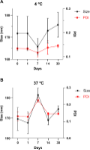
- 0.3, indicating high homogeneity and colloidal stability across the evaluated temperature conditions [41]. Maintaining stable particle size is critical, as variations in this parameter can influence surface area, alter diffusion, and affect release kinetics, ultimately compromising the pharmacokinetic
- on the specific chemical profile of the raw material used. Future investigations should incorporate multiple batches and establish correlations between chemical composition and biological activity to strengthen the translational relevance of the research. In vitro release kinetics studies are highly
- studies should directly address this correlation gap to advance the field, using dialysis membrane methods under physiological conditions to evaluate the release kinetics. Further investigations should examine the antimicrobial activity of nanocapsules against a wider range of microorganisms, particularly




Materials challenges in solid-state sensors for continuous monitoring of ions in water
Beilstein J. Nanotechnol. 2026, 17, 935–973, doi:10.3762/bjnano.17.66
- , thereby enabling high transduction gain from small adsorption events [106]. The active layer of an electrochemical electrode should provide high electrochemical activity with efficient ion and electron transport, ensuring fast charge/discharge kinetics. It must also maintain chemical stability and
- conductivity. The increased edge density and defect accessibility in FLG facilitate faster electron transfer kinetics and enhanced electrochemical activity, making it especially suitable for electrochemical sensing platforms. Bulk (multilayer) graphene, which approaches graphite-like behavior, offers excellent



Nanocarrier strategies to overcome P-glycoprotein-mediated drug resistance in cancer therapy
Beilstein J. Nanotechnol. 2026, 17, 882–921, doi:10.3762/bjnano.17.64
- active field of investigation in medical nanotechnology. Recent studies have reinforced the relevance of polymeric nanospheres and nanocapsules in the context of MDR therapy, particularly due to their tunability in terms of biodegradability, release kinetics, and capacity for surface functionalization


Light-driven ammonia electrooxidation via carbon nitride–ruthenium molecular interfaces
Beilstein J. Nanotechnol. 2026, 17, 854–862, doi:10.3762/bjnano.17.61
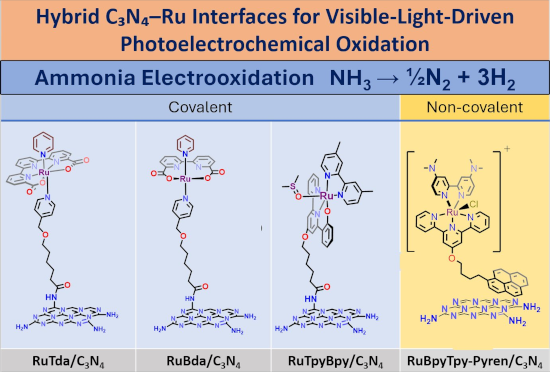
- ), Ru(V), and even Ru(VI) under forcing conditions) within a relatively narrow potential window, and because the ligand field around the ruthenium centre can be finely tuned to control the thermodynamics and kinetics of each oxidation step [20][21]. Three benchmark Ru catalysts are particularly relevant


Nanoparticle delivery systems for HIV pre-exposure prophylaxis (PrEP): advances and challenges
Beilstein J. Nanotechnol. 2026, 17, 839–853, doi:10.3762/bjnano.17.60
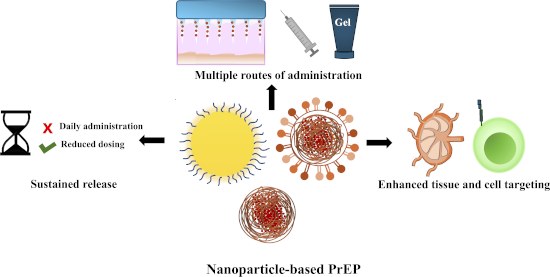
- -PrEP. They can be designed to encapsulate both hydrophobic or hydrophilic drugs, protect drugs from enzymatic degradation, and control release kinetics. Nanoparticle platforms that combine the capacity to hold a high payload of ARVs with the ability to carry it to specific sites and release it locally
- blocks. The degradation kinetics of polymer nanoparticles depends on various conditions, including the pH or the concentration of degrading enzymes. As these factors can differ between patients, they can create some variability in the pharmacokinetics between individuals [47][54]. Despite remaining


Glycerol photoelectrochemical oxidation reaction at carbon nitrides/BiVO4 materials
Beilstein J. Nanotechnol. 2026, 17, 806–817, doi:10.3762/bjnano.17.57
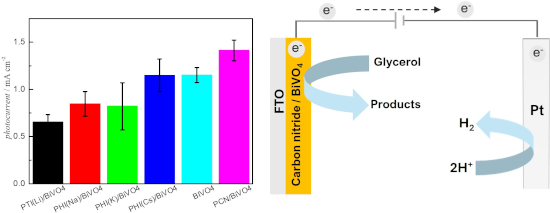
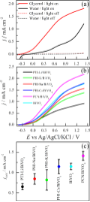
- [1]. Among the various methods of producing green-H2 [2], water photoelectrolysis [3] allows the direct use of solar energy, decreasing reliance on fossil fuels, and having potential for large-scale hydrogen production [4]. On the other hand, the challenges related to the sluggish kinetics of the
- water oxidation reaction, as well as the material stability at the anodes, must be overcome for this technology to be successfully transferred to end users [5]. To address these issues, several efforts have been made to develop efficient catalysts to improve the kinetics of the water oxidation reaction
- been pointed out as a promising material, as it presents high chemical stability and a wide absorption range of solar radiation [8][9][10]. To overcome the limitations associated with the low electrical conductivity of BiVO4, sluggish surface kinetics and the recombination of electron–hole pairs [11




Oxidative atmosphere-driven formation of single-phase spinel CuRh2O4 nanofibers for alkaline water oxidation
Beilstein J. Nanotechnol. 2026, 17, 737–743, doi:10.3762/bjnano.17.50
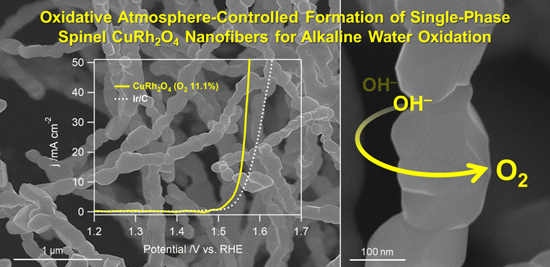
- to IrO2 (1.53 V vs RHE). Furthermore, the accelerated reaction kinetics of the Cu–Rh–O series, which contribute to its enhanced intrinsic OER activity, were confirmed by Tafel analysis (η vs log j, where η represents the overpotential and j is the GSA-normalized current density) derived from the




Environmental applications of silver nanoparticles: state-of-the-art review and emerging trends
Beilstein J. Nanotechnol. 2026, 17, 697–736, doi:10.3762/bjnano.17.49
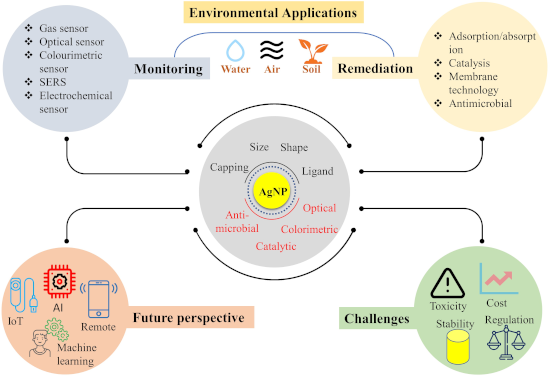
- pseudo-first-order reaction kinetics [25]. The addition of AgNPs to a matrix may improve their efficiency in removing various contaminants via adsorption mechanisms, which can be ionic or covalent, depending on the nanocomposite surface chemistry [26]. In a study, Ag-decorated reduced graphene oxide was
- , donating electrons that lower the activation energy barrier for hydride ion transfer to the substrate. This process follows pseudo-first-order kinetics, with smaller particle sizes (higher surface-to-volume ratio) and electron-rich surfaces (modulated by capping agents) yielding higher apparent rate
- elastica) synthesised AgNPs for the adsorption of gases (SO2 and NO2). The study found that 98% of SO2 removal was achieved with pseudo-second-order reaction kinetics [148]. A study utilised AgNP-incorporated cotton fabrics for removing bioaerosols from air conditioners [149]. The results showed a


Molecular engineering of individual dye-based nanoparticle photostability for ultrabright two-photon fluorescence
Beilstein J. Nanotechnol. 2026, 17, 688–696, doi:10.3762/bjnano.17.48
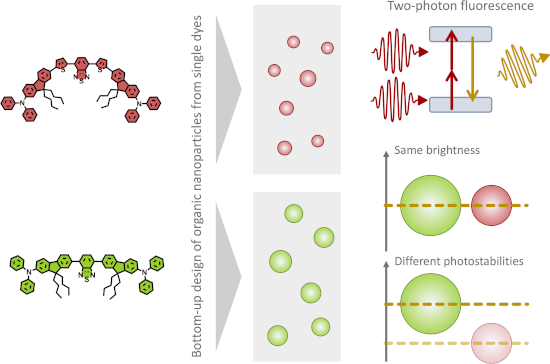
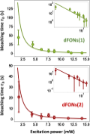
- Dye 2 demonstrated an approximately 14 times higher 2P absorption cross section compared to dye 1. The higher absorption probability in dFONs(2) implies that photobleaching should occur faster than in dFONs(1). Individual nanoparticle bleaching kinetics were thus monitored by directly recording


Two-step laser synthesis of Ag@TiO2 nanomaterials for the photocatalytic degradation of rhodamine B
Beilstein J. Nanotechnol. 2026, 17, 622–634, doi:10.3762/bjnano.17.43
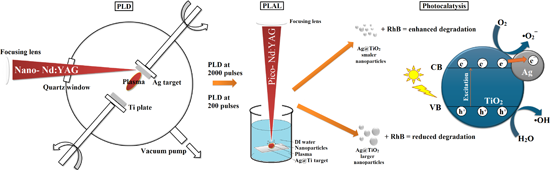
- nanoparticles. Ag nanoparticles can enhance light absorption due to plasmonic effects. Together, these effects contribute to the improved photocatalytic performance observed in this study [28]. Photodegradation of rhodamine B with Ag@TiO2 (200p and 2000p) NPs To examine the kinetics of continuous photocatalytic


Recent progress in enhancing built-in electric fields of perovskite solar cells via junction engineering
Beilstein J. Nanotechnol. 2026, 17, 602–621, doi:10.3762/bjnano.17.42



Synthesis of Cu–Mo/TiO2 and Co–Mo/TiO2 photocatalysts for the efficient degradation of organic pollutants in water
Beilstein J. Nanotechnol. 2026, 17, 559–570, doi:10.3762/bjnano.17.37
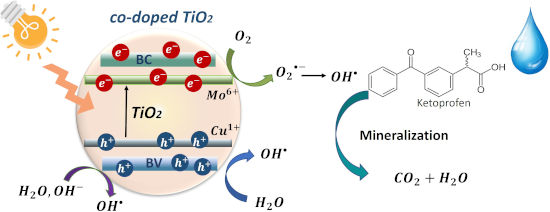
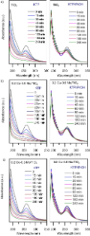
- properties were determined. Finally, the photocatalytic behavior of the materials was studied in the photocatalytic oxidation of ketoprofen (KTP) under UV irradiation, with the aim of studying the charge-transfer improvement. Ketoprofen degradation, adsorption, kinetics, and reaction pathways have been



Electrochemical determination of ciprofloxacin using a MIL-101/reduced graphene oxide-modified electrode
Beilstein J. Nanotechnol. 2026, 17, 541–554, doi:10.3762/bjnano.17.35
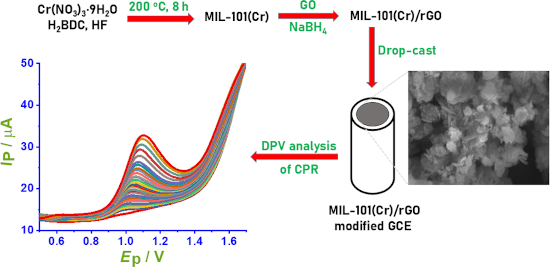
- oxidation peak is observed at the bare GCE, indicating sluggish electron-transfer kinetics. Upon modification with MIL-101 or rGO, the anodic peak current increases noticeably, reflecting improved adsorption and conductivity. The obtained peak potentials (Ep) for GCE, GO/GCE, rGO/GCE, MIL-101/GCE, MIL-101


Defects and defect-mediated engineering of two-dimensional materials: challenges and open questions
Beilstein J. Nanotechnol. 2026, 17, 454–488, doi:10.3762/bjnano.17.31
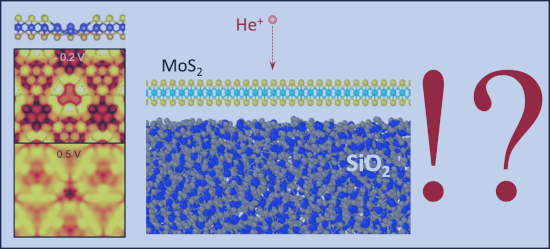
- beyond a “trial and error” approach. What are the oxidation mechanisms and kinetics of defective surfaces in 2D materials? Substitutional oxygen defects are present in 2D materials synthesized via chemical vapor deposition (CVD) [51]. This can be a result of oxide precursors, which are frequently used
- . Despite the high reactivity of larger S vacancy clusters, several challenges remain in describing the oxidation kinetics. O2 is bound weakly to TMD surfaces with a binding energy of ≈0.14 eV [55][63][64][65]. Ab initio molecular dynamics (MD) simulations show that O2 is therefore mobile on the pristine
- vacancies exhibit reduced effective charges and are more chemically active. This enables barrier-less reactions of O2, explaining the rapid oxidation at larger vacancy clusters. Additional uncertainty in modelling oxidation kinetics arises from the possibility of changes in the spin state of the O2 molecule





Nanocarrier-integrated multilayer films produced by 3D printing for improved skin adhesion and curcumin photostability
Beilstein J. Nanotechnol. 2026, 17, 440–453, doi:10.3762/bjnano.17.30
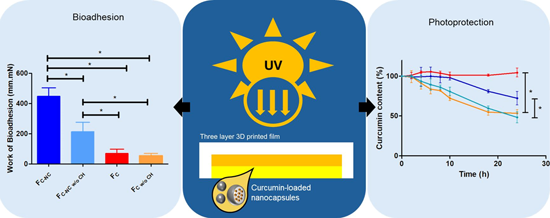
- nanocarrier incorporation alone, is the primary determinant of enhanced photostability. A limitation of this study is the absence of in vitro release kinetics and skin permeation data, which are essential to fully characterise the biopharmaceutical performance of the films. These experiments were not required
- characterise drug release kinetics and skin permeation/penetration behaviour, which will be essential for advancing this printed multilayer system toward broader application in topical drug-delivery research. (A–C) Rheological behaviour with oscillation frequency data for storage (G′), loss modulus (G″), and


Biomimetic nanoparticles in cancer photodynamic therapy: a review of targeted delivery systems and therapeutic outcomes
Beilstein J. Nanotechnol. 2026, 17, 396–422, doi:10.3762/bjnano.17.27
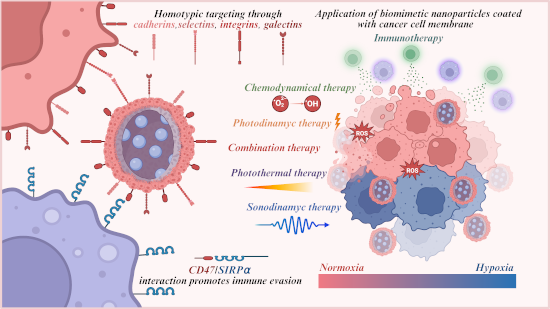
- limited functional capabilities. This realization has driven the development of additional surface modifications aimed at improving targeting specificity to particular cells or tissues, enhancing stability in the bloodstream, controlling drug release kinetics, and tailoring nanoparticle systems to meet
- capacities ensure adequate PS payloads for sufficient ROS generation at tumor sites, release kinetics govern bioavailability within the tumor microenvironment, spatiotemporal control of photoactivation, and minimization of off-target phototoxicity during systemic circulation. Addressing tumor hypoxia: BNP


Polycatecholamine nanocoatings on stainless steel: the effect on attachment of human fibroblasts and platelets
Beilstein J. Nanotechnol. 2026, 17, 365–380, doi:10.3762/bjnano.17.25
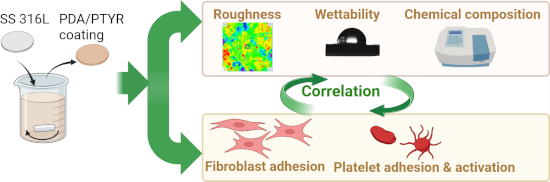
- multiplied, as shown in Figure 8b. Similar to our study, surface Ra affecting the initial threshold has been reported by other authors [38]. It is known that both nano/microroughness and wettability of the material surface can influence cell adhesion since these parameters affect the adsorption kinetics of




Advancing nanolithography: a comprehensive review of materials for local anodic oxidation with AFM
Beilstein J. Nanotechnol. 2026, 17, 275–291, doi:10.3762/bjnano.17.19
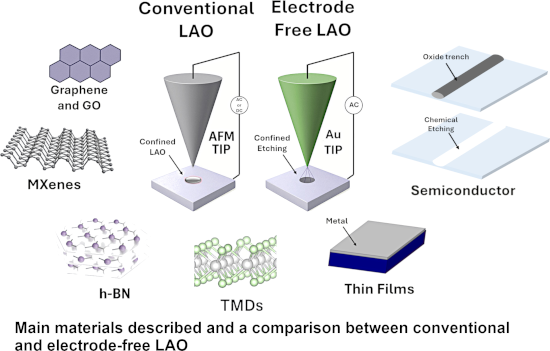
- heterostructures. Semiconductors such as silicon and silicon carbide remain foundational due to their controllable oxidation kinetics, while metals like titanium and aluminum offer opportunities for plasmonic and optical applications. 2D materials, including graphene, graphene oxide, and transition metal
- features. Different materials exhibit varying oxidation kinetics, conductivity, and susceptibility to environmental conditions. For example, TMDs such as MoS2 and WSe2 are especially sensitive to phonon scattering, which significantly influences their thermal conductivity, electrical transport properties


Gold nanoparticle-decorated reduced graphene oxide as a highly effective catalyst for the selective α,β-dehydrogenation of N-alkyl-4-piperidones
Beilstein J. Nanotechnol. 2026, 17, 218–238, doi:10.3762/bjnano.17.15
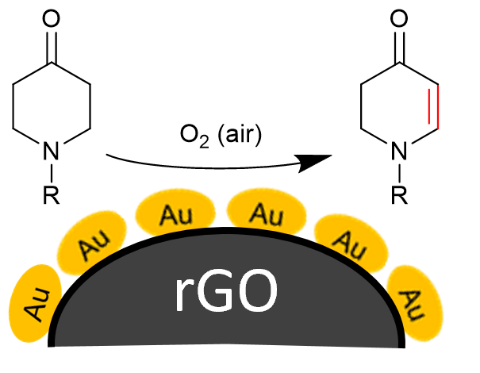
- environment for catalyst dispersion, thereby enhancing reaction kinetics. This is likely due to the residual oxygen content of rGO (Supporting Information File 1, Figure S6), which enables the effective anchoring of AuNPs and results in higher catalytic efficiency. In addition, the AC-based composites tend to


Safe and sustainable by design with ML/AI: A transformative approach to advancing nanotechnology
Beilstein J. Nanotechnol. 2026, 17, 176–185, doi:10.3762/bjnano.17.11
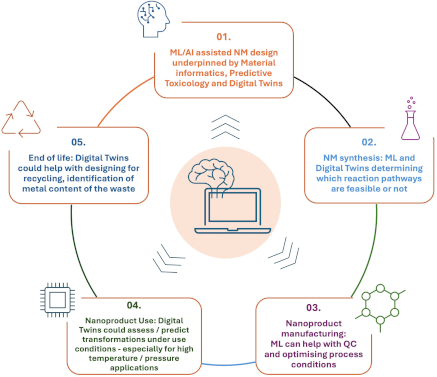
- , Bayesian models and probabilistic methods have become essential for handling incomplete or fluctuating datasets, allowing analysts to quantify the uncertainty around key factors such as release rates, exposure scenarios, and degradation kinetics [53]. These advanced statistical techniques yield more


Influence of surface characteristics on the in vitro stability and cell uptake of nanoliposomes for brain delivery
Beilstein J. Nanotechnol. 2026, 17, 139–158, doi:10.3762/bjnano.17.9
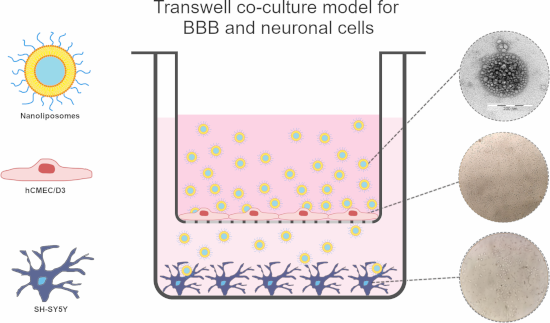
- . However, optimizing tight junctions to mirror human BBB characteristics remains a challenge [10][11]. On the other hand, the SH-SY5Y neuroblastoma cell line, which can further differentiate into neuronal-like morphologies, is often used to evaluate nanodelivery systems uptake kinetics and drug efficacy




Development and in vitro evaluation of liposomes and immunoliposomes containing 5-fluorouracil and R-phycoerythrin as a potential phototheranostic system for colorectal cancer
Beilstein J. Nanotechnol. 2026, 17, 97–121, doi:10.3762/bjnano.17.7
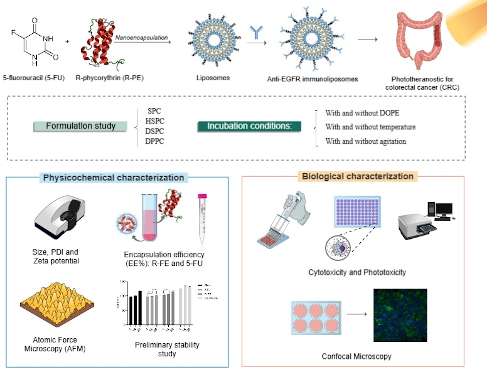
- previously described [24]. 2.3.4.3 Release profile of R-PE and 5-FU. The release profile of R-PE and 5-FU from liposomes and immunoliposomes was analyzed using the Korsmeyer–Peppas (Equation 3) model, commonly employed in drug release kinetics studies, using the DDSolver software [24]. The Korsmeyer–Peppas