Search results
Search for "laser" in Full Text gives 905 result(s) in Beilstein Journal of Nanotechnology. Showing first 200.
Synthesis and characterization of RF-sputtered ZnTe/Cu2−xTe thin films for solar cell applications
Beilstein J. Nanotechnol. 2026, 17, 1016–1027, doi:10.3762/bjnano.17.69
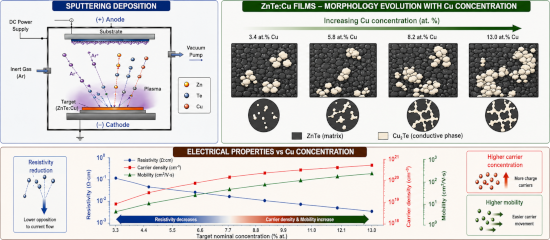
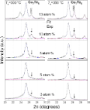
- ) diffractometer with Co Kα radiation (λ = 1.7889 Å). Raman spectra were obtained in a micro-Raman system (Labram, Dilor) with a 20 mW He–Ne laser (λ = 632.8 nm) focused through a 50× objective, resulting in a spot size of approximately 2 µm. Neutral density filters were employed to minimize local heating effects



Nanocarrier strategies to overcome P-glycoprotein-mediated drug resistance in cancer therapy
Beilstein J. Nanotechnol. 2026, 17, 882–921, doi:10.3762/bjnano.17.64
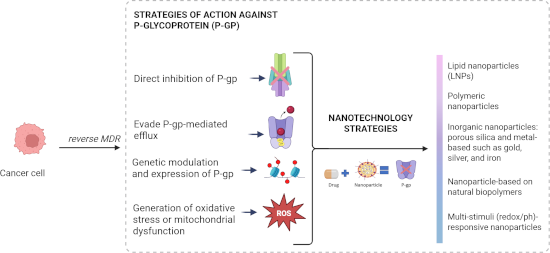
- internalization and nuclear localization compared to the free drug, even prior to external activation. Upon activation with an 808 nm near-infrared (NIR) laser, a localized photothermal effect raises the tumor temperature by over 15 °C, triggering rapid DOX release and inducing cancer cell death without harming


Restorative potential of laser-synthesized silver nanoparticles with Salvia officinalis for periodontal disease treatment: an in vitro study
Beilstein J. Nanotechnol. 2026, 17, 781–795, doi:10.3762/bjnano.17.55
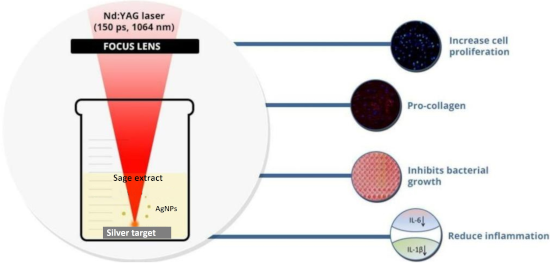
- local damage, systemic associations highlight the urgent need for innovative therapies. Herein, we present an eco-friendly synthesis of silver nanoparticles (AgNPs) by picosecond pulsed laser ablation in liquid (PLAL), using Salvia officinalis aqueous extract (sage extract) as both medium and stabilizer
- . AgNPs were synthesized at two laser pulse energies (2 and 6 mJ), in sage extract and deionized water, and characterized by dynamic light scattering, transmission electron microscopy, and inductively coupled plasma optical emission spectroscopy. Synthesis at 6 mJ in sage extract (SageAgNPs6mJ) yielded
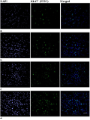
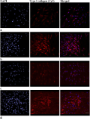
- inflammation. This dual antibacterial and regenerative action demonstrates the high potential of sage-assisted PLAL-synthesized AgNPs as a safe, sustainable strategy for periodontal disease treatment. Keywords: cell proliferation; periodontal disease; pulsed laser ablation in liquid (PLAL); Salvia officinalis



Substrate-dependent pore formation in molybdenum disulfide monolayers under ion irradiation
Beilstein J. Nanotechnol. 2026, 17, 769–780, doi:10.3762/bjnano.17.54
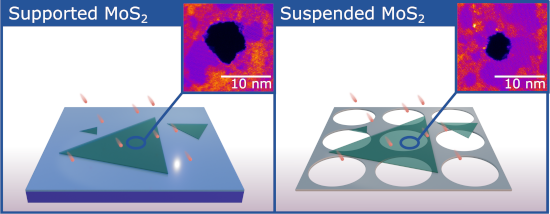
- and PL spectroscopy were performed using a WITec alpha300 RA confocal Raman spectrometer. In all instances, a green laser (λ = 532 nm) with a maximum power of 1 mW was used. For Raman spectra, a 1800 L·mm−1 grating was used, while a 300 L·mm−1 grating was used for PL recording. (a–d) False-color STEM


Environmental applications of silver nanoparticles: state-of-the-art review and emerging trends
Beilstein J. Nanotechnol. 2026, 17, 697–736, doi:10.3762/bjnano.17.49
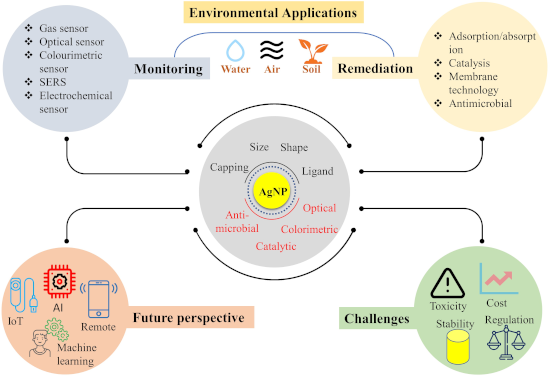
- sensing, allowing for a design tailored to a specific application. For example, PVP-capped AgNPs were used to selectively detect Hg2+ in the presence of methionine as a linker molecule [39]. Laser ablation, evaporation–condensation, and sputtering fall under physical syntheses and offer the advantage of


Molecular engineering of individual dye-based nanoparticle photostability for ultrabright two-photon fluorescence
Beilstein J. Nanotechnol. 2026, 17, 688–696, doi:10.3762/bjnano.17.48
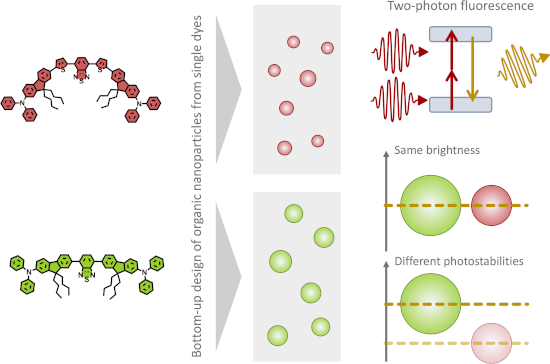
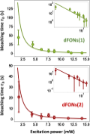
- from 10 to 100 s, depending on the nature of the dFONs and their molecular building blocks [18][19]. Exploring the photostability of dFONs is especially relevant for 2P-excited SPT techniques, which require very high laser intensities, significantly increasing photobleaching by increasing the
- the piezoelectric stage with 100 nm steps and a 10 ms integration time per pixel. Laser excitation powers were maintained at 1.7 mW and 1.6 mW for dFONs(1) and dFONs(2), respectively. A typical scan is shown in Figure 2a, where several point spread functions (PSFs) are displayed corresponding to
- between the distributions. This consistent brightness across both dFONs validates the bottom-up synthesis design. Observation of the saturation and two-photon absorption cross section Following the identification of individual nanoparticles, the laser focus was then maintained on each nanoparticle while


Two-step laser synthesis of Ag@TiO2 nanomaterials for the photocatalytic degradation of rhodamine B
Beilstein J. Nanotechnol. 2026, 17, 622–634, doi:10.3762/bjnano.17.43
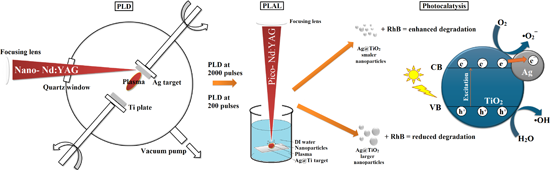
- Marija Kovacevic Milos Tosic Rafaela Radicic Vladimir Rajic Niksa Krstulovic Milos Momcilovic Sanja Zivkovic Vinča Institute of Nuclear Sciences-National Institute of the Republic of Serbia, University of Belgrade, Mike Petrovića Alasa 12-14, 11351 Belgrade, Serbia Centre for Advanced Laser
- Techniques, Institute of Physics, Bijenička Cesta 46, 10000 Zagreb, Croatia 10.3762/bjnano.17.43 Abstract This study presents a novel, chemical-free approach for the synthesis of Ag-modified TiO2 (Ag@TiO2) nanoparticles by combining the two laser-based ablation techniques pulsed laser deposition (PLD) and
- pulsed laser ablation in liquids (PLAL). Initially, silver was ablated using 200 and 2000 pulses and deposited onto titanium targets via PLD. Subsequently, these modified targets were submerged in water and processed using PLAL to generate the final nanomaterials. Characterization through HRTEM, EDS, and


Probing tribological evolution in atomically thin MoS2 at different scales
Beilstein J. Nanotechnol. 2026, 17, 586–597, doi:10.3762/bjnano.17.40
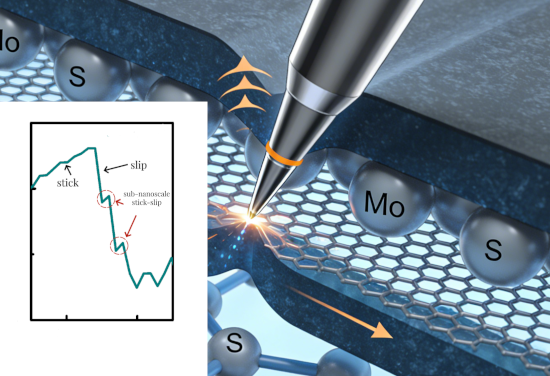
- mode using silicon probes (PPP-LFMR, Nanosensors) with a normal spring constant of 0.2 N·m−1 and a tip radius of ≈8 nm. Raman spectra were collected using a 533 nm laser (0.5 mW power) to avoid sample damage. The surface roughness (Ra) values of MoS2 were measured from the corresponding topographic


Impacts of annealing on structural and photophysical properties of zinc phthalocyanine adsorbed on graphene
Beilstein J. Nanotechnol. 2026, 17, 576–585, doi:10.3762/bjnano.17.39
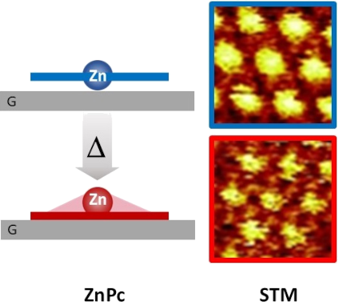
- ), %) or in absorption OD = −log10(T/Treference). Raman scattering was measured together with residual fluorescence using a 633 nm excitation (60 μW·cm−2) from a stabilized laser (Cobolt 08-NLD series, Hubner Photonics). This excitation light was line filtered (LL01-633, Semrock) and focused on the sample


Laser–material interactions in liquids for the synthesis of nanomaterials: current status and perspectives
Beilstein J. Nanotechnol. 2026, 17, 571–575, doi:10.3762/bjnano.17.38

- of Wuppertal, 42119 Wuppertal, Germany Department of Materials Science and Engineering, University of Virginia, 395 McCormick Road, Charlottesville, Virginia 22904-4745, USA 10.3762/bjnano.17.38 Keywords: colloidal nanoparticles; green synthesis of nanoparticles; laser ablation in liquids; laser
- –matter interactions; laser processing in liquids; In the ever-evolving landscape of materials science and nanotechnology, laser synthesis and processing of colloids (LSPC) has emerged [1] as a powerful and versatile technique for producing high-purity, surfactant-free nanoparticles from a wide range of
- . The field of LSPC encompasses several techniques with distinct target configurations and laser irradiation regimes. Irradiation of a solid target submerged in a liquid with intense laser pulses is referred to as laser ablation in liquids (LAL) [16], an established technique for the efficient
Upcycling agroindustrial waste into graphene oxide supports for gold nanoparticles: toward sustainable nanomaterials
Beilstein J. Nanotechnol. 2026, 17, 489–504, doi:10.3762/bjnano.17.32
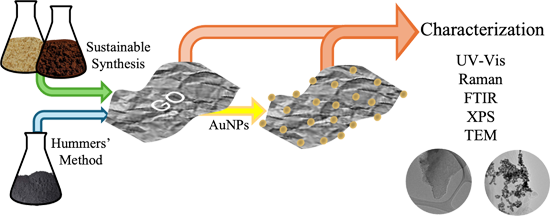
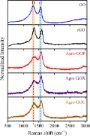
- spectrometer coupled to an Olympus BX41 optical microscope. The excitation source was a 532 nm solid-state laser (nominal output 28 mW) operated at 25% power using a 20× objective to minimize possible thermal effects on the samples. Spectra were recorded in the 500–3050 cm−1 range using a grating of 1800 mm−1



Nanocarrier-integrated multilayer films produced by 3D printing for improved skin adhesion and curcumin photostability
Beilstein J. Nanotechnol. 2026, 17, 440–453, doi:10.3762/bjnano.17.30
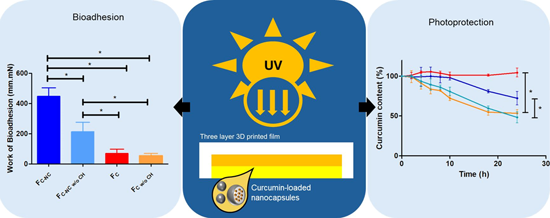
- laser sintering, binder jetting, semi-solid extrusion (SSE), and direct powder extrusion [3][4][5]. SSE is a method in which a semi-solid material is placed into a syringe and continuously extruded layer by layer onto a smooth surface until the entire object is created. The semi-solid material itself


Biomimetic nanoparticles in cancer photodynamic therapy: a review of targeted delivery systems and therapeutic outcomes
Beilstein J. Nanotechnol. 2026, 17, 396–422, doi:10.3762/bjnano.17.27
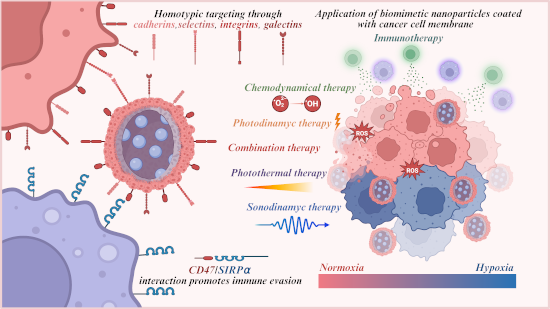
- regions within the tumors. In 4T1 cells exposed to NIR laser irradiation, membrane-coated nanoparticles generated singlet oxygen with threefold greater efficiency compared to non-coated nanoparticles. In BALB/c mouse models bearing 4T1 tumors, the membrane-coated nanoparticles preferentially accumulated


Polycatecholamine nanocoatings on stainless steel: the effect on attachment of human fibroblasts and platelets
Beilstein J. Nanotechnol. 2026, 17, 365–380, doi:10.3762/bjnano.17.25
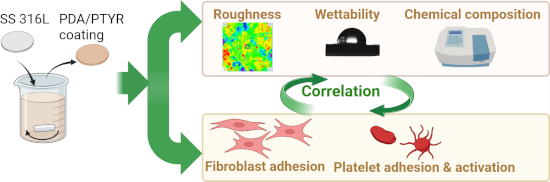
- controlled nanoscale surface features in the development of next-generation bioactive coatings for medical implants and blood-contacting devices. Experimental Materials and methods Stainless steel samples Stainless steel 316L discs (14 mm in diameter, 0.8 mm in thickness) were laser-cut by STOMILEX (Poland




Interconnection morphology effects on the radio frequency response of carbon nanotube sponges
Beilstein J. Nanotechnol. 2026, 17, 343–351, doi:10.3762/bjnano.17.23
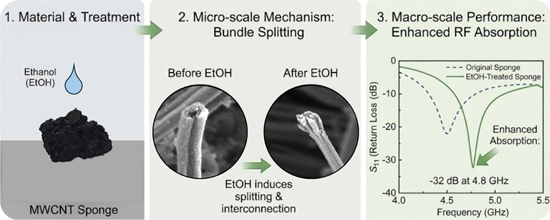
- using a laser with a wavelength of 532 nm and a power of approximately 15 mW. The photon energy was calibrated using a Si reference. The measurements were performed using a monochromator with 1800 lines·mm−1. The laser power was optimised to prevent laser-induced damage. XPS surface analysis studies



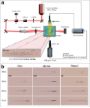
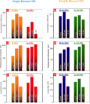
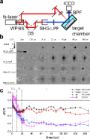
Beam shaping techniques for pulsed laser ablation in liquids: Unlocking tunable control of nanoparticle synthesis in liquids
Beilstein J. Nanotechnol. 2026, 17, 309–342, doi:10.3762/bjnano.17.22
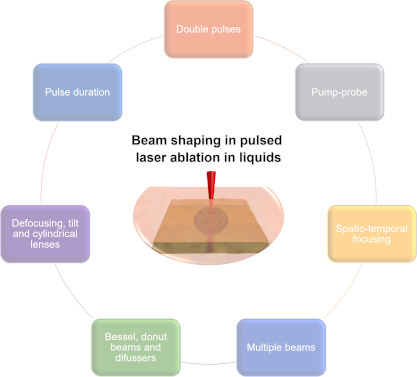
- 10.3762/bjnano.17.22 Abstract Nanoparticle synthesis via pulsed laser ablation in liquids has gained prominence as a versatile and environmentally friendly approach for producing ligand-free colloids with controlled composition, size, and morphology. While pulsed laser ablation in liquids offers
- unparalleled advantages in terms of nanoparticle purity and material versatility, enhancing the size control and productivity require modifications of the standard pulsed laser ablation in liquids technique, such as the incorporation of beam shaping techniques. Recent developments in spatial and temporal beam
- shaping have demonstrated their potential to revolutionise pulsed laser ablation in liquids by enabling more precise energy deposition and modified nanoparticle production dynamics. This review highlights the critical role of beam shaping, encompassing spatial shaping of the beam to influence laser







Fast vortex dynamics and relaxation times in NbRe-based heterostructures
Beilstein J. Nanotechnol. 2026, 17, 292–302, doi:10.3762/bjnano.17.20
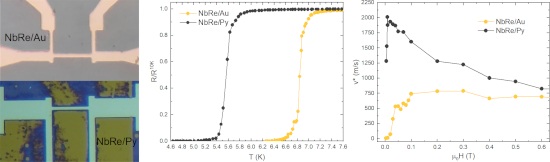
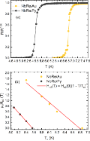
- optical lithography using a direct laser writer exposure followed by an ion-etching procedure. This technique results in microstrips with straight edges, ensuring a uniform width, w, of the device [39]. The geometrical values of the microstrips are reported in Table 1. Electrical contacts were realized


Multilayered hyperbolic Au/TiO2 nanostructures for enhancing the nonlinear response around the epsilon-near-zero point
Beilstein J. Nanotechnol. 2026, 17, 251–261, doi:10.3762/bjnano.17.17
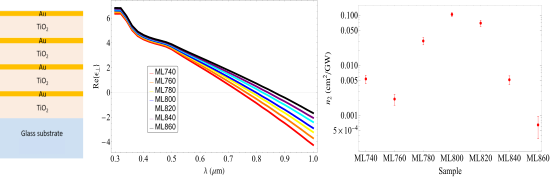
- laser, enabling us to characterize both the refractive and absorptive contributions to the nonlinear response. Due to the high pulse repetition rate inherent to Ti:sapphire systems and the presence of linear absorption in the samples, cumulative pulse-to-pulse thermal effects may be present. A modified
- version of the z-scan technique that allowed us to separate the electronic from the thermal contribution was used. A clear enhancement of the nonlinear response was observed for the sample with an ENZ point around the laser wavelength 800 nm with a nonlinear refractive index of n2 = 0.103 ± 0.006 cm2·GW−1
- tune the material to the laser wavelength rather than the other way around. We make a characterization of the linear optical properties of the samples and present a study of the nonlinear optical properties. For the linear characterization of the samples, we study the absorption using spectrophotometry


Gold nanoparticle-decorated reduced graphene oxide as a highly effective catalyst for the selective α,β-dehydrogenation of N-alkyl-4-piperidones
Beilstein J. Nanotechnol. 2026, 17, 218–238, doi:10.3762/bjnano.17.15


Structure-dependent thermochromism of PAZO thin films: theory and experiment
Beilstein J. Nanotechnol. 2026, 17, 186–199, doi:10.3762/bjnano.17.12
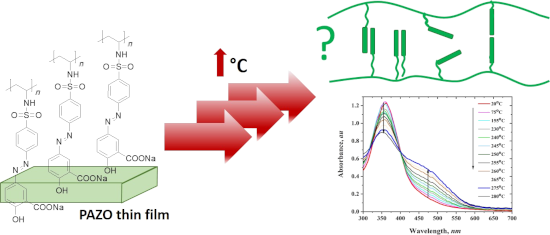
- prepared for the study. Two of them underwent thermal treatment at 200 °C for 1 h, resulting in the emergence of a new absorption band with a peak in the 460–475 nm range. Birefringence was then induced in pairs of samples using 444 and 532 nm laser illumination. Following sample treatment and laser
- under laser illumination at 532 nm. To emphasize these changes, we plotted in the Figure 4D the spectra of the untreated PAZO sample and the thermally treated one. Quantitative interpretation of the obtained P and S absorption spectra can be done by calculating an order parameter, Sorder, from the
- started approximately 1 h after the samples had cooled down to r.t. The corresponding data are presented in Figure 5. From the results it is evident that thermal treatment does not enhance the birefringence (∆n) when the pump laser wavelength is 444 nm. In contrast, a significant improvement is observed


Influence of surface characteristics on the in vitro stability and cell uptake of nanoliposomes for brain delivery
Beilstein J. Nanotechnol. 2026, 17, 139–158, doi:10.3762/bjnano.17.9
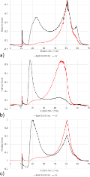
- outlet of the MWD detector was connected to a DAWN 8+ HELEOS II MALS operating with a 658 nm laser (Wyatt Technology Europe). A DLS (Malvern Zetasizer Nano-S, UK) with an installed quartz flow cell (ZEN0023) was also used in this study in flow mode. Refractive index (RI) and absorption parameters were
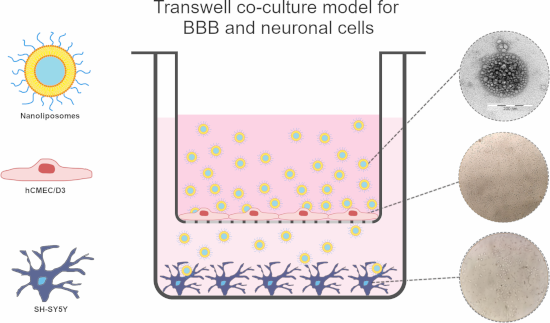
- acidic environment (for visualization of endocytic pathways). Further, the cells were stained and visualized as described above. Internalization studies of nanoliposomes in hCMEC/D3 cells by confocal microscopy Confocal laser scanning microscopy (Carl Zeiss, Axiovert 200M Inverted Microscope) was
- ± 0.81 to 140.20 ± 0.95 nm (PDI < 0.256). The data in the literature suggests that DLS is widely employed for sizing liposomes and other colloidal materials. It operates by detecting laser light scattered due to the Brownian motion of particles or macromolecules in suspension, with the scattering




Reduced graphene oxide paper electrode for lithium-ion cells – towards optimized thermal reduction
Beilstein J. Nanotechnol. 2026, 17, 24–37, doi:10.3762/bjnano.17.3
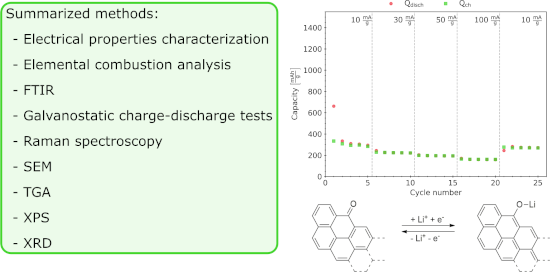
- samples per material, that is, M300, T400, T600, and T800. Raman spectroscopy The structural properties of the rGO paper sheets were studied with Raman spectroscopy (InVia Renishaw spectrometer). The spectra were collected with three accumulations, a 10 s exposure time, and 1% laser power (laser



Quantitative estimation of nanoparticle/substrate adhesion by atomic force microscopy
Beilstein J. Nanotechnol. 2026, 17, 1–14, doi:10.3762/bjnano.17.1

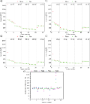
- cantilever deflection as well as torsional spring constant [39]. However, errors can arise due to the sensitivity of the PSPD to laser alignment and a few micrometers offset from the tip shear center, leading to erroneous determination of the cantilever torsion loop offset. As a result, there is very low



Internal 3D temperature mapping in biological systems using ratiometric light-sheet imaging and lipid-coated upconversion nanothermometers
Beilstein J. Nanotechnol. 2025, 16, 2306–2316, doi:10.3762/bjnano.16.159
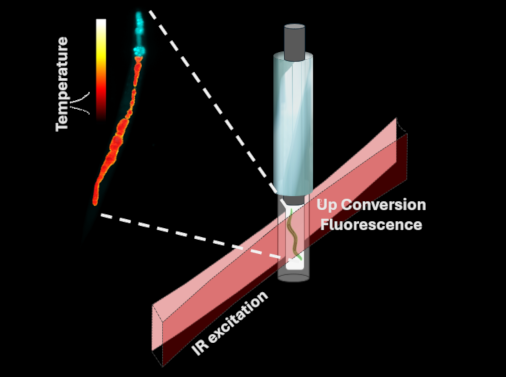
- NIR excitation at 980 nm was provided by a fiber Bragg grating-stabilized laser (JDSU, 2900 Series), with collimated light focused onto the back focal plane of a 4×/0.13 NA excitation objective (Nikon, PlanFluor) using a 250 mm cylindrical lens (Thorlabs, LJ1267RM-A). The excitation objective
- metabolism to organ-specific stress responses. Characteristic UC fluorescent emission spectra of NaYF4:Er3+/Yb3+ in the green region when irradiated with 980 nm laser light. Insets: UC process scheme (right). Schematic representation of the energy transfer between Yb3+ and Er3+ ions and the UC emission in an


Visualizing nanostructures in supramolecular hydrogels: a correlative study using confocal and cryogenic scanning electron microscopy
Beilstein J. Nanotechnol. 2025, 16, 2274–2284, doi:10.3762/bjnano.16.156
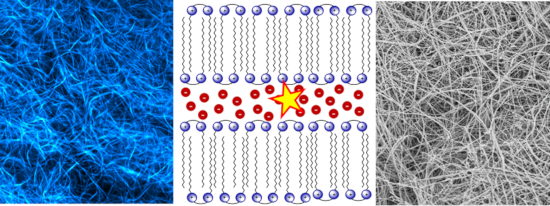
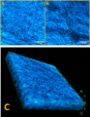
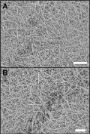
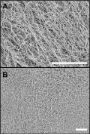
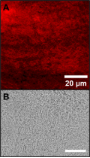
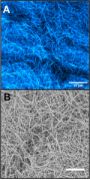
- ) fluorophores were imaged using confocal laser scanning microscopy (CLSM) of fully solvated gels and cryogenic scanning electron microscopy (cryo-SEM) was used to observe the corresponding xerogels. The DPP@Gel systems exhibit strong fluorescence and are effectively imaged using CLSM, with fibre morphologies
- even then, excitation laser intensities had to be operated at or near their maximum fluence to obtain images with good signal-to-noise ratio. This elevated laser power then contributed to a certain extent of fluorophore bleaching, making effective imaging even more challenging. Despite these measures
- . The significantly stronger fluorescence emission of the DPP derivatives under moderate laser excitation (a low percentage of the maximum possible irradiance) enabled individual fibrillar structures to be visualized clearly without the need to compress the gel between glass slides, thus preserving the