Search results
Search for "machine learning" in Full Text gives 61 result(s) in Beilstein Journal of Nanotechnology.
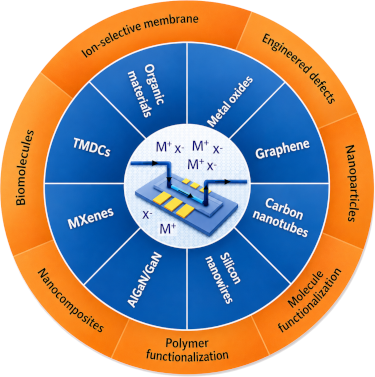
Materials challenges in solid-state sensors for continuous monitoring of ions in water
Beilstein J. Nanotechnol. 2026, 17, 935–973, doi:10.3762/bjnano.17.66


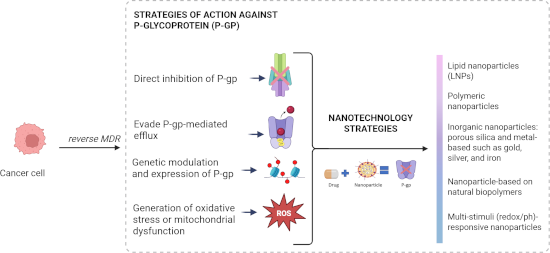
Nanocarrier strategies to overcome P-glycoprotein-mediated drug resistance in cancer therapy
Beilstein J. Nanotechnol. 2026, 17, 882–921, doi:10.3762/bjnano.17.64


Cross-scale design of chemosensor arrays: from molecular self-assembly in water to paper-based devices for metal ion detection
Beilstein J. Nanotechnol. 2026, 17, 828–838, doi:10.3762/bjnano.17.59
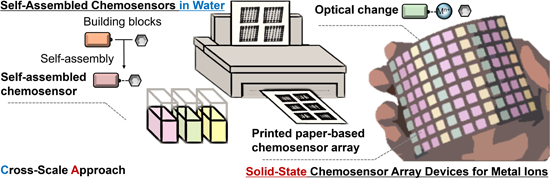
- colorimetric responses in the presence of interferents show non-linearity. Therefore, a powerful machine-learning method, SVM, was employed to build a linear calibration line from datasets constructed by color channels. Spike-and-recovery tests toward Zn2+ and Cu2+ demonstrated reliable analytical performance


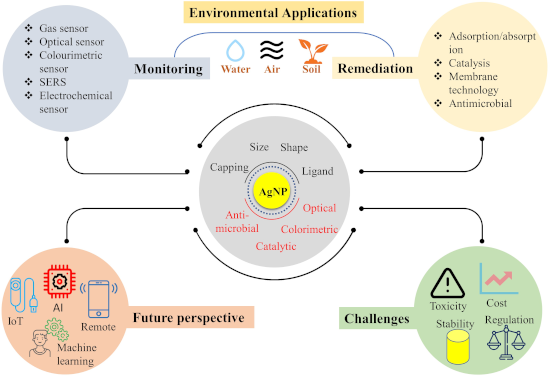
Environmental applications of silver nanoparticles: state-of-the-art review and emerging trends
Beilstein J. Nanotechnol. 2026, 17, 697–736, doi:10.3762/bjnano.17.49


afspm: A framework for manufacturer-agnostic automation in scanning probe microscopy
Beilstein J. Nanotechnol. 2026, 17, 653–667, doi:10.3762/bjnano.17.45
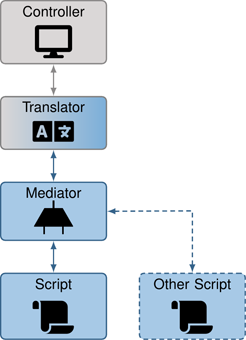
- classified surface structure, detecting atoms [5], molecules [6], or defects of interest [7][8]. Even the design of experiments has been researched, using statistics to drive decisions during the experiment [9][10][11][12]. Active learning, where a machine learning algorithm’s internal model is updated
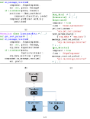
- the method “find_positions” invoking a pre-trained machine learning classifier, or predefined image processing logic. The determined positions are sent over IPC to the experiment script (“[experiment]” in Figure 7c), which, upon receipt, stores them in an internal data structure for later use. This




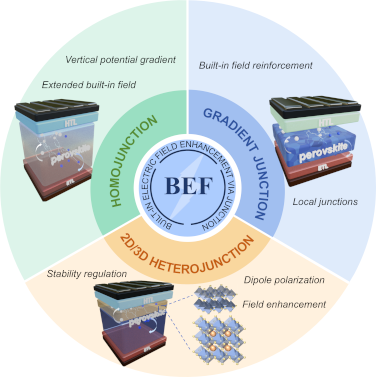
Recent progress in enhancing built-in electric fields of perovskite solar cells via junction engineering
Beilstein J. Nanotechnol. 2026, 17, 602–621, doi:10.3762/bjnano.17.42



Laser–material interactions in liquids for the synthesis of nanomaterials: current status and perspectives
Beilstein J. Nanotechnol. 2026, 17, 571–575, doi:10.3762/bjnano.17.38

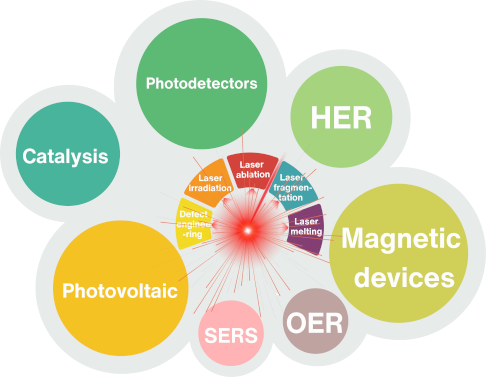
- melting to explosive fragmentation of Au nanoparticles under picosecond laser irradiation in water [42]. Further advances in LSPC can be facilitated by data-driven machine learning approaches, which provide new pathways for optimizing synthesis parameters toward targeted size, composition, phase, and
Defects and defect-mediated engineering of two-dimensional materials: challenges and open questions
Beilstein J. Nanotechnol. 2026, 17, 454–488, doi:10.3762/bjnano.17.31
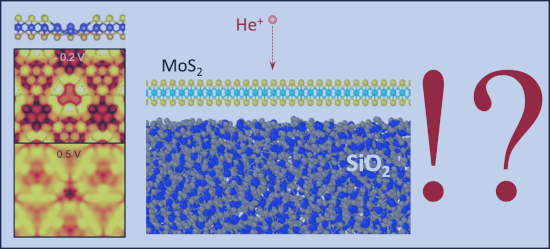
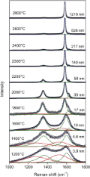
- been computationally prohibitively costly, but modern machine learning models have enabled such simulations for non-resonant Raman experiments. Therefore, the great challenge is the development of higher-precision measurements utilizing nano-Raman spectroscopy (see Figure 3). When nano-Raman is
- density and their random distribution, which makes it computationally extremely demanding to determine structural dynamics, whether from molecular dynamics or from harmonic approximation plus finite displacements. This can nowadays be overcome by using machine learning interatomic potentials (MLIPs
- (first-order) change in the electronic susceptibility (or polarizability). Similar to machine learning (ML) models for energies, one can also build ML models for polarizability [116][117][118]. The main difference is that Raman scattering is described by a second-rank tensor, which depends on the





Nanoinformatics: spanning scales, systems and solutions
Beilstein J. Nanotechnol. 2026, 17, 423–427, doi:10.3762/bjnano.17.28
- : artificial intelligence; in silico approaches; machine learning; nanoinformatics; nanomaterials functionality; nanotoxicity; sustainability; Nanoinformatics (as an offshoot of chemoinformatics) refers to the combination of physical chemistry and materials theory with in silico approaches to address key
- emergence of artificial intelligence and machine learning approaches, both causal and generative, are opening up new opportunities for exploring the materials and chemical space to develop new as yet undiscovered nanomaterials, for optimising in parallel the functionality, safety and sustainability of
- nanomaterials physicochemical properties, structural features, and biomolecule interactions using both physics-based and machine-learning (ML) approaches; (ii) prediction of nanomaterials toxicity including development of novel toxicity-related descriptors; (iii) solution-focussed approaches applying advanced

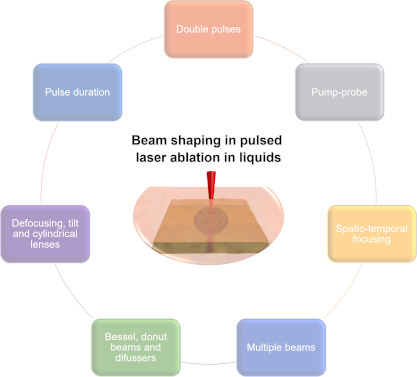
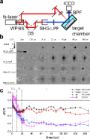
Beam shaping techniques for pulsed laser ablation in liquids: Unlocking tunable control of nanoparticle synthesis in liquids
Beilstein J. Nanotechnol. 2026, 17, 309–342, doi:10.3762/bjnano.17.22



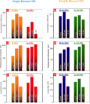




Advancing nanolithography: a comprehensive review of materials for local anodic oxidation with AFM
Beilstein J. Nanotechnol. 2026, 17, 275–291, doi:10.3762/bjnano.17.19
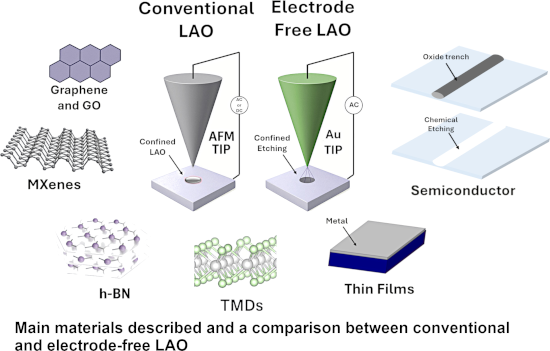
- low throughput of traditional SPL. 3.2.5 Machine learning. Optimizing LAO process parameters (such as pulse amplitude, width, and tip–sample interaction) remains a complex challenge. Recent developments in numerical simulation and machine learning (ML) offer promising avenues to address these


Safe and sustainable by design with ML/AI: A transformative approach to advancing nanotechnology
Beilstein J. Nanotechnol. 2026, 17, 176–185, doi:10.3762/bjnano.17.11
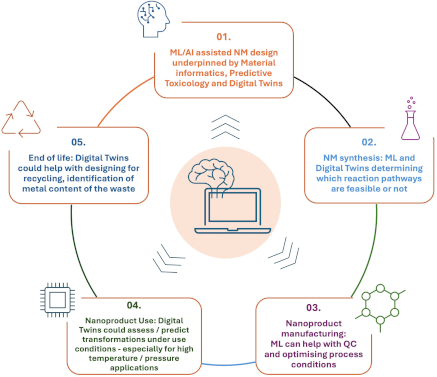
- considerations into the earliest stages of material development. Advances in machine learning (ML) and artificial intelligence (AI) have further enhanced the effectiveness of SSbD by providing predictive modelling, risk assessment, decision-making tools, and the ability to computationally screen candidate
- opportunities, and the path forward for integrating ML/AI-driven SSbD frameworks into regulatory and industrial practices. Keywords: digital twins; machine learning; materials informatics; safe and sustainable by design; Introduction Nanotechnology has fundamentally changed the landscape of materials science
- (WPMN) Steering Group [21]. These frameworks strive to ensure that ENMs and chemicals undergo rigorous evaluation and transparent reporting of hazards, exposures, and life cycle impacts from the earliest stages of product conception. Recent advances in machine learning (ML) and artificial intelligence


Missing links in nanomaterials research impacting productivity and perceptions
Beilstein J. Nanotechnol. 2025, 16, 2168–2176, doi:10.3762/bjnano.16.149
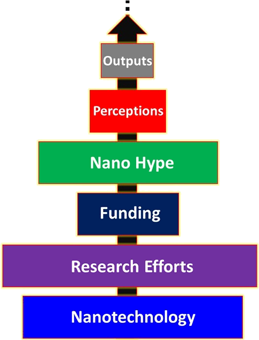
- productive technologies like generative AI, machine learning, and related progress, nanotechnology has not achieved autonomous societal integration. The author argues that without a unified, transparent, and science-driven global regulatory framework, the transformative potential of nanotechnology will
- as generative AI, machine learning, and related progress. The latter areas are inherently multidisciplinary, encompassing multiple research domains, with nanotechnology often representing only a component. Nevertheless, from a user‑oriented perspective, generative AI, machine learning, and Internet
- technological revolutions such as generative AI, machine learning, Internet of Things, and related progress, nanotechnology falls short in terms of commercial and practical outcomes. It is understandable that nanotechnology is still an emerging field that is inherently more exploratory in nature. In other words
Microplastic pollution in Himalayan lakes: assessment, risks, and sustainable remediation strategies
Beilstein J. Nanotechnol. 2025, 16, 2144–2167, doi:10.3762/bjnano.16.148
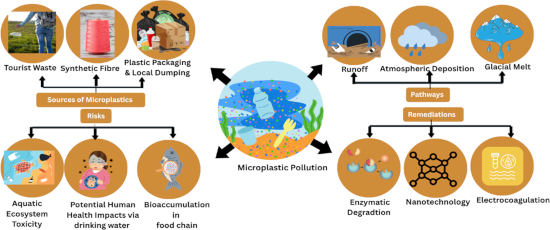
- strategies being pursued for MP remediation, which strike a balance between efficiency, operational feasibility, and environmental sustainability. While physical and chemical methods are dominant, the use of advanced technologies such as electrochemical systems, machine-learning-based sensing, and


Evaluating metal-organic precursors for focused ion beam-induced deposition through solid-layer decomposition analysis
Beilstein J. Nanotechnol. 2025, 16, 1942–1951, doi:10.3762/bjnano.16.135
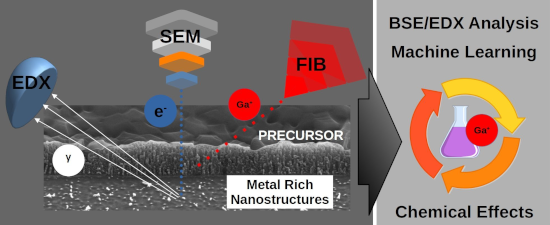
- -dispersive X-ray spectroscopy (EDX); focused ion beam (FIB); focused ion beam-induced deposition (FIBID); machine learning; scanning electron microscopy (SEM); Introduction A variety of nanomanufacturing techniques, such as optical and electron-beam lithography, nanoimprint lithography, atomic layer
- (SEM EDX) together with machine learning-based hyperspectral data processing, which uses non-negative matrix factorization (NMF) to separate the EDX signals of structures from the ones of the substrate. As already shown, this type of analysis greatly enhances the applicability of SEM EDX for the
- C, O, F, and Si, as well as the Ag Lα map (see Supporting Information File 1, Figure S2–S4 for other precursors). In all cases, the maps show that the formed structures are enriched in metal. In the next step, the EDX data were processed by machine learning NMF as described in details in Jany and


Current status of using adsorbent nanomaterials for removing microplastics from water supply systems: a mini review
Beilstein J. Nanotechnol. 2025, 16, 1837–1850, doi:10.3762/bjnano.16.127
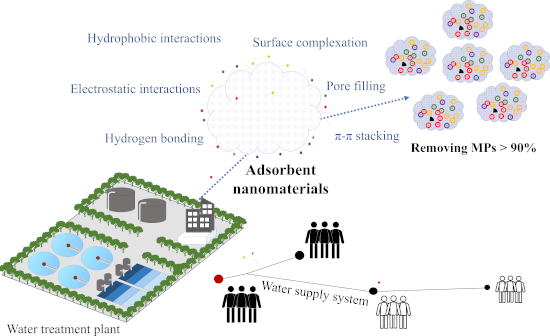
- ]. Finally, along with the development of information technology, the application of artificial intelligence (AI) and machine learning (ML) can transform water treatment. Leveraging pattern detection, ML simplifies MP classification and enhances nanomaterial identification, improving research efficiency and


Ambient pressure XPS at MAX IV
Beilstein J. Nanotechnol. 2025, 16, 1677–1694, doi:10.3762/bjnano.16.118
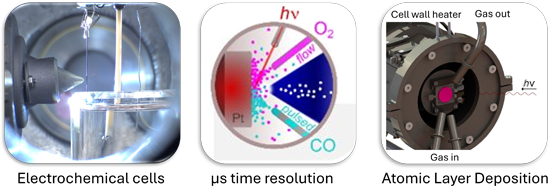
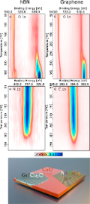
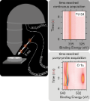
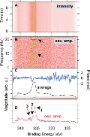
- between fundamental surface studies and application-relevant complexity. Another promising frontier is the coupling of APXPS with advanced data acquisition and analysis, such as machine learning for spectral interpretation, real-time kinetic modeling, and high-throughput experimentation. These approaches





Nanotechnology-based approaches for the removal of microplastics from wastewater: a comprehensive review
Beilstein J. Nanotechnol. 2025, 16, 1607–1632, doi:10.3762/bjnano.16.114
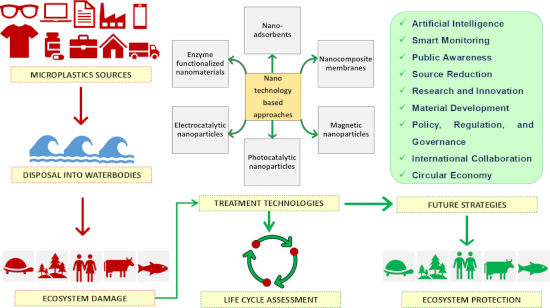
- synthesis, hybrid system integration, and machine learning optimization. Together, these approaches aim to establish a comprehensive, scalable, and environmentally safe solution for the remediation of MPs in wastewater systems. Keywords: artificial intelligence; membrane technology; microplastic
- nanoparticles, enhanced through machine learning (ML) optimization, enable dual removal of MPs and organic pollutants with efficient magnetic recovery. Despite their potential, concerns remain regarding synthesis complexity, environmental safety of nanomaterials, and real-water applicability. These emerging
- recovery and high adsorption selectivity due to imine surface groups. Machine learning was applied to optimize operational parameters, enhancing removal efficiency while minimizing sorbent use. The system demonstrated stable performance across multiple reuse cycles, highlighting its potential as a smart


Nanomaterials for biomedical applications
Beilstein J. Nanotechnol. 2025, 16, 1499–1503, doi:10.3762/bjnano.16.105
- treatments. The research is still in its early stages, and the results are encouraging so far. In the future, machine learning, biocompatible materials, and tailored therapies will all be included for patient-specific care [35]. Nanomaterials are also widely used in medical devices and prosthetics
Laser processing in liquids: insights into nanocolloid generation and thin film integration for energy, photonic, and sensing applications
Beilstein J. Nanotechnol. 2025, 16, 1428–1498, doi:10.3762/bjnano.16.104




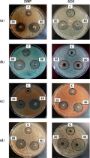


The role of biochar in combating microplastic pollution: a bibliometric analysis in environmental contexts
Beilstein J. Nanotechnol. 2025, 16, 1401–1416, doi:10.3762/bjnano.16.102



Automated collection and categorisation of STM images and STS spectra with and without machine learning
Beilstein J. Nanotechnol. 2025, 16, 1367–1379, doi:10.3762/bjnano.16.99
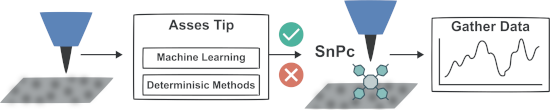
- spectroscopic measurements. The ability to automate this process is a key aim in development of high resolution scanning probe materials characterisation. In this paper, we assess the feasibility of automating the assessment of imaging quality, and spectroscopic tip quality, via both machine learning (ML) and
- characteristic feature corresponding to the surface state, which appears as a step function around a specific bias value, which for the Au(111) surface appears at around −0.48 V [13][14]. One notable attempt to automate this classification using machine learning (ML) was carried out by Wang et al. [15]. This
- number of spectra in each category after the labelling step. For ML training, the data were split into training, validation, and test sets at a ratio of 70:10:20. This left 1823 spectra for training, 260 for validation, and 521 for final testing. Classification methods Machine learning classifier With





Enhancing the therapeutical potential of metalloantibiotics using nano-based delivery systems
Beilstein J. Nanotechnol. 2025, 16, 1350–1366, doi:10.3762/bjnano.16.98
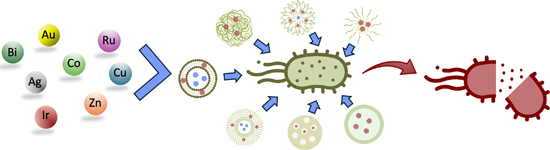
- delivery platforms, as well as the investigation of synergistic effects through combination therapies. In-depth in vivo studies will be essential to validate preclinical findings and ensure translational potential. Moreover, the integration of computational modelling and machine learning may expedite the


Electronic and optical properties of chloropicrin adsorbed ZnS nanotubes: first principle analysis
Beilstein J. Nanotechnol. 2025, 16, 1184–1196, doi:10.3762/bjnano.16.87
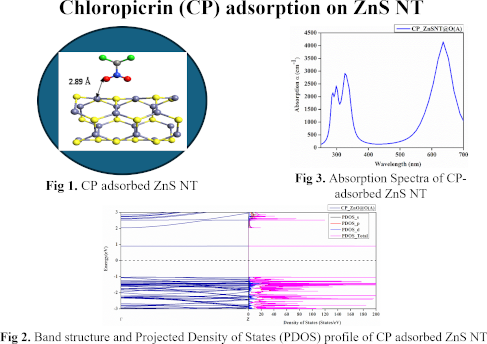
- composites with other materials, such as carbon nanotubes, to optimize performance [26]. Furthermore, the flexible synthesis of ZnS NTs with controlled morphology and size allows for tailoring their sensing capabilities. External stimuli combined with machine learning can further enhance their sensitivity


Crystalline and amorphous structure selectivity of ignoble high-entropy alloy nanoparticles during laser ablation in organic liquids is set by pulse duration
Beilstein J. Nanotechnol. 2025, 16, 1141–1159, doi:10.3762/bjnano.16.84
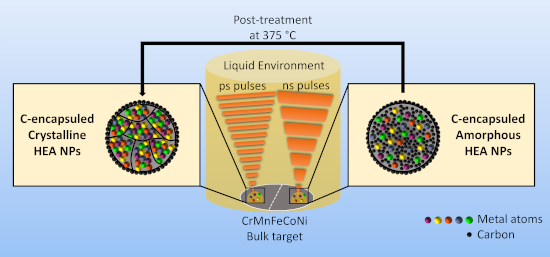
- on density functional theory calculations of binding energies and machine learning algorithms for an efficient catalyst design [15][17][19]. The synthesis of HEA NPs has been realized by many methods, including carbothermal shock synthesis (CTS) [20][21], chemical reduction [22][23], fast-moving bed