


Search results
Search for "pH" in Full Text gives 715 result(s) in Beilstein Journal of Nanotechnology. Showing first 200.
Ultrasonic irradiation in the synthesis of nanohydroxyapatite: a chemically friendly technique for improving hemocompatibility and antibiofilm applications
Beilstein J. Nanotechnol. 2026, 17, 991–1015, doi:10.3762/bjnano.17.68
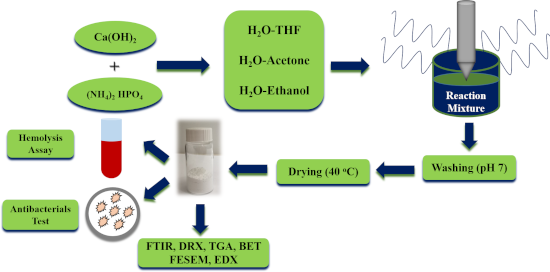
- to determine the concentrations of Ca2+ and PO43− ions, as well as the pH effect, in order to elucidate the specific interaction mechanisms between the nHA variants (15 and 60 min) and bacterial cells. Experimental Synthesis of nanohydroxyapatite Ca(OH)2 (MW: 74.10 g/mol, 96% purity) and (NH4)2HPO4




Materials challenges in solid-state sensors for continuous monitoring of ions in water
Beilstein J. Nanotechnol. 2026, 17, 935–973, doi:10.3762/bjnano.17.66
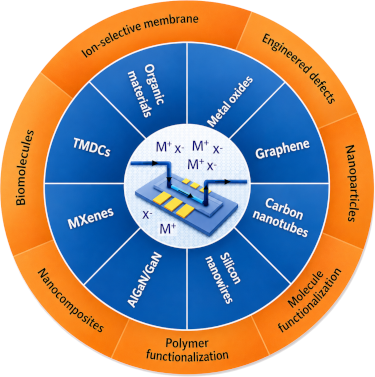
- and with temperature fluctuations is required because real samples (biological fluids, environmental solutions, or industrial streams) differ widely in composition and operating conditions. In practice, this means the device must tolerate variations in ionic strength, pH, temperature, and fluid flow
- directly responds to surface chemical reactions (protonation/deprotonation of –OH groups) that change oxide surface potential and shift the threshold voltage. Due to this mechanism, highly sensitive and stable IS-FETs for pH monitoring are reported that are CMOS-compatible and can be miniaturized, but this
- semiconducting behavior with high transconductance, making them good candidates for gas and pH sensing [112][113], their high density of surface states makes sensing in aqueous environments challenging. A high density of surface states can cause charge scattering effects, which decrease the charge mobility while



Nanocarrier strategies to overcome P-glycoprotein-mediated drug resistance in cancer therapy
Beilstein J. Nanotechnol. 2026, 17, 882–921, doi:10.3762/bjnano.17.64
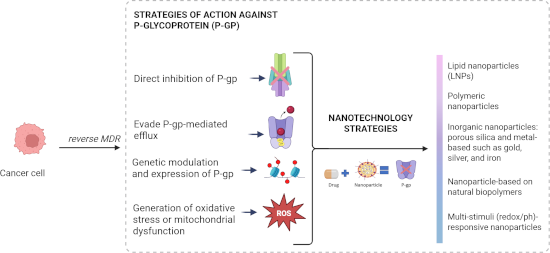
- reduces the cytosolic availability of chemotherapeutics independently of P-gp, but pH-responsive nanocarriers engineered for endosomal escape indirectly address this barrier. EMT-associated phenotypic shifts alter membrane composition and uptake pathways in ways that affect nanoparticle internalization
- microenvironment (e.g., acidic pH or elevated levels of reactive oxygen species (ROS)), to gain access to tumor cells. By entering through these routes, they may initially evade recognition by membrane-associated P-gp. However, once the drug is released into the cytosol, subsequent prevention of drug efflux
- (scavenger receptor, class B type 1)-mediated endocytosis as a form of cellular internalization [32]. (ii) To achieve a release in response to the tumor microenvironment, nanoparticles are designed to be sensitive to tumor-specific stimuli, such as acidic pH or ROS so that the nanoparticles remain stable in


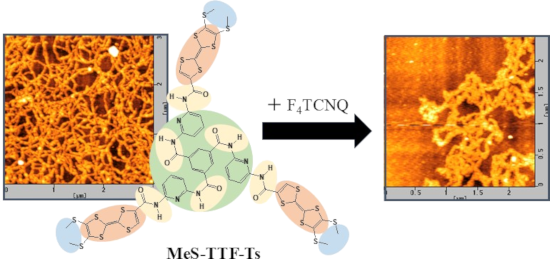
Supramolecular one-dimensional conducting nanofibers from a C3-symmetric tetrathiafulvalene derivative
Beilstein J. Nanotechnol. 2026, 17, 872–881, doi:10.3762/bjnano.17.63
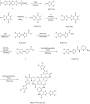
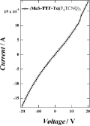
- . Additional 5 M HCl was added until the pH reached 1–2. The layers were separated, and the aqueous phase was extracted with diethyl ether. The combined organic layers were dried over MgSO4, filtered, and concentrated under reduced pressure to afford compound 6 as a red solid. Yield 115.7 mg (92.1%) [44][45


Nanoparticle delivery systems for HIV pre-exposure prophylaxis (PrEP): advances and challenges
Beilstein J. Nanotechnol. 2026, 17, 839–853, doi:10.3762/bjnano.17.60
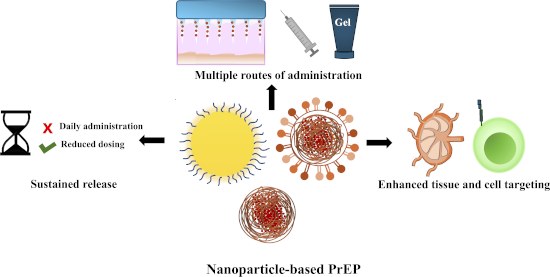
- [45][46][47]. Furthermore, polymers can be engineered to respond to environmental triggers such as pH or temperature for smart drug release [39][40][42]. This provides polymeric systems additional functionalities beyond targeted delivery to HIV-susceptible tissues or cell populations [41][42][43][44
- CAP, which is a pH-sensitive polymer with intrinsic HIV-1 entry inhibitory activity [39]. The resulting pH-responsive CAP-DTG nanoparticles were incorporated into a thermosensitive gel for vaginal application. This resulted in a pH-responsive release of drug, demonstrating limited release of DTG at
- acidic pH (4.2), representative of vaginal environment, and significantly enhanced drug release at neutral pH (7.4), simulating semen exposure. The in vitro studies also showed cellular uptake of CAP nanoparticles into vaginal epithelial cells and sustained intracellular presence over 7 days. The CAP-DTG


Glycerol photoelectrochemical oxidation reaction at carbon nitrides/BiVO4 materials
Beilstein J. Nanotechnol. 2026, 17, 806–817, doi:10.3762/bjnano.17.57
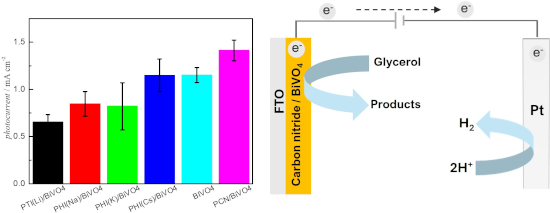
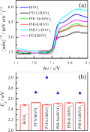
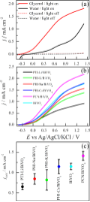
- oxidation depicted higher photocurrents and provided a protective effect against photocorrosion. The photoelectrochemical activity and selectivity of glycerol oxidation on BiVO4 are influenced by several factors, including pH [26], electrolyte cation and anion [28], BiVO4 surface crystallography orientation
- (Supporting Information File 1, Equation S1) [34]. The photoelectrochemical characterization was carried out using a potentiostat/galvanostat (PGSTAT302N, Autolab, Metrohm). Measurements were performed in a three-electrode cell containing a Na2SO4 solution (0.5 mol·L−1, pH 6.8), BiVO4 or CN/BiVO4 as working
- , as indicated by the blue triangles in Figure 5b, in agreement with the literature values [31]. Electrochemical characterization Photoelectrochemical activities were evaluated by LSV at a scan rate of 0.05 V·s−1 in a Na2SO4 solution (0.5 mol·L−1, pH 6.8). Initially, the activity of the BiVO4 film was




Environmental applications of silver nanoparticles: state-of-the-art review and emerging trends
Beilstein J. Nanotechnol. 2026, 17, 697–736, doi:10.3762/bjnano.17.49
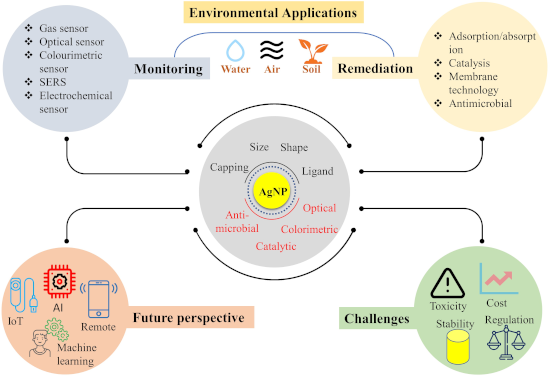
- , size, temperature, pH, concentration, and shape. 2.3 Factors affecting AgNP properties relevant to environmental applications Nanosilver and its properties are well-suited for various ecological applications and can be engineered by varying synthesis parameters that affect AgNP properties. The
- application of AgNPs depends on factors such as size/shape, capping, pH, temperature, and NP concentration, which can be optimised through the synthesis approach. The size and shape of AgNPs significantly influence their properties and applications, with smaller particles exhibiting enhanced functional
- stabilising NPs. The pH-dependent detection of metal ions using PVP-AgNPs was reported, with Pb2+ detected at pH 9.6 at a LOD of 14.4 nM [66]. The reaction pH influences stability and dissolution of the AgNPs, which are among the main factors in AgNPs-mediated applications [67]. Particle aggregation is a


Cellulose as a photocatalyst support material: extraction, structural features, and environmental applications
Beilstein J. Nanotechnol. 2026, 17, 635–652, doi:10.3762/bjnano.17.44
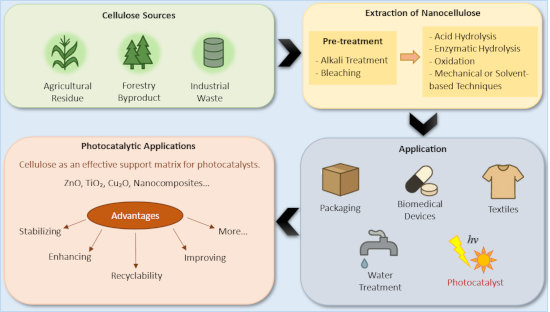
- shows the schematic diagram of cellulose nanocrystals preparation process. Enzymatic hydrolysis. Enzymatic hydrolysis provides an environmentally friendly approach to producing CNCs as it breaks down cellulose fibers under mild conditions that typically involve temperatures of 36–50 °C and a neutral pH
- oxidation sites on cellulose [60]. TEMPO oxidation is a highly sensitive catalytic cycle. The parameters must be tightly controlled to ensure that the reaction only modifies the surface groups without depolymerization. It is usually carried out at room temperature with a pH around 10 and low doses of TEMPO
- (0.1 mmol) [61]. The oxidation reaction actively consumes base and produces acid, causing the pH to drop continuously. It must be maintained by adding NaOH dropwise. This is because NaClO is most active at pH 10, and the newly formed carboxyl groups are ionized into carboxylates, driving the reaction


Two-step laser synthesis of Ag@TiO2 nanomaterials for the photocatalytic degradation of rhodamine B
Beilstein J. Nanotechnol. 2026, 17, 622–634, doi:10.3762/bjnano.17.43
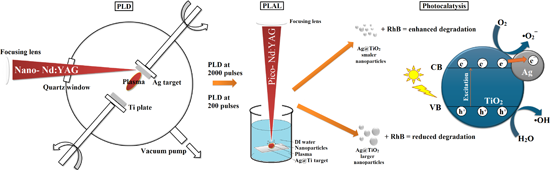
- electrophoretic mobility measurements. Before sample analysis, the nanoparticle colloid solutions were ultrasonicated. This way, all possible agglomerates were broken down into smaller and more uniform particles. Samples were analyzed at the native pH value. Structure of rhodamine B. SEM micrograph with
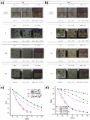
- electrophoretic mobility of Ag@TiO2 200p and Ag@TiO2 2000p NPs at pH 2.4. Estimated values of bandgap and conduction and valence band potentials for TiO2, Ag@TiO2 200p, and Ag@TiO2 2000p. Values of the pseudo-first and pseudo-second order rate constants and the corresponding correlation coefficients for the


Towards targeted drugs and next generation of nanomedicines
Beilstein J. Nanotechnol. 2026, 17, 598–601, doi:10.3762/bjnano.17.41

- can be targeted to the area of interest, even if the material itself may also reach other areas. Endogenous stimuli are characteristics of the targeted site that distinguish it from the healthy tissue, such as the lower pH or lower oxygen content of certain tumor areas [15]. External stimuli include
Synthesis of Cu–Mo/TiO2 and Co–Mo/TiO2 photocatalysts for the efficient degradation of organic pollutants in water
Beilstein J. Nanotechnol. 2026, 17, 559–570, doi:10.3762/bjnano.17.37
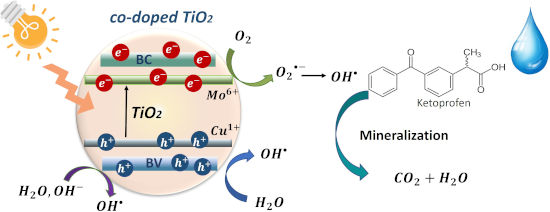
- cobalt, the point of zero charge decreased, resulting in values of 6.2 and 6.8 for the catalysts 0.5 Cu–0.5 Mo/TiO2 and 0.5 Co–0.5 Mo/TiO2, respectively. The PZC value can be used to determine the optimal pH value of the ketoprofen aqueous solution for the photocatalytic reaction experiments. Since the
- photocatalysts are positively charged at pH < PZC, the electrostatic forces between the negatively charged organic molecules, such as the carboxylate groups of nonsteroidal anti-inflammatory drug molecules, and the positive charge of the catalyst surface, favor the interaction between both chemical species
- extraction of data, using Gaussian peak fitting, and the software Origin Pro 8 to obtain the figures. The point of zero charge (PZC) of TiO2, Cu–Mo/ TiO2, and Co–Mo/ TiO2 was determined by the acid–base titration method [40]. For this purpose, 25 mL of a 0.1 M NaCl solution adjusted to pH 2.5 with 0.1 M HCl



Electrochemical determination of ciprofloxacin using a MIL-101/reduced graphene oxide-modified electrode
Beilstein J. Nanotechnol. 2026, 17, 541–554, doi:10.3762/bjnano.17.35
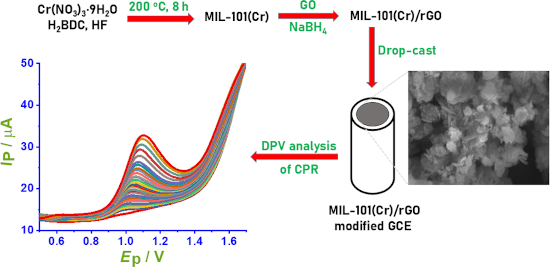
- ·9H2O), terephthalic acid (H2BDC), graphite powder, potassium permanganate (KMnO4), sodium borohydride (NaBH4), sulfuric acid (H2SO4), hydrogen peroxide (H2O2), and other analytical-grade reagents were purchased from standard chemical suppliers. Britton–Robinson (BR) buffer solutions at different pH
- levels were prepared using a mixture of acetic acid, phosphoric acid, and boric acid, with pH adjusted using 0.2 M NaOH solution. Synthesis of reduced graphene oxide (rGO), MIL-101, and MIL-101/rGO Graphene oxide (GO) was synthesized from natural graphite using a modified Hummers’ method, as described in
- buffer solution at room temperature under optimized pH conditions. DPV parameters, including accumulation potential (Eacc), accumulation time (tacc), pulse amplitude (ΔE), and voltage step (Ustep), were optimized before conducting the analytical measurements. Real sample preparation Pharmaceutical


Upcycling agroindustrial waste into graphene oxide supports for gold nanoparticles: toward sustainable nanomaterials
Beilstein J. Nanotechnol. 2026, 17, 489–504, doi:10.3762/bjnano.17.32
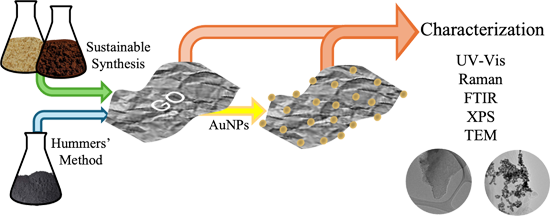
- mixture was magnetically stirred at 50 °C for 12 h under reflux. The oxidation process was stopped by adding 3 mL of 30% H2O2. The resulting mixture was sequentially washed with deionized water, 30% HCl, 99% ethanol and, finally, again with deionized water until reaching a pH of 5. Eventually, GO was
- stirred at 200 rpm for 12 h at room temperature. Afterwards, the mixture was centrifuged at 7000 rpm for 10 min to precipitate Agro-GO and separate the supernatant containing dissolved iron ions. The solid was washed with deionized water until the pH reached 5. Finally, purified Agro-GO was vacuum-dried
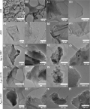
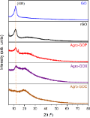
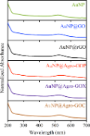
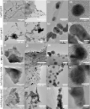
- , and the suspension was stirred magnetically at 220 rpm. Afterwards, the pH was adjusted to 5 by dropwise addition of 1 M NaOH. Then, 400 μL of an aqueous HAuCl4 solution (0.05 mM) was introduced into the system. The reaction mixture was irradiated with UV light (GR.E 500 W lamp, Helios Italquartz



Nanocarrier-integrated multilayer films produced by 3D printing for improved skin adhesion and curcumin photostability
Beilstein J. Nanotechnol. 2026, 17, 440–453, doi:10.3762/bjnano.17.30
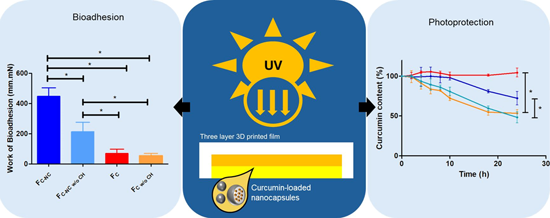
- concentrated to 10 mL. The experiment was carried out in a dark environment, protected from light. Blank formulations (B-NC) were prepared under the same conditions, without addition of curcumin in the organic phases. All formulations were prepared and characterised in triplicate. Particle size, pH and zeta
- -fold in an aqueous 10 mmol/L NaCl solution and filtered through a 0.45 µm membrane (Millipore®). The pH of the formulations was measured without prior dilution at 25 °C using a calibrated potentiometer (VB-10, Denver Instrument, USA). where C2 is the concentration of the sample after dilution, C1 is
- pH was adjusted to 3.0 using triethanolamine. Chromatography was conducted at a flow rate of 1.0 mL/min, with an injection volume of 20 µL, and curcumin was detected at a wavelength of 427 nm. The method was linear over the concentration range of 2.5–50.0 µg/mL of curcumin (y = 126634x − 12894; r


Biomimetic nanoparticles in cancer photodynamic therapy: a review of targeted delivery systems and therapeutic outcomes
Beilstein J. Nanotechnol. 2026, 17, 396–422, doi:10.3762/bjnano.17.27
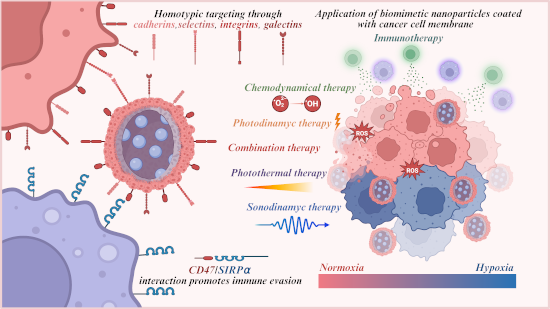
- internalization through receptor-mediated endocytosis and homotypic binding, as well as improve colloidal stability. Strategies such as incorporating pH-sensitive components or lysosomal escape mechanisms further enable controlled drug release within target cells. Despite these advances, optimizing BNP design to
- respond to specific stimuli, such as pH, enzymes, or external triggers like light, enabling controlled drug release at the target site [76]. For example, pH-sensitive lipids or peptides can be incorporated to accelerate drug release in the acidic tumor microenvironment. Additionally, BNPs can be loaded
- advancement came from Wang’s group in 2023 [114], who developed “adaptive” CCM-coated nanoparticles that could dynamically alter their surface properties in response to the TME. By incorporating pH-sensitive linkers between the membrane coating and targeting ligands, these nanoparticles maintained their


Polycatecholamine nanocoatings on stainless steel: the effect on attachment of human fibroblasts and platelets
Beilstein J. Nanotechnol. 2026, 17, 365–380, doi:10.3762/bjnano.17.25
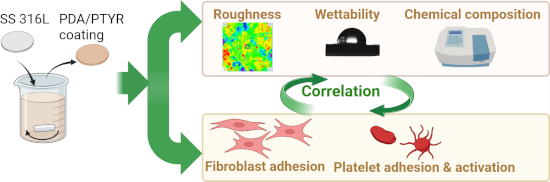
- coatings obtained by self-polymerization at mildly basic pH, or by oxidative routes, improve cell adhesion and proliferation [18], reduce bacterial adhesion by more than 90% [16][19], and markedly enhance hemocompatibility [20]. Long-term stability has been demonstrated through in vivo persistence over
- molar ratio of 1:2 relative to dopamine in 50 mM acetate buffer, at pH adjusted to 5.5. The reaction was conducted for 10 min, 30 min, 1 h, or 4 h. To create a polytyrosine (PTYR) coating, samples were immersed into the solution containing 0.8 mg/mL tyrosine (Carl Roth GmbH, Germany), with 0.6 mM FeCl2
- (Sigma-Aldrich, Germany), and 30% (v/v) H2O2 solution (Sigma-Aldrich, Germany) so that the molar ratio of H2O2/FeCl2 was 25:1. The pH of this solution was adjusted to 4.0, and the reaction was conducted for 30 min, 1 h, 4 h, or 24 h. All coating processes were carried out on a magnetic stirrer (300 rpm




Fast vortex dynamics and relaxation times in NbRe-based heterostructures
Beilstein J. Nanotechnol. 2026, 17, 292–302, doi:10.3762/bjnano.17.20
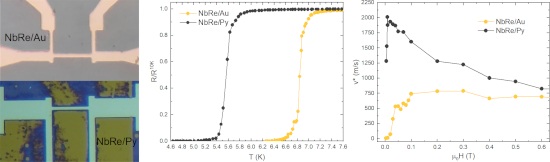
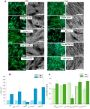
- ]. The enhancement of vortex dynamics and the reduction of τE are strongly linked to the optimization of quasiparticle relaxation mechanisms. Excited quasiparticles can relax primarily through two processes, namely thermal electron–phonon (e–ph) interaction and electron–electron (e–e) recombination [1
- ]. In classical, low-Tc superconductors, the dominant relaxation channel is provided by e–ph scattering events [17], while in high-Tc superconductors the situation is reversed, with e–e recombination playing a major role in energy relaxation [18]. The efficiency of these processes and the value of τE


Gold nanoparticle-decorated reduced graphene oxide as a highly effective catalyst for the selective α,β-dehydrogenation of N-alkyl-4-piperidones
Beilstein J. Nanotechnol. 2026, 17, 218–238, doi:10.3762/bjnano.17.15
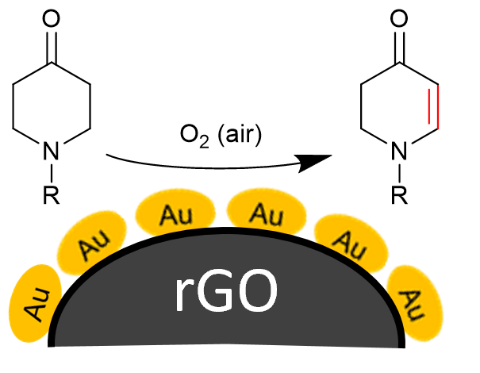
- coated with strong ligands that provide initial stability over time, ligand desorption, ligand exchange, or environmental factors such as pH and ionic strength can weaken the protective layer, leading to nanoparticle aggregation or structural degradation [14][15]. An important aspect of expensive noble


Safe and sustainable by design with ML/AI: A transformative approach to advancing nanotechnology
Beilstein J. Nanotechnol. 2026, 17, 176–185, doi:10.3762/bjnano.17.11
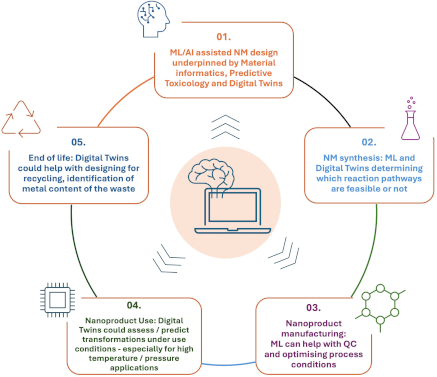
- potential EHS risks as they evolve, ensuring proactive rather than reactive risk management. Third, dynamic simulations – including digital twin technologies – provide a virtual environment for researchers to run “what if” scenarios, allowing them to explore the impact of variable parameters (e.g., pH
- for rapid adjustments to nanomaterial formulations or processing parameters in response to emerging safety or efficacy concerns. By simulating how nanomaterials behave across varying operational scenarios – incorporating factors like temperature, pH, or mechanical stress – digital twins will


From shield to spear: Charge-reversible nanocarriers in overcoming cancer therapy barriers
Beilstein J. Nanotechnol. 2026, 17, 159–175, doi:10.3762/bjnano.17.10
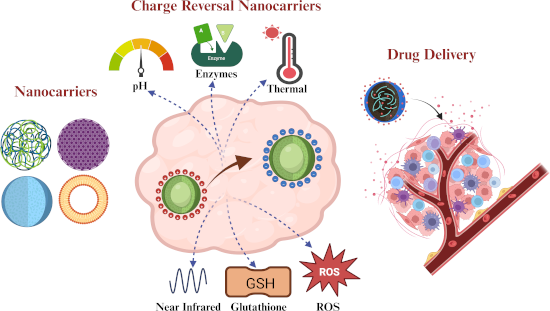
- , which enhances drug targeting while reducing off-target effects. These carriers leverage triggers such as changes in pH, enzymatic activity, redox conditions, temperature, light, ultrasound, X-rays, and magnetic fields to enable intelligent and controlled release of therapeutics. This review examines
- ) [15]. These systems can switch their surface charge in response to tumour microenvironment (TME) triggers such as pH changes, redox states, or enzymatic activity, enhancing drug stability, facilitating cellular uptake, and enabling targeted drug release. This responsive functionality gives CR-NDDSs a
- biofilms within the TME, where the nanoparticles are activated by pH changes and demonstrate their potential for site-specific drug delivery [19]. This strategy also enables controlled drug release, as the pH-sensitive charge reversal triggers site-specific drug unloading in acidic tumour microenvironments


Influence of surface characteristics on the in vitro stability and cell uptake of nanoliposomes for brain delivery
Beilstein J. Nanotechnol. 2026, 17, 139–158, doi:10.3762/bjnano.17.9
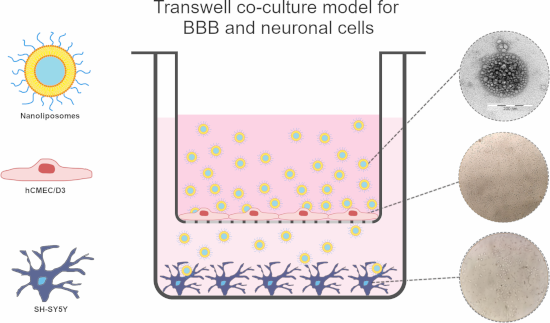
- incomplete uptake, are suitable adjustments in the incubation time, temperature, and NL concentration, as well as pH and ion concentrations. Optimization of these factors is essential for accurate identification of transport mechanisms, like diffusion or receptor-mediated endocytosis, also reflecting the
- evaporated under vacuum using a rotary evaporator (25 °C, 50 rpm, 50 mbar; Büchi 215, Switzerland). The resulting thin lipid film was hydrated with phosphate buffer (PB) at pH 7.4. The hydration process involved four consecutive cycles, each consisting of three 5 min steps: ultrasonication (50/60 Hz
- -potential of the nanoliposomes Тhe z-average diameter, the polydispersity index (PDI), and the z-potential (ZP) were determined using a Zetasizer Nano Series, (Nano-ZS, Malvern Instruments Ltd., UK), after diluting the optimal NL samples in 10 mM PB pH 7.4 (1:20, v/v). Measurements were made under the




Capabilities of the 3D-MLSI software tool in superconducting neuron design
Beilstein J. Nanotechnol. 2026, 17, 122–138, doi:10.3762/bjnano.17.8

- , screen-mediated interaction between the input (“CL”) and readout (“sq”) elements can give the same effect, with an effective asymmetry parameter [43] Based on experimental measurements (Lout ≈ 2.40 pH, Msq ≈ 2 fH, Mout ≈ 1.47 pH, Min ≈ 1.43 pH), we estimate teff ≈ 0.005. Using calculated values (Lout
- ≈ 2.45 pH, Msq ≈ 3 fH, Mout ≈ 1.55 pH, Min ≈ 1.48 pH), the estimate gives teff ≈ 0.006. Despite the small value of t, the effective asymmetry significantly distorts the TF, likely because of the really small amplitude of the output signal. Therefore, the presented design of the Gauss neuron require



Development and in vitro evaluation of liposomes and immunoliposomes containing 5-fluorouracil and R-phycoerythrin as a potential phototheranostic system for colorectal cancer
Beilstein J. Nanotechnol. 2026, 17, 97–121, doi:10.3762/bjnano.17.7
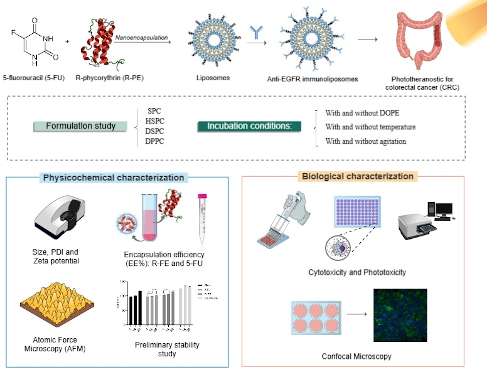
- , SPC) and amount (25 and 50 mg) followed by sonication. In summary, the lipids were solubilized in 5 mL of chloroform and evaporated for 30 min at 65 °C. In the next step, the lipid film was hydrated with 5 mL of phosphate buffer saline (PBS, pH 7.4) during 60 min at 100 rpm and 37 °C or with PBS, pH
- Traut's reagent, in a molar ratio of 40:1 (Traut/cetuximab), in PBS/EDTA buffer (5 mM, pH 8.0), under incubation at 37 °C for 1 h. The excess Traut's reagent was removed by chromatography on a disposable PD-10 desalting column, collecting 1 mL fractions eluted with PBS/EDTA (5 mM, pH 8.0). The cetuximab
- Sepharose CL-4B column eluted with PBS (pH 7.4) [19]. 2.3 Sample characterization 2.3.1 Particle size, polydispersity and zeta potential The hydrodynamic vesicle size and polydispersity index (PDI) were performed by dynamic light scattering (DLS), and the zeta potential by electrophoretic light scattering



Functional surface engineering for cultural heritage protection: the role of superhydrophobic and superoleophobic coatings – a comprehensive review
Beilstein J. Nanotechnol. 2026, 17, 63–96, doi:10.3762/bjnano.17.6

- principles. Ethyl lactate acts as the organic solvent, PHB as the gelator, and DFO as a chelating agent for Fe(III), all functioning effectively at a mildly acidic pH (~4.8). The authors prepared several mock-ups of mild steel by chemically inducing corrosion and coating with Paraloid® B72, replicating real




Terahertz-range on-chip local oscillator based on Josephson junction arrays for superconducting quantum-limited receivers
Beilstein J. Nanotechnol. 2025, 16, 2296–2305, doi:10.3762/bjnano.16.158
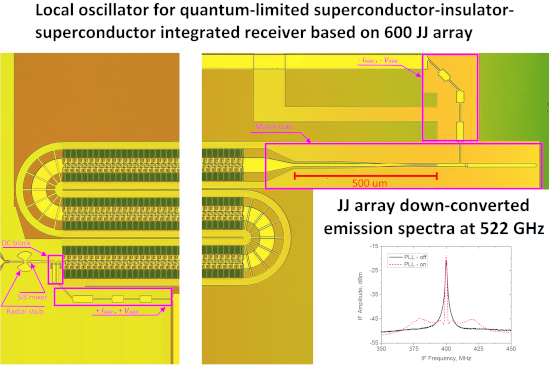
- junctions in this work are as follows: Ic = 110 μA, C = 300 fF, Lshunt = 1.5 pH, and Rshunt = 1.9 Ω. For this set of parameters there is a bump on the single junction IVC at a voltage of approx. 0.5 mV caused by an LC resonance between the shunt inductance and the junction capacitance. Since the





