


Search results
Search for "porosity" in Full Text gives 261 result(s) in Beilstein Journal of Nanotechnology. Showing first 200.
Nanoglasses: a trail towards uncharted regions of vitreous materials and their properties?
Beilstein J. Nanotechnol. 2026, 17, 1047–1062, doi:10.3762/bjnano.17.72

- ”, characterized by increased excess volume. The increase of excess volume can be attributed to the nanometre-sized porosity among the consolidated glass nanoparticles, which facilitates localized dissipation of the excess volume, that is, initially condensed into pores and consequently results in alterations in
- attributable to open porosity, as confirmed by TEM analyses and radiotracer diffusion measurements. In contrast, nanoglasses fabricated through inert gas condensation frequently exhibit substantial porosity, which can compromise their structural integrity. This suggests that sputtered films may offer a more
- versatile and more reliable approach for nanoglass fabrication, potentially overcoming the porosity- and impurity-related limitations of nanoglasses prepared by inert gas condensation. Tracer diffusion measurements were conducted using ion beam sputtering and time-of-flight secondary ion mass spectrometry


Ultrasonic irradiation in the synthesis of nanohydroxyapatite: a chemically friendly technique for improving hemocompatibility and antibiofilm applications
Beilstein J. Nanotechnol. 2026, 17, 991–1015, doi:10.3762/bjnano.17.68
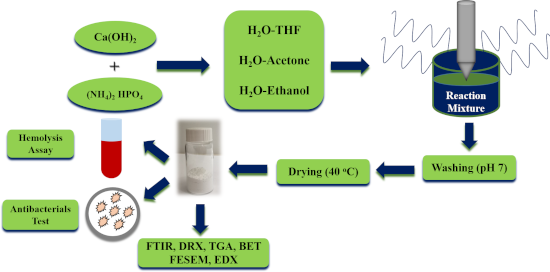
- nanomaterial. The former method provides insights into the size associated with the boundary and geometry of particle aggregates, whereas the latter allows for an estimation of contributions from internal porosity. Here, Brunauer–Emmett–Teller (BET) analysis was employed to determine quantitative particle size
- ). This apparent discrepancy, far from being contradictory, demonstrates a consistent correlation with the nature of the nanomaterials synthesized via sonochemistry. Such differences are typical for this synthesis method, where high surface roughness and internal porosity detected through gas adsorption
- , result in specific surface area diameters smaller than the geometric diameters observed in micrographs. This occurs because BET analysis integrates the total specific surface area (including contributions from internal porosity), while electron microscopy characterizes only the external geometry of the




Materials challenges in solid-state sensors for continuous monitoring of ions in water
Beilstein J. Nanotechnol. 2026, 17, 935–973, doi:10.3762/bjnano.17.66
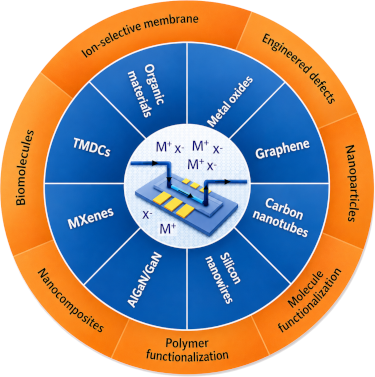
- microstructure. The specific surface area of sensing semiconducting metal oxides (SMOs) is in a range of 20–200 m2/g depending on their degree of porosity and nanostructuring [108][109]. As an example of an SMO-based device, a WG-FET based on a SnO2 thin-film channel was developed for the selective detection of



Environmental applications of silver nanoparticles: state-of-the-art review and emerging trends
Beilstein J. Nanotechnol. 2026, 17, 697–736, doi:10.3762/bjnano.17.49
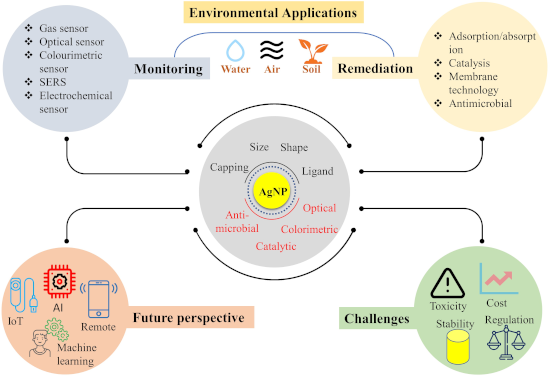
- (26 to 67%), and CaCl2 (27 to 41%)) and lowest fouling along with high flux recovery. The surface property, high porosity, and antimicrobial action of AgNPs have added to the advancement of membrane technology [141]. A study developed a nanocatalytic membrane to remove dyes (MO, MB, and RhB) and


Decontamination from water pollutants and pathogens by electrospun nanofibers doped with heavy-atom-free borafluorene-BODIPY photosensitizers
Beilstein J. Nanotechnol. 2026, 17, 668–682, doi:10.3762/bjnano.17.46
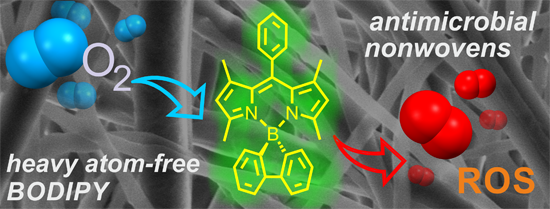
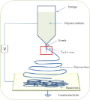
- platform and processing method giving materials with large surface areas, good mechanical properties, and high porosity, enabling oxygen diffusion, light penetration, and efficient ROS production. Accordingly, we used electrospinning, a relatively simple and cheap technique with the perspective for large
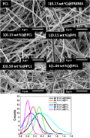
- ImageJ software (version 1.52q, USA). The fiber diameter distribution was evaluated based on a Gaussian approximation, with 100 measurements collected for each sample. The porosity (p) was calculated using Equation 1: where Vf represents the volume of the tested sample, mf is the sample’s mass, and mt is
- , and p indicates the porosity. Photocatalyst distribution in the mats The presence of BODIPY in the PCL, PMMA, and PS matrices was verified using energy-dispersive X-ray spectroscopy (EDS) as well as time-of-flight secondary ion mass spectrometry (ToF SIMS) measurements performed on a Helios 5 Dual



Cellulose as a photocatalyst support material: extraction, structural features, and environmental applications
Beilstein J. Nanotechnol. 2026, 17, 635–652, doi:10.3762/bjnano.17.44
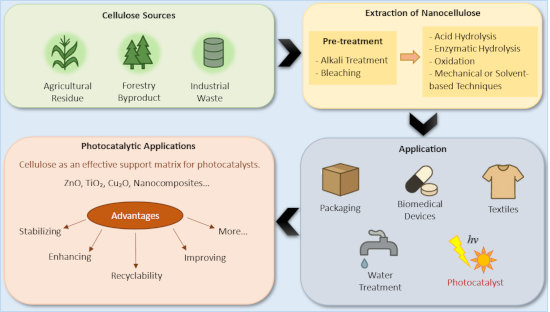
- for cellulose extraction were also explored such as acid hydrolysis, enzymatic hydrolysis, oxidation, and mechanical or solvent-based techniques. Besides that, this review highlights the role of cellulose in photocatalytic applications, where its high surface area, structural porosity, and abundance
- production often requires large amounts of solvents, reagents, reducing agents, and capping agents to ensure stability [67][85]. In recent years, metal–organic frameworks have attracted considerable attention as versatile supports or precursors for catalysts because of their high porosity, tunable functions


Eco-efficient materials for agricultural crops based on a mineral rich in MOR- and HEU-type zeolites
Beilstein J. Nanotechnol. 2026, 17, 381–395, doi:10.3762/bjnano.17.26
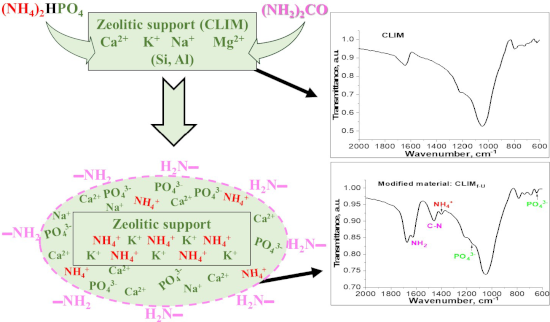
- − (hydrated ionic radius of 3.39 Å) [38] by adsorption and occlusion processes in the porosity of the zeolitic support, compensating for its charge with cations (K+, Ca2+, etc.) exchanged from zeolitic phases and some amount of unexchanged ammonium ions. According to published data [21], phosphate anions can
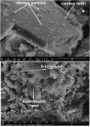
- textural parameter values (Table 2). Like all zeolitic minerals, this natural zeolite possesses both porosity and mesoporosity. In this regard, note in the SEM images the spacing between the crystals of the zeolitic phases. It leads to diffusion of DAP and urea through them (porous and mesoporous) to the




Interconnection morphology effects on the radio frequency response of carbon nanotube sponges
Beilstein J. Nanotechnol. 2026, 17, 343–351, doi:10.3762/bjnano.17.23
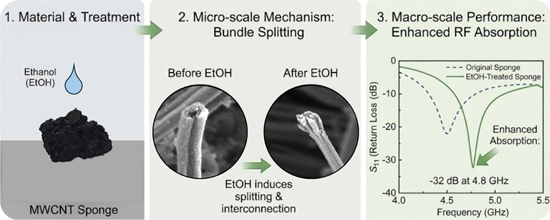
- porosity, low weight, good mechanical response, and good conductivity [25]. The properties of CNSs have been exploited in many different applications that include mechanical transducers [26], water filtration [27], and others [28]. In this paper, we tested our synthesized CNSs as active material for the
- conducted on the as-grown sample revealed an interconnected network of MWCNTs arranged in bundles with external tube diameters ranging between 60 and 80 nm (Figure 3a) and a porosity above 95% [24][25][26][27]. After the treatment with ethanol, tubes of smaller diameters and lengths appear, and the bundles



Gold nanoparticle-decorated reduced graphene oxide as a highly effective catalyst for the selective α,β-dehydrogenation of N-alkyl-4-piperidones
Beilstein J. Nanotechnol. 2026, 17, 218–238, doi:10.3762/bjnano.17.15
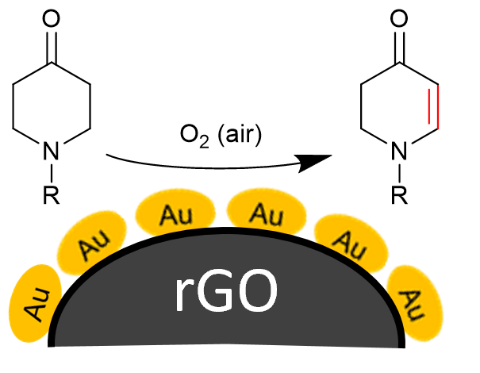
- , scanning electron microscopy (SEM) and nitrogen gas sorption surface area analysis using the Brunauer–Emmett–Teller (BET) theory were employed to evaluate the surface structure, porosity, and overall texture of the materials. The SEM image in Figure 2a reveals the typical structure of AC, characterized by
- density due to its high porosity than the other carbon materials AC and CB, as illustrated in Supporting Information File 1, Figure S4. When comparing the two reduction methods, hot reduction with NaCit and cold reduction with POM (SiW9), important differences arise in nanoparticle formation. NaCit is a


Functional surface engineering for cultural heritage protection: the role of superhydrophobic and superoleophobic coatings – a comprehensive review
Beilstein J. Nanotechnol. 2026, 17, 63–96, doi:10.3762/bjnano.17.6
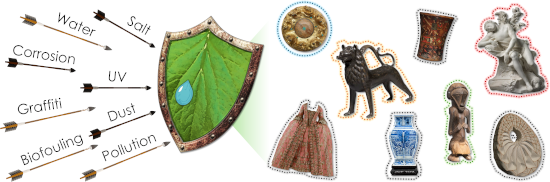
- stages of application [51]. For these reasons trend is to use other engineered materials. The tailoring of coating materials must be guided by the nature of the substrate since porosity, roughness, and coating thickness directly affect adhesion, durability, hydrophobicity, and ultimately compliance with
- relevant when considering different threats. Water is the most pervasive menace, in both indoor and outdoor environments [52]. For stone and other inorganic materials, high porosity and surface irregularities can increase coating absorption, resulting in thicker and less uniform layers that compromise
- , causing rusty surfaces due to oxygen dispersed in water or to salt residues [57]. For these reasons, much effort is devoted to developing coatings that minimize water interaction, while ensuring that substrate-dependent properties such as porosity, roughness, and coating thickness are carefully considered




Stereodiscrimination of guests in chiral organosilica aerogels studied by ESR spectroscopy
Beilstein J. Nanotechnol. 2025, 16, 2034–2054, doi:10.3762/bjnano.16.140
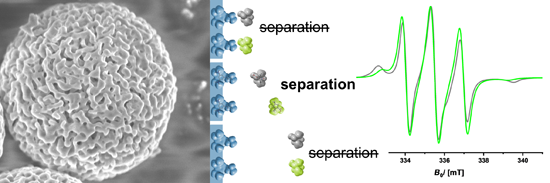
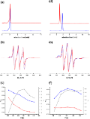
- aerogel. Characterization data for the prepared SIL is shown in Supporting Information File 1, Figure S1. A monolithic material with a large porosity and a polydisperse pore system in the size range Dpore = 50–300 nm was obtained. The specific surface area is ABET = 946 m2·g−1 according to nitrogen
- displays the typical aerogel structure with a random pore system and polydisperse sizes from 30 to 250 nm. The high porosity was confirmed by nitrogen physisorption analysis (Figure 2b). The isotherm is typical for a material with large mesopores and macropores, and the specific surface area, ABET, is 552
- polydisperse particles leads to a significant portion of large interparticle voids. However, porosity and specific surface area (ABET = 25 m2·g−1) are lower as determined from N2 physisorption analysis (Figure 7b). We applied the material in HPLC and performed two runs, that is, one with (+)-3CP and one with




Beyond the shell: exploring polymer–lipid interfaces in core–shell nanofibers to carry hyaluronic acid and β-caryophyllene
Beilstein J. Nanotechnol. 2025, 16, 2015–2033, doi:10.3762/bjnano.16.139
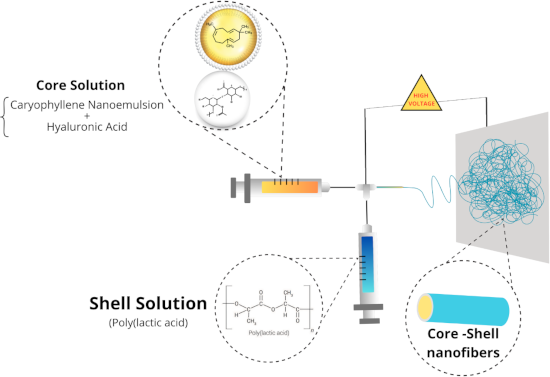
- advancements in the controlled release of diverse bioactive compounds [5][6][7][8][9][10]. Among the various nanostructured platforms explored for these purposes, nanofibers have gained attention due to their high surface area, adjustable porosity, and robust mechanical properties, which set them apart from
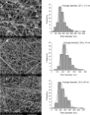
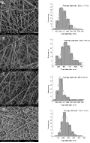
- pores. The pore formation on the shell surface is a potential mechanism for regulating the release of the core content [56][57]. A biomedical scaffold must possess suitable pore size and a high level of porosity. The porosity of the scaffold in tissue engineering applications should be adequate. A study
- an interconnected nanoarchitecture, forming a membrane with porosity that enhances surface hydrophobicity and promotes strong adhesion forces with water [61]. In core–shell nanofibers, the use of PLA as the shell inherently implies that the nanofibers will exhibit a hydrophobic surface due to the




The cement of the tube-dwelling polychaete Sabellaria alveolata: a complex composite adhesive material
Beilstein J. Nanotechnol. 2025, 16, 1998–2014, doi:10.3762/bjnano.16.138
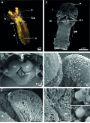
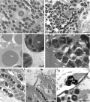
- of cement cells [13][15][26]. These bonds allow the adhesive to solidify within a few hours, potentially explaining the porosity gradient observed in the cement spots. Curing would prevent the spheroids from expanding further. As it likely begins at the free edge of the adhesive spot and progresses



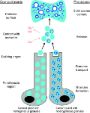
Current status of using adsorbent nanomaterials for removing microplastics from water supply systems: a mini review
Beilstein J. Nanotechnol. 2025, 16, 1837–1850, doi:10.3762/bjnano.16.127
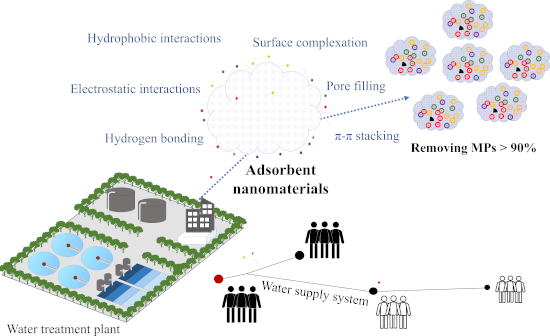
- , and the main mechanism involved electrostatic attractions between the positive charge of MPs and negatively charge of GAC [58]. Metal-organic frameworks. MOFs are highly ordered crystalline materials characterized by high porosity and large surface area (Figure 3). Their pore size, volume, and


Exploring the potential of polymers: advancements in oral nanocarrier technology
Beilstein J. Nanotechnol. 2025, 16, 1751–1793, doi:10.3762/bjnano.16.122
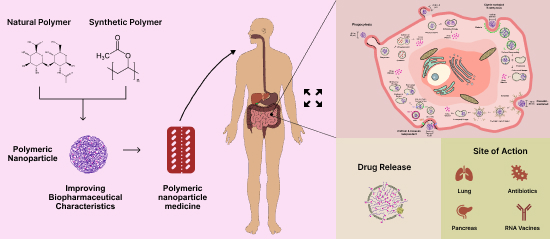
- porosity, crystallinity has a reduced impact on molecule release [61]. The influence on compound diffusion can be attributed to the polymer’s molecular weight, which affects the formulation’s behavior, aggregation, and architecture. Degradation products form more rapidly in polymers with lower molecular
- remains constant and independent of concentration gradients [28]. In addition to diffusion, drug transport through water-filled pores may also occur by convection. The porosity of the nanostructure promotes water influx, which is induced by osmotic pressure, facilitating drug release via osmotic pumping


Beyond the bilayer: multilayered hygroscopic actuation in pine cone scales
Beilstein J. Nanotechnol. 2025, 16, 1695–1710, doi:10.3762/bjnano.16.119
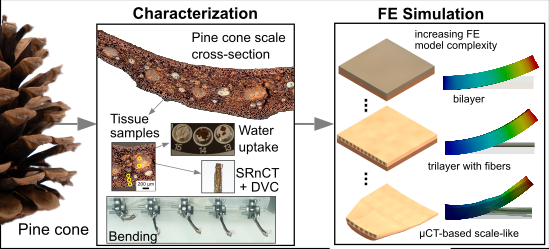
- tissues. Furthermore, they described a porosity gradient in the sclereid cell layer, without distinguishing between the sclereid cell layer and the brown tissue layer. The more porous adaxial sclereid cells they described are consistent with the earlier description of the brown tissue between the sclereid
- hand, while the sclereid layer remains relatively rigid. This porosity can also be seen in the cross sections we prepared (Figure 1) and in the CT images (Figure S4, Supporting Information File 2). Since the choice of probe tip for nanoindentation measurements of hierarchically structured biological


Nanotechnology-based approaches for the removal of microplastics from wastewater: a comprehensive review
Beilstein J. Nanotechnol. 2025, 16, 1607–1632, doi:10.3762/bjnano.16.114
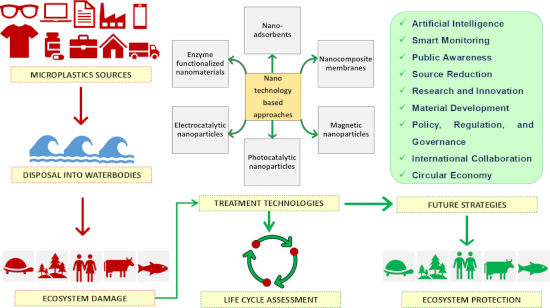
- environmental conditions and across a wide pH range, making them reliable materials for pollutant removal [83]. Sun et al. [84] studied the removal of MPs from water using a sustainable adsorbent composed of graphene oxide and chitin. The elastic nature of the sponge retains its high porosity, enabling
- contact angle decreasing from 84.6° ± 1° to 64.2° ± 1.2°), work of adhesion, wetting energy, porosity, and pore dimensions. Among various loadings, the membrane with 0.5 wt % MIL-100 (Fe) (M0.5) showed the best overall performance. It delivered a pure water flux over ten times higher than M0 and achieved


Photocatalytic degradation of ofloxacin in water assisted by TiO2 nanowires on carbon cloth: contributions of H2O2 addition and substrate absorbability
Beilstein J. Nanotechnol. 2025, 16, 1567–1579, doi:10.3762/bjnano.16.111
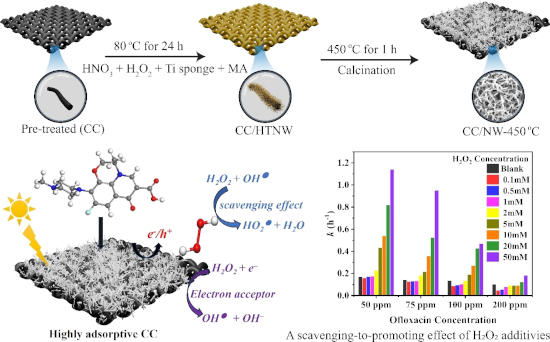
- −1 and a pore volume of 0.025 cm3·g−1, indicating limited surface area and porosity. The average pore diameter was 3.83 nm, suggesting the presence of mesopores (Supporting Information File 1, Figure S2). Note here that the carbon cloth substrate was included when evaluating the BET specific surface


Transient electronics for sustainability: Emerging technologies and future directions
Beilstein J. Nanotechnol. 2025, 16, 1545–1556, doi:10.3762/bjnano.16.109
- thick Mg trace for up to three weeks in PBS (pH 7.4, 37 °C). However, organic films suffer from intrinsic porosity due to their polymer chain structure, which limits their water-blocking performance compared to inorganic counterparts. In contrast, inorganic coatings, traditionally employed in the field


Laser processing in liquids: insights into nanocolloid generation and thin film integration for energy, photonic, and sensing applications
Beilstein J. Nanotechnol. 2025, 16, 1428–1498, doi:10.3762/bjnano.16.104
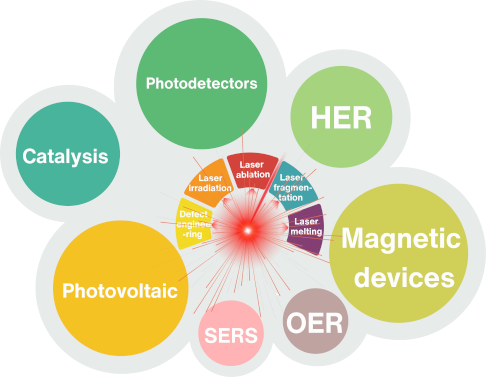
- deposited by doctor blade exhibit higher porosity and distinct clustering compared to those made by laser ablation. This increased porosity in the doctor blade films is likely responsible for the better dye absorption observed. However, a disadvantage of the doctor blade method is the poor adhesion of the






The role of biochar in combating microplastic pollution: a bibliometric analysis in environmental contexts
Beilstein J. Nanotechnol. 2025, 16, 1401–1416, doi:10.3762/bjnano.16.102
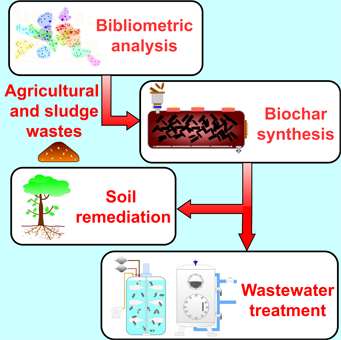
- interactions in soil [31]. Biochar properties The physical and chemical properties of biochar depend significantly on the composition of its feedstock [46]. Molecular model calculations and quantum chemistry analyses suggest that biochar derived from wood exhibits superior physical properties, such as porosity
- composition, and microbial community. Regarding soil physical properties, MPs modify porosity and aeration, which in turn disrupt water and air circulation, leading to soil compaction and dryness that adversely affect root development [52][54][56]. These changes are exemplified by the reduction in water



Enhancing the photoelectrochemical performance of BiOI-derived BiVO4 films by controlled-intensity current electrodeposition
Beilstein J. Nanotechnol. 2025, 16, 1289–1301, doi:10.3762/bjnano.16.94
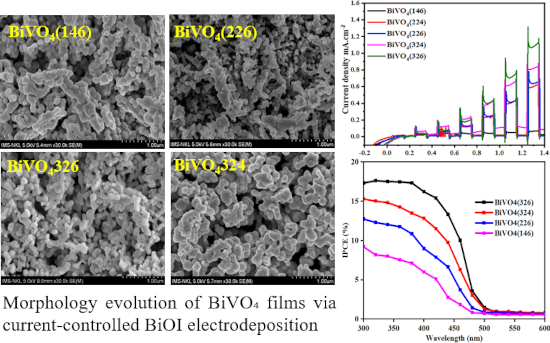
- charge carrier transport; however, their uneven porosity and high charge recombination rates hindered their PEC performance improvement. McDonald and Choi [19] introduced a facile electrodeposition method based on p-benzoquinone reduction to fabricate ultrathin BiOI films, which could be thermally
- optimize its conversion to BiVO4. By systematically adjusting the deposition current density and vanadium precursor concentration, we achieved fine control over the crystallinity, grain size, porosity, and optical properties of the resulting films. This level of tunability leads to substantial improvements
- )2 volumes, suggested improved charge separation and transport pathways. These voids facilitate the diffusion of the reactants and products, reducing the recombination rates and enhancing the water-splitting efficiency. The finer particle sizes and increased porosity, as observed for BiVO4(326



Influence of ion beam current on the structural, optical, and mechanical properties of TiO2 coatings: ion beam-assisted vs conventional electron beam evaporation
Beilstein J. Nanotechnol. 2025, 16, 1097–1112, doi:10.3762/bjnano.16.81
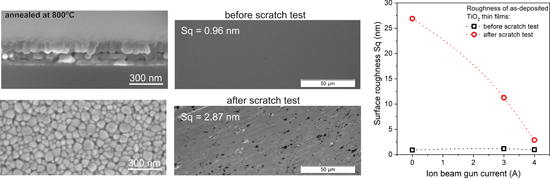
- substrates heated to 250 °C, the refractive index was 2.4. Packing density (PD) and porosity (P) of both as-deposited and annealed coatings were determined using the real part of refractive index. Packing density was calculated according to the Clausius–Mossotti relation [60][61]: where ρf and ρb represent
- the film and bulk densities of titania, respectively, while nf and nb denote the refractive indices of the TiO2 coatings and bulk material for amorphous titanium dioxide as 2.449 [43][61][62]. Porosity (P) was calculated based on the Equation 3 [63][64]: The highest packing density (0.87) and the
- lowest porosity (28.6%) were obtained for coatings deposited with the highest value of additional Iibg = 4 A, while the opposite values were obtained for film deposited using the conventional EBE process (Table 4). Annealing seems to play a key role in modifying the structure of the deposited TiO2




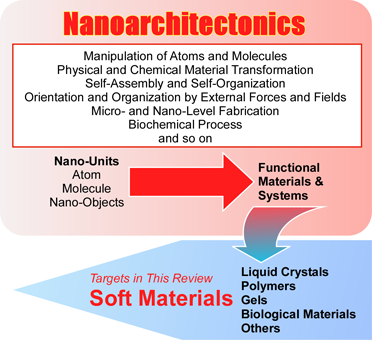
Soft materials nanoarchitectonics: liquid crystals, polymers, gels, biomaterials, and others
Beilstein J. Nanotechnol. 2025, 16, 1025–1067, doi:10.3762/bjnano.16.77
- involved the sequential organization of a colloidal suspension comprising polyaniline/polystyrene sulfonate and ZIF-8 MOF nanocrystals coated with polyallylamine hydrochloride (Figure 14). This functional electrode was designed to combine two key elements, that is, high surface area and porosity with






Supramolecular hydration structure of graphene-based hydrogels: density functional theory, green chemistry and interface application
Beilstein J. Nanotechnol. 2025, 16, 806–822, doi:10.3762/bjnano.16.61
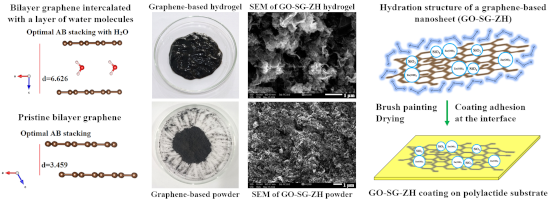
- nanosheets, SG nanoparticles, and ZH nanostructures are attractive to water molecules to form hydration shells on the surfaces. In addition to hydration layers, the three-dimensional assembly of graphene-based nanosheets provides high porosity as water reservoirs which supply water to intersheet spacings
- nanosheets agglomerated and stacked together to form big particles (size of hundreds of micrometers, Figure 3e). The GO-SG-ZH particles had low porosity or small spacing between graphene-based nanosheets (Figure 3f). Besides, the GO-SG-ZH hydrogel was spread on a carbon tape and dehydrated for SEM imaging





