Search results
Search for "pressure" in Full Text gives 1097 result(s) in Beilstein Journal of Nanotechnology. Showing first 200.
Nanoglasses: a trail towards uncharted regions of vitreous materials and their properties?
Beilstein J. Nanotechnol. 2026, 17, 1047–1062, doi:10.3762/bjnano.17.72

- nanoparticles at elevated compaction pressure, enabling room-temperature processing [4][5][6], or through energetic deposition of amorphous clusters [42][43]. Consequently, when vitreous powder particles are compacted at low homologous temperatures, interfacial regions arise between the glass “grains


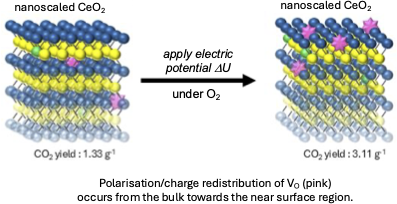
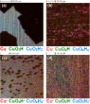
Influence of an external electric field on the catalytic CO oxidation of nanoscaled CeO2 and its La3+ and Gd3+ congeners
Beilstein J. Nanotechnol. 2026, 17, 1028–1038, doi:10.3762/bjnano.17.70
- pump (GK-M-12/02) and a pressure transducer (PAA33X-V-30 (0–30 bar), accuracy of 0.05% and resolution of 0.002%) were purchased from Gardner Denver Thomas GmbH, Germany and Omega Newport electronics GmbH, Germany, respectively. The FTIR spectra were recorded from 400 to 4000 cm−1, considering
- exposed to the catalyst in a controlled manner. The pressure in the system was monitored using a pressure transducer, whose output signal was read with a multimeter. The pressed catalyst pellet was placed in the sample chamber at the end of the cell. The catalyst amounts are shown in Supporting
- was kept under vacuum and cooled to room temperature before gas dosing. During the vacuum pre-treatment and before gas dosing, the pressure reading was close to zero within the resolution of the pressure-monitoring system. The vacuum spectrum was recorded in this step. The CO-containing gas mixture
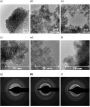


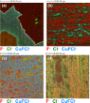
Synthesis and characterization of RF-sputtered ZnTe/Cu2−xTe thin films for solar cell applications
Beilstein J. Nanotechnol. 2026, 17, 1016–1027, doi:10.3762/bjnano.17.69
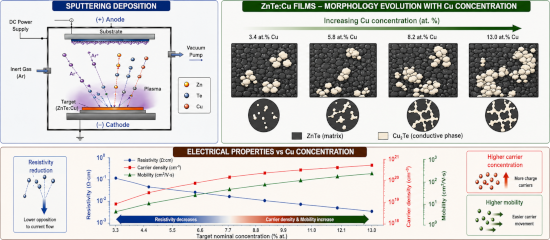
- reported to occur at temperatures below 250 °C in RF sputtering systems [20]. The base pressure prior to deposition was ≈10−5 Torr and the working pressure during growth was maintained at approximately ≈2 × 10⁻³ Torr. The targets were pre-sputtered for 5 min to remove surface contaminants, and the
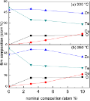

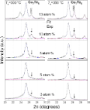


Ultrasonic irradiation in the synthesis of nanohydroxyapatite: a chemically friendly technique for improving hemocompatibility and antibiofilm applications
Beilstein J. Nanotechnol. 2026, 17, 991–1015, doi:10.3762/bjnano.17.68
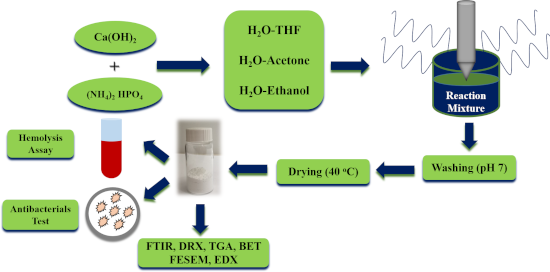
- simplicity of the reaction medium, low energy consumption, and short processing times required to obtain the products, nHA synthesis carried out with ultrasonic irradiation complies with the precepts of green chemistry. Specifically, this method operates at low temperatures and atmospheric pressure
- . Since all nanohydroxyapatite synthesis reactions were conducted at room temperature (approximately 25 °C) and atmospheric pressure (around 0.96 atm), values reported in the literature (ΔGf = −12670 kJ/mol for hydroxyapatite and −1128 kJ/mol for calcite [58][59]) can be used to justify the formation
- indicates the degree to which hydroxyapatite will dissolve in water or biological fluids at standard temperature and pressure: The equilibrium constant for the dissolution reaction of HA in a saturated solution is given by Equation 15: This low solubility is vital in biological systems such as bones and




Enhanced erosion resistance and radiation stability of WC–WO3 nanocomposite films under 100 keV Kr+ ion irradiation
Beilstein J. Nanotechnol. 2026, 17, 922–934, doi:10.3762/bjnano.17.65
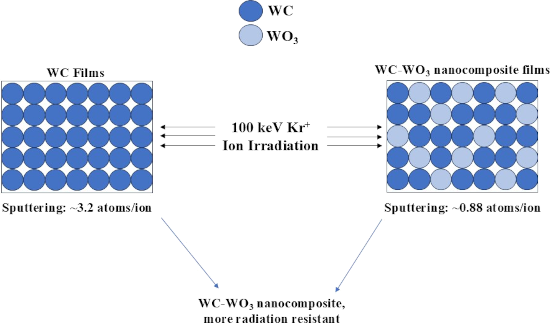
- backed by a rotary pump. The deposition was done under 3 × 10⁻² mbar pressure with a power of 150 W RF for 30 min in the presence of argon gas having flow rate of 30 sccm. The WC–WO3 nanocomposite films were synthesized using sputter deposition of WC films at room temperature (RT) and its subsequent



Nanocarrier strategies to overcome P-glycoprotein-mediated drug resistance in cancer therapy
Beilstein J. Nanotechnol. 2026, 17, 882–921, doi:10.3762/bjnano.17.64
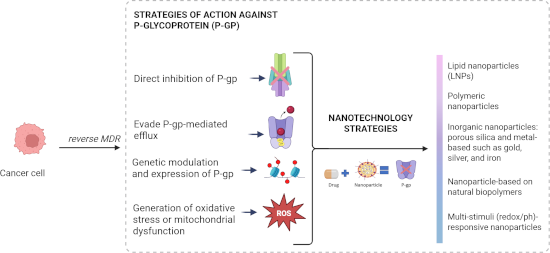
- genetic and epigenetic alterations within tumor cells, as well as structural features of the TME present prior to any therapeutic challenge. Acquired resistance, by contrast, emerges following exposure to chemotherapeutic agents and reflects selective pressure exerted by treatment itself [12][13]. In both


Supramolecular one-dimensional conducting nanofibers from a C3-symmetric tetrathiafulvalene derivative
Beilstein J. Nanotechnol. 2026, 17, 872–881, doi:10.3762/bjnano.17.63
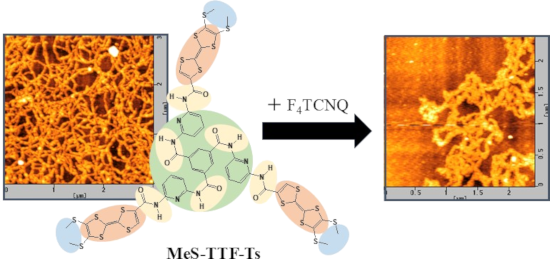
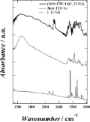
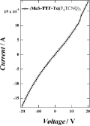
- reduced pressure, the residue was extracted with chloroform and washed with brine. The organic layer was dried over MgSO4, filtered, and concentrated under reduced pressure. The crude product was purified by recrystallization from acetone to afford compound 2 as yellow needle crystals. Yield 401.0 mg
- -dithiole-2-thioxo-4,5-dicarboxylate (999.6 mg, 3.99 mmol) in chloroform (40 mL). The reaction mixture was stirred at 25 °C for 1 h. The mixture was filtered through Celite and washed with chloroform. The solvent was removed under reduced pressure, and the residue was purified by column chromatography
- mg, 1.59 mmol) were dissolved in a mixture of triethyl phosphite (10 mL) and toluene (10 mL). The reaction mixture was refluxed at 110 °C for 2 h. After removal of the solvent under reduced pressure, toluene (100 mL) was added to the residue and evaporated under reduced pressure. This procedure was


Sustainable fabrication of 2D-based devices through reuse of substrates with microfabricated electrodes
Beilstein J. Nanotechnol. 2026, 17, 818–827, doi:10.3762/bjnano.17.58
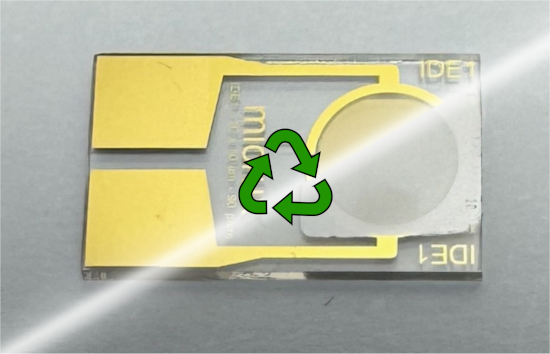
- its ability to penetrate microscopic gaps [24]. Heating to 50 °C can help weaken the van der Waals interactions between the 2D flakes and the substrate. Simultaneously, ultrasound agitation enhances molecular diffusion and promotes cavitation, generating localized pressure fluctuations that further
- out using a roll-to-roll setup. Nitto SPV 224 tape was applied on the surfaces of two polyoxymethylene cylinders with a perimeter ratio of 53:23 [32]. A bulk van der Waals material was placed on one cylinder, and the system was rotated under moderate pressure (20–40 N) at ≈1500 rpm for 50 s, resulting
- identified by transmission optical microscopy and then confirmed by differential reflectance spectroscopy [38][39][40]. Monolayer CVD-MoS2 flakes were grown by chemical vapor deposition using a NaCl-assisted ambient-pressure CVD approach, following established procedures reported in the literature [35][36


Tuning the electronic properties of defect-rich MoS2
Beilstein J. Nanotechnol. 2026, 17, 796–805, doi:10.3762/bjnano.17.56
- contamination-free surface could be confirmed. The samples were sputtered with a IQE 10 ion source (SPECS GmbH, Berlin, Germany) using Ar and Ne gas (purity: 4.5, Linde plc, Dublin, Ireland and Westfalen AG, Münster, Germany). The pressure in the vacuum chamber was maintained at a constant level of 5 × 10⁻⁵
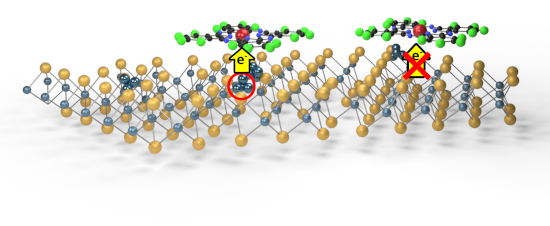
- °C and a pressure of approximately 1 × 10⁻⁷ mbar using a Knudsen cell. Via a quartz crystal microbalance, the deposition rate was determined as 0.1–0.2 nm·min−1. The nominal layer thickness of the deposited CoPcF16 molecule on the MoS2 substrate was calculated by comparing core level intensities of


Restorative potential of laser-synthesized silver nanoparticles with Salvia officinalis for periodontal disease treatment: an in vitro study
Beilstein J. Nanotechnol. 2026, 17, 781–795, doi:10.3762/bjnano.17.55
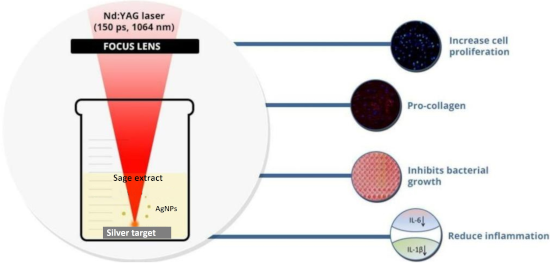
- was filtered (5–13 μm, Lab Logistic Group), frozen at −20 °C overnight, and lyophilized under 400 Pa vacuum pressure. The lyophilizate was subsequently filtered (0.2 μm, Minisart®, Sartorius) and reconstituted in sterile water to a concentration of 100 mg·mL−1. After preparing the extract, the



Tailoring Ag–Pt nanoalloys through solid-state dewetting: structural and optical insights
Beilstein J. Nanotechnol. 2026, 17, 748–759, doi:10.3762/bjnano.17.52

- composition of the nanostructures. Due to the higher vapor pressure of Ag atoms, they can preferentially desorb from the nanostructures, and the rate of Ag sublimation exponentially increases with temperature [51][52][53]. Additionally, based on lower-magnification SEM images of the nanostructures, we
- temperature, with a pressure below 1.1 × 10⁻⁸ mbar. The results were calibrated to the C 1s line and analyzed using Shirley background subtraction and a Gaussian–Lorentzian curve as the fitting algorithm by the CasaXPS software. Additionally, detailed investigations of the microstructure and chemical




Oxidative atmosphere-driven formation of single-phase spinel CuRh2O4 nanofibers for alkaline water oxidation
Beilstein J. Nanotechnol. 2026, 17, 737–743, doi:10.3762/bjnano.17.50
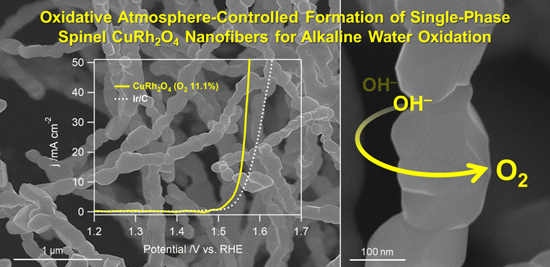
- particularly sensitive to the synthetic environment because Cu readily changes its oxidation state (Cu0/Cu+/Cu2+) depending on the oxidative atmosphere during annealing [9][10]. As a result, slight variations in oxygen partial pressure can significantly alter phase evolution and often lead to undesired




Environmental applications of silver nanoparticles: state-of-the-art review and emerging trends
Beilstein J. Nanotechnol. 2026, 17, 697–736, doi:10.3762/bjnano.17.49
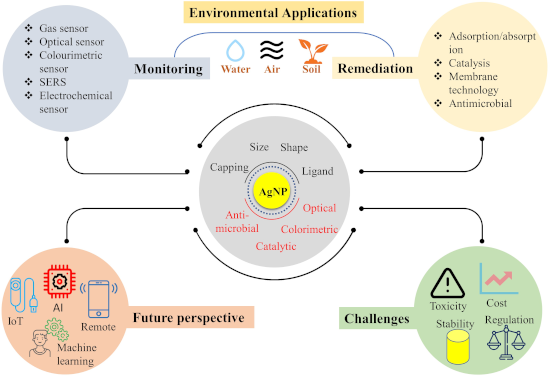
- and PM removal [155]. The study reported the removal of PM2.5 (99.99%), a low-pressure drop (31 Pa), and the removal of aerosol pollutants (SOx, NOx, methylbenzene, and ʟ-nicotine). The nanosystem inhibits E. coli, S. aureus, and Porcine deltacoronavirus with no significant toxicity. This indicates
- incorporated in PVDF nanofiber membranes were synthesised for improved air purification, achieving efficiencies of 99.95–99.97% and a pressure of 137.5 Pa. Additionally, 99.6% inhibition of S. aureus and E. coli was achieved after exposure to sunlight for two weeks [157]. Chitosan-stabilised AgNPs incorporated
- highly efficient air filtration system. The results were 99.78% (PM2.5) filtration efficiency, low-pressure drop (61.15 Pa), and enhanced zone of inhibition (100–141%) [159]. A side-by-side nanofiber was designed with ZnO on one and AgNPs on the other side for air pollutant removal application. The


Decontamination from water pollutants and pathogens by electrospun nanofibers doped with heavy-atom-free borafluorene-BODIPY photosensitizers
Beilstein J. Nanotechnol. 2026, 17, 668–682, doi:10.3762/bjnano.17.46
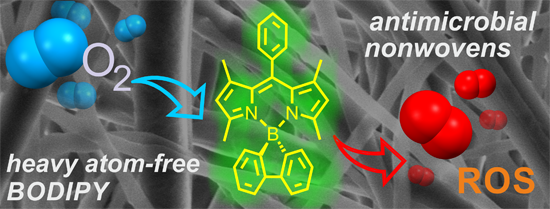
- ) analysis was done with an AXIS Supra+ (Kratos Analytical) instrument equipped with a monochromatic Al Kα X-ray source (hν = 1486.6 eV, operating at 10 mA, 15 kV). The system base pressure was pb = 3.9·10−9 Torr. The pass energy was set to 160 eV (scanning step 0.9 eV) for survey spectra acquisition and 20
- work of photocatalyst. After irradiation, the liquid phase was removed from the vial, the material was washed with distilled water, dried under reduced pressure (1 mbar, 25 °C, 1 h), and used in the next run without any additional treatment. Figure 11 shows some oscillations in the decomposition rates



Cellulose as a photocatalyst support material: extraction, structural features, and environmental applications
Beilstein J. Nanotechnol. 2026, 17, 635–652, doi:10.3762/bjnano.17.44
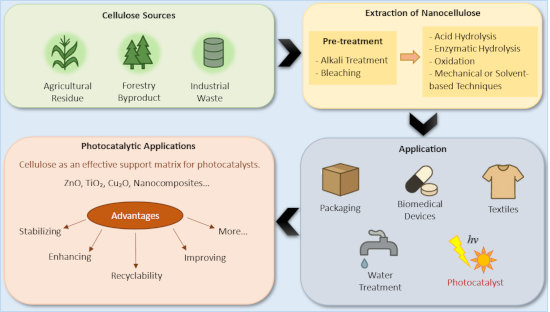
- potentially recovering and reusing the dissolved sugars [8]. Ionic liquids treatment serves as promising green alternatives to harmful organic solvents and their negligible vapor pressure makes them particularly attractive. Unlike traditional solvents, ionic liquids are non-flammable and possess unique
- conditions [62]. Unlike conventional solvents, ILs are non-flammable, thermally stable, and exhibit negligible vapor pressure, which not only minimizes safety hazards but also reduces volatile emissions, making them attractive for sustainable applications. Their effectiveness arises from unique molecular
- nanofibers from biomass. It operates through two main steps involving high-pressure steaming followed by rapid pressure release [54][55]. In the first stage, dry biomass absorbs steam under elevated pressure and temperature, and when the pressure is suddenly released, the rapid drop causes instant water


Defects and defect-mediated engineering of two-dimensional materials: challenges and open questions
Beilstein J. Nanotechnol. 2026, 17, 454–488, doi:10.3762/bjnano.17.31
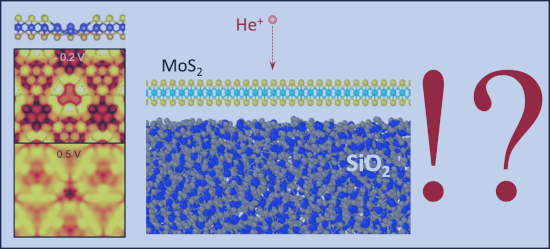
- a comparison to the theory difficult. A possible solution is to use a different strategy: For systematic studies of the thermodynamic conditions (background pressure and temperature), synthesis systems need to be developed that allow to vary these conditions (partial pressures of the constituents
- energy shifts and peak shapes [179][180][181][182][183][184][185][186][187]. Complementing XPS, scanning X-ray photoelectron microscopy (SPEM) provides spatially resolved chemical information at the nanoscale, and near-ambient pressure XPS enables real-time monitoring of the chemical reactivity of





Nanocarrier-integrated multilayer films produced by 3D printing for improved skin adhesion and curcumin photostability
Beilstein J. Nanotechnol. 2026, 17, 440–453, doi:10.3762/bjnano.17.30
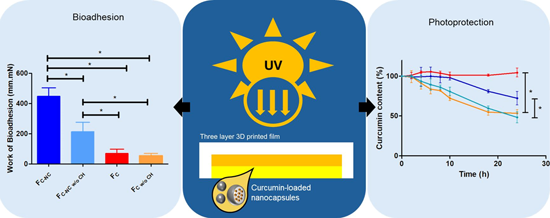
- aqueous phase under moderate stirring (the temperature and agitation speed parameters were the same as those of the organic phase). The aqueous phase was composed of 0.077 g of polysorbate 80 and 54 mL of ultrapure water. Acetone was removed under reduced pressure, and the resulting suspensions were
- pressure at 40 °C, a procedure widely employed in the nanoprecipitation-based preparation of polymeric nanocapsules. Considering the high volatility and water miscibility of acetone and its classification as a class-3 solvent (ICH Q3C), residual levels are expected to be minimal after evaporation


Biomimetic nanoparticles in cancer photodynamic therapy: a review of targeted delivery systems and therapeutic outcomes
Beilstein J. Nanotechnol. 2026, 17, 396–422, doi:10.3762/bjnano.17.27
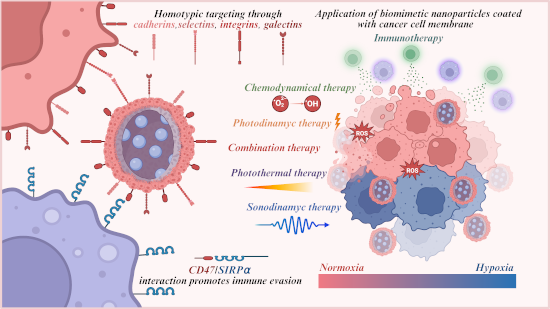
- lysis is essential for the extraction of biomimetic membranes; the membrane composition is directly influenced by the severity of the lysis method. Common techniques include (i) ultrasound, that is, membrane rupture via pressure waves (20–50 kHz), requiring precise control to prevent heat damage [54
- ]; (ii) freeze–thaw cycles, that is, cell disruption via narrow pores (enhanced at low temperatures) [55]; (iii) mechanical shearing, that is, cell disruption via narrow pores (enhanced at low temperatures) [56]; and (iv) osmotic pressure, that is, hypotonic solutions are used to induce swelling and


Interconnection morphology effects on the radio frequency response of carbon nanotube sponges
Beilstein J. Nanotechnol. 2026, 17, 343–351, doi:10.3762/bjnano.17.23
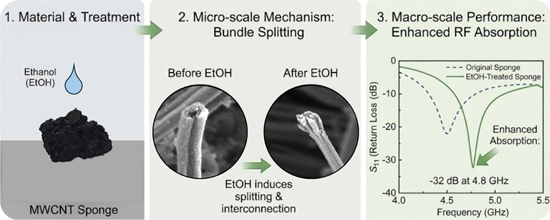
- . Before the growth process, the pressure was brought to 1 atm by introducing a mixture of argon and hydrogen (30 and 20 sccm, respectively) through a stainless steel pipe. A solution containing ferrocene (2.3 wt %) dispersed in 10 mL of ethanol and stirred for 4 h was injected at a constant rate (5 mL·h−1
- pipe during the growth process. (3) The pressure of the gas mixture (argon, acetylene, and hydrogen at 200, 80, and 100 sccm, respectively) was higher than that adopted for the growth of the CNT film. (4) The process duration was 2 h. After cooling down the system, the reaction products were directly
- were performed in an ultrahigh-vacuum chamber (base pressure below 10−10 bar) equipped with a semi-imaging analyser MAC 2 (Riber Instruments) operating in the constant pass energy mode (with a total energy resolution of 1.1 eV). Non-monochromatic Al Kα radiation (1486.6 eV) was used (8 kV, 8 mA). The




Beam shaping techniques for pulsed laser ablation in liquids: Unlocking tunable control of nanoparticle synthesis in liquids
Beilstein J. Nanotechnol. 2026, 17, 309–342, doi:10.3762/bjnano.17.22
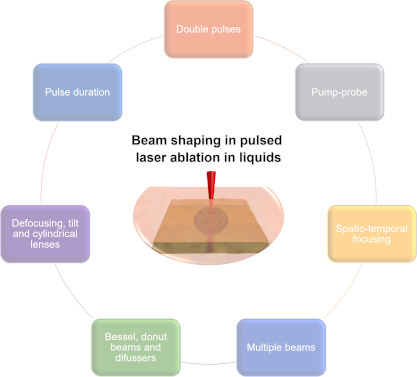
- geometry alters the internal pressure distribution and collapse dynamics, affecting the interaction between the plasma plume, shock waves, and the surrounding liquid. Consequently, both the light-induced welding and the anisotropic cavitation bubble dynamics are key factors determining the formation of the
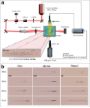
- hundred femtoseconds, indicating a swift breakdown of material under the laser influence. Besides, at lower fluences, photomechanical spallation occurs, which involves moderate temperature and pressure, removing material with minimal vaporisation [179]. Surface ripples appear, and the machining area







Fast vortex dynamics and relaxation times in NbRe-based heterostructures
Beilstein J. Nanotechnol. 2026, 17, 292–302, doi:10.3762/bjnano.17.20
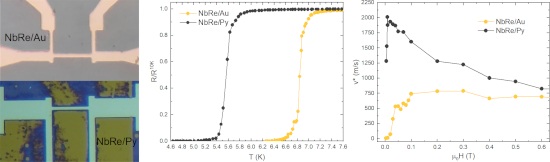
- on SiO2 substrates. The base pressure was P = 2.2 × 10⁻⁸ mbar, and the Ar pressure during the deposition was = 6.6 μbar, = 12 μbar and = 6.3 μbar. During the deposition, the film thickness was monitored in situ by a thickness monitor, which provides a real-time measurement of the growth rate. The


Multilayered hyperbolic Au/TiO2 nanostructures for enhancing the nonlinear response around the epsilon-near-zero point
Beilstein J. Nanotechnol. 2026, 17, 251–261, doi:10.3762/bjnano.17.17
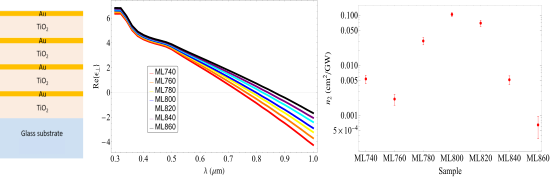
- electron beam and Au layers via Joule effect deposition, both at a deposition rate of 0.15 nm·s−1 and a base pressure of 2 µTorr. The target thickness for Au was 10 nm, while that of TiO2 was varied from 44 to 72 nm to achieve ENZ properties at or around the working wavelength of 800 nm. Every structure


Comparative study on 3D morphologies of delignified, single tracheids and fibers of five wood species
Beilstein J. Nanotechnol. 2026, 17, 239–250, doi:10.3762/bjnano.17.16
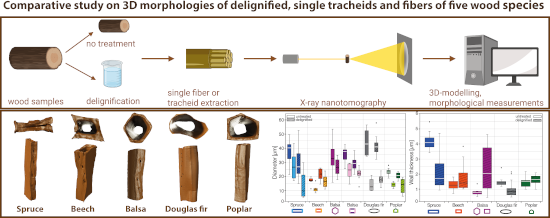
- a key role in preventing cell collapse under high tensile stress or/and inner pressure exerted by the water column during transpiration [8]. Wood delignification is a crucial process in various industries, particularly pulp and paper production, biofuel generation, and the development of advanced
- , first using distilled water and acetone (1:6, v/v, ≥99.5%, Carl Roth, Karlsruhe, Germany), followed by toluene (≥99.5%, Carl Roth) for 24 h each. Afterwards, toluene was washed out by extraction with ethanol for 2 h, and the samples were dried at reduced pressure overnight (15 mbar, 40 °C). For


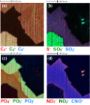
Time of flight secondary ion mass spectrometry imaging of contaminant species in chemical vapour deposited graphene on copper
Beilstein J. Nanotechnol. 2026, 17, 200–213, doi:10.3762/bjnano.17.13
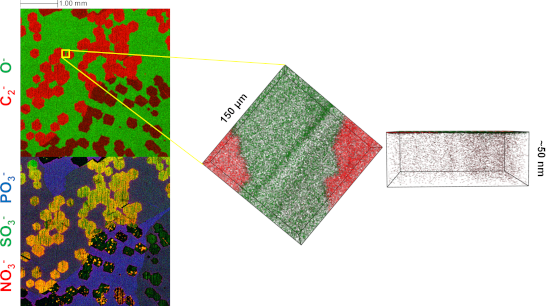
- roughness, measured over an area of 230 µm × 300 µm, from the BO, Ar, and Ar:H2 samples all had Ra values of ≈300 nm, with the EP value decreasing to ≈200 nm [43]. All graphene growth experiments were carried out in a commercial Aixtron Black Magic Pro 4-inch cold wall CVD system at a base pressure of ≈1
- reactor cooled to room temperature in an Ar only atmosphere. During all stages of the process, a pressure of 50 mbar was regulated via a PID controlled outlet valve. Ex situ ToF-SIMS measurements were performed using a TOF SIMS IV instrument (ION-TOF Gmbh, Germany) at a vacuum pressure of <5 × 10⁻⁹ mbar





Subdigital integumentary microstructure in Cyrtodactylus (Squamata: Gekkota): do those lineages with incipiently expressed toepads exclusively exhibit adhesive setae?
Beilstein J. Nanotechnol. 2026, 17, 38–56, doi:10.3762/bjnano.17.4
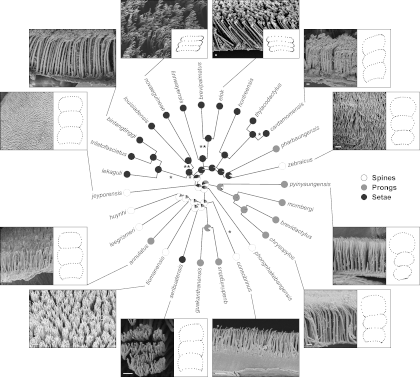
- incorporated into the locomotor cycle. Since terrestrial and generalist Cyrtodactylus are prevalent in closed habitats and putatively rely more on crypsis than maximum escape speed for predator avoidance [40][86], this trade-off might not pose such a significant selective pressure associated with the secondary
- surface roughness at a scale pertinent to the size and interactions of the epidermal microstructures are generally scarce [30][31][33][80][83][92] and non-existent for arboreal Cyrtodactylus. Among all ecotypes analysed, the crown habitat of trees apparently imposes the strongest selective pressure on