Search results
Search for "proteins" in Full Text gives 429 result(s) in Beilstein Journal of Nanotechnology. Showing first 200.
Nanocarrier strategies to overcome P-glycoprotein-mediated drug resistance in cancer therapy
Beilstein J. Nanotechnol. 2026, 17, 882–921, doi:10.3762/bjnano.17.64
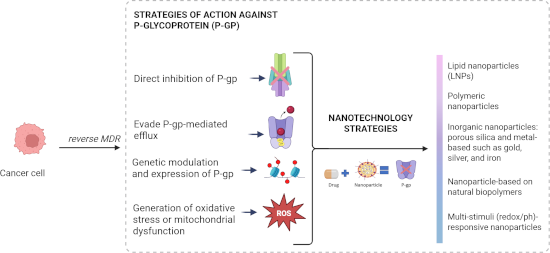
- pathways falls outside its primary scope. A schematic overview of P-gp-mediated resistance and nanocarrier-based strategies to overcome it is provided in Figure 1. 1.3 P-glycoprotein as a therapeutic target The ATP-binding cassette (ABC) superfamily comprises proteins that couple ATP binding and hydrolysis
- . Lipid nanoparticles (LNPs) are nanoscale drug delivery systems composed of lipids that enable the encapsulation and transport of active substances such as drugs, nucleic acids, proteins, and other therapeutic compounds [43]. These structures reduce systemic toxicity and improve therapeutic efficacy and
- proteins and nucleic acids from premature degradation and rapid clearance by the body. Unlike other solid nanoparticles, such as metallic ones, polymeric nanoparticles can have empty or permeable internal structures that provide higher drug-loading capacity. Besides, their surface can be functionalized


Restorative potential of laser-synthesized silver nanoparticles with Salvia officinalis for periodontal disease treatment: an in vitro study
Beilstein J. Nanotechnol. 2026, 17, 781–795, doi:10.3762/bjnano.17.55
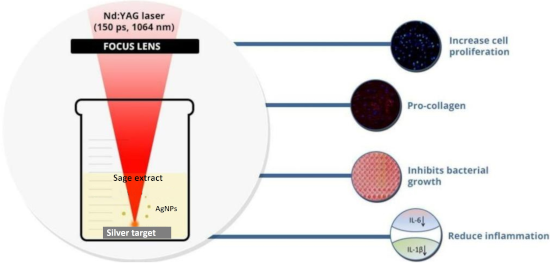
- a microplate reader at 560 nm (Sunrise, Tecan). The collagen standard was used to construct the calibration curve, and the values were normalized per milligram of proteins in the samples. Results were presented as percentage of TCC compared to the control. Analysis of pro-inflammatory cytokine
- interactions with proteins and ions, which makes direct quantification of free Ag+ ions challenging [47]. Interestingly, SageAgNPs6mJ demonstrated toxicity toward bacterial cells without decreasing the viability of GFCs at the same concentration, thus achieving antimicrobial efficacy without cellular damage



Interface-engineered Caco-2 cell culture on a collagen-coated liquid–liquid interface in a microfluidic device
Beilstein J. Nanotechnol. 2026, 17, 760–768, doi:10.3762/bjnano.17.53
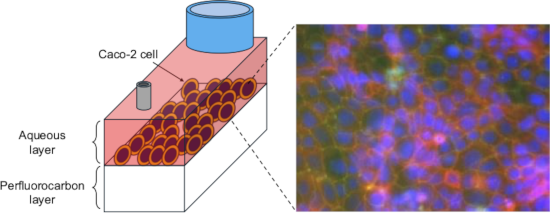
- investigation of epithelial barrier formation, transport functions, and mechanobiological responses that are otherwise difficult to isolate in conventional solid-supported systems. Moreover, when functionalized with extracellular matrix proteins, such interfaces can support uniform epithelial maturation and


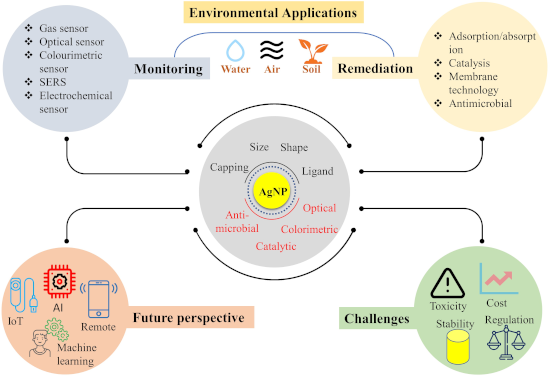
Environmental applications of silver nanoparticles: state-of-the-art review and emerging trends
Beilstein J. Nanotechnol. 2026, 17, 697–736, doi:10.3762/bjnano.17.49


Protein-based custom-designed molecular nanotraps for biomedical applications
Beilstein J. Nanotechnol. 2026, 17, 683–687, doi:10.3762/bjnano.17.47

- stability, but raise concerns when intended for therapeutic uses and systemic administration. Overcoming adverse effects, allergic reactions, and toxic degradation by-products led us to conceptualize nanoMIPs in a radically new way. Recently, the original use of natural polymers, in particular of proteins
- , as building blocks for the synthesis of imprinted bioderived materials was proposed, referring to them as bioMIPs [5][6]. Imprinting with biopolymers, such as proteins, could revolutionize the field and, ultimately, shape a new class of therapeutics and medical devices. The bioMIPs, by being fully
- of bioMIPs be made? The answer is deeply linked to the intended final application. Natural polymers, such as polysaccharides, proteins, oligonucleic acids, and terpenes, offer a large variety of physicochemical properties deriving from their chemical structures [8]. Overall, proteins stand out for

Towards targeted drugs and next generation of nanomedicines
Beilstein J. Nanotechnol. 2026, 17, 598–601, doi:10.3762/bjnano.17.41
- clinically approved nanomedicines such as Doxil or Abraxane used "natural nanoparticles" (i.e. lipid vesicles and proteins) for changing the biodistribution of pharmaceutical drugs, there is hope that fully synthetic engineered nanoparticles may be used in the future. There is, thus, a large potential for
- protein binding in order to avoid immune cell recognition and clearance, hence prolonging nanomedicine circulation time, in some cases the adsorbed endogenous proteins may provide this endogenous targeting capacity [28][29]. First evidence of this type of targeting has been reported for Onpattro, the
- interaction with the low density lipopoprotein receptor (LDLR) on the hepatocytes [29]. Other examples of nanomedicines exploiting endogenous targeting are the so-called selective organ-targeting (SORT) lipid nanoparticles, which adsorb different corona proteins on their surface depending on their charge
Nanoinformatics: spanning scales, systems and solutions
Beilstein J. Nanotechnol. 2026, 17, 423–427, doi:10.3762/bjnano.17.28
- milk consisting of the six most abundant milk proteins found in natural cow milk and lactose, the most abundant sugar found in dairy products, based on their corresponding interaction strengths. The resulting freely accessible multiscale computational model enables predictions of the binding strength

Biomimetic nanoparticles in cancer photodynamic therapy: a review of targeted delivery systems and therapeutic outcomes
Beilstein J. Nanotechnol. 2026, 17, 396–422, doi:10.3762/bjnano.17.27
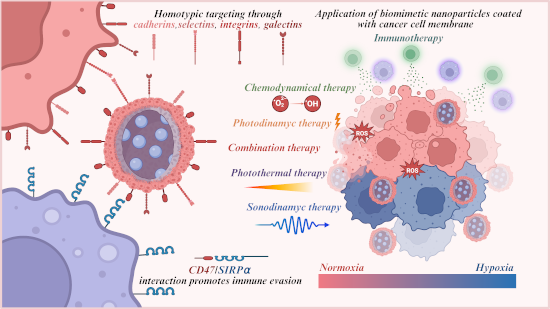
- ][12]. Biomimetic nanoparticles (BNPs) represent a transformative novel approach for PS delivery [13]. By mimicking biological structures, such as cell membranes, proteins, or endogenous carriers, BNPs enhance PS delivery through improved biocompatibility, immune evasion, and active tumor targeting
- have been explored as sources for biomimetic membranes to coat nanoparticles such that inherent biological functions and properties of specific cells could be exploited to enhance the performance and versatility of BNPs. According to some authors, biomimetic systems comprising proteins from cells to
- imitate the biological identity of cells through the corresponding surface proteins and clusters of biological molecules; these modifications enable the actions of aforementioned technologies and provide the particles with new functions. Limitations of biomimetic nanoparticles The clinical translation of


Polycatecholamine nanocoatings on stainless steel: the effect on attachment of human fibroblasts and platelets
Beilstein J. Nanotechnol. 2026, 17, 365–380, doi:10.3762/bjnano.17.25
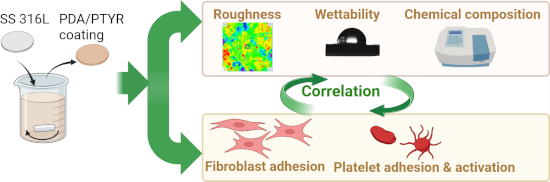
- the medium proteins to the surfaces and cells interact with surfaces through the protein layer [39]. Many previous reports demonstrated that grooves on the surface enhance fibroblast adhesion [28][40][41], but it has also been established that there is a roughness threshold for cell attachment that
- -thrombogenic plasma proteins, such as fibrinogen, which is present in PRP and was used for the study [46]. This can lead to the formation of fibrin clots on the biomaterial surface [47]. To date, PDA coatings prepared using a traditional way (slow air oxidation) have been known for increasing the adhesion of




Advancing nanolithography: a comprehensive review of materials for local anodic oxidation with AFM
Beilstein J. Nanotechnol. 2026, 17, 275–291, doi:10.3762/bjnano.17.19
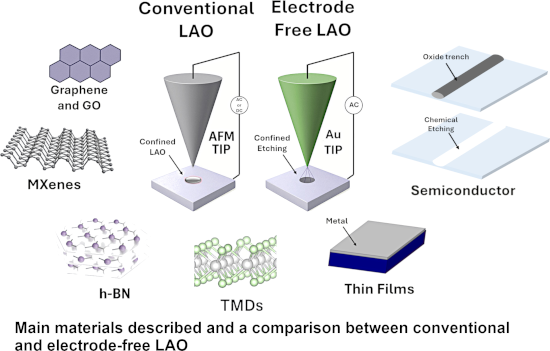
- polymers can be selectively oxidized to create hydrophilic regions or chemically reactive sites, enabling controlled interactions with proteins, cells, or other biomolecules. However, challenges remain in ensuring that the LAO process does not degrade the material’s biocompatibility or structural integrity


From shield to spear: Charge-reversible nanocarriers in overcoming cancer therapy barriers
Beilstein J. Nanotechnol. 2026, 17, 159–175, doi:10.3762/bjnano.17.10
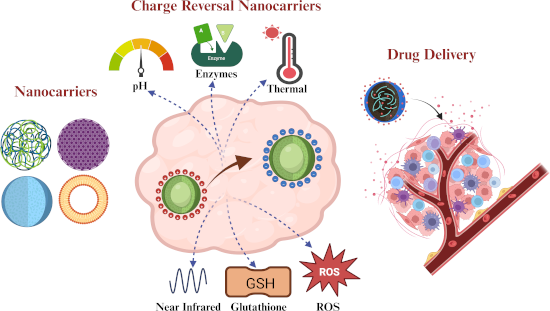
- biodistribution while protecting fragile biomolecules such as proteins and nucleic acids [11]. Through targeted and sustained release, these systems enhance therapeutic efficacy, prolong circulation, and reduce systemic toxicity compared to conventional formulations [12][13]. As illustrated in Figure 1
- physicochemical parameters, the surface charge is essential for determining nanocarrier interactions with biological membranes, cellular uptake, and biodistribution [17]. With a positive charge, the nanocarrier tends to be absorbed by high plasma proteins and cleared faster from the bloodstream. In contrast
- et al. developed a dual immune checkpoint-inhibiting nanocarrier, aLS@VpNPs, which is cloaked with triple-negative breast cancer (TNBC) cell membranes and incorporates anti-LAG3 and Siglec10 proteins. This biomimetic design enhances tumour targeting and biocompatibility. Moreover, the nanocarrier is


Influence of surface characteristics on the in vitro stability and cell uptake of nanoliposomes for brain delivery
Beilstein J. Nanotechnol. 2026, 17, 139–158, doi:10.3762/bjnano.17.9
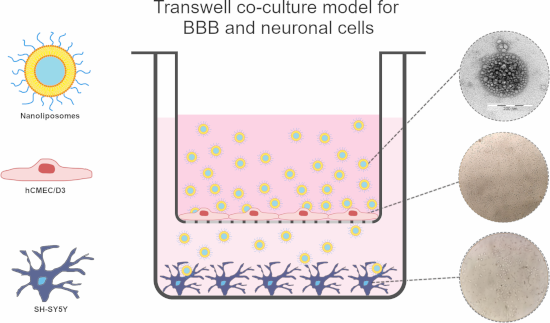
- NLs interact with biomolecules, thus forming a protein corona (PC), altering functional proteins, and engaging in redox reactions with reactive species [6]. These interactions can affect the functionality, biodistribution, targeting, and cell internalization of NLs. Serum components can disrupt the
- lipid structure of NLs, leading to AC leakage, while plasma protein adsorption may cause particle aggregation [7]. In this sense, the presence of proteins in the tissue environment can alter cellular uptake of both cationic and anionic carriers [8]. In short, our understanding of how nanodelivery
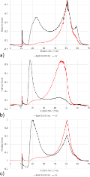
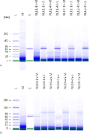
- set to 1.38 and 0.010, respectively. Water was set as the dispersant, the temperature was set to 25 °C, while the attenuation was set to 11. The 'general purpose (normal distribution)' was chosen as the analysis model. High-resolution automated electrophoresis of the adsorbed proteins onto




Development and in vitro evaluation of liposomes and immunoliposomes containing 5-fluorouracil and R-phycoerythrin as a potential phototheranostic system for colorectal cancer
Beilstein J. Nanotechnol. 2026, 17, 97–121, doi:10.3762/bjnano.17.7
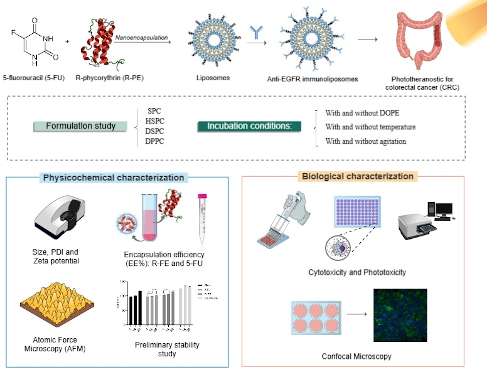
- lipophilic substances. Furthermore, liposomes can also act as a protein delivery system, reducing enzymatic degradation of proteins and enhancing their stability and their permeability through cell membranes [7]. Immunoliposomes provide many advantages by surface functionalization with targeting biomolecules
- extracted R-PE (0.73) suggests the presence of other biomolecules – such as polysaccharides and residual proteins – which may further contribute to membrane stabilization during liposome formation [15]. For 5-FU, no significant difference was observed between the HSPC 25 and HSPC 50 formulations, which may
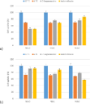
- structural and functional integrity of the bioactive compounds. 3.5 Stability of nanoparticles in serum Assessing colloidal stability in bovine serum is a critical parameter for inferring the in vivo behavior of nanostructured systems, as the presence of plasma proteins can induce adsorption on the particle



Chiral plasmonic nanostructures fabricated with circularly polarized light
Beilstein J. Nanotechnol. 2025, 16, 2245–2264, doi:10.3762/bjnano.16.154
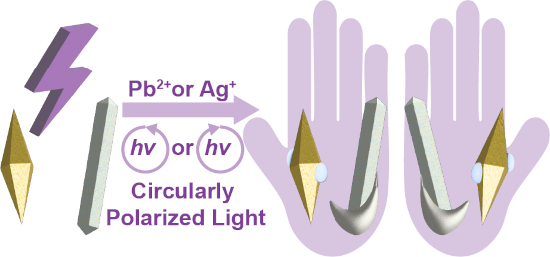
- two proteins due to the supramolecular interactions between the chiral extracellular domains and the curved chiral nanoparticles, which led to the enantiomer-dependent immunological response. Nam et al. have shown that the stronger binding affinities of molecules to regions of both positive and


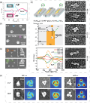
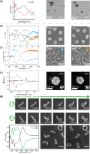


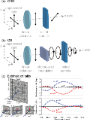
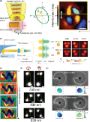

Optical bio/chemical sensors for vitamin B12 analysis in food and pharmaceuticals: state of the art, challenges, and future outlooks
Beilstein J. Nanotechnol. 2025, 16, 2207–2244, doi:10.3762/bjnano.16.153
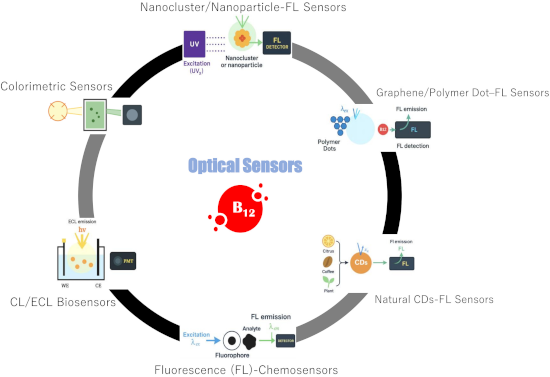
- when the capacity of the IF system is exceeded [50]. In the active transport pathway, the absorption of VB12 through receptors commences following its liberation from the dietary source. Food proteins act as carriers for dietary VB12. The acidic conditions within the gastric lumen enable the liberation
- forms (AdoCbl and MeCbl), via a complicated intracellular process involving various chaperone proteins and transporters, regardless of its form when ingested [34][47][50][55]. Acting as the main chaperone, the methylmalonic aciduria and homocystinuria type-C protein (MMACHC) captures VB12 exiting the
- -methyltetrahydrofolate (5-MTHF) donates the methyl group and is thereafter transformed into tetrahydrofolate. Methionine is then converted into S-adenosylmethionine (SAM), which serves as a vital methyl donor for the methylation of proteins, phospholipids, neurotransmitters, RNA, and DNA. In contrast, Ado-Cbl acts as a


Ultrathin water layers on mannosylated gold nanoparticles
Beilstein J. Nanotechnol. 2025, 16, 2183–2198, doi:10.3762/bjnano.16.151
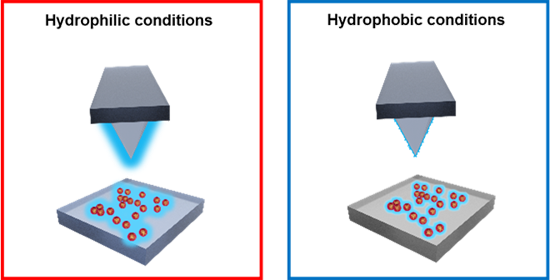
- nanoparticle systems, one functionalized with an oligo(ethylene glycol) ligand, and one functionalized with a mixture of the same with a dimannoside ligand. The dimannoside ligand was chosen to mimic the surface chemistry of viral spike proteins. We characterized the particles by electron microscopy, dynamic
- properties on particle size and shape has been demonstrated for particle sizes in the 1–100 nm range and on biological interfaces [7]. Limited biocompatibility and high tendency to aggregate in solution inspired new mechanisms of particle biofunctionalization with proteins, lipids, or carbohydrates. Coupling
- or humid environments are not well known, although there are many examples, for example, sensors that use antibodies (glycosylated proteins) linked to AuNPs, such as the now very established SARS-CoV-2 antigen tests [5]. While practical questions about storage conditions and lifetimes call for tests



Rapid synthesis of highly monodisperse AgSbS2 nanocrystals: unveiling multifaceted activities in cancer therapy, antibacterial strategies, and antioxidant defense
Beilstein J. Nanotechnol. 2025, 16, 2105–2115, doi:10.3762/bjnano.16.145
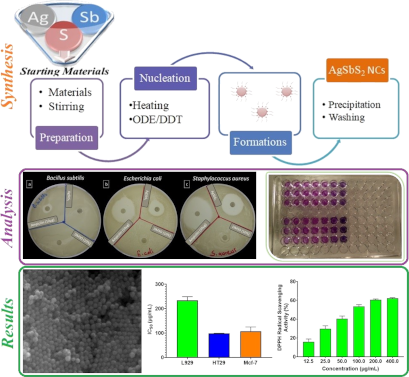
- nanoparticles with bacterial cells and the production of ROS, which causes DNA damage and denaturation of proteins close to the bacterial membrane, causes cell membrane damage [37][38]. In addition, the electrostatic force generated between the bacterial cells and the synthesized NCs causes distraction of the


Molecular and mechanical insights into gecko seta adhesion: multiscale simulations combining molecular dynamics and the finite element method
Beilstein J. Nanotechnol. 2025, 16, 2055–2076, doi:10.3762/bjnano.16.141
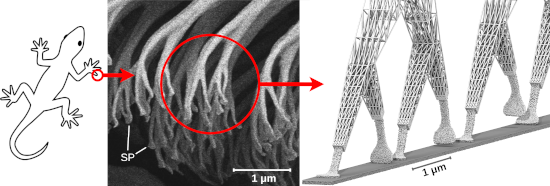
- . Spatulae and substrate: particles Mesoscale spatula model The mesoscale spatula model was derived from prior research. Its shape is based on SEM images [23], and the force field was derived bottom-up from united-atom gecko keratin simulations [12]. The keratin proteins in gecko seta and spatulae form a






The cement of the tube-dwelling polychaete Sabellaria alveolata: a complex composite adhesive material
Beilstein J. Nanotechnol. 2025, 16, 1998–2014, doi:10.3762/bjnano.16.138
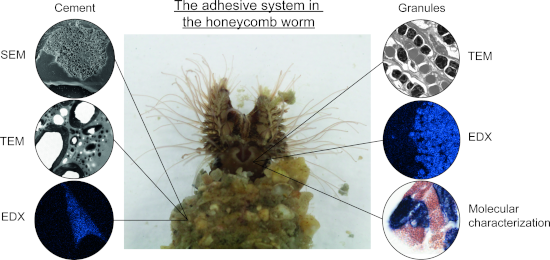
- several studies. However, some aspects of cement formation are still poorly understood and several differences have been pointed out between the two main model species. This study aims to investigate the adhesive system of Sabellaria alveolata by identifying new potential adhesive proteins, as well as
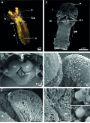
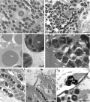
- describing the ultrastructure and elemental composition of the cement cells and their secretion. Different adhesive proteins are packaged in one or the other of two types of cement cells, namely, those containing homogeneous granules and those containing heterogeneous granules with lamellar inclusions
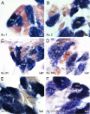
- . Phosphoserine has been identified as one of the main modified amino acids in tubeworm cement and, using in situ hybridization, we propose that FAM20C kinases would be the enzymes responsible for the phosphorylation of serine residues in adhesive proteins. Comparison between the ultrastructure of the granules



PEGylated lipids in lipid nanoparticle delivery dynamics and therapeutic innovation
Beilstein J. Nanotechnol. 2025, 16, 1914–1930, doi:10.3762/bjnano.16.133
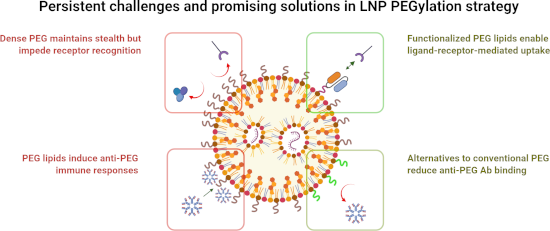
- physicochemical properties would be PEG-specific and not translatable between studies. LNP pegylation-associated trade-off between nonspecific binding and cellular interactions When LNPs are introduced into biological systems, they encounter a complex milieu of biomolecules, predominantly proteins, which can
- ]. PEG’s hydrophilic and steric properties are instrumental in reducing the adsorption of proteins onto LNP surfaces. By creating a hydrated barrier, PEG minimizes nonspecific binding, leading to a “stealth” effect that prolongs circulation time and reduces recognition by the mononuclear phagocytic system
- [24]. However, the effectiveness of this barrier depends on PEG density, molecular weight, and chain configuration. The previously mentioned high-density PEG layers in a “brush” conformation are particularly effective at repelling proteins compared to lower-density “mushroom” configurations, which may


Self-assembly and adhesive properties of Pollicipes pollicipes barnacle cement protein cp19k: influence of pH and ionic strength
Beilstein J. Nanotechnol. 2025, 16, 1863–1872, doi:10.3762/bjnano.16.129
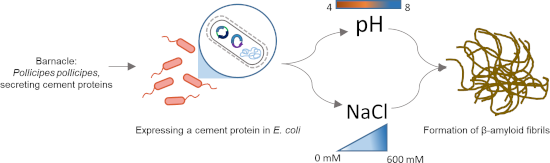
- Sciences, University of Galway H91 TK33, Ireland 10.3762/bjnano.16.129 Abstract Marine organisms such as barnacles rely on a complex underwater adhesive system, driven by self-assembly and intermolecular associations between cement proteins, for permanent attachment to a variety of surface types. In this
- may help to inform the design of eco-friendly adhesives for application in biomedicine, industry, and underwater engineering [2][3]. Mussel adhesive proteins are the most extensively studied of marine bioadhesives. Mussels anchor to submerged surfaces using a byssus, a bundle of proteinaceous threads
- secreted by the foot [4]. Each thread ends in an adhesive plaque composed of mussel foot proteins (Mfps), which are rich in the modified amino acid ʟ-3,4-dihydroxyphenylalanine (DOPA) [5]. DOPA is formed via post-translational hydroxylation of tyrosine and mediates wet surface adhesion through hydrogen


On the road to sustainability – application of metallic nanoparticles obtained by green synthesis in dentistry: a scoping review
Beilstein J. Nanotechnol. 2025, 16, 1851–1862, doi:10.3762/bjnano.16.128
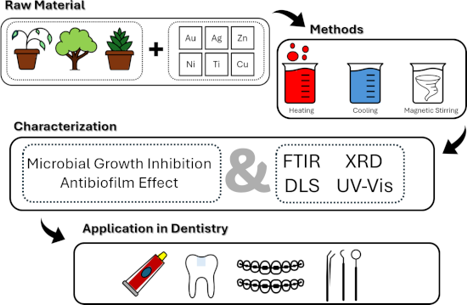
- extracts, several compounds, such as phenols, flavonoids, terpenoids, alkaloids, and proteins, play crucial roles in reducing metal ions and stabilizing nanoparticles, thereby eliminating the need for harsh chemical catalysts [12][13][14]. This technique is widely regarded as a clean technology as it


Exploring the potential of polymers: advancements in oral nanocarrier technology
Beilstein J. Nanotechnol. 2025, 16, 1751–1793, doi:10.3762/bjnano.16.122
- walls. Since mucus is continuously secreted along the GIT, it is subsequently eliminated due to the cellular renewal process [5]. Mucus is a complex hydrogel comprising proteins, carbohydrates, lipids, salts, antibodies, bacteria, and cellular debris. Mucins are the primary protein component of mucus
- protrusions induced by growth factors, bacteria, viruses, and necrotic cells. These protrusions either collapse into endocytic vesicles or retract into the membrane, fusing with it and forming macropinosomes [80]. CME involves interactions between clathrin-associated adaptors and sorting proteins, forming
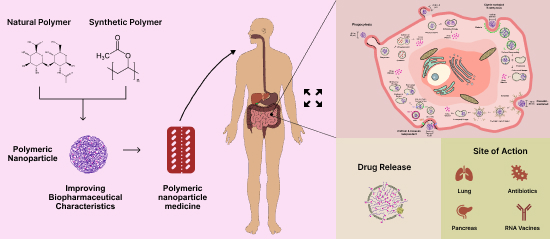
- polymers Nanotechnological systems derived from natural polymers found in biological species, such as proteins and polysaccharides, are referred to as biopolymeric NPs. Examples of natural polymers utilized in these NPs include casein, zein, hyaluronic acid, alginate, and chitosan [89]. Biopolymers are


Advances of aptamers in esophageal cancer diagnosis, treatment and drug delivery
Beilstein J. Nanotechnol. 2025, 16, 1734–1750, doi:10.3762/bjnano.16.121
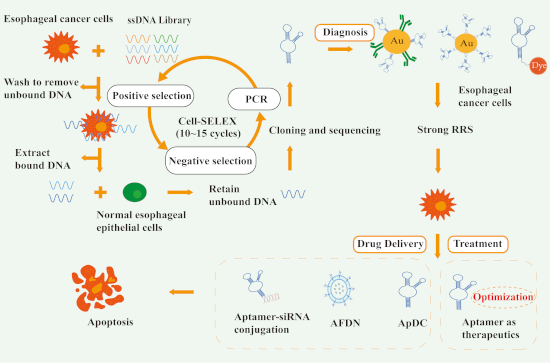
- . These sensors feature minimal invasiveness and low detection limits, demonstrating unique advantages in the early detection of cancer biomarker proteins. Moreover, an advanced drug delivery platform [28] was engineered by functionalizing nanocarriers with the AS1411 aptamer, enabling the targeted co
- , peptide aptamers exhibit target specificity predominantly limited to protein molecules, representing a relatively constrained target spectrum. Nucleic acid aptamers, which can bind to proteins, genes, small molecules, cells and other targets, are commonly used in laboratory and clinical practice and
- disease progression, primarily encompassing proteins, nucleic acids, metabolites, and cellular components [44]. To be clinically relevant, these markers must demonstrate both high sensitivity and specificity, enabling robust diagnostic and prognostic capabilities. Most biosensors for cancer detection use


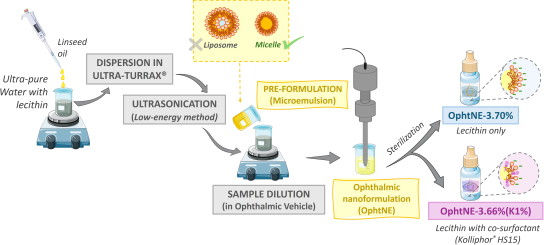
Multifunctional anionic nanoemulsion with linseed oil and lecithin: a preliminary approach for dry eye disease
Beilstein J. Nanotechnol. 2025, 16, 1711–1733, doi:10.3762/bjnano.16.120