


Search results
Search for "rGO" in Full Text gives 77 result(s) in Beilstein Journal of Nanotechnology.
Electrochemical sensing of sildenafil in pharmaceutical formulations using an (S,N)-doped reduced graphene oxide-modified electrode
Beilstein J. Nanotechnol. 2026, 17, 1087–1102, doi:10.3762/bjnano.17.74
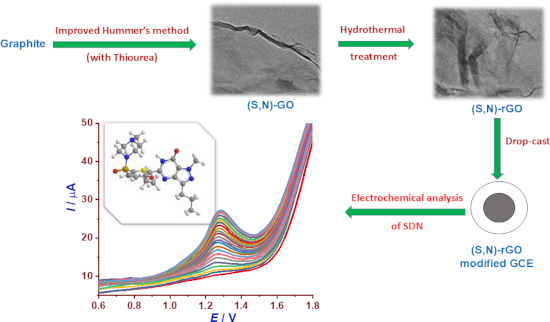
- Quoc Viet, Cau Giay, Hanoi City, 100000, Vietnam 10.3762/bjnano.17.74 Abstract In this work, (S,N)-co-doped reduced graphene oxide ((S,N)-rGO) was successfully synthesized via thermal treatment and thoroughly characterized by X-ray diffraction, high-resolution transmission electron microscopy
- , elemental mapping, photoluminescence, and Raman spectroscopy, confirming the successful incorporation of nitrogen and sulfur into the graphene framework. The obtained (S,N)-rGO was used to modify a glassy carbon electrode for the electrochemical determination of sildenafil (SDN). The modified electrode
- samples. The results were in good agreement with those from high-performance liquid chromatography, indicating that the proposed electrochemical method is reliable and suitable for practical analysis. Keywords: differential pulse voltammetry; electrode modifier; rGO; (S,N)-rGO; sildenafil; Introduction



Materials challenges in solid-state sensors for continuous monitoring of ions in water
Beilstein J. Nanotechnol. 2026, 17, 935–973, doi:10.3762/bjnano.17.66
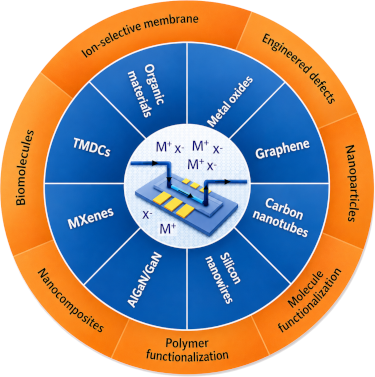
- delocalized π-electrons, with extremely high mobility. Charge transfer from adsorbates or ions occurs by electron donation or withdrawal, shifting the Fermi level and modulating carrier density. Hopping transport only occurs if graphene is heavily defected (e.g., reduced graphene oxide, rGO) [117]. Graphene
- practice, graphene (and rGO) integrates readily with ion-selective membranes, which localize the recognition event within the Debye length and translate ion activity into reproducible shifts in the Dirac point [118]. Chen et al. developed a rGO-based FET sensor for detection of nitrate ions in water. The
- device employs rGO nanosheets as the conductive channel, functionalized with benzyltriethylammonium chloride (TEBAC), whose quaternary ammonium groups exhibit strong electrostatic affinity for nitrate ions. The TEBAC molecules are immobilized on rGO via π–π interactions, forming a stable hybrid sensing


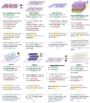
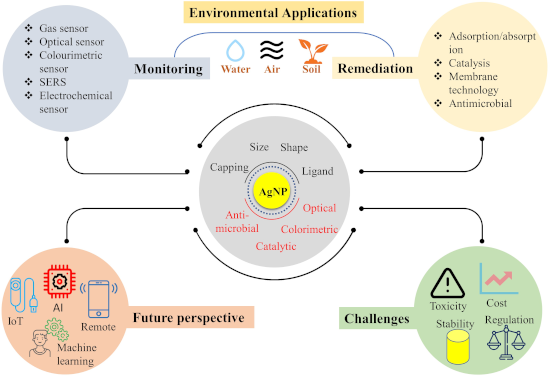
Environmental applications of silver nanoparticles: state-of-the-art review and emerging trends
Beilstein J. Nanotechnol. 2026, 17, 697–736, doi:10.3762/bjnano.17.49


Electrochemical determination of ciprofloxacin using a MIL-101/reduced graphene oxide-modified electrode
Beilstein J. Nanotechnol. 2026, 17, 541–554, doi:10.3762/bjnano.17.35
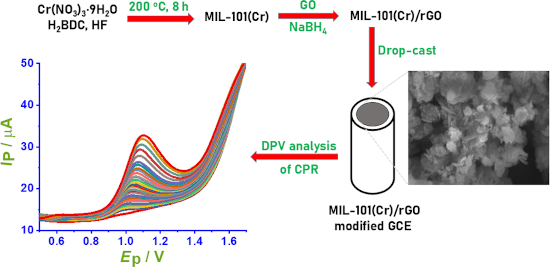
- ciprofloxacin (CPR) was developed using a glassy carbon electrode modified with MIL-101/reduced graphene oxide (MIL-101/rGO). MIL-101/rGO was synthesized via a facile ultrasonic-assisted method and characterized by various physicochemical techniques. The synergistic combination of MIL-101 with rGO significantly
- enhanced the electrocatalytic activity toward CPR oxidation. The electrochemical behavior of CPR on the MIL-101/rGO-modified electrode was systematically investigated using cyclic voltammetry and differential pulse voltammetry. Under optimized experimental conditions, the proposed sensor exhibited a linear
- , yielding acceptable recoveries. These results indicate that the MIL-101/rGO-modified electrode provides a promising and efficient platform for the electrochemical sensing of CPR in pharmaceutical and environmental analysis. Keywords: ciprofloxacin; electrochemical analysis; MIL-101; reduced graphene oxide


Upcycling agroindustrial waste into graphene oxide supports for gold nanoparticles: toward sustainable nanomaterials
Beilstein J. Nanotechnol. 2026, 17, 489–504, doi:10.3762/bjnano.17.32
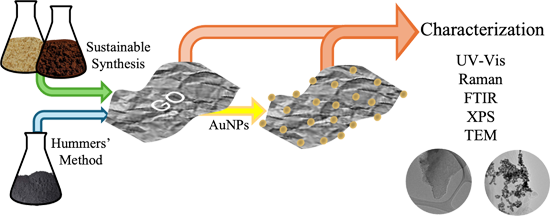
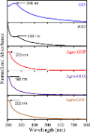
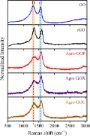
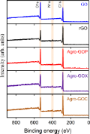
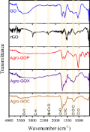
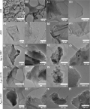
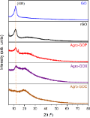
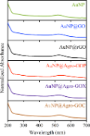
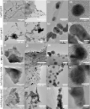
- develop a sustainable route for producing graphene oxide-based materials from agroindustrial waste and to evaluate their structural and chemical properties in comparison with conventional graphene oxide (GO) and reduced graphene oxide (rGO). Agroindustrial waste-derived graphene oxide (Agro-GO) was
- synthesized from peanut shells and spent coffee grounds via a ferrocene-assisted green pyrolysis–oxidation approach. The resulting materials were compared with GO prepared via the Marcano-modified Hummers' method and its hydrazine-reduced counterpart (rGO). Comprehensive characterization was performed using
- dynamics of AuNPs [34][35]. This study compares GO produced by the modified Hummers' method and its reduced form (rGO) with Agro-GO derived from fast, low-temperature pyrolysis of agroindustrial residues (peanut shells and spent coffee grounds), examining how the carbon source affects the type and content



Advancing nanolithography: a comprehensive review of materials for local anodic oxidation with AFM
Beilstein J. Nanotechnol. 2026, 17, 275–291, doi:10.3762/bjnano.17.19
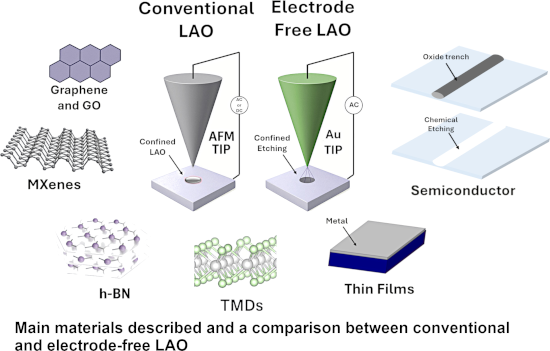
- ultraclean nanodevices. Reduced graphene oxide (rGO) resembles graphene but with some residual oxygen and structural defects. rGO comprises ordered sp2 domains with nanosized dimensions interspersed between highly disordered sp3 domains with oxygen-containing functional groups. This indeed limits the film’s
- conductivity and mobility. Reversing the bias in a standard LAO setup enables the restoration of conductivity in GO layers or flakes through a localized reduction reaction [87][103] or a localized catalytic reaction [104]. In Figure 5a,b, we show a conductive AFM image of a single restored rGO feature [87
- ] obtained after local reduction by SPL, with a lateral size below 100 nm. Even better results on GO, in terms of lateral resolution, have been achieved by thermochemical nanolithography [105]. The electrical properties of rGO patterns obtained in both ways (electrochemically and thermochemically) are


Gold nanoparticle-decorated reduced graphene oxide as a highly effective catalyst for the selective α,β-dehydrogenation of N-alkyl-4-piperidones
Beilstein J. Nanotechnol. 2026, 17, 218–238, doi:10.3762/bjnano.17.15
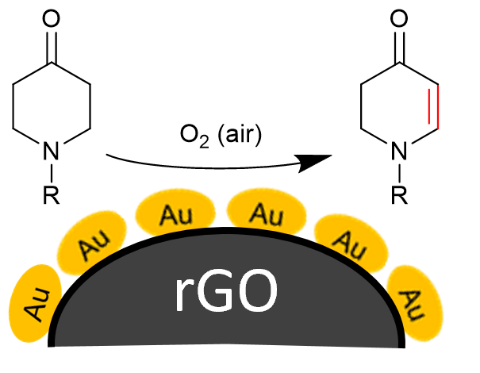
- reduced graphene oxide (AuNPs/rGO) were demonstrated to be a highly reactive catalyst for the selective α,β-oxidative dehydrogenation (ODH) of N-alkyl-4-piperidones, using N-methyl-, N-ethyl- and N-benzyl-4-piperidone. The substrate N-methyl-4-piperidone represents a pharmaceutically relevant system as
- its reaction product N-methyl-2,3-dihydropyridin-4(1H)-one is highly valuable (>1000 €·g−1) in contrast to the inexpensive starting material (0.15 €·g−1). Various synthesis methods were employed to prepare AuNPs supported on different carbon materials, including reduced graphene oxide (rGO), activated
- carbon (AC), and carbon black (CB), to investigate the influence of the carbon support on the catalyst performance. As stabilizing agents for the AuNPs, citrate (Cit) and the polyoxometallate [SiW9O34]10− (SiW9) were used. Among the tested catalysts, the rGO-supported ones, Au-Cit/rGO, Au-SiW9/rGO, and


Reduced graphene oxide paper electrode for lithium-ion cells – towards optimized thermal reduction
Beilstein J. Nanotechnol. 2026, 17, 24–37, doi:10.3762/bjnano.17.3
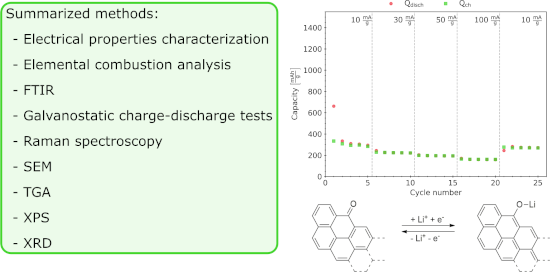
- . Keywords: electrode material; graphene paper; lithium-ion batteries; reduced graphene oxide; thermal reduction; Introduction Electrode materials comprising reduced graphene oxide (rGO) for energy storage in lithium-ion-based or sodium-ion-based technologies have been the subject of over 3800 publications
- between 2020 and 2024 in the ScienceDirect database only [1]. Market forecasts predict the growth of the overall rGO market at a compound annual growth rate of 36.5% between 2024 and 2031 [2]. This material owes its popularity in particular to such properties as sufficient electrical conductivity and
- specific surface area, and low bulk density [3][4]. The role of rGO in electrode materials can be considered in two ways. It can be applied as a conductive additive, improving transport properties and, as a result, enhancing capacity [5]. It can also be the active material itself [6][7]. To mention just a



Current status of using adsorbent nanomaterials for removing microplastics from water supply systems: a mini review
Beilstein J. Nanotechnol. 2025, 16, 1837–1850, doi:10.3762/bjnano.16.127
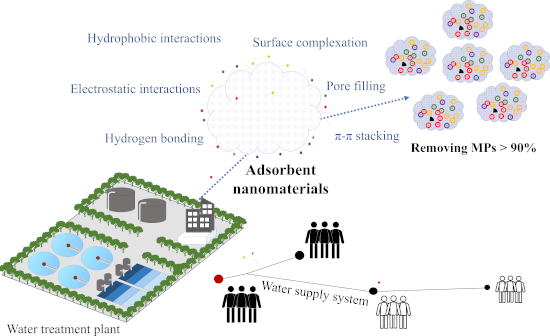
- bonding through oxygen-containing groups (oxidized biochar), pore filling, and electrostatic interactions [53]. GO materials, such as a nickel/reduced graphene oxide (Ni/rGO) nanocomposite, also exhibited high adsorption efficiency, achieving 80.3% removal of PS from water containing 100 mg·L−1 PS. The
- primary mechanisms were hydrophobic and π–π interactions between PS microspheres and the Ni/rGO nanocomposite [54]. In addition, a mass loss of 35.66–50.46% of MP particles from aqueous polyethylene suspensions after 480 min was observed when using GO, GO-Cu2O, GO-MnO2, and GO-TiO2 for treatment [55
- ]. Recently, Yan et al. developed a reduced graphene oxide (S-rGO) membrane with small lateral size and a rejection rate of up to 99.9% while maintaining high water permeability (236.2 L·m−2·h−1·bar−1) [56]. As another type of material belonging to carbon-based adsorbents, CNTs have also gained attention


Photocatalytic degradation of ofloxacin in water assisted by TiO2 nanowires on carbon cloth: contributions of H2O2 addition and substrate absorbability
Beilstein J. Nanotechnol. 2025, 16, 1567–1579, doi:10.3762/bjnano.16.111
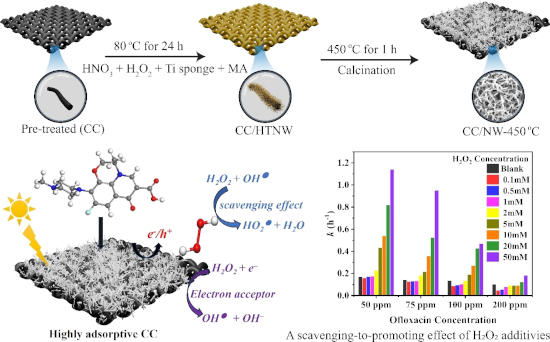
- on porous materials, such as carbon-based adsorbents. These innovations help to slow down electron–hole recombination, broaden light absorption, and enhance surface adsorption sites [11]. Cao et al. synthesized TiO2 nanowires on reduced graphene oxide (rGO) through a solvothermal method, which
- improved active sites and facilitated interfacial charge separation [12]. Activated carbon effectively supports TiO2, enhancing adsorption capacity and loading, which directly impacts photocatalytic efficiency [13]. In contrast to rGO or activated carbon granules, employing carbon cloth as substrates


Laser processing in liquids: insights into nanocolloid generation and thin film integration for energy, photonic, and sensing applications
Beilstein J. Nanotechnol. 2025, 16, 1428–1498, doi:10.3762/bjnano.16.104
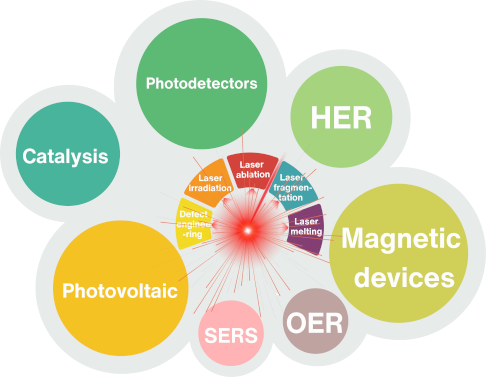
- . A modification in this work was made by incorporating graphene oxide (GO) and reduced graphene oxide (rGO) into SnS to form nanocomposites. The only difference was the laser ablation wavelength (1064 nm) [128]. The deposition of SnS:GO nanocomposite thin film was achieved by adding different






Structural and magnetic properties of microwave-synthesized reduced graphene oxide/VO2/Fe2O3 nanocomposite
Beilstein J. Nanotechnol. 2025, 16, 921–932, doi:10.3762/bjnano.16.70
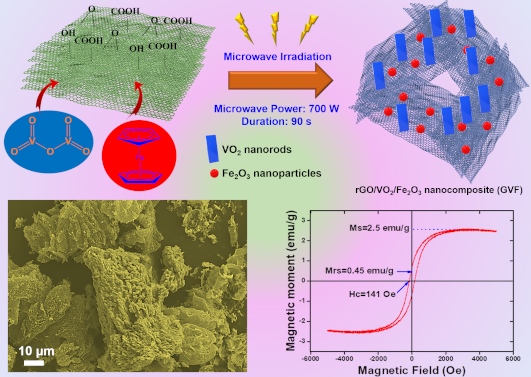
- Sumanta Sahoo Ankur Sood Sung Soo Han School of Chemical Engineering, Yeungnam University, 280 Daehak-ro, Gyeongsan 38541, South Korea 10.3762/bjnano.16.70 Abstract Reduced graphene oxide (rGO)-assisted microwave (MW) synthesis of metal-oxide-based binary and ternary nanocomposites has recently
- gained considerable research attention. In this context, the current work demonstrates a facile rGO-supported solid-state MW synthetic route for fabricating a ternary nanocomposite of VO2, Fe2O3, and rGO. Here, the MW irradiation for 90 s was found to be suitable for the reduction and exfoliation of
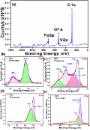
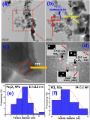
- graphite oxide to form rGO, the reduction of V2O5 to form VO2, and the formation of Fe2O3 from ferrocene. X-ray diffraction and X-ray photoelectron spectroscopy analyses confirm the formation of distinct metal oxides in the presence of rGO. Furthermore, the morphological analysis reveals the deposition of



Facile one-step radio frequency magnetron sputtering of Ni/NiO on stainless steel for an efficient electrode for hydrogen evolution reaction
Beilstein J. Nanotechnol. 2025, 16, 837–846, doi:10.3762/bjnano.16.63
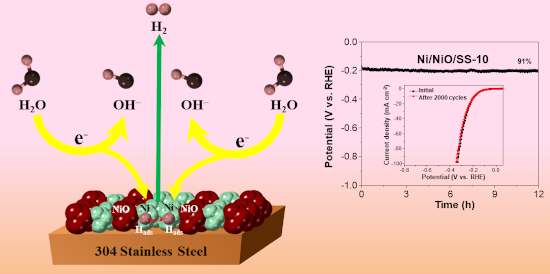
- ][47][48]. Specifically, the overvoltage of Ni/NiO/SS-10 is lower than those of NiO/C (565 mV) [40], Ni3S2/NC (199 mV) [44], NiCoP/rGO (209 mV) [47], and NF-Ni3Se2/Ni (203 mV) [48]. Also, the Tafel slopes indicate that the reaction kinetics of the Ni/NiO/SS-10 electrode is faster than those of the
- ) [41], NiP2/NiO (94 mV·dec−1) [45], Ni5P4 (98 mV·dec−1) [46], and NiCoP/rGO (124.1 mV·dec−1) [47]. Generally, Tafel slopes are used to determine the HER mechanism, which could follow the Volmer–Heyrovsky or Volmer–Tafel pathway [49]. In this work, the Tafel value of Ni/NiO/SS-10 is between 40 and 120


Supramolecular hydration structure of graphene-based hydrogels: density functional theory, green chemistry and interface application
Beilstein J. Nanotechnol. 2025, 16, 806–822, doi:10.3762/bjnano.16.61
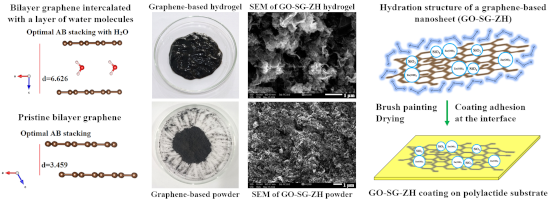
- reduced graphene oxide (RGO), causes the drawbacks of small effective surface area and low dispersibility in media [10]. Several approaches have been reported to prevent the irreversible stacking of graphene-based nanosheets, including electrostatic repulsion, nanoparticle intercalation, three-dimensional
- assembly, and surface hydration [10][11][12]. In our previous works, a number of graphene-based hydrogels (RGO-SnO2, RGO-ZnO, and RGO) were synthesized to evidence the reversible self-assembly of graphene-based nanosheets thanks to water intercalation in the hydrated ensembles [13][14][15][16][17


Emerging strategies in the sustainable removal of antibiotics using semiconductor-based photocatalysts
Beilstein J. Nanotechnol. 2025, 16, 264–285, doi:10.3762/bjnano.16.21
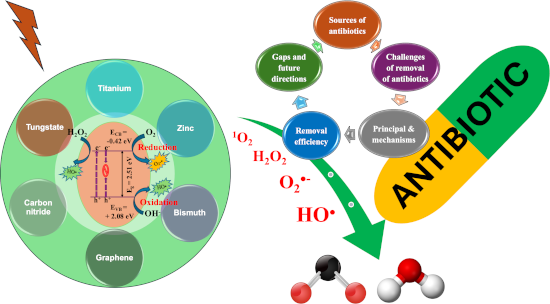
- pore sizes, fast charge transfer, high density and long lifetime of photoinduced charges, and strong interaction between ZnO and N,O-containing biochar [81]. Roy and colleagues [82] effectively synthesized a rGO-ZnO composite functionalized with ferrocene through a simple hydrothermal method. This Fc
- @rGO-ZnO photocatalyst exhibited exceptional performance compared to pristine ZnO, resulting in a five-fold increase in CIP and SMX removal efficiency. After three hours of treatment, it removed more than 95% of the antibiotics. The most recent research on the use of ZnO- or Zn-based compounds as
- electron–hole pairs and powerful redox capability. Higher photoactivity was also observed for other heterostructures such as NiFe2O4/Bi2O3 [87], Fe3O4@Bi2O3–RGO [88], Bi2O3/(BiO)2CO3 [89]. Bismuth oxyhalides (BiOX) are renowned as photocatalysts because of their distinctive optical and electrical



Recent advances in photothermal nanomaterials for ophthalmic applications
Beilstein J. Nanotechnol. 2025, 16, 195–215, doi:10.3762/bjnano.16.16
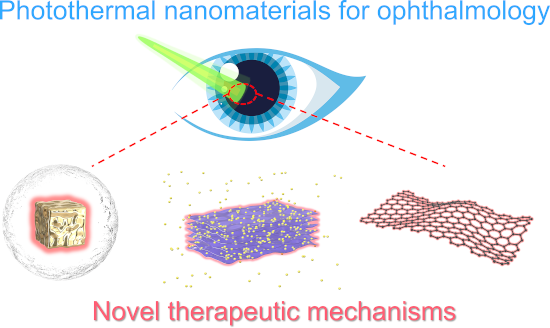
- of LECs (Figure 3d). Consequently, the incidence of PCO in a rabbit model was approximately one third of that observed in the control group. Furthermore, photothermal nanomaterials with a wide absorption wavelength, such as reduced graphene oxide (rGO) [67] and polydopamine [68], have been utilized
- vesicle leakage, bacterial endophthalmitis, and ocular hypotonia. Wang et al. developed a polyvinyl alcohol (PVA) hydrogel with enhanced photothermal, antimicrobial, and drug-delivery capabilities (PVA@rGO-Ag/5-Fu) [71]. Under NIR irradiation, the rGO-Ag component in the hydrogel effectively targets and


Interface properties of nanostructured carbon-coated biological implants: an overview
Beilstein J. Nanotechnol. 2024, 15, 1041–1053, doi:10.3762/bjnano.15.85
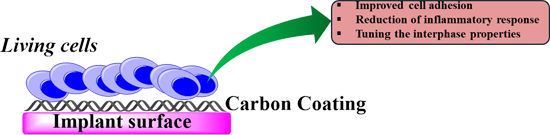
- applications [4] as active species or as drug delivery platforms using tailored carbon nanotubes (CNTs) [5][6], fullerenes [7][8], carbon dots (CDs) [9][10], and graphene-related materials (i.e., graphene oxide (GO) [11], reduced graphene oxide (rGO) [12], and nanographite (nG) [13]). Furthermore, the
- graphene-containing materials [44]. Furthermore, the manipulation of pristine graphene is a hard task, and several derivatives (i.e., GO and rGO) have been developed to partially preserve the properties of pristine graphene while enabling better handling. GO is an oxidized graphene derivative rich in
- deeply affects its electronic properties, which are considerably inferior compared with neat graphene. However, GO can be suspended in several solvents and easily functionalized to act as a chemical platform [48]. rGO stands as a compromise between the easier handling of GO and the properties of neat



Exploring surface charge dynamics: implications for AFM height measurements in 2D materials
Beilstein J. Nanotechnol. 2024, 15, 767–780, doi:10.3762/bjnano.15.64
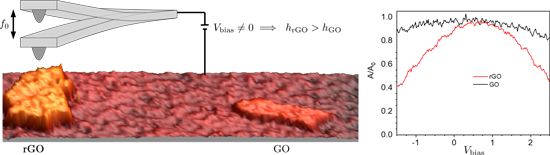
- explain the measurements, suggesting that there may be additional interactions directly related to the 2D nature of these materials affecting the height measurements. To explore this issue, in this work, we conducted a study on single-layer flakes of graphene oxide (GO) and reduced graphene oxide (rGO) co
- equations for the system, including the presence of the tip, which we have subsequently particularized for 2D materials on insulating supports. Experimental Co-deposited samples of GO and rGO were prepared following the methodology outlined in [61]. In summary, ultradiluted (4 × 10⁻⁴ wt %) dispersions of GO
- and/or rGO in Milli-Q type-I water (MQ water) were utilized. A drop of these dispersions was cast onto highly doped p-type silicon (1–10 Ω·cm, Siltronix) with a 300 nm SiO2 layer thermally grown on top. Before deposition, the substrate underwent a thorough cleaning process, which involved rinsing with


Experimental investigation of usage of POE lubricants with Al2O3, graphene or CNT nanoparticles in a refrigeration compressor
Beilstein J. Nanotechnol. 2023, 14, 1041–1058, doi:10.3762/bjnano.14.86
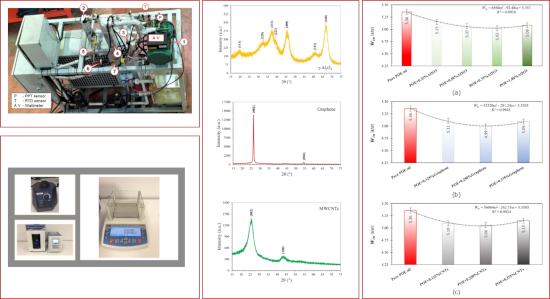
- becoming more and more common due to their unique thermal properties [14]. Akkaya et al. [15] experimentally explored the lubrication properties of sepiolite (SP) and its carbon composites carbon black (CB), MWCNT, and reduced graphene oxide (rGO) in a refrigeration compressor. Consequently, the addition
- of SP-rGO nanoparticles showed the best improvement in the compressor performance. According to the studies in the literature, the usage of nanolubricants in refrigeration compressors reduces energy consumption and provides a positive effect on compressor performance. Some studies in the literature





Nanoarchitectonics of photothermal materials to enhance the sensitivity of lateral flow assays
Beilstein J. Nanotechnol. 2023, 14, 988–1003, doi:10.3762/bjnano.14.82
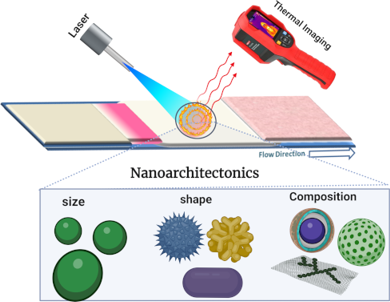
- reduced graphene oxide (rGO), SERS imaging can be done along with photothermal therapy [84]. Recently, our group developed a multifunctional rGO–Au nanoscale architecture loaded with Raman dye and anticancer drugs for fluorescence/SERS imaging-guided breast cancer therapy. Under activation of a laser at
- diagnostic tools. Based on the photothermal principle, very recently, Shirshahi et al. developed LFA strips for the detection of E. coli O157:H7 strains of bacteria. They used reduced graphene oxide as both tracer and photothermal signal amplification material. After the deposition of rGO on the test line
- strains of bacteria [27]. The integration of rGO into LFAs opens up exciting possibilities for developing ultrasensitive and selective diagnostic platforms, owing to the increased surface area and abundance of functional groups on the rGO surface. In another study, carboxylated graphene oxide was used to


Evaluation of electrosynthesized reduced graphene oxide–Ni/Fe/Co-based (oxy)hydroxide catalysts towards the oxygen evolution reaction
Beilstein J. Nanotechnol. 2023, 14, 420–433, doi:10.3762/bjnano.14.34
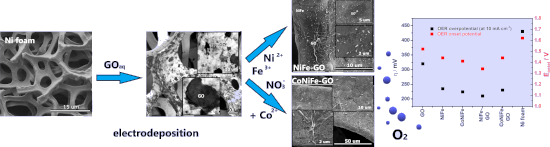
- and/or GO. For example, Wu et al. [13] chemically fabricated metal alloys and their oxides (NiCo, CoFe) with nitrogen-doped graphene (N-rGO/NiCo-NiO-CoO, N-rGO/CoFe-Co2FeO4) on a glassy carbon electrode (GCE). The N-rGO/NiCo-NiO-CoO and N-rGO/CoFe-Co2FeO4 catalysts revealed an OER overpotential (η) of
- performance was also obtained for electrodeposited NiFe LDH combined with GO on nickel foam (GO-NiFe-LDH) [12] and NiFe LDH combined with reduced graphene oxide (rGO) on nickel foam (NiFe-LDH/RGO) [21]. The OER η was determined to be 119 mV and 150 mV determined at 10 mA·cm−2 in 1 M KOH for GO-NiFe-LDH and
- NiFe-LDH/RGO/NF, respectively. The efficient OER was associated with the presence of the electron interaction between the metal and graphene. The literature presents the possibility of improving OER performance of the electrode by combining Fe-, Ni- and/or Co-based oxides/hydroxides and GO instead of




Bismuth-based nanostructured photocatalysts for the remediation of antibiotics and organic dyes
Beilstein J. Nanotechnol. 2023, 14, 291–321, doi:10.3762/bjnano.14.26
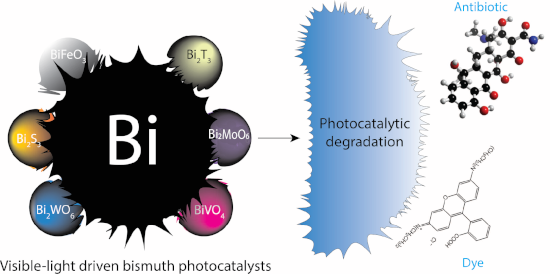
- -scheme photocatalytic system. Li et al. [42] constructed spindle-shaped BiVO4-RGO-g-C3N4 Z-scheme photocatalysts for the highly effective degradation of antibiotics. The 1-D Z-scheme ternary nanocomposites had a very high photooxidation response. According to the authors, ciprofloxacin and tetracycline


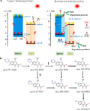
Recent trends in Bi-based nanomaterials: challenges, fabrication, enhancement techniques, and environmental applications
Beilstein J. Nanotechnol. 2022, 13, 1316–1336, doi:10.3762/bjnano.13.109
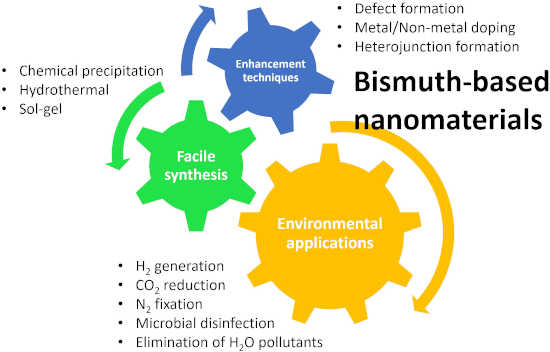
- turn helps to foster the movement of photogenerated carriers. Furthermore, the high photocatalytic activity of the BiOI/Bi2O2CO3/RGO composite can be attributed to the fact that the positively charged BiOI/Bi2O2CO3 was electrostatically paired with the negatively charged graphite oxide (GO) to form




Electrocatalytic oxygen reduction activity of AgCoCu oxides on reduced graphene oxide in alkaline media
Beilstein J. Nanotechnol. 2022, 13, 1020–1029, doi:10.3762/bjnano.13.89
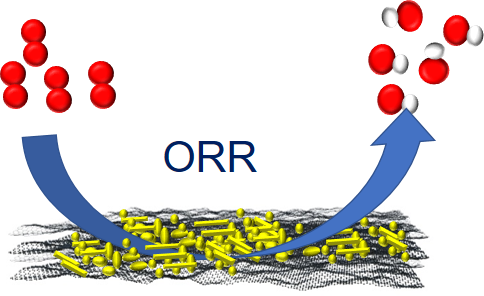
- AgCuCo (0.6:1.5:1.5, 2:1:1, and 6:1:1) oxide NPs supported on a reduced graphene oxide (rGO) matrix. Morphology, composition, and functional groups were methodically analysed using various microscopic and spectroscopic techniques. The as-prepared electrocatalysts were employed as cathode substrates for
- the oxygen reduction reaction (ORR) in alkaline medium. Varying the Ag fraction in copper cobalt oxide has a significant influence on the ORR activity. At a ratio of 2:1:1, AgCuCo oxide NPs on rGO displayed the best values for onset potential, half-wave potential, and limiting current density (Jk) of
- interesting choice could be the support/assembly of trimetallic AgCuCo particles via in situ formation integrated with conductive (graphitic) supports to further enhance the electrocatalytic properties regarding the ORR in alkaline medium. We designed trimetallic AgCuCo oxide NPs supported on rGO using a


A nonenzymatic reduced graphene oxide-based nanosensor for parathion
Beilstein J. Nanotechnol. 2022, 13, 730–744, doi:10.3762/bjnano.13.65
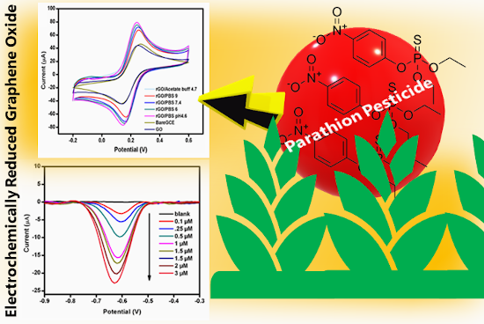
- nanoribbons doped with silver nanoparticles, rGO doped with ZrO2, and CuO–TiO2 hybrid nanocomposites were proposed to detect methyl parathion [19][20][21][22]. Rajaji et al. (2019) modified glassy carbon electrodes with graphene oxide encapsulated 3D porous chalcopyrite (CuFeS2) nanocomposites to detect
- phase of GO and RGO was characterized by X-ray diffraction (XRD) using a X’pertpro MPD XRD (PAN analytical B.V., the Netherlands) with Cu Kα radiation (λ = 1.5406 Å). Scanning electron microscopy (SEM) of the modified electrode was conducted on a JEOLEVO® 18 special edition (model: ZEISS EVO-MA 10) at
- carboxyl-type oxygen (531.4 eV), C–OH type (532.5 eV), and hydroxyl (533.6 eV). The intensity of the peaks is significantly reduced in RGO samples (Figure 2C and Figure 2D) compared to pristine GO, indicating considerable deoxygenation. The C 1s spectra of RGO (Figure 2C) can also be deconvoluted into four





