


Search results
Search for "redox reactions" in Full Text gives 77 result(s) in Beilstein Journal of Nanotechnology.
Environmental applications of silver nanoparticles: state-of-the-art review and emerging trends
Beilstein J. Nanotechnol. 2026, 17, 697–736, doi:10.3762/bjnano.17.49
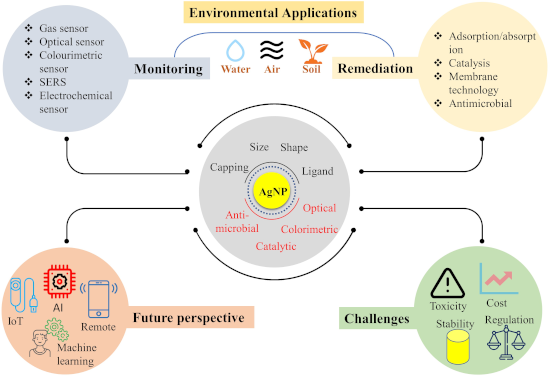
- junction formation at the Ag/semiconductor interface creates an internal electric field that suppresses electron–hole recombination, extending carrier lifetime and enabling band-alignment-dependent redox reactions [127]. Reactive oxygen species, primarily •OH, •O2−, h+, and 1O2, drive oxidative pollutant


Cellulose as a photocatalyst support material: extraction, structural features, and environmental applications
Beilstein J. Nanotechnol. 2026, 17, 635–652, doi:10.3762/bjnano.17.44
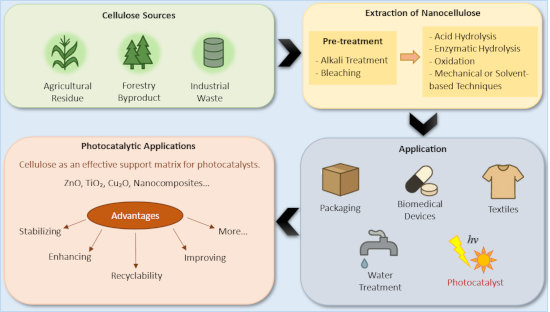
- materials that can absorb light energy and generate electron–hole pairs, which then participate in redox reactions to produce ROS that degrade organic pollutants. Titanium dioxide (TiO2) and zinc oxide (ZnO) are the common catalysts that have been used [18][19]. Figure 3 illustrates the general mechanism of


From shield to spear: Charge-reversible nanocarriers in overcoming cancer therapy barriers
Beilstein J. Nanotechnol. 2026, 17, 159–175, doi:10.3762/bjnano.17.10
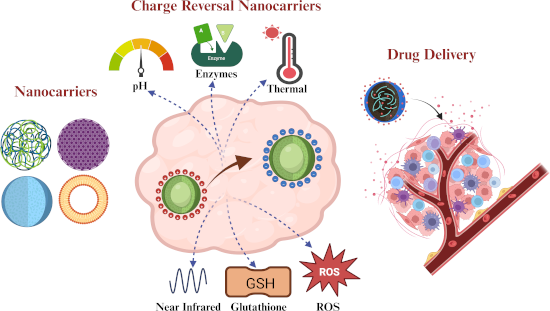
- processes, other stimuli, such as enzymatic cleavage, redox reactions, or magnetic heating induce irreversible charge changes since they involve permanent chemical or structural modifications to the nanocarrier surface. 2.2 Enzyme-responsive nanocarriers Enzymes are essential components that manage cellular


Influence of surface characteristics on the in vitro stability and cell uptake of nanoliposomes for brain delivery
Beilstein J. Nanotechnol. 2026, 17, 139–158, doi:10.3762/bjnano.17.9
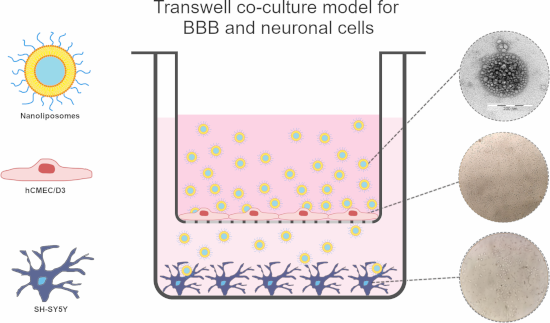
- NLs interact with biomolecules, thus forming a protein corona (PC), altering functional proteins, and engaging in redox reactions with reactive species [6]. These interactions can affect the functionality, biodistribution, targeting, and cell internalization of NLs. Serum components can disrupt the




Reduced graphene oxide paper electrode for lithium-ion cells – towards optimized thermal reduction
Beilstein J. Nanotechnol. 2026, 17, 24–37, doi:10.3762/bjnano.17.3
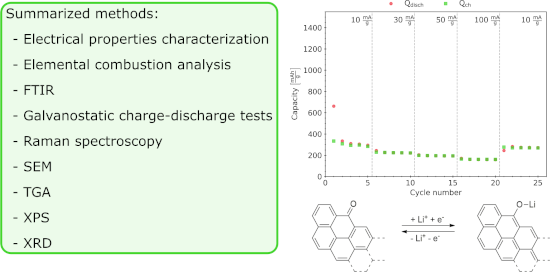
- the literature, it is the ketone group that is characterized by reactivity and participates in redox reactions [6][24][25]. The suggested redox reaction scheme is depicted in Figure 1b. During discharge, lithium ions are transported through the electrolyte to the cathode material, where they react
- partial elimination occurred with the preservation of the ketone-related band near ≈1800 cm−1. Thus, the charge storage mechanism via redox reactions involving these functionalities was enabled, promoting the application of the material as lithium- or sodium-ion energy storage material [54]. Moreover, the



Quantitative estimation of nanoparticle/substrate adhesion by atomic force microscopy
Beilstein J. Nanotechnol. 2026, 17, 1–14, doi:10.3762/bjnano.17.1

- partial penetration, removal, or reduction cannot be excluded. We did not detect changes in the roughness between pristine and plasma-treated surfaces (RMS < 0.2 nm at 5 × 5 µm area) that would contribute to a change in friction. Interfacial redox reactions between the copper NP and the wafer surface



Chiral plasmonic nanostructures fabricated with circularly polarized light
Beilstein J. Nanotechnol. 2025, 16, 2245–2264, doi:10.3762/bjnano.16.154
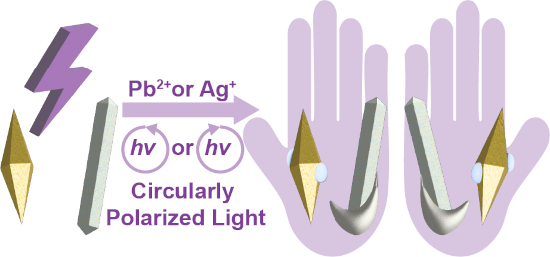
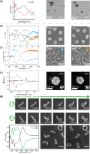
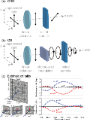
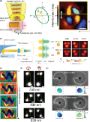
- magnitude) with light-absorbing reactants observed at optical hot spots compared to other locations. Hot carriers generated in PNSs can transfer into molecular species and trigger redox reactions. The rate of hot carrier generation strongly depends on the PNS absorption, proportional to the electric field
- when creating chiral metal/semiconductor structures using CPL, as explained in Section 2.2. Conversely, the warm carrier distribution profile may differ from the EM field profile; this can cause photo-redox reactions to be distributed more symmetrically in space, which is not ideal for producing PNSs





Optical bio/chemical sensors for vitamin B12 analysis in food and pharmaceuticals: state of the art, challenges, and future outlooks
Beilstein J. Nanotechnol. 2025, 16, 2207–2244, doi:10.3762/bjnano.16.153
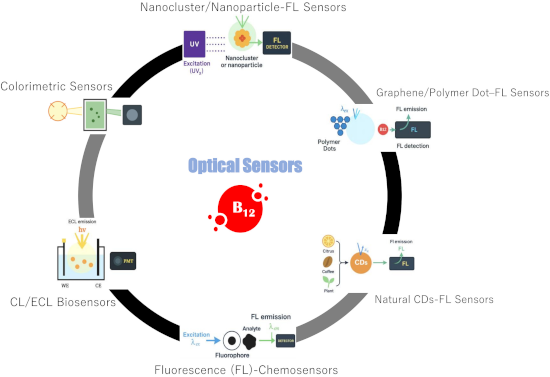
- + redox reactions [2][27]. Although Antherjanam et al. reviewed different electrochemical sensing strategies for VB12 [27], to the best of our knowledge, the utilization of optical sensing platforms for detecting VB12 has not been yet reviewed. Optical sensing involves generating an optical signal as the
- photons (light) when they return to their ground state [97]. In contrast, electrochemiluminescence (ECL) sensors integrate electrochemical and chemiluminescent principles. The light-emitting reaction is started by applying an electrical voltage that triggers redox reactions on the electrode surface. Here


Electrical, photocatalytic, and sensory properties of graphene oxide and polyimide implanted with low- and medium-energy silver ions
Beilstein J. Nanotechnol. 2025, 16, 1794–1811, doi:10.3762/bjnano.16.123
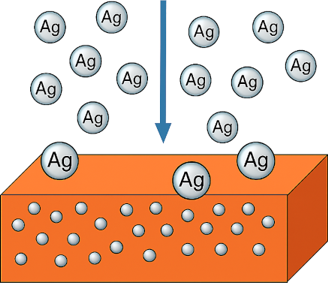
- , where they initiate redox reactions with adsorbed species, such as water or dissolved oxygen, leading to the formation of reactive oxygen species that degrade organic contaminants. In Ag-modified polymer matrices, several synergistic effects contribute to enhanced photocatalytic activity. The


Ambient pressure XPS at MAX IV
Beilstein J. Nanotechnol. 2025, 16, 1677–1694, doi:10.3762/bjnano.16.118
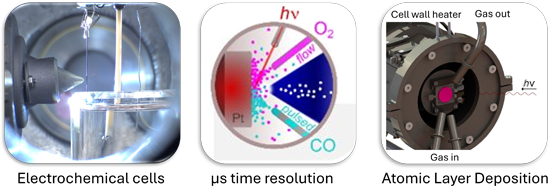
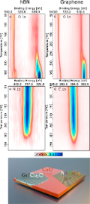
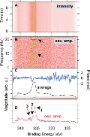
- important challenges for modern human civilization. Reactions such as water splitting, CO2 reduction, and pollutant degradation rely on photocatalysts that absorb light, generate electron–hole pairs, and drive redox reactions at interfaces. For the rational and methodical design of a more sophisticated





Nanotechnology-based approaches for the removal of microplastics from wastewater: a comprehensive review
Beilstein J. Nanotechnol. 2025, 16, 1607–1632, doi:10.3762/bjnano.16.114
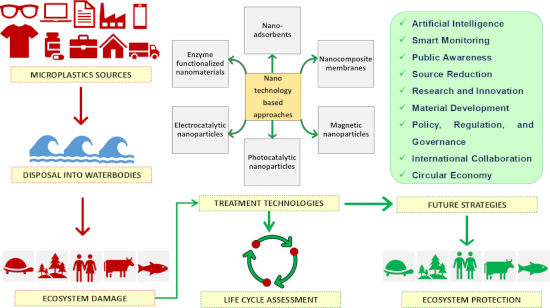
- include ultraviolet-induced oxidation, ozone-based oxidation, photocatalysis (activated by UV, solar, or visible light), electrochemical oxidation, and persulfate-activated oxidation [57]. In photocatalysis, photons excite the catalyst, generating electron–hole pairs that trigger redox reactions with the


Laser processing in liquids: insights into nanocolloid generation and thin film integration for energy, photonic, and sensing applications
Beilstein J. Nanotechnol. 2025, 16, 1428–1498, doi:10.3762/bjnano.16.104
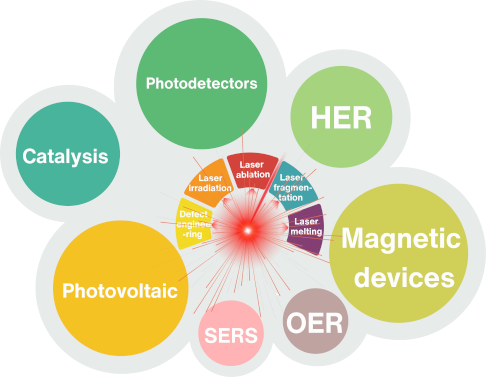
- area for redox reactions, and facilitating the intercalation and deintercalation of ions during energy storage and conversion processes [90]. Thus, LDL represents a transformative approach that far surpasses traditional laser-based techniques in its ability to precisely manipulate the structural






Ferroptosis induction by engineered liposomes for enhanced tumor therapy
Beilstein J. Nanotechnol. 2025, 16, 1325–1349, doi:10.3762/bjnano.16.97
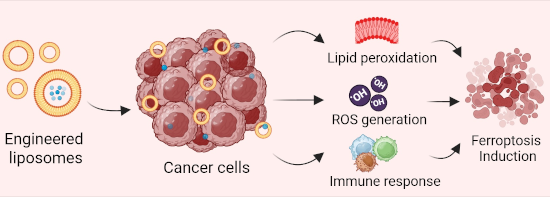
- of ferroptosis by dissipating cysteine [36][60][79]. Considering the role of the transcription factor Nuclear Factor Erythroid 2-related Factor 2 (NRF2) in the transcription of genes involved in redox reactions and managing oxidative stress, this factor can be considered an attenuator of ferroptosis


Soft materials nanoarchitectonics: liquid crystals, polymers, gels, biomaterials, and others
Beilstein J. Nanotechnol. 2025, 16, 1025–1067, doi:10.3762/bjnano.16.77
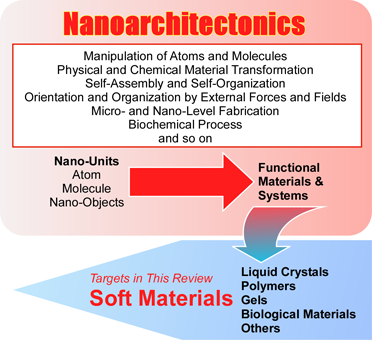
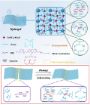
- ]. They make effective use of intercalation into the nanospaces formed in thin polymer films (Figure 17). Molecular redox reactions that are precisely controlled at room temperature are employed in biochemical processes, including proton coupling electron transfer reactions. For instance, two-electron






Time-resolved probing of laser-induced nanostructuring processes in liquids
Beilstein J. Nanotechnol. 2025, 16, 968–1002, doi:10.3762/bjnano.16.74
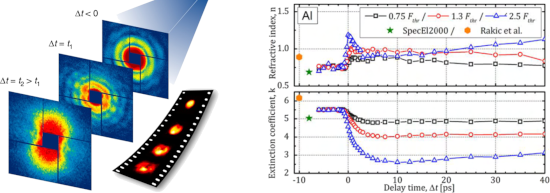
- ablation and fragmentation products with a high defect density, and enhances catalytic activity. In addition, the liquid may also participate in the reaction by electrostatic stabilization [12], formation of gases [16], or chemical interaction with the target to enhance redox reactions or passivating


Insights into the electronic and atomic structures of cerium oxide-based ultrathin films and nanostructures using high-brilliance light sources
Beilstein J. Nanotechnol. 2025, 16, 860–871, doi:10.3762/bjnano.16.65

- transport properties in the presence of specific gases, due to the redox reactions that take place on the surface [12][13]. An atomic level understanding of the structure–function relationship in this oxide is essential for guiding the design of efficient materials to optimize the performance of the


Colloidal few layered graphene–tannic acid preserves the biocompatibility of periodontal ligament cells
Beilstein J. Nanotechnol. 2025, 16, 664–677, doi:10.3762/bjnano.16.51
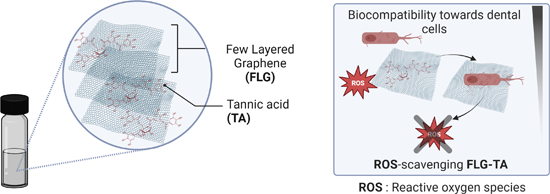
- metal ion chelation. Chromatin contains copper ions, which readily participate in redox reactions and bind strongly to DNA. These ions can form complexes with TA. Within cancer cells, for instance, this interaction can trigger ROS production and DNA damage [17]. However, when TA is complexed with




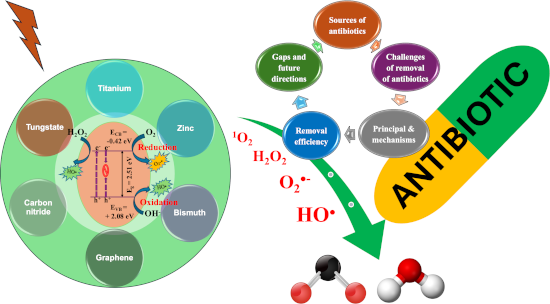
Emerging strategies in the sustainable removal of antibiotics using semiconductor-based photocatalysts
Beilstein J. Nanotechnol. 2025, 16, 264–285, doi:10.3762/bjnano.16.21



Introducing third-generation periodic table descriptors for nano-qRASTR modeling of zebrafish toxicity of metal oxide nanoparticles
Beilstein J. Nanotechnol. 2024, 15, 1142–1152, doi:10.3762/bjnano.15.93
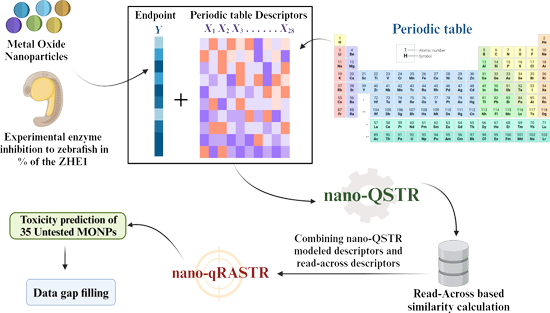
- behavior in different oxidation states. This is particularly relevant in nanoparticle chemistry, where redox reactions are common. The density of a metal is a macroscopic property that influences the mass and volume of nanoparticles. Electron affinity measures the energy change when an electron is added to


Laser synthesis of nanoparticles in organic solvents – products, reactions, and perspectives
Beilstein J. Nanotechnol. 2024, 15, 638–663, doi:10.3762/bjnano.15.54
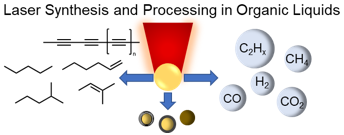
- 23284, USA 10.3762/bjnano.15.54 Abstract Laser synthesis and processing of colloids (LSPC) is an established method for producing functional and durable nanomaterials and catalysts in virtually any liquid of choice. While the redox reactions during laser synthesis in water are fairly well understood
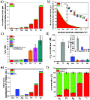
- [36]. Depending on the process, gas formation can be attributed to different redox reactions that contribute to nanoparticle formation. For the laser ablation, fragmentation, and melting processes, the nanoparticles are found to be at least partially oxidized, ranging from a surface oxidation of 5–10
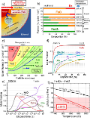
- certain controllability of the redox reactions occurring during reductive or oxidative laser processing in aqueous media at constant particle size. Furthermore, focusing laser pulses in CO2-saturated water leads to the reduction of CO2, which selectively yields CO [74] or oxocarbon-encapsulated





Classification and application of metal-based nanoantioxidants in medicine and healthcare
Beilstein J. Nanotechnol. 2024, 15, 396–415, doi:10.3762/bjnano.15.36
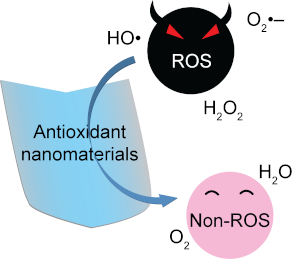
- reported. Most of them employ transition metals such as iron [70], copper [71], cobalt [72], gold [73], manganese [74], platinum [75], or cerium [76] as main elements. Most transition metals have various oxidation states allowing them to generate cycles of redox reactions that are involved in superoxide
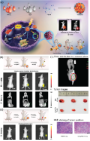
- ]. Similarly, Zeng et al. employed this strategy to fabricate a CeO2 nanozyme-loaded nanovesicle to address hypoxia at the tumor sites [169]. In this system, the CeO2 nanozyme with the ability to generate the cycle of redox reactions continuously provides a significant amount of O2 for assisting cancer


Metal-organic framework-based nanomaterials as opto-electrochemical sensors for the detection of antibiotics and hormones: A review
Beilstein J. Nanotechnol. 2023, 14, 631–673, doi:10.3762/bjnano.14.52
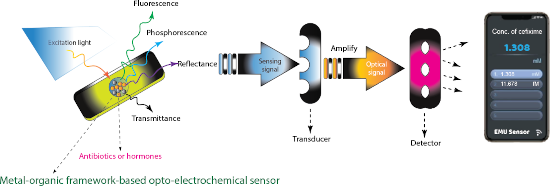
- electrochemical sensors (Figure 10). The target analyte interacts with the recognition layer at the sensing electrode surface to produce an electrical signal that contains the analytical information. Chemical reactions (redox reactions) on the electrode surface are converted by the physicochemical transducer into


Utilizing the surface potential of a solid electrolyte region as the potential reference in Kelvin probe force microscopy
Beilstein J. Nanotechnol. 2022, 13, 1558–1563, doi:10.3762/bjnano.13.129
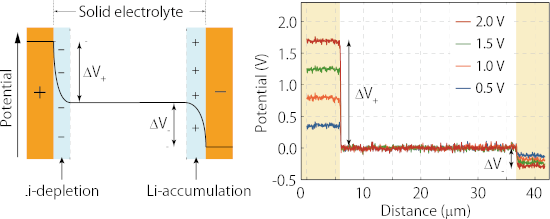
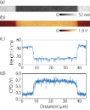
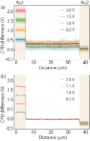
- Nobuyuki Ishida National Institute for Materials Science, Sengen 1-2-1, Tsukuba, Ibaraki 305-0047, Japan 10.3762/bjnano.13.129 Abstract In electrochemical measurements, monitoring the electrode potential using a stable reference is essential for controlling the redox reactions that occur at the
- , in the case of electrochemical devices such as batteries, the redox reactions that occur at the electrode are determined by the potential difference across the electrode–electrolyte interface, not the electrode potential relative to ground. This prevents the accurate consideration of redox reactions
- potential drop that occurs on the positive (ΔV+) and negative electrode sides (ΔV−) cannot be predicted using only the applied DC voltage. This makes it difficult to analyze the progression of redox reactions at the electrodes, because the redox reactions depend strongly on the potential difference at the




Sodium doping in brookite TiO2 enhances its photocatalytic activity
Beilstein J. Nanotechnol. 2022, 13, 599–609, doi:10.3762/bjnano.13.52
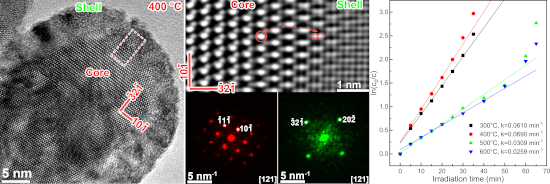
- increased due to its importance for photocatalytic application. Ohtani et al. reported that extra-fine brookite TiO2 exhibited good photocatalytic activity for redox reactions in aqueous propan-2-ol and silver sulfate solution [7]. Kobayashi et al. suggested that the photoactivity of brookite nanoparticles


Influence of thickness and morphology of MoS2 on the performance of counter electrodes in dye-sensitized solar cells
Beilstein J. Nanotechnol. 2022, 13, 528–537, doi:10.3762/bjnano.13.44
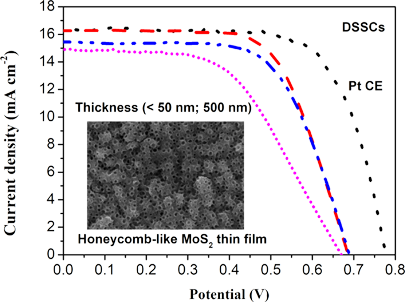
- exhibited two redox couple peaks at −0.34 V/−0.76 V and −0.77 V/−1.34 V attributed to the redox reactions of Mo7O246− and MoO42− ions, respectively [27]. The presence of MoO42− ions is due to the equilibrium in Equation 3, which occurs in acidic solution of (NH4)6Mo7O24 (the pH here is about 4.3). The CV
- cycle of the CV recorded in different concentrations of precursor solution (solution 1.25, 2.5, and 5.0) is shown in Figure 2b. The presence of the redox couple peak at −0.2/−0.75 V can be attributed to the redox reactions of Mo7O246− ions (the anodic peak is slightly shifted towards the anodic





