Search results
Search for "resonance" in Full Text gives 843 result(s) in Beilstein Journal of Nanotechnology. Showing first 200.
Enhanced erosion resistance and radiation stability of WC–WO3 nanocomposite films under 100 keV Kr+ ion irradiation
Beilstein J. Nanotechnol. 2026, 17, 922–934, doi:10.3762/bjnano.17.65
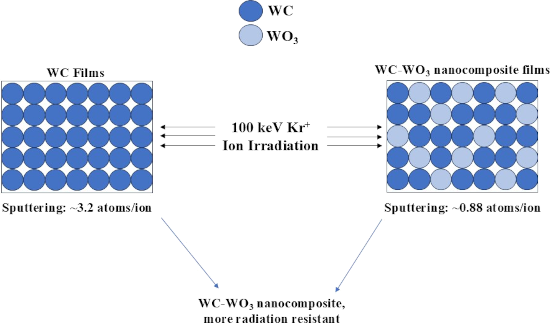
- the ions (Z1) and the target atoms (Z2). The energy loss may be lower than the predicted TRIM values because energy transfer efficiency changes for certain Z1 and Z2 combinations where resonance-like effects are absent. This results in TRIM overestimating/understimating sputtering yields compared to



Supramolecular one-dimensional conducting nanofibers from a C3-symmetric tetrathiafulvalene derivative
Beilstein J. Nanotechnol. 2026, 17, 872–881, doi:10.3762/bjnano.17.63
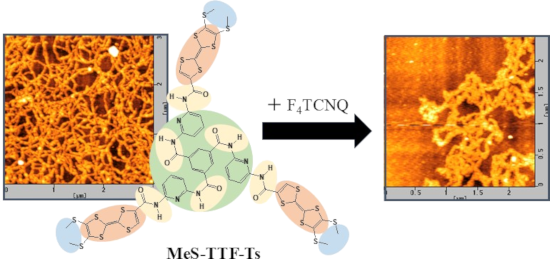
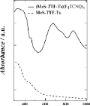
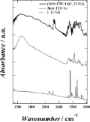
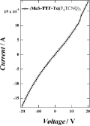
- nanostructures while facilitating efficient linear stacking of conductive units [34][35][36]. Experimental General Nuclear magnetic resonance (NMR) spectra were recorded on a JEOL ECX-400 spectrometer operating at 400 MHz for 1H NMR and 100.6 MHz for 13C NMR. Chemical shifts are reported in parts per million


He+ FIBID-fabricated 3D AFM tip architectures: an exploratory study of hollow pillars, helices, and spirals
Beilstein J. Nanotechnol. 2026, 17, 863–871, doi:10.3762/bjnano.17.62
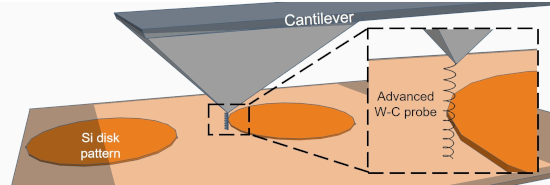
- (Bruker), in tapping mode. Before approaching the surface, the cantilevers were tuned to identify their resonance frequency and to adjust the driving frequency and oscillation amplitude for stable tapping-mode operation. Scans were recorded over areas of 25 μm2 and 1 μm2, using 512 lines and a scan rate


Tailoring Ag–Pt nanoalloys through solid-state dewetting: structural and optical insights
Beilstein J. Nanotechnol. 2026, 17, 748–759, doi:10.3762/bjnano.17.52

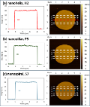
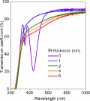
- process. Optical measurements revealed the presence of a single resonance peak. The composition-dependent plasmonic resonance band was observed for low Pt contents, while progressively blue-shifting and decreasing in intensity with increasing Pt concentration. This behavior is consistent with the strong d
- the bulk Ag–Pt system, and provide insight into their structure–property relationships relevant for catalytic and plasmonic applications. Keywords: Ag–Pt alloy; dewetting; nanoalloys; plasmon resonance; thin films; Introduction Nanoalloys in the form of nanostructures exhibit novel and intriguing
- properties, and thus, the application potential of the fabricated nanosystem. Moreover, when designing plasmonic devices based on Ag–Pt nanoalloys, one must take into account the damping of the plasmon resonance in platinum alloys. This phenomenon was theoretically investigated [36][37][38][39] and supported




Environmental applications of silver nanoparticles: state-of-the-art review and emerging trends
Beilstein J. Nanotechnol. 2026, 17, 697–736, doi:10.3762/bjnano.17.49
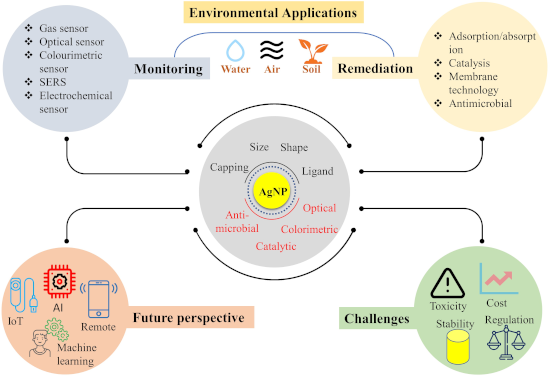
- environmental monitoring and remediation. For example, the optical properties of AgNPs are primarily governed by localised surface plasmon resonance (LSPR ), which occurs in the 380–450 nm region and depends on the nanoparticles’ size and shape. The unique optical properties of nanosilver were utilised to


Molecular engineering of individual dye-based nanoparticle photostability for ultrabright two-photon fluorescence
Beilstein J. Nanotechnol. 2026, 17, 688–696, doi:10.3762/bjnano.17.48
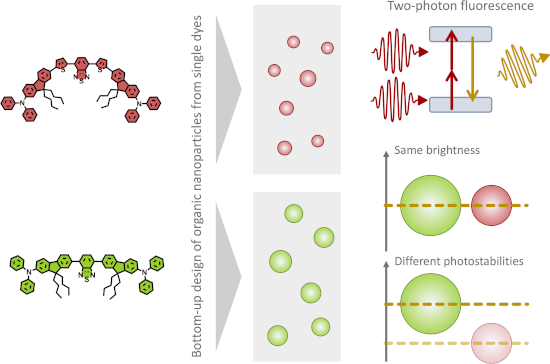
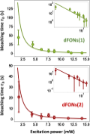
- ], and even up to 3 near an absorption resonance [35], α is between 2 and 13. We point out the fact that local fields exist also in the measurements of σ2 and Φ from Table 1. The corrections change, however, depending on the dFONs environment. As a result, the values of α measured in the paper cannot be


Two-step laser synthesis of Ag@TiO2 nanomaterials for the photocatalytic degradation of rhodamine B
Beilstein J. Nanotechnol. 2026, 17, 622–634, doi:10.3762/bjnano.17.43
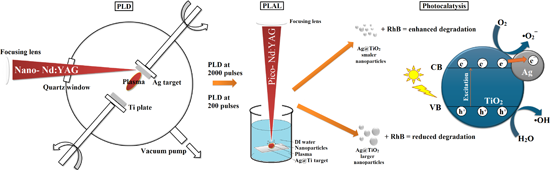
- resonance effects and facilitates the formation of Schottky barriers at the metal–semiconductor interface, both of which contribute to an extended light absorption range and enhanced charge carrier separation. The improved activity is primarily attributed to the narrowing of TiO2’s effective bandgap and the
- photocatalytic activity. The improved activity of Ag@TiO2 is not mainly due to bandgap reduction. It is more likely related to Ag–TiO2 interaction, where Ag reduces electron–hole recombination and enhances light absorption through surface plasmon resonance, leading to increased formation of reactive oxygen


Recent progress in enhancing built-in electric fields of perovskite solar cells via junction engineering
Beilstein J. Nanotechnol. 2026, 17, 602–621, doi:10.3762/bjnano.17.42



Impacts of annealing on structural and photophysical properties of zinc phthalocyanine adsorbed on graphene
Beilstein J. Nanotechnol. 2026, 17, 576–585, doi:10.3762/bjnano.17.39
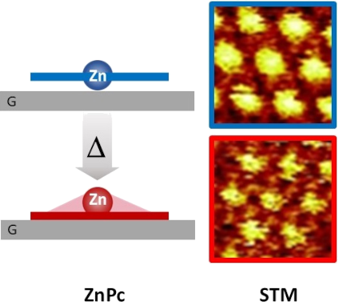
- nm are reported in Figure 2. Only ZnPc and graphene absorb at this excitation wavelength and can emit a resonantly enhanced Raman scattering detectable even at the monolayer level. On the contrary, TSB35-C12 is driven far from its resonance (its absorption starts at wavelengths shorter than 350 nm


Fractional shot noise of an SU(N) Kondo system
Beilstein J. Nanotechnol. 2026, 17, 515–540, doi:10.3762/bjnano.17.34
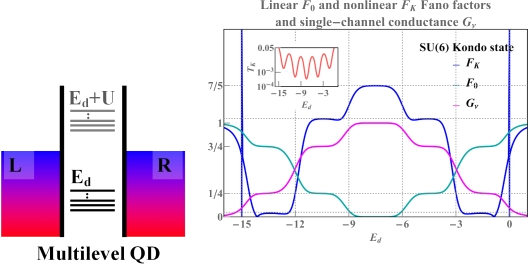
- dot (N-QD) in the Kondo regime. Using the Kotliar–Ruckentein slave boson approach (SBMFA) for an N-level Anderson model, we define effectively noninteracting quasiparticles of the SU(N) Kondo system (N = 2, 3, 4, 5, 6). Kondo resonance transmission coefficients determine linear noise describing
- -symmetry Kondo effects in nanostructures is the fact that Kondo temperatures dramatically increase with degeneracy and take on values that are experimentally accessible [15]. At the same time, the Kondo resonance peak remains narrower than Coulomb resonances. This makes SU(N) Kondo systems attractive for
- expressed by transmission, for the case of interacting electrons appropriately renormalized [53]. For Kondo-correlated systems, it is the many-body Kondo resonance forming at the Fermi level that enables perfect electron transmission. In the Kondo regime, conductance and many other quantities exhibit


![[Graphic 127]](/bjnano/content/inline/2190-4286-17-34-i187.svg?max-width=637&scale=1.18182)

Probing internal continua and atomic ultrafast charge transfer within size-controlled nanoparticles by post-collision interaction in core-hole clock spectroscopy
Beilstein J. Nanotechnol. 2026, 17, 505–514, doi:10.3762/bjnano.17.33
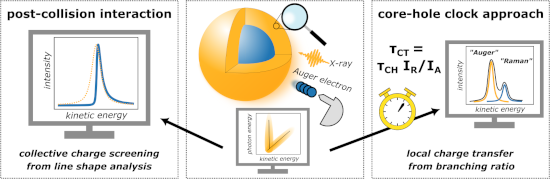
- comparison, relative charge transfer rates, each normalized to the charge transfer rate of the DL15 sample, at various photon energies are depicted in Figure 2b. Just above the resonance, these times are of the order of a few hundred attoseconds. For photon energies of 2475 eV and above, the charge transfer
- higher kinetic energies at photon energies close to the resonance. While asymmetries towards lower kinetic energies are typical for photoemission spectroscopy and are readily explained by various energy loss processes, this kind of behavior requires some process resulting in energy gain. Typically, the
- asymmetry appears to vanish and drastically deviates from the PCI trend. Based on the photon energy, this region corresponds to excitations into the atomic S 3p resonance. The localized nature of this resonance becomes further evident by the significantly enhanced intensity of the Raman feature (Figure 5



Upcycling agroindustrial waste into graphene oxide supports for gold nanoparticles: toward sustainable nanomaterials
Beilstein J. Nanotechnol. 2026, 17, 489–504, doi:10.3762/bjnano.17.32
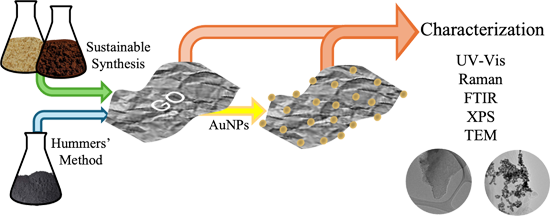
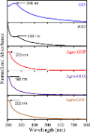
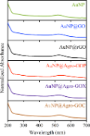
- resonance (LSPR) band centered at 522 nm, indicative of small and well-dispersed AuNPs in colloidal suspension. AuNPs grown on GO substrates showed redshifted LSPR bands in the range of 526–531 nm, accompanied by notable spectral broadening. These features are attributed to interactions between AuNPs and
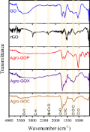
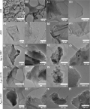
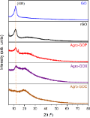
- agroindustrial waste-derived samples (Agro-GOP, Agro-GOX, and Agro-GOC). UV–vis spectra of AuNPs and AuNPs supported on GO samples. The plasmon resonance peak appears at 522 nm for AuNPs and is redshifted (526–531 nm) in the hybrids, indicating interaction with the GO surface. TEM images of AuNP-decorated GO



Defects and defect-mediated engineering of two-dimensional materials: challenges and open questions
Beilstein J. Nanotechnol. 2026, 17, 454–488, doi:10.3762/bjnano.17.31
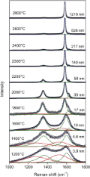
- be somewhat alleviated by doing the measurements under resonance conditions, which leads to activation of a large number of peaks. Another major issue is that one cannot directly read out the identity of a defect from the spectrum; instead, comparison to reference spectra is required. Such
- (described in the section before) for other 2D systems is a challenge. The advantages of graphene are the high Raman frequencies, the simplicity of the spectra, and the electronic resonance conditions, which are not always as favorable in the case of other 2D materials. However, several authors are
- resonant Raman is much more demanding as it should correctly describe the changes in the energy of electronic states and the transition dipoles. In addition, the largest resonance effects are usually seen at energies where polarizability changes quickly, that is, where it is most sensitive to the atomic





Biomimetic nanoparticles in cancer photodynamic therapy: a review of targeted delivery systems and therapeutic outcomes
Beilstein J. Nanotechnol. 2026, 17, 396–422, doi:10.3762/bjnano.17.27
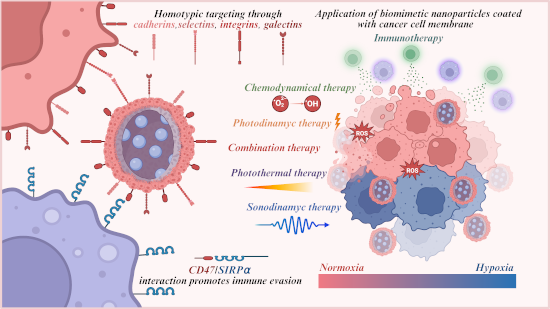
- theranostic applications [39] by facilitating tumor visualization through various imaging techniques [40], including fluorescence imaging [41], computed tomography [42], and magnetic resonance imaging (MRI) [43]. The development of nanobiotechnology in PDT opens new horizons for creating more effective and


Interconnection morphology effects on the radio frequency response of carbon nanotube sponges
Beilstein J. Nanotechnol. 2026, 17, 343–351, doi:10.3762/bjnano.17.23
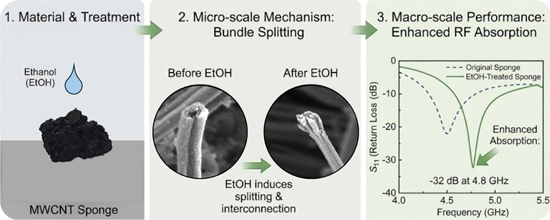
- the design of resonance antennas with dimensions down to one fiftieth or less of conventional metallic resonance antennas [4]. In addition, the electrons can travel freely along the 1D length of the tubes but not in the transverse direction, so that the high-frequency skin effect usually observed in
- from the as-grown CNS sample and the film of MWCNTs grown on a Si substrate as comparison (Figure 1). We observed that both samples have a resonance peak; for the CNT film, it is S11 = −23.0 dB at 4.40 GHz, and for the CNS sample, it is S11 = −22.6 dB at 4.78 GHz. The result found for the MWCNT film is
- case, while the CNS sample is self-standing, the CNT film was grown on a silicon substrate, and the combination of a substrate and slight differences in the growth parameters explains the discrepancy in resonance peak position. The CNS sample also shows an additional resonance at 8.8 GHz with S11 = −34



Beam shaping techniques for pulsed laser ablation in liquids: Unlocking tunable control of nanoparticle synthesis in liquids
Beilstein J. Nanotechnol. 2026, 17, 309–342, doi:10.3762/bjnano.17.22
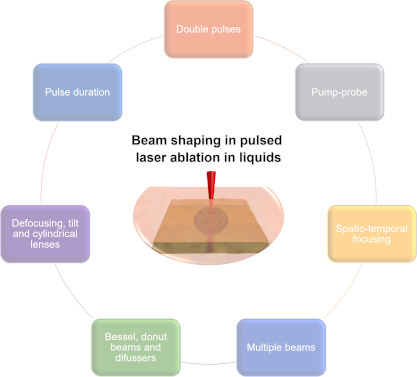
- neutron capture therapy [62][63], viral [64][65] and microbial growth inhibition [42][66], antibacterial agents [67][68], anticancer treatments [67][69], magnetic resonance imaging contrast agent [70], photothermal therapy [71][72], cell imaging [73], proton therapy enhancement [74][75], fluorescence [76
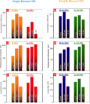
- pulse energies of 15 and 25 mJ (fluences of 34 and 56 mJ·cm−2). As seen in Figure 15a, at 15 mJ, the standard beam has minimal impact on NP size, with the surface plasmon resonance (SPR) peak at 390 nm remaining weak even after 60 min of irradiation. In contrast, the diffused beam at the same energy


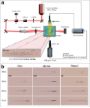



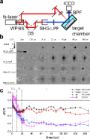


Calculation of the dynamic stiffness of a cantilever under torsional oscillation
Beilstein J. Nanotechnol. 2026, 17, 303–308, doi:10.3762/bjnano.17.21
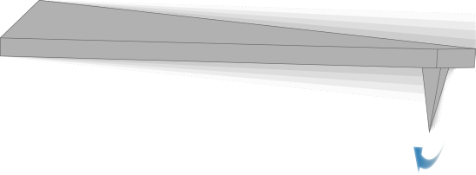
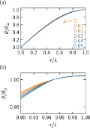
- , where the tip has a negligible moment of inertia (μ = 0) and is at x = L. The boundary conditions are θ(0, t) = 0 (no torsion) and Ctθ′(L, t) = 0 (no torque) [27]. With these conditions, we obtain where is the resonance angular frequency for the n-th eigenmode [28][29]. Figure 1c shows the deformation
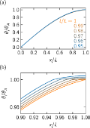
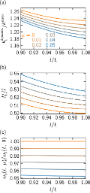
- -th oscillation mode, and is the effective moment of inertia. The dynamic stiffness and the effective moment of inertia are then given by where kstatic is the static stiffness defined by kstatic = Ct/L. The resonance angular frequencies obtained as are equal to those defined for Equation 3. Dynamic
- (x, t) for 0 ≤ x ≤ l and θright(x, t) for l < x ≤ L. The boundary conditions [25] are The equation of motion yields where the parameters αn(l, μ) are the positive solutions of in ascending order, and is the resonance angular frequency for the n-th eigenmode. The resonance angular frequency becomes

Multilayered hyperbolic Au/TiO2 nanostructures for enhancing the nonlinear response around the epsilon-near-zero point
Beilstein J. Nanotechnol. 2026, 17, 251–261, doi:10.3762/bjnano.17.17
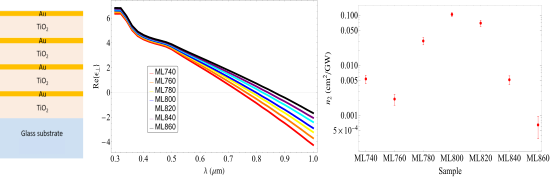
- function of the resonance conditions around the ENZ point. The characterization of the linear properties of the samples was done using spectrophotometry and spectral ellipsometry. We studied the nonlinear response with the z-scan technique at different incident irradiances using a Ti:sapphire femtosecond
- only relevant component is ; hence, we only calculate this component. We wish to produce samples with four metal–dielectric periods that have different ENZ wavelength values (λ = 740, 760, 780, 800, 820, 840, and 860 nm) to test the effect of the resonance conditions with the laser wavelength on the


Gold nanoparticle-decorated reduced graphene oxide as a highly effective catalyst for the selective α,β-dehydrogenation of N-alkyl-4-piperidones
Beilstein J. Nanotechnol. 2026, 17, 218–238, doi:10.3762/bjnano.17.15
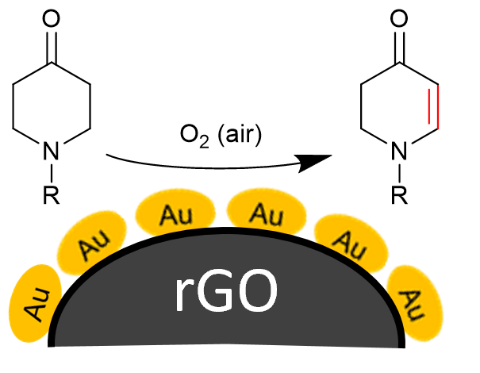
- gold nanoparticle suspension. The presence of AuNPs was confirmed by the appearance of a localized surface plasmon resonance (LSPR) band in the visible wavelength range, with a maximum absorbance at λmax = 519 nm (Figure 4a). The hydrodynamic radius (HD) by number-weighted distribution of dynamic light


Development and in vitro evaluation of liposomes and immunoliposomes containing 5-fluorouracil and R-phycoerythrin as a potential phototheranostic system for colorectal cancer
Beilstein J. Nanotechnol. 2026, 17, 97–121, doi:10.3762/bjnano.17.7
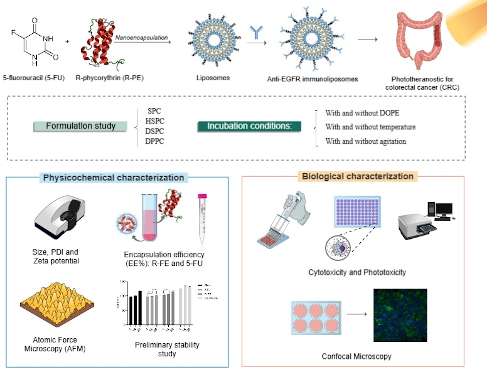
- drying for 15 min at room temperature. The analyses were conducted in air, using the tapping mode to prevent damage to the sample surface, by using a PPP-NCSTAu probe (Nanosensors®, Switzerland), with frequency resonance of 125 kHz and spring constant of 5.0 N/m. The scan rate was 1.5 s per line. The



Microscopic study of the intermediate mixed state in intertype superconductors
Beilstein J. Nanotechnol. 2026, 17, 57–62, doi:10.3762/bjnano.17.5
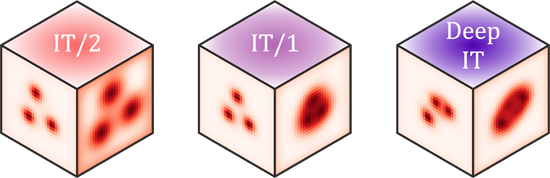
- eigenstates, and f(E) is the Fermi–Dirac distribution function. The electron density is kept constant at ne = 0.25 throughout all calculations by adjusting the chemical potential μ. Notice that the system is well away from the resonance at ne = 1 and, at the chosen value, the electronic dispersion is well


Terahertz-range on-chip local oscillator based on Josephson junction arrays for superconducting quantum-limited receivers
Beilstein J. Nanotechnol. 2025, 16, 2296–2305, doi:10.3762/bjnano.16.158
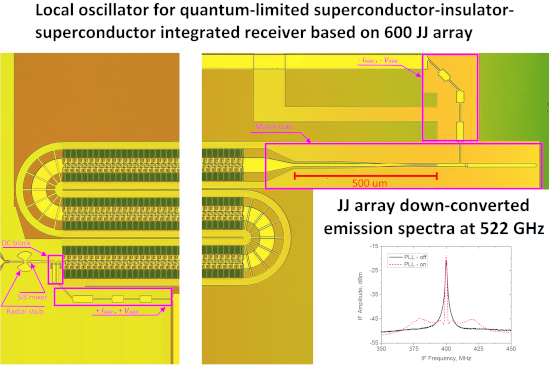
- junctions in this work are as follows: Ic = 110 μA, C = 300 fF, Lshunt = 1.5 pH, and Rshunt = 1.9 Ω. For this set of parameters there is a bump on the single junction IVC at a voltage of approx. 0.5 mV caused by an LC resonance between the shunt inductance and the junction capacitance. Since the
- corresponding resonance frequency is below the operating range of the samples, we will not discuss these effects here. At certain parameter values, the IVC of the single JJ exhibits a number of features that can be quantitatively described by the RLCSJ model, as shown in [38][45][46]. The image of the


Improving magnetic properties of Mn- and Zn-doped core–shell iron oxide nanoparticles by tuning their size
Beilstein J. Nanotechnol. 2025, 16, 2285–2295, doi:10.3762/bjnano.16.157
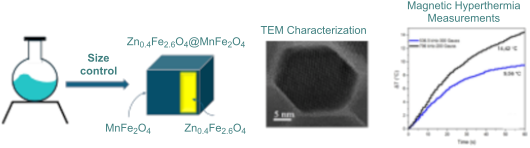
- unique magnetic properties, small size, and biocompatibility, which enable them to be used in a wide range of biomedical applications. These applications include magnetic resonance imaging, magnetic separation, targeted drug delivery, and hyperthermia [1][2]. Magnetic hyperthermia has been extensively



Geometry-controlled engineering of the low-temperature proximity effect in normal metal–superconductor junctions
Beilstein J. Nanotechnol. 2025, 16, 2265–2273, doi:10.3762/bjnano.16.155
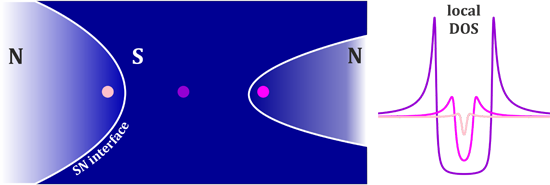
- being in resonance with the peak in the single-particle density of states at ne = 1. The order parameter Δij = Δiδij and the Hartree potential Ui are determined from the self-consistency equations. For the order parameter, we have [50] where Fi is a pair amplitude, and for the Hartree potential with


Chiral plasmonic nanostructures fabricated with circularly polarized light
Beilstein J. Nanotechnol. 2025, 16, 2245–2264, doi:10.3762/bjnano.16.154
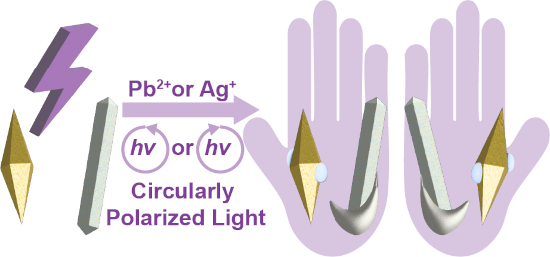
- ][101][102]. When the localized surface plasmon resonance of metal seeds is excited, hot electrons reduce Ag+ or from solution and deposit metallic Ag and Au. However, various studies in the past two decades on the plasmon-mediated reduction of Ag(I) and Au(III) have demonstrated a weak dependence of