Search results
Search for "response" in Full Text gives 1009 result(s) in Beilstein Journal of Nanotechnology. Showing first 200.
Cross-scale design of chemosensor arrays: from molecular self-assembly in water to paper-based devices for metal ion detection
Beilstein J. Nanotechnol. 2026, 17, 828–838, doi:10.3762/bjnano.17.59
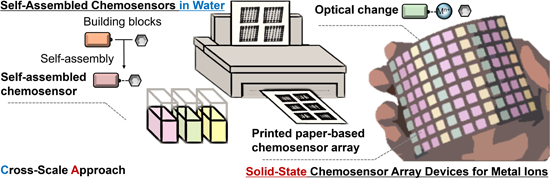
- based on pattern recognition. In pattern recognition-driven chemical sensors, various response patterns including absorbance, fluorescence intensities, and wavelength changes are used as input data for pattern recognition [36]. To perform accurate analysis, appropriate designs of chemosensors are
- requirements: They must exhibit different optical properties depending on the types of metal ions and their concentrations to obtain fingerprint-like response patterns, and they must be highly soluble [17]. Typical chemosensor molecules are covalently linked among the binding sites for analytes, optical units
- in response to the metal ions was significant in the presence of 5, unlike without the color manipulator (i.e., stand-alone dye array). Indeed, the qualitative detection with 100% correct classification was achieved for eleven types of metal ions, even with excess amounts of sodium chloride (NaCl


Tailoring Ag–Pt nanoalloys through solid-state dewetting: structural and optical insights
Beilstein J. Nanotechnol. 2026, 17, 748–759, doi:10.3762/bjnano.17.52

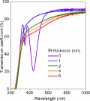
- nanostructures formed by the disintegration of a 7.9 nm Ag/0.1 nm Pt multilayer. The blue shift is expected upon alloying silver with platinum, since the plasmon resonance for Pt occurs in the near-UV region [62][63][64][65]. The rapid suppression of the plasmonic response with increasing Pt concentration arises
- pure silver structures and the significantly stronger extinction cross section (which can be considered a measure of the resonance response strength to excitation by an external electromagnetic field), observed for Ag compared to Pt, the number of samples was increased in the range of very low platinum




Environmental applications of silver nanoparticles: state-of-the-art review and emerging trends
Beilstein J. Nanotechnol. 2026, 17, 697–736, doi:10.3762/bjnano.17.49
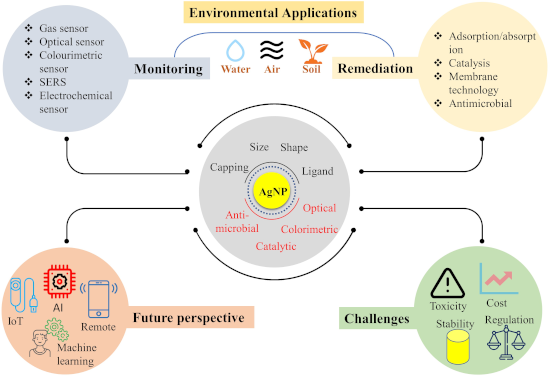
- nanoparticles, including surface coatings or functional groups, can alter their reactivity, stability, and interactions with pollutants and microorganisms [68]. Environmental standardization and stabilization of AgNPs surface charge are essential in biological systems for studying interactions [69]. Response


Protein-based custom-designed molecular nanotraps for biomedical applications
Beilstein J. Nanotechnol. 2026, 17, 683–687, doi:10.3762/bjnano.17.47

- ). The whole process occurred in an aqueous environment, providing sustainable conditions. The surface response method [20][21] enabled the modeling of the optimal conditions for the synthesis of uniform bioMIPs, yielding nanoparticulates with a low polydispersity (PDI < 0.3). Investigations to elucidate

Cellulose as a photocatalyst support material: extraction, structural features, and environmental applications
Beilstein J. Nanotechnol. 2026, 17, 635–652, doi:10.3762/bjnano.17.44
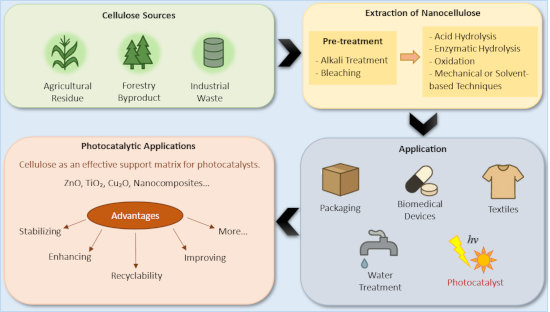
- photocatalyst on a larger support, which makes it easier to separate and reuse the material after the treatment process [100]. In response to these limitations, researchers have increasingly turned their attention to carbon/TiO2 composites, as they not only reduce the recombination of photogenerated electrons


Two-step laser synthesis of Ag@TiO2 nanomaterials for the photocatalytic degradation of rhodamine B
Beilstein J. Nanotechnol. 2026, 17, 622–634, doi:10.3762/bjnano.17.43
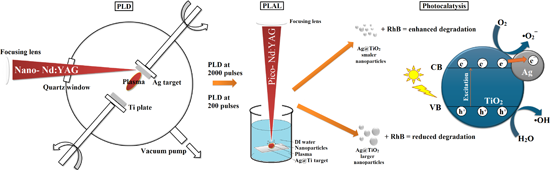
- TiO2 suffers from intrinsic drawbacks. Its bandgap is large (≈3.2 eV [9]); hence, it absorbs only UV light (a small fraction of sunlight, only 3–4%) and shows very limited visible-light response. Also, photogenerated electrons and holes recombine rapidly [7]. To address this, researchers have developed
- the morphology, composition, and crystallinity of the resulting nanostructures with high precision. The absence of organic contaminants or residual reagents maximizes the catalytic surface area, while the presence of silver can influence the optical response of TiO2 through plasmon-related effects


Recent progress in enhancing built-in electric fields of perovskite solar cells via junction engineering
Beilstein J. Nanotechnol. 2026, 17, 602–621, doi:10.3762/bjnano.17.42




Probing tribological evolution in atomically thin MoS2 at different scales
Beilstein J. Nanotechnol. 2026, 17, 586–597, doi:10.3762/bjnano.17.40
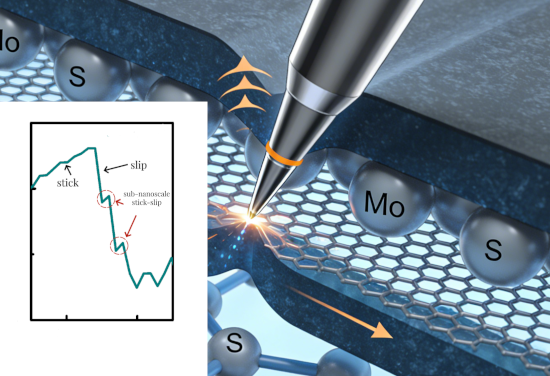
- –slip motion predicted by MD simulations [11][12]. This temporal resolution limitation means that our experiment cannot capture the transient dynamic process of individual sub-nanoscale stick–slip events, but only the cumulative spatial and force response of these events during the slip phase of


Impacts of annealing on structural and photophysical properties of zinc phthalocyanine adsorbed on graphene
Beilstein J. Nanotechnol. 2026, 17, 576–585, doi:10.3762/bjnano.17.39
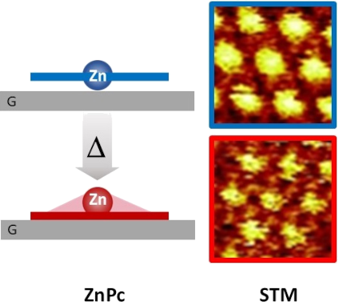
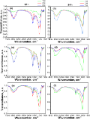
- characteristic of a ZnPc response [43]. However, the highest energy peak is strongly shifted from its value of 1506 cm−1 in the bulk to 1543 cm−1 in this assembly. The same shift has been reported for the ZnPc embedded inside carbon nanotubes or adsorbed on their surface [44]. This is considered as a signature
- response before ZnPc and TSB35-C12 deposition (grey), for reference. The standard D, 2D, and G peaks are labelled. The insert illustrates the proposed planar-square to shuttlecock transition (G: graphene substrate). Scanning tunneling microscopy (STM) images showing the molecular network of a self


Laser–material interactions in liquids for the synthesis of nanomaterials: current status and perspectives
Beilstein J. Nanotechnol. 2026, 17, 571–575, doi:10.3762/bjnano.17.38
- longer-term cavitation bubble dynamics, remains challenging even for shadowgraphy employing ultrafast cameras [34]. Pump–probe reflectometry provides the required picosecond and even femtosecond resolution [35]. However, interpretation of the multi-stage reflectivity response is nontrivial and often
Electrochemical determination of ciprofloxacin using a MIL-101/reduced graphene oxide-modified electrode
Beilstein J. Nanotechnol. 2026, 17, 541–554, doi:10.3762/bjnano.17.35
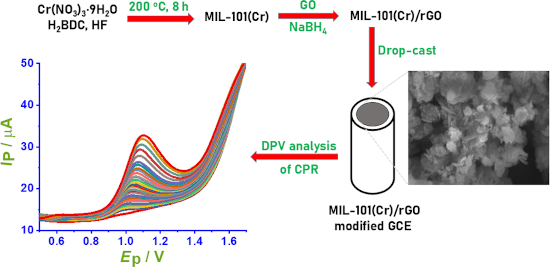
- response over 0.25–9.41 µM and a detection limit of 0.11 µM for CPR determination. The sensor also demonstrated good selectivity, satisfactory repeatability, and long-term stability. Furthermore, the method’s practical applicability was validated by the determination of CPR in pharmaceutical samples
- , complex sample preparation, skilled operators, and lengthy analysis times, which restrict their use for quick or in situ testing. In contrast, electrochemical sensors have become appealing alternatives because of their inherent benefits such as simplicity, low cost, rapid response, high sensitivity, and
- Raman response of the carbon phase. The ID/IG ratios of the composites range from 0.89 to 0.94, depending on the rGO content. Notably, these values are slightly lower than that of pure rGO, suggesting that the incorporation of MIL-101 can partially promote better ordering of sp2 domains through


Probing internal continua and atomic ultrafast charge transfer within size-controlled nanoparticles by post-collision interaction in core-hole clock spectroscopy
Beilstein J. Nanotechnol. 2026, 17, 505–514, doi:10.3762/bjnano.17.33
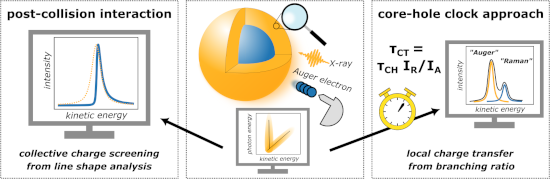
- charge transfer and collective dielectric response. The PCI core-hole clock analysis is, thus, a synchrotron approach of general relevance to the characterization of materials involving bound-state continua. S KL2,3L2,3 resonant Auger measurements of core–shell nanoparticles (core: 3.5 nm CdSe, shell: 7



Defects and defect-mediated engineering of two-dimensional materials: challenges and open questions
Beilstein J. Nanotechnol. 2026, 17, 454–488, doi:10.3762/bjnano.17.31
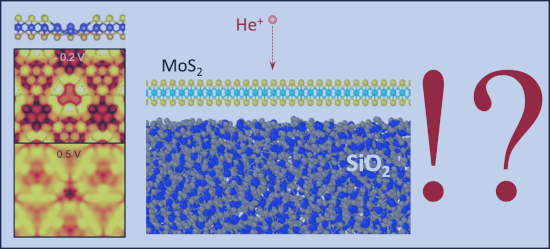
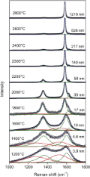
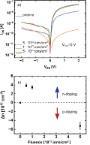
- ), mostly for pristine materials, but in a few cases also with defects [94][115]. In order to model Raman scattering, a model for the response of the material to incoming light is required. In the non-resonant case, Raman scattering is allowed when the atomic displacement of a vibrational mode leads to a





Nanocarrier-integrated multilayer films produced by 3D printing for improved skin adhesion and curcumin photostability
Beilstein J. Nanotechnol. 2026, 17, 440–453, doi:10.3762/bjnano.17.30
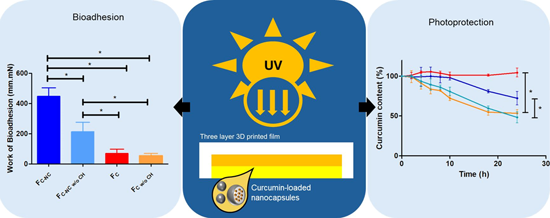
- patient’s physiological characteristics and genetic background, as well as their individual response to drugs and active substances. This level of personalisation significantly minimises the likelihood of adverse drug reactions and enhances therapeutic efficacy. Furthermore, a wide range of pharmaceutical


First-principles study on elastic properties of Cu, (Cu1−x,Nix)3Sn and interfacial mechanical properties of (Cu1−x,Nix)3Sn/Cu in the lead-free solder joint
Beilstein J. Nanotechnol. 2026, 17, 428–439, doi:10.3762/bjnano.17.29
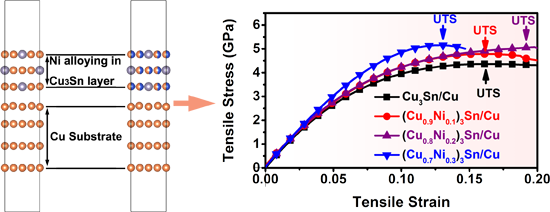
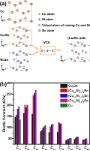
- the increase of Ni content. Moreover, using the calculated values of BV, BR, GV, and GR, the universal anisotropy index AU, developed by Ostoja-Starzewski et al., can be expressed as [30]: Because the mechanical response of crystals to external loads strongly depends on the elastic anisotropy, the



Nanoinformatics: spanning scales, systems and solutions
Beilstein J. Nanotechnol. 2026, 17, 423–427, doi:10.3762/bjnano.17.28
- /features governing the cellular uptake were analysed as a basis for programming higher cellular uptake efficiency and better therapeutic response [9]. He et al. used additive AI-based approaches to identify nanoparticle systems for delivering drugs to treat neurodegenerative diseases. Their method

Biomimetic nanoparticles in cancer photodynamic therapy: a review of targeted delivery systems and therapeutic outcomes
Beilstein J. Nanotechnol. 2026, 17, 396–422, doi:10.3762/bjnano.17.27
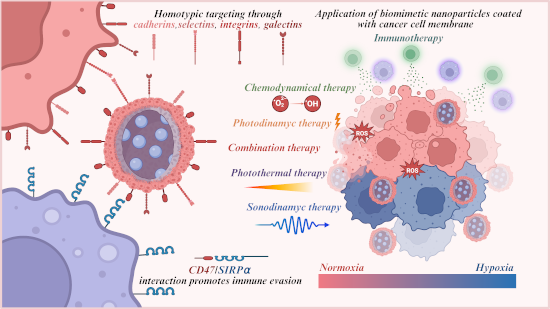
- body’s immune response [48]. BNPs utilizing a cell membrane to coat a synthetic core were reported in 2011. These nanoparticles consisted of a poly(lactic-co-glycolic) acid (PLGA) core coated with an outer layer derived from red blood cell (RBC) membranes [49]. It was demonstrated that the presence of
- advancement came from Wang’s group in 2023 [114], who developed “adaptive” CCM-coated nanoparticles that could dynamically alter their surface properties in response to the TME. By incorporating pH-sensitive linkers between the membrane coating and targeting ligands, these nanoparticles maintained their


Eco-efficient materials for agricultural crops based on a mineral rich in MOR- and HEU-type zeolites
Beilstein J. Nanotechnol. 2026, 17, 381–395, doi:10.3762/bjnano.17.26
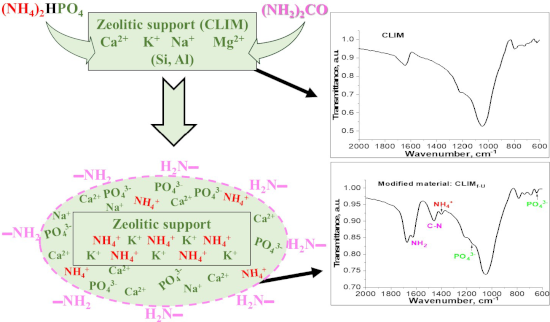
- . Studies on cultivation of corn in pots, which are a common diagnostic test for these purposes [15], confirm the aforesaid. The results obtained in these studies showed that the plants with the best response to the evaluated parameters (stem diameter, leaf area, and plant height) corresponded to the




Polycatecholamine nanocoatings on stainless steel: the effect on attachment of human fibroblasts and platelets
Beilstein J. Nanotechnol. 2026, 17, 365–380, doi:10.3762/bjnano.17.25
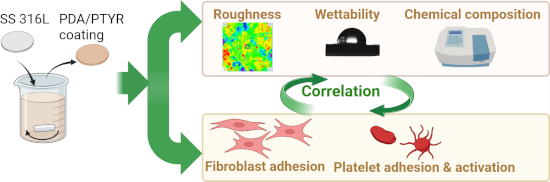
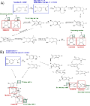
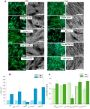
- d to evaluate the coating detachment or any morphological changes. Primary amine content evaluation Evaluation of primary amine (–NH2) content in the coatings was performed using methyl orange assay (adapted from [53]) to link the platelets response to the materials with the chemical composition of




Ferroelectric nanodot reservoir for neuromorphic computing
Beilstein J. Nanotechnol. 2026, 17, 352–364, doi:10.3762/bjnano.17.24
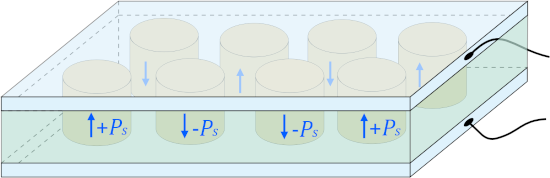
- nonlinear response of an ensemble of ferroelectric nanodots. The system consists of a network of nanodots, each carrying the bistable polarization state, arranged between electrodes in configurations that allow for parallel electrical addressing. By receiving temporal input signals, the ensemble evolves
- signals into the ferroelectric reservoir. The reservoir consists of an ensemble of nanodots, each exhibiting a nonlinear bistable polarization response ±Ps(i) (where i is the nanodot index and Ps is the magnitude of the spontaneous polarization) to external excitation. The ensemble of these nanodots forms
- , enabling rich dynamic response to time-varying inputs, as required for real-time neuromorphic tasks. Notably, our approach leverages the electrostatic physics of nanoscale ferroelectrics to implement a scalable, low-power analog computing substrate. The described system relies solely on dielectric


Interconnection morphology effects on the radio frequency response of carbon nanotube sponges
Beilstein J. Nanotechnol. 2026, 17, 343–351, doi:10.3762/bjnano.17.23
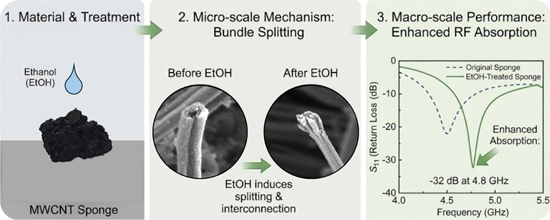
- , Italy 10.3762/bjnano.17.23 Abstract In this work, the high-frequency response of a multiwalled carbon nanotube (MWCNT) film grown on a silicon substrate is compared with that of MWCNT sponges (CNSs). Different from the CNT film, CNSs are a self-standing material that can operate in the absence of a
- , also an actual performance gain. The antenna built from CNSs shows an enhanced response gain compared with that of the MWCNT film, with both antennas having a maximum positioned around 4.8 GHz. After identifying the best CNT-based sample, the experiment focused on improving the CNS antenna’s response
- . In particular, we observed that the response of S11 = −22.6 dB around 4.8 GHz from the CNS antenna improved after a mild treatment with ethanol, reaching S11 = −32.6 dB measured after 10 min of waiting. This observed effect is studied in detail with scanning electron microscopy and Raman spectroscopy




Beam shaping techniques for pulsed laser ablation in liquids: Unlocking tunable control of nanoparticle synthesis in liquids
Beilstein J. Nanotechnol. 2026, 17, 309–342, doi:10.3762/bjnano.17.22
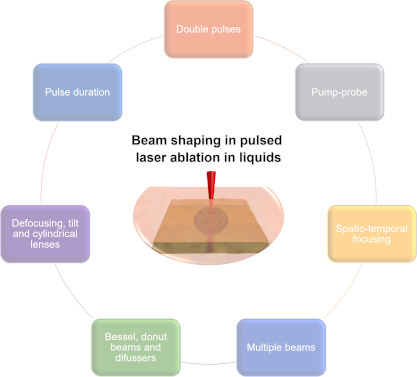
- mechanism. While, in femtosecond pulses, due to their ultrashort nature, the energy is deposited instantaneously into the material. This enables non-thermal ablation, where ionisation and photomechanical effects dominate the material’s response [163][164]. The role of temporal beam shaping in PLAL In this







Multilayered hyperbolic Au/TiO2 nanostructures for enhancing the nonlinear response around the epsilon-near-zero point
Beilstein J. Nanotechnol. 2026, 17, 251–261, doi:10.3762/bjnano.17.17
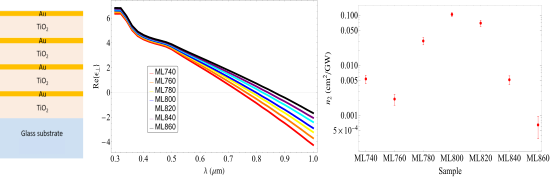
- –dielectric Au/TiO2 structures. The samples were fabricated using Joule effect evaporation for gold and electron beam evaporation for titanium dioxide. Their structure was designed to have an epsilon-near-zero (ENZ) point at different wavelengths around 800 nm, in order to study their nonlinear response as a
- function of the resonance conditions around the ENZ point. The characterization of the linear properties of the samples was done using spectrophotometry and spectral ellipsometry. We studied the nonlinear response with the z-scan technique at different incident irradiances using a Ti:sapphire femtosecond
- laser, enabling us to characterize both the refractive and absorptive contributions to the nonlinear response. Due to the high pulse repetition rate inherent to Ti:sapphire systems and the presence of linear absorption in the samples, cumulative pulse-to-pulse thermal effects may be present. A modified


Comparative study on 3D morphologies of delignified, single tracheids and fibers of five wood species
Beilstein J. Nanotechnol. 2026, 17, 239–250, doi:10.3762/bjnano.17.16
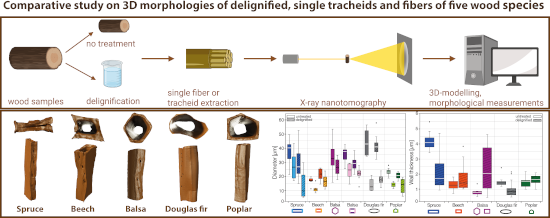
- environmental conditions and their different functional requirements. For instance, larger lumina typically form in earlywood during optimal environmental conditions, while latewood tracheids develop narrower lumina as a response to limited growth resources [35][36]. It seems that larger lumina in earlywood


Structure-dependent thermochromism of PAZO thin films: theory and experiment
Beilstein J. Nanotechnol. 2026, 17, 186–199, doi:10.3762/bjnano.17.12
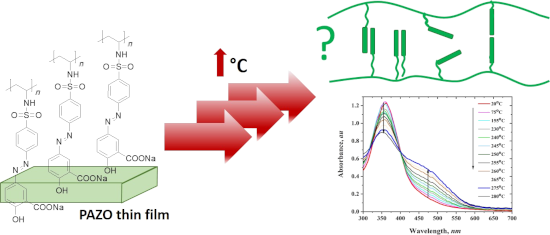
- relationship between the structural organization of the polymer side chains and temperature-induced optical changes. By combining experimental spectroscopic techniques with theoretical modeling, we demonstrate that the thermochromic response of PAZO films is strongly influenced by molecular aggregation, film
- thickness, and thermal treatment conditions. The observed changes in optical properties suggest that this response is governed by temperature-induced modulation of molecular ordering and aggregation state, which in turn alters the electronic transitions responsible for light absorption. Theoretical
- when a 532 nm laser is used. Additionally, the thermal treatment leads to an increase in the response time in both cases. These findings can be analyzed in the context of previously reported results. In the study by Nedelchev et al. [18], a spectral dependence of ∆n on the pump laser wavelength was