


Search results
Search for "silicon" in Full Text gives 913 result(s) in Beilstein Journal of Nanotechnology. Showing first 200.
Enhanced erosion resistance and radiation stability of WC–WO3 nanocomposite films under 100 keV Kr+ ion irradiation
Beilstein J. Nanotechnol. 2026, 17, 922–934, doi:10.3762/bjnano.17.65
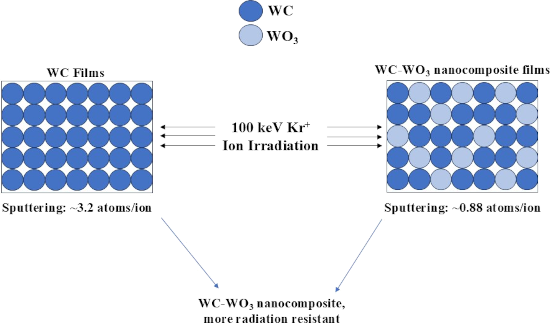
- lower-energy values corresponds to silicon (Si). Using SIMNRA 6.06 software after fitting the experimental data, the stoichiometry of W and C in the sample was determined to be roughly 1:1, while the thickness of the film was found to be ~400 nm. Determination of sputtering in the films The RBS spectra



Supramolecular one-dimensional conducting nanofibers from a C3-symmetric tetrathiafulvalene derivative
Beilstein J. Nanotechnol. 2026, 17, 872–881, doi:10.3762/bjnano.17.63
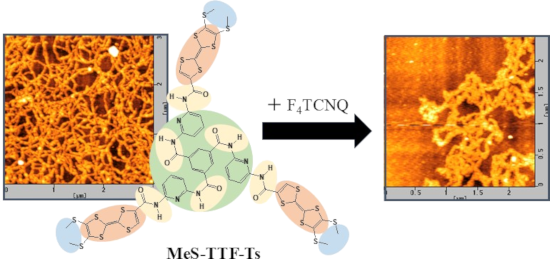
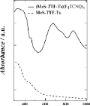
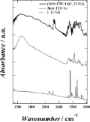
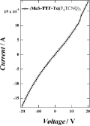
- measurements The structures formed on mica substrates were observed using an atomic force microscopy (AFM) system (Bruker Multi Mode 8). Measurements were performed in non-contact mode using a silicon cantilever with a spring constant of approximately 0.8 N·m−1. Optical spectra UV–vis absorption spectra were


He+ FIBID-fabricated 3D AFM tip architectures: an exploratory study of hollow pillars, helices, and spirals
Beilstein J. Nanotechnol. 2026, 17, 863–871, doi:10.3762/bjnano.17.62
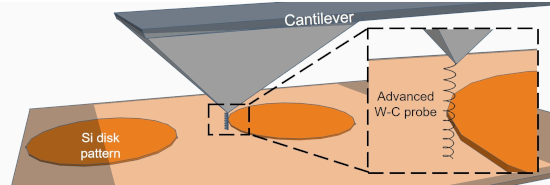
- angle. Second and third columns: SEM images of the same tips after the first and second AFM measurement cycles, respectively, acquired using a Thermo Fisher SCIOS 2 microscope at a 52° tilt angle. Topographic sketch of the silicon pattern employed in AFM measurements. A circular feature with a nominal


Nanoparticle delivery systems for HIV pre-exposure prophylaxis (PrEP): advances and challenges
Beilstein J. Nanotechnol. 2026, 17, 839–853, doi:10.3762/bjnano.17.60
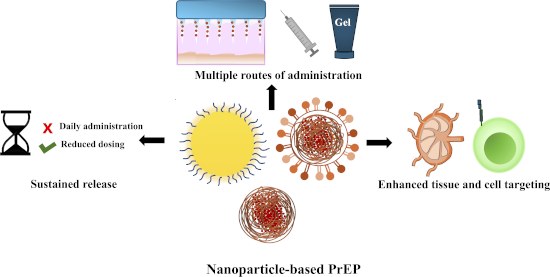
- as gold or mesoporous silica and silicon. Inorganic platforms offer distinct properties like structural rigidity, potential use as adjuvant systems, and some studies reported virion removal by attachment [29]. Although less widely applied in PrEP, they are attracting interest in microbicidal and
- . Inorganic nanoparticles Inorganic nanoparticles, particularly those made of metals (e.g., gold, silver) and mesoporous silicon have gained attention as antivirals as well as HIV drug delivery platforms due to their unique physicochemical properties that differ from biodegradable polymers or lipid-based
- ’ intrinsic antiviral actions such as protease inhibition [72][73][74]. Some studies of the toxicity of MNPs have provided indications of mitochondrial dysfunction, increased membrane permeability, cellular damage, and oxidative stress in host cells in response to MNP exposure [75][76]. Silicon-based systems


Tailoring Ag–Pt nanoalloys through solid-state dewetting: structural and optical insights
Beilstein J. Nanotechnol. 2026, 17, 748–759, doi:10.3762/bjnano.17.52

- Figure 3c, in addition to the clearly visible nanostructures, lighter gray, triangular-shaped islands can also be observed on the surface. These features may originate from the formation of metallic or metal–silicon compound flakes during annealing at higher temperatures. It may also be associated with
- shown in Figure 5. The survey spectra confirm the high chemical purity of all samples. Apart from Ag and Pt, only silicon originating from the substrate, as well as oxygen and carbon adsorbed from the atmosphere, were detected. The quantitative composition was determined from the survey spectra and is
- in Ag–Pt nanoalloys, as discussed in [69][70]. The linear EDS analysis also confirmed the formation of a thin intermediate layer, resulting from the diffusion of silicon from substrate into the structures. A similar effect was previously observed in Ag–Au nanostructures, where we noticed diffusion




Environmental applications of silver nanoparticles: state-of-the-art review and emerging trends
Beilstein J. Nanotechnol. 2026, 17, 697–736, doi:10.3762/bjnano.17.49
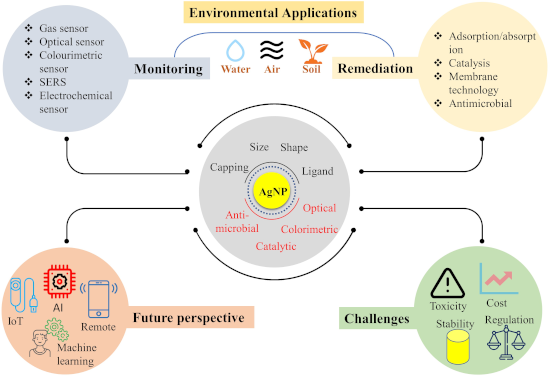
- nanoparticles using carbon or silicon wafers as the primary substrate [49]. The X-ray diffraction pattern reveal that AgNP crystal growth occurs at different facets depending on the NPs [49]. The most common facets include 111, 200, 220, and 311, corresponding to 2θ angles of 38.2°, 44.4°, 64.6°, and 77.5
- ·bar−1) was achieved with water. The membrane exhibited enhanced photocatalytic activity under UV, with a flux of 98.1% and an inhibition of 99% for E. Coli [144]. A membrane consisting of AgNPs, zirconium-doped silicon (Ag/ZrO2-SiO2) killed 98.86% and 97.42% of E. coli and S. aureus, respectively [145


Recent progress in enhancing built-in electric fields of perovskite solar cells via junction engineering
Beilstein J. Nanotechnol. 2026, 17, 602–621, doi:10.3762/bjnano.17.42
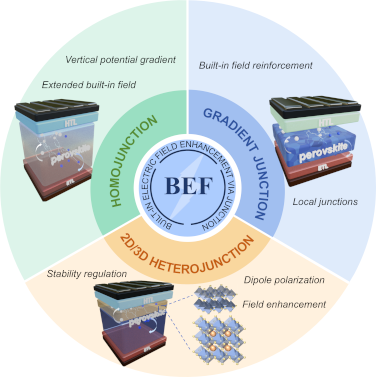
- interfacial recombination [20][21]. Therefore, the formation of a strong p–n junction is an effective strategy to improve photovoltaic device performance. Nevertheless, achieving stable p-type and n-type doping in perovskites remains more difficult than in silicon because doping can introduce lattice




Probing tribological evolution in atomically thin MoS2 at different scales
Beilstein J. Nanotechnol. 2026, 17, 586–597, doi:10.3762/bjnano.17.40
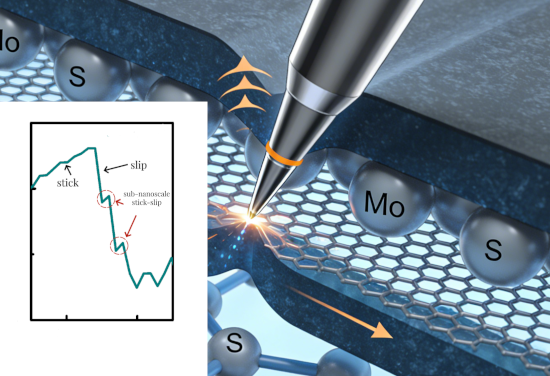
- mode using silicon probes (PPP-LFMR, Nanosensors) with a normal spring constant of 0.2 N·m−1 and a tip radius of ≈8 nm. Raman spectra were collected using a 533 nm laser (0.5 mW power) to avoid sample damage. The surface roughness (Ra) values of MoS2 were measured from the corresponding topographic


Upcycling agroindustrial waste into graphene oxide supports for gold nanoparticles: toward sustainable nanomaterials
Beilstein J. Nanotechnol. 2026, 17, 489–504, doi:10.3762/bjnano.17.32
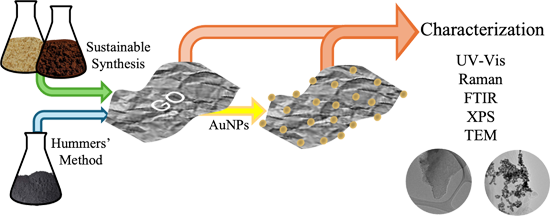
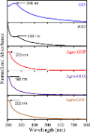
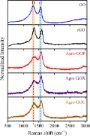
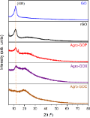
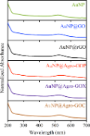
- = 1.5418 Å). The instrument was equipped with a high-speed silicon strip detector (D/teX Ultra). Diffraction patterns were recorded over a 2θ range of 5–80°. Results and Discussion Figure 1 shows the UV–vis absorption spectra of the Agro-GOP, Agro-GOX, and Agro-GOC samples compared with the reference



Eco-efficient materials for agricultural crops based on a mineral rich in MOR- and HEU-type zeolites
Beilstein J. Nanotechnol. 2026, 17, 381–395, doi:10.3762/bjnano.17.26
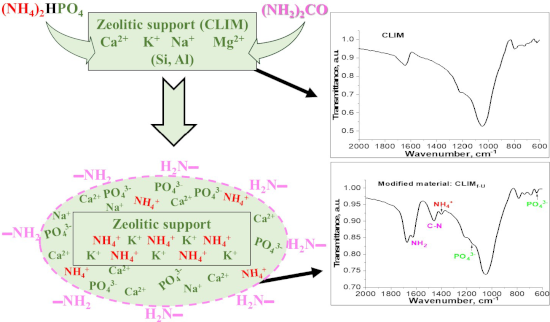
- formed by silicon and aluminium tetrahedra connected through their vertices by bridging oxygen atoms. This arrangement forms a network of interconnected channels and cavities with a large surface area, where water molecules and mobile cations (Na+, K+, Ca2+, Mg2+) are located to neutralize the excess
- utilized by crop plants during their development. Furthermore, the silicon contained in its matrix is considered an important element due to its role in the physiology and biochemistry of agricultural crops [12]. The cation exchange and adsorption properties of zeolites form the basis for the modification
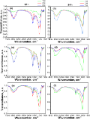
- modified with DAP) samples show characteristic zeolite bands in the 620–1214 cm−1 region, which are associated with the silicon and aluminium tetrahedral groups (SiO4 and AlO4) of the crystal lattice of MOR and HEU. The bands in the 3400–3600 cm−1 region are attributed to water molecules coordinated with




Interconnection morphology effects on the radio frequency response of carbon nanotube sponges
Beilstein J. Nanotechnol. 2026, 17, 343–351, doi:10.3762/bjnano.17.23
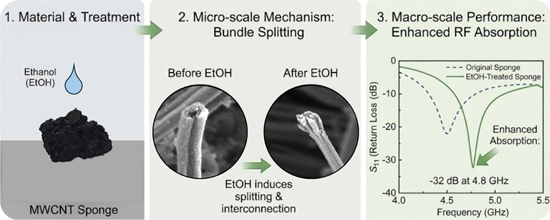
- , Italy 10.3762/bjnano.17.23 Abstract In this work, the high-frequency response of a multiwalled carbon nanotube (MWCNT) film grown on a silicon substrate is compared with that of MWCNT sponges (CNSs). Different from the CNT film, CNSs are a self-standing material that can operate in the absence of a
- case, while the CNS sample is self-standing, the CNT film was grown on a silicon substrate, and the combination of a substrate and slight differences in the growth parameters explains the discrepancy in resonance peak position. The CNS sample also shows an additional resonance at 8.8 GHz with S11 = −34
- ) horizontally positioned inside a furnace (Lenton, UK). The CNT films were grown on a silicon substrate (n-doped) placed inside a quartz tube that was sealed and pumped down to 10−2 mbar to reduce contamination and remove oxygen. The temperature was then increased at a constant rate (5 °C·min−1) up to 750 °C




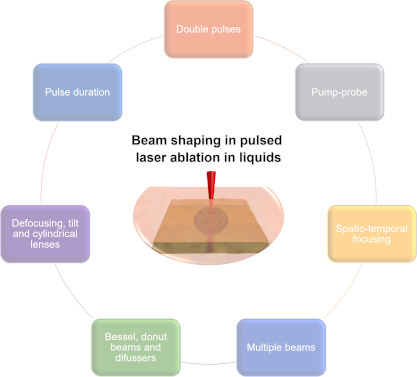
Beam shaping techniques for pulsed laser ablation in liquids: Unlocking tunable control of nanoparticle synthesis in liquids
Beilstein J. Nanotechnol. 2026, 17, 309–342, doi:10.3762/bjnano.17.22







Advancing nanolithography: a comprehensive review of materials for local anodic oxidation with AFM
Beilstein J. Nanotechnol. 2026, 17, 275–291, doi:10.3762/bjnano.17.19
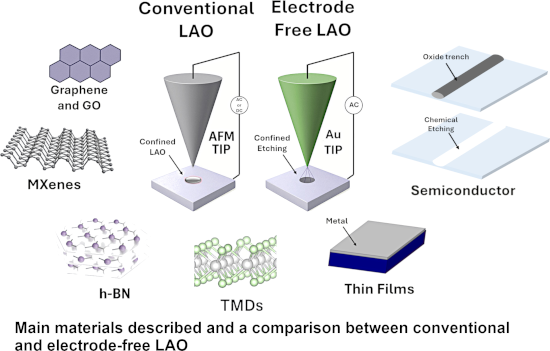
- heterostructures. Semiconductors such as silicon and silicon carbide remain foundational due to their controllable oxidation kinetics, while metals like titanium and aluminum offer opportunities for plasmonic and optical applications. 2D materials, including graphene, graphene oxide, and transition metal
- aims to highlight the capability of LAO to pattern two-dimensional (2D) materials such as graphene [20][21][22], hexagonal boron nitride [23] (hBN), transition metal dichalcogenides (TMDs) [21][24][25][26][27], metals [18][28][29], as well as traditional semiconductors such as silicon (Si) [6][10][30
- ][31], gallium arsenide (GaAs) [32][33] and silicon carbide (SiC) [34], meaning that SPL has still the potential to revolutionize nanolithography. In the context of 2D materials, LAO facilitates the fabrication of intricate structures such as nanoribbons and transistors, granting proper operation of


Gold nanoparticle-decorated reduced graphene oxide as a highly effective catalyst for the selective α,β-dehydrogenation of N-alkyl-4-piperidones
Beilstein J. Nanotechnol. 2026, 17, 218–238, doi:10.3762/bjnano.17.15


Functional surface engineering for cultural heritage protection: the role of superhydrophobic and superoleophobic coatings – a comprehensive review
Beilstein J. Nanotechnol. 2026, 17, 63–96, doi:10.3762/bjnano.17.6

- promising solution for heritage conservation. The same group also investigated a way to protect the same surfaces from simulated bird excreta [62], comparing the effectiveness of an experimental fluoropolymer (modified with SiO2 particles) with two commercial polymers (a fluorine-based and a silicon-based
- copolymer reduced wettability but failed to limit water absorption and showed poor resistance under rain exposure, similar to untreated samples. In contrast, the silicon-based coatings demonstrated better long-term hydrophobicity and surface stability. Among them, PSW slightly enhanced water retention




Reduced graphene oxide paper electrode for lithium-ion cells – towards optimized thermal reduction
Beilstein J. Nanotechnol. 2026, 17, 24–37, doi:10.3762/bjnano.17.3
- the oxygen mass percentage in each G-Flake® rGO paper sample. The equipment was calibrated with standard silicon oxide samples before each measurement. The samples of the measured materials were prepared to follow the requirement of the sample’s weight exceeding 0.01 g. The experiment involved four



Quantitative estimation of nanoparticle/substrate adhesion by atomic force microscopy
Beilstein J. Nanotechnol. 2026, 17, 1–14, doi:10.3762/bjnano.17.1

- of copper nanoparticles to silicon substrates deposited under varying conditions using DC magnetron sputter inert gas condensation. Atomic force microscopy was utilized as a tool for the manipulation of the nanoparticles and to measure lateral forces for their displacement, with cantilever



Improving magnetic properties of Mn- and Zn-doped core–shell iron oxide nanoparticles by tuning their size
Beilstein J. Nanotechnol. 2025, 16, 2285–2295, doi:10.3762/bjnano.16.157
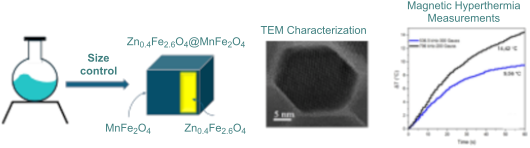
- File 1) were obtained with a PANalytical X’Pert Pro MPD diffractometer. The latter was used in a Bragg–Brentano configuration in reflection equipped with a Cu anticathode (Cu Kα radiation, λ = 0.154 nm) and a high-speed multichannel X’Celerator detector. The sample were placed on a silicon zero



Optical bio/chemical sensors for vitamin B12 analysis in food and pharmaceuticals: state of the art, challenges, and future outlooks
Beilstein J. Nanotechnol. 2025, 16, 2207–2244, doi:10.3762/bjnano.16.153
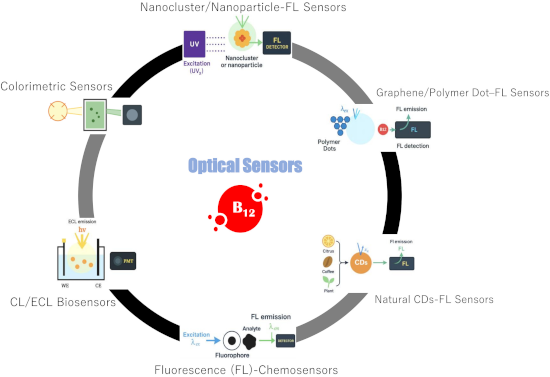
- + concentrations from 1.0 × 10⁻⁹ to 3.0 × 10⁻⁷ g/mL and an LOD of 4.4 × 10⁻¹⁰ g/mL with 2.3% RSD [105]. Andrade et al. designed a flow–batch methodology paired with a large-area silicon photodiode instead of a photomultiplier tube, resulting in a convenient and automated luminometer for CL analysis. In this


Electromagnetic study of a split-ring resonator metamaterial with cold-electron bolometers
Beilstein J. Nanotechnol. 2025, 16, 2199–2206, doi:10.3762/bjnano.16.152
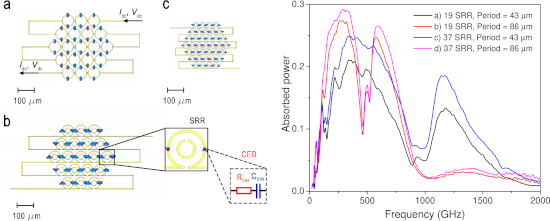
- solver of CST MWS in 3D mode. The simulated receiving structure is placed on a 500 μm thick silicon substrate. A 4 mm-diameter silicon hyperhemispherical lens is placed on the rear side of the substrate to efficiently couple the incident radiation into the planar structure. The external signal is
- are governed by the requirement to fill the Airy spot of the silicon lens. If the total array size is smaller than the Airy spot, a portion of the incident signal will not interact with the metamaterial, instead scattering into the surrounding space. Our simulations confirm this principle: A reduction


Ultrathin water layers on mannosylated gold nanoparticles
Beilstein J. Nanotechnol. 2025, 16, 2183–2198, doi:10.3762/bjnano.16.151
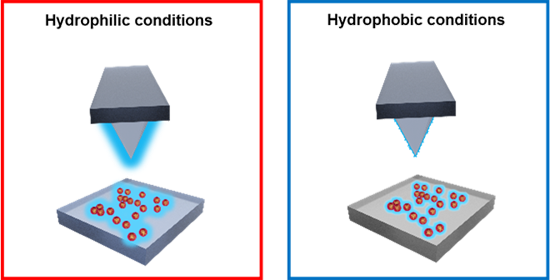
- measurements [24]. They form stable and well-defined organic layers on oxides, for example, on oxidized silicon wafers or glass, where surface charge and hydrophilicity are controlled by selecting the appropriate end groups. We combined all the methods mentioned to carry out AFM at variable RH levels in our
- diameter of the particles adsorbed on 3-(ethoxydimethylsilyl)propylamine (APDMES) silicon was estimated. The dimanno-AuNPs exhibited a mean size of 14.8 ± 1.6 nm (Figure 3A,C), and the size of the PEG AuNPs was 14.3 ± 1.5 nm (Figure 3B,D). The organic layers of PEG and dimannoside are transparent to
- hydrophilic and hydrophobic surfaces We assessed with SEM and AFM the aggregation tendency of the particles after adsorption. To this end, we determined water contact angles. The hydrophilic APDMES silicon gave 66 ± 3º. In contrast, on the hydrophobic octadecyltrichlorosilane (OTS) silicon, it was 92 ± 2º



The cement of the tube-dwelling polychaete Sabellaria alveolata: a complex composite adhesive material
Beilstein J. Nanotechnol. 2025, 16, 1998–2014, doi:10.3762/bjnano.16.138
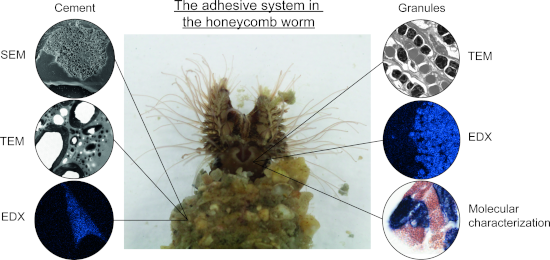
- ) equipped with an 80 mm2 silicon drift detector. Acquisition conditions on the SEM were 15 kV, 10 mm working distance, and 10 s live time acquisition at approximately 30–40% dead time. The spectra were acquired with an AZtec (Oxford Instrument) EDS data processing software. Transmission electron microscopy



Mechanical property measurements enabled by short-term Fourier-transform of atomic force microscopy thermal deflection analysis
Beilstein J. Nanotechnol. 2025, 16, 1952–1962, doi:10.3762/bjnano.16.136
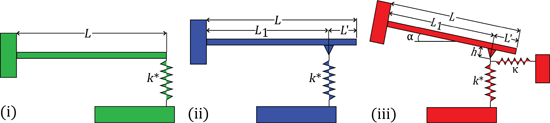
- AFM experiments on well-characterized surfaces, such as highly ordered pyrolytic graphite (HOPG), using silicon cantilevers with integrated probes. To examine the time evolution of the AFM cantilever’s oscillatory modes during an experiment, STFTs, rather than wavelet transforms, of the thermal motion
- An Agilent Keysight 5500 AFM was used in all experiments with measurements conducted under ambient laboratory conditions of 20–40% humidity. Four samples were analyzed in the experiments, namely, a silicon wafer, freshly-cleaved HOPG, poly(ethylene oxide) (PEO), and polydimethylsiloxane (PDMS). The
- mechanical properties of these samples are provided in Table 1. Silicon wafers were ultrasonicated in acetone and ethanol for 10 min each. HOPG samples were cleaved using the Scotch tape method within 30 min of beginning an experiment. Finally, the PEO and PDMS samples were not surface-treated following




Evaluating metal-organic precursors for focused ion beam-induced deposition through solid-layer decomposition analysis
Beilstein J. Nanotechnol. 2025, 16, 1942–1951, doi:10.3762/bjnano.16.135
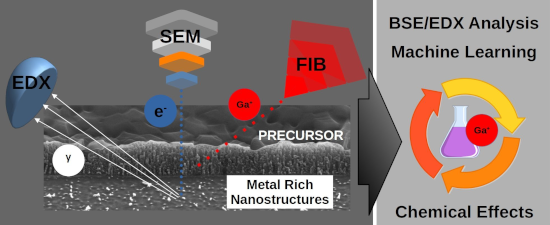
- signal coming from the silicon substrate. Subsequently, these distinct EDX signals were employed to quantify the chemical composition of the structures using an energy-dispersive X-ray EDX ZAF method in a standardless approach. Results and Discussion The chemical compositions of the formed structures are
- content increases with Fh. It is also worth to notice that the 30 keV gallium ion range in copper and silver is almost the same (the longitudinal ranges of gallium ions as calculated by SRIM are 11.6 nm for copper, 11.0 nm for silver, and 28.6 nm for silicon). Additionally, we calculated the volume-to
- decomposition of four Cu or Ag metal-organic precursors (i.e., ([Cu2(μ-O2Ct-Bu)4] (1), [Cu2(NH2(NH=)CC2F5)2(µ-O2CC2F5)4] (2), [Cu2(µ-O2CC2F5)4] (3), and [Ag2(μ-O2CC2F5)2] (4)) exposed to 30 keV gallium FIB irradiation. Individual precursor layers were deposited onto silicon substrates via sublimation and


Low-temperature AFM with a microwave cavity optomechanical transducer
Beilstein J. Nanotechnol. 2025, 16, 1873–1882, doi:10.3762/bjnano.16.130
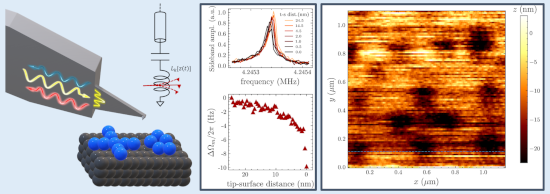
- on a silicon substrate. Each unit cell in the pattern contains different shapes as shown in the SEM image in Figure 6a. The tapered arms of crosses and ribbons shrink to reach a nominal minimum feature size of 20 nm. Figure 6b shows a FM-AFM image of the 1 µm × 1 µm scan area corresponding to the





