


Search results
Search for "solubility" in Full Text gives 354 result(s) in Beilstein Journal of Nanotechnology. Showing first 200.
Sustainable fabrication of 2D-based devices through reuse of substrates with microfabricated electrodes
Beilstein J. Nanotechnol. 2026, 17, 818–827, doi:10.3762/bjnano.17.58
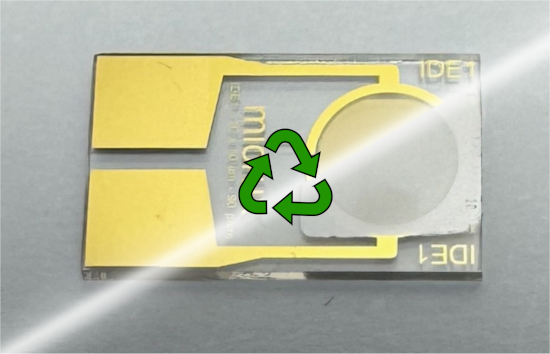
- cleaning conditions. Dihydrolevoglucosenone (Cyrene) has recently emerged as a greener alternative within this class, with solubility parameters and surface tension similar to those of NMP and DMF, but a lower toxicity profile [30][31]. Overall, these observations suggest that the solvent classes effective
- conditions. As summarized in Table S1 (Supporting Information File 1), NMP and DMF possess surface tensions (γ) and dispersive solubility parameters (δD) that closely match the surface energy characteristics of MoS2 (γ ≈ 40 mN/m, δD ≈ 18 MPa1/2), whereas dimethyl sulfoxide (DMSO) and acetone deviate more


Interface-engineered Caco-2 cell culture on a collagen-coated liquid–liquid interface in a microfluidic device
Beilstein J. Nanotechnol. 2026, 17, 760–768, doi:10.3762/bjnano.17.53
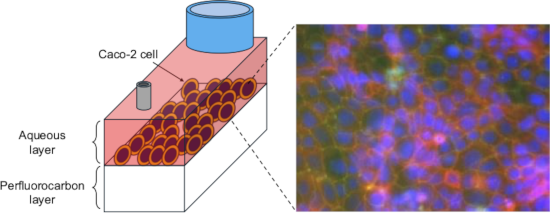
- attractive due to their chemical inertness, immiscibility with aqueous media, and high gas solubility [11], making them well suited for multiphase microfluidic applications. In this study, we propose a novel microfluidic cell culture system by utilizing a collagen-coated liquid–liquid interface that serves


Cellulose as a photocatalyst support material: extraction, structural features, and environmental applications
Beilstein J. Nanotechnol. 2026, 17, 635–652, doi:10.3762/bjnano.17.44
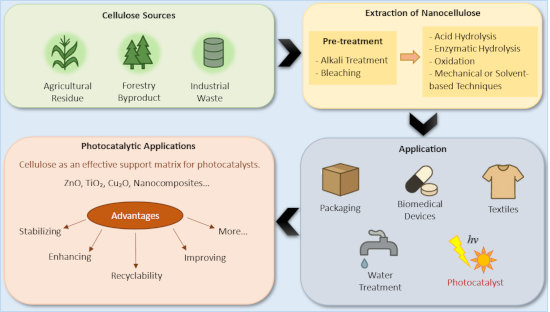
- solubility, improved compatibility with biological systems, and the ability to be tuned or functionalized for the development of advanced composite materials [68][69]. These forms of cellulose are particularly valuable in producing highly purified wound dressings that promote tissue regeneration, especially


Two-step laser synthesis of Ag@TiO2 nanomaterials for the photocatalytic degradation of rhodamine B
Beilstein J. Nanotechnol. 2026, 17, 622–634, doi:10.3762/bjnano.17.43
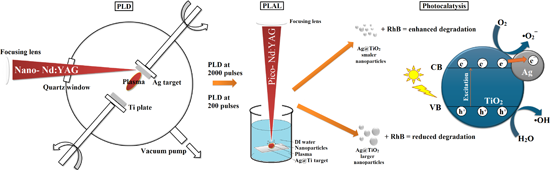
- , chemical stability and photostability, and high solubility in water. However, its widespread application and persistent nature raise serious environmental and health concerns. Once released into aquatic environments, RhB resists natural degradation processes, leading to long-term accumulation. It disrupts


Advances in nanotechnology applied to natural products
Beilstein J. Nanotechnol. 2026, 17, 555–558, doi:10.3762/bjnano.17.36

- , including: (i) antioxidant, (ii) anti-inflammatory, (iii) antimicrobial, (iv) vector-control capacity (e.g., larvicidal and repellent properties), and (v) antitumor [2]. However, despite their chemical and functional diversity, they have significant limitations, such as (a) low solubility, (b) thermal or
- , broadening the use of natural products in areas such as biological product development, immunization, and vector control [21][22]. In addition, polymeric micellar systems, such as poloxamer-based systems, have been explored to improve the solubility and dispersion of poorly water-soluble natural compounds
Nanocarrier-integrated multilayer films produced by 3D printing for improved skin adhesion and curcumin photostability
Beilstein J. Nanotechnol. 2026, 17, 440–453, doi:10.3762/bjnano.17.30
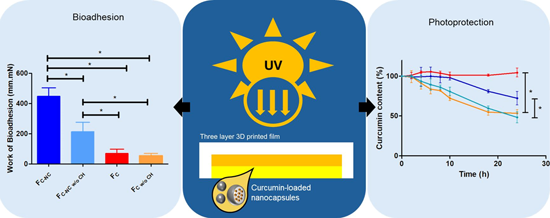
- produced by SSE could address these limitations. To overcome its poor solubility and enhance bioadhesion, curcumin was encapsulated in polymeric nanocapsules (C-NCs), yielding a mean particle size of 218 ± 5 nm, a polydispersity index of 0.10 ± 0.02, a zeta potential of −11 ± 4 mV, and 100% encapsulation
- for incorporation into topical dosage forms such as emulsions, fibres, films, and hydrogels for wound-healing applications. However, curcumin also exhibits low aqueous solubility, which limits its use in certain formulations [18]. Nanoparticles have the potential to overcome this limitation, as they
- nanocapsules or non-encapsulated curcumin was based on previous studies demonstrating the ability of nanocarriers to improve the aqueous solubility and antioxidant activity of curcumin when formulated as a gel [24][25][26]. Consequently, the objective of the present study was to use SSE 3D printing to design


Biomimetic nanoparticles in cancer photodynamic therapy: a review of targeted delivery systems and therapeutic outcomes
Beilstein J. Nanotechnol. 2026, 17, 396–422, doi:10.3762/bjnano.17.27
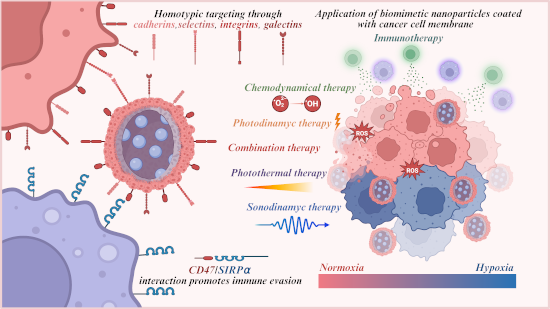
- , nanoencapsulation strategies for PSs are being actively developed [7][8]. Encapsulation of hydrophobic PSs in nanocarriers such as liposomes, polymeric nanoparticles, or micelles addresses solubility and stability, preventing aggregation [9]. Nanoparticles with sizes of 10–200 nm passively accumulate in tumor
- broad range of molecular therapeutics, including small molecules [34], RNA [35], plasmids [36], CRISPR/Cas systems [37], and other bioactive agents. Several key advantages of nanocarriers in PDT can be highlighted: (i) improved solubility and stability of PSs, (ii) enhanced delivery through both passive
- loading capacity. For instance, melanin-based nanoparticles loaded with Ce6 (loading efficiency ≈ 30%) showed enhanced biocompatibility and water solubility, with synergistic photodynamic and photothermal effects under imaging guidance [156]. Another strategy involves chemically attaching porphyrin-based


Polycatecholamine nanocoatings on stainless steel: the effect on attachment of human fibroblasts and platelets
Beilstein J. Nanotechnol. 2026, 17, 365–380, doi:10.3762/bjnano.17.25
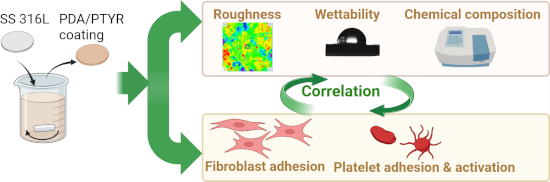
- oxidation reaction due to the limited solubility of ʟ-tyrosine in water. Thus, we used a supersaturated ʟ-tyrosine solution, to ensure that the oxidized part of the substrate is replaced by a fresh portion dissolved from the suspension [12]. The resulting SS-PDA and SS-PTYR samples were sterilizable, non




Structure-dependent thermochromism of PAZO thin films: theory and experiment
Beilstein J. Nanotechnol. 2026, 17, 186–199, doi:10.3762/bjnano.17.12
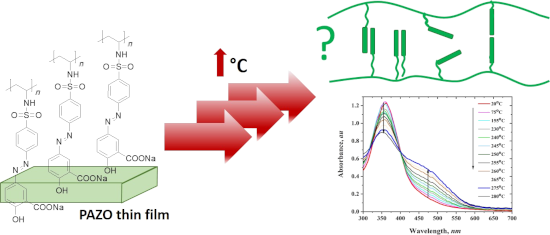
- undergo reversible E–Z isomerization upon exposure to light with different wavelengths. This E–Z isomerization of the azobenzene units leads to significant changes in the conformation, supramolecular structure, and bulk properties of the polymer such as optical anisotropy, solubility, and mechanical
- or meta-GGA functionals are desirable for geometry optimization, but considering a polymer with a realistic length would make the calculation too long and, therefore, expensive. On the other hand, the properties of the material (polymer), including crystallinity, density and solubility, are


From shield to spear: Charge-reversible nanocarriers in overcoming cancer therapy barriers
Beilstein J. Nanotechnol. 2026, 17, 159–175, doi:10.3762/bjnano.17.10
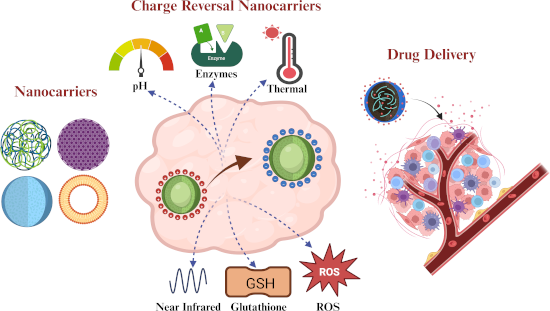
- , drug resistance, and poor tumour selectivity. In response to these limitations, nanotechnology-based drug delivery systems have gained prominence for enhancing solubility, improving molecular stability, enabling controlled drug release, and prolonging systemic circulation, offering superior therapeutic
- pressing need for innovative solutions. An example would be smart nanocarrier drug delivery systems that enhance targeting precision and mitigate adverse effects [9][10]. Nanotechnology-based drug delivery systems have revolutionised cancer treatment by improving drug solubility, stability, and


Functional surface engineering for cultural heritage protection: the role of superhydrophobic and superoleophobic coatings – a comprehensive review
Beilstein J. Nanotechnol. 2026, 17, 63–96, doi:10.3762/bjnano.17.6
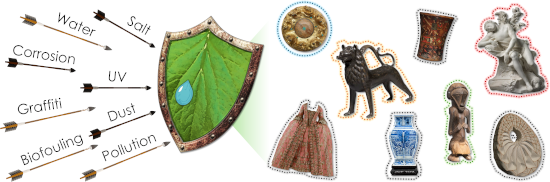
- ), to the initial mixture in order to reduce the wettability of the final coating. The formulation containing 2% of MCC enhanced with oregano essential oil (OEO) showed the lowest solubility, swelling, and wettability, along with strong antimicrobial activity against stone-deteriorating microorganisms
- immersion, showing low solubility, and conferring antimicrobial protection. Regarding safety, both chitosan and oregano essential oil are recognized as nontoxic to humans, biocompatible, and safe for handling. Finally, the criterion of sustainability was addressed, as the materials are biodegradable




Visualizing nanostructures in supramolecular hydrogels: a correlative study using confocal and cryogenic scanning electron microscopy
Beilstein J. Nanotechnol. 2025, 16, 2274–2284, doi:10.3762/bjnano.16.156
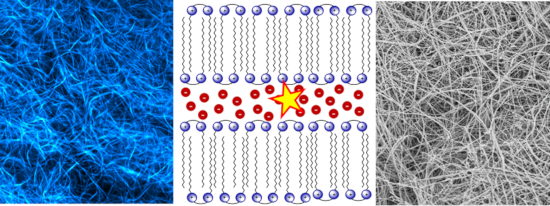
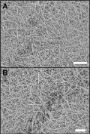
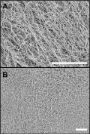
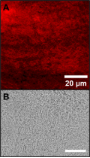
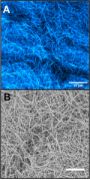
- nitrogen atoms are functionalized with carboxymethyl groups, providing aqueous solubility and enabling favourable interactions with the cationic imidazolium-based moieties in the gel network. Together, these probes enable complementary insights into the gel network’s morphology and probe–gel interactions



Optical bio/chemical sensors for vitamin B12 analysis in food and pharmaceuticals: state of the art, challenges, and future outlooks
Beilstein J. Nanotechnol. 2025, 16, 2207–2244, doi:10.3762/bjnano.16.153


Toward clinical translation of carbon nanomaterials in anticancer drug delivery: the need for standardisation
Beilstein J. Nanotechnol. 2025, 16, 2092–2104, doi:10.3762/bjnano.16.144
- breast cancers. Its small molecular weight and good aqueous solubility facilitate encapsulation in diverse DDSs, while its instability and short half-life, due to rapid deamination and phosphorylation, highlight the need for protective nanocarriers to improve bioavailability. These features make
- stabilising surface coatings are employed to preserve nanoparticle stability over time. The degree of functionalisation is also a key consideration as surface modifications can enhance solubility, targeting ability, and biocompatibility. Consistent functionalisation is necessary to ensure reproducibility and



Beyond the shell: exploring polymer–lipid interfaces in core–shell nanofibers to carry hyaluronic acid and β-caryophyllene
Beilstein J. Nanotechnol. 2025, 16, 2015–2033, doi:10.3762/bjnano.16.139
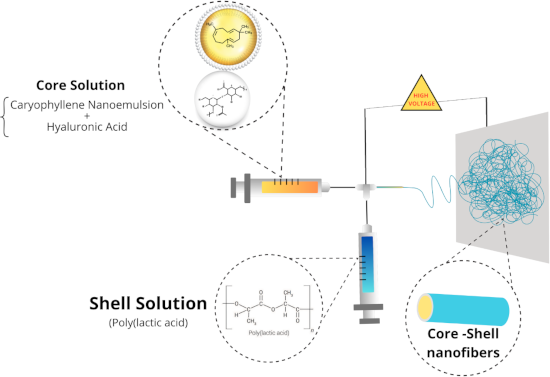
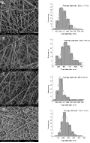
- inflammatory response during wound healing [32][33]. Chemically, βCp is characterized as a natural bicyclic sesquiterpene found in several plants and essential oils, and as expected for compounds of this class, it exhibits characteristic volatility and low solubility in water [34]. To address these limitations
- impregnated with HA and βCp nanoemulsion. The use of βCp in practice is questioned due to its low aqueous solubility, low viscosity, extreme volatility, and sensitivity to temperature, oxygen, and light [38]. The production of a nanoemulsion was developed as a nanocarrier system designed to enhance both the




Targeting the vector of arboviruses Aedes aegypti with nanoemulsions based on essential oils: a review with focus on larvicidal and repellent properties
Beilstein J. Nanotechnol. 2025, 16, 1894–1913, doi:10.3762/bjnano.16.132
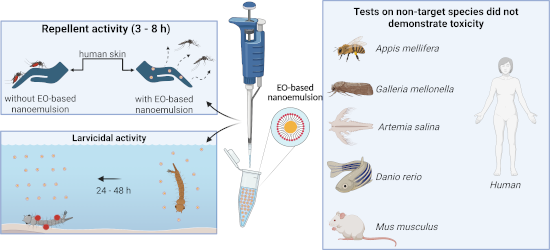
- solubility, high volatility, and intrinsic oxidation sensitivity. Thus, the development of novel formulations to efficiently deliver bioactives represents an innovative approach for Aedes aegypti control. In this context, nanothecnology provides smart formulations with improved drug solubility, controlled
- ]. Furthermore, they increase the water solubility of poorly soluble compounds, improve the dispersion of essential oils in vector control, and provide a controlled release of the bioactives. Finally, these systems can be obtained at low cost and through more sustainable technologies [36]. Given these advantages
- , pharmaceutical nanotechnology strategies such as nanoemulsions have been used as tools for vector control [79]. Numerous studies have shown that nanoemulsions can increase the solubility and prolong the larvicidal and/or repellent activity of essential oils, making them a promising solution to improve the


Phytol-loaded soybean oil nanoemulsion as a promising alternative against Leishmania amazonensis
Beilstein J. Nanotechnol. 2025, 16, 1826–1836, doi:10.3762/bjnano.16.126

- attracted attention due to their broad biological activities. To increase their solubility, stability, and cell delivery, nanotechnology-based systems, such as nanoemulsions (NEs), represent a promising approach. In this study, soybean oil nanoemulsions loaded with phytol (PHYT-NE) were developed using the
- pharmaceutical application by reducing bioavailability [18]. To overcome these limitations, the incorporation of phytol into nanostructured delivery systems, has been proposed to improve its solubility, stability, and intracellular delivery efficiency [19]. Nanotechnology-based drug delivery systems that


Piezoelectricity of layered double hydroxides: perspectives regarding piezocatalysis and nanogenerators
Beilstein J. Nanotechnol. 2025, 16, 1812–1817, doi:10.3762/bjnano.16.124

- emerging area of catalysis utilizes the ability of piezoelectric materials to convert mechanical energy into electrical energy for subsequent electrochemical reactions [13]. Liu et al. suggested that ultrathin Ni/Fe-LDH modified with polyethylene glycol (PEG) for better water solubility and

Exploring the potential of polymers: advancements in oral nanocarrier technology
Beilstein J. Nanotechnol. 2025, 16, 1751–1793, doi:10.3762/bjnano.16.122
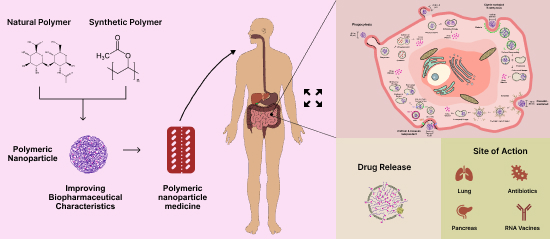
- particles. Materials reduced to this scale exhibit alterations in their physicochemical properties, enhancing their interactions with molecular and cellular processes. Consequently, nanotechnology has diverse pharmaceutical applications, as the nanoencapsulation of drugs improves solubility and
- made PNs a topic of growing interest in light of their small size and unique physicochemical properties [22][23]. These systems offer advantages for drug delivery, including the ability to protect labile compounds, control release kinetics, improve drug solubility and stability, enhance oral
- solubility and permeability in the cell membrane both in vitro and in vivo, demonstrated the importance of these characteristics for the pharmacokinetic performance of drugs and developed the “Biopharmaceutical Classification System” (BCS), which remains widely used today by regulatory agencies, research


Advances of aptamers in esophageal cancer diagnosis, treatment and drug delivery
Beilstein J. Nanotechnol. 2025, 16, 1734–1750, doi:10.3762/bjnano.16.121
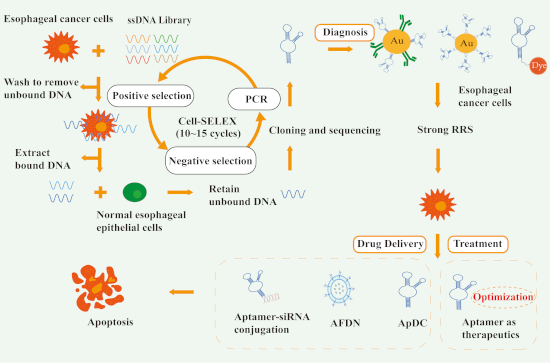
- obstacles to their safe application. Hence, ongoing research explores strategies to optimize the solubility and targeting ability of anti-EC drugs, and aptamers [25] represent a distinct class of molecular tools. Aptamers are small nucleotide or peptide sequences screened by “systematic evolution of ligands
- drug nanocarriers (AFDNs), based on ApDCs, encapsulate drugs for protection and exhibit specific chemical modifications. AFDNs are not only helpful to improve drug solubility, ability to cross various biological barriers, and circulation time in vivo, but also achieve highly specific targeting with the
- delivery of gene-silencing therapeutics; (2) direct intercalation of aptamers with small-molecule chemotherapeutic drugs (e.g., DOX), forming stable complexes; (3) co-encapsulation of aptamers and hydrophobic drugs into nanoparticles (e.g., liposomes or polymeric micelles) to improve drug solubility and


Prospects of nanotechnology and natural products for cancer and immunotherapy
Beilstein J. Nanotechnol. 2025, 16, 1644–1667, doi:10.3762/bjnano.16.116
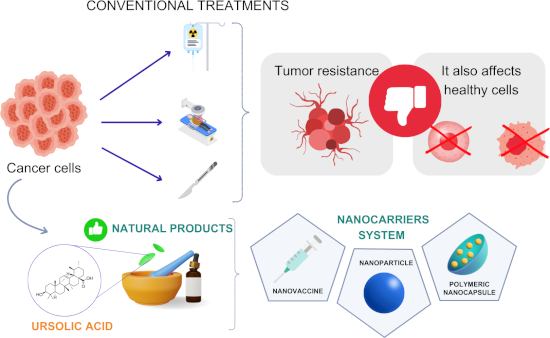
- improvement in bioavailability and pharmacokinetics are based on increased solubility, observed, for example, by Chittasupho et al., improved permeation through biological barriers, as seen in the work of Huang et al., and protection against premetabolism and early elimination, as analyzed by Miguel et al
- characterization, and therapeutic evaluation of nanotechnology [92]. The formulation of patent CN114470229 was discussed in an article by Guo et al., which showed that the nanoparticle, as in the patent, achieved better solubility, synergistic effect, and better targeting [93]. In addition, the article published
- inflammatory and oxidative effects, posing a risk to the lungs, liver, and kidneys [27]. Regarding the use of natural products, nanoparticles can increase the bioavailability, pharmacokinetics, and selectivity of compounds toward cancer cells, thereby improving their solubility and delivery [103]. Moreover


Cross-reactivities in conjugation reactions involving iron oxide nanoparticles
Beilstein J. Nanotechnol. 2025, 16, 1504–1521, doi:10.3762/bjnano.16.106
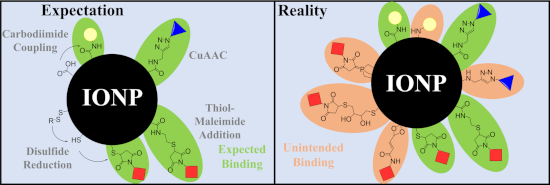
- should be detectable directly by UV–vis spectroscopy. Unfortunately, we could not detect binding with any of these dyes (results not shown). All three dyes showed relatively low aqueous solubility, and have their primary amine attached directly to an aromatic ring structure, which may contribute to both
- , also did not result in any detectable dye loading on the IONPs. We also tried using Remazol Brilliant Blue R (Figure 6d), a commercially available primary amine-containing dye with sulfonate groups, which impart excellent aqueous solubility, and once again, detected no dye on the IONPs. We thus







Enhancing the therapeutical potential of metalloantibiotics using nano-based delivery systems
Beilstein J. Nanotechnol. 2025, 16, 1350–1366, doi:10.3762/bjnano.16.98
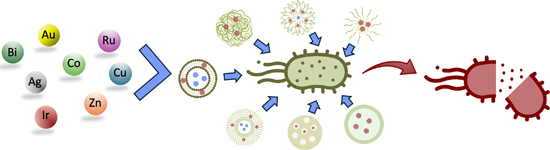
- metalloantibiotics to reach clinical application [21]. One of the main characteristics of metallodrugs is their low aqueous solubility; this, combined with their typically short in vivo half-lives, results in inadequate bioavailability and low accumulation at the therapeutic site [22]. Another limiting factor is the
- enabling controlled release and selective accumulation at the infection site, as well as facilitating the delivery of antibiotics to intracellular bacterial reservoirs [54][55]. Altogether, these advantages contribute to enhanced therapeutic efficacy, improved solubility of poorly water-soluble compounds
- , such as biocompatibility and drug protection, while avoiding many of their limitations. In comparison to conventional colloidal carriers, SLNs demonstrate reduced toxicity, greater surface area, enhanced biocompatibility, extended drug release, improved cellular uptake, and increased drug solubility


Ferroptosis induction by engineered liposomes for enhanced tumor therapy
Beilstein J. Nanotechnol. 2025, 16, 1325–1349, doi:10.3762/bjnano.16.97
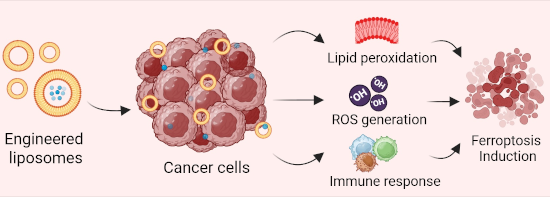
- hydrophilic and hydrophobic therapeutic agents, they improve the solubility and efficacy of drugs, especially those with poor aqueous solubility. Liposomes reduce the impact on healthy tissue while delivering strong drug concentrations directly to the tumor, minimizing the harmful side effects of chemotherapy


Acrocomia aculeata oil-loaded nanoemulsion: development, anti-inflammatory properties, and cytotoxicity evaluation
Beilstein J. Nanotechnol. 2025, 16, 1277–1288, doi:10.3762/bjnano.16.93
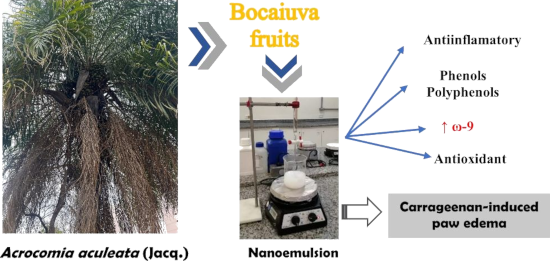
- , nutraceutical, and industrial applications. However, due to the chemical and physicochemical characteristics as well as the solubility and stability of this oil, it was decided to make a nanoemulsion to enhance its already known therapeutic benefits. Nanoemulsions are nanoemulsified systems, either oil-in-water
- emulsified systems loaded with plant extracts have better pharmacological activity than extracts when used naturally [22]. For example, plant oil-loaded nanoemulsions exhibit high water solubility, improved permeability, and enhanced bioavailability [23]. This contrasts with the limited solubility and poor
- , quality indicators such as refractive index, solubility in different organic solvents, and relative density showed that the bocaiúva oil used in that study had good purity [35]. Coimbra and Jorge analyzed Acrocomia aculeata oil and found refractive index values similar to those in this study (1.46 ± 0.01





