


Search results
Search for "solubilization" in Full Text gives 35 result(s) in Beilstein Journal of Nanotechnology.
Development of Protium heptaphyllum essential oil-loaded nanocapsules: experimental design and biological activity
Beilstein J. Nanotechnol. 2026, 17, 974–990, doi:10.3762/bjnano.17.67
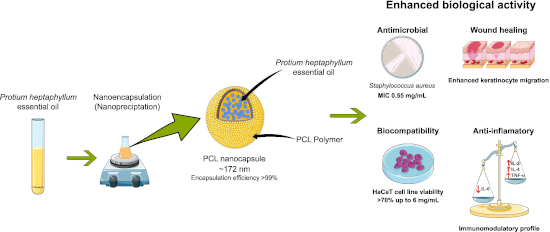
- solubilization in the organic phase during nanoprecipitation, resulting in near-complete incorporation. Efficiencies exceeding 95% have been reported in polymeric systems containing lipophilic essential oils [39][40], reinforcing the stability and reproducibility of the process. However, the ultrafiltration




Advances in nanotechnology applied to natural products
Beilstein J. Nanotechnol. 2026, 17, 555–558, doi:10.3762/bjnano.17.36

- increases interfacial area and contact with biological surfaces, improves the apparent solubilization of predominantly lipophilic compounds, and can reduce undesirable organoleptic characteristics [5][6]. In inflammatory settings, several preclinical studies have reported lower levels of pro-inflammatory
Quality by design optimization of microemulsions for topical delivery of Passiflora setacea seed oil
Beilstein J. Nanotechnol. 2025, 16, 2116–2131, doi:10.3762/bjnano.16.146
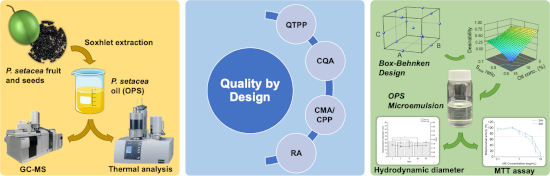
- solubilization capacity, ability to enhance dermal permeation, and cost-effectiveness make microemulsions attractive carriers compared with other delivery systems [6][7]. Nevertheless, conventional microemulsions typically require high concentrations of surfactants, which may raise safety concerns such as


Phytol-loaded soybean oil nanoemulsion as a promising alternative against Leishmania amazonensis
Beilstein J. Nanotechnol. 2025, 16, 1826–1836, doi:10.3762/bjnano.16.126

- formazan solubilization in ethanol (Sigma-Aldrich, Brazil) when required. In vitro antileishmanial activity was performed in RPMI 1640 medium (Sigma-Aldrich, Brazil) supplemented with FBS and streptomycin antibiotic 100 IU/mL, with parasite viability measured using resazurin solution (Sigma-Aldrich, Brazil


Multifunctional anionic nanoemulsion with linseed oil and lecithin: a preliminary approach for dry eye disease
Beilstein J. Nanotechnol. 2025, 16, 1711–1733, doi:10.3762/bjnano.16.120
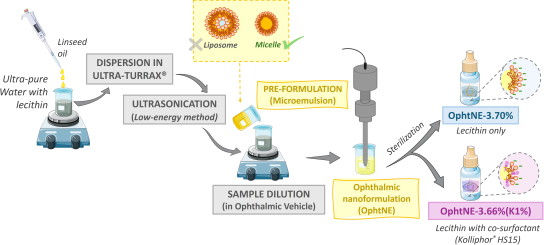
- better stability, smaller droplet size, and improved solubilization of hydrophobic compounds, making them more suitable for superficial ocular conditions like dry eye, where sustained bioavailability and tear film compatibility are vital [53]. Liposomes may also face practical issues due to interactions
- between the drug and phospholipids, affecting stability [52][54]. Moreover, heating linseed oil to the formulation temperature of 75 °C offers specific advantages, such as enhanced phase interaction and improved solubilization potential for hydrophobic drugs, without compromising its chemical integrity or



The role of biochar in combating microplastic pollution: a bibliometric analysis in environmental contexts
Beilstein J. Nanotechnol. 2025, 16, 1401–1416, doi:10.3762/bjnano.16.102
- ) MPs significantly reduce total exchangeable cations (Na+, K+, Mg2+, and Ca2+) by 4–6% [58]. Additionally, non-biodegradable MPs such as PE and PVC inhibit organic phosphate mineralization, alkaline phosphatase activity, and inorganic phosphate solubilization. By contrast, biodegradable MPs such as PLA



Investigation of the solubility of protoporphyrin IX in aqueous and hydroalcoholic solvent systems
Beilstein J. Nanotechnol. 2025, 16, 1209–1215, doi:10.3762/bjnano.16.89
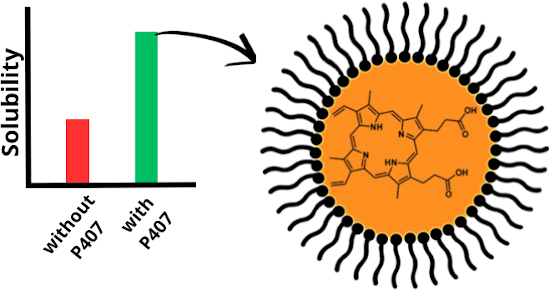
- subsequent degradation or aggregation. The addition of P407 significantly enhanced PpIX solubilization, particularly in aqueous systems, with no significant differences observed between water and ethanol at varying concentrations in the presence of P407. Figure 1A and Figure 1B highlight the turbidity
- EtOH50 and EtOH77 remained clear and free of undissolved solids for up to 96 h, confirming the complete solubilization without saturation. Figure 3 illustrates PpIX concentration during the solubilization period in EtOH50 and EtOH77. The average concentration over the first 8 h of analysis (stabilization
- solubility and stability for hydrophobic compounds. In systems containing 10% (w/w) P407 with 0.4 mg/mL PpIX (EtOH50, EtOH77, and water), the complete solubilization was achieved regardless of the solvent used. Figure 4 shows the solubilization kinetics in the polymeric systems. The average concentrations


Fabrication of metal complex phthalocyanine and porphyrin nanoparticle aqueous colloids by pulsed laser fragmentation in liquid and their potential application to a photosensitizer for photodynamic therapy
Beilstein J. Nanotechnol. 2025, 16, 1088–1096, doi:10.3762/bjnano.16.80
- -diphenyltetrazolium bromide (MTT) reagent was added to each well. After 4 h of incubation, 100 μL of solubilization solution (10% SDS, 10 mM HCl) was added to each well. After overnight incubation, the absorbance at 562 nm was measured using a plate reader (TECAN Safire2). Each sample was assayed in triplicate, and


Efficiency of single-pulse laser fragmentation of organic nutraceutical dispersions in a circular jet flow-through reactor
Beilstein J. Nanotechnol. 2025, 16, 711–727, doi:10.3762/bjnano.16.55
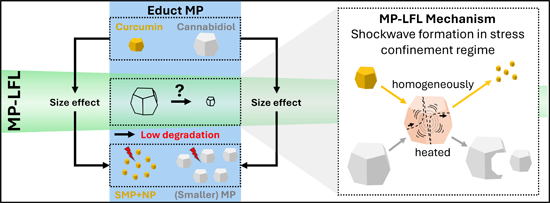
- viability even at high curcumin concentrations. Keywords: antioxidant; cannabidiol; curcumin; drug; food additive; low degradation; nanoparticle; pulsed laser ablation in liquids; solubilization; Introduction Laser synthesis and processing of colloids (LSPC) has become increasingly popular over the last
- often are hydrophobic, is their increased solubilization or aqueous dispersion, relevant for pharmacological, photochemical, and photomedical applications. For example, metal complex phthalocyanines (Pc) [18] such as vanadium (VOPc) [19][20][21][22], copper (CuPc) [23][24], aluminum (AlPc) [24], and


Synthesis and the impact of hydroxyapatite nanoparticles on the viability and activity of rhizobacteria
Beilstein J. Nanotechnol. 2025, 16, 216–228, doi:10.3762/bjnano.16.17
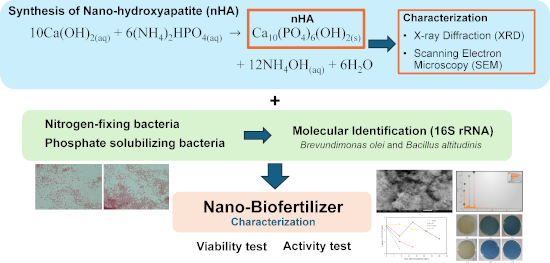
- Tb-nHA sample. These findings correlate with the higher colony count of the Pd rhizobacterium strain as outlined in Table 2. Phosphate-solubilizing capability of rhizobacteria-nHA The proficiency of rhizobacteria in phosphate solubilization after inoculation on the nHA carrier for 21 days underscores
- state. Rhizobacteria demonstrate their ability to create transparent zones on Pikovskaya media because of their capability for phosphate solubilization. These microorganisms produce organic acids, such as citric acid and oxalic acid, which bind to phosphate via hydroxy groups and chelating cations such
- rhizobacteria, Pd and Tb rhizobacteria, decreased. nHA utilized as a carrier for rhizobacteria demonstrated good compatibility, as the loaded rhizobacteria retained their phosphate-solubilization activity, evident from the appearance of clear zones. Additionally, the nitrogen-fixing activity was maintained as


Isolation of cubic Si3P4 in the form of nanocrystals
Beilstein J. Nanotechnol. 2023, 14, 971–979, doi:10.3762/bjnano.14.80
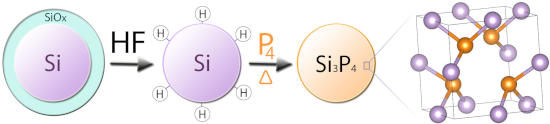
- . Several techniques for functionalization and colloidal solubilization of Si3P4 NPs were outlined. Optical properties of the material were studied to reveal an experimental bandgap of 1.25 eV. Potential applications of the material include the preparation of microcircuits through the introduction of P


Quercetin- and caffeic acid-functionalized chitosan-capped colloidal silver nanoparticles: one-pot synthesis, characterization, and anticancer and antibacterial activities
Beilstein J. Nanotechnol. 2023, 14, 362–376, doi:10.3762/bjnano.14.31
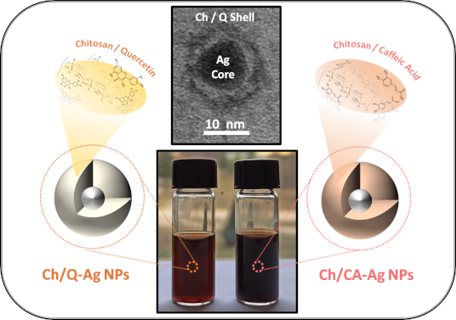
- , while water-soluble MTT converts to an insoluble purple formazan. Therefore, MTT requires solubilization of insoluble formazan to determine its concentration by absorbance, whereas XTT does not require any solubilization. Therefore, the use of XTT is an excellent solution for the quantification of cells


Single-step extraction of small-diameter single-walled carbon nanotubes in the presence of riboflavin
Beilstein J. Nanotechnol. 2022, 13, 1564–1571, doi:10.3762/bjnano.13.130
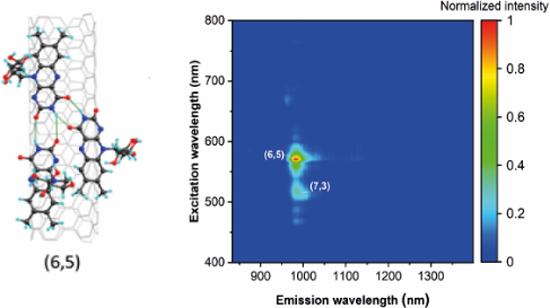
- flavin adenine dinucleotide [16]. The presence of π-conjugated isoalloxazine in riboflavin drives binding to SWCNTs, and the hydrophilic ribityl chain allows for the solubilization of SWCNTs in aqueous media. The planar isoalloxazine structure, accompanied by intermolecular interactions with nanotubes
- to its low solubility in water, which leads to poor solubilization of SWCNT bundles. Lower riboflavin concentrations did not affect the dispersion process of nanotubes in any way. To analyze the dispersing ability of riboflavin, the same amount of SWCNTs was dispersed in 1% w/w SDS aqueous solution


Hydroxyapatite–bioglass nanocomposites: Structural, mechanical, and biological aspects
Beilstein J. Nanotechnol. 2022, 13, 1490–1504, doi:10.3762/bjnano.13.123
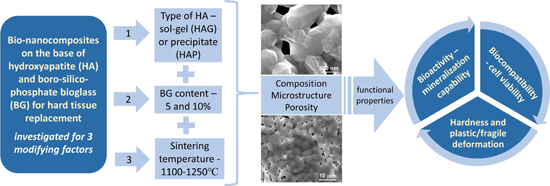
- , therefore, higher dissolution rate. HAP-based composites with a denser structure need a longer period of immersion in SBF for solubilization and the beginning of the mineralization process. And indeed, after 5 days of soaking, a well-pronounced precipitate was observed on HAP-based composites, too (Figure
Green synthesis of zinc oxide nanoparticles toward highly efficient photocatalysis and antibacterial application
Beilstein J. Nanotechnol. 2022, 13, 1108–1119, doi:10.3762/bjnano.13.94
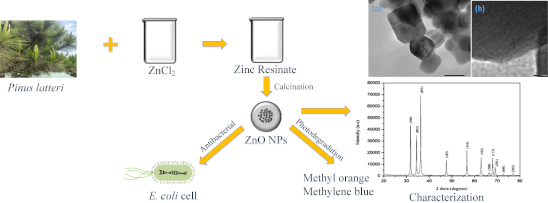
- , proteins, DNA, and amino acids [39][40][41]. The O2 causes biomembrane oxidation reactions, damaging tissues [42]. Furthermore, it is reasonable to explain that the additional toxicity that causes bacterial death is due to the fact that zinc solubilization releases Zn2+ ions which can infiltrate into




Systematic studies into uniform synthetic protein nanoparticles
Beilstein J. Nanotechnol. 2022, 13, 274–283, doi:10.3762/bjnano.13.22
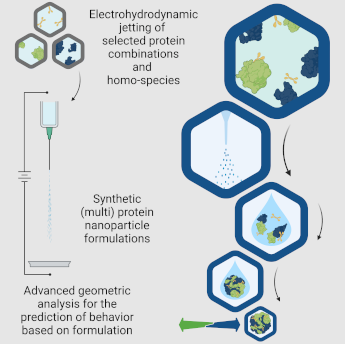
- . Paclitaxel was traditionally formulated through solubilization with harsh solvents, which led to adverse side effects and special administration instrumentation [9]. While AbraxaneTM was first FDA-approved for the treatment of metastatic breast cancer, it has since been investigated for other cancers


Use of nanosystems to improve the anticancer effects of curcumin
Beilstein J. Nanotechnol. 2021, 12, 1047–1062, doi:10.3762/bjnano.12.78
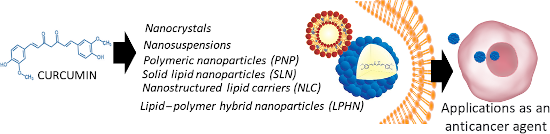
- Conventional nanosystems are particularly attractive for the biopharmaceutics classification system (BCS) class IV drugs, such as CUR, which require increases in their solubilization, pharmacokinetics, and permeation [43]. Curcumin has been targeted against carcinogenic lesions in the colon, skin, cervix


A review on nanostructured silver as a basic ingredient in medicine: physicochemical parameters and characterization
Beilstein J. Nanotechnol. 2021, 12, 440–461, doi:10.3762/bjnano.12.36
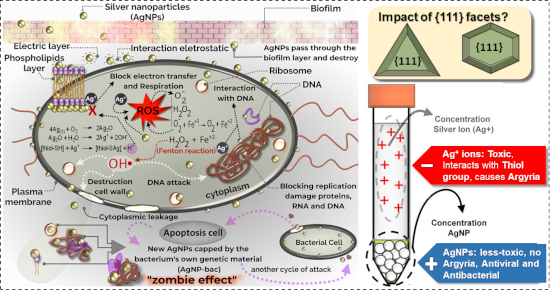
- ]. Separation of AgNPs from Ag+: The cloud point extraction (CPE) technique was initiated by Goto et al. and it is based on the solubilization capacity and on the cloud point of nonionic surfactants [148]. At the cloud point, the instability observed in the micelles is promoted by the dehydration of the


Key for crossing the BBB with nanoparticles: the rational design
Beilstein J. Nanotechnol. 2020, 11, 866–883, doi:10.3762/bjnano.11.72
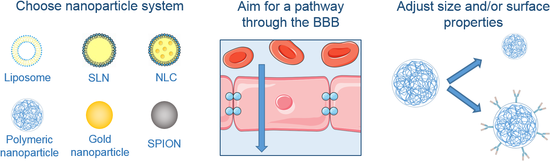
- [27]. The liquid lipid phase allows for a better solubilization of APIs and thus for a higher drug loading capacity than that of SLNs [168]. NLCs loaded with itraconazole prepared with PS80 were able to almost double the itraconazole concentration in the brain compared to the drug alone [169]. In


Rational design of block copolymer self-assemblies in photodynamic therapy
Beilstein J. Nanotechnol. 2020, 11, 180–212, doi:10.3762/bjnano.11.15
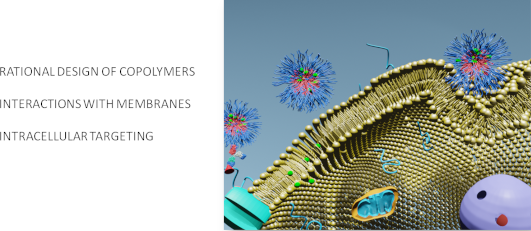
- then the ones for the hydrophilic block. In the former case, the photosensitizer can be simply solubilized in the interior of the self-assemblies or covalently linked to the copolymer backbone. Physical solubilization of the photosensitizer The structures, features and applications of block copolymers
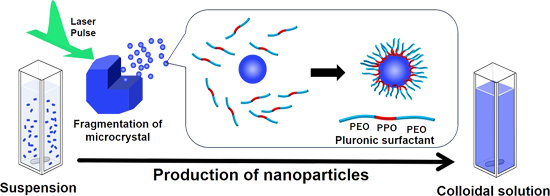
- used for the physical solubilization of photosensitizers are described in this section and summarized below in Table 1. Most commonly applied are biocompatible, nontoxic and FDA-approved copolymers, such as pluronics [30][31][32][33][34][35] or biodegradable aliphatic polyesters, based for instance on
- backbone is known to be biocompatible, as demonstrated by its long use in opthalmology [44]. Counterintuitively, as it will be detailed in the next section, the introduction of aromatic units is not always an advantage [45]. In order to improve the solubilization of the photosensitizer, other interactions






Molecular architectonics of DNA for functional nanoarchitectures
Beilstein J. Nanotechnol. 2020, 11, 124–140, doi:10.3762/bjnano.11.11
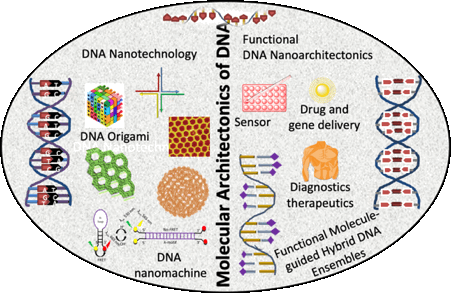
- solubilization and weak alignment of proteins within plasma membrane are crucial to measure the residual dipolar couplings (RDCs), and the RDCs are crucial to obtain NMR structural information on membrane-bound proteins. As reported, DNA origami-based liquid crystalline media can overcome detergent-related


Design of a nanostructured mucoadhesive system containing curcumin for buccal application: from physicochemical to biological aspects
Beilstein J. Nanotechnol. 2019, 10, 2304–2328, doi:10.3762/bjnano.10.222
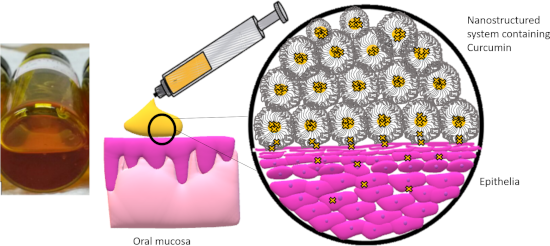
- hexagonal core with ordered structure, which enable the solubilization of hydrophilic and hydrophobic drugs [4][5][6][7][8][9]. Moreover, C974P is an acrylic-acid derivative, highly cross-linked, hydrophilic, and displays mucoadhesive properties [1]. In this sense, an increase in temperature promotes the


Gold-coated plant virus as computed tomography imaging contrast agent
Beilstein J. Nanotechnol. 2019, 10, 1983–1993, doi:10.3762/bjnano.10.195
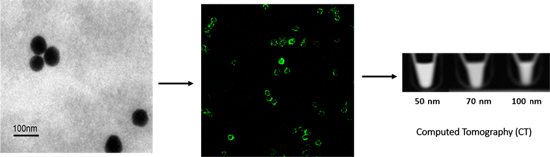
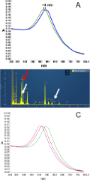
- and size, indicating that they are resistant to solubilization or oxidation. The dual STEM and EDX spectra from the Antibody-PEG5000Au-CPMV gave useful information about the spatial distribution of gold and sulfur across the cellular surface. The simultaneously acquired EDX spectrum images confirmed




Nanoconjugates of a calixresorcinarene derivative with methoxy poly(ethylene glycol) fragments for drug encapsulation
Beilstein J. Nanotechnol. 2018, 9, 2057–2070, doi:10.3762/bjnano.9.195
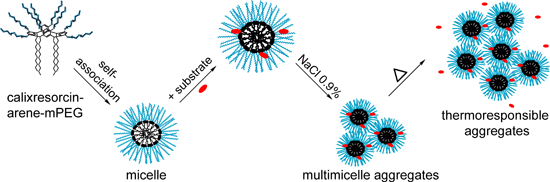
- . The fluorescence emission of naproxen sodium is quenched in the presence of macrocycle and does not change in the presence of mPEG-550 (Figure S12, Supporting Information File 1). This is evidence for the binding of Nap near the aromatic fragments of macrocycle. After the solubilization of IF and Nap
- solutions in D2O; (b) 1H NMR spectra of IF and 3 + IF solutions in D2O; (c) intensity-averaged particle size distribution of aqueous solutions of 3 in the absence and the presence of Nap and IF (solubilization method, c3 = 10 mg/mL). In vitro release profiles of free RhB and RhB-loaded micelles of 3 in PBS


Surfactant-induced enhancement of droplet adhesion in superhydrophobic soybean (Glycine max L.) leaves
Beilstein J. Nanotechnol. 2017, 8, 2345–2356, doi:10.3762/bjnano.8.234
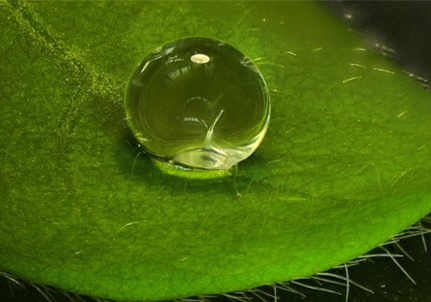
- solubilization of the waxes and gas chromatography (GC–FID) and mass spectroscopy (GC–MS). Results Micromorphology of the leaf surface The micromorphology of leaf surfaces was investigated by scanning electron microscopy (SEM) and 3D light microscopy. Trichomes, commonly termed hairs, are slightly tilted, up to





