


Search results
Search for "standardization" in Full Text gives 32 result(s) in Beilstein Journal of Nanotechnology.
Nanocarrier strategies to overcome P-glycoprotein-mediated drug resistance in cancer therapy
Beilstein J. Nanotechnol. 2026, 17, 882–921, doi:10.3762/bjnano.17.64
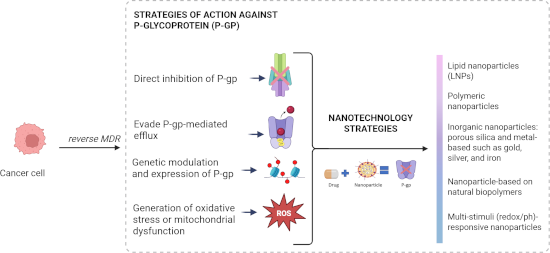
- -scale manufacturing requirements, and regulatory complexity. Overall, nanoparticle-mediated modulation of P-gp represents a promising strategy toward precision oncology, although future success will depend on scalable design, mechanistic standardization, and biomarker-guided clinical implementation


Environmental applications of silver nanoparticles: state-of-the-art review and emerging trends
Beilstein J. Nanotechnol. 2026, 17, 697–736, doi:10.3762/bjnano.17.49
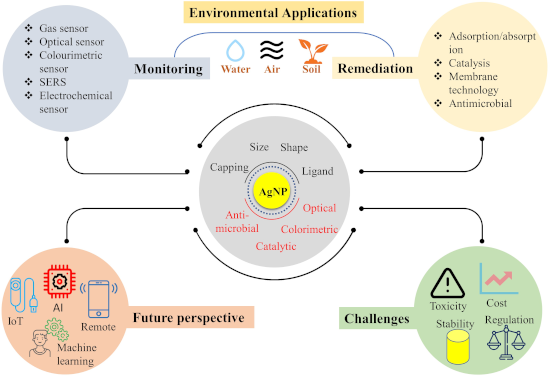
- nanoparticles, including surface coatings or functional groups, can alter their reactivity, stability, and interactions with pollutants and microorganisms [68]. Environmental standardization and stabilization of AgNPs surface charge are essential in biological systems for studying interactions [69]. Response


afspm: A framework for manufacturer-agnostic automation in scanning probe microscopy
Beilstein J. Nanotechnol. 2026, 17, 653–667, doi:10.3762/bjnano.17.45
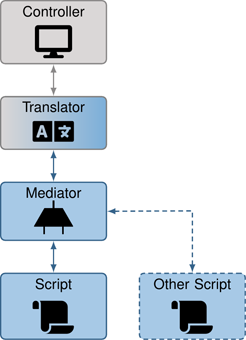
- manufacturer-specific logic away from the main code, communicating between scripts over IPC interfaces, and configuration file parsing and instantiation via standalone processes – have broader appeal than just for SPM. Indeed, many experimental fields of study are hampered by a lack of standardization in their




Safe and sustainable by design with ML/AI: A transformative approach to advancing nanotechnology
Beilstein J. Nanotechnol. 2026, 17, 176–185, doi:10.3762/bjnano.17.11
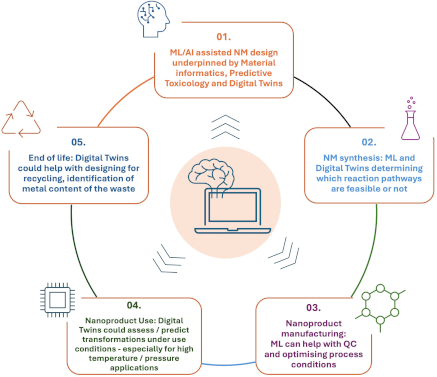
- effectiveness of ML/AI models for nanomaterials is often hindered by inconsistent and non-harmonized physicochemical data. Thus, improving data quality through standardization, metadata annotation, and curated databases is crucial to enhance the reliability and regulatory acceptance of predictions. Second, AI


From shield to spear: Charge-reversible nanocarriers in overcoming cancer therapy barriers
Beilstein J. Nanotechnol. 2026, 17, 159–175, doi:10.3762/bjnano.17.10
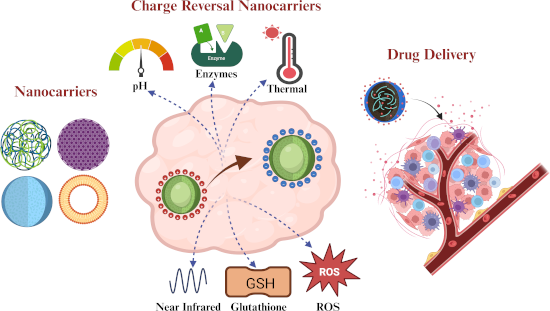
- challenges such as long-term biocompatibility, accumulation, and dose-dependent toxicity will be critical for advancing these promising systems towards safe and effective patient use [96]. Their intricate structural design, composed of multiple functional elements, complicates standardization and


Optical bio/chemical sensors for vitamin B12 analysis in food and pharmaceuticals: state of the art, challenges, and future outlooks
Beilstein J. Nanotechnol. 2025, 16, 2207–2244, doi:10.3762/bjnano.16.153


Missing links in nanomaterials research impacting productivity and perceptions
Beilstein J. Nanotechnol. 2025, 16, 2168–2176, doi:10.3762/bjnano.16.149
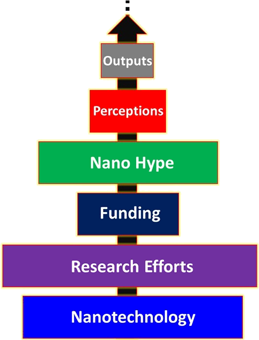
- ; public-facing technologies; standardization; translational barriers; Perspective Atom-by-atom innovation The historical creation of nanomaterials and their applications is much older than often assumed and has long been a subject of debate. It would be wrong to believe that nanomaterials have been
- market entry. To address these challenges, a dedicated global regulatory and standardization framework is urgently needed. This should include the establishment of an international body similar to IUPAC to develop universally accepted nomenclature, definitions, and metrological standards for
- nanomaterials. Such standardization would enhance scientific consistency, improve industrial classification and labeling, and support transparent communication across global supply chains. Moreover, the creation of a centralized international registry for commercially available nanoproducts is highly essential
Toward clinical translation of carbon nanomaterials in anticancer drug delivery: the need for standardisation
Beilstein J. Nanotechnol. 2025, 16, 2092–2104, doi:10.3762/bjnano.16.144

- based on their physicochemical and functional properties, thereby establishing a common classification toward standardization. Consequently, standardising the classification and nomenclature of CNMs, as well as developing relevant databases, will be essential for advancing research and development in



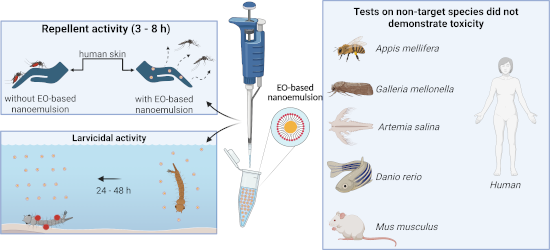
Targeting the vector of arboviruses Aedes aegypti with nanoemulsions based on essential oils: a review with focus on larvicidal and repellent properties
Beilstein J. Nanotechnol. 2025, 16, 1894–1913, doi:10.3762/bjnano.16.132


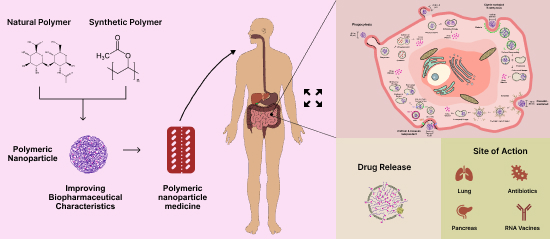
Exploring the potential of polymers: advancements in oral nanocarrier technology
Beilstein J. Nanotechnol. 2025, 16, 1751–1793, doi:10.3762/bjnano.16.122


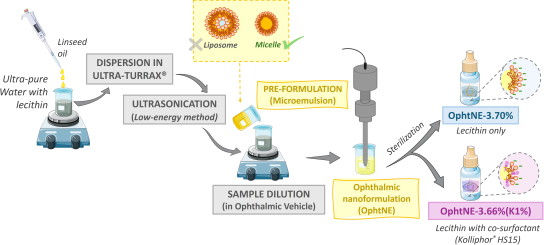
Multifunctional anionic nanoemulsion with linseed oil and lecithin: a preliminary approach for dry eye disease
Beilstein J. Nanotechnol. 2025, 16, 1711–1733, doi:10.3762/bjnano.16.120
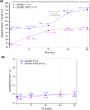
- , maintained under standard conditions (5% CO2 at 37 °C). Cell viability was determined using the trypan blue exclusion method. The in vitro cytotoxicity of the sterile nanoformulations was evaluated according to the guidelines of the International Organization for Standardization (ISO 10993-5:2009) [59



Acrocomia aculeata oil-loaded nanoemulsion: development, anti-inflammatory properties, and cytotoxicity evaluation
Beilstein J. Nanotechnol. 2025, 16, 1277–1288, doi:10.3762/bjnano.16.93
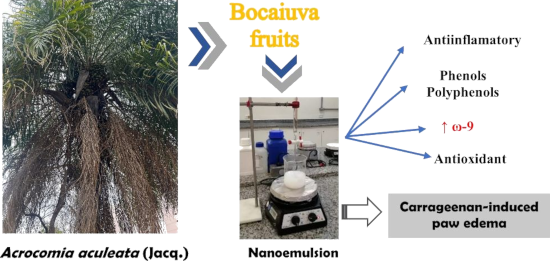
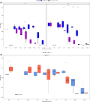
- triplicate, and cell viability was expressed as a percentage according to International Organization for Standardization ISO 10993-5 guidelines [65]. Anti-inflammatory activity of Acrocomia aculeata oil-based nanoemulsion Animals The anti-inflammatory effect was evaluated using carrageenan-induced paw edema


Instance maps as an organising concept for complex experimental workflows as demonstrated for (nano)material safety research
Beilstein J. Nanotechnol. 2025, 16, 57–77, doi:10.3762/bjnano.16.7

- physics-based model description, termed MODA [44], driven by the activities of the European Materials Modelling Council (EMMC), resulting in a workshop agreement of the European Committee for Standardization (CEN). Instance maps can support this effort by graphically resolving reporting documents as they


Green synthesis of silver nanoparticles derived from algae and their larvicidal properties to control Aedes aegypti
Beilstein J. Nanotechnol. 2024, 15, 1566–1575, doi:10.3762/bjnano.15.123
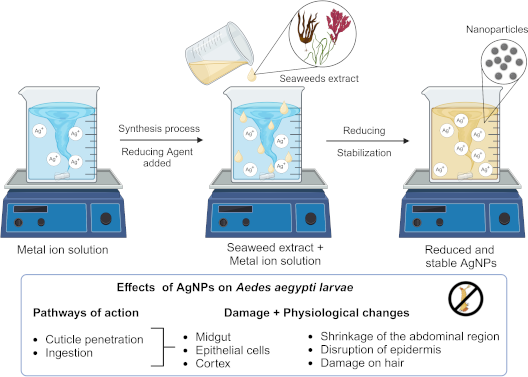
- the evident higher larvicidal activity of silver nanoparticles compared to algae extracts, there are significant variations in the results that must be considered. Larvicidal studies require standardization. Factors such as water volume, number of larvae, exposure time, larval stage, and mention of


Integrating high-performance computing, machine learning, data management workflows, and infrastructures for multiscale simulations and nanomaterials technologies
Beilstein J. Nanotechnol. 2024, 15, 1498–1521, doi:10.3762/bjnano.15.119
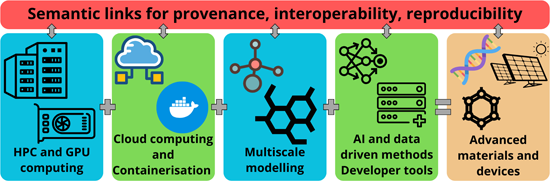
- strategies heavily rely on data from various sources, including experimental measurements, simulations, and literature databases. However, ensuring the accessibility, reliability, and interoperability of data remains a significant hurdle. Standardization efforts and data sharing platforms are essential to
- an evident lack of standardization (for example, in the definition of features for materials data across multiscale domains), poor links with specific application domains, and a consequent narrowing of potentially interested communities. Overall, the limitations in the integration between multiscale
- scenarios. As stated above, even low-TRL basic research lacks most of the requirements to initiate a path towards standardization and industrial validation. The technical limitations outlined above result in significant issues for technology transfer in the field. These include the lack of industry-grade


Introducing third-generation periodic table descriptors for nano-qRASTR modeling of zebrafish toxicity of metal oxide nanoparticles
Beilstein J. Nanotechnol. 2024, 15, 1142–1152, doi:10.3762/bjnano.15.93
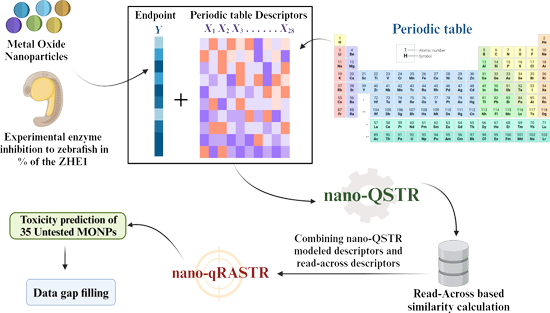
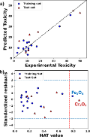
- standardization approach determines the applicability domain based on similarity. (3) The proximity of the predicted value of the query compound to the experimental mean training response is evaluated [40]. Results and Discussion nano-QSTR toxicity model Equation 1 has been developed employing the BSS-MLR


Identification of structural features of surface modifiers in engineered nanostructured metal oxides regarding cell uptake through ML-based classification
Beilstein J. Nanotechnol. 2024, 15, 909–924, doi:10.3762/bjnano.15.75
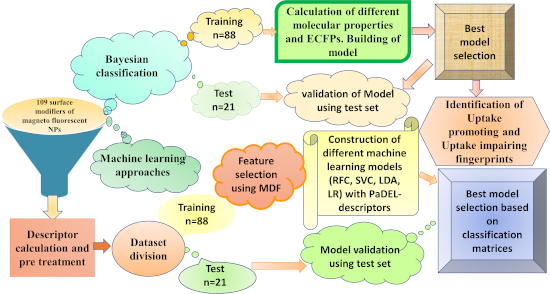
- advancement of nanotechnology has led to the widespread utilization of engineered nanostructured metal oxides (ENMOs) in various industrial and biomedical applications [1]. Nanoparticles (NPs) are described by the International Organization for Standardization as structures characterized by one, two, or three


Elasticity, an often-overseen parameter in the development of nanoscale drug delivery systems
Beilstein J. Nanotechnol. 2023, 14, 1149–1156, doi:10.3762/bjnano.14.95
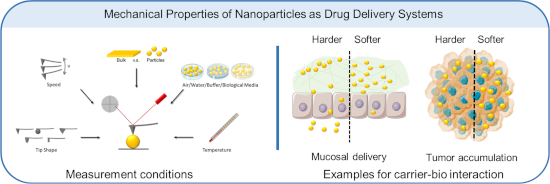
- ][17]. Similarly to the advent of nanomedicines, certain standardization in terms of methods and parameters is necessary to allow for a better comparison between different studies. Perspective Measurement conditions influencing the absolute values of elastic properties Different possibilities to


The steep road to nonviral nanomedicines: Frequent challenges and culprits in designing nanoparticles for gene therapy
Beilstein J. Nanotechnol. 2023, 14, 351–361, doi:10.3762/bjnano.14.30
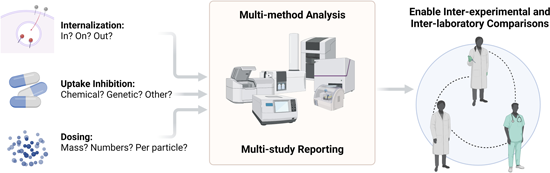
- materials have had an impact include their use as vaccines, cancer therapies, and in the treatment of rare genetic disorders [1][2][3]. Still, there are several impediments to characterizing, understanding, and controlling the interactions between NPs and biological substrates [4][5][6]. Standardization of
- NP characterization is a widely recognized issue that is critically entwined with scientific and technical considerations [7][8]. In fact, the importance of standardization within the field of nanomaterials has already been highlighted in previous editorials and perspectives, illuminated by “Nature
- analysis of the literature indicates that the nanomedicine research community as a whole would benefit from multiparameter and multistudy reporting, which would facilitate comparison and assessment of results across studies and research groups. Standardization of high-quality NP-mediated nonviral gene
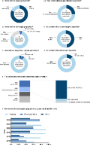

Rational design of block copolymer self-assemblies in photodynamic therapy
Beilstein J. Nanotechnol. 2020, 11, 180–212, doi:10.3762/bjnano.11.15
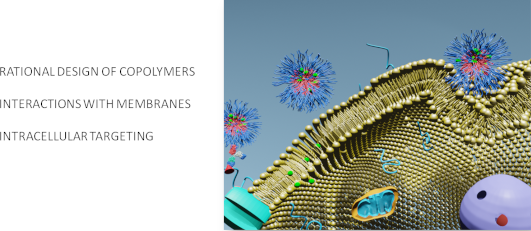


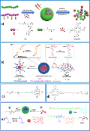


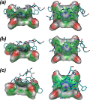


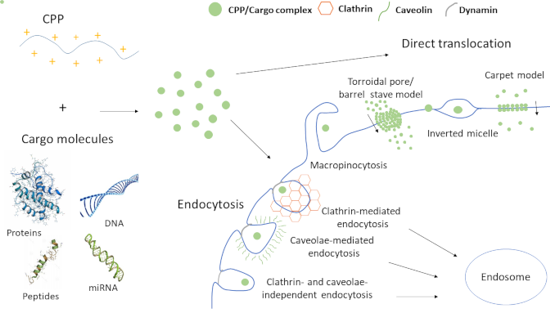
Internalization mechanisms of cell-penetrating peptides
Beilstein J. Nanotechnol. 2020, 11, 101–123, doi:10.3762/bjnano.11.10


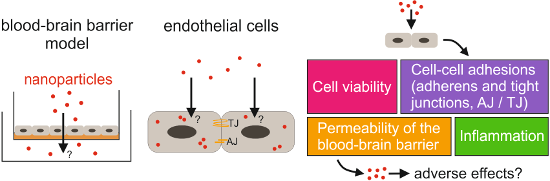
Effects of gold and PCL- or PLLA-coated silica nanoparticles on brain endothelial cells and the blood–brain barrier
Beilstein J. Nanotechnol. 2019, 10, 941–954, doi:10.3762/bjnano.10.95
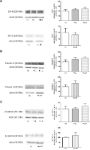
- the bands, given in arbitrary units, and subsequent standardization on actin. rBCEC4 monolayer permeability rBCEC4 cells (90,000) were seeded per gelatin-coated Millicell® culture plate insert with 3 µm pore size (Merck Millipore, Germany) on days in vitro 0 (DIV0) and left to grow until monolayer



Characterization and influence of hydroxyapatite nanopowders on living cells
Beilstein J. Nanotechnol. 2018, 9, 3079–3094, doi:10.3762/bjnano.9.286
- sectors, including automobile, chemicals, construction, cosmetics, electronics, energy, engineering, environment, medicine, security, sports, telecommunication, textiles and transportation [1][2]. The International Organization for Standardization, in cooperation with the European Committee for
- Standardization, has defined nanoscale as a size range from approximately 1 to 100 nm. A nanomaterial is defined as a material (natural, incidental or manufactured) containing particles, in an unbound state, or as an aggregate (object composed of strongly or fused bounded particles), or as an agglomerate

![[Graphic 1]](/bjnano/content/inline/2190-4286-9-286-i2.svg?max-width=637&scale=1.18182) .
.



Review on nanoparticles and nanostructured materials: history, sources, toxicity and regulations
Beilstein J. Nanotechnol. 2018, 9, 1050–1074, doi:10.3762/bjnano.9.98

- and Drug Administration (USFDA) also refers to NMs as “materials that have at least one dimension in the range of approximately 1 to 100 nm and exhibit dimension-dependent phenomena” [3]. Similarly, The International Organization for Standardization (ISO) has described NMs as a “material with any


Nanocuration workflows: Establishing best practices for identifying, inputting, and sharing data to inform decisions on nanomaterials
Beilstein J. Nanotechnol. 2015, 6, 1860–1871, doi:10.3762/bjnano.6.189
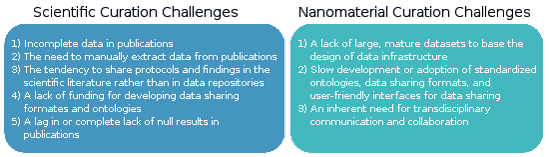
- nanocuration A workflow is a critical component of nanocuration for several reasons. A workflow: 1) defines the process for data curation, 2) allows for comparison across data repositories to determine areas of standardization and bottlenecks, and 3) provides a consistent process for understanding the quality
- collection once a repository structure and language are solidified. Related to the second aspect of the importance of a workflow, comparison between data resources, workflows serve as a written indicator of differences or similarities in underlying assumptions, order of operations, and standardization levels
- federated repositories allows each separate community to tailor the workflow to their available resources, especially in this fluid period of debates regarding dose metrics, physicochemical characterization data sets, and protocol standardization. Notably, in some organizations the term “curation” may be





