Search results
Search for "substrate" in Full Text gives 1420 result(s) in Beilstein Journal of Nanotechnology. Showing first 200.
Nanoglasses: a trail towards uncharted regions of vitreous materials and their properties?
Beilstein J. Nanotechnol. 2026, 17, 1047–1062, doi:10.3762/bjnano.17.72

- liquid state via heating, thereby undergoing a continuous glass transition, at face value, it occurs that the glass–glass interfaces most probably do not fulfil this definition. Similar to, for example, amorphous germanium obtained by vapour condensation onto a cold substrate, a continuous transition
- exploration of the full capabilities of nanoglasses. In recent years, new synthesis routes for a nanoglass state have been suggested that are based on electrochemical methods [46][47] or deposition from the gas phase onto a substrate [48][49][50][51]. While electrochemical methods yield larger amounts of


Vibration-induced dynamic structural superlubricity on MoS2/Au(111) under ultrahigh vacuum
Beilstein J. Nanotechnol. 2026, 17, 1039–1046, doi:10.3762/bjnano.17.71
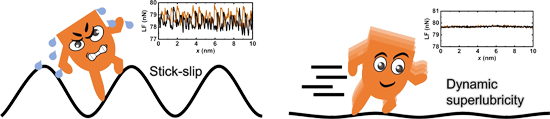
- , as shown in Figure 4a [28][29][30]. In the model, the top potential V1 with a MoS2 lattice constant of a1 and an amplitude of u1 describes the tip–MoS2 interaction. This is superimposed by a bottom potential V2 representing the MoS2–Au(111) interaction, characterized by a substrate periodicity of a2
- and an amplitude of u2. The stiffness kt denotes the lateral spring constant of the cantilever, and k2 represents the local interfacial stiffness between the MoS2 and the gold substrate. As the cantilever support moves at a constant velocity of vs, the tip and the MoS2 flake are displaced by x1 and x2


Synthesis and characterization of RF-sputtered ZnTe/Cu2−xTe thin films for solar cell applications
Beilstein J. Nanotechnol. 2026, 17, 1016–1027, doi:10.3762/bjnano.17.69
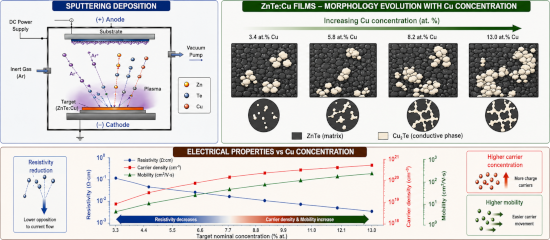
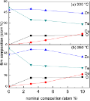
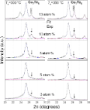
- /bjnano.17.69 Abstract The incorporation of copper and oxygen into zinc telluride (ZnTe) thin films deposited by radio-frequency magnetron sputtering from a single ZnTe–CuO composite target was investigated. The nominal Cu and O concentrations ranged from 3 to 13 atom %, and films were grown at substrate
- target, including the combined effects of composition and substrate temperature on phase evolution, microstructure, and functional properties, remains limited. In particular, the relationship between Cu-induced phase segregation, structural evolution, and the resulting electrical transition has not been
- fully established. Based on this approach, the present work investigates ZnTe-based films deposited from a ZnTe–CuO composite target over a broad nominal composition range (3–13 atom %) and at two substrate temperatures (300 and 350 °C). The objective is to establish the correlation between phase



Ultrasonic irradiation in the synthesis of nanohydroxyapatite: a chemically friendly technique for improving hemocompatibility and antibiofilm applications
Beilstein J. Nanotechnol. 2026, 17, 991–1015, doi:10.3762/bjnano.17.68
- Section III of Supporting Information File 1. The adsorption of a substrate onto the nanoparticle surface within a biological environment is governed by factors such as hydrophobicity, chemical structure, and particle size. In this study, this parameter is of critical importance as it directly influences




Materials challenges in solid-state sensors for continuous monitoring of ions in water
Beilstein J. Nanotechnol. 2026, 17, 935–973, doi:10.3762/bjnano.17.66
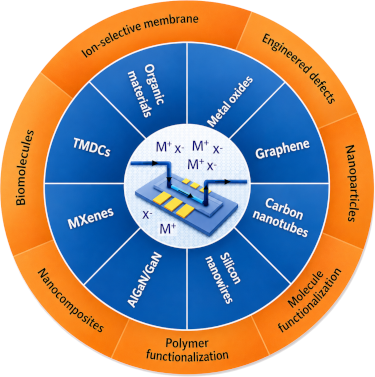
- static power waste, preventing reliable digital switching performance. Efforts to induce a bandgap, such as graphene nanoribbons, bilayer gating, or strain engineering, inevitably degrade mobility and increase scattering. Device performance is further limited by strong sensitivity to substrate



Enhanced erosion resistance and radiation stability of WC–WO3 nanocomposite films under 100 keV Kr+ ion irradiation
Beilstein J. Nanotechnol. 2026, 17, 922–934, doi:10.3762/bjnano.17.65
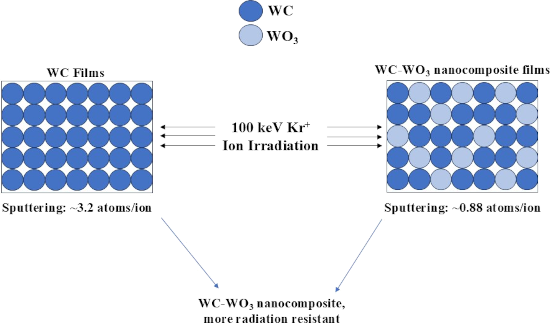
- substrate [55]. Given its importance, understanding of radiation tolerance has been a topic of long-standing research [59][60][61][62][63][64][65][66][67]. However, the studies performed till date have almost unilaterally focussed on the radiation-induced changes in single-component materials. A recent
- synthesized by sputter deposition on Si substrate heated at 600 K. Before the deposition, the substrates were sonicated for 10 min and then cleaned thoroughly using acetone. The sputter deposition chamber had a base vacuum of 4.9 × 10⁻⁶ mbar before the deposition was obtained using a turbomolecular pump
- . GIXRD pattern of (a) as-deposited (WC_RT) and (b) 700 °C annealed (S1) films in air ambient. GIXRD patterns of WC films (S2) deposited at 600 K substrate temperatures. Typical RBS spectra of S2 films. RBS spectra of the S1 films – pristine (black; S1_N) and irradiated (red; S1_I) at fluence 1 × 10¹⁷



Nanocarrier strategies to overcome P-glycoprotein-mediated drug resistance in cancer therapy
Beilstein J. Nanotechnol. 2026, 17, 882–921, doi:10.3762/bjnano.17.64
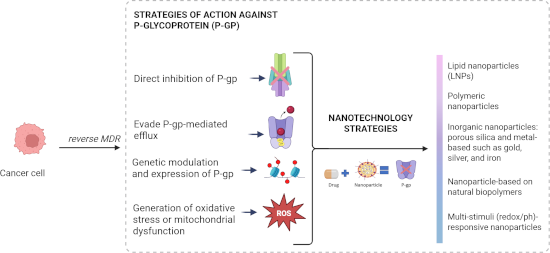
- -gp functions as an ATP-dependent efflux pump with broad substrate promiscuity for hydrophobic and amphipathic compounds. Clinically relevant chemotherapeutic agents expelled by P-gp include anthracyclines (doxorubicin, daunorubicin), vinca alkaloids (vinblastine, vincristine), taxanes (paclitaxel
- dynamics, from its nucleotide-binding domains to the conformational changes that drive substrate translocation, is therefore foundational to designing strategies that durably overcome MDR [14]. Escalating chemotherapeutic doses or increasing administration frequency are not viable solutions to P-gp
- interact with substrate-binding regions of P-gp or interfere with ATPase-driven transport activity to block drug efflux, increasing intracellular concentration and drug efficacy. Negi et al. developed liposomes coated with hyaluronic acid and containing imatinib mesylate, a substrate of the P-gp and BCRP


Supramolecular one-dimensional conducting nanofibers from a C3-symmetric tetrathiafulvalene derivative
Beilstein J. Nanotechnol. 2026, 17, 872–881, doi:10.3762/bjnano.17.63
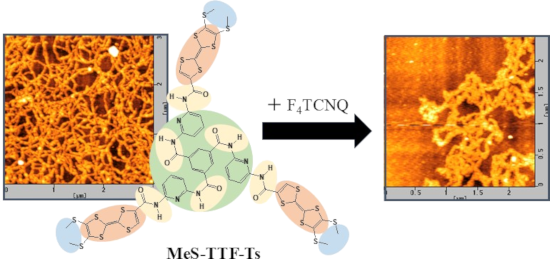
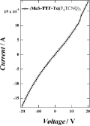
- structures with morphologies strongly dependent on the solvent conditions. AFM and SEM observations revealed that distinct supramolecular structures were formed depending on the solvent and substrate used, suggesting that molecular interactions and assembly processes play important roles in determining the
- films of MeS-TTF-Ts revealed the formation of well-defined one-dimensional nanostructures with relatively uniform morphology. Specifically, dimethylformamide (DMF) solution of MeS-TTF-Ts (6 mM) was dripped onto a mica substrate, and the solvent was allowed to evaporate, resulting in the formation of
- nanorod-like structures with a width of 100 nm, a height of 30 nm, and a length of 3 μm (Figure 1). These nanorods were observed to be distributed across the substrate without significant aggregation, suggesting that the self-assembly process proceeds in a controlled manner under these conditions. The


He+ FIBID-fabricated 3D AFM tip architectures: an exploratory study of hollow pillars, helices, and spirals
Beilstein J. Nanotechnol. 2026, 17, 863–871, doi:10.3762/bjnano.17.62
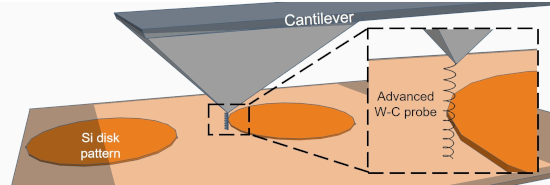
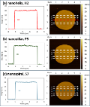
- ) nanoarchitectures with high spatial control. In these approaches, precursor molecules are adsorbed to the substrate surface, where local beam irradiation induces their dissociation. The nonvolatile products remain at the irradiated region and accumulate to form the deposit, while volatile fragments are removed by


Light-driven ammonia electrooxidation via carbon nitride–ruthenium molecular interfaces
Beilstein J. Nanotechnol. 2026, 17, 854–862, doi:10.3762/bjnano.17.61
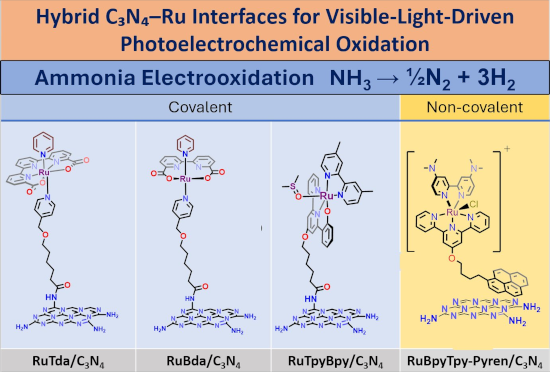
- without releasing oxidized intermediates such as hydrazine or hydroxylamine. Second, ammonia is a strong σ-donor that coordinates readily to Ru(II), positioning the substrate in the inner coordination sphere for successive proton-coupled electron-transfer steps. Third, the ligand environment around Ru can
- be rationally tuned to control the thermodynamics of each Ru(n)/Ru(n + 1) transition, the NH3/H2O binding selectivity, and the geometry of the high-valence Ru=NH intermediate that precedes N–N coupling. No first-row transition metal combines oxidation state accessibility, substrate affinity, and
- the semiconductor valence band and uses their oxidising power to drive the multielectron, multiproton transformation of the substrate. Ruthenium occupies a privileged position in oxidation catalysis because of its unique ability to access a wide range of stable oxidation states (Ru(II), Ru(III), Ru(IV


Cross-scale design of chemosensor arrays: from molecular self-assembly in water to paper-based devices for metal ion detection
Beilstein J. Nanotechnol. 2026, 17, 828–838, doi:10.3762/bjnano.17.59
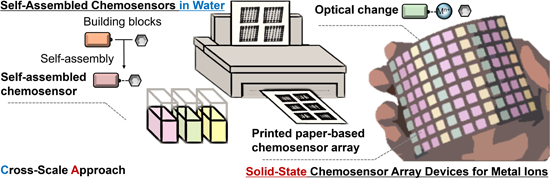
- devices, such fiber-like nanostructures contribute to the homogeneous dispersion of chemosensor molecules through office printing technologies [28][29]. The printed chemosensor arrays on a paper substrate exhibit optical changes upon analyte capture, which are detected using portable recording apparatuses
- printed wax layer melts on a hot plate during annealing. Next, an inkjet printer is employed to deposit chemosensor solutions onto predefined regions of the paper substrate. The fiber structures of paper substrates contribute to highly dispersed chemosensor elements, resulting in uniform solid-state
- sensing layers (Figure 7B). Upon exposure to metal ions in aqueous solutions, the immobilized chemosensors interact with the analytes and induce optical changes on the paper substrate. These optical patterns are rapidly recorded using portable devices. Subsequently, the captured digital photographs are


Sustainable fabrication of 2D-based devices through reuse of substrates with microfabricated electrodes
Beilstein J. Nanotechnol. 2026, 17, 818–827, doi:10.3762/bjnano.17.58
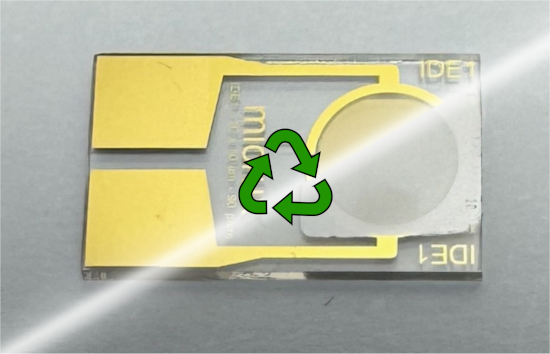
- signatures of the transferred 2D material, retain a largely homogeneous surface-potential distribution, and preserve comparable electrical performance after reuse. By extending the lifetime of pre-patterned chips, this approach can reduce substrate consumption and lower the cost of 2D device prototyping
- . Keywords: 2D device fabrication; microfabricated electrode; N-methyl-2-pyrrolidone; substrate reuse; ultrasonic cleaning; Introduction Nanoscience research often needs the fabrication of proof-of-concept devices to demonstrate applications of novel nanomaterials or to study their fundamental properties [1
- reliable method for cleaning and reusing these devices would be valuable for achieving more cost-effective 2D material-based device fabrication. Several recent studies have explored substrate reuse strategies to mitigate fabrication costs and improve sustainability in device prototyping [16][17][18]. For


Glycerol photoelectrochemical oxidation reaction at carbon nitrides/BiVO4 materials
Beilstein J. Nanotechnol. 2026, 17, 806–817, doi:10.3762/bjnano.17.57
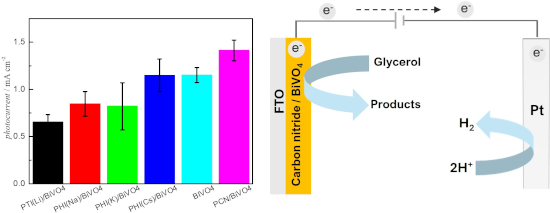
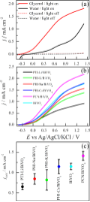
- (ethylene glycol) (PEG-300, Sigma-Aldrich, ACS reagent, 99.99%) for 30 min in an ultrasound bath (Soni-tech ultrasonic cleaner). Subsequently, 60 µL of a freshly sonicated suspension was drop-cast onto a 1 × 1 cm FTO (Sigma-Aldrich, surface resistivity ≈7 Ω/sq) substrate cleaned/pre-treated according to the
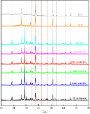
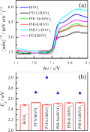
- . Figure 2 shows the XRD for the synthesized CNs/BiVO4 films and for BiVO4 and PCN films onto FTO substrate. The XRD pattern for clean FTO was also included (gray line) making it easier to observe its contribution to the other diffractograms. Notably, in all films, it is possible to observe the diffraction




Tuning the electronic properties of defect-rich MoS2
Beilstein J. Nanotechnol. 2026, 17, 796–805, doi:10.3762/bjnano.17.56
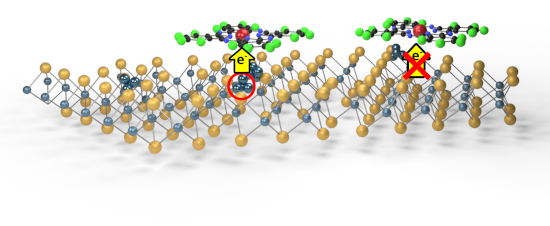
- TMDC layers [15]. Since interaction mechanisms depend strongly on the central metal atom and the ionization potential of the phthalocyanine, we focus specifically on CoPcF16 and vary the properties of the substrate. In general, electronic defects play a crucial role in novel optoelectronic devices, as
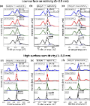
- °C and a pressure of approximately 1 × 10⁻⁷ mbar using a Knudsen cell. Via a quartz crystal microbalance, the deposition rate was determined as 0.1–0.2 nm·min−1. The nominal layer thickness of the deposited CoPcF16 molecule on the MoS2 substrate was calculated by comparing core level intensities of
- the overlayer (C 1s) to the intensity of the substrate related Mo 3d signal. The photoionization cross sections were taken from Yeh and Lindau [27], and the inelastic mean free path was calculated using the formula given by Seah and Dench [28] for organic molecules. The XPS spectra were fitted using


Substrate-dependent pore formation in molybdenum disulfide monolayers under ion irradiation
Beilstein J. Nanotechnol. 2026, 17, 769–780, doi:10.3762/bjnano.17.54
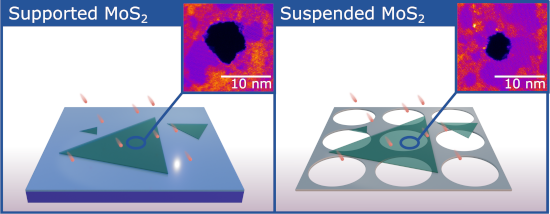
- suspended MoS2, MoS2 on SiO2, bilayer MoS2, and MoS2 on gold. Both pore size and pore formation efficiency exhibit a pronounced dependence on the type of substrate. Pores are largest and most frequent in MoS2 on SiO2, while the gold substrate massively quenches pore formation. The observed pore dimensions
- under both HCI and SHI irradiation conclusively demonstrate the central role of substrate and interface-dependent electronic dissipation pathways regarding damage under these types of ion irradiation. Keywords: defects; MoS2; nanopores; SiO2; scanning transmission electron microscopy (STEM
- formation have largely focused on suspended 2D materials [13][25][28][29], practical applications typically require the 2D material to be supported by a substrate. Direct investigation of ion-irradiated supported 2D materials, however, remains experimentally challenging for several reasons. For example


Interface-engineered Caco-2 cell culture on a collagen-coated liquid–liquid interface in a microfluidic device
Beilstein J. Nanotechnol. 2026, 17, 760–768, doi:10.3762/bjnano.17.53
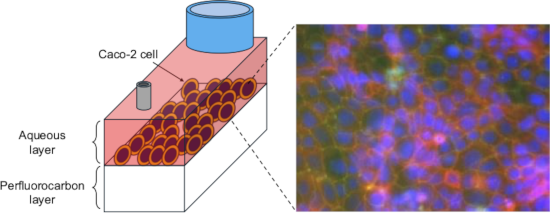
- substrates, which limit the physicochemical flexibility of the cellular microenvironment. Here, we introduce a microfluidic platform in which a collagen-coated liquid–liquid interface formed between perfluorocarbon (FC-43) and culture medium serves as a substrate for epithelial cell adhesion. By culturing
- rigidity and pore-related constraints inherent to synthetic solid membranes [8][9][10]. Importantly, culturing cells at a liquid–liquid interface provides a unique opportunity to decouple biochemical signaling from substrate-imposed mechanical constraints, thereby enabling more physiologically relevant
- as a cell-adhesion substrate for epithelial cells (Figure 1A). The rectangular cuboid-shaped microfluidic device allows for stable formation of the liquid–liquid interface for cell culture by sequential flow manipulation (Figure 1B). Using Caco-2 cells, a well-known epithelial cell line, we


Tailoring Ag–Pt nanoalloys through solid-state dewetting: structural and optical insights
Beilstein J. Nanotechnol. 2026, 17, 748–759, doi:10.3762/bjnano.17.52

- tension) and the energy gained by reducing the total contact area between the film and the substrate (interfacial tension). A comprehensive analysis of the transformation of a thin layer into isolated islands was provided in a series of publications by Thompson and collaborators [13][20][21][22]. They
- metallic layers is their thickness: the thinner the layer, the lower the temperature at which it transforms into isolated islands. It can be stated that the significant influence of surface energy in thin-film structures, phase separation boundaries (layer–substrate, layer–liquid phase), grain boundaries
- shown in Figure 5. The survey spectra confirm the high chemical purity of all samples. Apart from Ag and Pt, only silicon originating from the substrate, as well as oxygen and carbon adsorbed from the atmosphere, were detected. The quantitative composition was determined from the survey spectra and is




Environmental applications of silver nanoparticles: state-of-the-art review and emerging trends
Beilstein J. Nanotechnol. 2026, 17, 697–736, doi:10.3762/bjnano.17.49
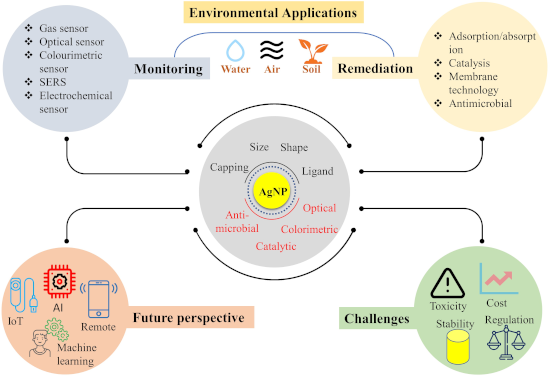
- nanoparticles using carbon or silicon wafers as the primary substrate [49]. The X-ray diffraction pattern reveal that AgNP crystal growth occurs at different facets depending on the NPs [49]. The most common facets include 111, 200, 220, and 311, corresponding to 2θ angles of 38.2°, 44.4°, 64.6°, and 77.5
- , donating electrons that lower the activation energy barrier for hydride ion transfer to the substrate. This process follows pseudo-first-order kinetics, with smaller particle sizes (higher surface-to-volume ratio) and electron-rich surfaces (modulated by capping agents) yielding higher apparent rate
- achieve antifouling. Dye degradation of 99% and 90% was achieved after the first and fifth cycles, respectively, indicating the efficiency of the engineered membrane [114]. Another study developed a photocatalytic membrane using AgNPs, graphene oxide, carbon nitride, and mixed cellulose ester as substrate


Cellulose as a photocatalyst support material: extraction, structural features, and environmental applications
Beilstein J. Nanotechnol. 2026, 17, 635–652, doi:10.3762/bjnano.17.44
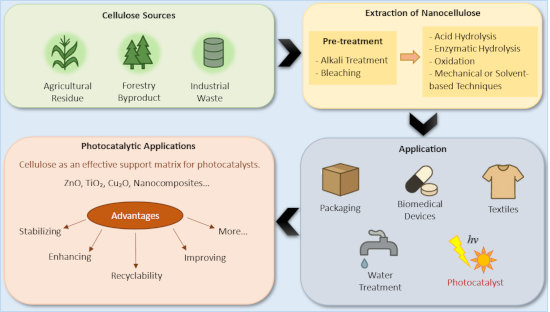
- temperature directly influence whether a substrate is suitable for applications. Traditionally, glass and plastic substrates have dominated the optoelectronic industry, especially in the development of flexible electronics, yet recent research has highlighted transparent nano-paper derived from renewable


Two-step laser synthesis of Ag@TiO2 nanomaterials for the photocatalytic degradation of rhodamine B
Beilstein J. Nanotechnol. 2026, 17, 622–634, doi:10.3762/bjnano.17.43
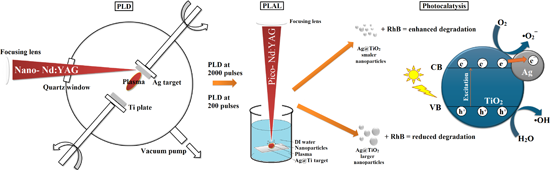
- were deposited onto titanium substrates (purity > 99.9%, ThermoScientific) using nanosecond pulsed laser deposition in a vacuum. A 1 mm thick Ag plate (purity > 99.99%, GoodFellow) served as the laser target, with both the Ti substrate and Ag target rotating to ensure uniform film formation. An Nd:YAG
- laser (1064 nm, 300 mJ, 5 Hz, 5 ns) was focused onto the Ag target with a fluence of 12 J·cm−2. Different silver film thicknesses were obtained by varying the number of laser pulses (200 and 2000). Subsequently, the Ag-coated Ti plates and a pure Ti substrate underwent picosecond pulsed laser ablation


Recent progress in enhancing built-in electric fields of perovskite solar cells via junction engineering
Beilstein J. Nanotechnol. 2026, 17, 602–621, doi:10.3762/bjnano.17.42
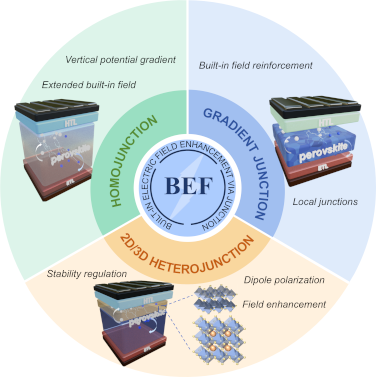
- gradient was induced across the film thickness. This induced a controllable potential gradient across the film thickness, increased the substrate work function by about 0.3 eV, and created a vertical p–n homojunction. Time-resolved photoluminescence (TRPL) measurements revealed that the carrier lifetime of



Probing tribological evolution in atomically thin MoS2 at different scales
Beilstein J. Nanotechnol. 2026, 17, 586–597, doi:10.3762/bjnano.17.40
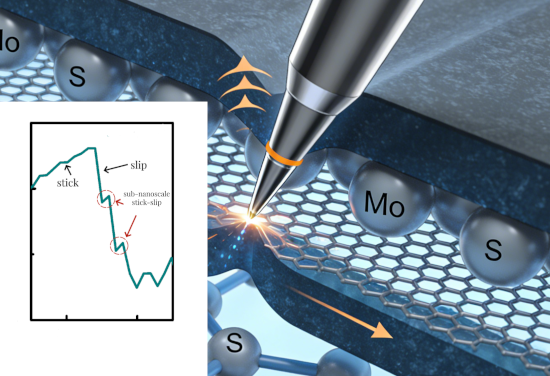
- tribology toward the sub-nanoscale. Experimental Sample preparation Single-layer and few-layer MoS2 were obtained from bulk MoS2 by mechanical exfoliation [19]. N-Doped Si covered with dry oxidation-generated 300 nm thick SiO2 was used as the substrate. Prior to exfoliation, substrates were cleaned
- as the actual tip displacement between adjacent sub-sites, which is critical for characterizing load- and layer thickness-dependent sub-nanoscale stick–slip motion. Results and Discussion Due to the relatively large fluctuation of atomically thin MoS2 caused by the rough substrate, the thickness of
- MoS2 on the rough substrate is determined by combining the cross-sectional height profile and the Raman spectra. The height profiles in topographic image are carefully located in the fluctuation direction of rough substrate. Thus, the thicknesses of MoS2 on the rough substrate along the black and red


Impacts of annealing on structural and photophysical properties of zinc phthalocyanine adsorbed on graphene
Beilstein J. Nanotechnol. 2026, 17, 576–585, doi:10.3762/bjnano.17.39
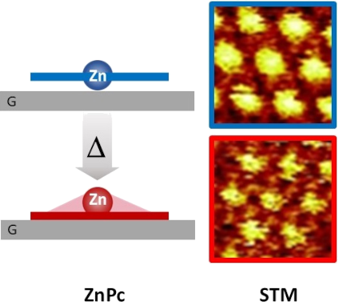
- treatments, as often shown for example with α and β phases of zinc phthalocyanines (ZnPc), with consequences on molecule orientations relative to the substrate and absorbance efficiency [21] or dynamics of charge migration and charge transfer to substrate [22]. Even inside a given phase, minute structural
- particular, ZnPc has been shown to present such 2D phase transitions on various substrates such as TiO2 [32], Au(111) [33][34], InSb [35], or ZnS [36]. These studies have emphasized the diversity of mechanisms involved in the relative stability of 2D phases, including intermolecular versus molecule–substrate
- Zn atom pointing outward (i.e., away from graphene) thus allowing the Pc-conjugated structure to approach closer to the graphene substrate. Returning to the absorption measurements, we infer that this planar-square to shuttlecock transition is accompanied by a shift of the Q-band, a small proportion


Electrochemical determination of ciprofloxacin using a MIL-101/reduced graphene oxide-modified electrode
Beilstein J. Nanotechnol. 2026, 17, 541–554, doi:10.3762/bjnano.17.35
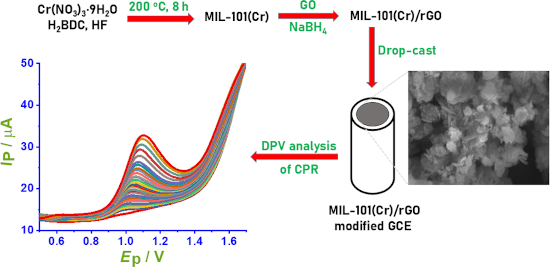
- morphology that offers a large surface area and a conductive substrate for material deposition. The pristine MIL-101 (Figure 4b) consists of irregular polyhedral particles that tend to aggregate, forming relatively compact clusters. In contrast, the MIL-101/rGO composite (Figure 4c) reveals that MIL-101


Defects and defect-mediated engineering of two-dimensional materials: challenges and open questions
Beilstein J. Nanotechnol. 2026, 17, 454–488, doi:10.3762/bjnano.17.31
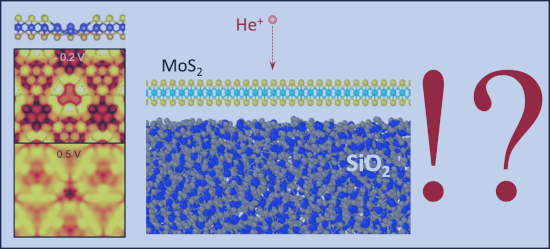
- from triplet to singlet during dissociation [62]. Although O2 incorporation into the WS2 surface involves electron transfer from the substrate, the reaction may proceed via non-adiabatic pathways, as previously discussed for O2 adsorption on metal surfaces [66][67]. This underscores the limitations of
- MoSe2 on a gold substrate to the Janus MoSeS structure [77]. Also, a facile low-temperature thiol chemistry route was suggested to remove sulfur vacancies in 2D MoS2 [78], which resulted in a significant drop in the number of the charged impurities and traps and increased the mobility. Qualitatively
- has been found on S vacancies in a monolayer of MoS2 on Au(111) [146]. However, in this case, the metallic Au substrate provided not only the electron bath for screening the magnetic moment, but also enabled the electron transfer to the vacancy due to the favorable alignment of the work functions [147