


Search results
Search for "thermal analysis" in Full Text gives 53 result(s) in Beilstein Journal of Nanotechnology.
Microplastic pollution in Himalayan lakes: assessment, risks, and sustainable remediation strategies
Beilstein J. Nanotechnol. 2025, 16, 2144–2167, doi:10.3762/bjnano.16.148
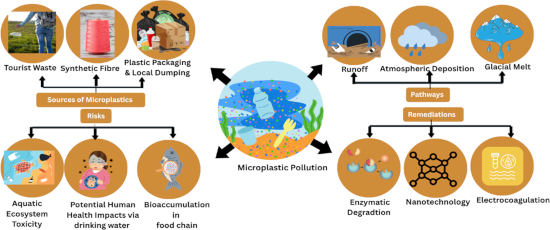
- ]. The combined analytical flow and instrumentation for MP characterization, such as digestion, preparation, and analytical processes like microscopy, spectroscopy, and thermal analysis, is presented in Figure 4. 4.3 Challenges in quantification and identification under alpine conditions MPs assessment


Quality by design optimization of microemulsions for topical delivery of Passiflora setacea seed oil
Beilstein J. Nanotechnol. 2025, 16, 2116–2131, doi:10.3762/bjnano.16.146
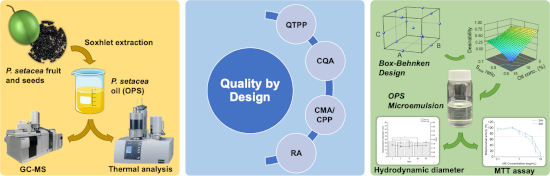
- chromatography–mass spectrometry and thermal analysis. A full factorial design, followed by a Box–Behnken design, was employed to optimize the formulation based on critical quality attributes and the defined quality target product profile. The optimized ME presented a hydrodynamic diameter of approximately 22 nm
- such as chemical degradation and microbial contamination. These processes can compromise the thermodynamic stability and overall performance of the system [6]. Thermal analysis The thermal characteristics of the formulations were also evaluated (Figure 9). The thermograms revealed no evidence of
- 270 °C and 250 °C, respectively. The oven temperature program ranged from 70 °C to 300 °C, increasing at a rate of 3 °C·min−1. Compound identification was conducted by matching the mass spectra to those in the NIST17. Simultaneous thermal analysis The thermal behavior of P. setacea oil was evaluated


Beyond the shell: exploring polymer–lipid interfaces in core–shell nanofibers to carry hyaluronic acid and β-caryophyllene
Beilstein J. Nanotechnol. 2025, 16, 2015–2033, doi:10.3762/bjnano.16.139
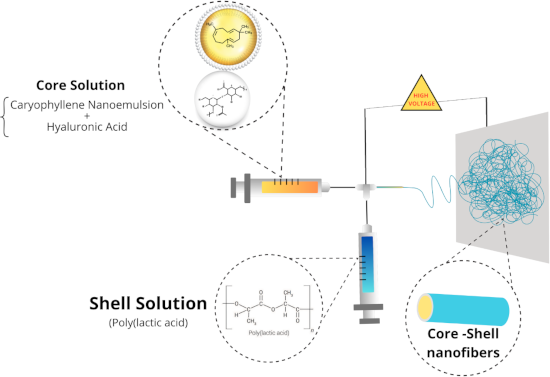
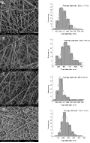
- presence of the core did not reduce the thermal stability of the nanofibers, suggesting that the hybrid HA+NE core may have enhanced this stability, likely due to an interaction between the core and the shell. Complementing the thermal analysis performed by TGA, DSC was used to obtain detailed information




Multifunctional anionic nanoemulsion with linseed oil and lecithin: a preliminary approach for dry eye disease
Beilstein J. Nanotechnol. 2025, 16, 1711–1733, doi:10.3762/bjnano.16.120
- the titration of the LO sample (mL), VB is the volume of KOH solution required for blank solvent titration (mL), [KOH] is the concentration of ethanolic KOH solution (0.093 mol·L−1), MA is the mass of the LO sample used (g), and 56.1 g·mol−1 is the molecular weight of KOH. Thermal analysis



Nanotechnology-based approaches for the removal of microplastics from wastewater: a comprehensive review
Beilstein J. Nanotechnol. 2025, 16, 1607–1632, doi:10.3762/bjnano.16.114
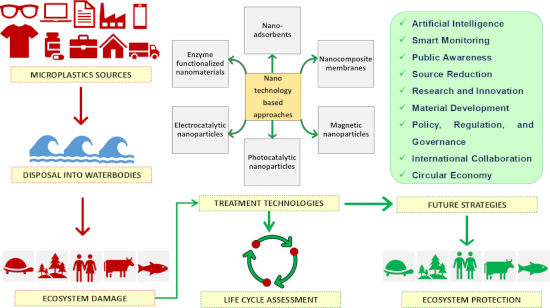
- spectroscopy, visual inspection, and thermal analysis. Among these, visual methods offer speed and simplicity; however, they often rely on personal judgment and are generally limited to the detection of larger particles [131]. Thermal analysis methods like thermogravimetric analysis/differential scanning


Dendrimer-modified carbon nanotubes for the removal and recovery of heavy metal ions from water
Beilstein J. Nanotechnol. 2025, 16, 1522–1532, doi:10.3762/bjnano.16.107

- 800 °C, indicating significant thermal stability, but surely less than unfunctionalized CNTs due to the presence of organic functional groups. Further thermal analysis of CNTs functionalized with dendrimers such as CNTs-G1, CNTs-G2, CNTs-G3, and CNTs-G5 have shown more pronounced weight losses at


Synthesis and antibacterial properties of nanosilver-modified cellulose triacetate membranes for seawater desalination
Beilstein J. Nanotechnol. 2025, 16, 1380–1391, doi:10.3762/bjnano.16.100
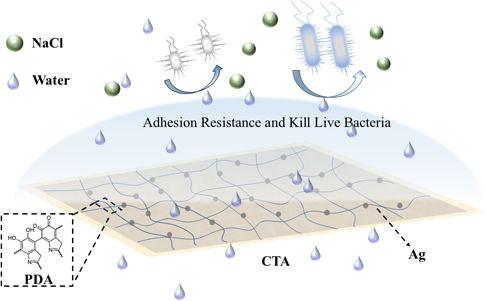
- absorbed water; a noticeable weight loss in the temperature range of 300–370 °C, due to the thermal degradation of CTA; and slow weight loss after 370 °C, caused by the combustion of degraded products. Differential thermal analysis (DTA) reveals distinct transition temperatures associated with endothermic


Enhancing mechanical properties of chitosan/PVA electrospun nanofibers: a comprehensive review
Beilstein J. Nanotechnol. 2025, 16, 286–307, doi:10.3762/bjnano.16.22

- Viscoelasticity is another property relevant to nanofibers, which combines both elastic and viscous responses to deformation. Viscoelastic properties, including storage modulus and loss modulus, can be tested using dynamic mechanical analysis (DMA) or dynamic mechanical thermal analysis (DMTA). This technique


Mn-doped ZnO nanopowders prepared by sol–gel and microwave-assisted sol–gel methods and their photocatalytic properties
Beilstein J. Nanotechnol. 2024, 15, 1283–1296, doi:10.3762/bjnano.15.104
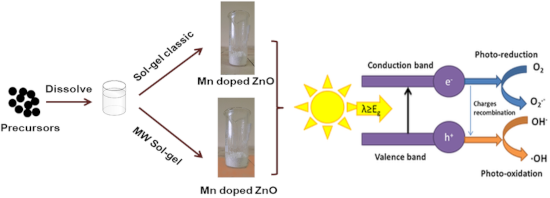
- thermal analysis The thermal behavior of the resulting materials was investigated by TG/DTG/DTA. It was shown that the thermal decomposition of the gels is not essentially influenced by the method of preparation. The thermo-gravimetric curves for the as-prepared Mn-doped ZnO powders are presented in
- thermal effects, as well as their assignments are summarized in Table 1. Microwaves intensify the sol–gel reactions but do not modify the formed molecular species, as has been shown for other oxide systems [14]. Thermally treated samples Based on the results obtained by thermal analysis, the as-prepared
- /min. Characterization Fourier transform infrared spectra (FTIR) were recorded with a Nicolet 6700 apparatus in the range of 400–4000 cm−1. The resolution was 4 cm−1. The powders were pressed in KBr pellets, and the spectra were recorded in absorbance mode. Differential thermal analysis (DTA) and


Enhanced catalytic reduction through in situ synthesized gold nanoparticles embedded in glucosamine/alginate nanocomposites
Beilstein J. Nanotechnol. 2024, 15, 1227–1237, doi:10.3762/bjnano.15.99
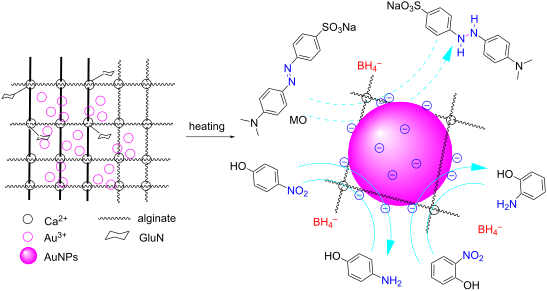
- ) using a nanoPartica Horiba SZ-100 instrument. Thermal analysis through thermogravimetry (TGA) was performed using a LabSys evo S60/58988 Thermoanalyzer (Setaram, France). The oven-dried powder of both blank nanocomposite GluN/Alg and synthesized composite AuNPs@GluN/Alg underwent heating from 30 to 800



Nanostructured lipid carriers containing benznidazole: physicochemical, biopharmaceutical and cellular in vitro studies
Beilstein J. Nanotechnol. 2023, 14, 804–818, doi:10.3762/bjnano.14.66
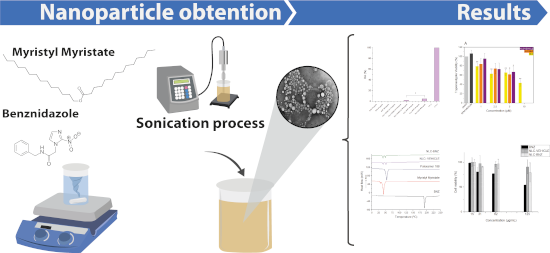
- scanning calorimetry analysis Thermal analysis of BNZ, myristyl myristate, poloxamer 188, and NLC-BNZ was performed by differential scanning calorimetry (DSC Q2000, TA Instruments, New Castle, DE, USA) under an inert atmosphere of dry nitrogen (50 mL·min−1). A standard aluminum pan containing approximately


Silver nanoparticles loaded on lactose/alginate: in situ synthesis, catalytic degradation, and pH-dependent antibacterial activity
Beilstein J. Nanotechnol. 2023, 14, 781–792, doi:10.3762/bjnano.14.64
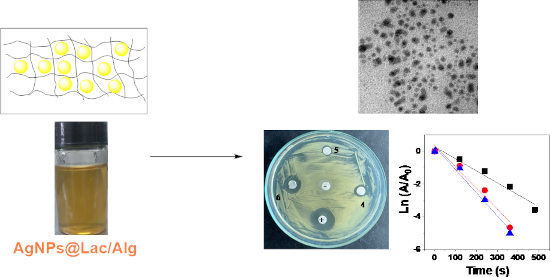
- morphology of the nanocomposites was investigated using transmission electron microscopy (TEM) with a JEOL JEM-1400 instrument. Thermal analysis, including thermogravimetry analysis (TGA) and differential scanning calorimetry (DSC), was conducted using a LabSys Evo 1600 thermal analyzer (SETARAM, France


The microstrain-accompanied structural phase transition from h-MoO3 to α-MoO3 investigated by in situ X-ray diffraction
Beilstein J. Nanotechnol. 2023, 14, 692–700, doi:10.3762/bjnano.14.55
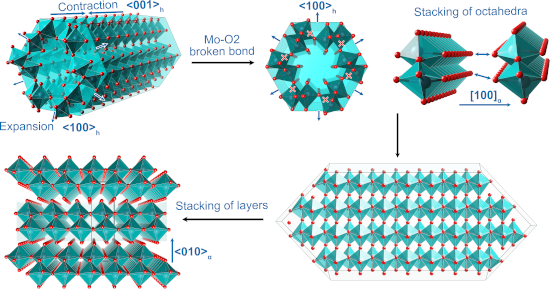
- 355 °C is related to the release of the water molecules intercalated in the octahedra tunnel, which is consistent with the thermal analysis [23][27]. When increasing the temperature above 400 °C, the relation between lattice parameters and temperature evidently deviates from linearity. The parameter a


Green synthesis of zinc oxide nanoparticles toward highly efficient photocatalysis and antibacterial application
Beilstein J. Nanotechnol. 2022, 13, 1108–1119, doi:10.3762/bjnano.13.94
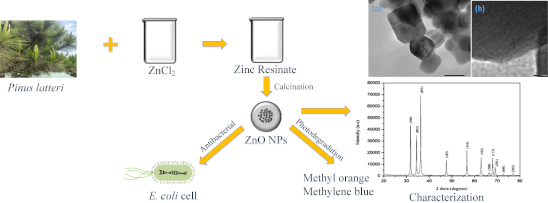
- microscopy (HR-TEM) on a JEOL JEM-2100. The thermal decomposition of zinc resinate to form ZnO NPs were studied by thermal gravimetric analysis (TGA) and differential thermal analysis (DTA) curves using thermal gravimetric analysis (DSC131, LABSYS TG/DSC1600, TMv), by heating up to 1000 °C at a heating rate


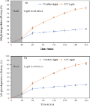


A 3D-polyphenylalanine network inside porous alumina: Synthesis and characterization of an inorganic–organic composite membrane
Beilstein J. Nanotechnol. 2020, 11, 938–951, doi:10.3762/bjnano.11.78
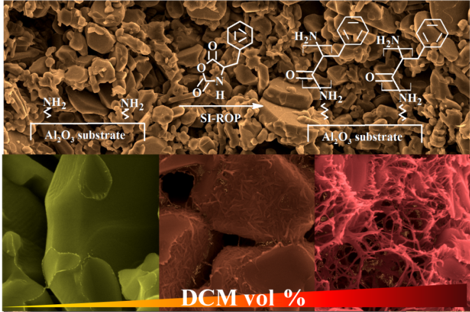
- thermogravimetric measurements of different polyphenylalanine functionalized ALOX-membranes. The thermal analysis in oxygen atmosphere showed a first decay step after 310 °C and a second decay step after 490 °C. The total value of the relative mass loss was determined by simply subtracting 100% minus the mass (in




Poly(1-vinylimidazole) polyplexes as novel therapeutic gene carriers for lung cancer therapy
Beilstein J. Nanotechnol. 2020, 11, 354–369, doi:10.3762/bjnano.11.26
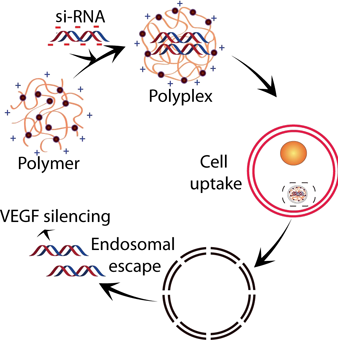
- efficiency of the formed complexes in A549 lung cancer cells. The polyplex formed was found to exhibit 66% complexation efficiency. The complexation was confirmed by gel retardation assays, FTIR and thermal analysis. The blank PVI polymer was not toxic to cells. The polyplex was found to exhibit excellent


pH-Controlled fluorescence switching in water-dispersed polymer brushes grafted to modified boron nitride nanotubes for cellular imaging
Beilstein J. Nanotechnol. 2019, 10, 2428–2439, doi:10.3762/bjnano.10.233
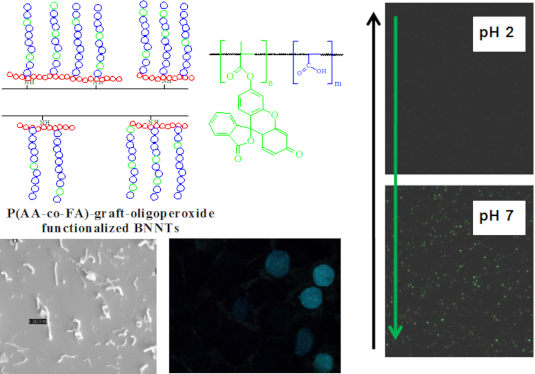
- BNNTs were dried and stored as a powder. Characterization of BNNTs Thermogravimetric analysis (TGA) TGA analysis was performed using a Perkin Elmer Pyris 1 TGA instrument with Thermal Analysis Gas Station and Pyris Version 11.1.1.0497 software. The samples were analyzed under N2 gas flow, which was


Design of a nanostructured mucoadhesive system containing curcumin for buccal application: from physicochemical to biological aspects
Beilstein J. Nanotechnol. 2019, 10, 2304–2328, doi:10.3762/bjnano.10.222
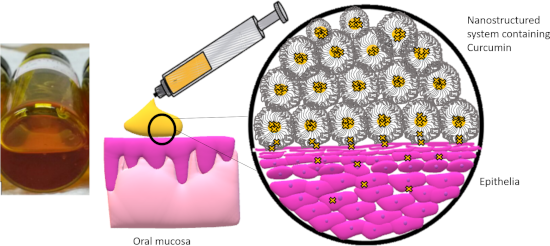
- properties of CUR in order to evaluate if the spectra obtained from the thermal analysis were influenced by the end time of the sample preparation. The time required for CUR incorporation into the polymeric micelles was also determined. Moreover, this analysis allows for the understanding of diffusion and


Synthesis of highly active ETS-10-based titanosilicate for heterogeneously catalyzed transesterification of triglycerides
Beilstein J. Nanotechnol. 2019, 10, 2039–2061, doi:10.3762/bjnano.10.200
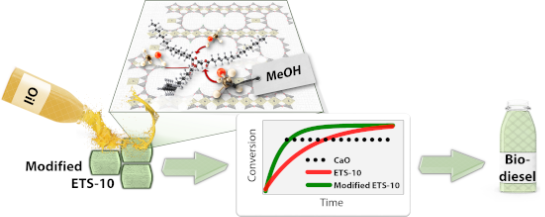
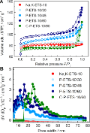
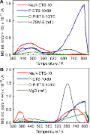
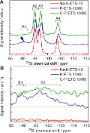
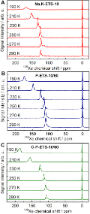
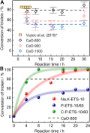
- (PFG) NMR, state of the Ti atoms before and after the treatment of titanosilicates by electron paramagnetic resonance (EPR) and thermal stability of the crystals by differential thermal analysis (DTA). Results and Discussion Structure characterization of an as-synthesized ETS-10 titanosilicate Figure 2








High-temperature resistive gas sensors based on ZnO/SiC nanocomposites
Beilstein J. Nanotechnol. 2019, 10, 1537–1547, doi:10.3762/bjnano.10.151
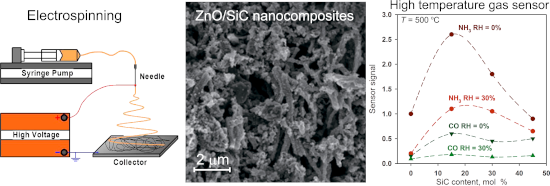
- oxide, ZnO, were prepared separately by electrospinning of polymer solutions followed by heat treatment in order to remove the polymer and crystallize the semiconductor material. The annealing conditions for polymer decomposition were determined by thermal analysis. Fabrication of nanocrystalline SiC



Alloyed Pt3M (M = Co, Ni) nanoparticles supported on S- and N-doped carbon nanotubes for the oxygen reduction reaction
Beilstein J. Nanotechnol. 2019, 10, 1251–1269, doi:10.3762/bjnano.10.125
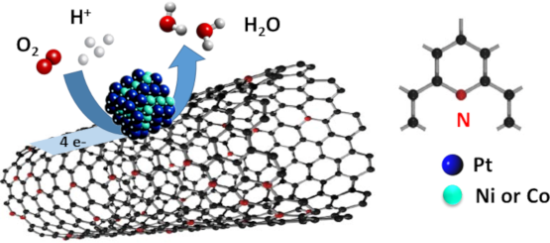
- ) and thermal analysis under air (thermobalance Perkin Elmer Diamond TG). The textural characterization (BET surface area, SBET) of the material was evaluated by N2 adsorption–desorption analysis at −196 °C using a Quantachrome autosorb device. X-ray photoelectron spectroscopy (XPS) was performed on a








Concurrent nanoscale surface etching and SnO2 loading of carbon fibers for vanadium ion redox enhancement
Beilstein J. Nanotechnol. 2019, 10, 985–992, doi:10.3762/bjnano.10.99
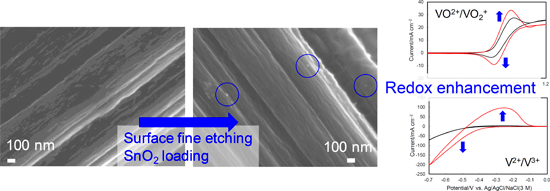
- manufacturer or determined in advance by thermogravimetry and a differential thermal analysis using an SSC/5200 thermal analyzer (Seiko Instruments). Concurrent surface etching and SnO2 loading For depositing the Sn-containing carbonaceous thin films (CSnPc), eight pieces of TGP (1 cm2) and 10 mg of SnPc were



Towards rare-earth-free white light-emitting diode devices based on the combination of dicyanomethylene and pyranine as organic dyes supported on zinc single-layered hydroxide
Beilstein J. Nanotechnol. 2019, 10, 760–770, doi:10.3762/bjnano.10.75
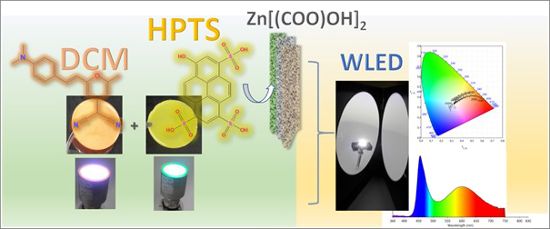
- the 2° < 2θ < 70° range with a scanning speed (2θ) of 0.03°/min. Thermogravimetry and differential thermal analysis (TG-DTA) experiments were carried out on a SETARAME TG-DTA92 thermogravimetric analyser. The dried Zn-SLH sample was heated in air (25 mL/min) from 25 to 800 °C at a rate of 5 °C/min


New micro/mesoporous nanocomposite material from low-cost sources for the efficient removal of aromatic and pathogenic pollutants from water
Beilstein J. Nanotechnol. 2019, 10, 119–131, doi:10.3762/bjnano.10.11
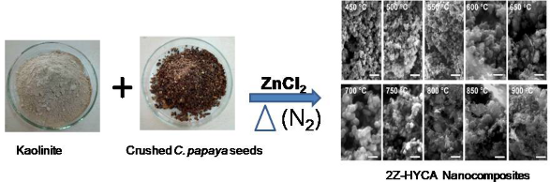
- nuclear magnetic resonance spectroscopy suggest the formation of several new bonds in the materials upon reaction of the precursors, thus confirming the formation of a new hybrid material. Thermogravimetric analysis/differential thermal analysis and elemental analysis confirm the presence of carbonaceous
- referenced to a 0.5 M aqueous solution of aluminum nitrate. 13C and 29Si signals were referenced to tetramethylsilane (TMS). Other analysis Thermogravimetric /differential thermal analysis was performed on a Netzsch STA 449F3 from 25 to 1000 °C at 5 °C/min under N2. The point of zero charge (pHpzc) analysis
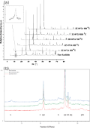
- , the samples made at 750 °C and higher also contain plate-like or fiber-like features. Thermogravimetric and differential thermal analysis Figure 7 shows representative thermogravimetric analysis/differential thermal analysis (TGA/DTA) data obtained from measurements in nitrogen. Consistent with the




Co-intercalated layered double hydroxides as thermal and photo-oxidation stabilizers for polypropylene
Beilstein J. Nanotechnol. 2018, 9, 2980–2988, doi:10.3762/bjnano.9.277
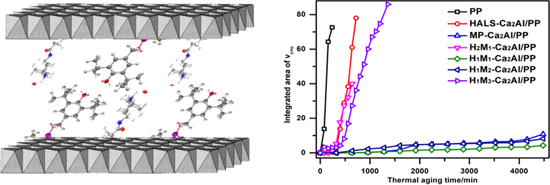
- diffractometer with a wavelength of 0.154 nm at 40 kV and 30 mA in a 2θ range of 3–70° at 10°·min−1. Fourier-transform infrared (FTIR) spectra were recorded on a Bruker Vector 22 infrared spectrophotometer with KBr pellets (sample/KBr of 1:100 by weight) or thin films. Thermogravimetry and differential thermal
- analysis (TG-DTA) was performed on a PCT-IA instrument in the range of 25 to 700 °C at 5 °C·min−1 under flowing air. Scanning electron microscopy (SEM) images were taken with a Zeiss scanning electron microscope by dropping dilute ethanol suspension at room temperature. Elemental analysis for metal





