


Search results
Search for "transition metal" in Full Text gives 244 result(s) in Beilstein Journal of Nanotechnology. Showing first 200.
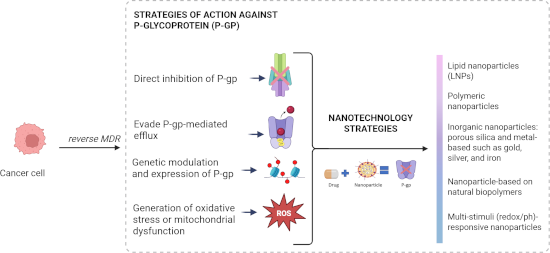
Nanocarrier strategies to overcome P-glycoprotein-mediated drug resistance in cancer therapy
Beilstein J. Nanotechnol. 2026, 17, 882–921, doi:10.3762/bjnano.17.64


Light-driven ammonia electrooxidation via carbon nitride–ruthenium molecular interfaces
Beilstein J. Nanotechnol. 2026, 17, 854–862, doi:10.3762/bjnano.17.61
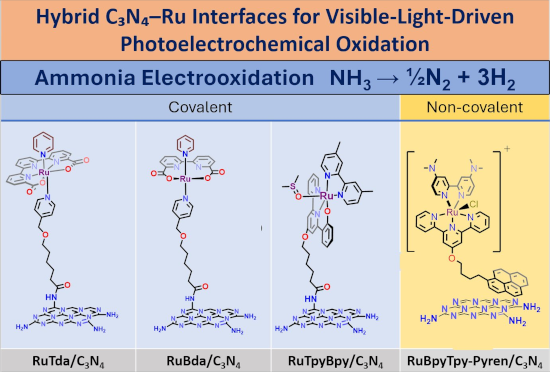
- be rationally tuned to control the thermodynamics of each Ru(n)/Ru(n + 1) transition, the NH3/H2O binding selectivity, and the geometry of the high-valence Ru=NH intermediate that precedes N–N coupling. No first-row transition metal combines oxidation state accessibility, substrate affinity, and


Tuning the electronic properties of defect-rich MoS2
Beilstein J. Nanotechnol. 2026, 17, 796–805, doi:10.3762/bjnano.17.56
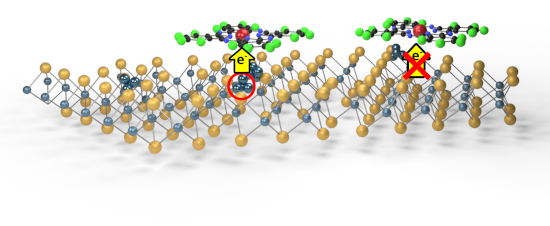
- Research, Helmholtz-Zentrum Berlin für Materialien und Energie GmbH, 12489 Berlin, Germany 10.3762/bjnano.17.56 Abstract Transition metal dichalcogenides (TMDCs), including molybdenum disulfide (MoS2), have emerged as a promising candidate for novel semiconducting devices. However, in many cases
- . Keywords: angle-resolved photoelectron spectroscopy (ARPES); MoS2; phthalocyanine; X-ray absorption spectroscopy (XAS); X-ray photoelectron spectroscopy (XPS); Introduction In the pursuit for novel semiconducting materials, the group of transition metal dichalcogenides (TMDCs), including molybdenum
- techniques, heterostructuring with (fluorinated) transition metal phthalocyanines (TMPcs) has been shown to modify the interfacial electronic properties of pristine TMDCs [8][9][10]. For the interface between CoPcF16 and defect-free MoS2, a slight doping in the TMDC was recently observed, however without


Cellulose as a photocatalyst support material: extraction, structural features, and environmental applications
Beilstein J. Nanotechnol. 2026, 17, 635–652, doi:10.3762/bjnano.17.44
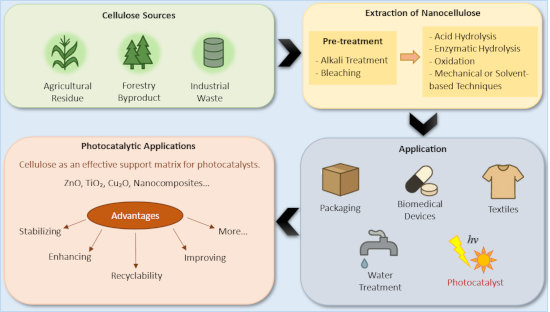
- transition metal nanoparticles such as iron, silver, palladium, platinum, titanium, and copper have been widely employed for breaking down pollutants; however, their tendency to aggregate limits performance, which is why they are frequently immobilized on solid substrates. This immobilization not only


Two-step laser synthesis of Ag@TiO2 nanomaterials for the photocatalytic degradation of rhodamine B
Beilstein J. Nanotechnol. 2026, 17, 622–634, doi:10.3762/bjnano.17.43
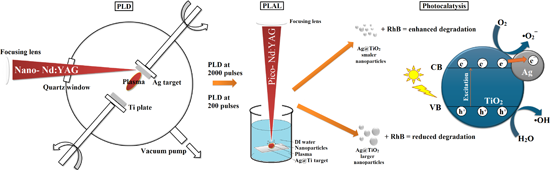
- facilitate improved separation of photogenerated charge carriers and extend light absorption toward the visible region, which together contribute to the enhanced photocatalytic performance of Ag@TiO2 compared to bare TiO2. Liza et al. [27] showed that TiO2 doping with a transition metal such as Ag may result


Synthesis of Cu–Mo/TiO2 and Co–Mo/TiO2 photocatalysts for the efficient degradation of organic pollutants in water
Beilstein J. Nanotechnol. 2026, 17, 559–570, doi:10.3762/bjnano.17.37
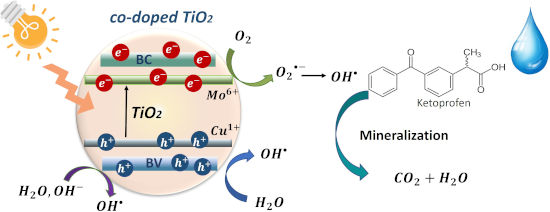
- developed to overcome these limitations, including doping, noble-metal deposition, heterogeneous structures, and surface sensitization. Doping is a widely employed method to generate impurity states in the forbidden region or to reduce the effective bandgap. Doping TiO2 with transition metal ions can adjust
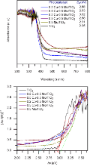
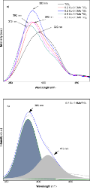
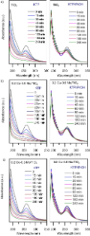
- could be balanced by the doping levels in TiO6 octahedra [3]. Mo6+ is a transition metal ion with high valence that exhibits exceptional optical, electronic, and catalytic characteristics [12]. There are a few reports about the doping of TiO2 with molybdenum [13][14][15][16]; it has been shown that Mo
- the doping of TiO2 can be done during its synthesis or through an impregnation technique, which is a very simple method that does not require high energy consumption. In addition, the transition metal precursors are relatively inexpensive, which makes these materials more attractive to be used in



Defects and defect-mediated engineering of two-dimensional materials: challenges and open questions
Beilstein J. Nanotechnol. 2026, 17, 454–488, doi:10.3762/bjnano.17.31
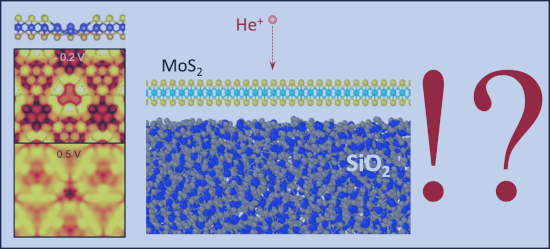
- formation energies at the surfaces result in much higher surface defect concentration compared to the bulk. This gives rise to the following questions: Is this also true for van der Waals materials? Do thermodynamic considerations in transition metal dichalcogenides (TMDs) with relatively low (compared to
- graphene or h-BN) defect formation energies prevent low defect concentrations in monolayer sheets? How can synthesis methods for monolayer materials be modified to control defect species and concentration? We note that, in TMDs, not only chalcogen vacancies, but also transition metal vacancies and
- (CrM) [120], and vanadium (VM) [123] at the transition metal site, as well as annealing or ion bombardment-induced chalcogen vacancies (VacX) [124][125][126][127]. In Figure 7, STM topographies of common defects in TMDs recorded close to the conduction band edge are shown. These reference data can be





Advancing nanolithography: a comprehensive review of materials for local anodic oxidation with AFM
Beilstein J. Nanotechnol. 2026, 17, 275–291, doi:10.3762/bjnano.17.19
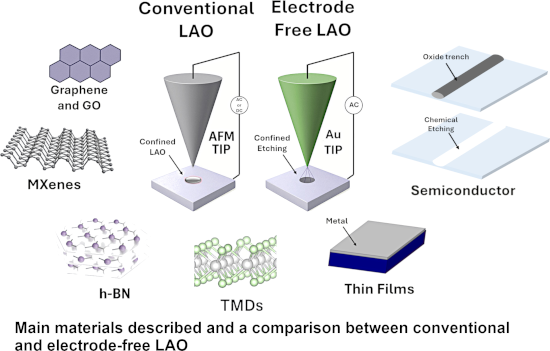
- heterostructures. Semiconductors such as silicon and silicon carbide remain foundational due to their controllable oxidation kinetics, while metals like titanium and aluminum offer opportunities for plasmonic and optical applications. 2D materials, including graphene, graphene oxide, and transition metal
- aims to highlight the capability of LAO to pattern two-dimensional (2D) materials such as graphene [20][21][22], hexagonal boron nitride [23] (hBN), transition metal dichalcogenides (TMDs) [21][24][25][26][27], metals [18][28][29], as well as traditional semiconductors such as silicon (Si) [6][10][30
- excellent, with rGO presenting a bulk conductivity that is comparable to the values reported for chemically reduced GO (>104 S·m−1). 2.5.5 Transition metal dichalcogenides. TMDs, such as MoS2, MoSe2, WSe2, and MoTe2, have emerged as highly promising materials for LAO due to their unique electronic


Competitive helical bands and highly efficient diode effect in F/S/TI/S/F hybrid structures
Beilstein J. Nanotechnol. 2026, 17, 15–23, doi:10.3762/bjnano.17.2
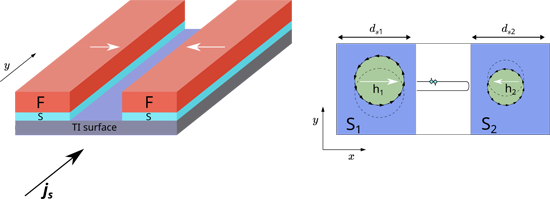
- magnetization directions as in, for example, F/S/F spin valves [77]. Another possibility is more modern and is based on van der Waals structures comprised of transition-metal dichalcogenide materials such as superconducting NbSe2 and magnetic VSe2 on top of Bi2Se3 [78]. We solve the stated problem for the


![[Graphic 16]](/bjnano/content/inline/2190-4286-17-2-i31.svg?max-width=637&scale=1.18182)
![[Graphic 17]](/bjnano/content/inline/2190-4286-17-2-i32.svg?max-width=637&scale=1.18182)


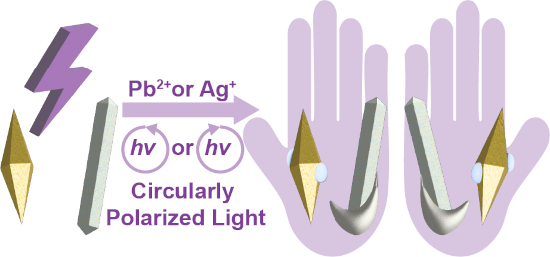
Chiral plasmonic nanostructures fabricated with circularly polarized light
Beilstein J. Nanotechnol. 2025, 16, 2245–2264, doi:10.3762/bjnano.16.154
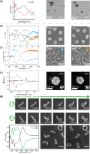
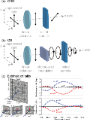
- generating detailed information on biomolecules, such as the hierarchy of protein structures [146][147][148]. The superchiral field of cPNSs has also been utilized to selectively modulate the excitation and spontaneous emission rate of valley excitons in transition metal dichalcogenide (TMDC) monolayers [156







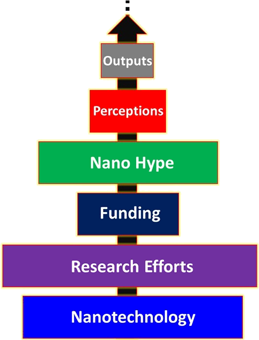
Missing links in nanomaterials research impacting productivity and perceptions
Beilstein J. Nanotechnol. 2025, 16, 2168–2176, doi:10.3762/bjnano.16.149
- , other 2D nanomaterials, such as elemental 2D materials (e.g., borophene, phosphorene, and silicene), transition metal dichalcogenides (e.g., MoS2, WS2, and NbSe2), transition metal oxides (e.g., MnO2, Fe2O3, and Ni(OH)2 nanosheets), MXenes (e.g., Ti3C2, Ti2C, and Ta4C3), 2D halides (e.g., CrI3, NiI2
- , and FeCl2), 2D nitrides (e.g., BCN), 2D transition metal nitrides(e.g., MoN, Ti4N3, and GaN) [10], 2D carbides (e.g., α-C2N and B2C), 2D perovskites (e.g., (BA)2PbI4), and 2D metal-organic frameworks have also shown extraordinary promise. These nanosystems exhibit exceptional physical and chemical
The cement of the tube-dwelling polychaete Sabellaria alveolata: a complex composite adhesive material
Beilstein J. Nanotechnol. 2025, 16, 1998–2014, doi:10.3762/bjnano.16.138
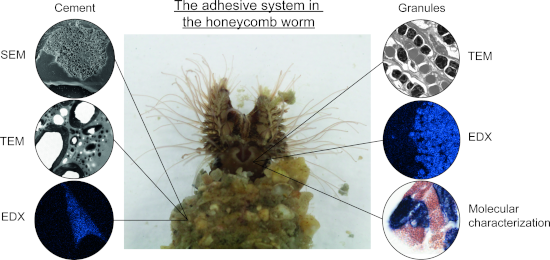
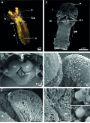
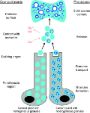
- , contains His-rich blocks that can form cross-links with transition metal ions, particularly copper ions [43]. These metals were not detected in this study, however. Another candidate, Sa-3C, was also identified through the in silico analyses. This candidate has a diblock copolymer structure containing a N





Ambient pressure XPS at MAX IV
Beilstein J. Nanotechnol. 2025, 16, 1677–1694, doi:10.3762/bjnano.16.118

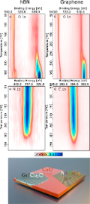
- transition metal dichalcogenides [30] are widely studied for this purpose. Boix, Knudsen and collaborators combined APXPS with gas pulsing with varied composition to repeatedly form and remove undercover reaction products. Specifically, they studied CO and H2 oxidation below oxygen-intercalated graphene




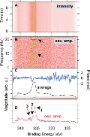


Nanotechnology-based approaches for the removal of microplastics from wastewater: a comprehensive review
Beilstein J. Nanotechnol. 2025, 16, 1607–1632, doi:10.3762/bjnano.16.114
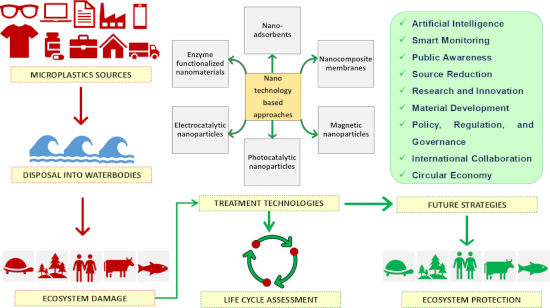
- -dimensional nanomaterials, have received interest across scientific fields owing to their exceptional chemical and thermal stability. Their chemical formula is Mn+1XnTx (n = 1, 2, or 3), where M denotes an early transition metal such as titanium, molybdenum, or vanadium, while X denotes carbon and nitrogen



Transient electronics for sustainability: Emerging technologies and future directions
Beilstein J. Nanotechnol. 2025, 16, 1545–1556, doi:10.3762/bjnano.16.109

- bioresorbable materials, advanced materials such as carbon nanotubes (CNTs) [95] and two-dimensional transition metal dichalcogenides (e.g., MoS2) [96] are being re-examined from a new perspective, with growing interest in their potential biodegradability. The rediscovery and reassessment of such established


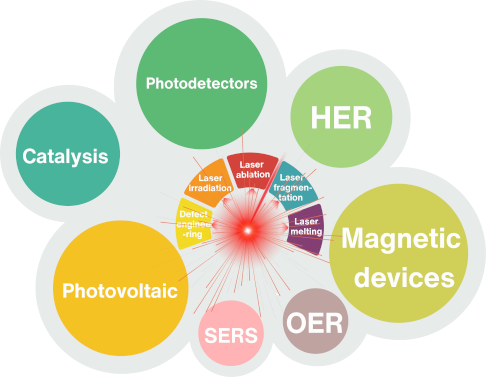
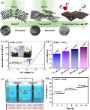
Laser processing in liquids: insights into nanocolloid generation and thin film integration for energy, photonic, and sensing applications
Beilstein J. Nanotechnol. 2025, 16, 1428–1498, doi:10.3762/bjnano.16.104






Electronic and optical properties of chloropicrin adsorbed ZnS nanotubes: first principle analysis
Beilstein J. Nanotechnol. 2025, 16, 1184–1196, doi:10.3762/bjnano.16.87
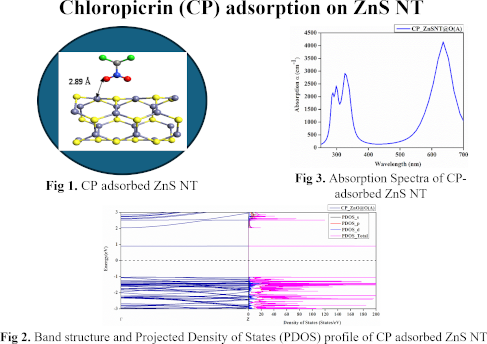
- for applications ranging from ultraviolet light-emitting diodes and injection lasers to flat-panel displays and sensors [15][16][17][18][19]. ZnS, a promising transition metal chalcogenide with a wide bandgap of approximately 3.7 eV, has shown remarkable potential in gas sensing applications


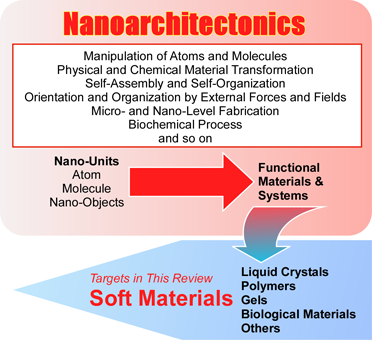
Soft materials nanoarchitectonics: liquid crystals, polymers, gels, biomaterials, and others
Beilstein J. Nanotechnol. 2025, 16, 1025–1067, doi:10.3762/bjnano.16.77
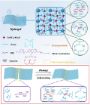
- colleagues have reported the rapid and reversible microactuation of liquid crystals based on the surface catalysis of H₂ and O₂ at room temperature on a late transition metal alloy film (Figure 7) [242]. The reaction of gaseous hydrogen and oxygen, catalyzed by a Pd/Au surface, is employed to rapidly and






Heat-induced transformation of nickel-coated polycrystalline diamond film studied in situ by XPS and NEXAFS
Beilstein J. Nanotechnol. 2025, 16, 887–898, doi:10.3762/bjnano.16.67
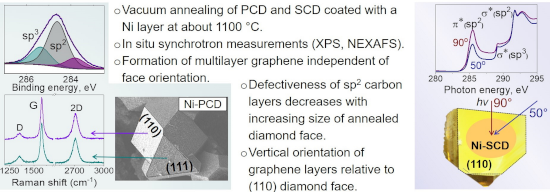
- of diamond surfaces is important for many applications, which require the formation of thin conductive electrodes on dielectric substrates. Transition metal catalysts can facilitate the graphitization process, which depends on the diamond face orientation. In the present work, the role of a nickel
- associated with the presence of large aromatic fragments on the surface of both annealed films [43]. Moreover, this peak overlaps with the characteristic C K-edge features of transition metal carbides. Therefore, it can also be attributed to the presence of Ni‒C states in the annealed Ni-PCD film [44


Insights into the electronic and atomic structures of cerium oxide-based ultrathin films and nanostructures using high-brilliance light sources
Beilstein J. Nanotechnol. 2025, 16, 860–871, doi:10.3762/bjnano.16.65

- ; Introduction Transition metal oxides in the form of thin films or nanostructures find extensive use in sustainable energy technologies [1][2]. They serve as active materials or supports for catalysts for various chemical reactions, essential to energy conversion, sensing, and environmental remediation [3][4
- dynamic processes occurring for example upon photoexcitation. Among transition metal oxides, cerium oxide (or ceria) has unique redox properties, linked to the relative stability of Ce cations in the 4+ and 3+ oxidation states, which make the material highly effective in automotive catalysts and in the


Synthesis and magnetic transitions of rare-earth-free Fe–Mn–Ni–Si-based compositionally complex alloys at bulk and nanoscale
Beilstein J. Nanotechnol. 2025, 16, 823–836, doi:10.3762/bjnano.16.62
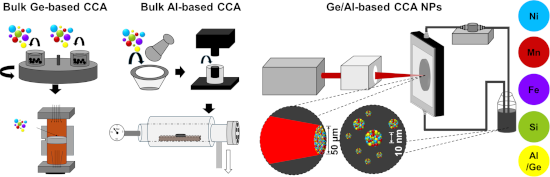
- are linked to significant environmental risks, while geopolitical factors pose supply chain vulnerabilities [21]. By avoiding the use of rare earth elements, CCAs present a sustainable alternative for functional magnetic materials [14]. Specifically, MnTX-based CCA alloys (where T is the transition
- metal and X can be Si, Ge or Al) have gained attention because of their magneto-structural phase transition at low temperatures. As ternary alloys, these materials undergo a magnetic and structural transition from a low-temperature orthorhombic TiNiSi-type structure to a high-temperature hexagonal Ni2In


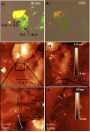
Thickness dependent oxidation in CrCl3: a scanning X-ray photoemission and Kelvin probe microscopies study
Beilstein J. Nanotechnol. 2025, 16, 749–761, doi:10.3762/bjnano.16.58
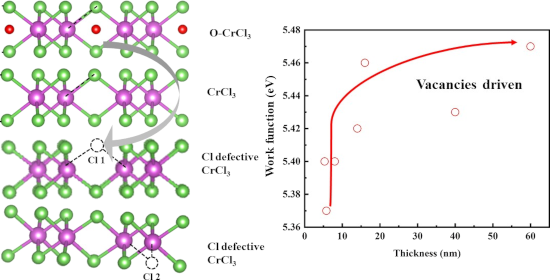
- , Faculty of Applied Physics and Mathematics, 80-233 Gdansk, Poland 10.3762/bjnano.16.58 Abstract The modifications in the electronic properties induced by the thickness and size of an individual flake of transition-metal halides on different substrates (silicon oxide or In-doped tin oxide) are of
- . This turns the system from a surface Mott–Hubbard insulator to a charge-transfer [8] one in spite of Cr being an early transition metal [32]. What can be presumed from the present study is that Cl–O exchange following Cl vacancy formation is limited in very thin layers because of the limited diffusion






Nanostructured materials characterized by scanning photoelectron spectromicroscopy
Beilstein J. Nanotechnol. 2025, 16, 700–710, doi:10.3762/bjnano.16.54
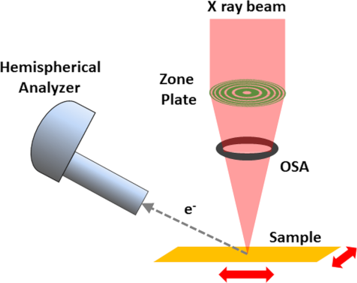
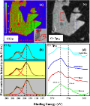
- ; operando; oxides; scanning photoelectron spectromicroscopy; semiconductor nanowires; transition metal dichalcogenides; XPS; Introduction Nanometer or micrometer-sized materials play a key role in modern technologies in the search of new routes for unforeseen performances generating breakthroughs in
- the SPEM microscope hosted at the ESCA microscopy beamline at the Elettra synchrotron research center. In the first example, chemical heterogeneous layered transition metal dichalcogenides were analyzed, showing the importance of spatial resolution in their characterization. In the second example, an
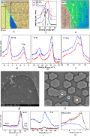
- nanostructured materials characterized by SPEM. Results and Discussion Chemical heterogeneities in layered transition metal dichalcogenides The heterogeneous chemical composition of the CrxTi1−xSe2 system was for the first time observed and described in [12]. The observed heterogeneity led to the splitting of


High-temperature epitaxial growth of tantalum nitride thin films on MgO: structural evolution and potential for SQUID applications
Beilstein J. Nanotechnol. 2025, 16, 690–699, doi:10.3762/bjnano.16.53
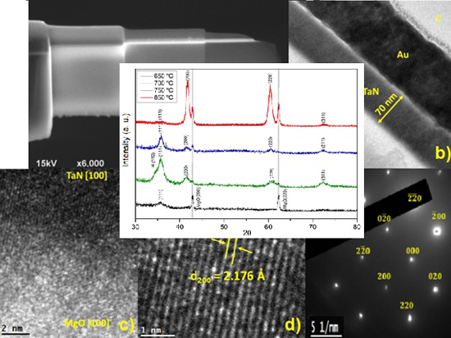
- electronic devices operating in the gigahertz range. Transition-metal compounds, such as nitrides and carbides (e.g., NbN, TiN, TiC, and TaN), have demonstrated Tc values ranging from 2 to 10.4 K [3][4][5][6]. These compounds constitute a significant class of materials because of their exceptional physical


Zeolite materials with Ni and Co: synthesis and catalytic potential in the selective hydrogenation of citral
Beilstein J. Nanotechnol. 2025, 16, 520–529, doi:10.3762/bjnano.16.40
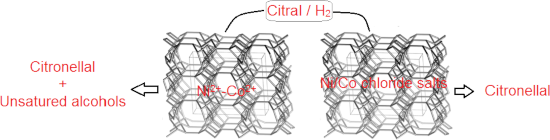
- offering comparable catalytic properties. Despite extensive research on zeolite-supported transition metal catalysts, their application to citral hydrogenation remains very little explored [11]. Most recent studies focus on the selective hydrogenation of related biomass-derived compounds, such as furfural





