


Search results
Search for "vibrations" in Full Text gives 330 result(s) in Beilstein Journal of Nanotechnology. Showing first 200.
Impacts of annealing on structural and photophysical properties of zinc phthalocyanine adsorbed on graphene
Beilstein J. Nanotechnol. 2026, 17, 576–585, doi:10.3762/bjnano.17.39
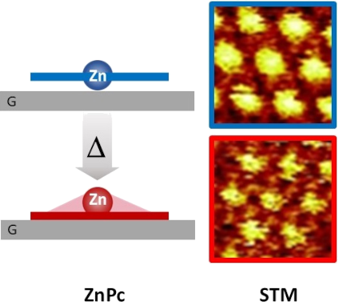
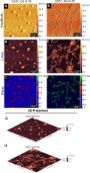
- conjugated ring and in-plane bending of C–H. Such intensity changes in the bands corresponding to out-of-plane vibrations have been reported to be a consequence of an axial displacement of the zinc ion and subsequent out-of-plane distortion of the ring [43]. It results from a lowering of the symmetry of ZnPc


Electrochemical determination of ciprofloxacin using a MIL-101/reduced graphene oxide-modified electrode
Beilstein J. Nanotechnol. 2026, 17, 541–554, doi:10.3762/bjnano.17.35
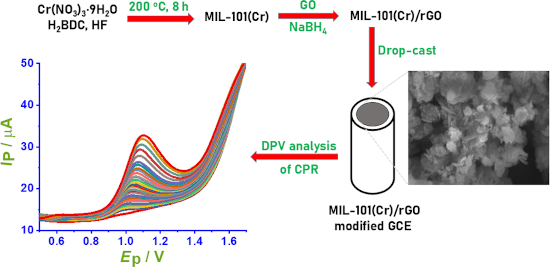
- typical for reduced graphene oxide. In contrast, pristine MIL-101 displays multiple Raman bands in the low- and mid-frequency regions (280, 473, 629, 809, 866, 925, 1037, 1145, 1283, 1454, and 1611 cm−1), which can be assigned to lattice vibrations of the metal–oxygen clusters and organic linker modes


Upcycling agroindustrial waste into graphene oxide supports for gold nanoparticles: toward sustainable nanomaterials
Beilstein J. Nanotechnol. 2026, 17, 489–504, doi:10.3762/bjnano.17.32
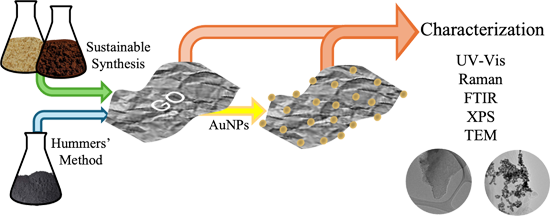
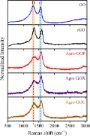
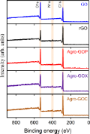
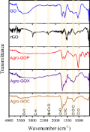
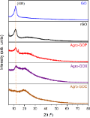
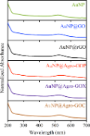
- carboxyl vibrations, consistent with the oxygen functionalities expected for conventionally synthesized GO, in line with XPS analysis. In contrast, rGO shows attenuated C–O and C=O bands and a relatively more pronounced C=C contribution, reflecting partial deoxygenation and partial restoration of the sp2



Defects and defect-mediated engineering of two-dimensional materials: challenges and open questions
Beilstein J. Nanotechnol. 2026, 17, 454–488, doi:10.3762/bjnano.17.31





Eco-efficient materials for agricultural crops based on a mineral rich in MOR- and HEU-type zeolites
Beilstein J. Nanotechnol. 2026, 17, 381–395, doi:10.3762/bjnano.17.26
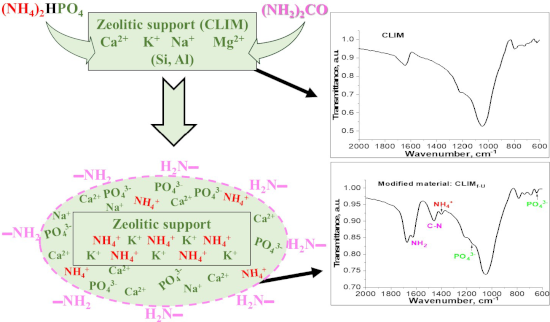
- absorption bands near to 1400 cm−1 corresponding to the bending vibrations of N–H bonds in NH4+-modified natural zeolites. In general, when ammonium interacts with the oxygen atoms of the zeolitic structure, various configurations are formed, each of which exhibits different interaction strength depending on
- native charge-compensating cations (Na+, K+, Ca2+, Mg2+) and the stretching of OH groups, while those observed at 1645 cm−1 are associated with deformation vibrations related to water [32][33]. The changes obtained as a result of CLIM modifications with DAP (Figure 1a,b) are best visualized in the
- vibrations associated with the asymmetric bending of the urea amino group. In the case of HEU from the Tasajeras deposit, a slightly larger displacement (12 cm−1) was observed compared to the 7 cm−1 shift observed for this natural zeolite (a mixture of MOR and HEU) from the San Andrés deposit under study




Development and in vitro evaluation of liposomes and immunoliposomes containing 5-fluorouracil and R-phycoerythrin as a potential phototheranostic system for colorectal cancer
Beilstein J. Nanotechnol. 2026, 17, 97–121, doi:10.3762/bjnano.17.7

- characteristic bands of both R-PE and 5-FU, confirming their incorporation into liposomes and immunoliposomes (Figure 5). For R-PE, typical amide vibrations were observed: amide I (C=O) around 1650 cm−1 and amide II (N–H) near 1540 cm−1, along with a broad N–H/O–H stretching between 3200–3400 cm−1, attributed to



Reduced graphene oxide paper electrode for lithium-ion cells – towards optimized thermal reduction
Beilstein J. Nanotechnol. 2026, 17, 24–37, doi:10.3762/bjnano.17.3
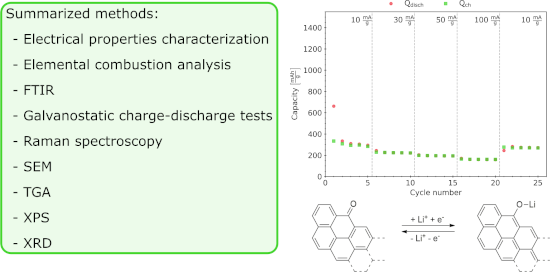
- –C group”) [46]; however, they can also origin from –OH groups as well as ether (C–O) and epoxide (C–O–C) groups [27][46]. The band near ≈1570 cm−1 can be interpreted as a result of stretching vibrations of the C=C bonds in the aromatic lattice [27][46]. Another origin of this band might be the
- bending vibrations in water molecules [46]. The distinct peaks observed between 1700 and 1800 cm−1 correspond to the C=O stretching vibrations from carbonyl groups [27]. The peak near 2848 cm−1 can refer to the C–H stretching in aldehyde groups [46] and the 3013 cm−1 peak to the aromatics C(sp2)–H [46
- ]. The wavenumber shift in relation to literature data can result from the applied reduction parameters (cf. Xiong et al. [47]). The band observed in the wavenumber range of 3300–3600 cm−1 can be attributed to the O–H stretching vibrations from hydroxy groups or adsorbed water. The temperature values for



Improving magnetic properties of Mn- and Zn-doped core–shell iron oxide nanoparticles by tuning their size
Beilstein J. Nanotechnol. 2025, 16, 2285–2295, doi:10.3762/bjnano.16.157
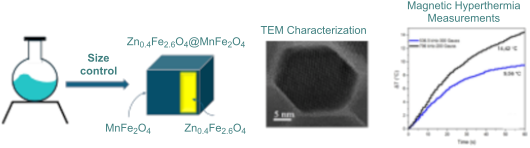
- their structural properties and confirms the successful formation of both core and core–shell structures (Figure 4). The Fe–O stretching vibrations in spinel ferrites typically appear within the range of 500–650 cm−1, with tetrahedral Fe–O bonds generally observed around 550–600 cm−1. However, in the
- observed peak positions and their shift, highlighting the impact of lattice distortions, bond strengthening, and interfacial interactions on the vibrational properties of the material [18]. The presence of peaks at ≈2850 cm−1 and ≈2920 cm−1 is associated with the C–H stretching vibrations from surface
- -capping agents, such as oleic acid, which is commonly used during synthesis to control particle size and prevent aggregation. The broad peak observed at ≈3400 cm−1 is linked to the O–H stretching vibrations of adsorbed water or hydroxy groups on the particle surface, which is a common feature for



Ultrathin water layers on mannosylated gold nanoparticles
Beilstein J. Nanotechnol. 2025, 16, 2183–2198, doi:10.3762/bjnano.16.151
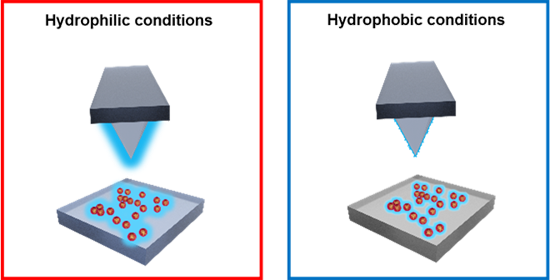
- vibrational bands are superimposed on a very broad signal from bulk gold, quasi-constant after normalization (like FTIR). In contrast to FTIR, the bands stem only from vibrations at interfaces, that is, from the NP surface in contact with air. Additionally, highly symmetric vibrations are forbidden (with very
- CH2). Moreover, the peak is unusually broad, possibly due to the complex shape of the disordered PEG chains. However, this type of disorder refers to the conformation of the PEG chains only; altogether, the C–H stretching vibrations must have a preferred orientation with respect to the gold surface


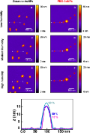

Rapid synthesis of highly monodisperse AgSbS2 nanocrystals: unveiling multifaceted activities in cancer therapy, antibacterial strategies, and antioxidant defense
Beilstein J. Nanotechnol. 2025, 16, 2105–2115, doi:10.3762/bjnano.16.145
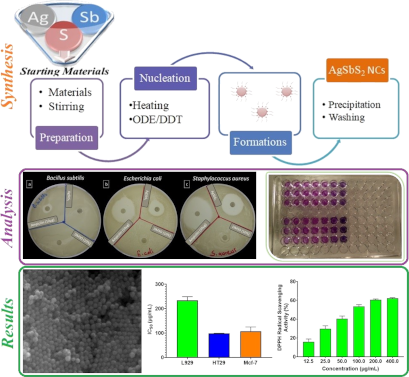
- addition, a weak peak centered around 1315 cm−1 corresponds to the C–H bending mode [36]. The characteristic peak around 1640 cm−1 was assigned to the O–H bending vibration, while the bands appearing in the 2800–3000 cm−1 range were attributed to the symmetric and asymmetric stretching vibrations of CH–H


Multifrequency AFM integrating PeakForce tapping and higher eigenmodes for heterogeneous surface characterization
Beilstein J. Nanotechnol. 2025, 16, 2077–2085, doi:10.3762/bjnano.16.142
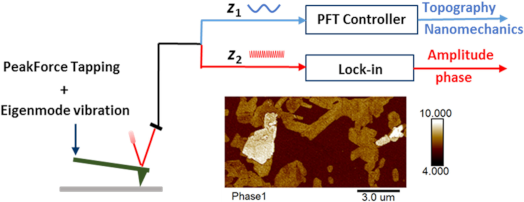
- ) technique that synergistically integrates PeakForce tapping mode with higher eigenmode vibrations to achieve simultaneous high-resolution topographical imaging and to access additional contrast channels for distinguishing material regions or compositions. Unlike conventional multimodal AFM, our method
- employs non-resonant and higher eigenmode frequencies to achieve robust topographical and compositional mapping. Our experimental results indicate that the superposition of high-eigenmode vibrations, when applied at low amplitudes, does not significantly interfere with the topographical and nanomechanical
- variations exceeding two orders of magnitude, this necessitates iterative probe selection, complicating high-throughput characterization [21]. In this study, we introduce a hybrid multifrequency AFM technique that synergistically integrates non-resonant PeakForce modulation with eigenmode vibrations to


Stereodiscrimination of guests in chiral organosilica aerogels studied by ESR spectroscopy
Beilstein J. Nanotechnol. 2025, 16, 2034–2054, doi:10.3762/bjnano.16.140
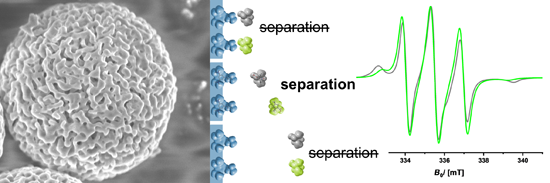
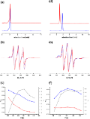
- m2·g−1. The meso-macroporous structure was also found by mercury intrusion porosimetry (Figure 2c). The FTIR spectrum is consistent with the proposed composition (Figure 2d). The vibrations at ν = 3000–3600 cm−1 are characteristic for NH and OH groups. At 2982 cm−1, one sees the CH groups. Amide




Beyond the shell: exploring polymer–lipid interfaces in core–shell nanofibers to carry hyaluronic acid and β-caryophyllene
Beilstein J. Nanotechnol. 2025, 16, 2015–2033, doi:10.3762/bjnano.16.139
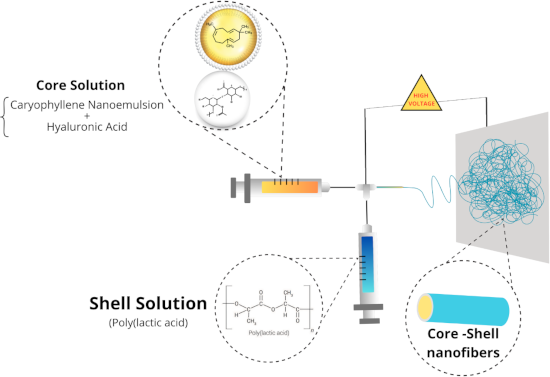
- -PLA, NF-HA/PLA, and NF-HA+NE2/PLA) exhibited PLA-specific bands at 2995, 2946, 1759, and 1089 cm−1, corresponding to the asymmetric stretching vibration of –CH3, symmetric stretching of –CH3, and stretching vibrations of C=O and C–O, respectively [62]. The HA powder spectrum displayed bands at 3300




Mechanical property measurements enabled by short-term Fourier-transform of atomic force microscopy thermal deflection analysis
Beilstein J. Nanotechnol. 2025, 16, 1952–1962, doi:10.3762/bjnano.16.136
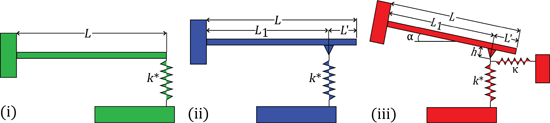
- is generated in a CR-AFM experiment. The cantilever resonant frequency was converted into contact stiffness using analytical models of cantilever vibrations, which could then be compared with contact mechanics models relating the applied normal force to contact stiffness. It was shown that those




Low-temperature AFM with a microwave cavity optomechanical transducer
Beilstein J. Nanotechnol. 2025, 16, 1873–1882, doi:10.3762/bjnano.16.130
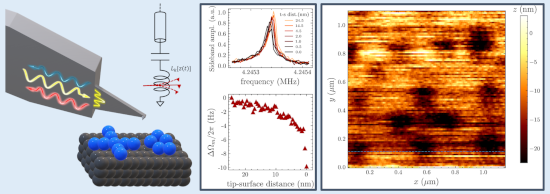
- causing significant wideband mechanical vibrations, which can propagate through the cold stages down to the measurement apparatus. However, force sensors with integrated position detectors, as the one presented in this work, do not require free-space optical alignment with a long optical path length. They
- can therefore be made light and compact, significantly reducing their susceptibility to external vibrations, the complexity of vibration isolation, and their thermal mass. For this prototype, we implement a rather simple vibration isolation which, as we will show, is sufficient to demonstrate imaging
- –surface distance, oscillation amplitude of the driven cantilever, sharpness of the tip, and pickup of environmental vibrations and noise, such as noise from the actuator driving the cantilever oscillation as well as feedback noise and sample topography. We perform initial positioning of the microscope by


Further insights into the thermodynamics of linear carbon chains for temperatures ranging from 13 to 300 K
Beilstein J. Nanotechnol. 2025, 16, 1818–1825, doi:10.3762/bjnano.16.125
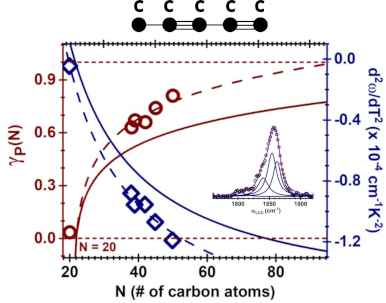
- that CNT provide conditions that are sufficient to stabilize the LCC and inhibit transversal vibrations, while keeping CNT and LCC properties disentangled. In fact, this remains true even when the LCC@CNT systems are submitted to high pressures [29][55][56][57]. The literature has also shown that many


![[Graphic 23]](/bjnano/content/inline/2190-4286-16-125-i25.svg?max-width=637&scale=1.18182)
Electrical, photocatalytic, and sensory properties of graphene oxide and polyimide implanted with low- and medium-energy silver ions
Beilstein J. Nanotechnol. 2025, 16, 1794–1811, doi:10.3762/bjnano.16.123
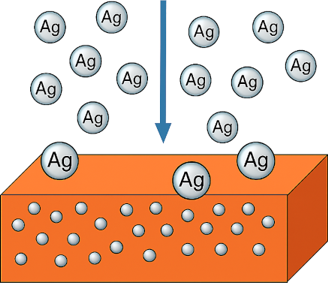
- slight decrease in C–N and C–O–C vibrations. Different changes can be observed in the case of implantation of 1.5 MeV Ag ions. At the lowest fluence of 3.75 × 1012 cm−2, an increase in intensity was observed for the C=O (≈1800 cm−1) and C=C (≈1650 cm−1) vibrations. This increase indicates a strengthening
- of these chemical bonds, probably due to the restructuring and formation of new carbonyl and aromatic bonds as a result of ion implantation. At the same time, slight decreases in intensity were observed for the vibrations of CH2 (≈1400 cm−1), C–N (≈1200 cm−1), and C–O–C (≈1100 cm−1), indicating the
- due to the higher energy transferred by the ions, leading to fragmentation of the molecules and formation of defects. The C–N (≈1200 cm−1) vibrations show a further decrease in intensity, indicating cleavage of aliphatic chains and disintegration of amide groups. The C–O–C (≈1100 cm−1) and C=O (≈800


Dendrimer-modified carbon nanotubes for the removal and recovery of heavy metal ions from water
Beilstein J. Nanotechnol. 2025, 16, 1522–1532, doi:10.3762/bjnano.16.107

- reaction with EDA, the FTIR spectrum of CNTs-G0 reveals new peaks around 3340 cm−1, which correspond to N–H stretching vibrations from the introduced amine groups. Additionally, strong absorption bands at approximately 1700 cm−1 were observed in all other materials, representing the C=O stretching of amide
- bonds. Moreover, the presence of a band at 3690 cm−1, associated with the stretching of amine groups overlapped with hydroxy stretching vibrations, further confirms the successful formation of amide linkages by the reaction between amine groups of EDA and carboxyl groups of MA-functionalized CNTs [45


Laser processing in liquids: insights into nanocolloid generation and thin film integration for energy, photonic, and sensing applications
Beilstein J. Nanotechnol. 2025, 16, 1428–1498, doi:10.3762/bjnano.16.104






Photochemical synthesis of silver nanoprisms via green LED irradiation and evaluation of SERS activity
Beilstein J. Nanotechnol. 2025, 16, 1417–1427, doi:10.3762/bjnano.16.103
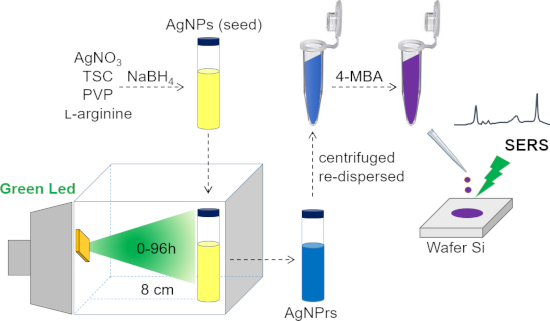
- (Figure 7a) displays two dominant peaks at 1088 and 1596 cm−1, corresponding to the stretching vibrations of the aromatic ring. Weaker peaks are observed at 1182 and 1292 cm−1, attributed to C–H stretching, and at 805 cm−1, corresponding to the bending vibration of the carboxylate group (COO−) [20][21
- 10−4 M (Figure 8c) shows no detectable peaks, whereas the SERS spectrum of 4-MBA at 10−5 M, enhanced by both AgNPs (Figure 8b) and AgNPrs (Figure 8a), exhibit strong signals at 1080 and 1589 cm−1, corresponding to aromatic ring vibrations. Additional weaker peaks at 1148 and 1184 cm−1 are assigned to


Synthesis and antibacterial properties of nanosilver-modified cellulose triacetate membranes for seawater desalination
Beilstein J. Nanotechnol. 2025, 16, 1380–1391, doi:10.3762/bjnano.16.100
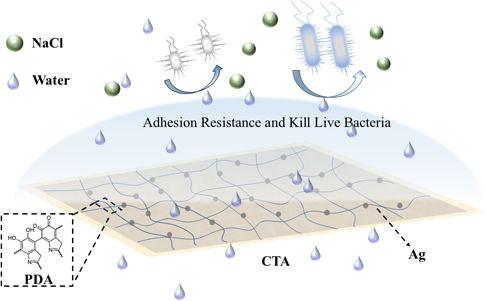
- observed at 3490, 2940, and 1038 cm−1 correspond to the stretching vibrations of –OH, C–H, and C–O–C in the CTA membrane. The bands at 1736, 1367, and 1216 cm−1 are attributed to C=O, –CH3, and C–O in the acetyl groups, respectively. Coating of the CTA surface with PDA does not yield any new characteristic
- and the container walls was stripped off and tested via FTIR. The spectrum exhibited characteristic peaks at approximately 1506 cm−1 and 1600 cm−1, corresponding to the stretching vibrations of the indole ring structure (Figure 1) [29]. This result indicates that dopamine was successfully polymerized


Deep-learning recognition and tracking of individual nanotubes in low-contrast microscopy videos
Beilstein J. Nanotechnol. 2025, 16, 1316–1324, doi:10.3762/bjnano.16.96
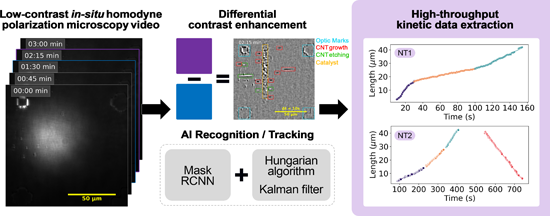
- successive frames. However, some video frames are unrecognizable due to imaging artifacts, illumination instability, or uncompensated vibrations. Following the initial tracking stage, all segments were grouped into clusters of varying sizes, corresponding to objects recognized across consecutive frames. The


Functional bio-packaging enhanced with nanocellulose from rice straw and cinnamon essential oil Pickering emulsion for fruit preservation
Beilstein J. Nanotechnol. 2025, 16, 1234–1245, doi:10.3762/bjnano.16.91
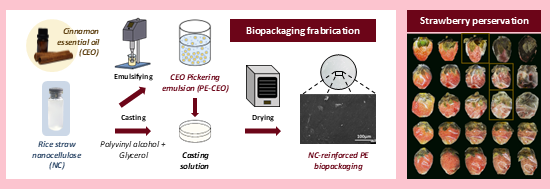
- characteristic peaks confirm the presence of functional groups associated with PE-CEO and polymer interactions. The broad absorption band around 3300 cm−1 corresponds to O–H stretching vibrations, indicating hydrogen bonding between the biopolymer and PE-CEO components [24]. The intensity of the peaks at 1730 cm



Chitosan nanocomposite containing rotenoids: an alternative bioinsecticidal approach for the management of Aedes aegypti
Beilstein J. Nanotechnol. 2025, 16, 1197–1208, doi:10.3762/bjnano.16.88
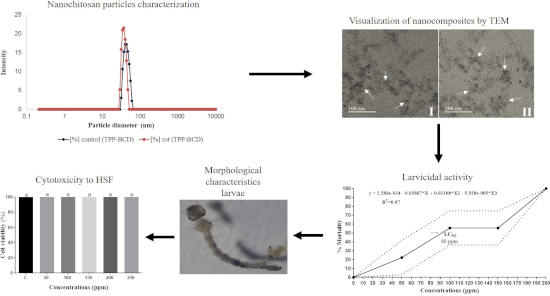
- –3000 cm−1 region, corresponding to the stretching vibrations of hydroxyl and amide groups. In the nanoparticle spectra, characteristic bands are observed at 1640–1650 cm−1 and around 1550 cm−1, associated with amide I (C=O stretching) and amide II (N–H bending), respectively. Peaks in the 1417–1403 cm
- −1 range are attributed to the bending vibrations of C–H in methyl and methylene groups [22][23][24]. The spectrum of pure rotenoids displays a complex profile with multiple peaks due to the presence of diverse functional groups [14]. Notably, 6-aromatic C=C stretching appears in the 1600–1300 cm−1



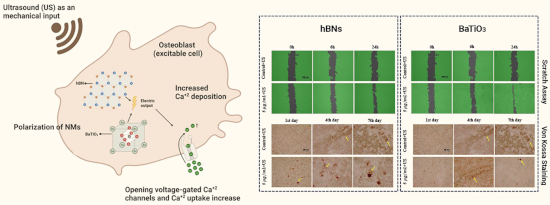
Piezoelectricity of hexagonal boron nitrides improves bone tissue generation as tested on osteoblasts
Beilstein J. Nanotechnol. 2025, 16, 1068–1081, doi:10.3762/bjnano.16.78
- -plane bending vibration, respectively [43]. The broad band at 3200 cm−1 could be attributed to stretching vibrations of hydroxyl groups (O–H) of hBNs or humidity. Supporting Information File 1, Figure S3 (d) displays the Raman spectrum of hBNs, which reveals a dominant peak at 1367 cm−1, in line with
- attributed to OH-stretching and OH-deformation vibrations due to moisture content, respectively [51]. The Raman spectrum, displayed in Supporting Information File 1, Figure S4 (b), revealed the presence of Raman active vibration modes of BaTiO3 in its tetragonal phase, indicating its polycrystalline nature





