


Search results
Search for "Au" in Full Text gives 746 result(s) in Beilstein Journal of Nanotechnology. Showing first 200.
Electron transport through nanoscale multilayer graphene and hexagonal boron nitride junctions
Beilstein J. Nanotechnol. 2025, 16, 2132–2143, doi:10.3762/bjnano.16.147
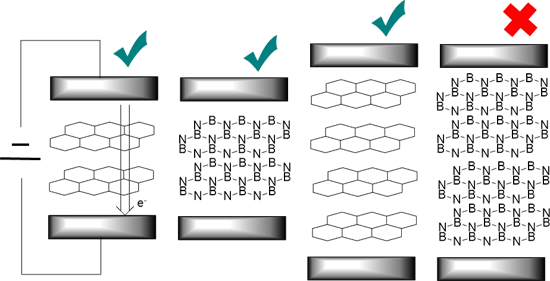
- the c-direction was selected to be 150 k-points per angstrom. Benchmark tests were performed using the NEGF method with Au electrodes instead of Pt, and the Heyd–Scuseria–Ernzerhof 2006 screened hybrid functional (HSE06) instead of PBE. The results obtained from those benchmark simulations showed


Laser ablation in liquids for shape-tailored synthesis of nanomaterials: status and challenges
Beilstein J. Nanotechnol. 2025, 16, 1963–1997, doi:10.3762/bjnano.16.137
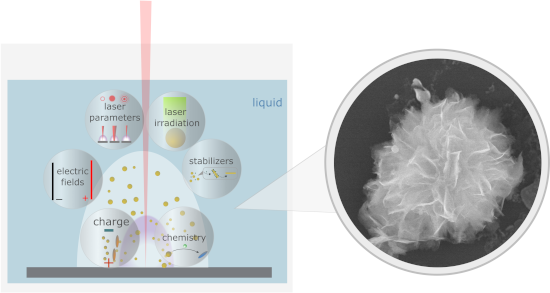
- enlarged aggregates were observed. The changes in the structure were observed even at slightly elevated temperatures (35 °C), which indicates high sensitivity of the growth mechanisms to temperature increase. A similar effect has been shown by Haram et al. in [47], who observed formation of Ag and Au
- to be quite versatile and applied to the nanosecond laser synthesis of nanowires of various metals including noble (Au [48][49], Cu [49]), alkali, and alkali-earth metals (Rb [49], Cs [49], Ba [49]) as well as refractory metals (Nb [50], W [50], Re [50] and Mo [50]). Upon interaction with a high
- wavelength. Therefore, the variation of the incident laser beam wavelength can be used to direct the process of modification either to the pathway of size modification or re-shaping route. In [76] the formation of Au nanowires was only observed at laser wavelengths of 355 and 532 nm, while a 1064 nm laser





Low-temperature AFM with a microwave cavity optomechanical transducer
Beilstein J. Nanotechnol. 2025, 16, 1873–1882, doi:10.3762/bjnano.16.130
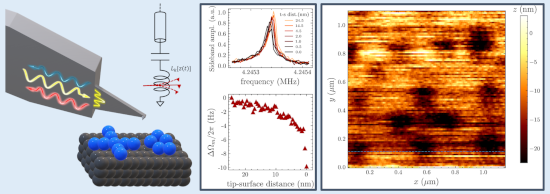
- . Figure 5d–f shows the effect of the measurement bandwidth on a single scan line. Finally, we tested the lateral resolution of our microscope by imaging a less trivial structure. We fabricated a second test sample by etching a pattern from the top Ti layer of a Ti(10 nm)/Au(5 nm)/Ti(5 nm) film deposited


Self-assembly and adhesive properties of Pollicipes pollicipes barnacle cement protein cp19k: influence of pH and ionic strength
Beilstein J. Nanotechnol. 2025, 16, 1863–1872, doi:10.3762/bjnano.16.129
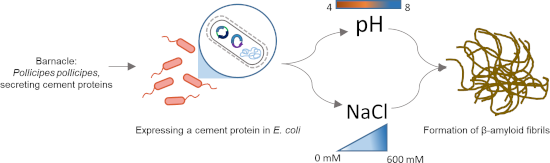
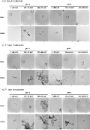
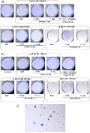
- 20000× magnification are shown. The scale bar represents 600 nm. ThT assay analysis of rPolcp19k-his protein samples incubated for 0 and 21 days in the indicated buffers. Assay results are presented in arbitrary units (AU) of fluorescence and as mean ± standard deviation; n = 3. Analysis of adhesion of


Laser processing in liquids: insights into nanocolloid generation and thin film integration for energy, photonic, and sensing applications
Beilstein J. Nanotechnol. 2025, 16, 1428–1498, doi:10.3762/bjnano.16.104
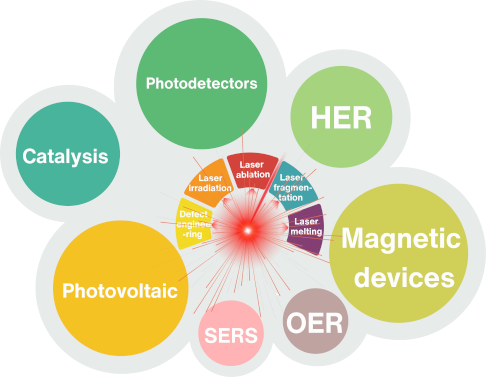
- medium characteristics (e.g., chemical composition and viscosity) influence the size, morphology, and surface properties of the Au NPs, which, in turn, determine their performance. The effect of solvents on morphology of generated NPs in laser ablation is shown in Figure 2. While PLAL offers a rich
- photoelectron ejection induced by laser shots, which leaves positive charges on the surface [35][36]. These surface charges cause electrostatic repulsion between different parts of the material, leading to fragmentation and the formation of smaller particles. The study on Au NP fragmentation [37] highlights the
- significance of photon-assisted transitions in fragmentation processes, particularly when interacting with the second and third harmonics of a picosecond Nd:YAG laser. Although the temperature of the Au NPs exceeded the evaporation threshold, the results suggest that heating alone was not the primary cause of






Parylene-coated platinum nanowire electrodes for biomolecular sensing applications
Beilstein J. Nanotechnol. 2025, 16, 1392–1400, doi:10.3762/bjnano.16.101
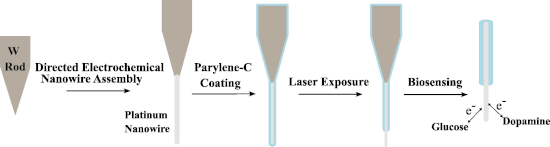
- inappropriate for some applications [13][14][15]. Among various manufacturing techniques, directed electrochemical nanowire assembly (DENA) stands out as a one-step method that enables rapid and tunable fabrication of crystalline metal nanowires [16][17]. In the DENA method, AC power and a metal salt (e.g., Au


Automated collection and categorisation of STM images and STS spectra with and without machine learning
Beilstein J. Nanotechnol. 2025, 16, 1367–1379, doi:10.3762/bjnano.16.99
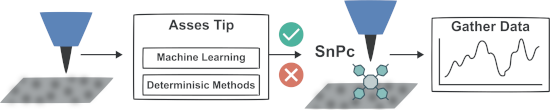
- deterministic methods (DM) using a prototypical tin phthalocyanine on Au(111) system at 4.7 K. We find that both ML and DM are able to classify images and spectra with high accuracy, with only a small amount of prior surface knowledge. We highlight the practical advantage of DM not requiring large training
- characteristic feature corresponding to the surface state, which appears as a step function around a specific bias value, which for the Au(111) surface appears at around −0.48 V [13][14]. One notable attempt to automate this classification using machine learning (ML) was carried out by Wang et al. [15]. This
- work aimed to classify the state of a STM tip based on STS measurements of the Au(111) surface. Using a total of 1789 archived spectra, a ML model was trained which aimed to classify new spectra into one of five categories, based on the similarity of each the spectrum to an idealised surface state




Enhancing the therapeutical potential of metalloantibiotics using nano-based delivery systems
Beilstein J. Nanotechnol. 2025, 16, 1350–1366, doi:10.3762/bjnano.16.98
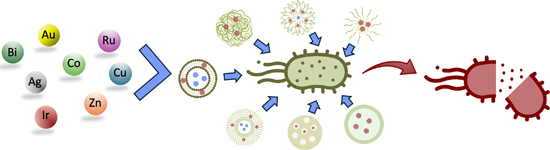
- S. aureus, E. faecium, E. faecalis, and M. tuberculosis. In order to achieve a sustained release of auranofin to the infection site and improve the treatment efficacy, Díez-Martínez et al. investigated the encapsulation of this Au(I) complex in poly(lactic-co-glycolic acid) (PLGA) nanoparticles and
- the antibacterial efficacy of the resulting formulation against the Gram-positive pathogens S. pneumoniae and S. pyogenes [111]. Auranofin-PLGA NPs exhibited a strong bactericidal effect, effectively sterilizing multiresistant pneumococcal strains at a Au(I) concentration of just 0.25 μM. This potent
- , bioavailability, and therapeutic effectiveness [112]. The resulting Au-loaded BCMs exhibited a high loading efficiency and uniform size and displayed improved activity against S. aureus and C. glabrata compared to the free gold metallodrug. Also, our group described a novel lipoformulation encapsulating the gold


Better together: biomimetic nanomedicines for high performance tumor therapy
Beilstein J. Nanotechnol. 2025, 16, 1246–1276, doi:10.3762/bjnano.16.92
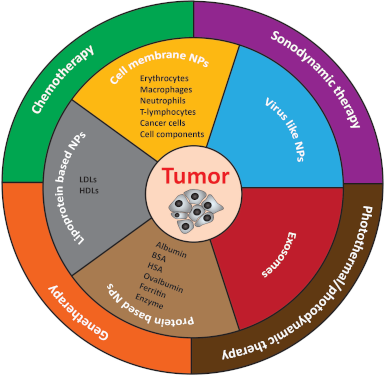
- surface acts as scaffold for synthesis of nanoparticles [76]. The thiol groups are protonated at neutral pH and can entrap Au(III) ions. When the pH is changed to basic (≈12), Au(III) is reduced to Au and gold nanoparticles are formed [77]. Synthesis of albumin-templated nanomaterials depends upon many







Crystalline and amorphous structure selectivity of ignoble high-entropy alloy nanoparticles during laser ablation in organic liquids is set by pulse duration
Beilstein J. Nanotechnol. 2025, 16, 1141–1159, doi:10.3762/bjnano.16.84
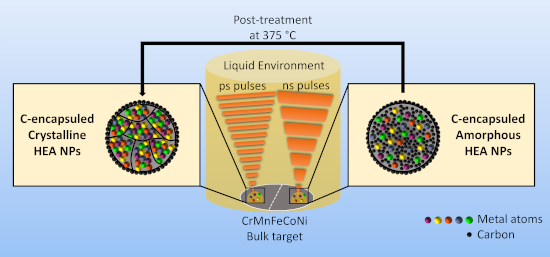
- for ps-LAL HEA NPs and PDI = 0.12 for ns-LAL HEA NPs) is evident. Due to fundamental differences in the particle formation mechanisms during ps- and ns-LAL as proposed by Shih et al., ps-LAL has been reported to yield bimodal size distributions (at least of Ag and Au at high fluences) [82], which may




Towards a quantitative theory for transmission X-ray microscopy
Beilstein J. Nanotechnol. 2025, 16, 1113–1128, doi:10.3762/bjnano.16.82
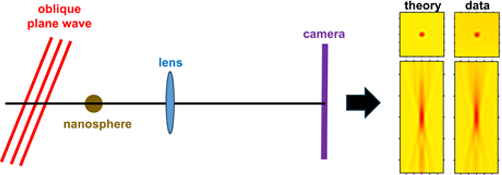
- crystalline order extended over the full particle. Fourier transform of a sub-region of this image yielded a lattice spacing for Au(111) of 0.236 nm, close to the nominal value of 0.235 nm (Supporting Information File 1, Section S13, Figure S12b). Finally, an energy-dispersive X-ray spectroscopy analysis



Soft materials nanoarchitectonics: liquid crystals, polymers, gels, biomaterials, and others
Beilstein J. Nanotechnol. 2025, 16, 1025–1067, doi:10.3762/bjnano.16.77
- colleagues have reported the rapid and reversible microactuation of liquid crystals based on the surface catalysis of H₂ and O₂ at room temperature on a late transition metal alloy film (Figure 7) [242]. The reaction of gaseous hydrogen and oxygen, catalyzed by a Pd/Au surface, is employed to rapidly and
- alignment, from vertical to planar. Subsequently, exposure to oxygen oxidizes the adsorbed hydrogen, reforming the adsorbed oxygen on the Pd/Au surface and restoring the liquid crystal to its initial alignment. The motion of the liquid crystal can be controlled by exposure to gas mixtures of H2 and O2 with






Time-resolved probing of laser-induced nanostructuring processes in liquids
Beilstein J. Nanotechnol. 2025, 16, 968–1002, doi:10.3762/bjnano.16.74
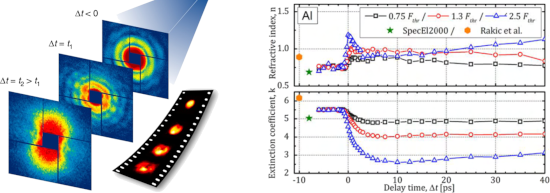
- Bragg peaks (in wide-angle X-ray scattering (WAXS) geometry) to specifically reconstruct the distribution of crystallinity and lattice strain [74]. In pump–probe configuration, photoinduced strain field oscillations in single Au nanocrystals [75] have been resolved. These studies revealed large-scale NP
- caused by fluctuations in individual single-particle images. Single Au nanospheres were irradiated with femtosecond infrared laser pulses, rapidly increasing the electron temperature to several tens of thousands of kelvins within a few hundred femtoseconds. Photoexcited hot electrons in metallic Au
- transferred their excess kinetic energy by colliding with other conduction electrons and Au ions, which subsequently increased the lattice temperature, reaching equilibrium within a few tens of picoseconds. Interestingly, ultrafast single-particle imaging revealed unexpected phenomena that deviate from the


Characterization of ion track-etched conical nanopores in thermal and PECVD SiO2 using small angle X-ray scattering
Beilstein J. Nanotechnol. 2025, 16, 899–909, doi:10.3762/bjnano.16.68
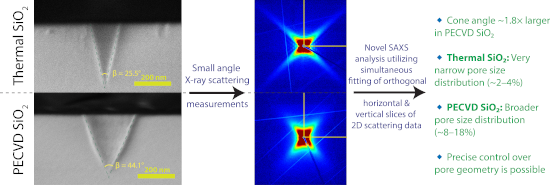
- nanopores in thermal and plasma-enhanced chemical vapor-deposited (PECVD) SiO2 using synchrotron-based small-angle X-ray scattering (SAXS). The nanopores were fabricated by irradiating the samples with 89 MeV, 185 MeV, and 1.6 GeV Au ions, followed by hydrofluoric acid etching. We present a new approach for
- and a wider size distribution. Results and Discussions Figure 1 shows plan-view scanning electron microscopy (SEM) images of nanopores fabricated in thermal (Figure 1a) and PECVD (Figure 1b) SiO2 by etching ion tracks produced with 1.6 GeV Au ion irradiation (see Experimental and Theory section for
- typically differ in morphology, density, and stoichiometry compared to thermally grown SiO2. The electronic energy loss (Se) in the thermal and PECVD SiO2 layers was calculated using the SRIM2008 code [49]. The average Se values for thermal SiO2 for 1.6 GeV, 185 MeV, and 89 MeV Au irradiation are 21.1, 16.6


Heat-induced transformation of nickel-coated polycrystalline diamond film studied in situ by XPS and NEXAFS
Beilstein J. Nanotechnol. 2025, 16, 887–898, doi:10.3762/bjnano.16.67
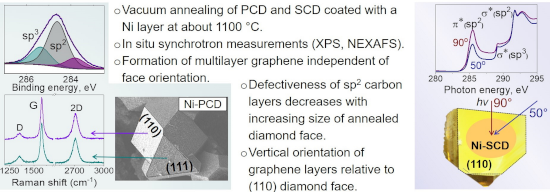
- XPS spectra was performed by referring to the Au 4f7/2 line at 84.0 eV measured from a clean Au foil. XPS data processing was carried out using CASA XPS software version 2.3.15. Fitting of the core-level spectra was performed using the sum of Gauss–Lorenz and Doniach–Sunjic functions after the


Insights into the electronic and atomic structures of cerium oxide-based ultrathin films and nanostructures using high-brilliance light sources
Beilstein J. Nanotechnol. 2025, 16, 860–871, doi:10.3762/bjnano.16.65

- associated to the formation of a Ce–Pt alloyed interfacial phase exhibiting a (2 × 2) periodicity [47]. The influence of the substrate on the stability and reactivity of supported ceria nanoislands has also been investigated by Ce M5 XANES in the case of Au(111) [48]. A loss of redox activity accompanied by


Synchrotron X-ray photoelectron spectroscopy study of sodium adsorption on vertically arranged MoS2 layers coated with pyrolytic carbon
Beilstein J. Nanotechnol. 2025, 16, 847–859, doi:10.3762/bjnano.16.64
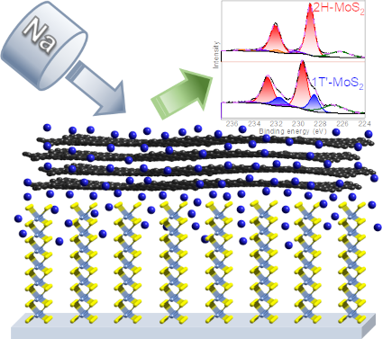
- chambers was carried out without breaking the vacuum. The energy scale was calibrated using the binding energy of the Au 4f7/2 component at 84.0 eV measured from a clean gold foil. The surface concentration of the elements was determined from the XPS survey spectra taking into account the photoelectron


Thickness dependent oxidation in CrCl3: a scanning X-ray photoemission and Kelvin probe microscopies study
Beilstein J. Nanotechnol. 2025, 16, 749–761, doi:10.3762/bjnano.16.58
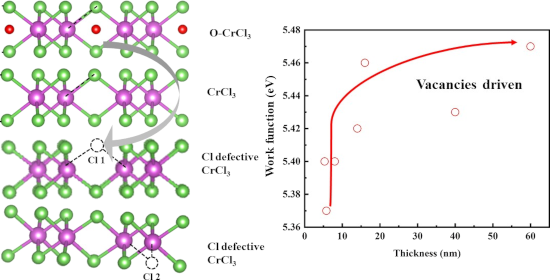
- performed at the ESCA Microscopy beamline 2.2L of Elettra Synchrotron Trieste facility, Italy. The incident photon energy of ≈740 eV was calibrated by means of Au f7/2 at 84.0 eV from a clean gold foil sample. To reduce the beam-induced effects on the samples, we recorded the high-energy-resolution spectra
- the flake thicknesses determined by AFM. Green: 285 nm SiO2 on Si substrate measured with Pt-coated tip (Kelvin potential 5.5 eV), red: ITO substrate (190 nm) on glass measured with a Pt-coated tip, and blue: ITO substrate (190 nm) on glass measured with a Au-coated tip (Kelvin potential 5.1 V





Efficiency of single-pulse laser fragmentation of organic nutraceutical dispersions in a circular jet flow-through reactor
Beilstein J. Nanotechnol. 2025, 16, 711–727, doi:10.3762/bjnano.16.55


Nanostructured materials characterized by scanning photoelectron spectromicroscopy
Beilstein J. Nanotechnol. 2025, 16, 700–710, doi:10.3762/bjnano.16.54
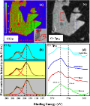
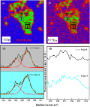
- composition and the surface potential across InP nanowire p–n junctions for individual nanowire devices. InP nanowires were grown on InP(111) substrates by vapor–liquid–solid growth using nanoimprint lithography for generating catalytic Au nanoparticles in a metal–organic vapor phase epitaxy (MOVPE) reactor
- few nanometers along the entire nanowire. For operando SPEM measurements, nanowires were transferred onto a prepatterned device template with flat, individually contacted Au/Ti electrodes deposited onto a SiO2/Si substrate, separated by a 1.5 µm wide insulating gap. Optical microscopy images of the
- samples including marker structures were used to directly navigate to suitable nanowires in the SPEM measurements. Figure 2b shows elemental-sensitive In 4d and P 2p SPEM images, highlighting the nanowire shape and position, which can even be noticed as a shadow in the Au 4f image, where the signal from


High-temperature epitaxial growth of tantalum nitride thin films on MgO: structural evolution and potential for SQUID applications
Beilstein J. Nanotechnol. 2025, 16, 690–699, doi:10.3762/bjnano.16.53
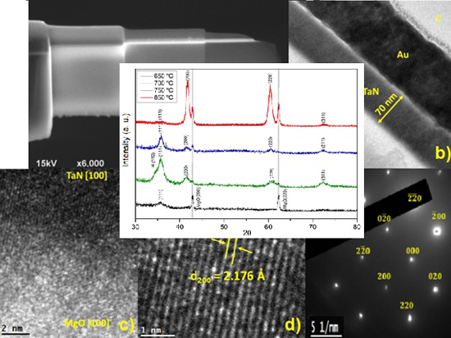
- focused ion beam (FIB) for SEM observation; Au films were evaporated on the TaN samples before the FIB process to protect the samples (Figure 6a). The sample in Figure 6b shows a film thickness of 70 nm, and one can distinguish the Au protective layer used for the FIB process. Figure 6c shows the


The impact of tris(pentafluorophenyl)borane hole transport layer doping on interfacial charge extraction and recombination
Beilstein J. Nanotechnol. 2025, 16, 678–689, doi:10.3762/bjnano.16.52
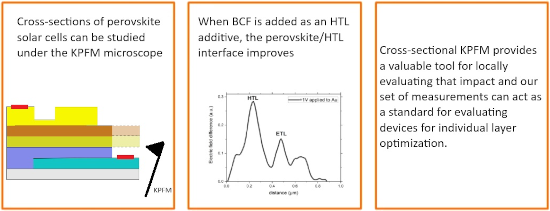
- measured potential under 1 V bias minus the potential at dark/short-circuit conditions and x is the distance. For these measurements, we applied +1 V to the Au electrode to forward bias the device (Figure 3e–h and Supporting Information File 1, Section 5). The resulting magnitude of the electric field
- solution containing 15 mg PTAA, 7.5 μL, LiTFSI solution (170 mg in 1 mL acetonitrile), and 7.5 μL tBP solution (1:1 in acetonitrile), dissolved in 1 mL toluene. For the BCF batch, instead of LiTFSI and tBP, BCF was added in at an 8% mol ratio to PTAA. After the HTL deposition, an Au electrode was
- evaporated as a back contact under vacuum (Edwards FL 400 Au evaporator). The devices were characterized in terms of efficiency with a solar simulator (Abet Technologies, SunLite) under AM1.5 illumination. Cross-section preparation To create solar cells with exposed cross-sections, we mechanically cleaved


Focused ion and electron beams for synthesis and characterization of nanomaterials
Beilstein J. Nanotechnol. 2025, 16, 613–616, doi:10.3762/bjnano.16.47

- deposition techniques, this thematic issue includes studies on low-energy electron interactions with metal(II) bis(acetylacetonate) complexes [5]. Another molecule investigated for its gas-phase fragmentation mechanism via dissociative ionization and dissociative electron attachment is [Au(CH3)2Cl]2. Studies
- the substrate. Metallic structures can be fabricated directly or through post-purification methods, such as water-assisted treatment, which has been effective for Au and Pt deposits [10]. Interestingly, morphological changes in the underlying SiO2 layer were observed during the process, resembling

Nanomaterials in targeting amyloid-β oligomers: current advances and future directions for Alzheimer's disease diagnosis and therapy
Beilstein J. Nanotechnol. 2025, 16, 561–580, doi:10.3762/bjnano.16.44
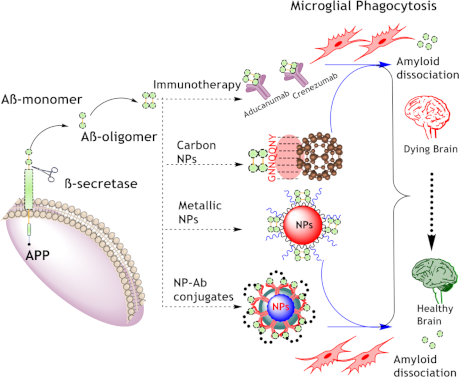
- inhibit amyloid fibrillation. By attaching two peptide inhibitors (VVIA and LPFFD) to the surface of AuNPs using Au–S bonds, they created hybrid AuNPs that prevented oligomerization and reduced β-sheet formation, promoting random coil structures instead. The combined effect of these hybrid AuNPs was


Functionalized gold nanoflowers on carbon screen-printed electrodes: an electrochemical platform for biosensing hemagglutinin protein of influenza A H1N1 virus
Beilstein J. Nanotechnol. 2025, 16, 540–550, doi:10.3762/bjnano.16.42
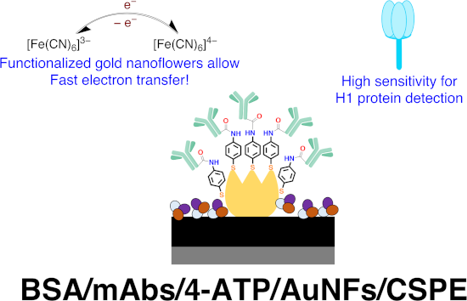
- standard deviation of 44 nm, which suggests size polydispersity (Figure 2D). The flower-like morphology of the nanostructures provides small Au domains across the electrode surface. The shape of these domains confers them with larger surface area than other types of nanostructures with plain geometric
- largest change in the CV was observed after the functionalization of the AuNFs with 4-ATP through stable Au–S bonds. In this case, the peak-to-peak separation for the 4-ATP/AuNFs/CSPE was 0.16 V, showing that the redox reversibility for the [Fe(CN)6]3−/4− pair and the current response of the electrode
- , the existence of this effect in a material appears to depend on the size of the superficial nanostructures. A similar effect has been reported for 4-ATP-functionalized multilayered nanostructures of Ag, Au, and Pt with a size range between 48 and 130 nm [36][37] as well as for 4-ATP-functionalized





