


Search results
Search for "GaN" in Full Text gives 57 result(s) in Beilstein Journal of Nanotechnology.
Towards rare-earth-free white light-emitting diode devices based on the combination of dicyanomethylene and pyranine as organic dyes supported on zinc single-layered hydroxide
Beilstein J. Nanotechnol. 2019, 10, 760–770, doi:10.3762/bjnano.10.75
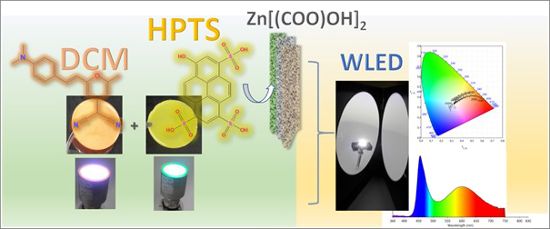
- -emitting diode (LED); pyranine; zinc hydroxyacetate; Introduction Light-emitting diode (LED) devices are the most developed lighting systems today. 95% of LEDs found on the market generate white light by combining the blue light of a semiconductor diode (GaN or InGaN) with the broad yellow emission of the
- . The optical properties of the luminescent wet hybrid materials and films were recorded. Finally, a down-conversion pseudo-white LED was designed by simply associating, in remote-phosphor configuration, silicone/SLH-dye composite film and a GaN LED emitting at 450 nm. Composite films with a single dye


Charged particle single nanometre manufacturing
Beilstein J. Nanotechnol. 2018, 9, 2855–2882, doi:10.3762/bjnano.9.266
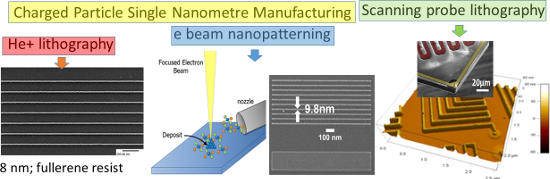
- combined with CVD. As another example, 5 nm GaN quantum dots were deposited by Crozier [86] by EBID from a specially tailored precursor resulting in high-quality uniform deposits on a thin film of Si/SiO2. Shimojo [87] demonstrated the deposition of self-standing nanorods, 10 nm in diameter, by electrons


Oriented zinc oxide nanorods: A novel saturable absorber for lasers in the near-infrared
Beilstein J. Nanotechnol. 2018, 9, 2730–2740, doi:10.3762/bjnano.9.255
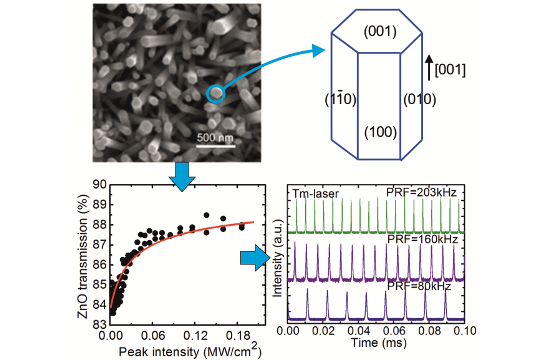
- due to the high sensitivity of ZnO to chemical environments [6], for light-emitting diodes due to the compatibility with the GaN technology and random lasing [7] (in the blue, around 0.390 µm), and in dye-sensitized solar cells [8]. The absorption and emission properties of the ZnO nanomaterials are



Two-dimensional photonic crystals increasing vertical light emission from Si nanocrystal-rich thin layers
Beilstein J. Nanotechnol. 2018, 9, 2287–2296, doi:10.3762/bjnano.9.213
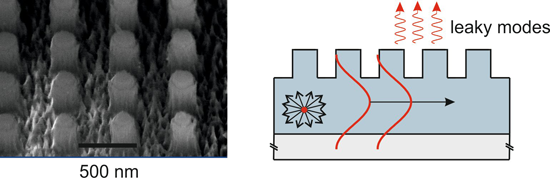
- for photonic nanostructures, such as nanoimprinting [13][16], microsphere-based lithography [17] or laser processing [18], which may open up ways towards practical applications of 2D PhCs. The latter method, for example, enabled to enhance the light extraction from InGaN/GaN quantum wells on a



Optimization of the optical coupling in nanowire-based integrated photonic platforms by FDTD simulation
Beilstein J. Nanotechnol. 2018, 9, 2248–2254, doi:10.3762/bjnano.9.209
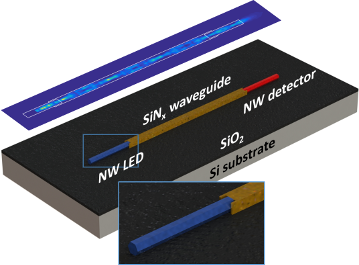
- communication systems are required [5][6]. The technology for visible wavelength PICs is much less mature than for IR PICs, and different approaches have been explored. One exploratory approach for visible photonics consists of the monolithic integration of InGaN emitters/detectors with GaN-based waveguides [7
- ][8][9]. This approach presents the advantage of providing both passive and active elements, however it brings many fabrication challenges (such as the necessity of low-loss GaN waveguides, etc). For passive photonic circuits used in the visible light range, SiN circuitry is gaining increasing
- extensive research on NW integrated platforms [28][29][30]. The first important step is the on-chip manipulation of light, which can be achieved by integrating NW emitters and detectors with waveguides. Park et al. demonstrated the coupling between an electrically pumped single InGaN/GaN NW LED and a 2D


Light extraction efficiency enhancement of flip-chip blue light-emitting diodes by anodic aluminum oxide
Beilstein J. Nanotechnol. 2018, 9, 1602–1612, doi:10.3762/bjnano.9.152
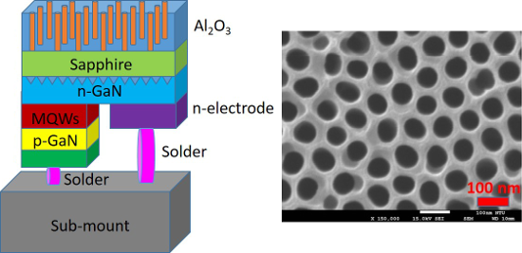
- the light extraction efficiency (LEE) of the LED [10]. Ding et al. fabricated a LED with enhanced LEE by depositing a patterned sapphire substrate (PSS) on a flip-chip LED with GaN as a base layer [11]. Shei et al. enhanced the LEE of LEDs by 27% by producing a microstructure on the surface of LEDs
- with Ga-doped zinc oxide (GZO)/GaN as the base layer and then reducing the total reflectivity by changing the shape, thickness, and density of the microstructure through dry etching [12]. Li et al. increased the LEE of an InGaN-monolayer quantum-well LED by 1.8–1.9 times relative to that of a
- traditional LED by producing a TiO2 microstructure array on p-GaN through dipping and rapid convective deposition and using noncrystalline TiO2 and anatase TiO2 with a diameter of 520 nm [13]. Huang et al. used Zn and Mg for ion implantation at the GZO thin layer and then adopted rapid thermal annealing to


Cathodoluminescence as a probe of the optical properties of resonant apertures in a metallic film
Beilstein J. Nanotechnol. 2018, 9, 1491–1500, doi:10.3762/bjnano.9.140
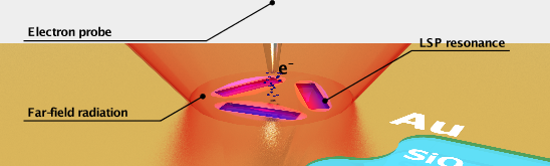
- GaAs nanowires [46], modes of single and pairs of AlGaAs disks [47], the optical properties of quantum discs of GaN/AlN in GaN nanowires [48] and various modes of gold nanodecahedra [49]. The potential of CL used in transmission to observe various colour centres in nanodiamonds has also been


Review: Electrostatically actuated nanobeam-based nanoelectromechanical switches – materials solutions and operational conditions
Beilstein J. Nanotechnol. 2018, 9, 271–300, doi:10.3762/bjnano.9.29
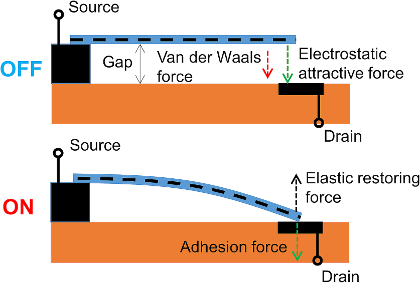
- change of the chemical composition of the contacting materials. Electrical-current-induced thermal effects have been studied in various one-dimensional nanostructures such as Si [92], Ge [10][54], carbon nanotubes (CNTs) [93][94][95], GaN [96][97] and ZnTe [98]. The evolution of a nanocontact between a


Dopant-stimulated growth of GaN nanotube-like nanostructures on Si(111) by molecular beam epitaxy
Beilstein J. Nanotechnol. 2018, 9, 146–154, doi:10.3762/bjnano.9.17
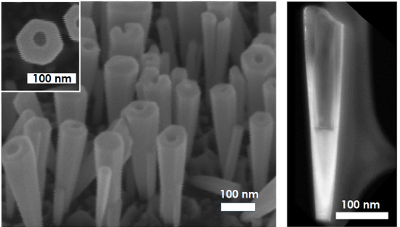
- , Institut d’Electronique Fondamentale, UMR 8622 CNRS, University Paris Sud, University Paris-Saclay, 91405 Orsay cedex, France 10.3762/bjnano.9.17 Abstract In this paper we study growth of quasi-one-dimensional GaN nanowires (NWs) and nanotube (NT)-like nanostructures on Si(111) substrates covered with a
- thin AlN layer grown by means of plasma-assisted molecular beam epitaxy. In the first part of our study we investigate the influence of the growth parameters on the geometrical properties of the GaN NW arrays. First, we find that the annealing procedure carried out prior to deposition of the AlN buffer
- the study, we introduce a new dopant-stimulated method for GaN nanotube-like nanostructure synthesis using a high-intensity Si flux. Transmission electron microscopy was used to investigate the morphological features of the GaN nanostructures. The synthesized structures have a hexagonal cross-section


Combined scanning probe electronic and thermal characterization of an indium arsenide nanowire
Beilstein J. Nanotechnol. 2018, 9, 129–136, doi:10.3762/bjnano.9.15
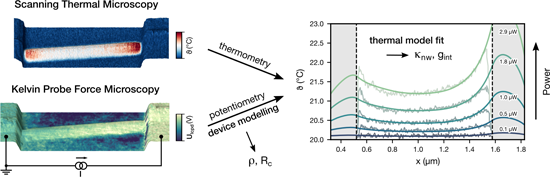
- substrate, = geWc = (1.8 ± 0.6) × 107 W·m−2·K−1. Both values are below the interfacial conductivity of the nanowire to the oxide. This is not unusual, as shown before for GaN nanowires [36]. Because the exact contact geometries are unknown, the error in the estimation of τc is rather large, and could be


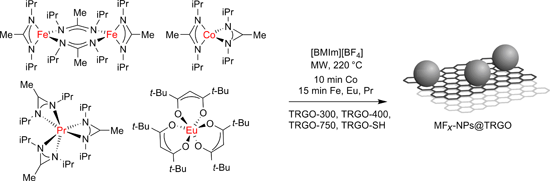
Synthesis of metal-fluoride nanoparticles supported on thermally reduced graphite oxide
Beilstein J. Nanotechnol. 2017, 8, 2474–2483, doi:10.3762/bjnano.8.247
- by grant Ja466/31-2 and in the core-facilities program through grant MA 1280/40-1. The authors also gratefully acknowledge financial support of research on functionalized graphene research by the European Community as part of the EU Graphene Flagship (GAN 696656). We thank Mr. Manuel Endres for the


Angstrom-scale flatness using selective nanoscale etching
Beilstein J. Nanotechnol. 2017, 8, 2181–2185, doi:10.3762/bjnano.8.217
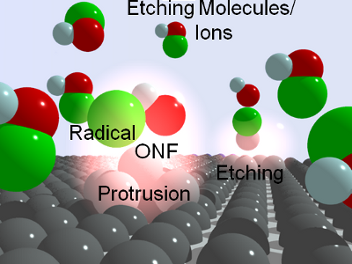
- . Subsequently, the molecules are dissociated by the ONF, and the dissociated radicals selectively etch the protrusions. Finally, the ONF disappears and the etching process stops automatically. Near-field etching is performed using Cl2 gas for glass, GaN [9], and plastic surfaces, and O2 gas for diamond and



Enhancement of mechanical and electrical properties of continuous-fiber-reinforced epoxy composites with stacked graphene
Beilstein J. Nanotechnol. 2017, 8, 1909–1918, doi:10.3762/bjnano.8.191
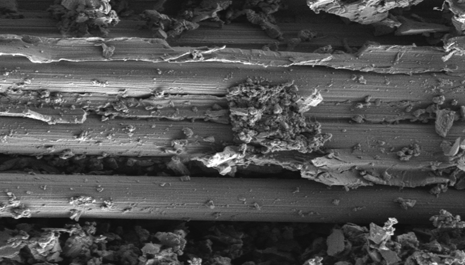
- Naum Naveh Olga Shepelev Samuel Kenig Shenkar College of Engineering and Design, 12 Anna Frank St., Ramat Gan 5252626, Israel Israel Plastics and Rubber Center, Technion City, Haifa 3200004, Israel 10.3762/bjnano.8.191 Abstract Impregnation of expandable graphite (EG) after thermal treatment with


Surface improvement of organic photoresists using a near-field-dependent etching method
Beilstein J. Nanotechnol. 2017, 8, 784–788, doi:10.3762/bjnano.8.81
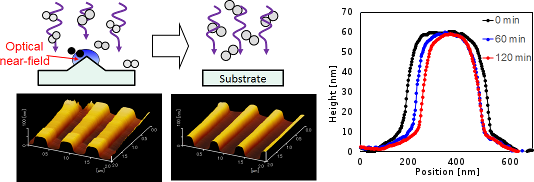
- effective in producing atomically flat surfaces in various materials, including GaN [9], glass [10] and even diamond [11] and has shown to be effective on both flat and patterned surfaces. According to theory, the etching effect originates from radical gas-phase components. More precisely, ambient O2
- eV; excitation power density: 0.8 W/cm2) and (2) GaN laser (405 nm; 3.06 eV; excitation power: 39 mW). These lasers were carefully selected to be below the dissociation energy of O2 (5.12 eV) in order to avoid conventional photochemical etching through direct O2 dissociation. The light intensity for
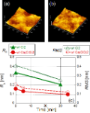
- photoresist after 120 min of near-field etching with a He–Cd laser (325 nm, 3.81 eV) ((a) before and (b) after) and a GaN laser (405 nm; 3.06 eV) ((c) before and (d) after). (e) and (f) provide details of (c) and (d) respectively at the same positions (white dashed line). (a) Photoresist profile before (black


Localized surface plasmons in structures with linear Au nanoantennas on a SiO2/Si surface
Beilstein J. Nanotechnol. 2016, 7, 1519–1526, doi:10.3762/bjnano.7.145
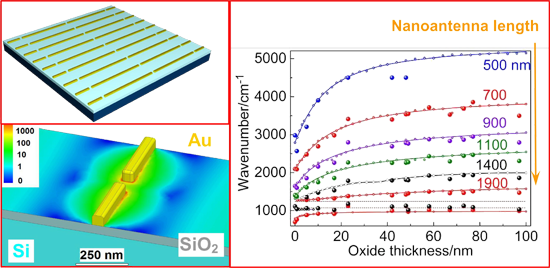
- of the theoretical study of coupling between the LSPR and SO phonon modes in the nanoantenna structures formed on a GaN substrate were also reported [32]. A significant increase of the phonon response (1900 times) at the SO phonon frequencies is observed for the structures with nanoantenna arrays


Viability and proliferation of endothelial cells upon exposure to GaN nanoparticles
Beilstein J. Nanotechnol. 2016, 7, 1330–1337, doi:10.3762/bjnano.7.124
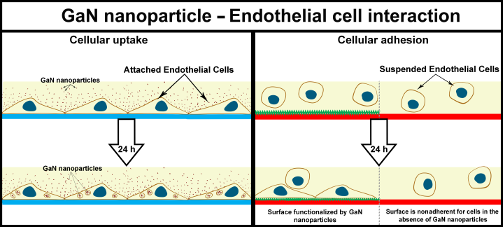
- Moldova 10.3762/bjnano.7.124 Abstract Nanotechnology is a rapidly growing and promising field of interest in medicine; however, nanoparticle–cell interactions are not yet fully understood. The goal of this work was to examine the interaction between endothelial cells and gallium nitride (GaN
- ) semiconductor nanoparticles. Cellular viability, adhesion, proliferation, and uptake of nanoparticles by endothelial cells were investigated. The effect of free GaN nanoparticles versus the effect of growing endothelial cells on GaN functionalized surfaces was examined. To functionalize surfaces with GaN, GaN
- nanoparticles were synthesized on a sacrificial layer of zinc oxide (ZnO) nanoparticles using hydride vapor phase epitaxy. The uptake of GaN nanoparticles by porcine endothelial cells was strongly dependent upon whether they were fixed to the substrate surface or free floating in the medium. The endothelial



Sonochemical co-deposition of antibacterial nanoparticles and dyes on textiles
Beilstein J. Nanotechnol. 2016, 7, 1–8, doi:10.3762/bjnano.7.1
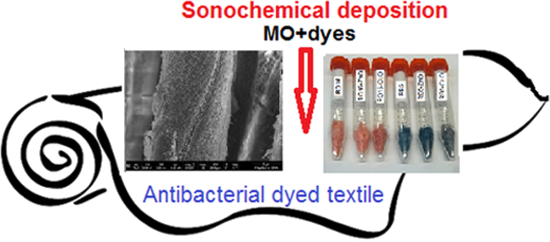
- Ilana Perelshtein Anat Lipovsky Nina Perkas Tzanko Tzanov Aharon Gedanken Bar-Ilan University, Department of Chemistry, Bar-Ilan Institute of Nanotechnology & Advanced Materials, IL-52900 Ramat-Gan, Israel Universitat Politècnica de Catalunya, Group of Molecular and Industrial Biotechnology




Blue and white light emission from zinc oxide nanoforests
Beilstein J. Nanotechnol. 2015, 6, 2463–2469, doi:10.3762/bjnano.6.255
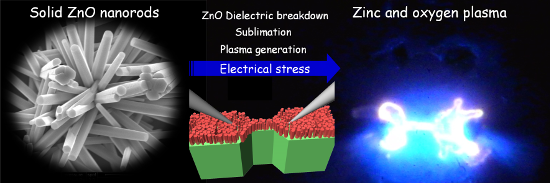
- -cost alternative to GaN [8]. It is also one of the substances that sublimate congruently at atmospheric pressure [15][16][17]: The results we present here are from electrical experiments performed on ZnO nanoforests formed by high-density nanowires grown on highly doped silicon microstructures. We have
- through multiple defect levels or because of the optical excitation of materials by the ultraviolet source [21]. Blue light has been previously observed from ZnO-based homojunction LEDs, where it is attributed to donor–acceptor pair recombination in the p-type ZnO layer [10] and also from n-ZnO/p-GaN


Surface-enhanced Raman scattering by colloidal CdSe nanocrystal submonolayers fabricated by the Langmuir–Blodgett technique
Beilstein J. Nanotechnol. 2015, 6, 2388–2395, doi:10.3762/bjnano.6.245
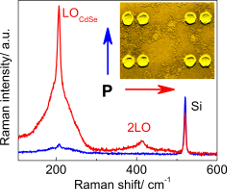
- CdS [17][18], CdTe [19], CdSe [20][21][22][23][24], ZnO [25][26][27][28], GaN [26], and CuxS [29][30], reveal the SERS effect by optical phonons when placed in close proximity of Au or Ag nanoclusters. Among those, CdSe NCs have attracted much attention for SERS experiments for at least two reasons


Combination of surface- and interference-enhanced Raman scattering by CuS nanocrystals on nanopatterned Au structures
Beilstein J. Nanotechnol. 2015, 6, 749–754, doi:10.3762/bjnano.6.77
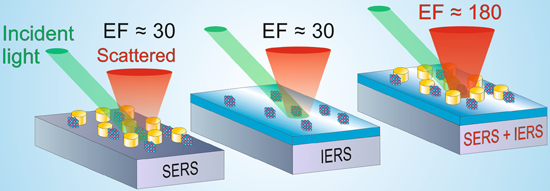
- scattering by LO phonons in epitaxial GaN and ZnO NC thin films covered with Ag was also explained by SERS [9]. A pronounced 104-fold SERS enhancement by surface optical phonons was observed for ZnO NCs excited in resonance with localised surface plasmon in Ag nanoclusters deposited on ZnO NCs and out of the


Bright photoluminescence from ordered arrays of SiGe nanowires grown on Si(111)
Beilstein J. Nanotechnol. 2014, 5, 2498–2504, doi:10.3762/bjnano.5.259
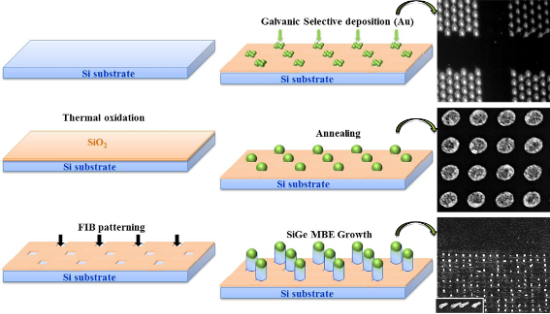
- 25 K) using a Bomem DA3 FTIR spectrometer equipped with a cooled Ge (Applied Detector Corporation) detector, and the samples were excited with loosely-focused light from a GaN-based semiconductor laser (70 mW at 405 nm) or from an argon ion laser (35 mW at 458 nm). Results and Discussion The PL


Nanometer-resolved mechanical properties around GaN crystal surface steps
Beilstein J. Nanotechnol. 2014, 5, 2164–2170, doi:10.3762/bjnano.5.225
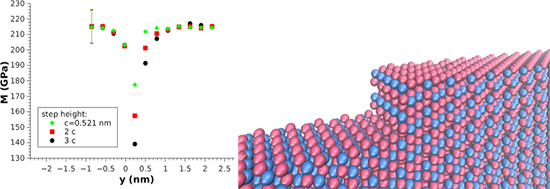
- these effects, while avoiding artifacts caused by the measurement technique itself. We performed a molecular dynamics study to investigate the mechanical properties of a GaN step of only a few lattice constants step height and scrutinized its applicability to indentation experiments using a finite
- more advanced surface features, including steps, are unclear at this point. The present work addresses the mechanical behavior around a gallium nitride (GaN) step employing a combination of classical molecular dynamics (MD) simulations with a finite element (FEM) approach and CR-AFM experiments. GaN is
- a material of great interest due to its application as a wide-band-gap semiconductor especially for optoelectronic devices [7][8]. Additionally, it is known that GaN can exhibit terraces ranging from monoatomic to a few lattice parameters in step height [9][10]. In principle, the results of this


![[Graphic 3]](/bjnano/content/inline/2190-4286-5-225-i13.png?max-width=637&scale=1.18182) along the y-axis of the upper Ga atom...
along the y-axis of the upper Ga atom...


A nanometric cushion for enhancing scratch and wear resistance of hard films
Beilstein J. Nanotechnol. 2014, 5, 1005–1015, doi:10.3762/bjnano.5.114
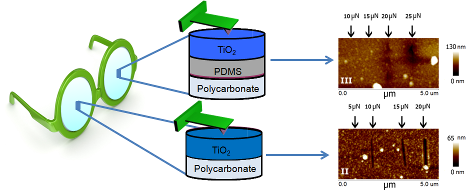
- Katya Gotlib-Vainshtein Olga Girshevitz Chaim N. Sukenik David Barlam Sidney R. Cohen Department of Chemistry and Institute of Nanotechnology & Advanced Materials, Bar Ilan University, Ramat-Gan 52900, Israel Department of Mechanical Engineering, Ben Gurion University, Beer Sheva, Israel



Growth and characterization of CNT–TiO2 heterostructures
Beilstein J. Nanotechnol. 2014, 5, 946–955, doi:10.3762/bjnano.5.108
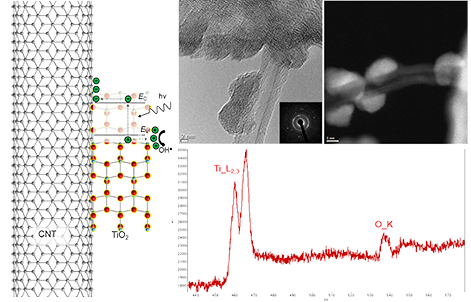
- illustration of the principle in STEM-EELS: (a) the microscope configuration in the STEM mode; (b) the inelastic scattering processes in the TEM sample contributing to the low-loss and the core-loss EELS signals; (c) an atomic-resolution STEM-HAADF image of a GaN–Ge interface; (d) a EELS core-loss spectrum


An ultrasonic technology for production of antibacterial nanomaterials and their coating on textiles
Beilstein J. Nanotechnol. 2014, 5, 532–536, doi:10.3762/bjnano.5.62
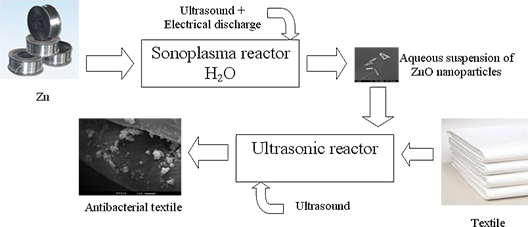
- Anna V. Abramova Vladimir O. Abramov Aharon Gedanken Ilana Perelshtein Vadim M. Bayazitov Institute of general and inorganic chemistry of the Russian Academy of Sciences, Leninskiy prospect 31, Moscow, 119991, Russian Federation Department of Chemistry, Bar Ilan University, Ramat-Gan, 52900





